(7% discount is applied at checkout)
Cart is empty
Your go-to destination for cutting-edge server products
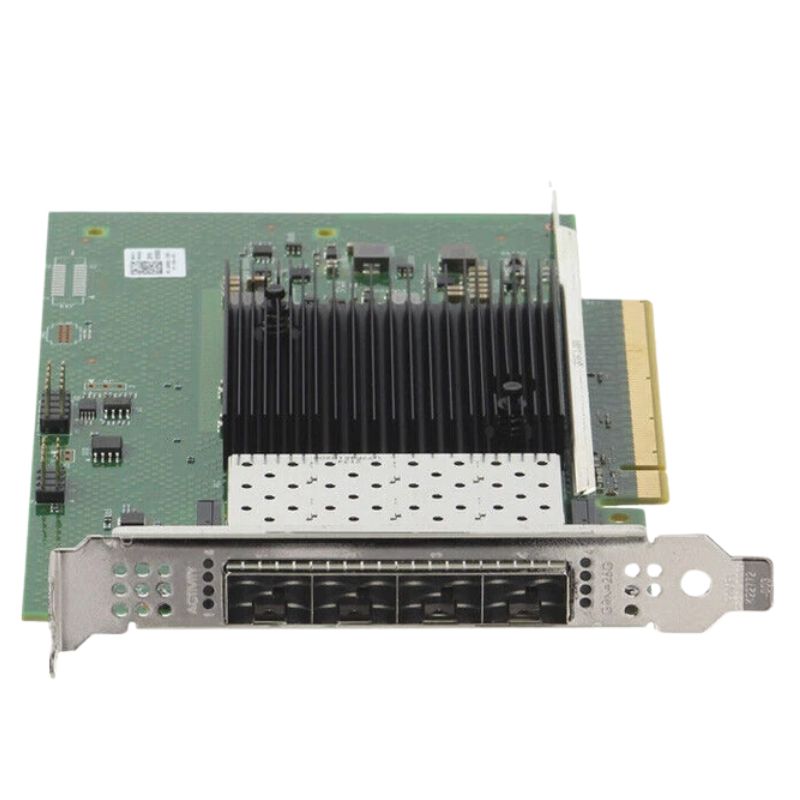


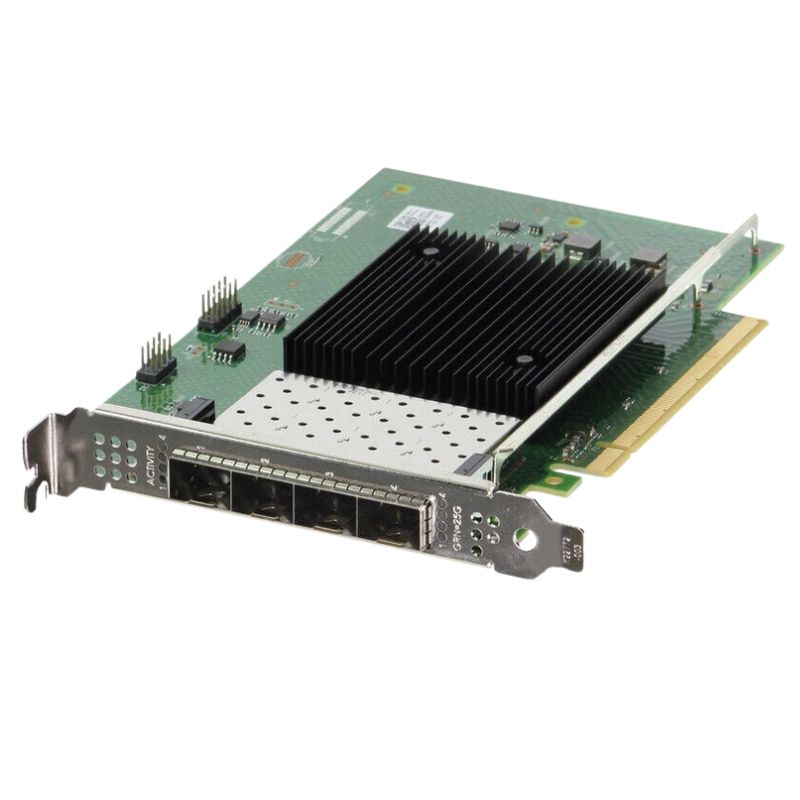
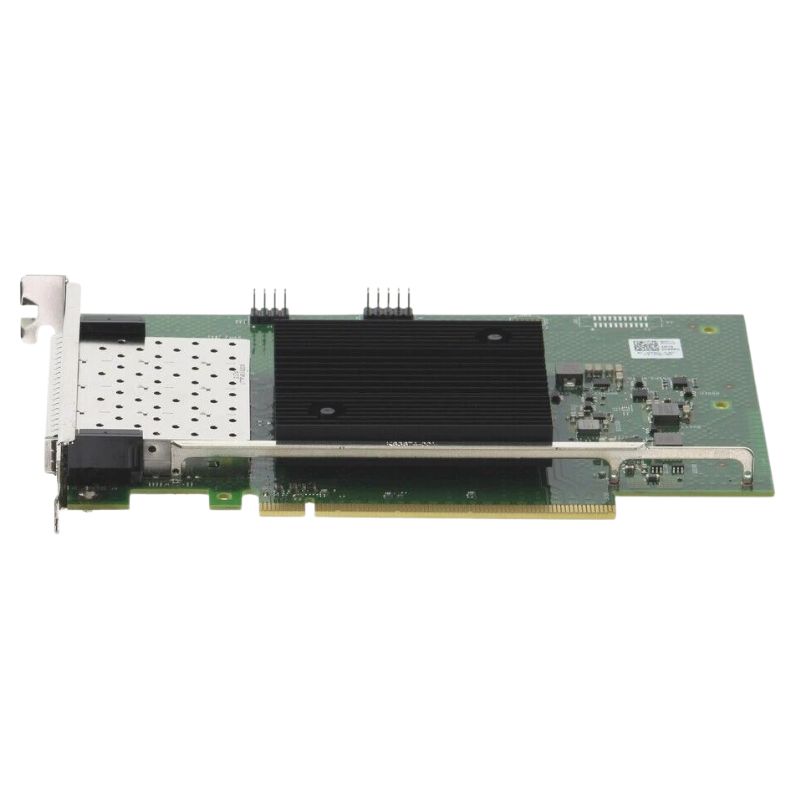
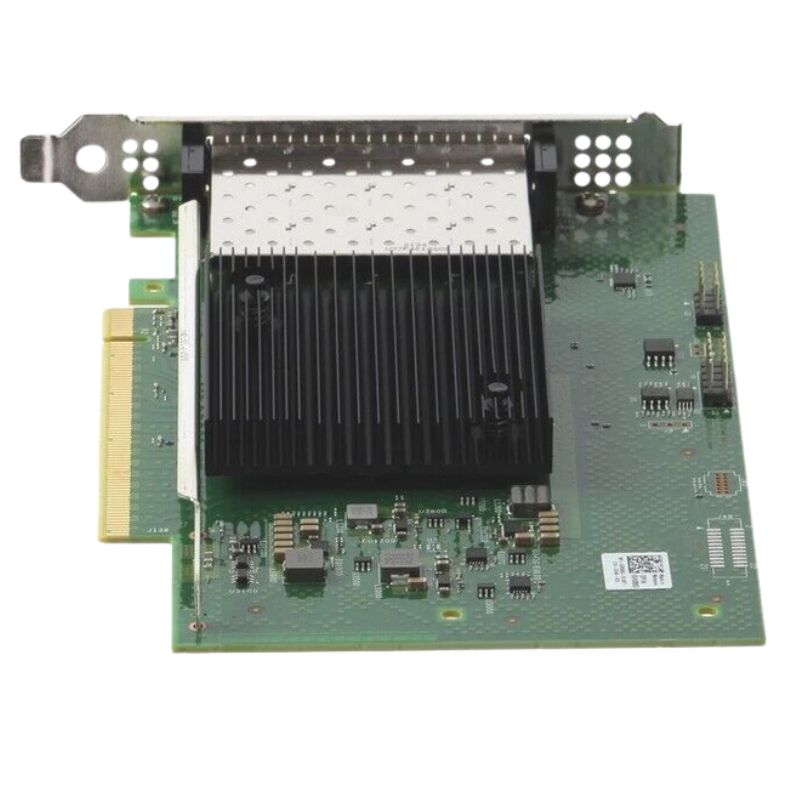
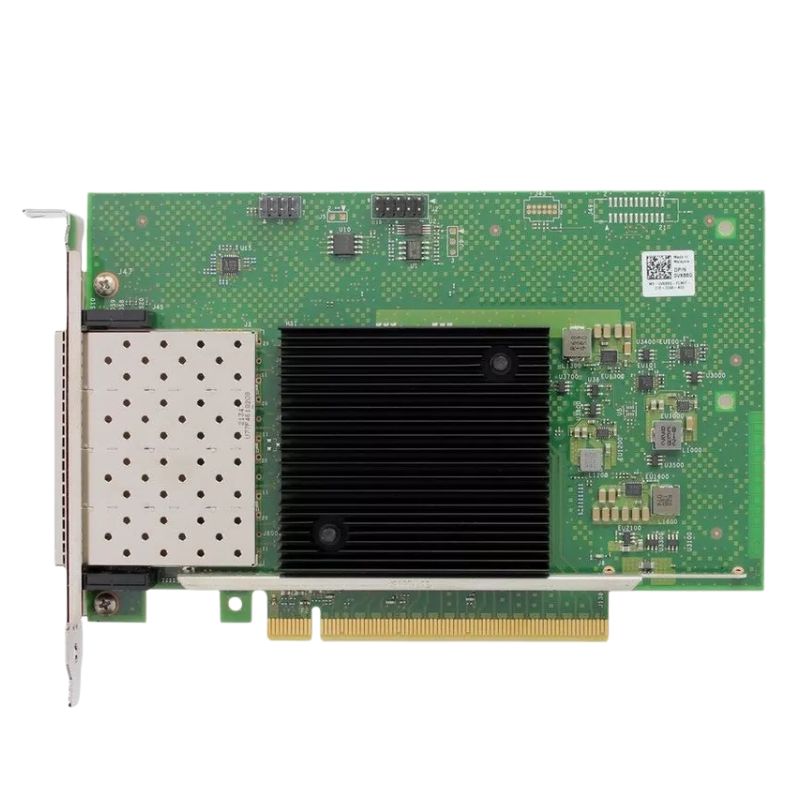
Intel X722DA4FH Quad-Ports 10GBPS SFP+ PCI-E 3.0 x8 & Full Height Server Network Adapter. New Sealed with 1-Year Replacement Warranty
| SKU/MPN | Warranty | Price | Condition | You save |
|---|---|---|---|---|
| X722DA4FH | 1 Year Warranty | $360.00 | New Sealed in Box (NIB) | You save: $126.00 (26%) |
| X722DA4FH | 1 Year Warranty | $425.00 | Factory-Sealed New in Original Box (FSB) | You save: $148.75 (26%) |
The Intel X722DA4FH is a robust quad‑port 10 Gbps SFP+ network adapter engineered for servers that demand consistent throughput, low latency, and dependable connectivity. Featuring a PCI Express 3.0 x8 interface and a full‑height bracket, this adapter enhances data‑intensive workloads, supports virtualized infrastructures, and strengthens multi‑gigabit network architectures with flexible port utilization and advanced offload capabilities.
The Intel X722DA4FH Quad-Port 10 Gigabit SFP+ PCI Express 3.0 x8 Full Height Server Network Adapter represents a high performance networking solution designed for modern data center environments, enterprise server deployments, virtualization clusters, and high throughput storage systems. Built around advanced Ethernet controller architecture, this adapter integrates four independent 10 Gigabit SFP+ interfaces, enabling dense network connectivity within a single expansion slot while maintaining stability under sustained workloads. The design emphasizes reliability, scalability, and deterministic throughput for mission-critical workloads where consistent packet delivery and low latency are essential.
Engineered for servers requiring robust uplink capacity, the adapter leverages PCI Express 3.0 x8 bandwidth to ensure that all four ports can operate simultaneously at full line rate under optimal conditions. The full height bracket form factor ensures mechanical stability in rack-mounted servers and enterprise chassis, supporting long-term deployment without mechanical stress or alignment issues. The SFP+ interface allows flexible optical or direct attach copper connectivity depending on infrastructure requirements, making it suitable for both short-range and long-range network topologies.
The quad-port configuration of the Intel X722DA4FH provides significant advantages in environments where port density and efficient slot utilization are critical. Instead of occupying multiple expansion slots for separate dual-port or single-port adapters, this single adapter consolidates four high-speed connections into one hardware module. This consolidation allows system architects to optimize server internal layout, leaving additional PCIe slots available for storage controllers, GPU accelerators, or specialized compute accelerators.
Each SFP+ interface operates independently, allowing flexible configuration for aggregation, redundancy, or segmented network traffic distribution. This architecture supports advanced traffic engineering scenarios where workload separation is required across management, storage, application, and backup networks. The independent nature of each port ensures that traffic congestion on one interface does not directly impact the performance of the others, contributing to predictable network behavior in high-load conditions.
Enterprise infrastructure environments often require scalable network expansion without frequent hardware redesign. The Intel X722DA4FH supports this requirement by offering a compact yet high capacity solution capable of integrating into both legacy and modern server platforms. Its PCI Express interface ensures compatibility with a wide range of server motherboards, while its standardized SFP+ ports allow seamless integration with existing optical transceivers and DAC cables.
Scalability is further enhanced by support for link aggregation configurations, enabling multiple ports to function together as a unified high-bandwidth channel. This is particularly useful in virtualization clusters, database servers, and distributed storage systems where aggregated throughput is necessary to maintain system responsiveness under concurrent workloads.
The PCI Express 3.0 x8 interface provides a high-speed communication channel between the network adapter and the host system. With significant throughput capacity, this interface ensures that the combined data transfer from all four 10 Gigabit ports can be handled efficiently without creating bottlenecks at the system bus level. This is especially important in environments where multiple virtual machines or containerized applications generate simultaneous network traffic streams.
The architecture prioritizes low latency packet transfer and efficient DMA operations, reducing CPU overhead during heavy network utilization. By offloading networking tasks from the central processing unit, the adapter contributes to improved overall system performance and resource allocation efficiency. This allows server processors to focus on application workloads rather than network packet handling tasks.
The internal data handling mechanisms are optimized to distribute incoming and outgoing traffic evenly across available processing queues. This ensures that high throughput workloads such as storage replication, live migration, and large-scale database synchronization can occur without congestion. The PCI Express interface acts as a high-speed pipeline that maintains consistent data flow between network interfaces and system memory.
In multi-threaded server environments, the adapter’s ability to distribute network interrupts and processing queues helps reduce CPU contention. This contributes to improved responsiveness in latency-sensitive applications such as financial systems, telecommunications platforms, and real-time analytics engines.
The SFP+ ports on the Intel X722DA4FH provide flexible connectivity options supporting a wide range of transceivers and direct attach copper solutions. This flexibility allows system administrators to tailor network configurations based on distance, bandwidth requirements, and environmental conditions. Optical transceivers can be used for long-distance interconnects between data center racks or buildings, while copper DAC cables provide cost-effective short-range connectivity within server clusters.
The modular nature of SFP+ technology ensures future adaptability, allowing network upgrades without replacing the entire adapter. As network standards evolve, compatible transceivers can be introduced to extend the lifespan of the hardware while maintaining compatibility with existing infrastructure.
Modern enterprise networks often consist of heterogeneous equipment from multiple vendors. The Intel X722DA4FH is designed with interoperability in mind, supporting standard-based SFP+ modules that function across diverse networking ecosystems. This ensures seamless integration into existing topologies without requiring extensive infrastructure modifications.
Interoperability also extends to virtualization and cloud orchestration platforms, where consistent network performance is essential for workload balancing and service availability. The adapter’s compatibility with standard networking protocols ensures smooth deployment across both private and hybrid cloud environments.
The full height bracket design of the Intel X722DA4FH ensures mechanical stability when installed in standard rack-mounted servers and enterprise chassis. This form factor provides secure mounting, reducing vibration impact and maintaining proper alignment of SFP+ ports during operation. Stability is particularly important in high-density data centers where equipment is continuously operating under thermal and mechanical stress conditions.
The structural design also supports efficient airflow management within server chassis. By maintaining a standardized form factor, the adapter contributes to predictable airflow patterns, reducing thermal hotspots and improving overall system cooling efficiency. This is essential for maintaining optimal performance in environments with high ambient temperatures or dense server stacking.
The adapter incorporates design considerations that support passive cooling through chassis airflow. Efficient heat dissipation ensures consistent performance during sustained high bandwidth operations. By minimizing thermal throttling risks, the adapter maintains stable throughput even under continuous heavy network utilization.
Thermal stability is critical in data-intensive applications such as virtualization clusters, backup systems, and high frequency transaction processing environments where uninterrupted performance is required.
The Intel X722DA4FH is optimized for virtualization environments where multiple virtual machines share physical network resources. Support for advanced queue management allows traffic to be distributed efficiently across virtualized workloads. Each virtual machine can be assigned dedicated or shared network queues, improving isolation and performance consistency.
This capability is particularly valuable in hyper-converged infrastructure deployments where compute, storage, and networking resources are tightly integrated. By enabling efficient packet distribution and reducing processing contention, the adapter enhances overall system responsiveness and workload efficiency.
Workload isolation ensures that high traffic activity in one virtual environment does not degrade performance in others. This is achieved through hardware-level traffic segmentation and queue prioritization mechanisms. As a result, mission-critical applications maintain stable network performance even under peak load conditions.
Performance consistency is a key requirement in cloud infrastructure environments, where service-level expectations must be maintained across dynamically changing workloads. The adapter’s architecture supports this requirement by maintaining predictable latency and throughput characteristics.
In data center environments, the Intel X722DA4FH is commonly deployed in aggregation layers, top-of-rack switching architectures, and high performance compute clusters. Its quad-port configuration enables dense connectivity for server farms, reducing the number of physical adapters required per rack. This contributes to improved rack space efficiency and simplified cabling structures.
The adapter is suitable for high bandwidth applications such as distributed storage systems, backup replication networks, and large scale virtualization platforms. Its ability to sustain multiple concurrent 10 Gigabit streams ensures that data movement between nodes remains efficient and reliable.
High availability architectures benefit from the redundancy capabilities provided by multiple independent network ports. The adapter supports failover configurations where traffic can be rerouted automatically in the event of link failure. This ensures continuous network availability and minimizes downtime in critical infrastructure environments.
Redundant network paths also enhance load balancing capabilities, allowing traffic distribution across multiple links to optimize bandwidth utilization and reduce congestion.
The Intel X722DA4FH is well suited for storage intensive environments where high throughput and low latency communication are essential. Applications such as network attached storage, storage area networks, and distributed file systems benefit from the adapter’s ability to handle large volumes of data efficiently across multiple ports.
Its architecture supports sustained data transfer rates, making it suitable for backup systems, archival storage solutions, and real-time replication services. The combination of multi-port connectivity and high-speed PCI Express interface ensures that storage traffic is handled without bottlenecks.
By distributing storage traffic across multiple network interfaces, the adapter reduces congestion and improves overall system responsiveness. This is particularly important in environments where simultaneous read and write operations occur across multiple storage nodes.
Efficient traffic distribution also contributes to improved redundancy and fault tolerance in distributed storage architectures, ensuring data integrity and availability under varying load conditions.
Reliability is a core design principle of the Intel X722DA4FH, ensuring consistent operation over extended deployment cycles. The adapter is designed for continuous operation in enterprise environments where downtime is not acceptable. Its robust hardware architecture and stable driver ecosystem contribute to predictable performance over time.
Lifecycle stability is essential for enterprise procurement strategies, where hardware is expected to remain operational and supported over long periods. The adapter’s compatibility with standard server platforms ensures long-term usability without frequent replacement requirements.
Critical systems such as financial transaction platforms, telecommunications infrastructure, and cloud service providers require uninterrupted network connectivity. The adapter supports these environments by providing stable multi-port connectivity and resilient hardware design that minimizes the risk of operational disruption.
Continuous operation capability ensures that enterprises can maintain service availability even under heavy workload conditions or network stress scenarios.


 Contact Us
 Information
 Catalog
 Solid State Drives (SSD)
 Network Switches
 Hard Disk Drives
 HBA & Controllers
 PC & Servers
 PC & Server Memory
 CPU & Processors
 Network Routers
 Power Supplies
 Tape Drives & Libraries
 Network Devices
 Computer & Network Cables