(7% discount is applied at checkout)
Cart is empty
Your go-to destination for cutting-edge server products
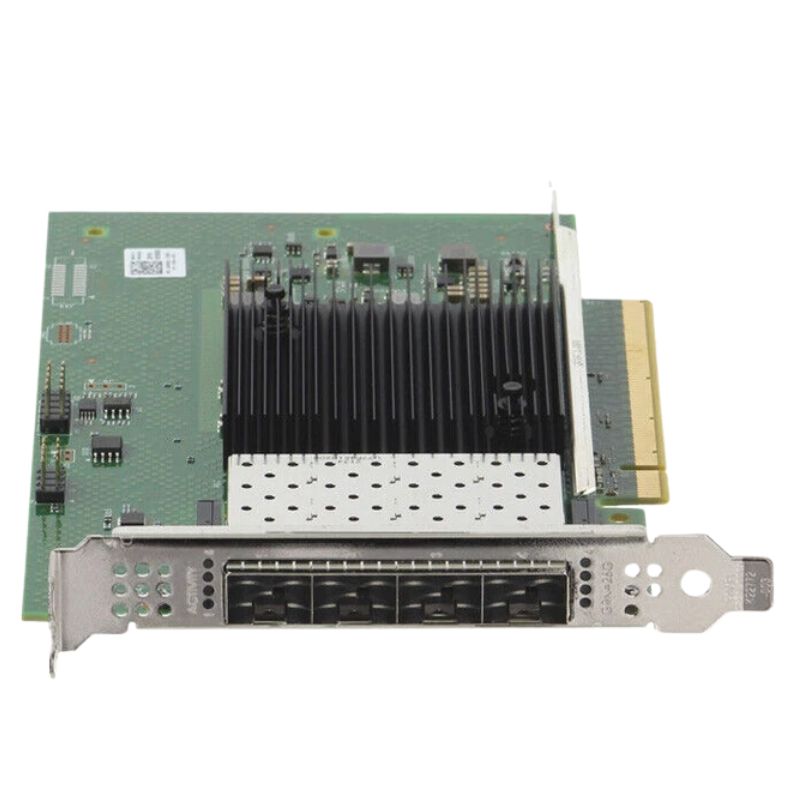


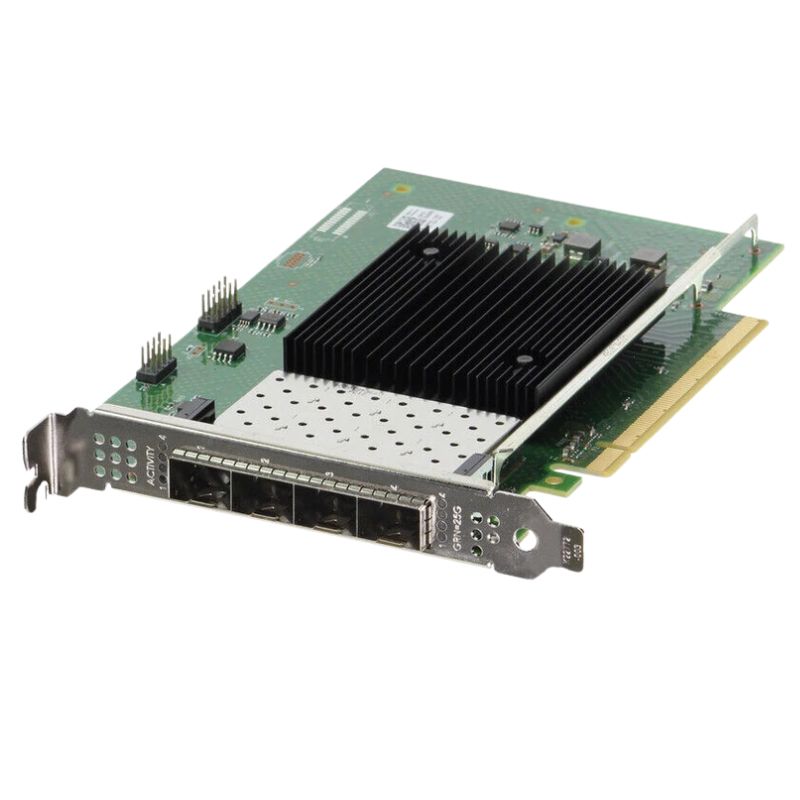
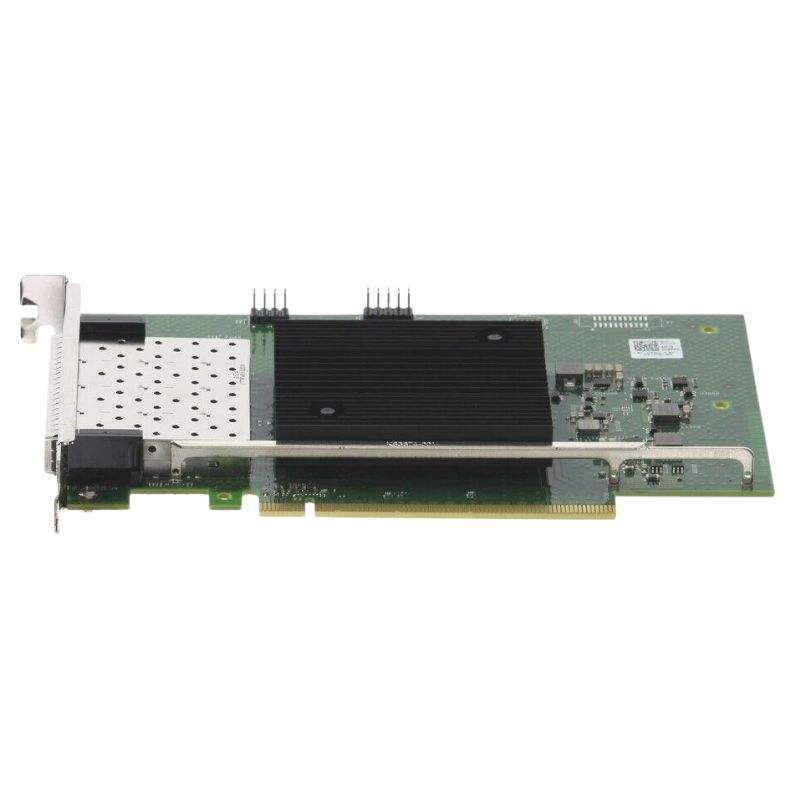
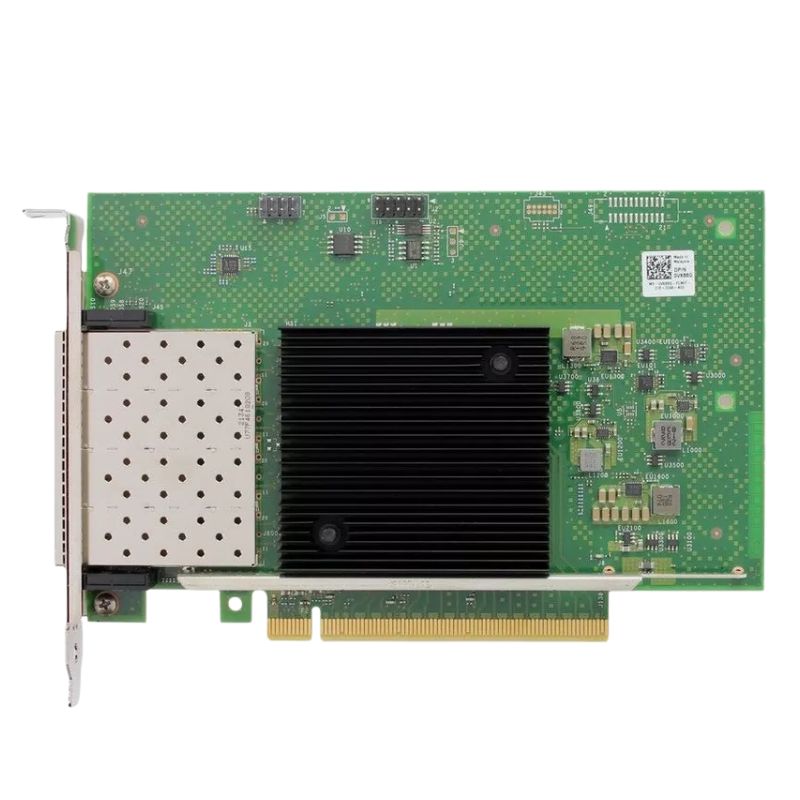
Intel X722DA4FH Quad-Ports 10GBPS SFP+ PCI-E 3.0 x8 & Full Height Server Network Adapter. Factory-Sealed New in Original Box (FSB) with 3 Years Warranty
| SKU/MPN | Warranty | Price | Condition | You save |
|---|---|---|---|---|
| X722DA4FH | 1 Year Warranty | $360.00 | New Sealed in Box (NIB) | You save: $126.00 (26%) |
| X722DA4FH | 1 Year Warranty | $425.00 | Factory-Sealed New in Original Box (FSB) | You save: $148.75 (26%) |
The Intel X722DA4FH is a high‑performance, quad‑port 10 Gbps SFP+ server network adapter designed for demanding data center and enterprise environments. Built on a PCI Express 3.0 x8 interface and supplied in a full‑height form factor, this adapter delivers reliable, low‑latency connectivity for virtualization, cloud workloads, and software‑defined storage platforms. With four 10 GbE ports, it enables flexible link aggregation, high‑bandwidth uplinks, and resilient network designs for modern server infrastructures.
The Intel X722DA4FH Quad-Ports 10GBPS SFP+ PCI-E 3.0 x8 & Full Height Server Network Adapter represents a specialized class of enterprise networking hardware engineered for high density data communication environments where throughput, stability, and scalability are essential. Developed within the advanced silicon networking portfolio of this adapter is designed to serve demanding infrastructures such as virtualization clusters, hyperscale cloud platforms, storage area networks, and high availability compute nodes that require deterministic packet delivery and sustained line-rate performance across multiple channels. The architecture of this adapter is centered on balancing computational efficiency with hardware offloading capabilities. Instead of relying heavily on host CPU cycles, the controller embedded within the network interface card manages packet segmentation, checksum calculations, and flow control at the hardware level. This approach significantly reduces latency variation and increases predictable throughput under mixed workloads. The quad-port configuration ensures parallel data streams can be processed simultaneously, making it suitable for distributed computing systems where workload partitioning is critical. The design philosophy emphasizes modular scalability, allowing administrators to deploy multiple instances across server racks without compromising thermal efficiency or PCI Express lane saturation. The integration of PCI-E 3.0 x8 connectivity ensures that the adapter is capable of leveraging sufficient bandwidth from modern server motherboards while maintaining backward compatibility with optimized lane negotiation protocols.
At the core of this adapter’s performance capability is the PCI Express 3.0 x8 interface, which provides a substantial data transfer pathway between the network controller and the host system. This interface is optimized for high throughput environments where multiple 10 Gigabit Ethernet streams are active simultaneously. The x8 lane configuration offers a balanced trade-off between electrical efficiency and bandwidth availability, ensuring that server workloads can maintain stable network performance without bottlenecks at the bus level.
The implementation of PCI Express Gen 3 signaling allows the adapter to achieve significantly higher per-lane throughput compared to earlier generations. This is particularly beneficial in environments that rely on real-time data replication, distributed database synchronization, or live migration of virtual machines. The architecture ensures that packet processing remains consistent even during peak load conditions, reducing jitter and maintaining deterministic latency behavior across all ports.
Another critical advantage of this interface is its ability to dynamically adjust power states depending on traffic demand. When network utilization decreases, the adapter can enter optimized low power states while still maintaining link readiness. This contributes to improved energy efficiency in large-scale deployments where hundreds or thousands of nodes may be operating simultaneously.
The quad SFP+ interface design of this adapter enables flexible deployment across a wide range of optical and direct attach copper networking environments. SFP+ cages provide modularity, allowing administrators to select transceivers based on required distance, medium type, and network topology. This adaptability is particularly important in enterprise data centers where mixed infrastructure environments often exist.
Short-range deployments can utilize direct attach copper cables for cost-effective intra-rack connectivity, while long-range applications can leverage fiber optic transceivers for inter-rack or inter-building communication. This flexibility reduces infrastructure constraints and allows network architects to design scalable topologies without being locked into a single transmission medium.
The optical subsystem of the adapter is engineered for signal integrity, ensuring minimal packet loss and reduced bit error rates even at sustained full duplex transmission. This stability is crucial for mission critical applications such as financial transaction systems, real-time analytics platforms, and distributed storage synchronization services.
The quad-port configuration of the adapter enables simultaneous multi-channel communication, which is essential in modern distributed computing ecosystems. Each port operates independently, allowing traffic segmentation across different workloads such as storage replication, management traffic, virtual machine migration, and application-level communication.
This separation of traffic pathways improves network efficiency by reducing congestion and eliminating contention between critical data streams. In virtualization environments, for example, one port can be dedicated to hypervisor management while others handle guest operating system traffic or storage backhaul operations. This ensures predictable performance and reduces the risk of packet collision or throughput degradation.
Load balancing mechanisms can be implemented at the software level to distribute traffic evenly across all active ports. This enhances redundancy and ensures continuous availability even in the event of a single port or link failure. The hardware-level isolation of each port further improves fault tolerance and operational resilience.
In modern data center environments, networking hardware must support both high throughput and high availability. This adapter is specifically designed to integrate into rack-mounted server systems where space optimization and thermal efficiency are critical. Its full height form factor ensures mechanical stability and compatibility with enterprise-grade chassis designs.
Deployment scenarios include top-of-rack switching architectures, spine-leaf network topologies, and hybrid cloud interconnect systems. The adapter’s ability to handle sustained high bandwidth traffic makes it suitable for east-west traffic flows within data centers, where internal communication between servers often exceeds external traffic volume.
The hardware is also capable of supporting segmented network zones, allowing administrators to isolate workloads for security and performance optimization. This is particularly important in multi-tenant cloud environments where strict traffic separation is required between different customers or departments.
Virtualized environments place significant demands on network interfaces due to the abstraction layer between physical hardware and virtual machines. This adapter is optimized for such environments through support for hardware acceleration technologies that offload virtualization-specific networking tasks from the host CPU.
Features such as virtualization queue management and direct memory access optimization enable efficient packet routing between virtual instances. This reduces overhead and improves the density of virtual machines that can be supported on a single physical host without degrading network performance.
The adapter also enhances live migration performance by maintaining stable throughput during the transfer of virtual machine states across physical nodes. This ensures minimal downtime and consistent application availability in dynamic cloud environments where workloads are frequently reallocated.
Storage systems such as distributed file systems and network attached storage environments benefit significantly from high bandwidth, low latency networking interfaces. The quad 10Gbps configuration of this adapter enables rapid data replication and synchronization across storage nodes.
In environments utilizing software-defined storage architectures, the adapter ensures that data integrity is maintained during high frequency read and write operations. This is achieved through hardware-assisted offloading of checksum validation and segmentation processes, which reduces CPU load and improves overall system responsiveness.
The consistent throughput provided by the adapter ensures that backup operations, snapshot replication, and disaster recovery processes can be executed within strict time windows without impacting production workloads.
The full height design of this network adapter provides enhanced thermal dissipation capabilities, which is essential in high performance computing environments. The physical structure allows for improved airflow distribution across the adapter surface, reducing thermal accumulation during sustained high load operations.
The mechanical stability of the full height bracket ensures secure installation within enterprise server chassis, minimizing vibration and connector stress. This contributes to long term reliability, especially in data centers where hardware is expected to operate continuously under heavy workloads.
Thermal efficiency is further enhanced by the adapter’s energy optimized silicon design, which dynamically adjusts processing intensity based on traffic demand. This reduces unnecessary heat generation while maintaining performance consistency.
High availability systems require redundancy at every layer of infrastructure, including networking. The quad-port architecture of this adapter inherently supports failover configurations that maintain connectivity even in the event of individual port failure.
Link aggregation techniques can be used to combine multiple ports into a single logical channel, increasing both throughput and resilience. This ensures continuous operation in mission critical environments where downtime is not acceptable.
The hardware design prioritizes stability under continuous load conditions, making it suitable for environments requiring uninterrupted 24/7 operation across distributed systems.
The long term reliability of enterprise networking hardware is essential for maintaining continuous service availability. This adapter is engineered with durability in mind, supporting sustained high throughput operation without degradation in performance over time.
Signal integrity, thermal balance, and electrical stability are all carefully managed within the hardware design to ensure consistent operation in demanding environments. This makes it suitable for deployment in large scale infrastructure where replacement cycles must be minimized.
Its design philosophy focuses on predictable behavior under load, ensuring that network administrators can plan capacity with confidence across complex distributed systems.


 Contact Us
 Information
 Catalog
 Solid State Drives (SSD)
 Network Switches
 Hard Disk Drives
 HBA & Controllers
 PC & Servers
 PC & Server Memory
 CPU & Processors
 Network Routers
 Power Supplies
 Tape Drives & Libraries
 Network Devices
 Computer & Network Cables