(7% discount is applied at checkout)
Cart is empty
Your go-to destination for cutting-edge server products
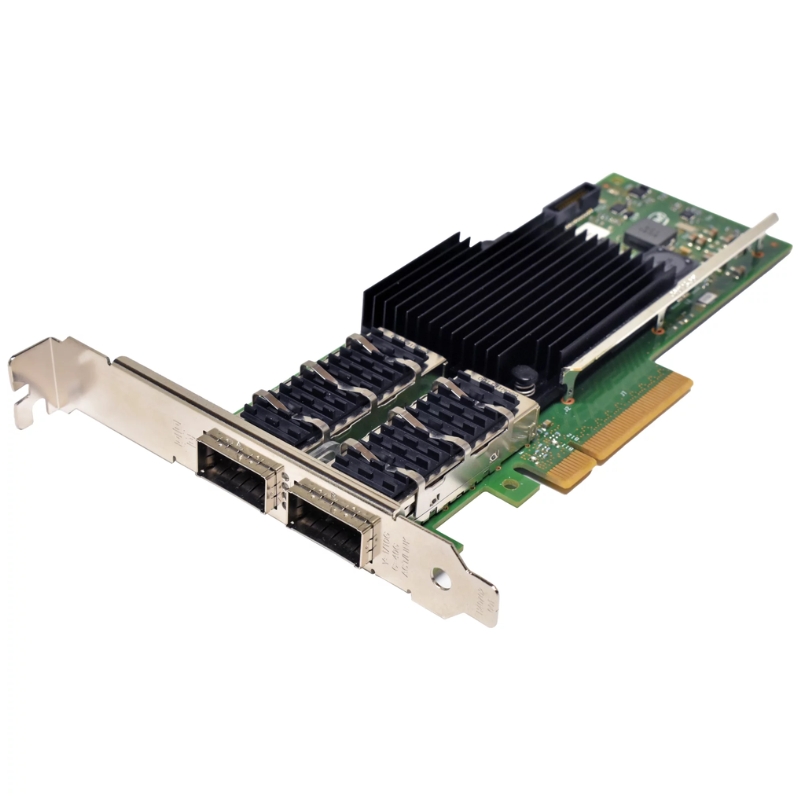


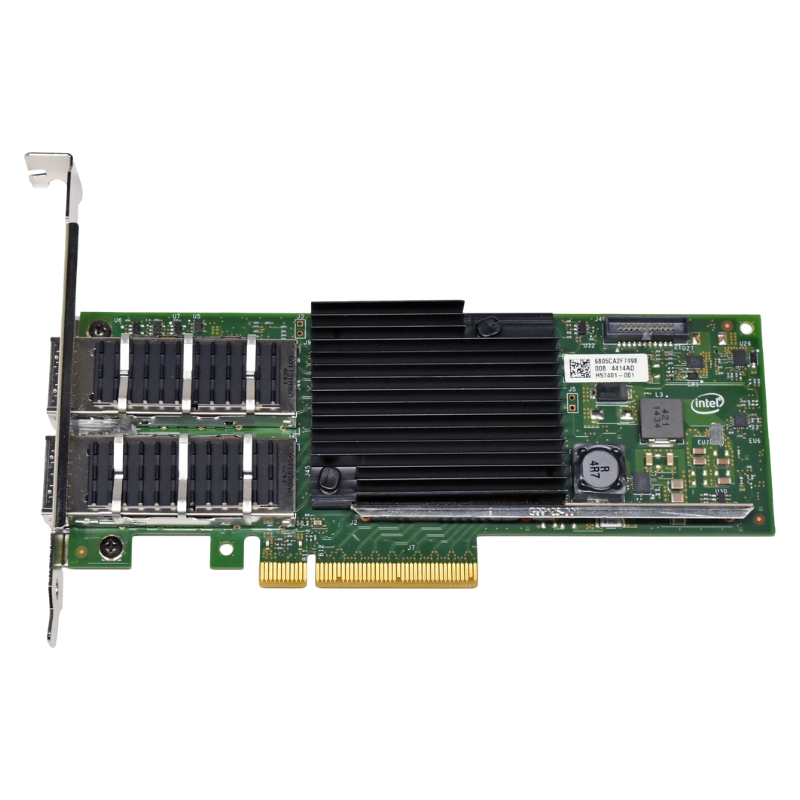
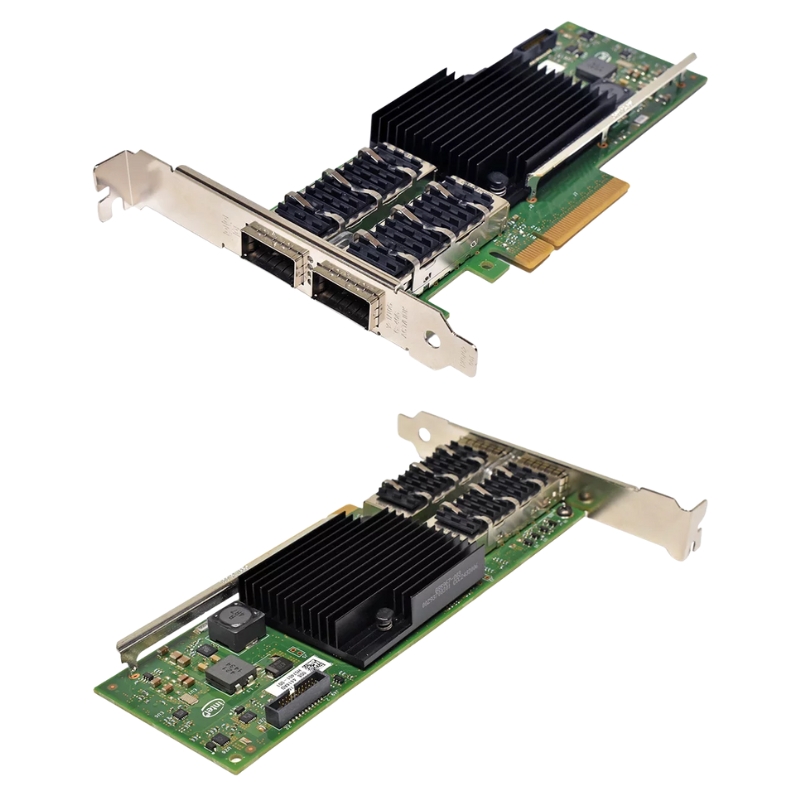
Intel XL710-QDA2 2-Port 40 Gigabit Ethernet QSFP+ PCI-Express Converged Network Adapter Plug-in Card. New Sealed in Box (NIB) with 3 Years Warranty
| SKU/MPN | Warranty | Price | Condition | You save |
|---|---|---|---|---|
| XL710-QDA2 | 1 Year Warranty | $279.00 | Excellent Refurbished | You save: $97.65 (26%) |
| XL710-QDA2 | 1 Year Warranty | $289.00 | New Sealed in Box (NIB) | You save: $101.15 (26%) |
The Intel XL710-QDA2 Dual Port Converged Network Adapter is a high-performance solution engineered for enterprise-grade networking. Featuring dual 40 Gigabit QSFP+ ports, this PCIE 3.0 x8 plug-in card delivers exceptional throughput, advanced virtualization support, and energy-efficient performance for modern data centers.
The Dual Port 40 Gigabit Ethernet QSFP+ PCI-E Converged Network Adapter represents a high-performance networking solution engineered for modern data centers, enterprise cloud infrastructures, and high-throughput computing environments. Designed to deliver ultra-low latency, high bandwidth aggregation, and advanced virtualization capabilities, this converged network adapter (CNA) is widely adopted in server architectures where scalable and reliable 40GbE connectivity is required. Built on Intel’s proven Ethernet controller architecture, the XL710-QDA2 integrates advanced offloading features and hardware acceleration technologies that significantly reduce CPU overhead while improving overall system efficiency.
The Intel XL710-QDA2 is built on a PCI Express 3.0 x8 interface, ensuring maximum data transfer efficiency between the network adapter and the host system. This high-speed interconnect is critical for achieving full 40 Gigabit Ethernet throughput per port, particularly in environments where multiple virtual machines and containerized workloads operate simultaneously. The PCIe architecture minimizes bottlenecks and provides a direct, high-bandwidth pathway to system memory, enabling consistent packet processing performance even under heavy network loads.
The adapter is optimized for server motherboards and rack-mounted systems where PCIe lane allocation and bandwidth management play a crucial role in overall system performance. The design ensures compatibility with enterprise-grade platforms and supports seamless integration into virtualization clusters and storage networking environments.
Equipped with dual QSFP+ interfaces, the XL710-QDA2 supports 40 Gigabit Ethernet per port, enabling aggregated bandwidth of up to 80Gbps in full-duplex mode. This dual-port architecture provides flexibility for redundant network paths, load balancing configurations, and high-availability deployments. The QSFP+ standard is widely used in high-density data center environments due to its ability to support breakout cabling options and compatibility with various optical and direct attach copper solutions.
The dual-port configuration also enhances scalability for enterprise workloads, allowing administrators to segment traffic between storage, virtualization, and application layers without requiring additional hardware expansion.
At the core of the adapter lies the Intel XL710 Ethernet controller ASIC, a powerful networking processor designed to handle high-throughput packet processing with minimal latency. The ASIC architecture is optimized for parallel processing, enabling simultaneous handling of multiple queues and traffic streams. This design is essential for modern workloads that rely heavily on virtualization, cloud computing, and software-defined networking (SDN).
The controller supports advanced packet classification, intelligent traffic management, and hardware-based acceleration of networking protocols, making it a key component in enterprise-grade networking infrastructures.
The XL710-QDA2 delivers consistent 40 Gigabit per second performance per port, enabling it to support high-bandwidth applications such as large-scale data analytics, distributed computing, and high-frequency trading systems. Its architecture ensures low packet loss and stable throughput even under sustained traffic loads, making it suitable for mission-critical workloads.
By leveraging optimized hardware queues and intelligent traffic scheduling, the adapter maintains predictable latency, which is essential for latency-sensitive applications such as real-time financial systems and cloud-native microservices.
One of the most significant advantages of the XL710-QDA2 is its extensive support for hardware offloading capabilities. These include TCP segmentation offload, large receive offload, checksum offloading, and packet filtering acceleration. By shifting these computational tasks away from the CPU to the network adapter, system resources are freed for application processing, improving overall server efficiency.
This offloading capability is particularly beneficial in virtualized environments where multiple workloads share the same physical infrastructure, ensuring that network performance does not degrade under heavy virtualization density.
The XL710-QDA2 supports Single Root I/O Virtualization (SR-IOV), a critical technology for modern cloud and virtualization environments. SR-IOV enables a single physical network adapter to present multiple virtual functions, each of which can be assigned directly to virtual machines. This reduces hypervisor overhead and improves network performance for virtualized workloads.
In large-scale cloud deployments, SR-IOV ensures that virtual machines can achieve near-native network performance, reducing latency and improving throughput consistency across multi-tenant environments.
The adapter is optimized for compatibility with virtual networking technologies such as VXLAN, NVGRE, and GENEVE encapsulation. These overlays are essential for modern software-defined data centers, where network abstraction and segmentation are required for scalability and security. The XL710-QDA2 processes encapsulated traffic efficiently using hardware acceleration, minimizing CPU involvement and improving packet processing efficiency.
The Intel XL710-QDA2 supports iWARP-based Remote Direct Memory Access (RDMA), allowing direct memory-to-memory communication between servers without involving the CPU in data transfer operations. This significantly reduces latency and increases throughput in distributed computing environments.
RDMA capabilities are particularly valuable in storage networks, high-performance computing clusters, and real-time analytics systems where microsecond-level latency improvements can significantly impact performance outcomes.
By minimizing protocol overhead and enabling direct hardware-based packet processing, the adapter ensures consistent ultra-low latency communication across network nodes. This is essential for workloads that require deterministic performance, such as financial trading platforms and real-time data replication systems.
The XL710-QDA2 is widely deployed in private and public cloud environments where scalable networking performance is critical. Its ability to handle high-density virtual machine environments makes it ideal for Infrastructure-as-a-Service (IaaS) and Platform-as-a-Service (PaaS) architectures.
In HPC environments, the adapter’s high throughput and low latency characteristics ensure efficient node-to-node communication. This is essential for scientific simulations, machine learning model training, and large-scale data processing workloads that require synchronized compute clusters.
The XL710-QDA2 is also widely used in storage area networks where fast and reliable data transfer between storage arrays and compute nodes is required. Its RDMA support and high bandwidth capabilities make it suitable for NVMe over Fabrics and distributed storage architectures.
The adapter is designed for broad compatibility across major enterprise operating systems including Linux distributions, Windows Server environments, and virtualization platforms such as VMware ESXi. This cross-platform compatibility ensures seamless deployment in heterogeneous IT infrastructures.
Driver support and firmware optimization provided by Intel ensure long-term stability and performance consistency across system updates and hardware upgrades.
Security is enhanced through hardware-based packet filtering and segmentation, reducing exposure to CPU-level vulnerabilities. The adapter supports secure offloading of network traffic processing, ensuring data integrity and reducing attack surfaces within the network stack.
In multi-tenant environments, the XL710-QDA2 provides robust traffic isolation mechanisms that ensure secure separation between workloads. This is essential for cloud providers and enterprise environments where data security and compliance are critical.
Despite its high-performance capabilities, the XL710-QDA2 is engineered for power efficiency. Intelligent power management features dynamically adjust energy consumption based on traffic load, reducing operational costs in large-scale deployments.
Thermal design optimization ensures stable performance under continuous high-load conditions. The adapter is built to operate within standard server cooling systems, maintaining consistent temperatures even in dense rack configurations.
The adapter supports multiple hardware queues that enable efficient distribution of network traffic across CPU cores. This improves parallel processing efficiency and ensures balanced workload distribution in multi-threaded environments.
Advanced packet steering mechanisms direct network traffic intelligently based on workload requirements. This ensures that high-priority traffic receives optimal processing resources while maintaining fairness across network streams.
When deploying the XL710-QDA2, careful consideration must be given to PCIe lane allocation and server architecture design. Ensuring sufficient bandwidth allocation is critical to achieving full 40GbE performance per port.
The adapter is best utilized in high-speed backbone networks where aggregation, redundancy, and scalability are required. Proper network design ensures that the full capabilities of the adapter are leveraged effectively across enterprise environments.


 Contact Us
 Information
 Catalog
 Solid State Drives (SSD)
 Network Switches
 Hard Disk Drives
 HBA & Controllers
 PC & Servers
 PC & Server Memory
 CPU & Processors
 Network Routers
 Power Supplies
 Tape Drives & Libraries
 Network Devices
 Computer & Network Cables