(7% discount is applied at checkout)
Cart is empty
Your go-to destination for cutting-edge server products
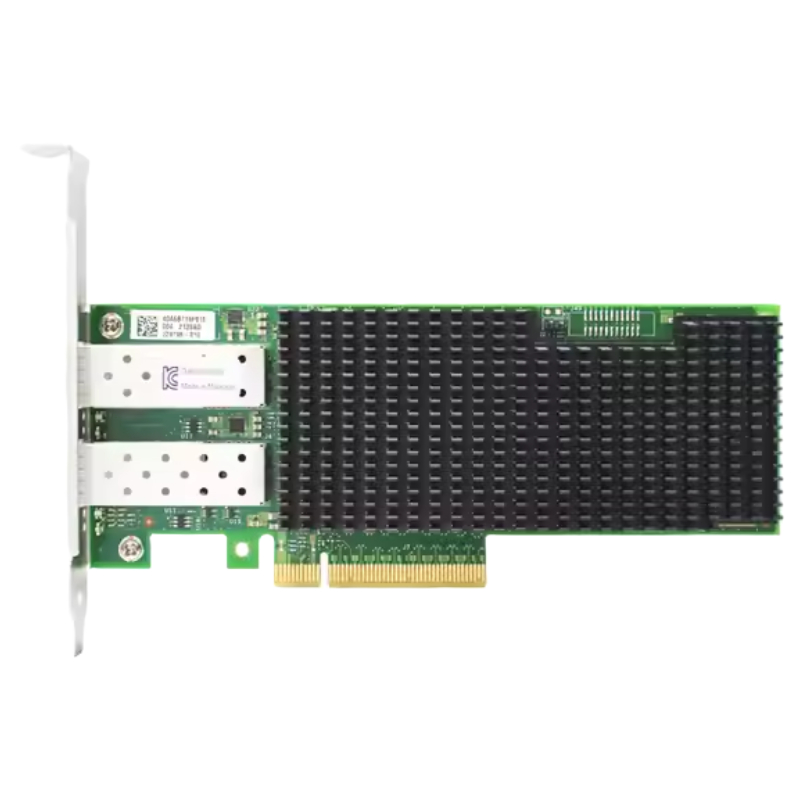


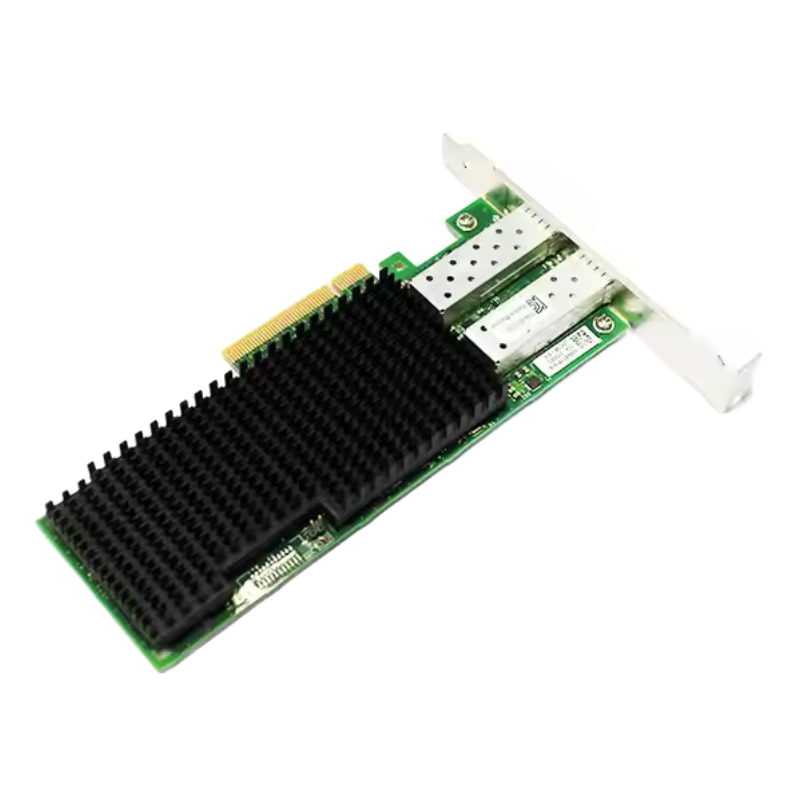
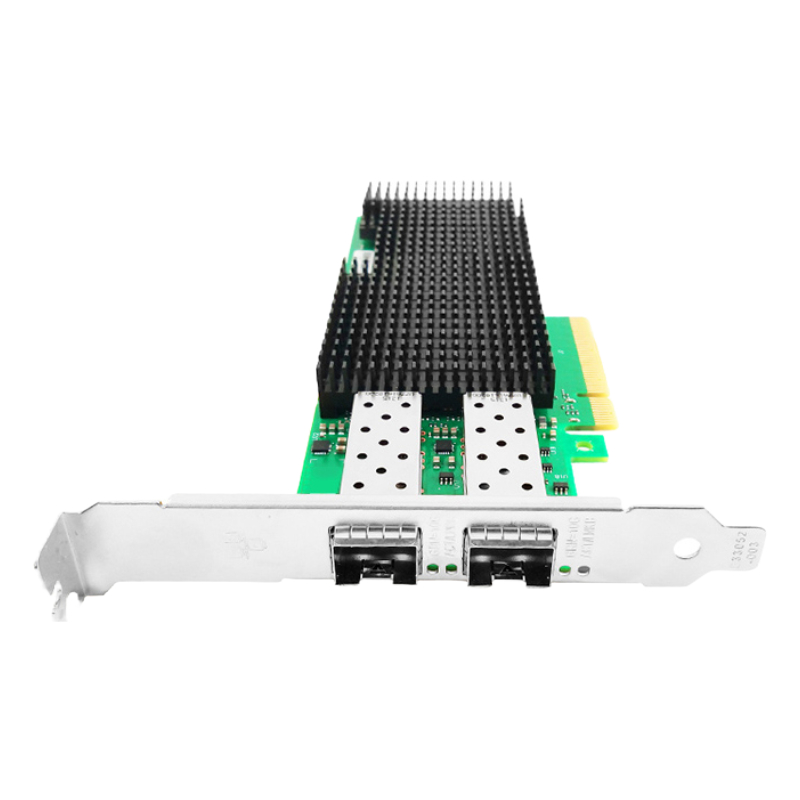
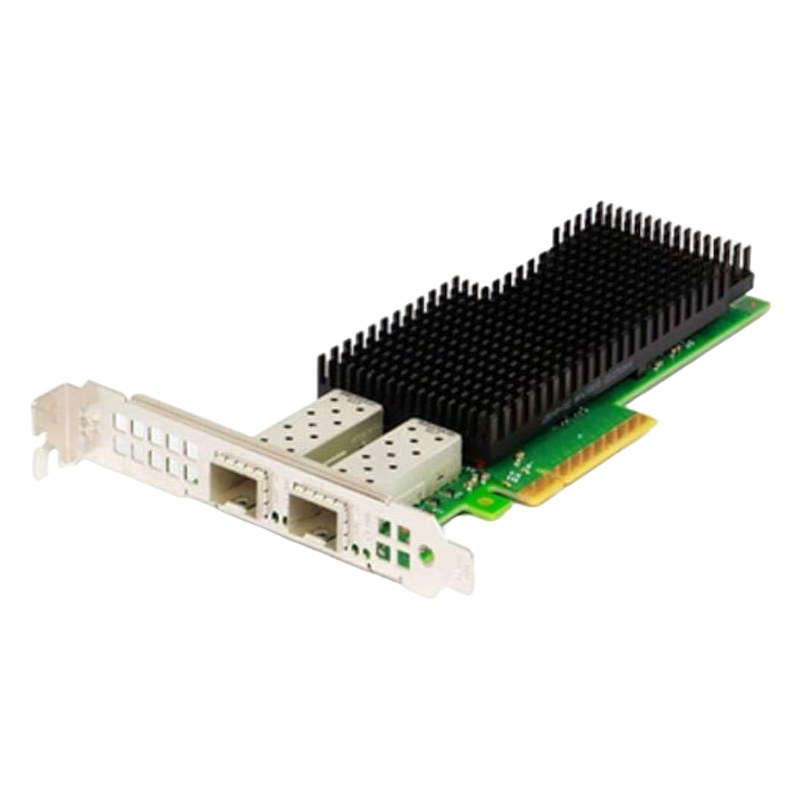
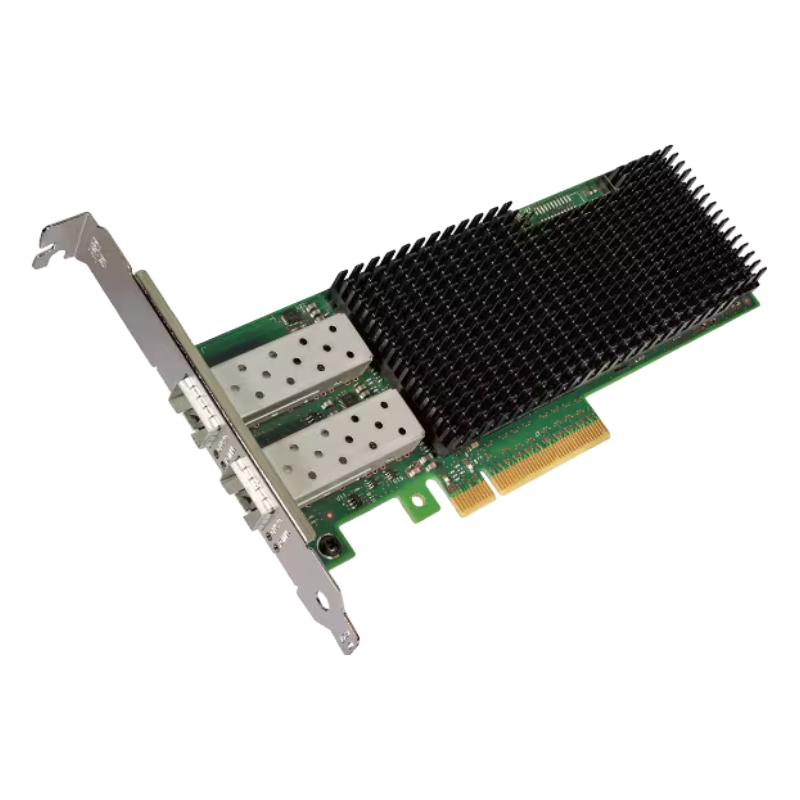
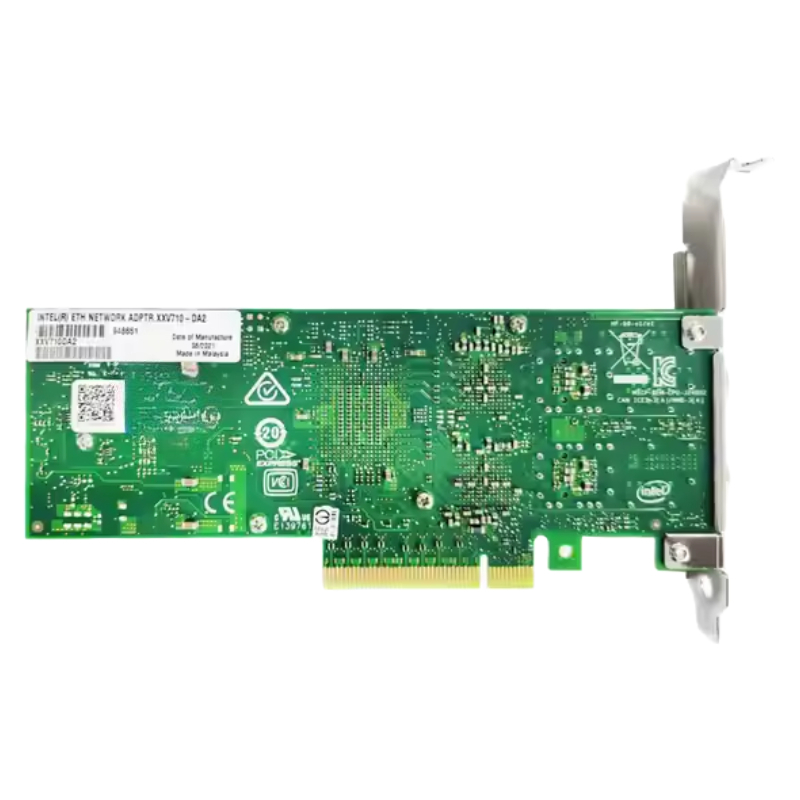
Intel XXV710DA2 2-Port 25Gbps SFP28 PCI-E Low Profile Gigabit Ethernet Network Adapters. Excellent Refurbished with 1 Year Replacement Warranty - Dell Version
| SKU/MPN | Warranty | Price | Condition | You save |
|---|---|---|---|---|
| XXV710DA2 | 1 Year Warranty | $84.00 | Excellent Refurbished | You save: $29.40 (26%) |
| XXV710DA2 | 1 Year Warranty | $115.00 | New Sealed in Box (NIB) | You save: $40.25 (26%) |
The Intel XXV710DA2 is a high-performance dual-port 25Gbps SFP28 PCI-E low profile Ethernet card designed for advanced networking environments. It delivers reliable wired connectivity and supports multiple protocols for enterprise-grade applications.
The category of Intel XXV710DA2 Dual Port 25 Gigabit SFP28 Network Adapters represents a high-performance class of server networking hardware designed for modern data centers, enterprise virtualization environments, cloud infrastructures, and high-throughput computing systems. Built on advanced Ethernet controller architecture from Intel, this adapter family is engineered to deliver ultra-low latency, high bandwidth efficiency, and exceptional scalability across demanding workloads where traditional 1GbE and 10GbE solutions become performance bottlenecks.
This category is primarily associated with dual-port 25GbE connectivity through SFP28 optical or direct-attach copper modules, enabling flexible deployment in diverse network topologies. The architecture supports next-generation workloads such as software-defined networking, hyper-converged infrastructure, distributed storage systems, and large-scale virtualization clusters.
The Intel XXV710DA2 adapter is built on a highly optimized Ethernet controller architecture designed to handle high packet-per-second workloads efficiently. The packet processing pipeline integrates multiple offload engines that reduce CPU utilization while maintaining deterministic throughput performance. The dual-port configuration enables parallel traffic streams, improving redundancy and bandwidth aggregation in enterprise deployments.
Hardware acceleration in this category is designed to offload critical networking functions from the host CPU. This includes checksum offload, segmentation offload, and advanced flow steering. By shifting these operations to the adapter hardware, system resources are preserved for application-level workloads, improving overall server efficiency in compute-intensive environments.
The adapter utilizes a high-bandwidth PCI Express interface that ensures sufficient upstream data throughput between the network card and the server motherboard. This allows the dual 25GbE ports to operate without bottlenecks, supporting sustained line-rate performance under heavy traffic conditions such as database replication or distributed storage synchronization.
The SFP28 interface is a critical component of this adapter category, enabling modular connectivity options. It supports both optical transceivers for long-distance data transmission and direct attach copper cables for short-range, low-latency server-to-switch connections. This flexibility makes the adapter suitable for both top-of-rack and end-of-row network architectures.
Signal integrity is maintained through advanced equalization and error correction mechanisms embedded within the physical layer design. This ensures minimal packet loss and consistent throughput even in electrically noisy data center environments. The design supports stable 25Gbps signaling per port, allowing aggregated throughput of 50Gbps in dual-port configurations.
The adapter category is engineered to support interoperability with existing 10GbE and 1GbE infrastructure through compatible switch configurations and transceiver modules. This allows gradual migration to higher-speed networks without requiring a complete infrastructure overhaul.
The Intel XXV710DA2 category is optimized for environments where latency sensitivity and throughput consistency are critical. Financial trading systems, real-time analytics platforms, and large-scale cloud applications benefit significantly from reduced packet processing delays and predictable network performance.
Multi-queue architecture enables efficient distribution of network traffic across multiple CPU cores. This parallel processing capability reduces bottlenecks in high-concurrency environments, allowing servers to handle thousands of simultaneous connections without degradation in performance.
Interrupt moderation techniques are implemented to balance latency and CPU utilization. By aggregating network interrupts, the adapter reduces overhead on the host system while maintaining responsiveness for latency-sensitive applications.
Single Root I/O Virtualization (SR-IOV) is a core feature in this adapter category, enabling a single physical network interface to be partitioned into multiple virtual functions. Each virtual function can be assigned directly to virtual machines, improving network isolation and reducing hypervisor overhead.
The adapter integrates seamlessly with major virtualization platforms, enabling efficient resource allocation in cloud environments. This ensures that virtual machines achieve near-native network performance, which is essential for multi-tenant cloud architectures.
High VM density scenarios benefit from the adapter’s ability to distribute network traffic evenly across virtual functions. This prevents performance contention and ensures predictable service delivery in shared infrastructure environments.
Remote Direct Memory Access capabilities enhance data transfer efficiency by allowing direct memory-to-memory communication between servers without involving CPU intervention. This reduces latency significantly and improves throughput in distributed computing systems.
In high-performance computing clusters, RDMA-enabled networking reduces synchronization delays between compute nodes. This results in faster parallel processing and improved efficiency in scientific simulations, machine learning workloads, and large-scale data analytics.
The adapter category supports advanced storage networking protocols that enable remote storage access with near-local performance characteristics. This is particularly useful in NVMe over Fabrics deployments where low latency is essential for maintaining storage performance consistency.
In hyperscale environments, the dual-port 25GbE capability provides the necessary bandwidth for east-west traffic between servers. This is essential for distributed applications that rely on rapid data exchange between multiple nodes.
Virtual desktop environments benefit from the adapter’s low latency and high throughput, ensuring smooth user experiences even under heavy concurrent session loads. Graphics rendering, application streaming, and real-time collaboration tools operate more efficiently under this network architecture.
Media streaming platforms leverage the high bandwidth capabilities to deliver high-definition and ultra-high-definition content to global audiences. The adapter ensures consistent throughput during peak traffic conditions.
Security is reinforced through advanced traffic segmentation capabilities that isolate network flows between applications and tenants. This reduces the risk of cross-traffic interference and enhances overall system security posture.
Hardware-level filtering mechanisms allow the adapter to enforce security policies without burdening the host CPU. This improves both performance and security enforcement efficiency in enterprise environments.
Firmware-level protections ensure that only authenticated and verified code runs on the adapter, preventing unauthorized modifications and reducing the risk of low-level network attacks.
This adapter category is designed for broad compatibility across enterprise server platforms, including rack-mounted servers, blade systems, and high-density compute nodes. It integrates with standard PCIe slots and supports a wide range of operating systems and virtualization stacks.
The driver ecosystem supports major enterprise operating systems, ensuring seamless deployment in heterogeneous IT environments. This includes optimized drivers for performance tuning and advanced feature activation.
Interoperability with 25GbE capable switches ensures smooth integration into existing network topologies. This allows enterprises to scale bandwidth without redesigning entire network infrastructures.
Fine-tuning queue depth and buffer allocation parameters can significantly enhance throughput performance in high-load scenarios. Proper configuration ensures balanced traffic distribution and minimizes packet drops under congestion.
Assigning network processing tasks to specific CPU cores improves cache utilization and reduces context switching overhead. This enhances overall system efficiency in multi-core server environments.
Support for jumbo frames allows larger packet sizes, reducing overhead and improving efficiency for bulk data transfers. This is particularly beneficial in storage replication and backup systems.
The dual-port architecture enables seamless horizontal scaling across distributed systems. Multiple adapters can be deployed across server clusters to increase aggregate network capacity without architectural redesign.
Advanced load balancing ensures that network traffic is evenly distributed across available ports and interfaces, reducing congestion and improving application responsiveness.
This category supports gradual infrastructure upgrades, allowing organizations to transition from lower-speed networks to 25GbE without disruptive changes to application architecture.
Power-efficient design principles are integrated into the adapter to reduce energy consumption while maintaining high performance levels. This is critical in large-scale deployments where energy efficiency directly impacts operational costs.
Dynamic power scaling adjusts energy usage based on traffic load, ensuring optimal power consumption during both peak and idle conditions.
Advanced thermal management ensures stable operation under sustained high-load conditions. Efficient heat dissipation contributes to long-term hardware reliability in dense server environments.


 Contact Us
 Information
 Catalog
 Solid State Drives (SSD)
 Network Switches
 Hard Disk Drives
 HBA & Controllers
 PC & Servers
 PC & Server Memory
 CPU & Processors
 Network Routers
 Power Supplies
 Tape Drives & Libraries
 Network Devices
 Computer & Network Cables