(7% discount is applied at checkout)
Cart is empty
Your go-to destination for cutting-edge server products
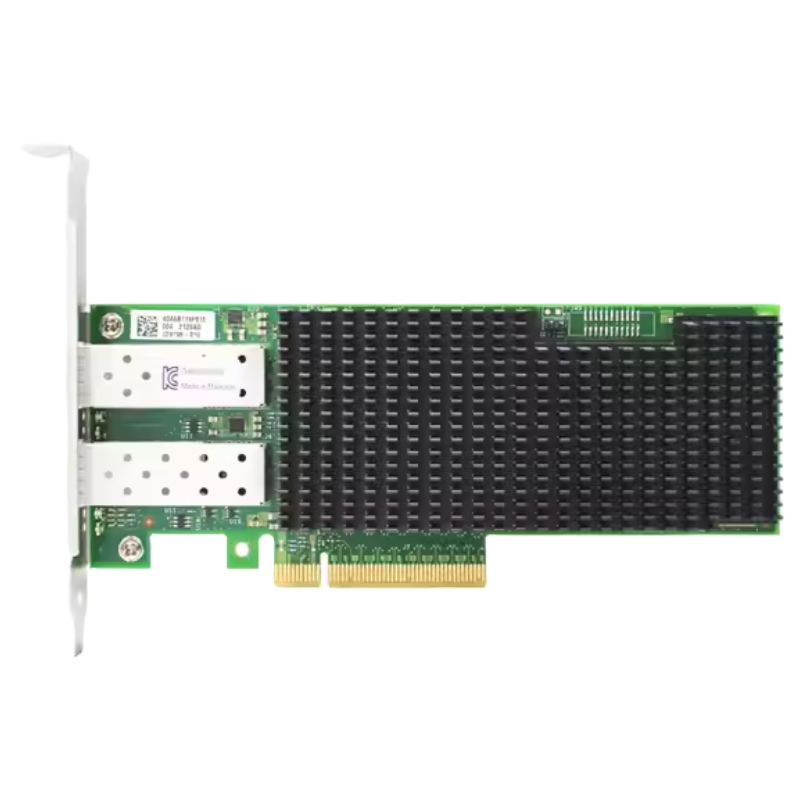


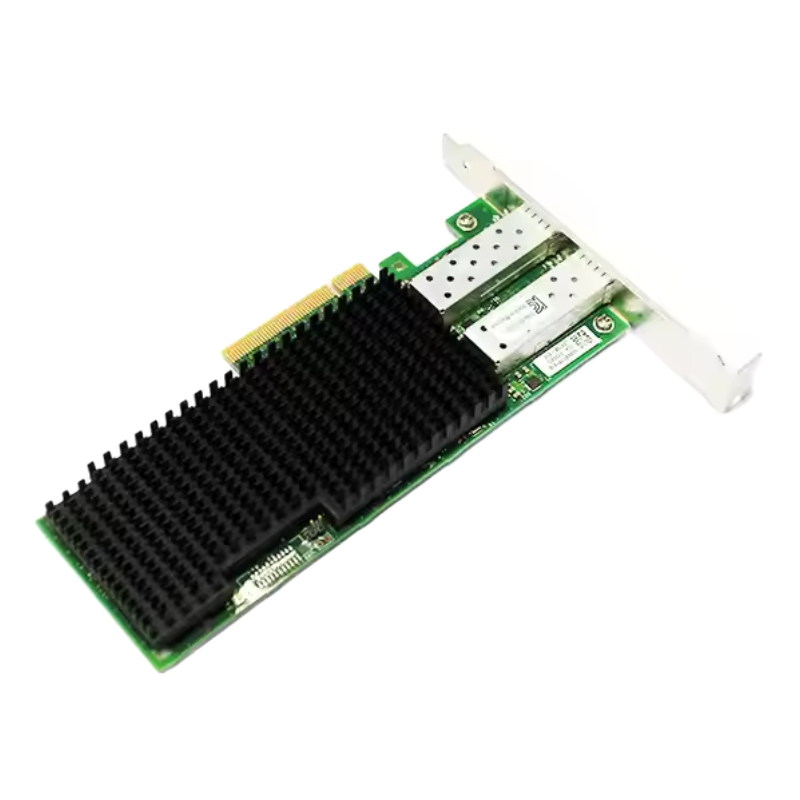
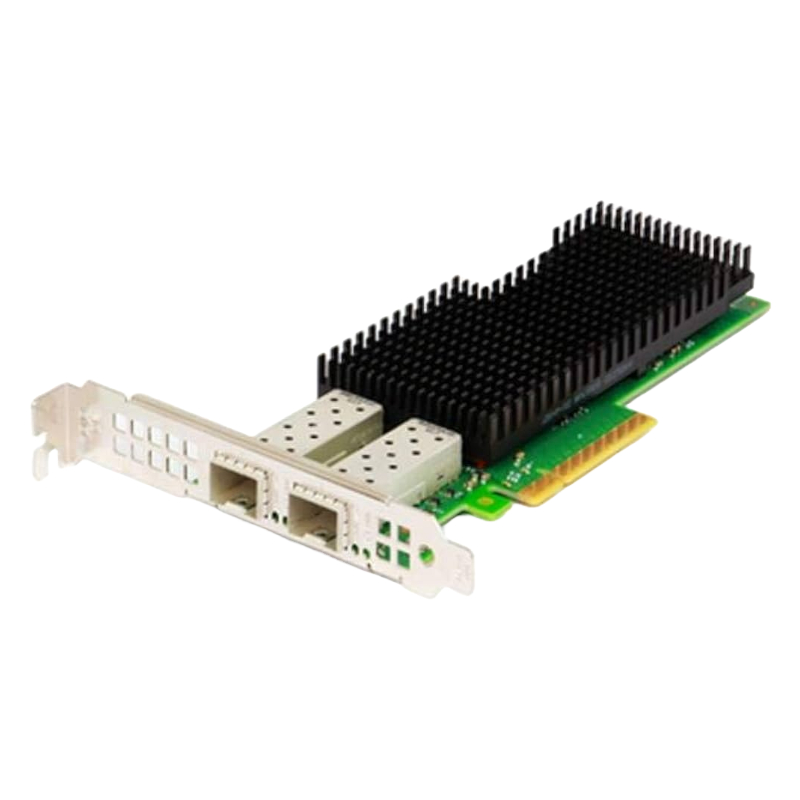
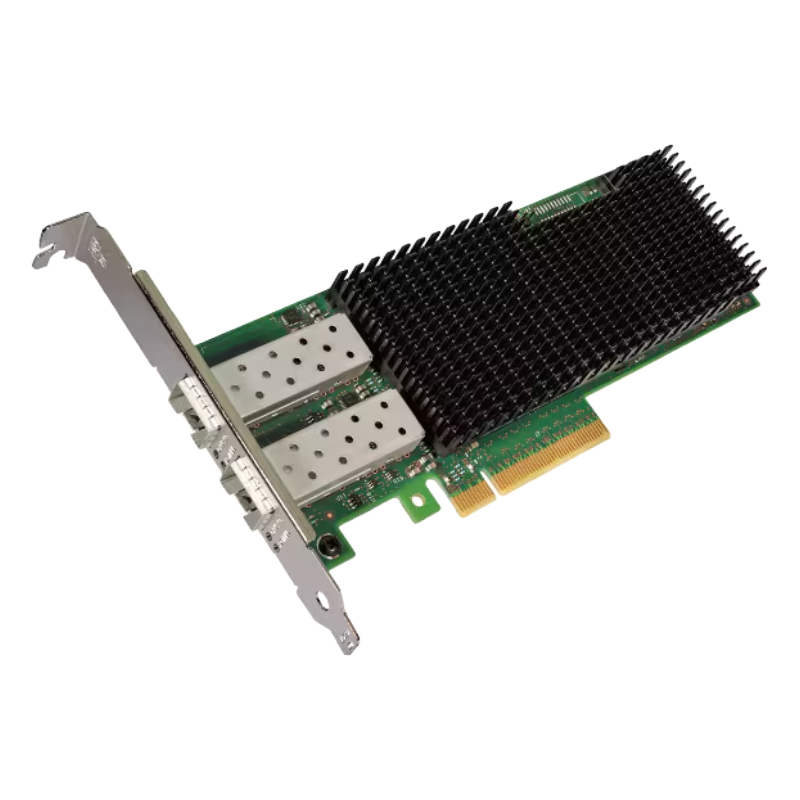
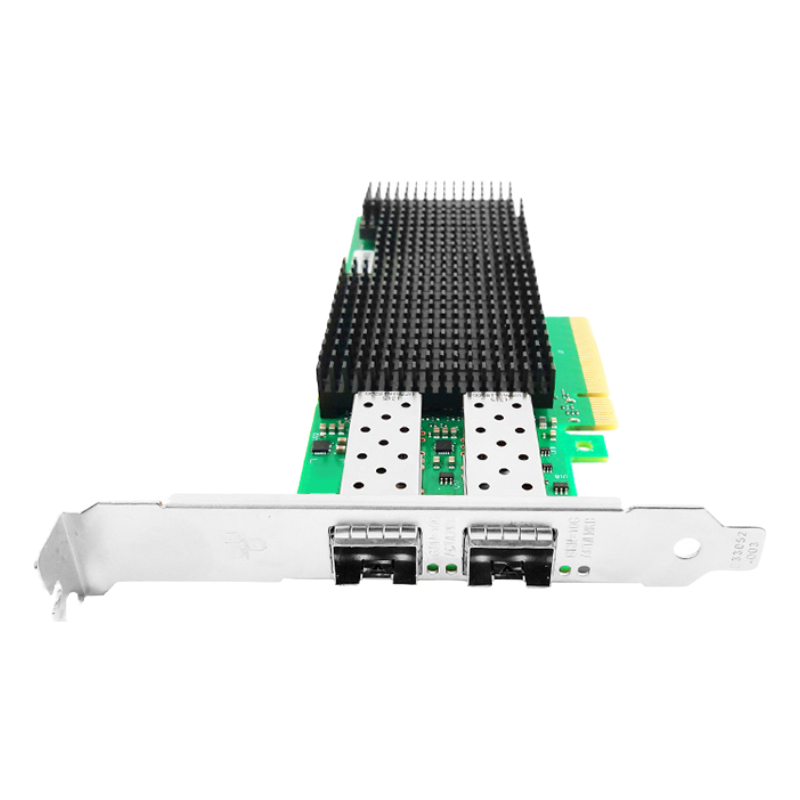
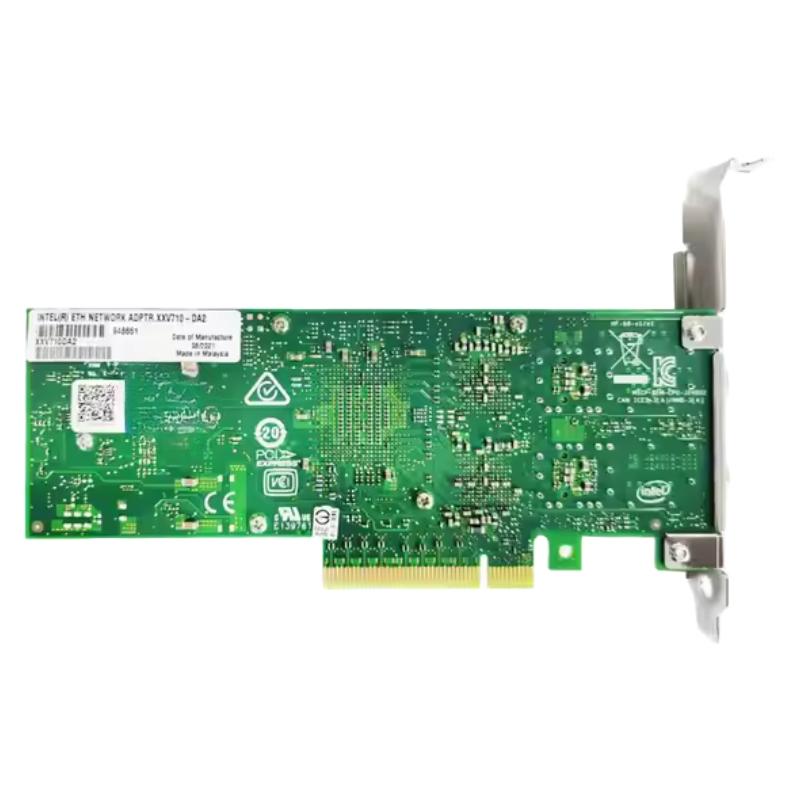
Intel XXV710DA2 Dual Port 25 Gigabit Ethernet SFP28 PCI-E Network Adapters. New Sealed in Box (NIB) with 3 Years Warranty
| SKU/MPN | Warranty | Price | Condition | You save |
|---|---|---|---|---|
| XXV710DA2 | 1 Year Warranty | $84.00 | Excellent Refurbished | You save: $29.40 (26%) |
| XXV710DA2 | 1 Year Warranty | $115.00 | New Sealed in Box (NIB) | You save: $40.25 (26%) |
The Intel XXV710DA2 is a high-performance dual-port 25Gbps SFP28 PCI-E low profile Ethernet card designed for advanced networking environments. It delivers reliable wired connectivity and supports multiple protocols for enterprise-grade applications.
The Intel XXV710DA2 Dual Port 25 Gigabit SFP28 Network Adapter represents a high-performance networking solution designed for modern data-intensive environments where scalability, ultra-low latency, and consistent throughput are essential. Built on advanced Ethernet architecture from Intel, this adapter belongs to the 25GbE generation of network interface cards (NICs), enabling organizations to transition smoothly from 10GbE infrastructures to higher-speed fabric environments without compromising stability or compatibility.
As data centers evolve toward virtualization, cloud computing, artificial intelligence workloads, and high-performance storage networking, adapters such as the Intel XXV710DA2 play a crucial role in eliminating network bottlenecks. Its dual-port configuration allows simultaneous handling of multiple high-bandwidth connections, making it a preferred choice for enterprise servers, storage systems, and high-density compute clusters.
At the core of the Intel XXV710DA2 lies a next-generation Ethernet controller architecture engineered for 25 Gigabit per second performance per port. This architecture is optimized to support modern workloads that require consistent packet delivery and deterministic latency behavior. It ensures that both small packet processing and large data stream transmission are handled efficiently, reducing CPU overhead and improving system responsiveness.
The adapter features a dual-port SFP28 interface, enabling two independent 25GbE connections on a single PCI Express adapter. This design provides flexibility in network topology planning, allowing administrators to configure redundancy, load balancing, or separate traffic segmentation between storage and application layers. The SFP28 form factor also ensures compatibility with a wide range of optical transceivers and direct attach copper cables.
The PCI Express interface used in the Intel XXV710DA2 is optimized for high throughput and low latency communication between the network adapter and host system. This ensures that even under heavy traffic conditions, data transfer remains stable and efficient. The PCIe architecture allows seamless scaling within enterprise servers, supporting virtualization workloads and high-performance computing environments without introducing significant bottlenecks.
One of the defining characteristics of the Intel XXV710DA2 Dual Port 25 Gigabit SFP28 Network Adapter is its ability to handle extremely high bandwidth workloads. With 25GbE per port, the adapter is capable of supporting aggregated throughput suitable for data analytics, cloud-native applications, distributed storage systems, and large-scale virtualization platforms. This level of performance ensures that network congestion is minimized even during peak usage periods.
Latency is a critical factor in modern data centers, especially for financial trading systems, real-time analytics, and distributed database environments. The Intel XXV710DA2 is designed to reduce packet processing delays by leveraging hardware acceleration features and optimized queue management techniques. These enhancements allow faster packet forwarding and reduced jitter across network paths.
The adapter incorporates intelligent packet processing mechanisms that reduce CPU intervention. This allows the host processor to focus on application-level tasks while the NIC handles segmentation, checksum offloading, and interrupt moderation. As a result, system performance improves significantly under heavy network load conditions.
In virtualized environments, network adapters must support multiple virtual machines simultaneously without degradation in performance. The Intel XXV710DA2 is designed with virtualization awareness, enabling efficient distribution of network resources across multiple virtual workloads. This ensures consistent connectivity for each VM regardless of overall system demand.
Single Root I/O Virtualization (SR-IOV) support allows the adapter to create multiple virtual functions, each of which can be assigned directly to virtual machines. This reduces hypervisor overhead and enhances network performance by allowing near-native access to the hardware. This capability is particularly beneficial in cloud data centers where multi-tenant isolation and performance consistency are required.
Cloud service providers rely heavily on network adapters like the Intel XXV710DA2 to maintain scalable infrastructure. Its ability to handle multiple tenants, high traffic volumes, and dynamic workload changes makes it a reliable component in public, private, and hybrid cloud environments.
Modern storage systems such as NVMe over Fabrics (NVMe-oF) require extremely high-speed and low-latency network connections. The Intel XXV710DA2 is designed to support such workloads by ensuring consistent throughput and minimal packet loss during high-volume storage operations. This makes it suitable for distributed storage clusters and software-defined storage architectures.
The adapter integrates seamlessly into modern spine-leaf data center architectures, where high-bandwidth east-west traffic dominates. Its 25GbE capability ensures that server-to-server communication remains fast and efficient, reducing congestion across the network fabric and improving overall system responsiveness.
Large-scale enterprise deployments benefit from the scalability of the Intel XXV710DA2. As workloads grow, additional servers equipped with this adapter can be added to the network without requiring significant infrastructure redesign. This ensures long-term investment protection and operational flexibility.
Despite its high-performance capabilities, the Intel XXV710DA2 is engineered for efficient power consumption. The adapter uses advanced power management technologies that dynamically adjust energy usage based on workload intensity. This ensures that energy efficiency is maintained even under high traffic conditions.
In densely packed server environments, heat generation can become a limiting factor. The adapter is designed with thermal optimization in mind, allowing it to operate reliably within standard enterprise server cooling systems. Its efficient heat dissipation characteristics ensure consistent performance without thermal throttling.
The combination of energy efficiency and thermal stability contributes to long-term operational reliability. Enterprises deploying the Intel XXV710DA2 can expect reduced maintenance requirements and stable performance over extended operational cycles.
Security is an essential component of modern networking infrastructure. The Intel XXV710DA2 includes hardware-based security acceleration features that help protect data integrity during transmission. These features reduce CPU overhead while ensuring encrypted traffic is processed efficiently.
The adapter supports secure offloading mechanisms that handle encryption and decryption tasks at the hardware level. This reduces the burden on system processors and improves overall throughput for secure workloads such as VPNs, encrypted storage traffic, and secure cloud communication.
Through advanced error correction and packet validation techniques, the Intel XXV710DA2 ensures that data integrity is maintained throughout transmission. This makes it suitable for mission-critical applications where data accuracy is non-negotiable.
In high-performance computing environments, the Intel XXV710DA2 provides the necessary bandwidth to support distributed computation workloads. Scientific simulations, financial modeling, and AI training clusters benefit from its low-latency and high-throughput capabilities.
Cloud providers deploy this adapter in server nodes to ensure consistent network performance across multi-tenant environments. Its ability to support virtualization and workload isolation makes it an ideal component in cloud infrastructure design.
Storage systems requiring fast and reliable data transfer rely on 25GbE connectivity to reduce bottlenecks. The Intel XXV710DA2 ensures smooth operation of backup systems, distributed file storage, and real-time data replication environments.
Artificial intelligence and machine learning systems require rapid data movement between compute nodes and storage arrays. The adapter’s high throughput and low latency characteristics make it a strong choice for training large-scale models and processing massive datasets.
The Intel XXV710DA2 is compatible with a wide range of enterprise server platforms. It integrates seamlessly into rack-mounted servers, blade systems, and high-density compute nodes, ensuring broad deployment flexibility across different infrastructure designs.
Comprehensive driver support ensures compatibility with major operating systems used in enterprise environments. This allows system administrators to deploy the adapter across heterogeneous infrastructures without encountering compatibility challenges.
The adapter is designed for simplified deployment, allowing IT teams to integrate it into existing networks with minimal configuration overhead. Management tools and monitoring capabilities further enhance visibility into network performance and operational health.
As organizations transition from legacy 10GbE systems, the Intel XXV710DA2 provides a natural upgrade path to 25GbE infrastructure. This transition enables higher throughput without requiring a complete redesign of existing network architecture.
Emerging technologies such as edge computing, IoT data aggregation, and real-time analytics demand scalable network solutions. The adapter’s architecture ensures readiness for these evolving workloads, making it a future-proof investment for enterprise IT infrastructure.
By supporting modern networking standards and scalable performance requirements, the Intel XXV710DA2 plays a key role in the evolution of next-generation data centers. Its design ensures compatibility with both current and future networking demands.
As part of strategic IT infrastructure planning, this adapter contributes to overall system efficiency, reliability, and scalability. Its integration into enterprise environments supports long-term digital transformation initiatives and high-performance computing growth strategies.


 Contact Us
 Information
 Catalog
 Solid State Drives (SSD)
 Network Switches
 Hard Disk Drives
 HBA & Controllers
 PC & Servers
 PC & Server Memory
 CPU & Processors
 Network Routers
 Power Supplies
 Tape Drives & Libraries
 Network Devices
 Computer & Network Cables