(7% discount is applied at checkout)
Cart is empty
Your go-to destination for cutting-edge server products
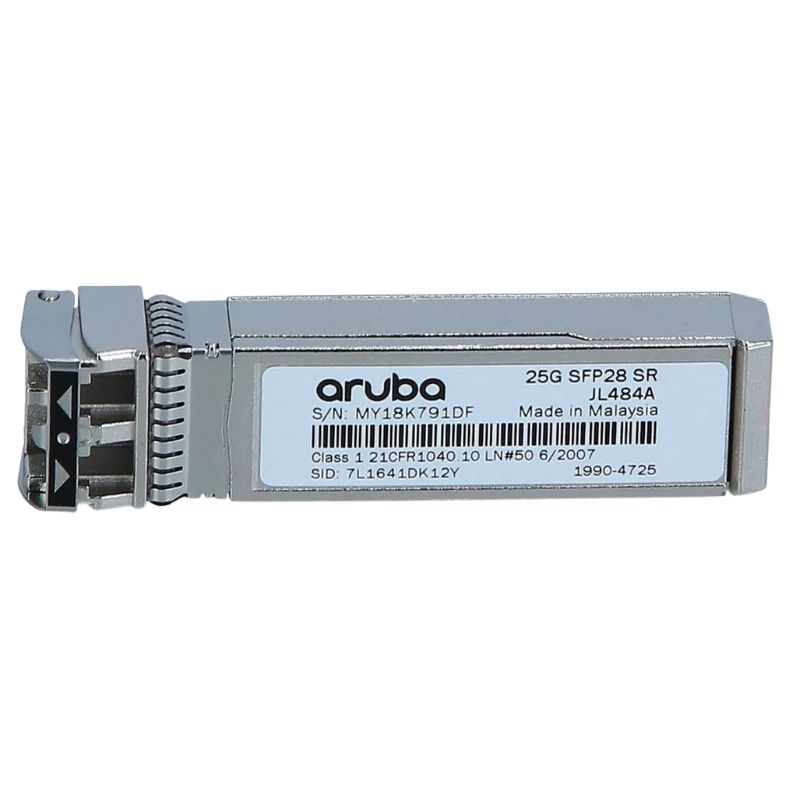


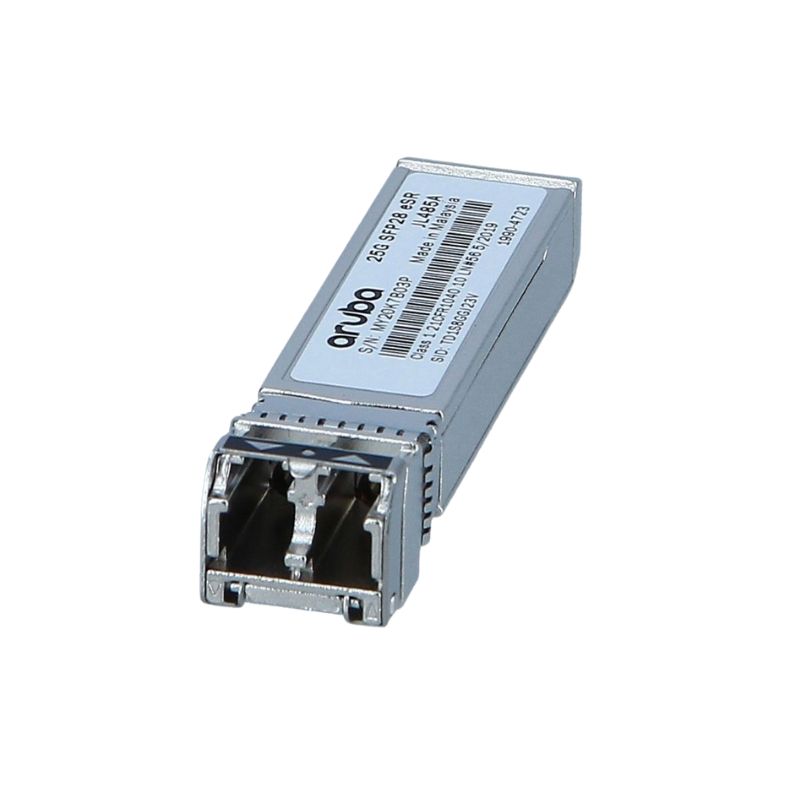
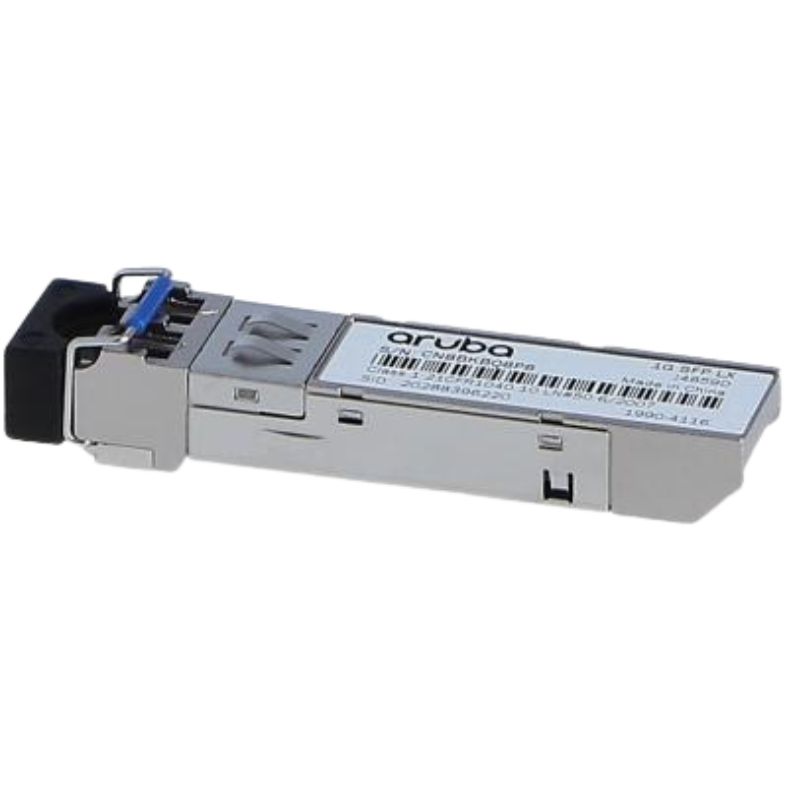
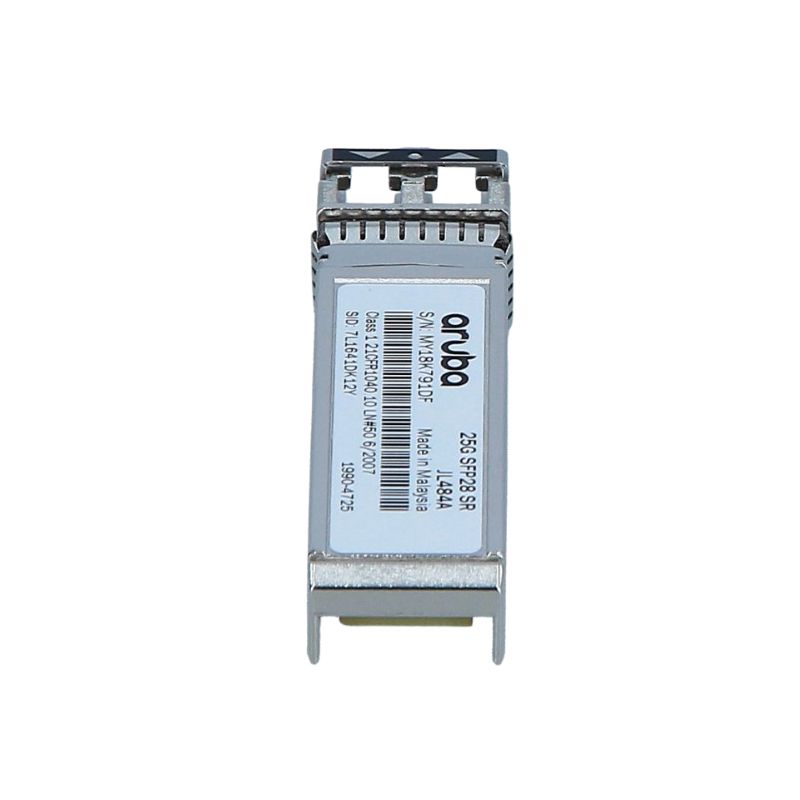
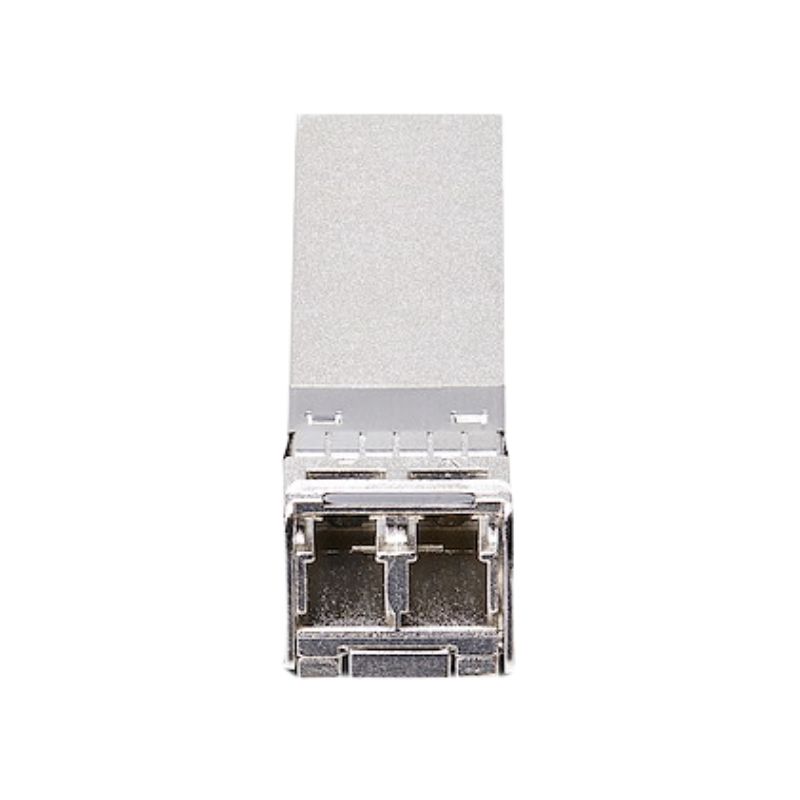
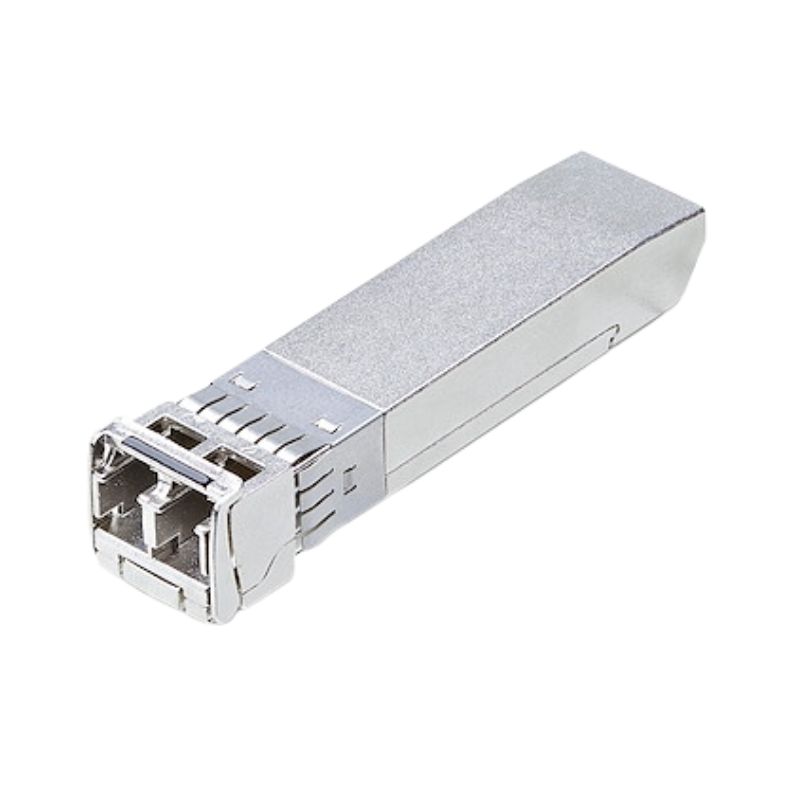
HPE JL486-61001 Aruba 25 Gigabit SFP28 LC LR 10Km SMF Transceiver. New Sealed Spare with 1 year replacement warranty
| SKU/MPN | Warranty | Price | Condition | You save |
|---|---|---|---|---|
| JL486-61001 | 1 Year Warranty | $1,078.00 | Factory-Sealed New in Original Box (FSB) | You save: $377.30 (26%) |
| JL486-61001 | 1 Year Warranty | $912.00 | New Factory-Sealed Spare | You save: $319.20 (26%) |
The HPE JL486-61001 Aruba 25 Gigabit SFP28 LC LR 10Km Single-Mode Fiber Transceiver is a high-performance optical networking module engineered for long-range, high-speed data transmission across modern enterprise and data center infrastructures. Designed to support 25GbE environments, this advanced SFP28 transceiver ensures stable and efficient connectivity over extended distances up to 10 kilometers using single-mode fiber (SMF). It delivers reliable low-latency communication for mission-critical applications, making it an essential component in scalable and high-bandwidth network architectures.
The evolution of data center and enterprise networking has rapidly shifted from legacy Gigabit Ethernet toward high density, high throughput architectures that demand both scalability and optical efficiency. The 25 Gigabit Ethernet standard represents a critical transition point between 10G and 40G/100G infrastructures, allowing organizations to increase bandwidth without excessive power consumption or disruptive infrastructure redesign. Within this evolution, SFP28 based optical transceivers such as the HPE JL486-61001 Aruba 25 Gigabit SFP28 LC LR 10Km SMF Transceiver play a fundamental role in enabling long reach, stable, and efficient optical communication across distributed environments.
The adoption of 25G optics is particularly significant in leaf spine architectures, where bandwidth per server uplink must scale linearly to avoid congestion. The compact SFP28 form factor provides a balance between port density and performance, making it ideal for modern switching platforms manufactured by leading vendors including and its networking division.
The HPE JL486-61001 Aruba 25G SFP28 LR transceiver is designed for long reach single mode fiber connectivity, extending up to 10 kilometers under optimal conditions. This capability places it in the category of long reach optical modules used in campus interconnects, metro aggregation layers, and large scale enterprise distribution networks. The module integrates precision laser technology, LC duplex interface design, and advanced signal conditioning mechanisms to ensure stable transmission over extended fiber spans.
Within Aruba switching environments, this transceiver contributes to high performance fabric connectivity, ensuring that data flows seamlessly between aggregation switches, core routers, and distributed data centers. Its engineering reflects a focus on reliability, interoperability, and energy efficiency in demanding networking scenarios.
At the core of the SFP28 LR transceiver lies a sophisticated electrical-to-optical conversion system. The module receives high speed electrical signals from the host switch via a standardized SFP28 interface and converts them into optical pulses suitable for single mode fiber transmission. This conversion is achieved through integrated driver circuitry and a high precision distributed feedback laser source.
The 25G signaling rate is achieved through advanced modulation techniques that maintain signal integrity while minimizing jitter and attenuation. The architecture is optimized for low latency performance, ensuring that packet transmission remains consistent even under heavy network load conditions.
The long reach capability of up to 10 kilometers is made possible by a high stability laser transmitter operating at a calibrated wavelength typically within the 1310 nanometer range. This wavelength is selected for its optimal propagation characteristics in single mode fiber, reducing chromatic dispersion and maintaining signal clarity across extended distances.
Thermal regulation and automatic power control mechanisms ensure that optical output remains consistent across varying environmental conditions. This is essential for maintaining link stability in enterprise and carrier grade deployments where temperature fluctuations can impact optical performance.
In modern data center environments, spine leaf architecture has become the dominant design pattern due to its scalability and predictable latency characteristics. The 25G SFP28 LR transceiver supports high speed uplinks between leaf and spine switches, enabling uniform bandwidth distribution across server clusters.
By leveraging long reach optical capabilities, data centers can extend connectivity between separate facilities or across large campus environments without the need for intermediate signal regeneration. This reduces infrastructure complexity and improves overall network efficiency.
Large enterprise campuses often require high bandwidth connections between geographically separated buildings or departments. The 10 kilometer reach capability of the HPE JL486-61001 makes it suitable for connecting core network facilities with remote buildings, disaster recovery sites, and distributed access layers.
This type of deployment ensures consistent application performance across the organization, supporting unified communications, virtualization platforms, and cloud based services.
Service providers and telecommunications operators utilize 25G LR optics as part of metro aggregation networks where traffic from multiple endpoints is consolidated into higher capacity backbone links. The stability and reach of single mode fiber transmission enable efficient transport of aggregated traffic across metropolitan regions.
Maintaining signal integrity over long distances requires advanced error reduction techniques and precise optical alignment. The transceiver incorporates built in digital diagnostic monitoring capabilities that allow network administrators to track parameters such as optical power levels, temperature, and voltage in real time.
These monitoring functions contribute to proactive maintenance strategies, reducing downtime and ensuring that potential issues are identified before they impact network performance.
Single mode fiber is inherently designed to minimize modal dispersion, but chromatic dispersion remains a key consideration in long distance optical transmission. The HPE JL486-61001 is engineered with optimized wavelength stability to reduce dispersion related signal degradation over distances up to 10 kilometers.
This ensures that high speed 25 Gigabit Ethernet signals remain clean and interpretable at the receiving end, preserving data integrity across the optical link.
Single mode fiber is essential for long reach optical communication due to its low attenuation and high bandwidth capacity. The HPE JL486-61001 is specifically optimized for this type of fiber, ensuring maximum performance across distances up to 10 kilometers.
The narrow core diameter of single mode fiber allows light to travel in a single propagation path, minimizing signal distortion and enabling high speed data transmission with minimal loss.
Proper cabling practices are essential for achieving optimal performance in optical networks. This includes maintaining clean connector surfaces, avoiding excessive bending radius, and ensuring proper cable management within rack systems. These practices help preserve signal integrity and extend the operational lifespan of optical components.
Modern optical transceivers include digital diagnostic monitoring features that provide real time insights into system health. These capabilities include monitoring of optical output power, receiver sensitivity, temperature thresholds, and supply voltage levels.
Such telemetry data enables network operators to implement predictive maintenance strategies, improving overall network uptime and reducing unexpected failures.
The HPE JL486-61001 is engineered for long term deployment in enterprise and carrier environments. Its robust design ensures consistent performance across extended operational cycles, even in demanding conditions where continuous data transmission is required.
High quality semiconductor components and precision optical alignment contribute to its reliability, making it a dependable choice for mission critical networking infrastructure.
As organizations continue to scale their digital infrastructure, the need for flexible and high bandwidth connectivity becomes increasingly important. The 25G SFP28 LR transceiver provides a scalable foundation for network expansion, enabling incremental upgrades without requiring complete infrastructure replacement.
This flexibility allows enterprises to evolve their network architecture in alignment with growing data demands, cloud adoption, and digital transformation initiatives.
Cloud computing environments rely heavily on high speed interconnects between compute, storage, and networking resources. The HPE JL486-61001 supports these environments by providing reliable long distance connectivity that ensures efficient data movement across distributed cloud infrastructures.
The SFP28 form factor represents a significant advancement in miniaturization, allowing higher port density on switching platforms without compromising performance. This enables network designers to maximize bandwidth per rack unit while maintaining efficient airflow and thermal performance.
The compact design also simplifies system upgrades, allowing transceivers to be replaced or added without disrupting existing infrastructure.
Each optical transceiver undergoes rigorous testing to ensure compliance with industry standards for performance, reliability, and interoperability. This includes optical stress testing, temperature cycling, and signal integrity validation under simulated network conditions.
Such stringent quality assurance processes ensure that the module performs reliably in real world deployments across diverse networking environments.
By enabling 25 Gigabit per second data transmission, the HPE JL486-61001 significantly enhances bandwidth availability in network architectures. This helps eliminate bottlenecks between server clusters and core switching layers, ensuring smooth application performance.
Efficient traffic distribution is particularly important in virtualization environments, where multiple virtual machines share underlying physical infrastructure.
Low latency communication is essential for applications such as real time analytics, financial trading systems, and high performance computing. The optimized optical design of the transceiver helps minimize transmission delays, contributing to faster data processing and response times.
This performance characteristic makes it suitable for environments where microsecond level latency differences can have significant operational impact.
The transceiver is designed for seamless integration with compatible Aruba switching platforms, ensuring plug and play functionality within supported hardware environments. The SFP28 form factor allows it to be inserted into standard high speed Ethernet ports without requiring additional configuration or hardware modification.
Within Aruba based network infrastructures, the module supports advanced routing, switching, and traffic management features that enhance overall network performance and scalability.
As part of the broader HPE networking ecosystem, the JL486-61001 transceiver is engineered to maintain interoperability across a range of enterprise grade switches and routers. This includes compatibility with cloud enabled infrastructure, virtualization environments, and hybrid network architectures.
The standardized design ensures that organizations can deploy the module across multiple network layers without compatibility concerns, simplifying inventory management and network planning.


 Contact Us
 Information
 Catalog
 Solid State Drives (SSD)
 Network Switches
 Hard Disk Drives
 HBA & Controllers
 PC & Servers
 PC & Server Memory
 CPU & Processors
 Network Routers
 Power Supplies
 Tape Drives & Libraries
 Network Devices
 Computer & Network Cables