(7% discount is applied at checkout)
Cart is empty
Your go-to destination for cutting-edge server products
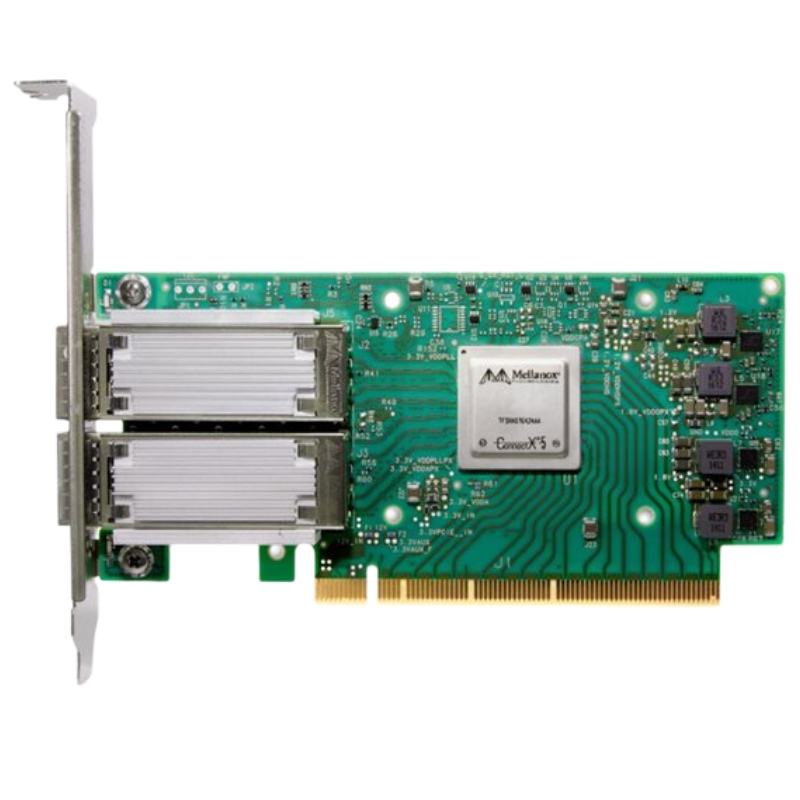


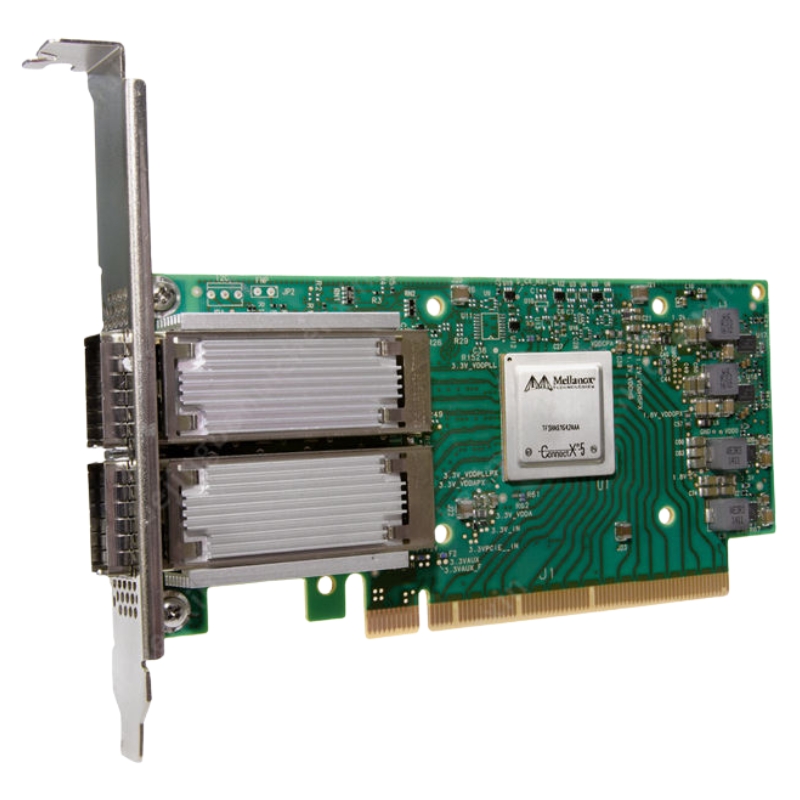
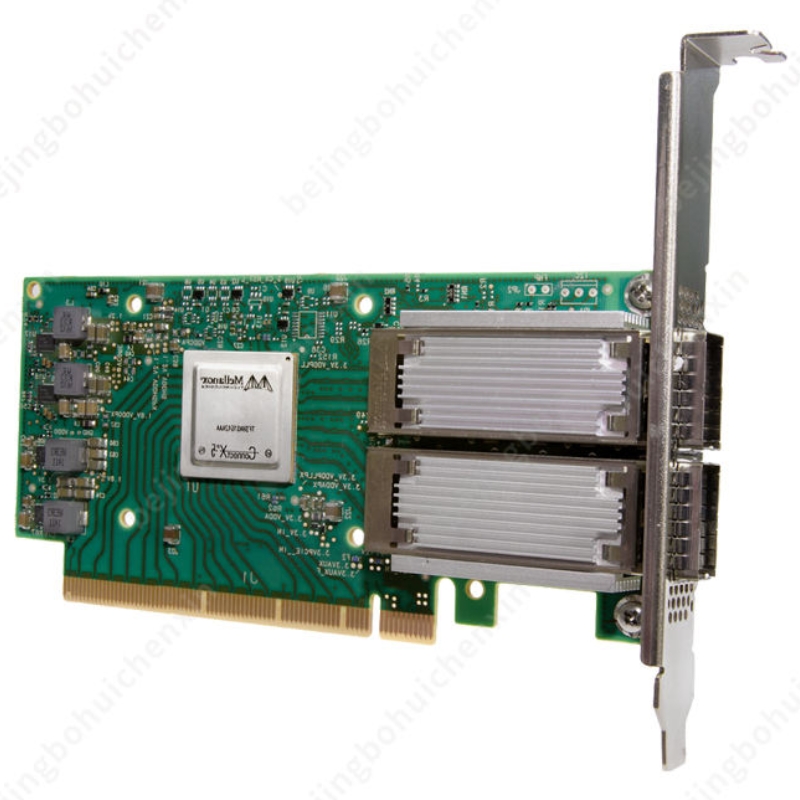
Lenovo 4XC7A08229 Thinksystem Adapter with 2 Ports ConnectX-5. Factory-Sealed New in Original Box (FSB) with 3 Years Warranty
| SKU/MPN | Warranty | Price | Condition | You save |
|---|---|---|---|---|
| 4XC7A08229 | 1 Year Warranty | Contact us for a price | Excellent Refurbished | |
| 4XC7A08229 | 1 Year Warranty | Contact us for a price | Factory-Sealed New in Original Box (FSB) |
The Lenovo 4XC7A08229 Adapter is equipped with 2 ports, making it a versatile and efficient choice for users. These ports offer a range of benefits and are essential for various tasks and connectivity options.
The Lenovo 4XC7A08229 ConnectX-5 EX 25/40GbE 2-Port Low-Latency Adapter category represents a class of enterprise-grade network interface solutions engineered for ultra-high throughput, minimal latency, and advanced data center networking capabilities. These adapters are designed for modern workloads that demand deterministic performance, including virtualization clusters, cloud-scale infrastructure, high-performance computing environments, storage-intensive architectures, and real-time analytics systems. Built around advanced Mellanox ConnectX-5 EX architecture and optimized for Lenovo server ecosystems, this category delivers a balance of bandwidth efficiency, CPU offload capabilities, and network acceleration technologies that significantly reduce overhead in data-intensive operations.
At the core of this adapter category lies the ConnectX-5 EX controller architecture, which integrates advanced packet processing engines, enhanced RDMA support, and optimized hardware offloading mechanisms. The design prioritizes minimizing CPU intervention in network operations, allowing compute resources to focus on application workloads rather than packet handling. This architecture supports both Ethernet and InfiniBand-inspired features in Ethernet environments, enabling flexible deployment across traditional and converged network infrastructures.
The adapter includes specialized offload engines designed to handle checksum calculations, segmentation tasks, and protocol processing directly in hardware. These capabilities reduce CPU utilization and improve throughput efficiency across multi-tenant environments. By offloading repetitive networking tasks, the adapter enhances system scalability and ensures predictable performance across diverse workloads.
The dual-port configuration provides flexible connectivity options for redundant networking topologies or aggregated bandwidth scenarios. Each port supports high-speed Ethernet standards, enabling deployment in both 25GbE and 40GbE infrastructures. This flexibility allows organizations to scale network performance according to evolving data center requirements without requiring hardware replacement.
Performance is a defining characteristic of the Lenovo 4XC7A08229 adapter category. The combination of high-bandwidth interfaces, low-latency processing, and advanced hardware acceleration enables sustained data transfer rates suitable for modern distributed systems. These adapters are optimized for parallel processing environments where multiple data streams must be handled concurrently without degradation in service quality.
Latency reduction is achieved through architectural enhancements that streamline packet traversal paths. By minimizing software stack involvement and leveraging direct memory access techniques, the adapter reduces end-to-end communication delays. This is particularly beneficial for financial trading systems, real-time analytics platforms, and distributed storage networks where latency directly influences performance outcomes.
The dual-port design allows for link aggregation strategies that increase total available bandwidth while maintaining redundancy. This ensures uninterrupted service delivery even under high traffic conditions or partial link failures. Load balancing mechanisms distribute traffic intelligently across available interfaces, preventing congestion and maximizing throughput efficiency.
The Lenovo ConnectX-5 EX adapter category is widely deployed in enterprise data centers and cloud computing environments due to its ability to handle diverse and demanding workloads. These include virtual machine orchestration, containerized microservices, software-defined storage, and large-scale database systems. Its ability to reduce CPU overhead and improve network determinism makes it a foundational component in modern infrastructure design.
In virtualized infrastructures, network efficiency is critical to ensuring consistent performance across multiple tenants. The adapter supports advanced virtualization technologies that allow virtual machines to directly access network resources with minimal hypervisor intervention. This improves network throughput and reduces latency for virtual workloads while maintaining strong isolation between tenants.
Cloud-native applications rely heavily on inter-service communication, often generating significant east-west traffic within data centers. The ConnectX-5 EX architecture ensures that this traffic is handled efficiently, reducing bottlenecks and improving response times across distributed microservices environments. Its ability to handle high packet rates makes it suitable for orchestrated container clusters and service mesh architectures.
Remote Direct Memory Access (RDMA) support is a key feature within this adapter category, enabling high-speed data transfers between systems without CPU involvement. This significantly reduces latency and improves throughput in storage and compute-heavy environments. RDMA over Converged Ethernet (RoCE) further extends these benefits into Ethernet-based infrastructures, allowing seamless integration with existing network architectures.
The adapter supports NVMe over Fabrics (NVMe-oF), enabling high-speed storage access across networked environments. This reduces storage access latency and enhances performance for distributed storage systems. By enabling direct memory-to-storage communication pathways, the adapter eliminates traditional bottlenecks associated with storage protocols.
In HPC environments, RDMA capabilities are essential for maintaining synchronized processing across compute nodes. The adapter’s low-latency communication pathways ensure that large-scale simulations, scientific modeling, and data-intensive computations can be executed efficiently across clustered systems.
Single Root I/O Virtualization (SR-IOV) is a core feature that allows the adapter to present multiple virtual functions to host systems. This enables direct assignment of network resources to virtual machines, reducing overhead associated with traditional virtual switching mechanisms. SR-IOV enhances both performance and security in multi-tenant environments by isolating network traffic at the hardware level.
Through SR-IOV, network bandwidth and processing capabilities can be allocated dynamically to virtual machines based on workload requirements. This ensures consistent performance even in environments with fluctuating resource demands. It also reduces CPU overhead by bypassing hypervisor-based networking layers.
Security is an integral aspect of modern networking adapters, and this category incorporates multiple hardware-level security mechanisms. These include secure boot processes, encrypted traffic handling capabilities, and hardware-based isolation features that prevent unauthorized access to data streams. The architecture is designed to support secure multi-tenant environments without compromising performance.
The adapter ensures that each virtual function operates in a securely isolated environment, preventing cross-communication between tenants. This is particularly important in cloud data centers where multiple customers share physical infrastructure. Hardware-level enforcement of isolation policies reduces risk and enhances compliance with security standards.
The Lenovo 4XC7A08229 adapter is optimized for integration with Lenovo ThinkSystem servers and enterprise-grade computing platforms. This ensures compatibility with firmware ecosystems, system BIOS configurations, and enterprise management tools. The adapter is validated for seamless deployment within Lenovo-certified data center environments, ensuring stability and performance consistency.
Firmware-level integration allows centralized management of adapter settings through Lenovo system management tools. Administrators can configure performance profiles, monitor network health, and update firmware remotely. This improves operational efficiency in large-scale deployments where manual configuration would be impractical.
Deploying high-speed network adapters requires careful planning of infrastructure topology, cabling standards, and switch compatibility. The 25/40GbE capability of this adapter category allows flexible integration into both legacy and modern network infrastructures. Proper deployment ensures optimal performance and minimizes network congestion across data center environments.
Efficient network topology design ensures that the adapter’s capabilities are fully utilized. Leaf-spine architectures, commonly used in modern data centers, complement the high-bandwidth capabilities of this adapter category. Such designs reduce hop counts and improve overall latency characteristics across distributed systems.
Despite its high-performance capabilities, the adapter is engineered for efficient power consumption. Advanced power management features dynamically adjust energy usage based on network load, reducing operational costs in large-scale deployments. Thermal optimization ensures stable operation even under sustained high-throughput conditions.
The adapter incorporates adaptive power scaling that adjusts processing intensity based on real-time traffic demands. This ensures that energy consumption remains proportional to workload requirements, improving overall data center efficiency and reducing heat generation.
Enterprise networking environments require consistent reliability, and this adapter category is designed to meet stringent operational standards. It supports continuous uptime scenarios and is tested for stability under sustained heavy workloads. Error correction mechanisms and fault-tolerant design principles ensure uninterrupted network communication.
Scalability is a core requirement for modern networking infrastructure, and this adapter category is designed to support incremental expansion without performance degradation. As workloads grow, additional ports and aggregated bandwidth configurations allow seamless scaling of network capacity.


 Contact Us
 Information
 Catalog
 Solid State Drives (SSD)
 Network Switches
 Hard Disk Drives
 HBA & Controllers
 PC & Servers
 PC & Server Memory
 CPU & Processors
 Network Routers
 Power Supplies
 Tape Drives & Libraries
 Network Devices
 Computer & Network Cables