(7% discount is applied at checkout)
Cart is empty
Your go-to destination for cutting-edge server products
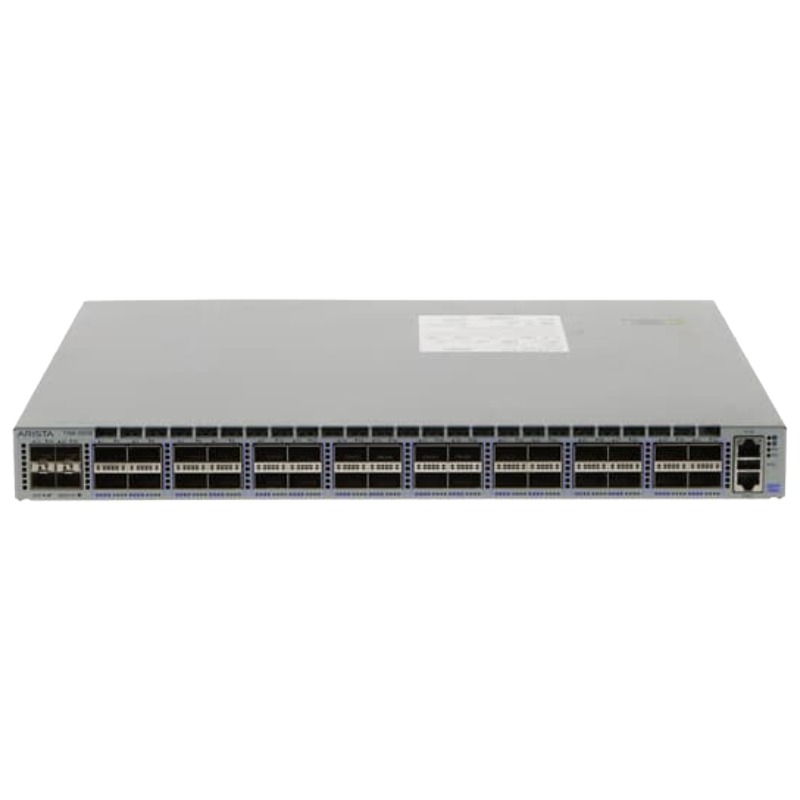


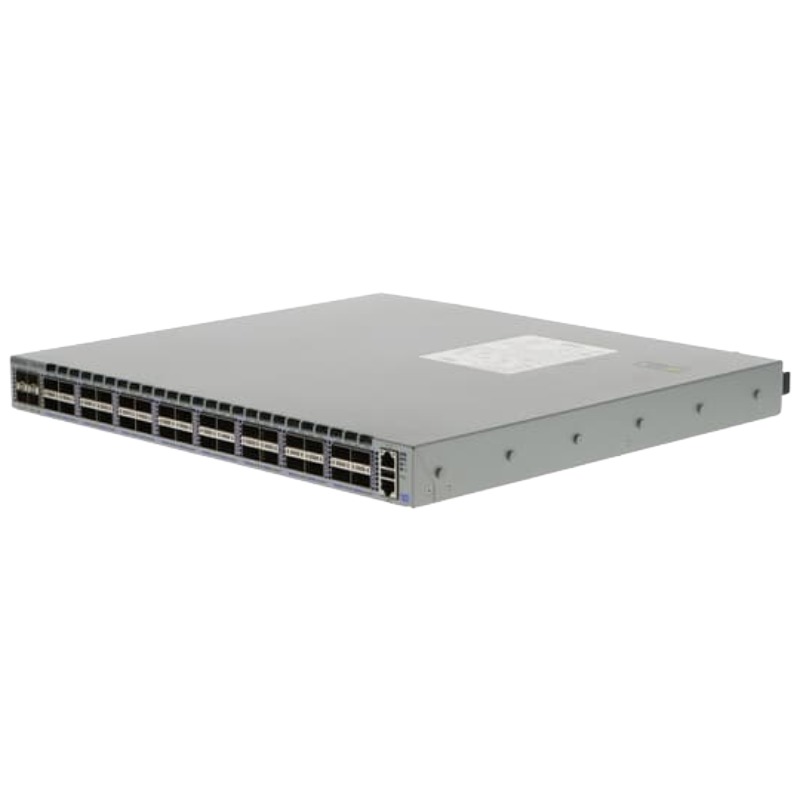
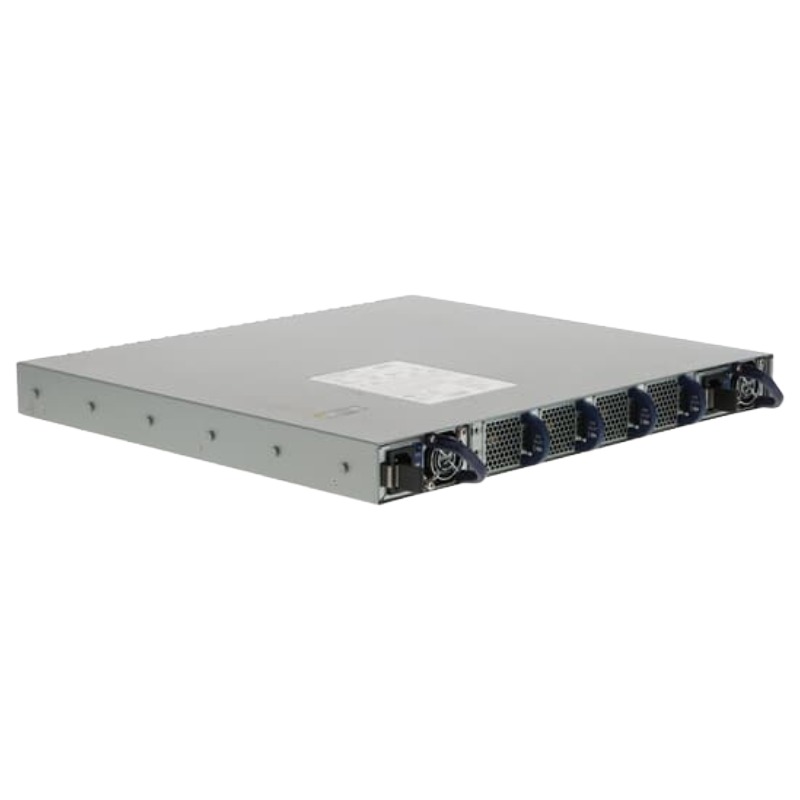
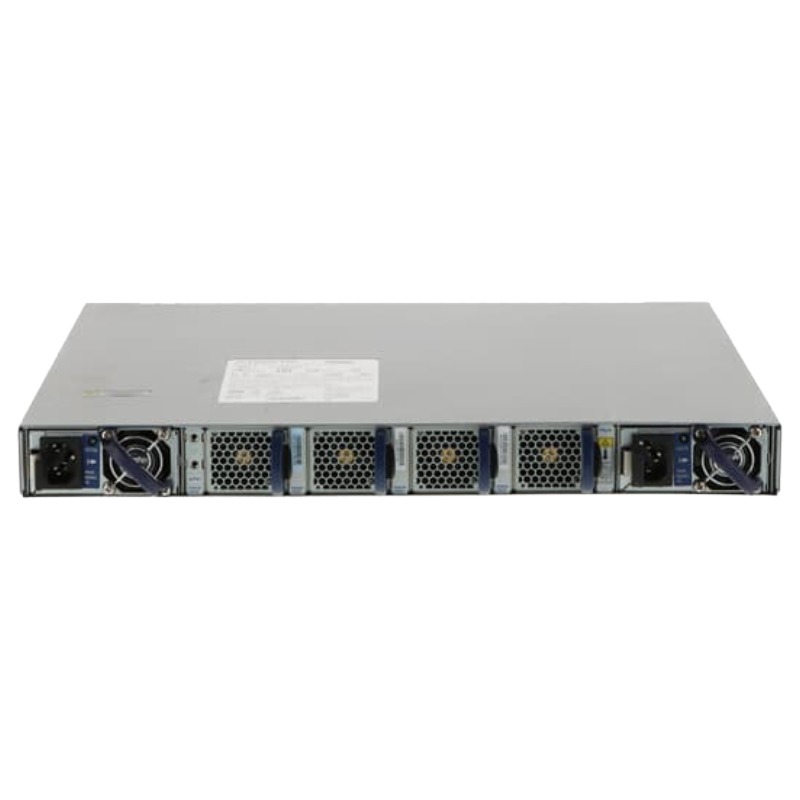
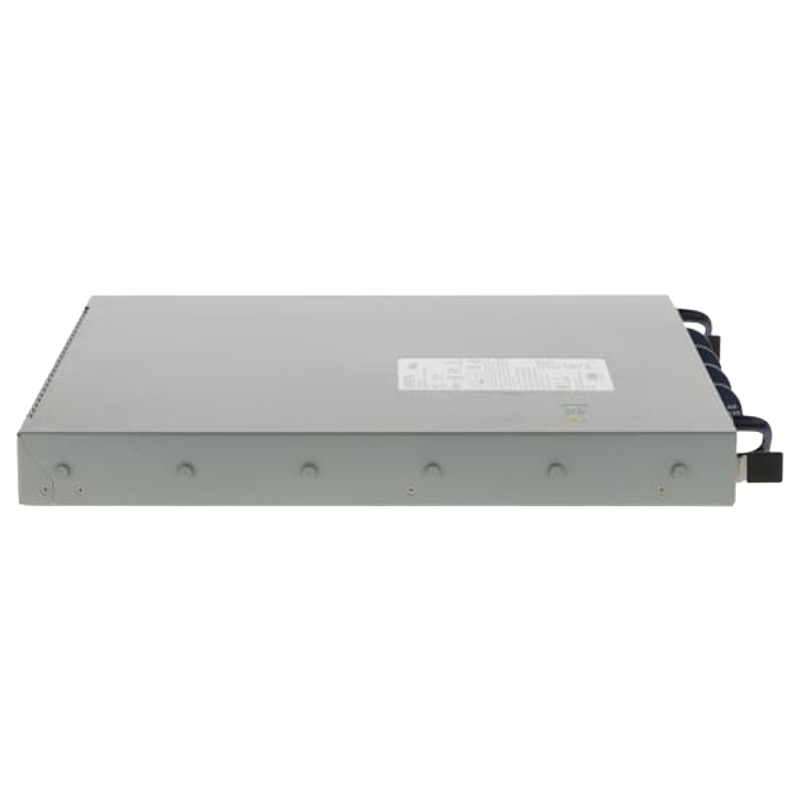
Arista DCS-7160-32CQ-F 7160 32 Ports 100GbE QSFP Front-to-rear Airflow Layer 3 1U Rack Mountable Switch. Excellent Refurbished with 1 Year Replacement Warranty
The Arista DCS-7160-32CQ-F is a next-generation fixed configuration Ethernet switch engineered for high-density, low-latency data center environments. Built under the Arista 7160 Series, this platform delivers exceptional throughput, scalability, and flexibility for cloud-scale deployments, enterprise networks, and service providers.
Arista DCS-7160-32CQ-F 7160 32 Ports 100GbE QSFP Front-to-rear Airflow Layer 3 1U Rack Mountable Switch is engineered as a high-performance, ultra-low-latency data center switch designed for cloud-scale environments, hyperscale architectures, and high-frequency trading networks where deterministic performance and extreme port density are critical. Positioned within the Arista 7160 Series, this platform delivers fixed configuration switching optimized for spine and leaf topologies requiring consistent 100GbE throughput with minimal packet delay variation.
The DCS-7160-32CQ-F 7160 Series architecture is developed for seamless integration into large-scale leaf-spine fabrics, enabling predictable scaling as data demands grow. The switch is purpose-built to handle east-west traffic patterns prevalent in distributed applications, virtualization clusters, and containerized workloads. Its non-blocking architecture ensures line-rate forwarding across all ports simultaneously, maintaining deterministic performance even under maximum load conditions.
The platform is fully compatible with modern cloud networking principles including ECMP routing, VXLAN overlays, and distributed routing protocols. These capabilities allow the switch to operate as a core building block in multi-tenant cloud environments where segmentation, isolation, and workload mobility are essential.
Designed for both leaf and spine roles, the system supports flexible deployment strategies in multi-tier data center architectures. Its 32-port 100GbE configuration allows aggregation of multiple downstream leaf switches or direct high-speed server connectivity depending on network design requirements.
The compact 1U chassis design of this switch optimizes rack space utilization in dense data center environments. Despite its small footprint, it delivers exceptionally high throughput capacity, making it ideal for installations where space, cooling efficiency, and power density must be carefully balanced.
The front-to-rear airflow design ensures consistent cooling direction aligned with standard data center hot aisle and cold aisle configurations. This thermal engineering approach improves cooling efficiency, reduces hotspot formation, and supports predictable airflow behavior when deployed in multi-rack clusters.
Even under sustained full-port utilization, the thermal system maintains stable operating conditions. This is essential for maintaining packet integrity and system longevity in environments where continuous high-throughput workloads are common.
At the core of the switch design is its 32-port 100GbE QSFP interface array. Each port is capable of operating at full line rate, supporting high-bandwidth interconnects for spine aggregation, server uplinks, and high-speed storage networks.
The QSFP interfaces support a wide range of optical and direct attach copper (DAC) modules, allowing flexible deployment across short-reach intra-rack connections and long-distance inter-rack fiber links. This flexibility enables the same hardware platform to be used across multiple network layers.
The ports can be configured for breakout operation, enabling a single 100GbE interface to be divided into multiple lower-speed connections. This supports hybrid network designs where mixed-speed connectivity is required for gradual infrastructure upgrades or heterogeneous device environments.
The switch is designed to maximize interconnect efficiency between compute nodes, storage arrays, and application clusters. With 100GbE bandwidth per port, it eliminates traditional bottlenecks and supports modern distributed computing workloads requiring ultra-fast data exchange.
The device operates as a full Layer 3 switch, enabling dynamic routing between subnets and virtual networks without requiring external routing appliances. This reduces network complexity while improving forwarding efficiency and latency characteristics.
It supports advanced routing protocols commonly used in large-scale environments, enabling automated route discovery and optimization. This ensures continuous network adaptability in environments with frequent topology changes.
The switch supports overlay networking technologies such as VXLAN, enabling scalable multi-tenant architectures. This allows logical networks to be decoupled from physical infrastructure, providing flexibility for cloud service providers and enterprise virtualization environments.
The switching architecture is designed for deterministic packet forwarding with extremely low latency variation. This is essential for applications such as financial trading platforms, real-time analytics systems, and high-performance computing clusters.
A fully non-blocking internal fabric ensures that all ports can operate simultaneously at full line rate without congestion within the switching plane. This architecture eliminates internal bottlenecks and ensures predictable throughput.
Advanced buffer management mechanisms allow the switch to handle microbursts and traffic spikes efficiently. This helps maintain packet integrity and reduces the likelihood of packet loss during sudden traffic surges.
The switch is optimized for environments requiring rapid packet processing, including distributed computing clusters and real-time analytics pipelines. Hardware acceleration ensures minimal CPU overhead and maximum throughput efficiency.
The platform is designed to scale seamlessly as data center requirements expand. Its modular deployment model allows incremental scaling without major architectural redesigns.
In spine-leaf architectures, the switch functions effectively as a spine node, aggregating multiple leaf switches while maintaining full bandwidth connectivity across the fabric.
Its high port density enables efficient multi-rack deployment strategies, reducing interconnect complexity and improving cabling efficiency across large installations.
Designed for continuous operation, the system incorporates redundancy mechanisms to ensure high availability in production environments. Power and cooling systems are engineered to support uninterrupted performance under heavy workloads.
The architecture includes built-in fault isolation capabilities that prevent localized issues from impacting overall system performance. Rapid recovery mechanisms ensure minimal service disruption during hardware or software anomalies.
The switch is widely deployed in cloud data centers where high bandwidth, low latency, and scalable connectivity are essential for virtualization platforms and distributed applications.
In enterprise networks, the system serves as a high-capacity aggregation or core switch, consolidating traffic from multiple access layers into a unified high-speed backbone.
The deterministic performance characteristics make it suitable for financial environments where microsecond-level latency differences can impact trading outcomes.


 Contact Us
 Information
 Catalog
 Solid State Drives (SSD)
 Network Switches
 Hard Disk Drives
 HBA & Controllers
 PC & Servers
 PC & Server Memory
 CPU & Processors
 Network Routers
 Power Supplies
 Tape Drives & Libraries
 Network Devices
 Computer & Network Cables