(7% discount is applied at checkout)
Cart is empty
Your go-to destination for cutting-edge server products
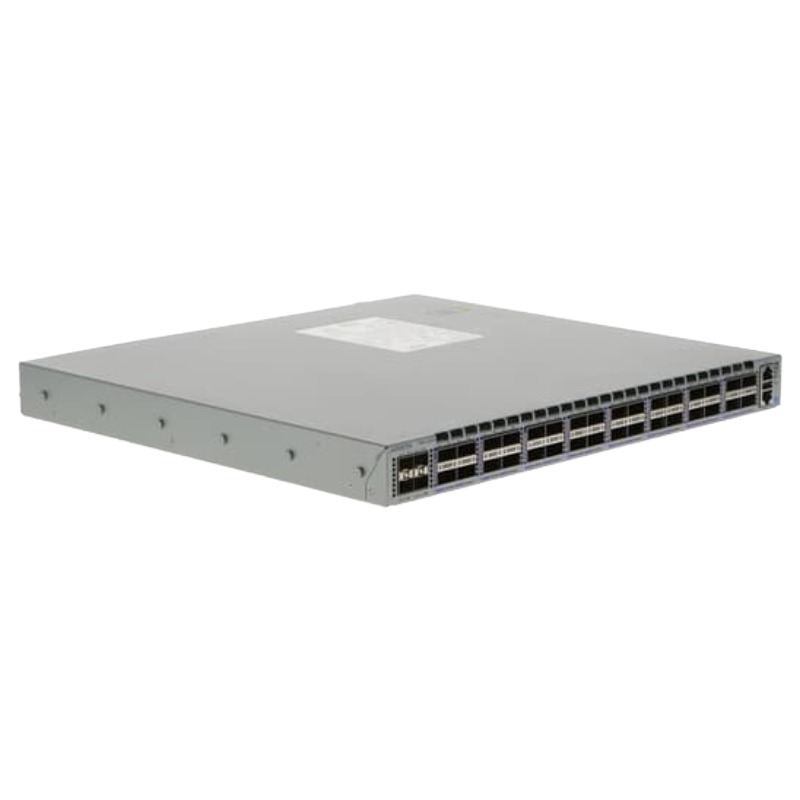


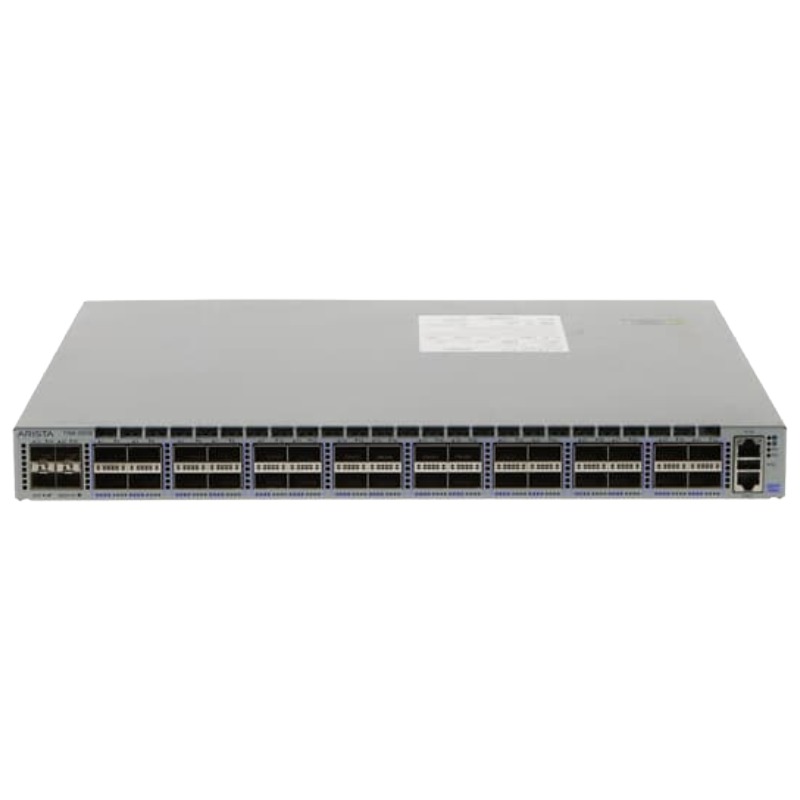
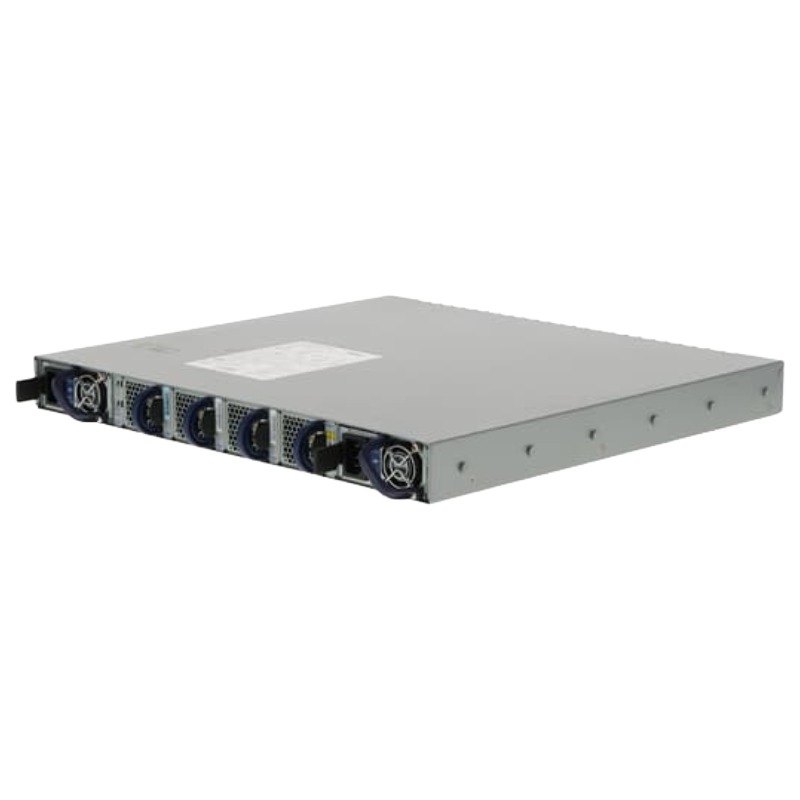
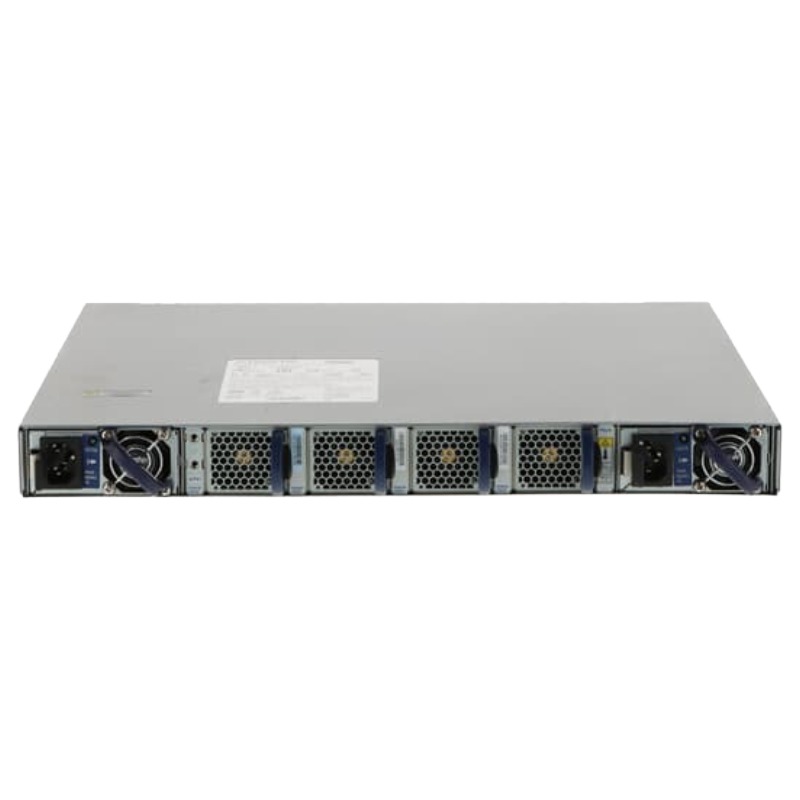
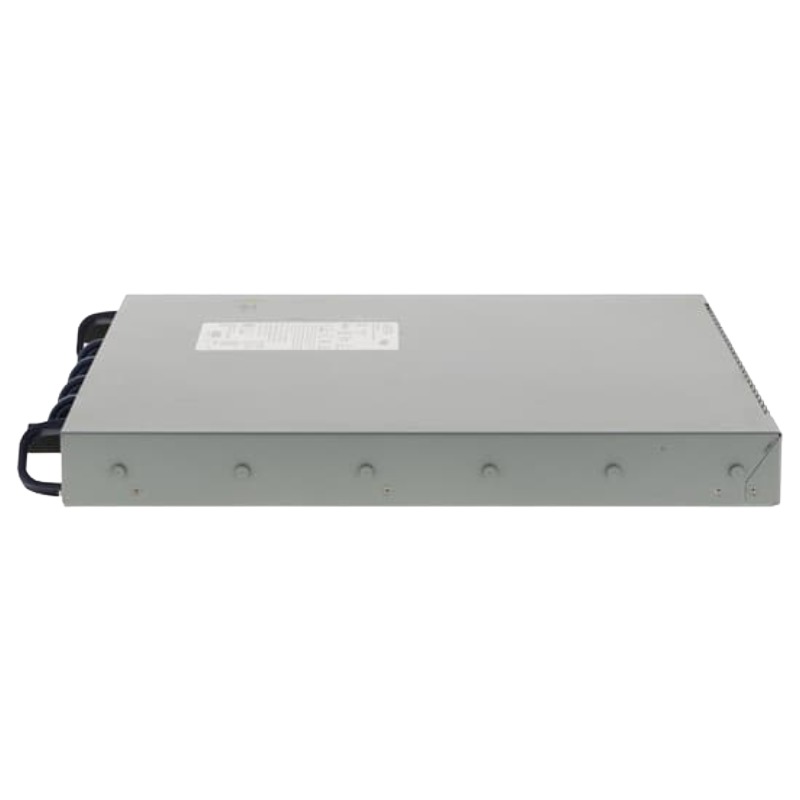
Arista DCS-7160-32CQ-R 7160-32CQ 32 Ports 100GBase-X QSFP 4x SFP Laye 3 Manageable Ethernet Switch. Excellent Refurbished with 1 Year Replacement Warranty
The DCS-7160-32CQ-R is a high-density, ultra-low latency switching solution designed for modern cloud-scale environments and high-performance data centers. This 32-port switch delivers advanced Layer 2 and Layer 3 capabilities optimized for demanding workloads such as cloud computing, hyperscale networking, virtualization, and high-speed storage interconnects.
The Arista DCS-7160-32CQ-R 7160-32CQ is a high-performance fixed configuration Layer 3 Ethernet switch engineered for modern cloud-scale data centers, high-frequency trading environments, enterprise aggregation layers, and hyperscale spine-and-leaf network architectures. Developed by this platform is optimized for ultra-low latency packet forwarding, high-density 100G connectivity, and advanced programmability features required in next-generation network infrastructures. The switch is part of the Arista 7160 Series, which focuses on delivering consistent deterministic performance with deep buffering capabilities and advanced traffic management.
The switch integrates 32 ports of 100GBase-X QSFP interfaces, delivering massive aggregate bandwidth suitable for spine-level deployments in large-scale data center fabrics. Each QSFP port supports a variety of optical transceivers and direct attach copper solutions, ensuring flexible deployment options across multiple network topologies. The ports are designed to support high-speed interconnectivity between leaf switches, spine layers, and aggregation clusters. These 100G ports also support breakout functionality, allowing each interface to be subdivided into multiple lower-speed connections such as 4x25G or 2x50G depending on transceiver configuration. This flexibility ensures backward compatibility with existing infrastructure while enabling smooth migration to higher-speed networking environments.
The chassis is designed as a compact fixed form factor system, optimized for rack-mounted deployment in standard 19-inch data center racks. Despite its high port density, the system maintains efficient airflow management and thermal control through front-to-back cooling architecture. This ensures stable operation even under sustained high-throughput conditions. The design prioritizes space efficiency, making it suitable for environments where rack real estate is limited but bandwidth demand is extremely high. The hardware layout supports optimal cable management and simplified maintenance access for enterprise and service provider deployments.
The Arista DCS-7160-32CQ-R operates as a fully capable Layer 3 switch, supporting a comprehensive suite of dynamic routing protocols essential for scalable network design. These include OSPF, BGP, IS-IS, and static routing mechanisms that enable efficient traffic distribution across large-scale network topologies. The routing engine is designed for high-speed convergence and minimal packet loss during topology changes, making it ideal for mission-critical environments where uptime and stability are essential. The system ensures fast failover capabilities and optimized route recalculation in dynamic network conditions.
A key feature of the platform is its deterministic low-latency forwarding behavior, which ensures consistent packet delivery times even under heavy network loads. The hardware is optimized for cut-through switching, reducing latency by forwarding packets before fully receiving them in certain conditions. This architecture is especially important for latency-sensitive applications such as high-frequency trading, real-time analytics, and distributed computing systems where microsecond-level performance differences can significantly impact outcomes.
The switch is designed to function as a spine or aggregation layer device in modern spine-and-leaf data center architectures. With 32 high-speed 100G ports, it can efficiently interconnect multiple leaf switches, ensuring non-blocking traffic flow across the fabric. This design eliminates bottlenecks and enables predictable performance scaling as the network grows. Its architecture is optimized for east-west traffic patterns commonly found in distributed cloud environments, where server-to-server communication dominates bandwidth usage. The switch ensures efficient load balancing across multiple paths while maintaining consistent latency.
Integration with cloud orchestration systems is a core feature of the platform. It supports automation frameworks that allow dynamic provisioning, configuration management, and network telemetry integration. These capabilities enable operators to deploy and manage large-scale networks with minimal manual intervention. The system is compatible with modern DevOps workflows, allowing network configurations to be treated as code. This improves repeatability, reduces configuration drift, and enhances operational efficiency across large infrastructures.
EOS includes advanced telemetry capabilities that allow real-time monitoring of network performance, congestion levels, and traffic patterns. These features enable operators to gain deep visibility into the network fabric and identify performance bottlenecks before they impact applications. Streaming telemetry support allows continuous data export to analytics platforms, enabling predictive analysis and automated network optimization. This is particularly useful in large-scale cloud environments where manual monitoring is not feasible.
The Arista DCS-7160-32CQ-R is engineered with high availability principles at its core. It supports redundant system processes and advanced failover mechanisms that ensure uninterrupted network operation even during hardware or software anomalies. Link-level redundancy features allow multiple physical connections to be grouped into logical aggregates, ensuring traffic continuity in case of link failure. This improves overall network resilience and reduces the risk of downtime in critical environments.
With an aggregate switching capacity designed for multi-terabit throughput, the switch is capable of handling extremely high traffic volumes across all ports simultaneously. This makes it suitable for hyperscale environments where traffic demands are continuously increasing. The hardware architecture is optimized for parallel processing, ensuring that each port operates independently while maintaining system-wide performance consistency. This allows predictable scaling without degradation in latency or throughput.
The switch incorporates advanced buffer management techniques that help mitigate congestion during traffic spikes. Dynamic buffer allocation ensures fair distribution of resources across all active flows, reducing packet loss in high-traffic scenarios. Congestion control mechanisms are integrated at the hardware level, enabling efficient handling of microbursts and sudden traffic surges commonly found in data center environments.
Security is integrated into the switching architecture through ACLs, port security mechanisms, and traffic filtering capabilities. These features allow administrators to enforce granular control over network traffic and restrict unauthorized access at multiple layers of the network stack. The system supports policy-based routing and segmentation strategies that help isolate workloads and enhance security posture in multi-tenant environments.
The switch includes mechanisms to protect the control plane from excessive traffic loads or malicious attacks. This ensures that critical routing and management functions remain stable even under adverse network conditions. Rate limiting and traffic policing features help maintain system integrity and prevent denial-of-service conditions from affecting core switching operations.
The platform is widely suited for hyperscale data center deployments where massive east-west traffic flows dominate network activity. Its high port density and scalable architecture make it ideal for cloud service providers managing large-scale distributed workloads. It supports the deployment of large leaf-spine fabrics that enable efficient horizontal scaling of compute and storage resources across geographically distributed clusters.
In enterprise environments, the switch functions effectively as a core or aggregation layer device, consolidating traffic from multiple access switches and routing it efficiently across the network backbone. Its Layer 3 capabilities ensure optimal traffic segmentation and routing efficiency. Organizations with high-performance computing needs, such as financial institutions and research facilities, benefit from its deterministic performance and low latency characteristics.
Energy-efficient components and intelligent power distribution systems help reduce overall operational costs. The switch is designed to balance high performance with optimized power consumption, making it suitable for large-scale deployments where energy efficiency is a critical consideration. Power supply redundancy options further enhance system reliability, ensuring continuous operation in case of power module failure.


 Contact Us
 Information
 Catalog
 Solid State Drives (SSD)
 Network Switches
 Hard Disk Drives
 HBA & Controllers
 PC & Servers
 PC & Server Memory
 CPU & Processors
 Network Routers
 Power Supplies
 Tape Drives & Libraries
 Network Devices
 Computer & Network Cables