(7% discount is applied at checkout)
Cart is empty
Your go-to destination for cutting-edge server products
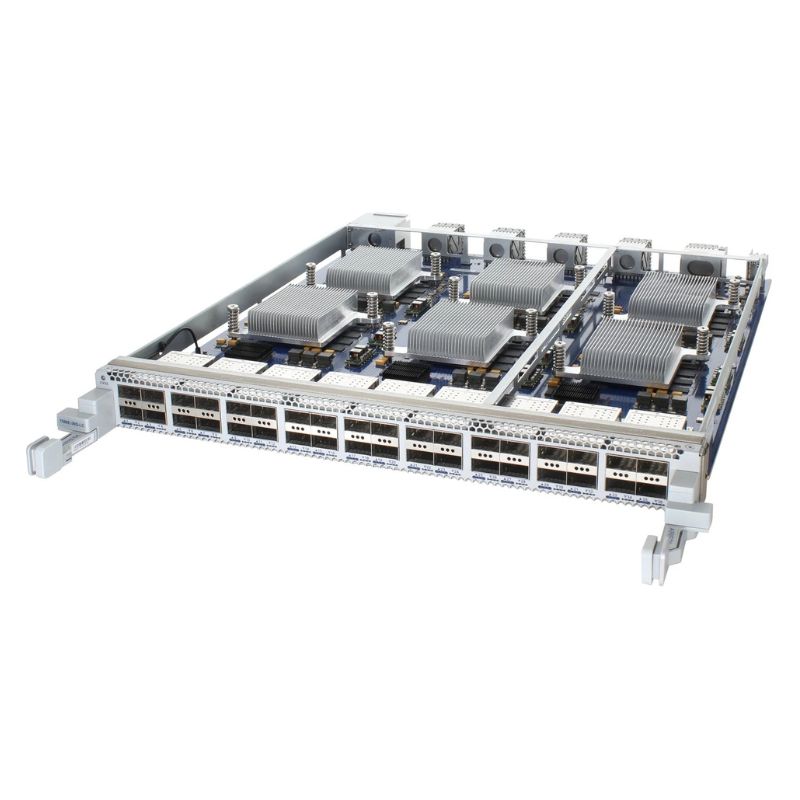


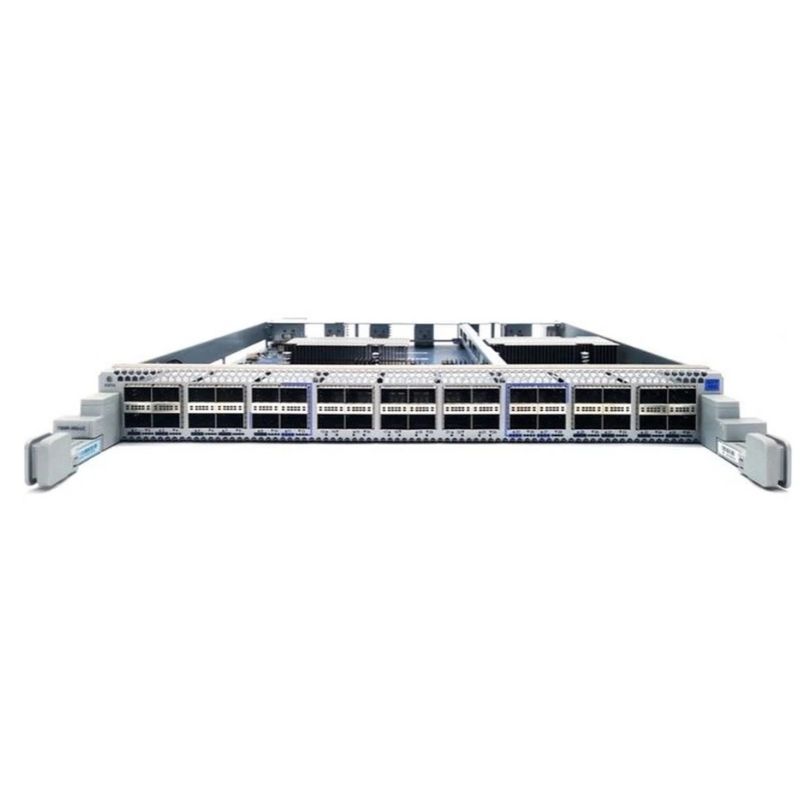
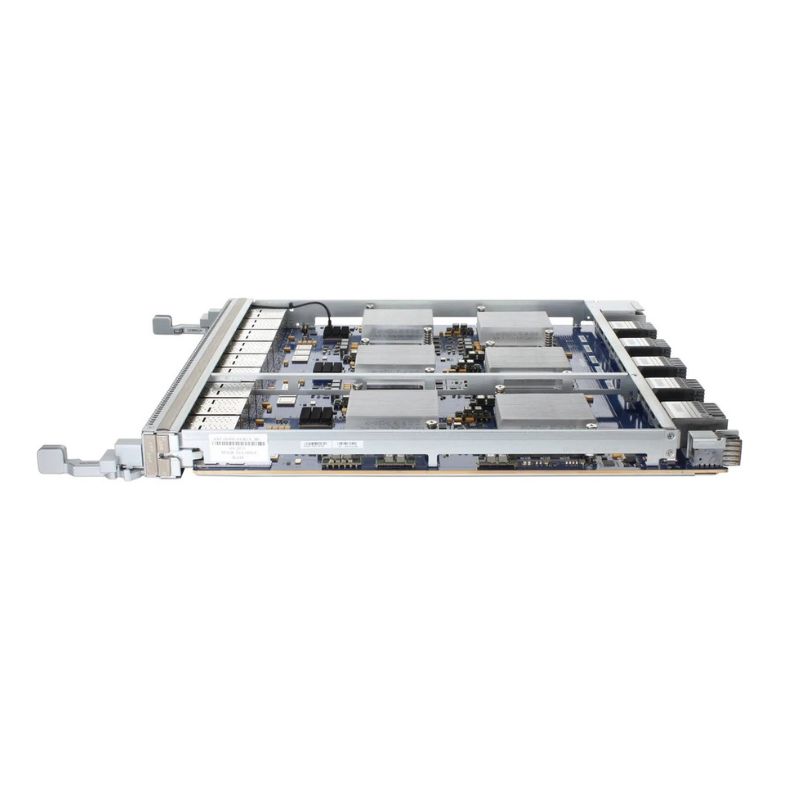
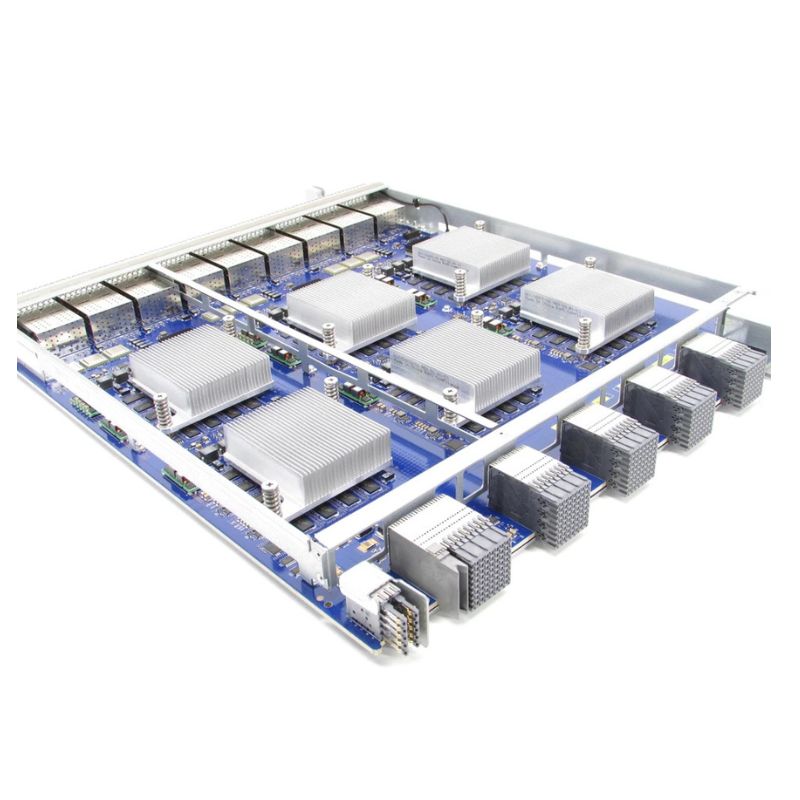
Arista DCS-7500E-36Q-LC 36 Ports QSFP+ 40G Line Card. Excellent Refurbished with 1 year replacement warranty
Overview of Arista DCS-7500E-36Q-LC QSFP+ 40G Line Card
The Arista DCS-7500E-36Q-LC line card is engineered for demanding enterprise and cloud networking environments that require exceptional throughput, ultra-low latency, and scalable switching architecture. Designed specifically for the DCS-7508 modular chassis, this 36-port QSFP+ 40GbE module delivers reliable connectivity for aggregation, spine-leaf infrastructures, and large-scale virtualization deployments.
The Arista DCS-7500E-36Q-LC 36XPORT QSFP+ 40G Line Card is engineered for enterprise-class and hyperscale networking environments that require high-bandwidth aggregation, scalable switching architecture, and low-latency data transmission. Designed specifically for compatibility with the Arista DCS-7508 modular chassis platform, this advanced line card delivers exceptional switching density through thirty-six QSFP+ 40 Gigabit Ethernet interfaces. Organizations operating large-scale cloud infrastructure, virtualization clusters, high-performance computing environments, and enterprise core networks depend on this module to support demanding workloads while maintaining operational efficiency.
The increasing adoption of virtualized data centers, software-defined networking, and east-west traffic flows has significantly increased the demand for high-capacity switching infrastructure. The DCS-7500E-36Q-LC addresses these modern networking challenges with a powerful architecture optimized for large-scale packet processing and efficient traffic handling. By integrating high-density 40G interfaces into the Arista 7500E modular ecosystem, businesses can scale bandwidth without compromising network reliability or performance consistency.
Modern enterprises require scalable networking equipment capable of supporting virtualization technologies, distributed storage systems, containerized workloads, and converged infrastructure platforms. The Arista DCS-7500E-36Q-LC line card is purpose-built to support these evolving requirements through a modular switching framework that enables flexible expansion within the DCS-7508 chassis environment.
The line card architecture focuses on minimizing latency while maximizing throughput efficiency across high-density network fabrics. Each QSFP+ interface supports 40 Gigabit Ethernet connectivity, enabling organizations to consolidate multiple lower-speed connections into a streamlined high-bandwidth infrastructure. This consolidation reduces cable complexity, lowers power consumption, and improves airflow management inside enterprise racks and data center cabinets.
In large-scale cloud environments, network administrators require deterministic performance and rapid packet forwarding to maintain application responsiveness. The DCS-7500E-36Q-LC supports these operational goals by delivering wire-speed packet forwarding across all ports while maintaining low-latency switching behavior essential for mission-critical applications.
The thirty-six QSFP+ interfaces available on the Arista DCS-7500E-36Q-LC provide high-bandwidth connectivity suitable for aggregation layers, spine architectures, and data center interconnect deployments. QSFP+ technology supports high-speed data transfer over fiber optic infrastructure and direct attach copper cabling, giving organizations flexibility when designing network topologies.
Each 40G port can support various transceiver and cabling configurations depending on deployment requirements. Network architects can implement short-range optical connectivity for intra-rack communication or long-range fiber links for cross-data-center connectivity. This flexibility allows enterprises to adapt the line card to changing infrastructure demands while preserving investment value.
The DCS-7500E-36Q-LC supports a broad ecosystem of compatible QSFP+ optical transceivers designed for varying transmission distances and media types. Organizations can deploy multimode fiber for short-distance connections or single-mode fiber for extended reach applications across campus and metropolitan environments.
Data center operators often require scalable optical networking solutions capable of supporting future expansion without major redesigns. By utilizing standardized QSFP+ connectivity, the Arista 36-port line card enables seamless integration into existing fiber infrastructures while simplifying migration toward higher-capacity architectures.
One of the major advantages of the QSFP+ platform is the availability of multiple interconnect technologies. The Arista DCS-7500E-36Q-LC supports direct attach copper cables for low-latency and cost-efficient short-range deployments. Fiber optic transceivers enable long-distance communication while maintaining high throughput and signal integrity.
Organizations implementing top-of-rack, end-of-row, or spine-leaf architectures benefit from this flexibility because different deployment models often require different media types. The ability to support diverse cabling configurations enhances deployment versatility while reducing infrastructure limitations.
The DCS-7500E-36Q-LC line card is specifically engineered for integration within the Arista DCS-7508 modular chassis. This compatibility ensures seamless interoperability with the switching fabric, supervisor modules, and operating system architecture of the 7500E platform.
Arista modular switches are recognized for their scalability and operational reliability in large-scale enterprise and cloud environments. The 7508 chassis supports multiple line cards and delivers a highly scalable switching environment capable of supporting large port counts and massive aggregate throughput. The addition of the 36-port 40G QSFP+ module significantly increases overall switching density and network scalability.
Because the line card integrates directly with the EOS operating system environment, network administrators gain access to advanced automation features, visibility tools, and software-defined networking capabilities. This integration simplifies deployment management while improving operational consistency across the entire network infrastructure.
Modular networking platforms provide significant advantages compared to fixed-configuration switches. Organizations can increase switching capacity incrementally by adding additional line cards as bandwidth requirements grow. The DCS-7500E-36Q-LC supports this scalable approach by enabling high-density 40G expansion without requiring complete infrastructure replacement.
This modular strategy reduces capital expenditure by allowing enterprises to invest gradually in additional network capacity. It also improves operational continuity because expansions can be performed within existing chassis infrastructure rather than requiring disruptive platform migrations.
Data center applications such as virtualization, cloud computing, financial services, and distributed storage require low-latency communication between servers and network devices. The Arista DCS-7500E-36Q-LC is designed to minimize forwarding delays while maintaining high throughput performance.
Low latency is especially important in environments where application responsiveness directly impacts business operations. Database synchronization, real-time analytics, storage replication, and clustered applications all benefit from rapid packet forwarding and consistent network behavior.
The high-performance switching ASICs integrated into the line card architecture enable efficient traffic handling while reducing bottlenecks that can occur during periods of high utilization. This ensures stable network performance even during peak operational loads.
The DCS-7500E-36Q-LC supports wire-speed forwarding across all interfaces, ensuring that network throughput remains consistent under demanding traffic conditions. Wire-speed performance is critical in modern data centers because application traffic patterns have become increasingly dynamic and bandwidth intensive.
Virtualized workloads generate significant east-west traffic between servers, storage arrays, and application clusters. The line card's ability to process packets efficiently at high speeds allows organizations to maintain optimal application performance while supporting large-scale virtualization environments.
High-density 40G connectivity helps reduce network congestion by consolidating traffic flows into larger bandwidth channels. Instead of relying on multiple lower-speed uplinks, enterprises can deploy fewer high-capacity connections that simplify traffic engineering and improve network efficiency.
This streamlined design approach reduces oversubscription risks while improving scalability across core and aggregation layers. As workloads continue to grow, the availability of dense 40G interfaces becomes increasingly valuable for maintaining consistent network performance.
Virtualization platforms generate dynamic traffic patterns that place significant demands on network infrastructure. The Arista DCS-7500E-36Q-LC supports virtualized environments by providing high-bandwidth connectivity between hypervisors, storage platforms, and application clusters.
As organizations deploy larger virtual machine environments, the network must support rapid workload migration, distributed computing, and scalable storage communication. The line card’s high-capacity QSFP+ interfaces help maintain stable communication between virtualized resources while supporting scalable infrastructure growth.
Network virtualization technologies also require flexible switching capabilities capable of supporting software-defined overlays and multi-tenant segmentation. Integration with the Arista EOS platform enables advanced automation and orchestration features that improve network agility.
Cloud providers and hyperscale data centers require networking equipment capable of supporting massive east-west traffic volumes and highly distributed workloads. The DCS-7500E-36Q-LC is optimized for these cloud-scale environments by delivering dense 40G connectivity with low latency and predictable forwarding behavior.
Large-scale cloud deployments depend on scalable spine-leaf architectures to support horizontal expansion. The line card’s high-density port configuration enables efficient spine connectivity while reducing the number of required switching modules and interconnect layers.
Cloud environments also benefit from the operational simplicity provided by Arista EOS automation capabilities. Administrators can implement centralized management, automated provisioning, and advanced telemetry across large network infrastructures.
The Arista DCS-7500E-36Q-LC operates within the Arista Extensible Operating System ecosystem, commonly known as EOS. This advanced network operating system provides a highly programmable and resilient software architecture designed for modern data center operations.
EOS delivers a consistent management framework across the entire Arista switching portfolio, simplifying operational procedures and reducing administrative complexity. Network engineers benefit from standardized command structures, centralized automation, and integrated monitoring capabilities.
The state-sharing architecture of EOS enhances fault tolerance and operational reliability by separating protocol processing from the underlying Linux kernel environment. This design helps improve software stability while reducing operational disruptions caused by network events.
Modern data centers increasingly rely on automation to improve efficiency and reduce manual configuration tasks. The DCS-7500E-36Q-LC supports extensive automation frameworks through EOS programmability features, APIs, and orchestration integrations.
Organizations can automate provisioning, configuration management, policy deployment, and monitoring operations across large network infrastructures. These capabilities reduce operational overhead while improving deployment consistency and minimizing human error.
Integration with software-defined networking platforms further enhances network agility. Administrators can dynamically allocate bandwidth resources, implement policy changes, and monitor network performance through centralized automation platforms.
Comprehensive visibility is essential for maintaining stable network operations in large-scale enterprise and cloud environments. The Arista DCS-7500E-36Q-LC benefits from EOS telemetry capabilities that provide real-time visibility into traffic flows, interface utilization, latency metrics, and operational status.
Advanced monitoring tools enable proactive troubleshooting and capacity planning by identifying performance bottlenecks before they impact production services. These analytics capabilities help organizations maintain high availability and optimize infrastructure efficiency.
Large enterprises often deploy the Arista DCS-7500E-36Q-LC within core switching layers and aggregation environments where high bandwidth and low latency are critical. The module’s high-density 40G interfaces support efficient traffic aggregation from access switches, server farms, and storage platforms.
Enterprise networks supporting collaboration tools, cloud applications, and large-scale data analytics require reliable switching infrastructure capable of handling increasing traffic volumes. The DCS-7500E-36Q-LC provides the scalability necessary to support these evolving enterprise requirements.
Its modular integration with the DCS-7508 chassis also supports long-term infrastructure growth strategies by enabling incremental expansion without major architectural redesigns.
High-performance computing clusters depend on low-latency communication between compute nodes and storage systems. The Arista 36-port QSFP+ line card supports these environments through efficient packet forwarding and high-throughput connectivity.
Scientific computing, financial modeling, machine learning workloads, and real-time analytics applications all benefit from the reduced communication delays enabled by high-performance switching infrastructure. The availability of dense 40G interfaces supports scalable interconnect architectures required for modern HPC deployments.
Service providers require scalable switching platforms capable of supporting large subscriber bases and bandwidth-intensive services. The DCS-7500E-36Q-LC enables efficient aggregation and transport of high-volume traffic within carrier and internet exchange environments.
Its high-density architecture allows providers to maximize rack efficiency while minimizing operational complexity. The combination of scalable throughput, modular flexibility, and EOS automation capabilities makes the line card suitable for evolving carrier network infrastructures.
Data center operators prioritize thermal efficiency because cooling costs significantly impact operational expenses. The Arista DCS-7500E-36Q-LC is engineered to support efficient airflow management within high-density modular chassis deployments.
Efficient thermal design contributes to stable operational performance while reducing the likelihood of overheating-related disruptions. Proper airflow management also helps extend hardware lifespan by maintaining consistent operating temperatures across switching components.
High-density environments require careful balancing of performance, cooling efficiency, and power utilization. The DCS-7500E-36Q-LC addresses these requirements through optimized hardware engineering suitable for enterprise and hyperscale deployments.
The consolidation of thirty-six 40G interfaces within a single modular line card significantly improves rack space utilization compared to deploying multiple standalone switching systems. Data centers with limited floor space benefit from this dense design approach because it enables higher bandwidth deployment within compact infrastructure footprints.
Improved rack efficiency also simplifies cable management and reduces infrastructure complexity. These operational benefits contribute to easier maintenance procedures and more organized data center layouts.
The Arista DCS-7500E-36Q-LC is designed for continuous operation within mission-critical networking environments. Enterprise and cloud infrastructures require reliable hardware capable of maintaining stable performance under sustained workloads.
Arista networking solutions are widely recognized for operational reliability, software stability, and advanced automation capabilities. The 36-port QSFP+ line card continues this design philosophy by supporting resilient switching operations across demanding environments.
Organizations deploying the DCS-7500E-36Q-LC benefit from a scalable infrastructure investment that supports evolving network demands while maintaining compatibility with the broader Arista 7500E ecosystem.
Technology refresh cycles can create significant infrastructure costs for enterprise organizations. Modular switching platforms help reduce these costs by enabling gradual expansion and selective component upgrades rather than complete platform replacement.
The DCS-7500E-36Q-LC supports this long-term investment strategy by allowing organizations to scale bandwidth capacity incrementally as operational requirements evolve. Enterprises can continue leveraging existing chassis infrastructure while expanding network performance through additional line card deployments.
This scalability model improves return on investment while simplifying long-term infrastructure planning. As data center traffic requirements continue increasing, the ability to expand switching capacity efficiently becomes a critical operational advantage.
The rapid growth of cloud computing, artificial intelligence workloads, virtualization, and distributed applications continues driving demand for scalable network infrastructure. The Arista DCS-7500E-36Q-LC provides the high-density 40G connectivity necessary to support these emerging technology trends.
Organizations investing in scalable modular networking solutions position themselves for future infrastructure growth while maintaining operational flexibility. The combination of high throughput, low latency, EOS integration, and modular scalability makes the DCS-7500E-36Q-LC an important component for modern enterprise and cloud networking strategies.


 Contact Us
 Information
 Catalog
 Solid State Drives (SSD)
 Network Switches
 Hard Disk Drives
 HBA & Controllers
 PC & Servers
 PC & Server Memory
 CPU & Processors
 Network Routers
 Power Supplies
 Tape Drives & Libraries
 Network Devices
 Computer & Network Cables