(7% discount is applied at checkout)
Cart is empty
Your go-to destination for cutting-edge server products
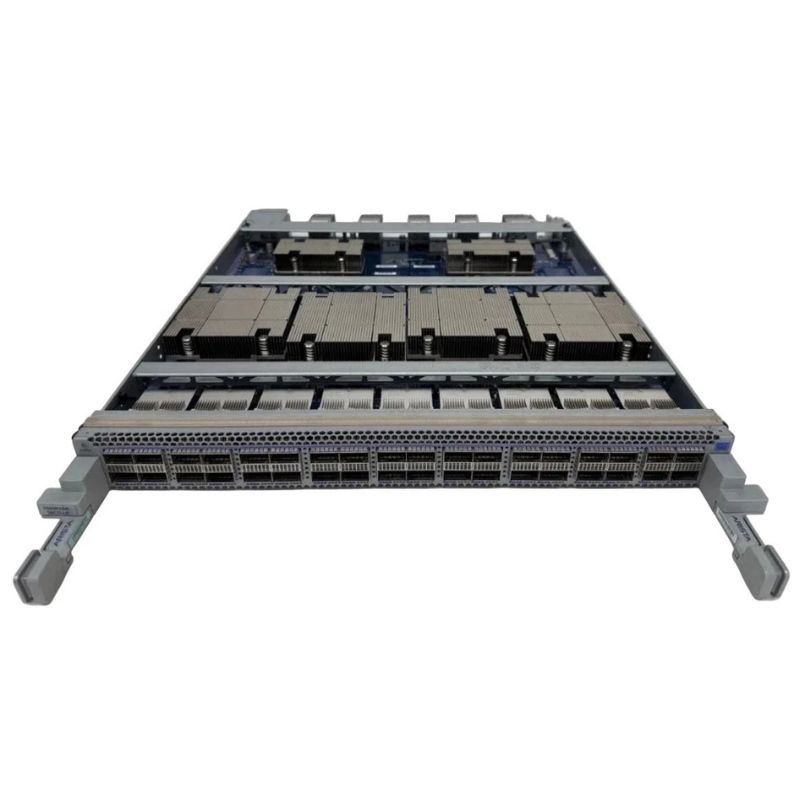


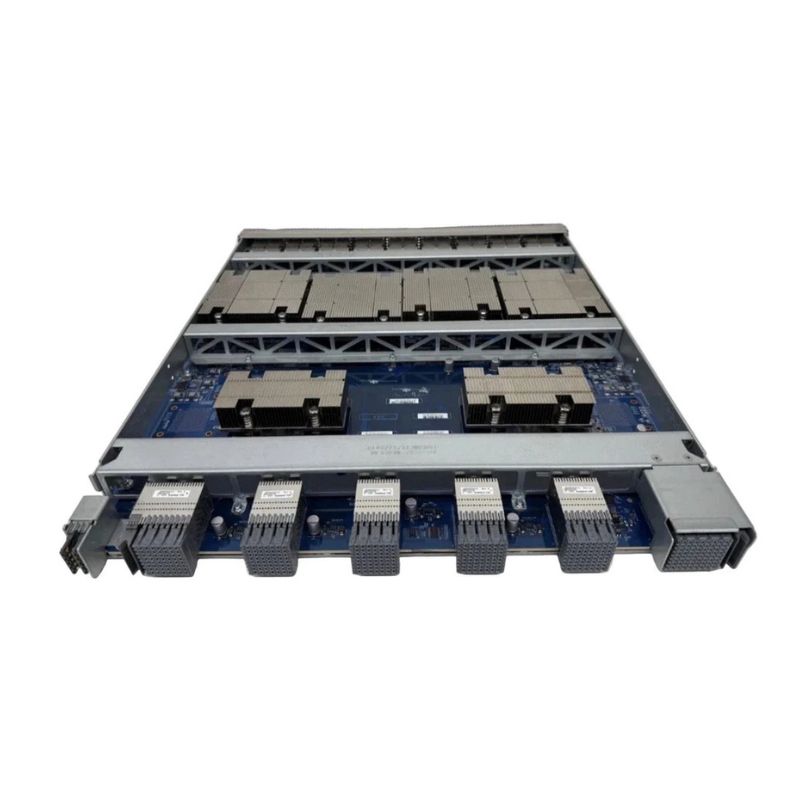
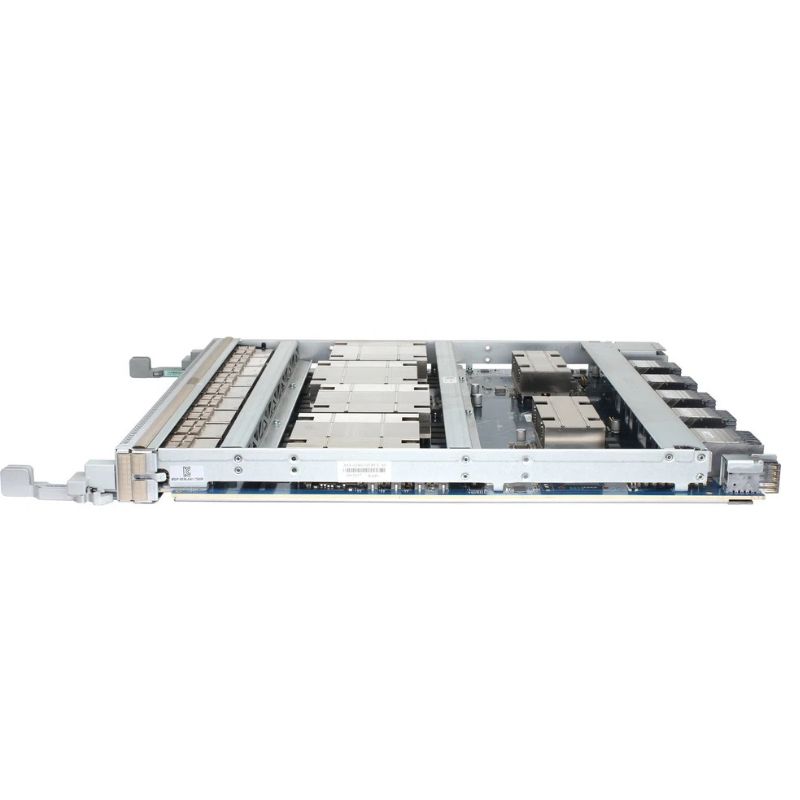
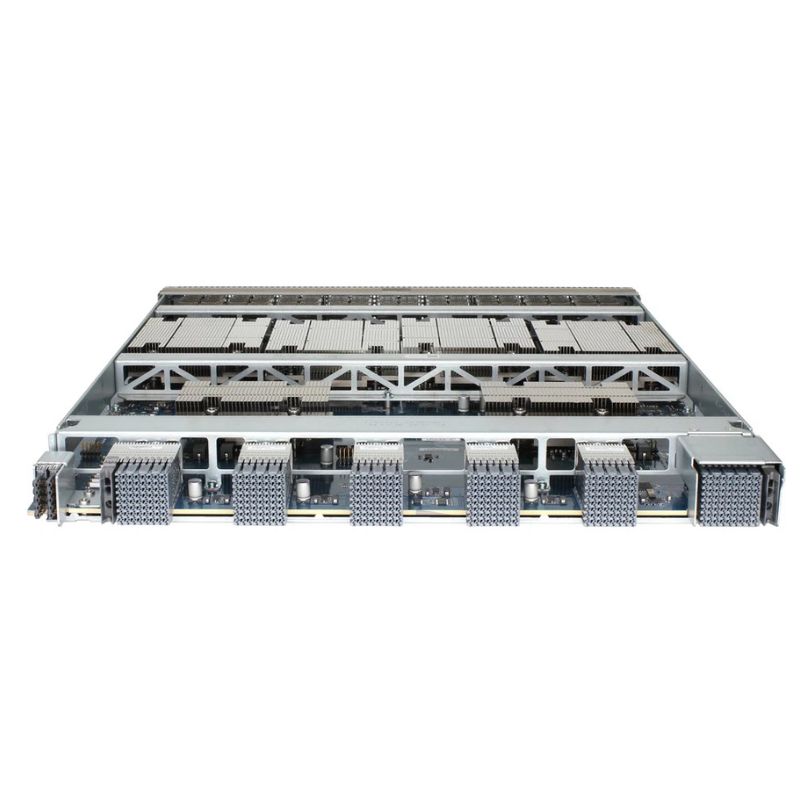
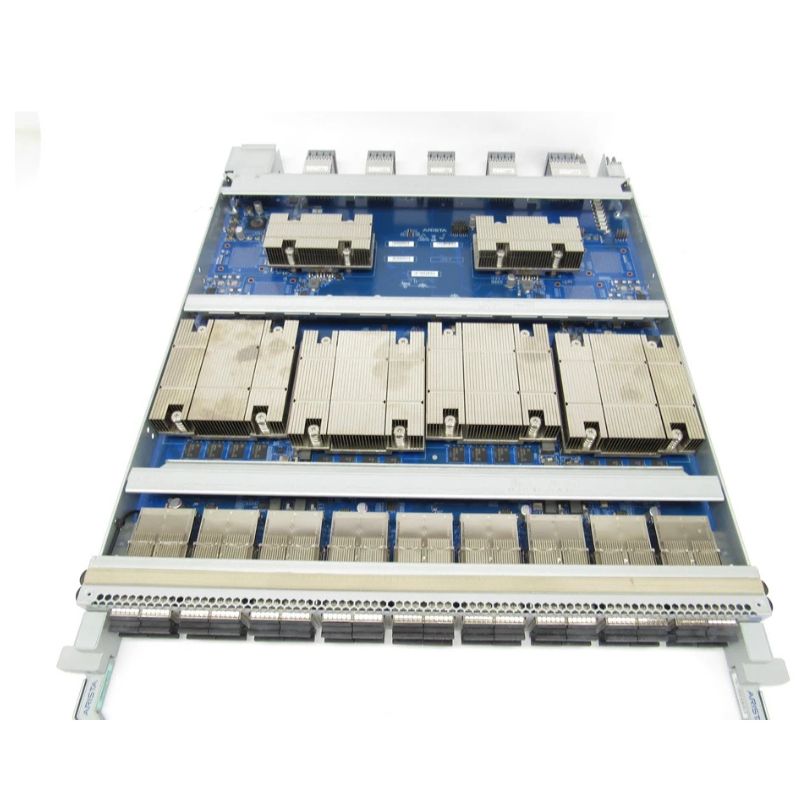
Arista DCS-7500R2AK-36CQ-LC 36 Ports 100GB QSFP100 Switch Line Card. Excellent Refurbished with 1 year replacement warranty
Overview of Arista DCS-7500R2AK-36CQ-LC 36 Ports Line Card
The ARISTA DCS-7500R2AK-36CQ-LC is a powerful 36-port QSFP100 line card engineered for enterprise-scale data centers, cloud fabrics, hyperscale environments, and large network infrastructures. Designed specifically for the ARISTA 7500R2 modular switching platform, this advanced networking module delivers exceptional throughput, flexible interface configurations, and ultra-low latency packet processing for modern high-bandwidth applications.
The Arista DCS-7500R2AK-36CQ-LC 7500R Series 36x 100GB QSFP100 Switch Line Card is engineered for high-density data center deployments that demand exceptional throughput, advanced scalability, and consistent low-latency network performance. Built for modern enterprise infrastructures, hyperscale environments, cloud computing platforms, and large-scale colocation facilities, this switch line card delivers the bandwidth and processing capabilities required for continuously expanding digital ecosystems.
Designed as part of the Arista 7500R Series modular switching platform, this high-performance line card integrates seamlessly into enterprise core, aggregation, and spine-layer architectures. Organizations implementing high-capacity networking solutions benefit from its optimized packet processing capabilities, sophisticated routing intelligence, and support for demanding east-west traffic flows commonly found in virtualized and containerized environments.
The 36-port QSFP100 configuration enables substantial port density while preserving efficient rack utilization. Each QSFP100 interface supports 100 Gigabit Ethernet connectivity, making the line card suitable for bandwidth-intensive workloads including artificial intelligence clusters, high-frequency transaction processing, cloud-scale storage systems, and real-time analytics platforms.
The Arista DCS-7500R2AK-36CQ-LC integrates directly with the switching fabric architecture of the 7500R Series chassis, ensuring optimized traffic forwarding and predictable network behavior under sustained workloads. This architecture supports non-blocking throughput characteristics that allow enterprises to scale without introducing bottlenecks into mission-critical applications.
Modern data centers require infrastructure capable of handling exponential traffic growth. The switch line card addresses these demands through advanced ASIC technology, extensive buffer resources, and intelligent forwarding mechanisms that maintain application responsiveness during periods of elevated network utilization.
By supporting high-capacity Ethernet deployments, the line card allows organizations to simplify network topologies while increasing aggregate bandwidth availability. This results in fewer physical devices, streamlined cable management, and improved operational efficiency across large-scale networking environments.
The 36x 100GB QSFP100 port design provides exceptional flexibility for organizations deploying high-speed Ethernet infrastructures. Data center operators can leverage these interfaces for server aggregation, spine connectivity, inter-data center links, and storage network transport without sacrificing scalability.
QSFP100 technology enables organizations to consolidate multiple lower-speed connections into unified high-bandwidth interfaces, reducing infrastructure complexity and lowering operational overhead. The line card supports environments where massive throughput capacity and consistent packet forwarding performance are essential to maintaining service continuity.
High-density 100GbE switching is increasingly important in environments supporting virtualization platforms, software-defined networking, distributed storage architectures, and cloud-native application deployments. The line card provides the bandwidth foundation required to support these evolving technologies.
The QSFP100 interfaces support a broad range of optical transceivers and direct attach cable configurations, allowing network architects to customize deployments according to distance requirements, latency expectations, and budget considerations. This flexibility simplifies integration into existing enterprise infrastructure while supporting future expansion initiatives.
Organizations deploying high-performance computing environments benefit from the ability to connect multiple servers, storage platforms, and aggregation switches using ultra-high-speed Ethernet connectivity. The flexibility of QSFP100 technology supports short-range, medium-range, and long-distance deployments within campus and interconnect architectures.
Scalability remains a central requirement in modern networking environments, and the Arista DCS-7500R2AK-36CQ-LC is optimized to support long-term infrastructure growth. The modular nature of the 7500R Series enables organizations to increase switching capacity incrementally while maintaining architectural consistency across the network core.
As traffic requirements expand, enterprises can deploy additional line cards within compatible chassis systems, preserving investment protection and minimizing migration complexity. This modular strategy reduces disruption during network expansion and allows infrastructure growth to align with business requirements.
Enterprise data centers require switching infrastructure capable of sustaining continuous high-bandwidth workloads without introducing packet loss or excessive latency. The Arista DCS-7500R2AK-36CQ-LC is optimized to deliver deterministic performance characteristics that support mission-critical workloads across diverse operational scenarios.
By incorporating advanced forwarding hardware and deep buffering capabilities, the switch line card ensures smooth traffic handling even during congestion events. This is particularly important in environments supporting storage replication, cloud orchestration platforms, virtual desktop infrastructure, and distributed computing applications.
Organizations managing latency-sensitive workloads benefit from consistent forwarding behavior that minimizes application disruption and maintains service-level objectives. The line card is engineered to support environments where network responsiveness directly impacts business operations and customer experiences.
Low-latency networking is essential for financial trading systems, AI model training clusters, media production environments, and large-scale cloud applications. The Arista DCS-7500R2AK-36CQ-LC provides optimized packet processing mechanisms designed to reduce forwarding delays while sustaining high throughput.
Efficient traffic handling enables applications to communicate rapidly across distributed infrastructures. This contributes to improved workload synchronization, faster storage access, and enhanced overall infrastructure responsiveness within enterprise and hyperscale deployments.
The combination of high-capacity interfaces and low-latency switching capabilities allows organizations to modernize network architectures while maintaining consistent application performance under demanding conditions.
Deep packet buffers are critical in environments where traffic bursts can overwhelm conventional switching platforms. The line card incorporates substantial buffering resources to manage congestion scenarios effectively, reducing packet drops and preserving application integrity during traffic spikes.
Storage-heavy workloads, virtualization clusters, and multi-tenant cloud platforms frequently generate uneven traffic patterns that require intelligent congestion management. Deep buffer architecture allows the line card to absorb these fluctuations while maintaining efficient packet forwarding behavior.
This buffering capability is particularly beneficial for organizations supporting multimedia streaming, backup operations, data analytics workloads, and distributed database synchronization across high-capacity networks.
Traffic engineering features within the Arista 7500R architecture enable organizations to optimize bandwidth utilization across complex network environments. The line card supports intelligent forwarding policies, traffic prioritization strategies, and advanced routing functions that contribute to predictable network performance.
Network administrators can implement sophisticated quality-of-service policies to ensure mission-critical applications receive appropriate bandwidth allocation and forwarding priority. This level of control is essential in environments supporting mixed workloads with varying performance requirements.
The rapid expansion of cloud computing platforms has created significant demand for scalable switching solutions capable of supporting dynamic workloads and highly virtualized environments. The Arista DCS-7500R2AK-36CQ-LC addresses these requirements through high-density connectivity, advanced automation compatibility, and scalable network intelligence.
Cloud service providers and hyperscale operators require networking hardware capable of supporting continuous infrastructure expansion while maintaining operational efficiency. This switch line card enables large-scale deployments that support thousands of servers, storage arrays, and virtual workloads within a unified switching framework.
The architecture of the 7500R Series supports spine-leaf topologies commonly used in modern cloud data centers. These topologies improve east-west traffic efficiency while simplifying scalability and reducing latency across distributed compute environments.
Virtualized infrastructures generate highly dynamic traffic patterns that require sophisticated switching intelligence and high-capacity forwarding capabilities. The line card supports these environments by delivering the bandwidth and reliability required for virtual machine mobility, container orchestration, and software-defined networking operations.
Organizations leveraging virtualization technologies benefit from scalable Ethernet connectivity that supports rapid workload deployment and seamless application migration across distributed infrastructure resources.
Support for advanced networking protocols enhances interoperability within virtualized ecosystems while improving infrastructure flexibility and operational consistency.
Software-defined networking initiatives require programmable infrastructure capable of adapting rapidly to changing operational demands. The Arista DCS-7500R2AK-36CQ-LC supports automation-driven deployments through compatibility with advanced orchestration platforms and centralized management frameworks.
Automation capabilities simplify network provisioning, policy management, and configuration consistency across large-scale environments. This reduces administrative overhead while improving deployment speed and operational accuracy.
Organizations implementing DevOps methodologies and infrastructure-as-code strategies benefit from programmable network infrastructure that integrates efficiently into automated operational workflows.
High-capacity interconnectivity between geographically distributed facilities is essential for modern enterprise continuity strategies and cloud expansion initiatives. The line card supports data center interconnect deployments requiring substantial bandwidth and reliable long-distance Ethernet transport.
Organizations can utilize the 100GbE interfaces for replication traffic, disaster recovery synchronization, backup operations, and multi-site workload distribution while maintaining consistent network performance.
The ability to support large-scale interconnect architectures contributes to improved business continuity planning and enables efficient hybrid cloud deployment models.
Modern enterprise infrastructures require more than raw switching throughput. Organizations also demand intelligent routing capabilities capable of supporting highly distributed application architectures, multi-tenant environments, and sophisticated traffic management strategies.
The Arista DCS-7500R2AK-36CQ-LC is optimized for environments where routing scalability and forwarding intelligence are critical operational requirements. Advanced routing support enables enterprises to deploy scalable Layer 2 and Layer 3 architectures across large campus and data center environments.
Comprehensive routing functionality supports network segmentation, traffic optimization, redundancy planning, and resilient application delivery across distributed infrastructures.
Enterprises operating large-scale infrastructures require extensive routing table capacity to support complex networking environments. The line card architecture is engineered to handle substantial route volumes while maintaining efficient forwarding performance and network stability.
This capability is especially valuable in service provider environments, multi-tenant cloud infrastructures, and enterprise core deployments where routing complexity continues to expand.
Scalable routing intelligence ensures organizations can accommodate evolving connectivity requirements without compromising network efficiency or operational consistency.
Network reliability is a critical requirement in enterprise environments where downtime can result in operational disruption and financial impact. The line card contributes to overall infrastructure resilience through robust hardware engineering and support for redundant network architectures.
High availability capabilities help organizations maintain service continuity during maintenance operations, hardware events, and traffic rerouting scenarios. This reliability is essential for industries requiring continuous network accessibility, including healthcare, finance, manufacturing, and cloud services.
By supporting resilient deployment models, the line card enables organizations to build infrastructures capable of meeting demanding uptime objectives.
Redundant networking architectures reduce the risk of service interruption and improve infrastructure stability. The Arista 7500R platform supports multiple redundancy mechanisms that contribute to continuous traffic availability across the network core.
The switch line card integrates into these resilient architectures by supporting advanced failover technologies and high-capacity traffic redistribution during link or hardware events.
Organizations implementing mission-critical services benefit from improved operational continuity and reduced risk associated with network outages.
Enterprise and cloud environments require sophisticated security frameworks capable of protecting sensitive data and maintaining operational integrity. The Arista DCS-7500R2AK-36CQ-LC supports advanced segmentation and policy enforcement strategies that contribute to secure network operations.
Modern security architectures increasingly rely on segmentation to isolate workloads, limit threat propagation, and enforce compliance requirements across distributed environments. The line card supports these initiatives through scalable networking intelligence and high-capacity traffic management.
Organizations deploying multi-tenant infrastructures benefit from secure traffic isolation mechanisms that preserve performance while supporting stringent operational controls.
Multi-tenant data centers and cloud service providers require networking platforms capable of supporting isolated customer environments without compromising scalability or performance. The line card enables efficient tenant separation through advanced switching and routing capabilities.
Scalable segmentation technologies support secure workload isolation while maintaining efficient utilization of shared infrastructure resources. This is essential for organizations delivering cloud services, managed hosting solutions, and enterprise colocation offerings.
By supporting secure traffic separation, the line card contributes to improved compliance management and operational reliability within shared infrastructure environments.
Policy-driven traffic management enables organizations to enforce security rules, optimize bandwidth allocation, and prioritize mission-critical applications. The line card supports sophisticated traffic control strategies that align network operations with business and compliance requirements.
Advanced traffic visibility and management capabilities help administrators maintain operational control across highly dynamic environments while improving infrastructure responsiveness and stability.
These capabilities are particularly valuable in enterprises supporting hybrid cloud deployments, remote workforce connectivity, and distributed application architectures.
The Arista DCS-7500R2AK-36CQ-LC is suitable for a broad range of enterprise networking scenarios including data center cores, spine switching layers, service provider backbones, and high-performance computing environments. Its combination of high-density connectivity and scalable architecture makes it adaptable to evolving infrastructure demands.
Organizations deploying private cloud platforms benefit from the ability to scale bandwidth rapidly while preserving architectural consistency across network domains. The line card supports flexible deployment strategies that accommodate changing application requirements and traffic patterns.
Enterprises modernizing legacy infrastructures can leverage the high-capacity capabilities of the 7500R Series to simplify network architectures and improve overall operational efficiency.
High-performance computing clusters require low-latency interconnectivity capable of supporting intensive parallel processing workloads. The line card provides the bandwidth density and forwarding efficiency necessary for AI workloads, scientific simulations, and large-scale computational analysis.
Efficient communication between compute nodes contributes to faster processing times and improved resource utilization within distributed computing environments.
The scalability of the platform enables organizations to expand computational infrastructure while maintaining consistent networking performance across growing clusters.
Enterprise core networks serve as the foundation for organizational connectivity and application delivery. The Arista DCS-7500R2AK-36CQ-LC supports core-layer deployments requiring exceptional throughput, advanced routing scalability, and resilient operational characteristics.
High-capacity Ethernet interfaces allow enterprises to aggregate traffic efficiently from campus environments, branch locations, and distributed data center resources while maintaining predictable performance.
The modular nature of the 7500R Series contributes to long-term investment protection by enabling organizations to scale infrastructure capacity incrementally in response to evolving business requirements.


 Contact Us
 Information
 Catalog
 Solid State Drives (SSD)
 Network Switches
 Hard Disk Drives
 HBA & Controllers
 PC & Servers
 PC & Server Memory
 CPU & Processors
 Network Routers
 Power Supplies
 Tape Drives & Libraries
 Network Devices
 Computer & Network Cables