(7% discount is applied at checkout)
Cart is empty
Your go-to destination for cutting-edge server products
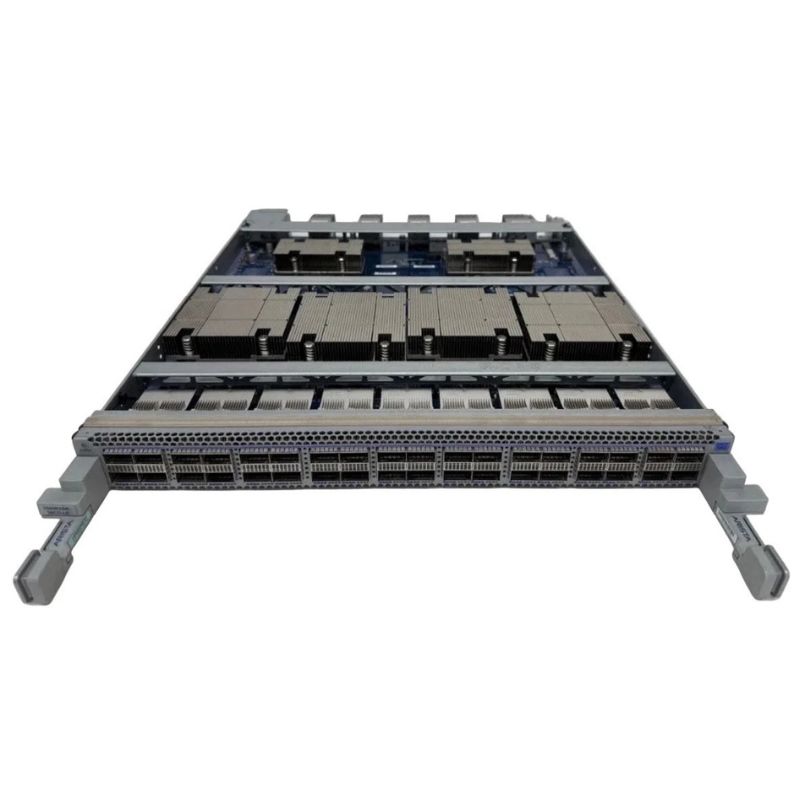


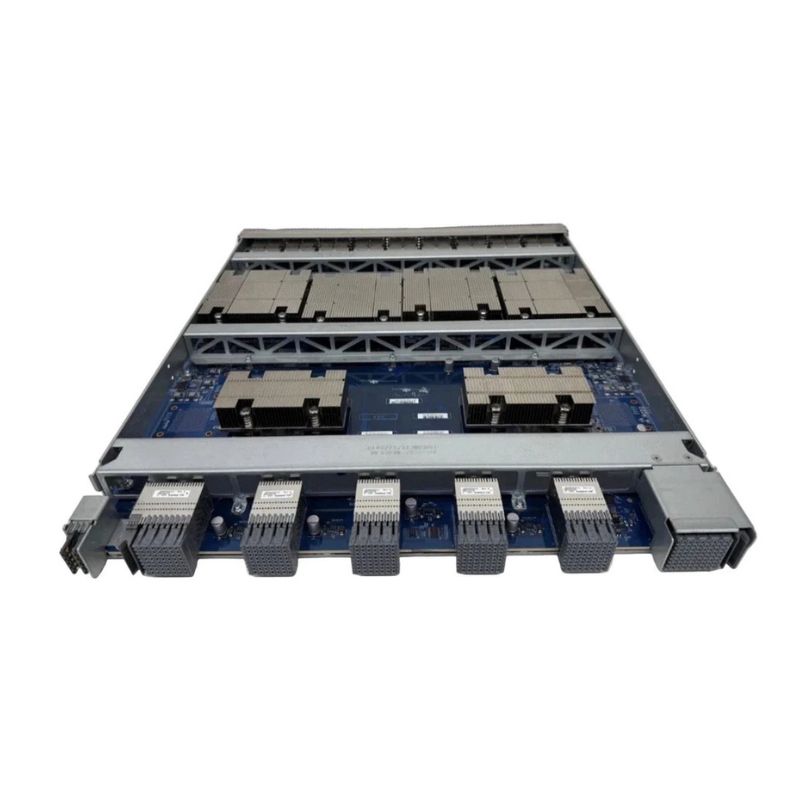
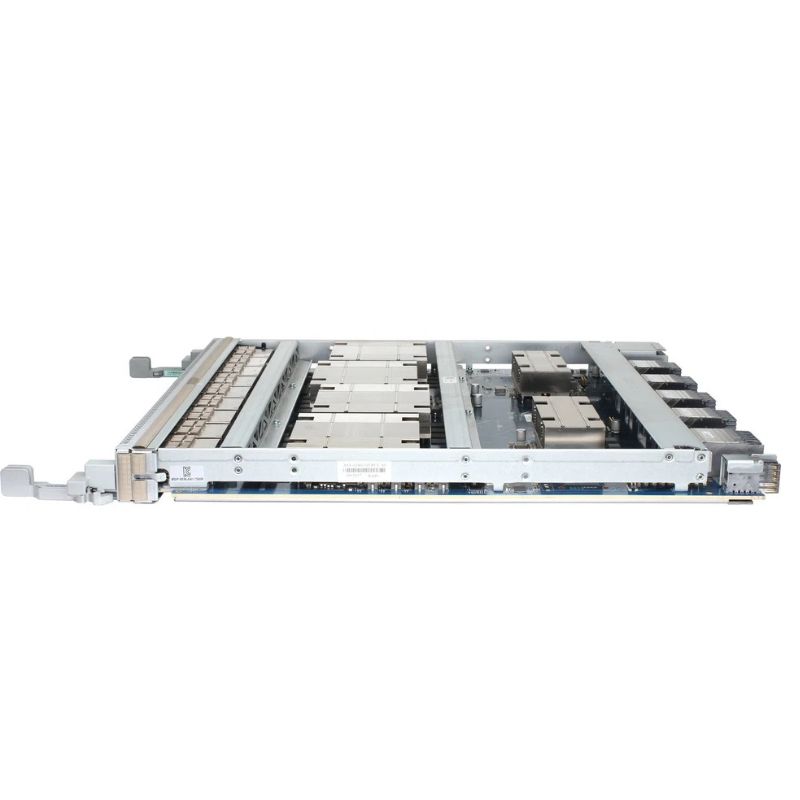
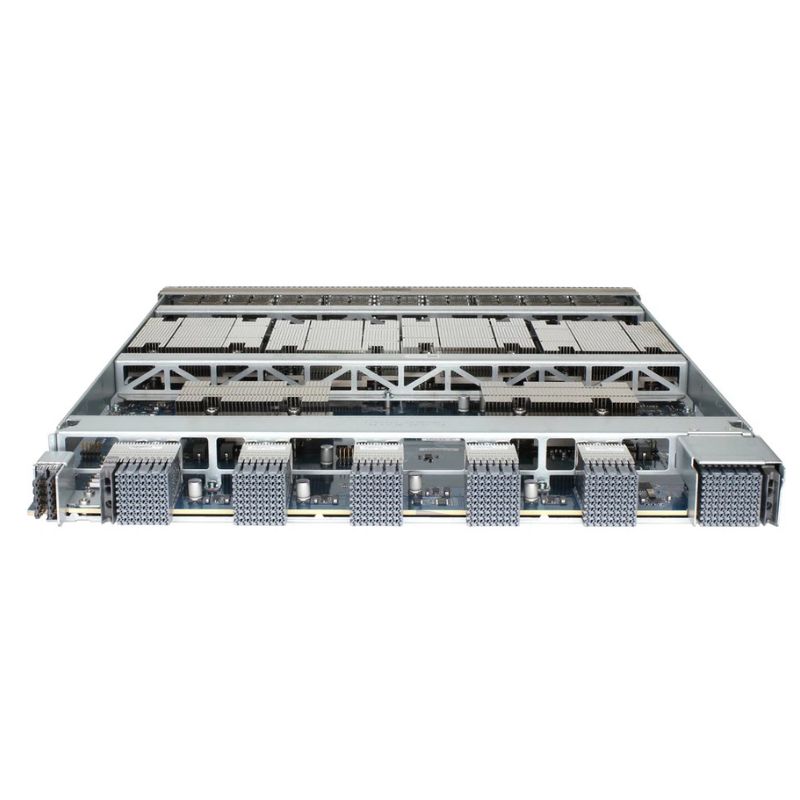
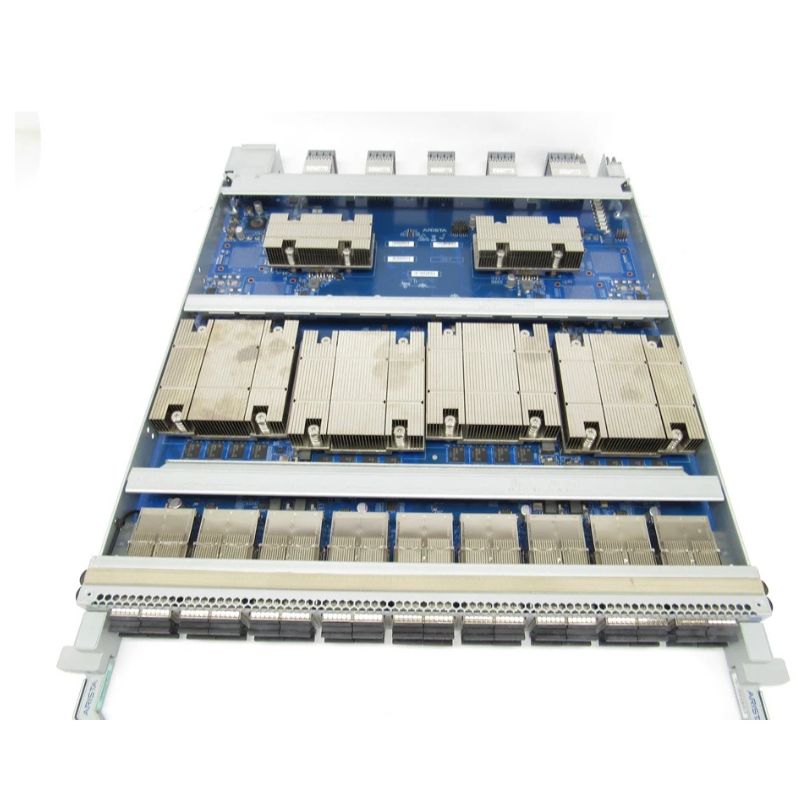
Arista DCS-7500R2M-36CQ-LC 36 Ports 100GbE QSFP100 with MACSec wirespeed Line Card. Excellent Refurbished with 1 year replacement warranty
Overview of Arista DCS-7500R2M-36CQ-LC Line Card
The Arista DCS-7500R2M-36CQ-LC is a high-density, advanced switching line card engineered for next-generation data center fabrics. Designed for the 7500R2 series modular switch platform, it delivers exceptional performance, scalability, and high-throughput networking capabilities for enterprise and cloud-scale environments. Built with precision engineering, this module enhances backbone infrastructure with ultra-fast connectivity and secure data transmission features.
The Arista DCS-7500R2M-36CQ-LC line card is an advanced high-density networking component designed for next-generation data center architectures that demand extreme throughput, deterministic latency, and robust security integration at scale. Built for the Arista 7500R2 Series modular switch platform, this line card delivers 36 ports of 100GbE connectivity using QSFP100 interfaces, enabling massive east-west traffic flows in cloud-scale environments, hyperscale data centers, and high-performance enterprise infrastructures. Engineered by
The architecture of the DCS-7500R2M-36CQ-LC is centered around delivering uncompromised density and scalability in environments where bandwidth demand grows exponentially. With 36 ports of 100 Gigabit Ethernet, the line card enables a highly efficient aggregation layer, reducing the physical footprint of networking hardware while increasing overall throughput capacity. Each port is capable of operating at wirespeed, ensuring no performance degradation under full load conditions.
This architecture is particularly suited for spine-and-leaf network topologies where scalability, low oversubscription, and predictable performance are critical. The QSFP100 interfaces support a range of optical and direct attach copper (DAC) connectivity options, enabling flexible deployment across varied rack-scale and row-scale network designs. The emphasis on modularity allows operators to expand capacity incrementally without redesigning entire infrastructure layers.
At the core of this line card is its 36-port QSFP100 configuration, which allows each port to deliver 100GbE connectivity using standardized QSFP form factors. This ensures interoperability with a wide range of transceivers, breakout cables, and optical modules, making it highly adaptable to diverse network environments. The QSFP100 ecosystem also enables backward compatibility with lower-speed interfaces through breakout configurations, supporting 4x25GbE or 2x50GbE transitions depending on deployment needs.
This flexibility allows network architects to design hybrid infrastructures where legacy systems coexist with high-speed modern workloads. The ability to dynamically allocate bandwidth across ports also enhances utilization efficiency, reducing wasted capacity and improving total cost of ownership in large-scale deployments.
One of the most significant capabilities of the DCS-7500R2M-36CQ-LC line card is its support for MACsec (Media Access Control Security) at wirespeed. MACsec provides hardware-based encryption at Layer 2, ensuring that all data traversing the physical network links is encrypted without introducing measurable latency. This is critical for environments handling sensitive workloads such as financial transactions, healthcare data, government communications, and multi-tenant cloud infrastructures.
Unlike software-based encryption mechanisms that consume CPU resources and introduce performance overhead, MACsec on this line card is implemented directly in hardware. This ensures that encryption and decryption processes occur at line rate, preserving throughput while maintaining strong cryptographic security standards. The integration of hardware acceleration ensures that even under full port utilization, the system maintains consistent latency and predictable performance.
The encryption capability is especially valuable in multi-hop data center environments where traffic often traverses multiple switches and interconnects. By securing data at each hop without performance degradation, organizations can achieve end-to-end encryption policies without sacrificing scalability or efficiency.
The DCS-7500R2M-36CQ-LC line card is designed to integrate seamlessly into the switching fabric of the 7500R2 Series chassis. It leverages a high-performance architecture that ensures non-blocking throughput across all ports, allowing simultaneous full-rate communication without contention or bottlenecks. This is essential for modern distributed applications such as container orchestration systems, AI/ML workloads, and real-time analytics platforms.
The non-blocking nature of the line card ensures that each port can operate at maximum capacity regardless of traffic patterns across the system. This is achieved through advanced packet forwarding engines and optimized internal switching pathways that minimize congestion and maximize efficiency. As a result, network administrators can deploy high-density workloads without worrying about oversubscription ratios affecting performance.
Latency-sensitive applications such as high-frequency trading systems, real-time telemetry processing, and distributed AI inference pipelines benefit significantly from the low-latency design of this line card. Every stage of packet processing, from ingress to egress, is optimized for minimal delay. This ensures deterministic behavior even under heavy traffic loads, which is a critical requirement for modern digital infrastructures.
The DCS-7500R2M-36CQ-LC is engineered to support massive scalability demands found in hyperscale data centers. As cloud computing continues to expand, network infrastructure must support rapid scaling without requiring architectural redesigns. This line card enables seamless expansion by providing high-density port availability within a modular chassis design.
Its compatibility with spine-and-leaf architectures allows it to serve as either a high-capacity spine aggregation point or as a core switching layer in large distributed networks. The modular nature of the system ensures that capacity can be increased incrementally as demand grows, reducing capital expenditure and improving operational efficiency.
In multi-tenant environments, isolation, security, and performance consistency are essential. The integration of MACsec encryption and high-performance forwarding ensures that tenant workloads remain isolated while still benefiting from shared infrastructure efficiency. This makes the line card particularly well-suited for cloud service providers offering Infrastructure-as-a-Service (IaaS), Platform-as-a-Service (PaaS), and hybrid cloud environments.
The line card operates under the Arista Extensible Operating System (EOS), a highly programmable and modular network operating system known for its stability and automation capabilities. EOS provides a unified control plane that simplifies network management while enabling advanced programmability through APIs, automation scripts, and telemetry integration.
Modern data centers require automation to manage complexity at scale. EOS enables network operators to integrate the line card into automated workflows using scripting tools and orchestration frameworks. This allows for dynamic configuration changes, automated provisioning, and real-time monitoring of network health metrics.
Telemetry data generated by the line card can be exported in real time, enabling deep visibility into traffic patterns, port utilization, and system performance. This supports predictive maintenance strategies and enhances operational reliability.
Reliability is a core design principle of the DCS-7500R2M-36CQ-LC. The line card is built with redundancy and fault tolerance in mind, ensuring continuous operation even under component stress or partial system failures. Its architecture is designed to isolate faults and maintain operational integrity without impacting the entire system.
When deployed within a modular chassis, the line card benefits from redundant power, cooling, and fabric connectivity systems. This ensures that even in the event of hardware degradation or environmental stress, the networking infrastructure continues to operate without interruption.
Security is deeply embedded into the architecture of the DCS-7500R2M-36CQ-LC. The inclusion of MACsec encryption ensures that data is protected at the link layer, reducing the risk of interception or tampering. This is particularly important for organizations operating in regulated industries where compliance with data protection standards is mandatory.
The hardware-based encryption model ensures that security does not become a bottleneck in network performance. Instead, it operates transparently, allowing administrators to enforce encryption policies without modifying application behavior or network topology.
The line card is suitable for a wide range of deployment scenarios, including enterprise data centers, cloud service provider networks, high-performance computing clusters, and telecommunications infrastructure. Its versatility allows it to function in both edge and core network roles depending on architectural requirements.
In enterprise environments, the line card serves as a high-performance aggregation layer, connecting multiple access switches and distribution layers into a unified core. This enables efficient traffic routing and centralized network management.
In hyperscale environments, the line card is often deployed in spine roles where it aggregates traffic from multiple leaf switches. Its high port density and non-blocking architecture make it ideal for supporting massive east-west traffic flows typical in distributed computing environments.


 Contact Us
 Information
 Catalog
 Solid State Drives (SSD)
 Network Switches
 Hard Disk Drives
 HBA & Controllers
 PC & Servers
 PC & Server Memory
 CPU & Processors
 Network Routers
 Power Supplies
 Tape Drives & Libraries
 Network Devices
 Computer & Network Cables