(7% discount is applied at checkout)
Cart is empty
Your go-to destination for cutting-edge server products
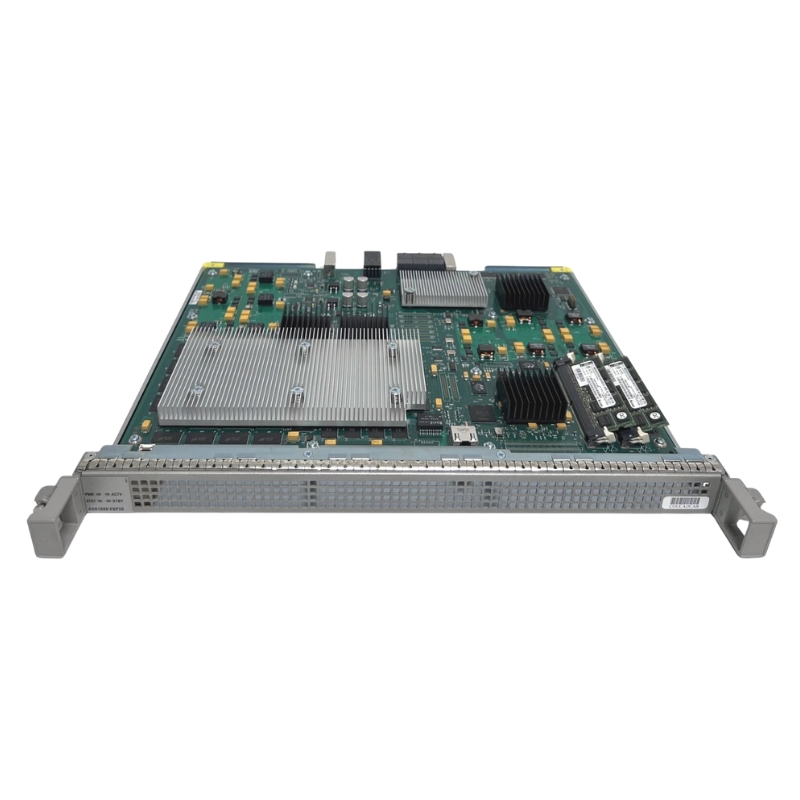


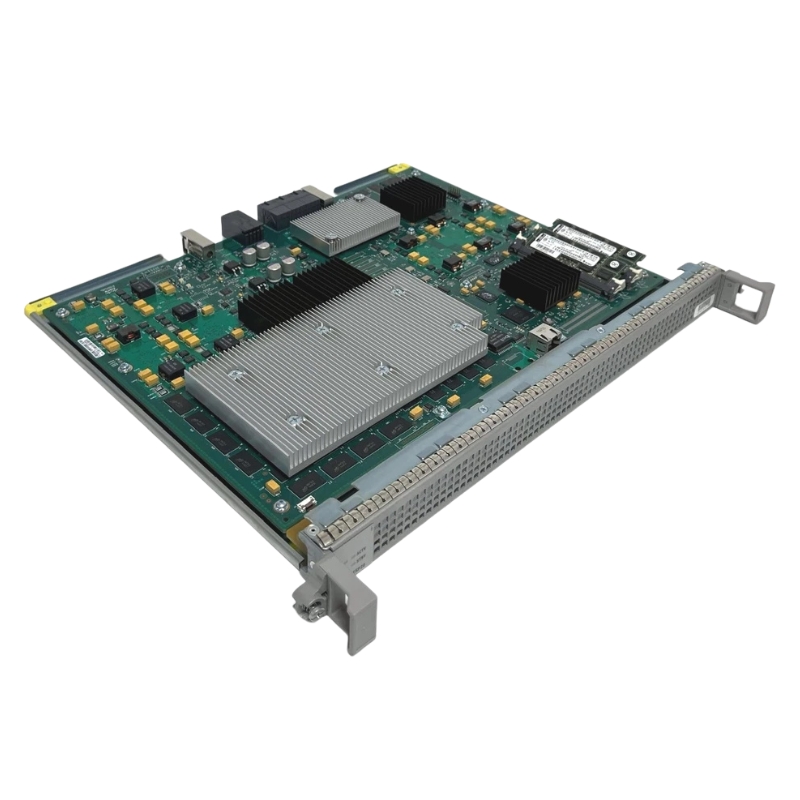
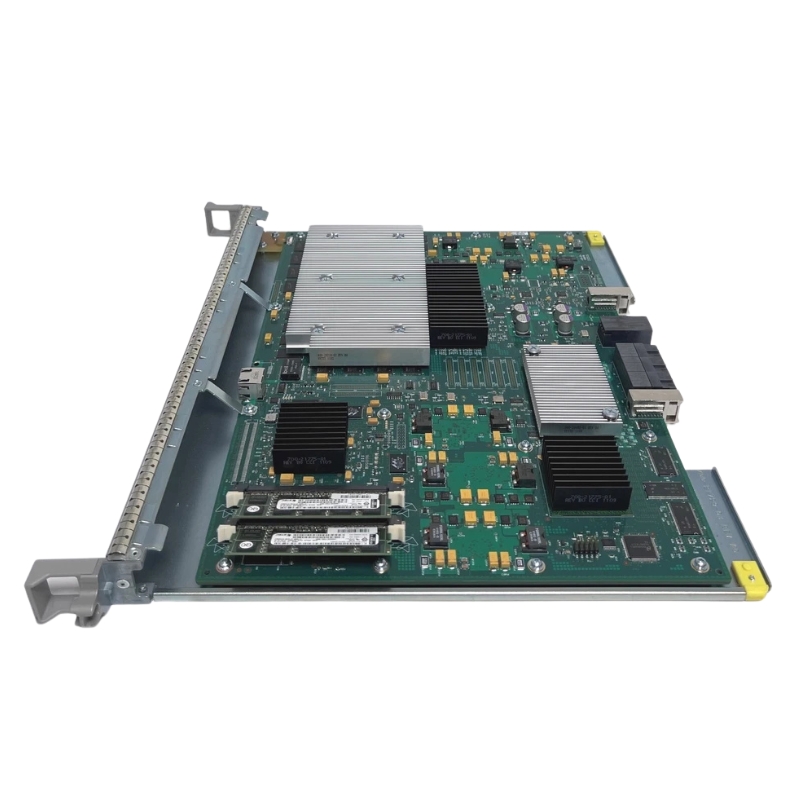
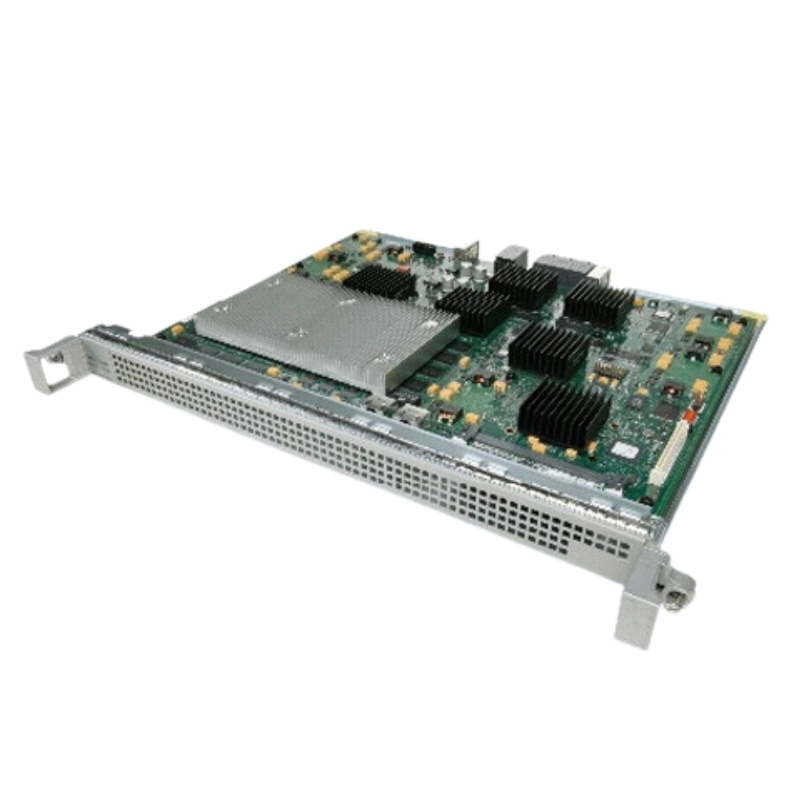
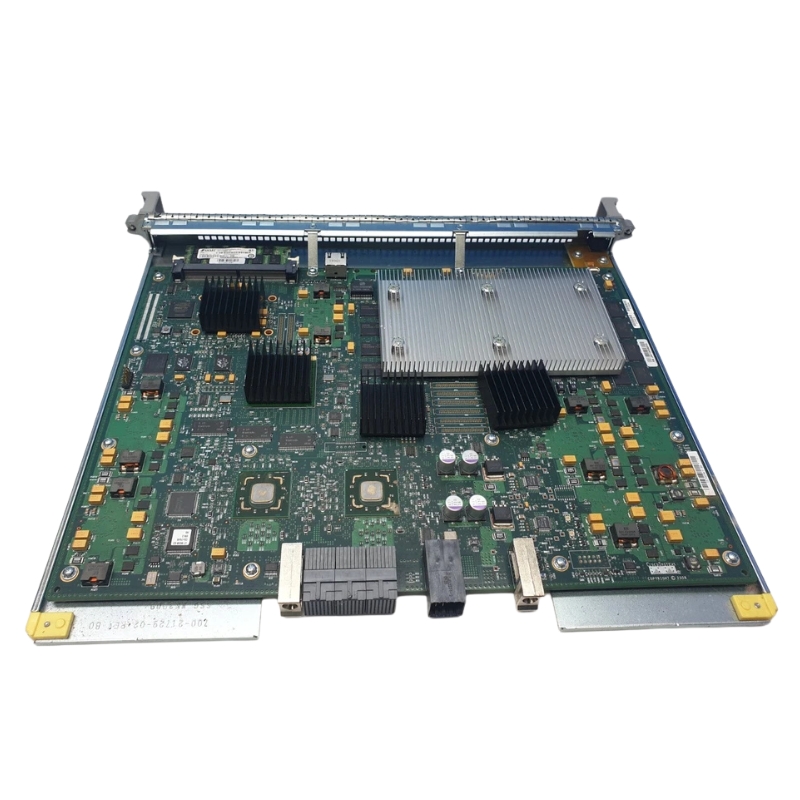
Cisco ASR1000-ESP10 Embedded Services Processor Series. Factory-Sealed New in Original Box (FSB) with 1 year replacement warranty
| SKU/MPN | Warranty | Price | Condition | You save |
|---|---|---|---|---|
| ASR1000-ESP10 | 1 Year Warranty | $150.00 | Excellent Refurbished | You save: $52.50 (26%) |
| ASR1000-ESP10 | 1 Year Warranty | $550.00 | Factory-Sealed New in Original Box (FSB) | You save: $192.50 (26%) |
The Cisco ASR1000-ESP10 from the ASR 1000 Series functions as a high-performance embedded services processor designed to strengthen routing intelligence and network throughput. Built as a plug-in control module, it enhances carrier-grade infrastructure by delivering optimized packet processing, scalable service integration, and dependable operational stability for modern enterprise and service provider environments.
The Cisco ASR 1000 Series represents a high performance routing platform engineered for carrier grade deployments, service provider edge environments, and large enterprise network backbones. The architecture is built around a modular design that separates processing responsibilities into specialized hardware components, allowing optimized handling of control plane functions, forwarding operations, and embedded services. Within this architecture, the Cisco ASR1000-ESP10 Services Processing Engine plays a central role in ensuring that high throughput packet forwarding and service integration are executed efficiently without compromising reliability or scalability.
This category of network processing hardware is designed to address the increasing demand for converged services, where routing, security, and application intelligence must operate simultaneously on high speed traffic streams. The ASR 1000 Series achieves this by distributing workloads across dedicated processors, ensuring that no single processing domain becomes a bottleneck. The ESP10 module in particular is engineered to deliver a balance of performance and service flexibility, making it suitable for complex network environments that require consistent forwarding performance under variable traffic conditions.
The Service Processing Engine is responsible for handling data plane operations within the Cisco ASR 1000 Series architecture. In the case of the ASR1000-ESP10, the engine is optimized for packet forwarding, traffic classification, and hardware accelerated service execution. It acts as the primary component that processes ingress and egress traffic flows, ensuring that routing decisions and service policies are enforced at wire speed.
The ESP10 integrates advanced forwarding logic that allows it to offload computationally intensive tasks from the route processor. This separation ensures that control plane operations such as routing updates and management functions do not interfere with packet forwarding performance. As a result, the system maintains stability even under heavy traffic loads or during periods of dynamic network convergence.
The ASR1000-ESP10 is engineered with hardware acceleration capabilities that enhance its ability to process large volumes of network traffic efficiently. It leverages specialized forwarding ASICs that are designed to handle packet inspection, encapsulation, and forwarding operations at high speed. This hardware acceleration ensures consistent performance even when the system is managing multiple concurrent services such as encryption, quality of service enforcement, and traffic shaping.
Throughput performance in this category of service processing engines is a critical factor for network scalability. The ESP10 is designed to support high bandwidth aggregation, making it suitable for edge routing environments where traffic from multiple sources converges into a single processing point. The architecture ensures minimal packet loss and reduced latency, which are essential requirements for service provider networks and latency sensitive applications.
The functional design of the Cisco ASR1000-ESP10 is centered around efficient packet lifecycle management. Every packet entering the system undergoes a structured processing sequence that includes classification, policy evaluation, forwarding lookup, and service enforcement. This design ensures that traffic is processed consistently regardless of complexity or protocol variation.
The module is tightly integrated into the ASR 1000 chassis, allowing seamless communication with route processors and other system components. This integration is essential for maintaining synchronization between control plane intelligence and data plane execution. The ESP10 is engineered to respond dynamically to routing updates and policy changes, ensuring that forwarding behavior remains aligned with network state.
The packet processing pipeline within the ASR1000-ESP10 is designed to handle high speed data flows with minimal latency. Incoming packets are first subjected to classification logic that determines their forwarding treatment. This includes identification of protocol type, source and destination addresses, and service requirements.
Once classified, packets are directed through forwarding tables that determine their next hop destinations. The pipeline is optimized to reduce processing overhead by leveraging hardware based lookup mechanisms. This allows the system to maintain predictable performance even in large scale routing environments with extensive routing tables and complex traffic patterns.
A fundamental principle of the ASR 1000 Series architecture is the separation of control plane and data plane functions. The ASR1000-ESP10 operates exclusively within the data plane, handling packet forwarding and service execution, while control plane operations are managed by dedicated route processors.
This separation enhances system stability by isolating routing intelligence from high speed forwarding tasks. It also improves scalability, as each plane can be optimized independently. The result is a robust system capable of handling dynamic routing environments without compromising forwarding performance.
The performance characteristics of the Cisco ASR1000-ESP10 are defined by its ability to maintain high throughput under varying traffic conditions. The module is designed to support sustained data transfer rates while ensuring low latency and minimal jitter. This makes it suitable for mission critical applications that require consistent network performance.
In addition to raw throughput capabilities, the ESP10 is optimized for efficient resource utilization. Its architecture ensures that processing capacity is allocated dynamically based on traffic demand, allowing the system to adapt to changing network conditions without manual intervention.
The scalability of the ASR1000-ESP10 makes it suitable for deployment in carrier grade network infrastructures. It is capable of handling large scale routing tables and high density traffic aggregation without performance bottlenecks. This scalability is achieved through a combination of hardware acceleration and modular system architecture.
As network demands increase, the ESP10 can maintain consistent forwarding performance, ensuring that service provider networks remain stable and efficient. This makes it an essential component in backbone and edge routing deployments where traffic volumes continue to grow.
High availability is a critical design consideration in the ESP10 module. The system is engineered to support redundancy mechanisms that ensure continuous operation even in the event of hardware or software disruptions. This includes failover capabilities and synchronized state management between redundant components.
The redundancy design ensures that network services remain uninterrupted, which is essential for enterprise and service provider environments where downtime can have significant operational impact. The ESP10 contributes to overall system resilience by maintaining forwarding continuity during failover events.
The Cisco ASR1000-ESP10 is designed to integrate seamlessly within the broader ASR 1000 Series router ecosystem. It works in conjunction with route processors and embedded service processors to deliver a unified networking platform capable of handling complex traffic requirements.
This integration allows for coordinated operation between routing intelligence and packet forwarding hardware. The result is a cohesive system that can adapt to network changes while maintaining high performance and service consistency.
Embedded services processors within the ASR 1000 Series provide additional functionality such as security services, application visibility, and traffic inspection. The ESP10 interacts with these processors to ensure that service policies are applied consistently across traffic flows.
This interaction enables the system to deliver integrated services without compromising forwarding performance. It also allows for flexible deployment of network services based on operational requirements.
The ASR1000-ESP10 is commonly deployed in network edge environments where traffic aggregation and service enforcement are required. These environments include service provider edge routers, enterprise WAN gateways, and internet exchange points.
In these scenarios, the ESP10 provides the necessary processing power to handle diverse traffic types while maintaining consistent performance. Its ability to manage high density traffic flows makes it ideal for edge routing applications.
The ESP10 supports deep packet inspection capabilities that allow it to analyze packet payloads beyond basic header information. This enables the system to identify application level traffic characteristics and apply appropriate policies.
This capability is essential for environments that require advanced traffic classification and security enforcement. It allows for granular control over network behavior based on application context.
Quality of service enforcement is a key function of the ESP10 module. It ensures that network traffic is prioritized according to predefined service policies. This includes bandwidth allocation, traffic shaping, and latency management.
By enforcing quality of service policies at the hardware level, the system ensures consistent performance for critical applications even under heavy network load conditions.
The ESP10 is designed with power efficiency in mind, minimizing energy consumption while maintaining high performance levels. This contributes to reduced operational costs and improved energy efficiency in large scale deployments.
Power optimization techniques ensure that the system operates efficiently under varying load conditions without unnecessary energy expenditure.
The Cisco ASR1000-ESP10 is widely used in service provider networks where high performance routing and service integration are required. Its architecture makes it suitable for a range of deployment scenarios involving large scale traffic management.
In enterprise environments, the ESP10 is used to aggregate traffic from multiple branch locations into centralized data centers. It provides the necessary processing power to manage secure and efficient connectivity across distributed networks.
The module supports wide area network optimization by enabling efficient traffic handling and service prioritization. This improves application performance across geographically distributed networks.
In internet routing infrastructure, the ESP10 plays a critical role in handling backbone traffic and ensuring stable routing performance. Its high throughput capabilities make it suitable for core network deployments where traffic volumes are extremely high.


 Contact Us
 Information
 Catalog
 Solid State Drives (SSD)
 Network Switches
 Hard Disk Drives
 HBA & Controllers
 PC & Servers
 PC & Server Memory
 CPU & Processors
 Network Routers
 Power Supplies
 Tape Drives & Libraries
 Network Devices
 Computer & Network Cables