(7% discount is applied at checkout)
Cart is empty
Your go-to destination for cutting-edge server products
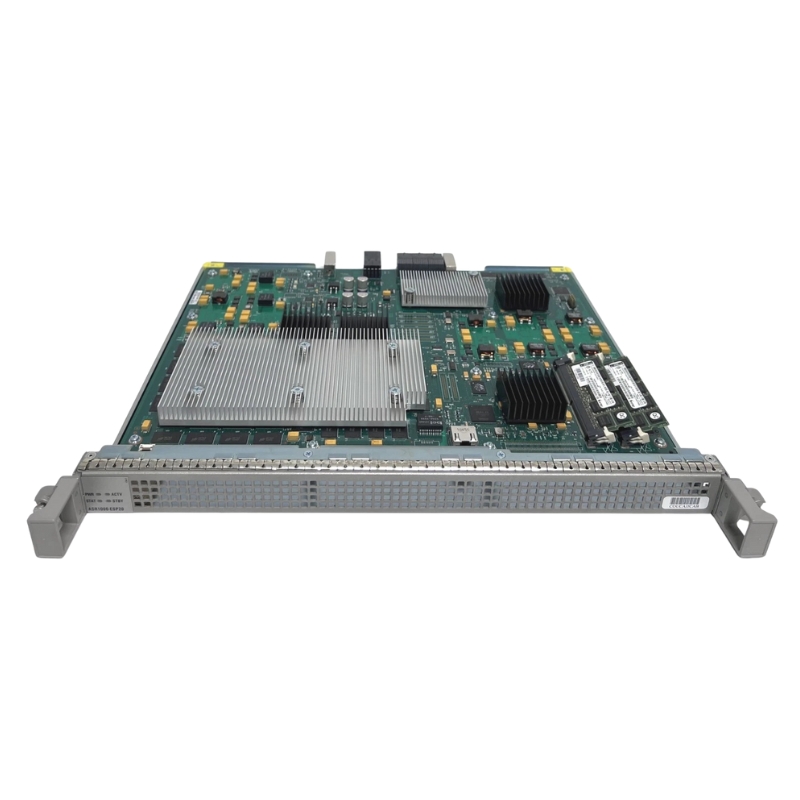


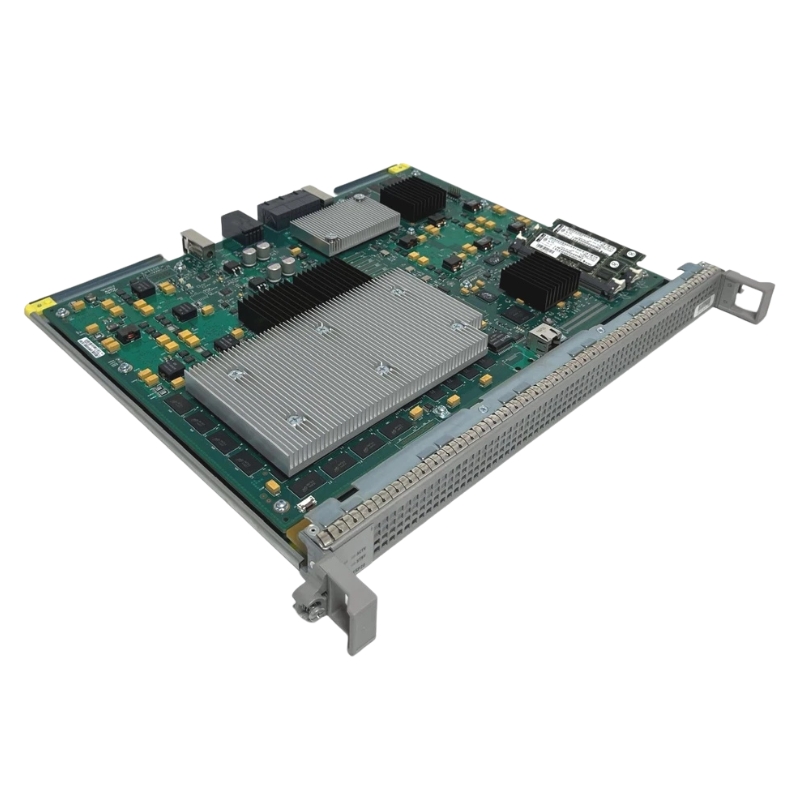
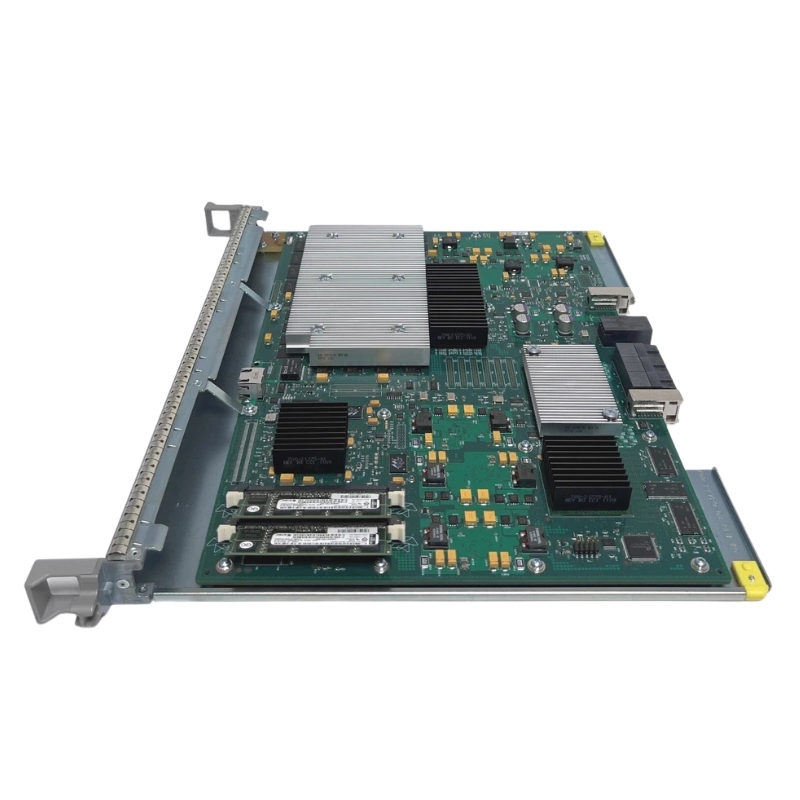
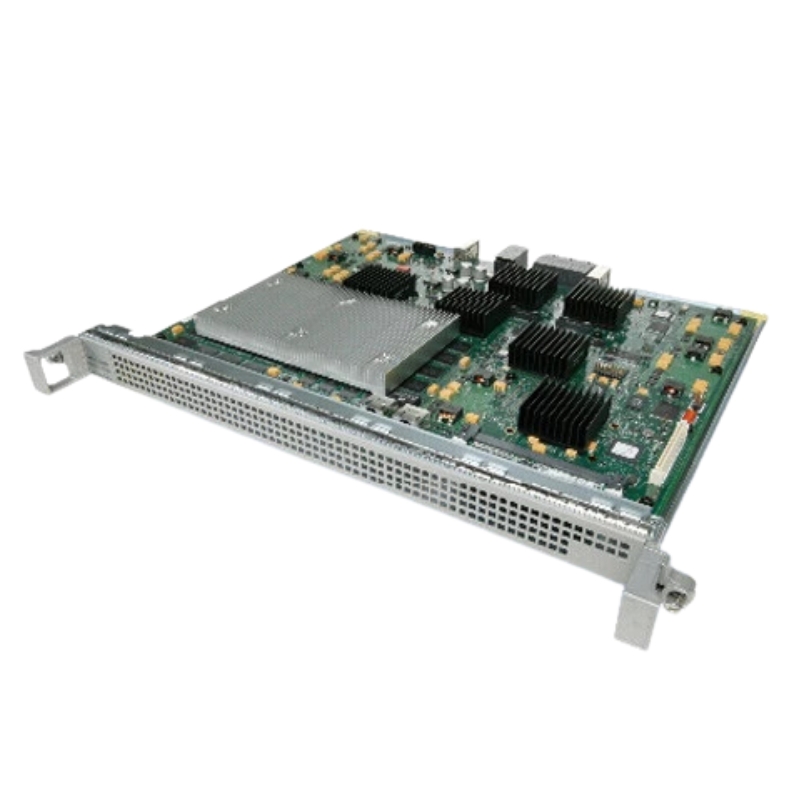
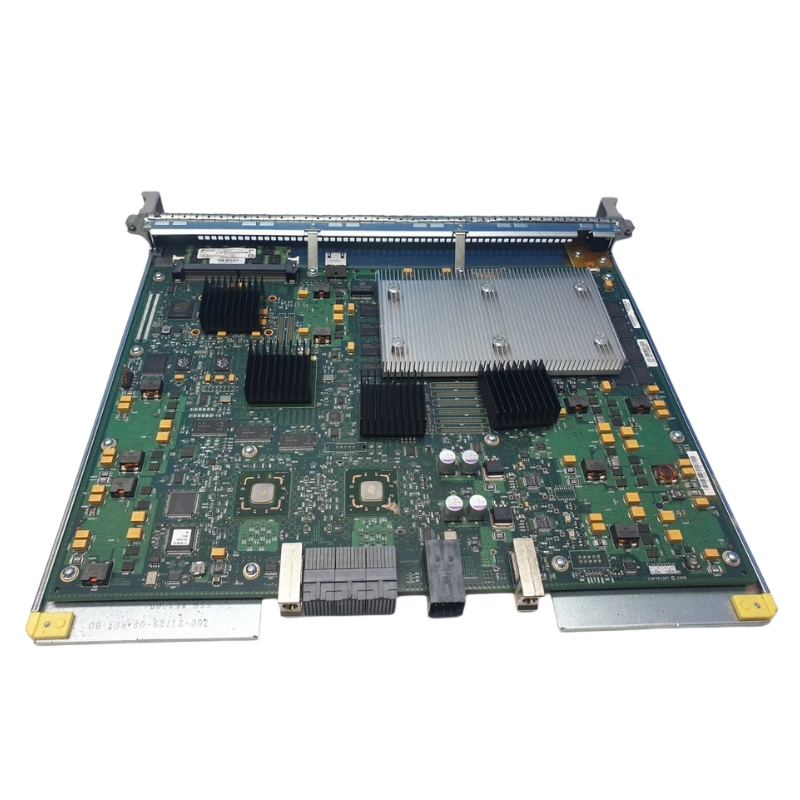
Cisco ASR1000-ESP10 ASR 1000Series Services Control Processor. Excellent Refurbished with 1 year replacement warranty
| SKU/MPN | Warranty | Price | Condition | You save |
|---|---|---|---|---|
| ASR1000-ESP10 | 1 Year Warranty | $150.00 | Excellent Refurbished | You save: $52.50 (26%) |
| ASR1000-ESP10 | 1 Year Warranty | $550.00 | Factory-Sealed New in Original Box (FSB) | You save: $192.50 (26%) |
Cisco ASR1000-ESP10 from the ASR 1000 Series functions as a high-performance services control processor designed to strengthen routing intelligence, optimize traffic flow, and enhance enterprise-grade network efficiency. Built for scalability and reliability, this plug-in module delivers advanced packet processing capabilities, supports large-scale routing environments, and ensures stable performance across demanding infrastructure deployments. It is engineered to improve network throughput, reinforce security handling, and support modern enterprise connectivity requirements with consistent operational stability.
The Cisco ASR1000-ESP10 ASR 1000 Series Services Control Processor represents a high-performance embedded services processing component designed for advanced routing platforms within carrier-grade and enterprise networking environments. This category is centered around scalable forwarding performance, deep packet inspection capabilities, and intelligent traffic handling functions that support next-generation network infrastructures. The architecture of the ASR 1000 Series is built to deliver high throughput, resilient service availability, and modular expansion, making it a foundational component for modern WAN edge deployments and service provider aggregation layers.
The ESP10 module is part of a broader architectural framework that integrates routing intelligence, hardware-based acceleration, and distributed processing. It is engineered to optimize packet forwarding efficiency while maintaining service consistency across high-density traffic flows. This category description explores the structural design, operational behavior, deployment use cases, and system-level integration aspects that define the Cisco ASR1000-ESP10 within the ASR 1000 Series ecosystem.
The architectural foundation of the ASR 1000 Series is built around separation of control plane and data plane responsibilities. The ESP10 functions primarily within the data plane, where it handles packet forwarding, encryption acceleration, and service processing tasks. This separation allows the system to maintain high availability and predictable performance even under heavy network loads. The control plane is managed by a separate processor subsystem that handles routing protocols, network topology awareness, and configuration management, while the ESP10 focuses on high-speed packet handling.
This design improves scalability because the forwarding capacity can be expanded independently of control logic. It also enhances system resilience since failures in routing logic do not directly compromise forwarding performance. The modular nature of the ESP10 ensures that network operators can deploy consistent service performance across different network sizes and traffic conditions.
At the core of the Cisco ASR1000-ESP10 lies a high-performance packet forwarding engine optimized for deterministic throughput. This engine is designed to handle large volumes of network traffic with minimal latency. It processes packets using hardware acceleration techniques that reduce dependency on software-based routing decisions. The result is efficient forwarding behavior even in complex routing environments with multiple services running simultaneously.
The forwarding engine supports advanced packet classification mechanisms that allow it to identify traffic types and apply appropriate forwarding logic. This includes support for differentiated services, policy-based routing, and application-aware handling. By integrating these capabilities into hardware, the ESP10 ensures consistent performance across varying workloads without introducing bottlenecks.
The integration between control and services within the ASR 1000 Series is designed to maximize operational efficiency. The Services Control Processor interacts closely with the ESP10 to distribute routing intelligence and policy enforcement instructions. This relationship ensures that forwarding decisions are aligned with real-time network policies and service requirements.
The control subsystem manages routing updates, configuration changes, and network state synchronization. These updates are communicated to the ESP10, which executes forwarding decisions based on the latest network information. This dynamic interaction enables rapid adaptation to network changes while maintaining stable traffic flow.
Scalability is a defining characteristic of the Cisco ASR1000-ESP10 category. The architecture is designed to support incremental capacity expansion without requiring complete system redesign. This allows organizations to scale their network infrastructure in alignment with traffic growth and service demand.
Performance optimization is achieved through hardware acceleration, distributed processing, and efficient memory management. The ESP10 is capable of handling multiple simultaneous traffic streams while maintaining consistent throughput levels. This makes it suitable for environments where predictable performance is critical, such as service provider edge networks and large enterprise WANs.
High availability is a fundamental design principle in the ASR 1000 Series. The ESP10 supports redundancy mechanisms that ensure continuous operation even in the event of hardware or software disruptions. Redundant configurations allow traffic to be rerouted seamlessly without impacting service continuity.
The system is designed to detect faults and automatically transition workloads to backup components. This minimizes downtime and ensures that network services remain accessible under adverse conditions. The redundancy model also supports maintenance operations without requiring full system shutdowns, which is critical for environments with strict uptime requirements.
The Cisco ASR1000-ESP10 is widely deployed in both enterprise and service provider environments. In enterprise settings, it serves as a WAN edge routing solution that connects branch offices, data centers, and cloud environments. Its ability to handle encrypted traffic and enforce security policies makes it suitable for modern hybrid network architectures.
In service provider environments, the ESP10 is used for aggregation, peering, and edge routing functions. Its high throughput and service integration capabilities allow providers to deliver consistent network performance across large-scale infrastructures. The architecture supports diverse traffic types, including voice, video, and data services, ensuring unified service delivery.
Traffic engineering is a critical function supported by the ASR 1000 Series ESP10 architecture. The system is capable of directing traffic flows based on predefined policies, network conditions, and application requirements. This enables optimized utilization of network resources and improved quality of service.
The ESP10 processes traffic classification rules at hardware speed, allowing real-time adjustments to forwarding behavior. This ensures that latency-sensitive applications receive priority handling while maintaining efficient bandwidth utilization for all other traffic types. The result is a balanced network environment that supports diverse application demands.
Security is deeply integrated into the Cisco ASR1000-ESP10 design. The platform supports hardware-accelerated encryption, which enhances performance for secure communications. This is particularly important for VPN deployments and encrypted WAN connectivity where high throughput must be maintained without compromising security.
The ESP10 also supports deep packet inspection capabilities that enable identification and mitigation of potential threats. By processing security functions in hardware, the system reduces the overhead on control processors and ensures that security enforcement does not degrade forwarding performance.
Quality of Service mechanisms within the ASR 1000 Series are tightly integrated with the ESP10 forwarding architecture. The system can classify traffic based on application type, source, destination, and policy definitions. This allows network administrators to prioritize critical applications and ensure consistent performance across the network.
Application awareness enhances the ability of the system to make intelligent forwarding decisions. By recognizing traffic patterns and application signatures, the ESP10 can allocate resources dynamically to optimize user experience and network efficiency.
Operational efficiency is a key consideration in the design of the Cisco ASR1000-ESP10 category. The system supports centralized management tools that simplify configuration, monitoring, and troubleshooting processes. These tools provide visibility into network performance and allow administrators to make informed decisions regarding capacity planning and optimization.
The modular architecture reduces complexity by allowing individual components to be upgraded or replaced without affecting the entire system. This improves long-term maintainability and reduces operational costs associated with network infrastructure management.
The ESP10 leverages hardware acceleration to improve packet processing efficiency. This approach offloads computationally intensive tasks from software-based processors, allowing the system to achieve higher throughput levels. Distributed processing ensures that workload is balanced across available resources, preventing performance bottlenecks.
This model enhances system responsiveness and ensures consistent performance even under peak traffic conditions. It also enables the platform to support future scalability requirements without requiring fundamental architectural changes.
The Cisco ASR1000-ESP10 is designed to integrate seamlessly with modern network architectures, including cloud-based environments and software-defined networking frameworks. Its flexible design allows it to operate within traditional routing environments as well as hybrid and virtualized infrastructures.
This adaptability makes it suitable for organizations undergoing digital transformation, where network agility and scalability are essential. The ESP10 supports dynamic service deployment models that align with evolving business requirements.
Reliability is a defining attribute of the ASR 1000 Series ESP10 platform. The system is engineered to deliver stable performance over extended operational periods. This is achieved through robust hardware design, fault-tolerant architecture, and continuous monitoring capabilities.
Long-term deployment stability ensures that organizations can rely on the platform for mission-critical networking functions without frequent interruptions or degradation in performance. This makes it suitable for environments where consistent connectivity is essential.


 Contact Us
 Information
 Catalog
 Solid State Drives (SSD)
 Network Switches
 Hard Disk Drives
 HBA & Controllers
 PC & Servers
 PC & Server Memory
 CPU & Processors
 Network Routers
 Power Supplies
 Tape Drives & Libraries
 Network Devices
 Computer & Network Cables