(7% discount is applied at checkout)
Cart is empty
Your go-to destination for cutting-edge server products
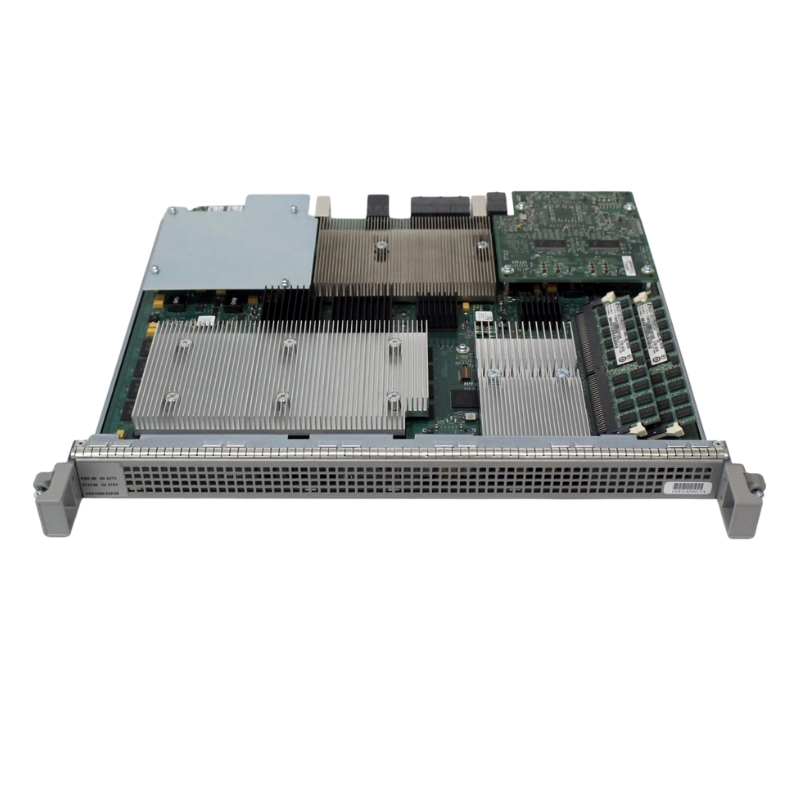


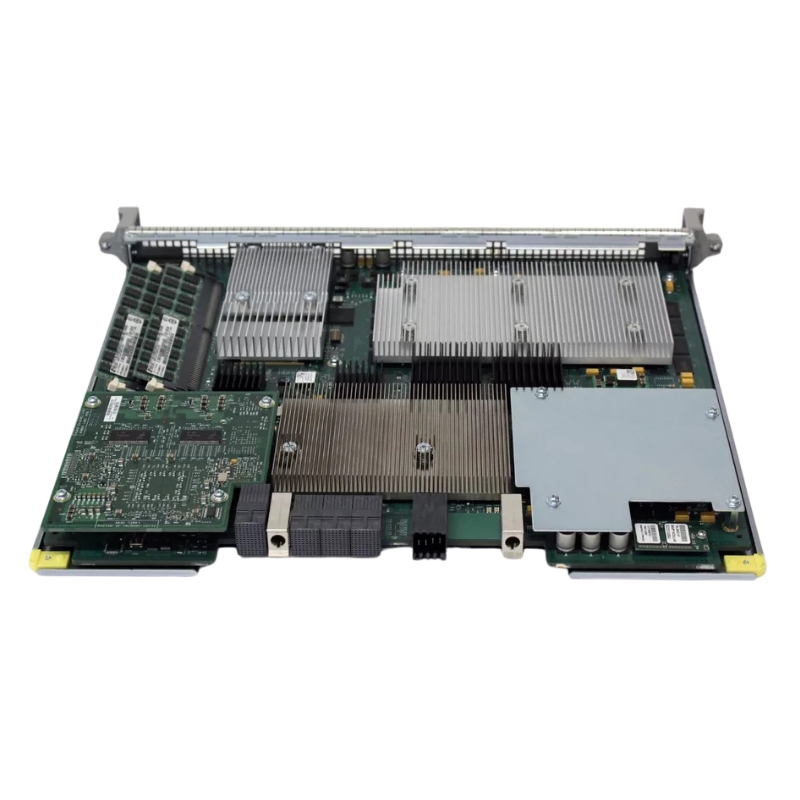
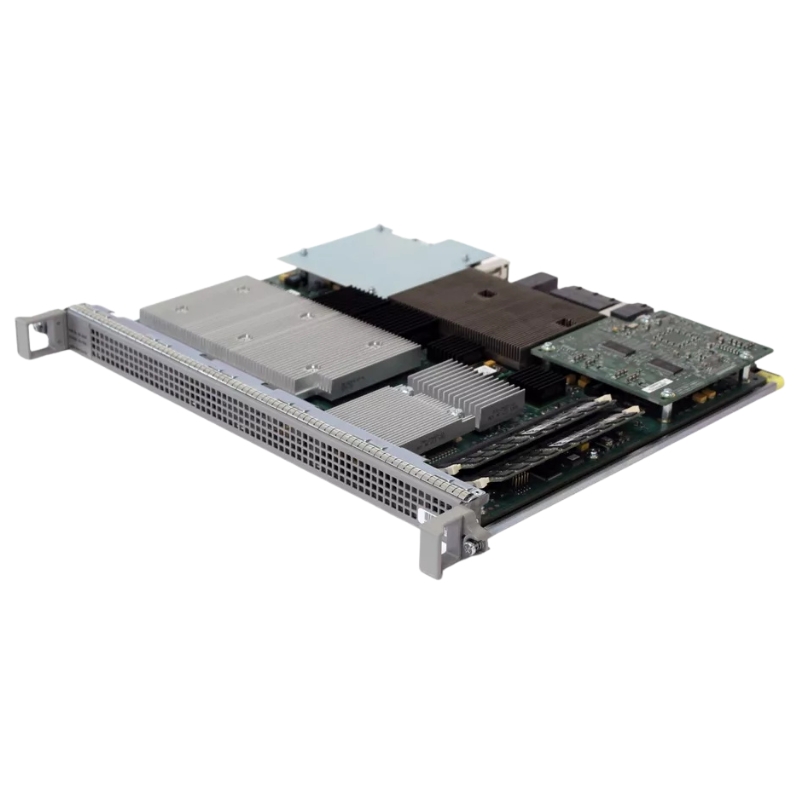
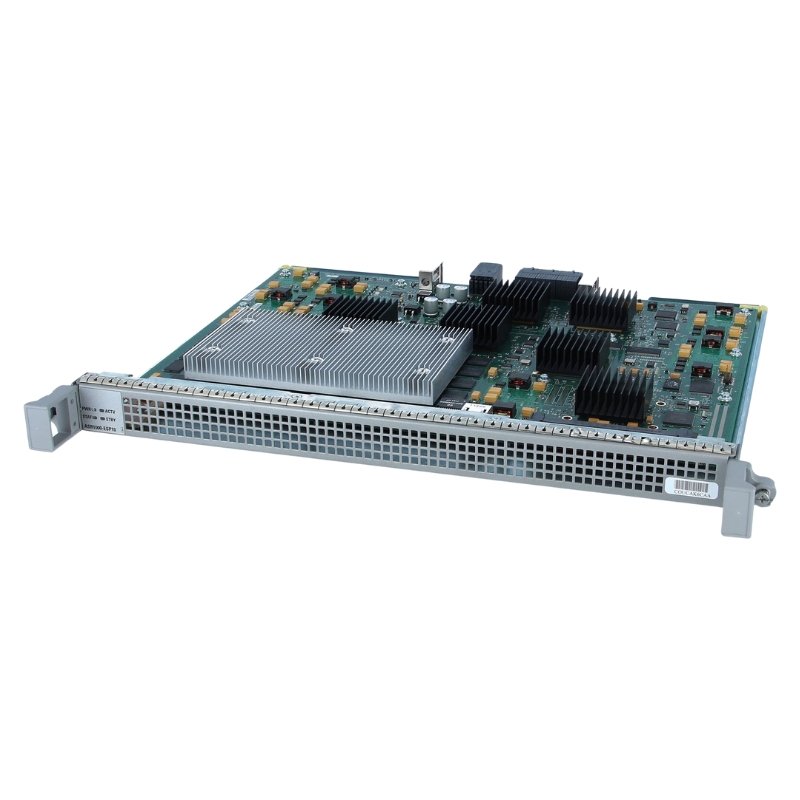
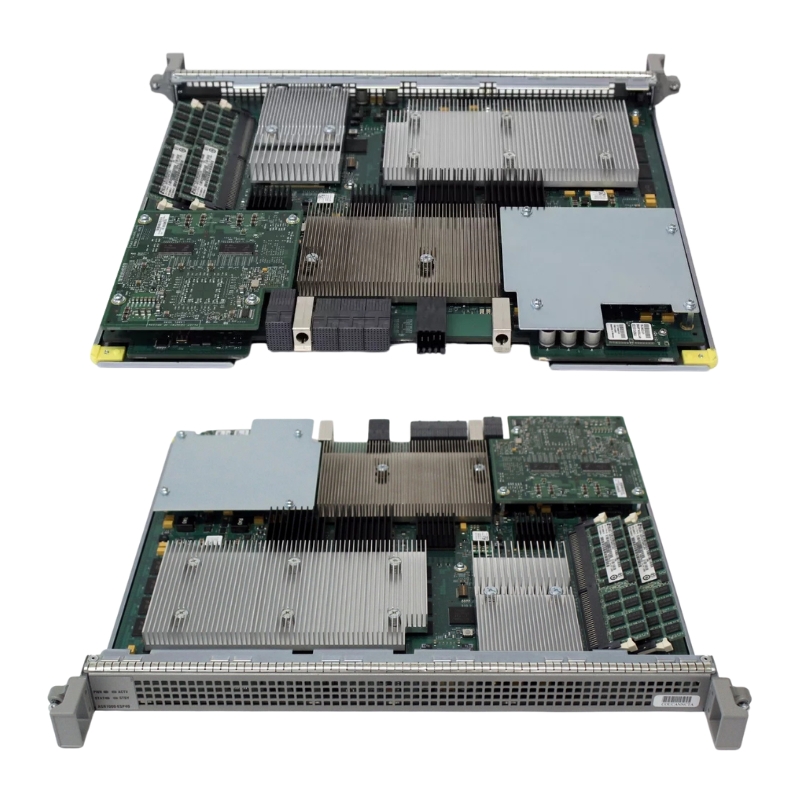
Cisco ASR1000-ESP40 Embedded Services Processor Plug-in Module 40GBPS. Factory-Sealed New in Original Box (FSB) with 1 year replacement warranty
| SKU/MPN | Warranty | Price | Condition | You save |
|---|---|---|---|---|
| ASR1000-ESP40 | 1 Year Warranty | $332.00 | Excellent Refurbished | You save: $116.20 (26%) |
| ASR1000-ESP40 | 1 Year Warranty | $1,690.00 | Factory-Sealed New in Original Box (FSB) | You save: $591.50 (26%) |
The Cisco ASR1000-ESP40 Embedded Services Processor is a high-performance plug-in module engineered to deliver up to 40 Gbps of optimized network throughput for enterprise-grade infrastructures. Designed for scalable routing environments, this advanced processor enhances service delivery, strengthens traffic handling efficiency, and supports mission-critical networking operations with exceptional stability and speed.
The Cisco Embedded Services Processor Plug-in Module 40Gbps
The Cisco ASR1000-ESP40 Embedded Services Processor Plug-in Module 40Gbps is a high-performance forwarding engine designed for advanced routing platforms in the Cisco ASR 1000 Series. It functions as the central data processing component responsible for handling packet forwarding, service integration, and traffic optimization at line-rate speeds. Developed and engineered by this embedded services processor module, which plays a critical role in enabling carrier-grade performance and enterprise-level scalability within modern network infrastructures.
This module is built to support up to 40 gigabits per second of aggregate throughput, making it suitable for environments where high-density traffic flows, secure data transport, and service-rich routing are essential. It is commonly deployed in edge routing architectures where performance, resilience, and service integration must coexist within a single hardware platform.
At the core of the Cisco ASR1000-ESP40 lies a specialized packet processing architecture designed to offload forwarding tasks from the route processor. This separation of control plane and data plane responsibilities allows the system to achieve consistent performance even under heavy traffic loads. The ESP40 handles complex packet inspection, forwarding decisions, and service chaining without degrading throughput.
The architecture relies on parallel processing engines optimized for deterministic packet handling. Each packet is analyzed, classified, and forwarded using precomputed forwarding tables stored in high-speed memory. This ensures minimal latency and stable performance under varying network conditions.
The embedded services processor integrates hardware acceleration mechanisms that significantly reduce CPU dependency for repetitive networking tasks. Functions such as access control enforcement, packet classification, and encryption processing are handled directly in hardware pipelines. This enables the system to maintain high efficiency while supporting advanced network services simultaneously.
The internal hardware is engineered for deterministic throughput, ensuring that even mixed traffic types, including voice, video, and data, are processed without bottlenecks. This capability is essential in modern converged networks where multiple service types operate over a unified infrastructure.
Within the Cisco ASR 1000 Series router family, the ESP40 functions as a pluggable module that integrates seamlessly with route processors and interface modules. This modular design allows network operators to scale performance according to deployment requirements without replacing the entire routing chassis.
The separation of processing roles between the ESP and other system components enables flexible upgrades and simplifies lifecycle management. Organizations can enhance forwarding capacity by upgrading the ESP module while retaining existing infrastructure investments.
The interaction between the ESP40 and the route processor is a key architectural feature. The route processor handles control plane functions such as routing protocol computation, network topology management, and configuration control. The ESP40 receives forwarding instructions derived from these processes and executes them at high speed.
This division of responsibilities ensures that complex routing decisions do not interfere with packet forwarding performance. The system is designed to maintain synchronization between control and data planes while minimizing overhead.
The Cisco ASR1000-ESP40 is engineered to deliver up to 40 Gbps of aggregate throughput, supporting high-density traffic environments. This performance level is achieved through optimized silicon design and advanced traffic scheduling algorithms. The system is capable of maintaining consistent throughput even when handling mixed packet sizes and diverse service workloads.
The forwarding engine is optimized for both small packet and large packet efficiency, ensuring balanced performance across different application types. This is particularly important in service provider environments where traffic composition can vary significantly.
The ESP40 supports a wide range of routing protocols and forwarding mechanisms. It is capable of handling large routing tables and complex forwarding decisions efficiently. The integration with Cisco IOS XE software enables dynamic routing updates and real-time network adaptation.
The system supports both IPv4 and IPv6 traffic natively, ensuring compatibility with modern network environments and future scalability requirements.
Beyond basic forwarding, the ESP40 is designed to support integrated network services such as quality enforcement, traffic shaping, and packet inspection. These services are implemented in hardware to avoid performance degradation.
The ability to combine routing and service processing in a single module simplifies network design and reduces the need for additional hardware appliances. This contributes to lower operational complexity and improved efficiency.
Quality of Service functionality within the ESP40 ensures that critical traffic receives priority handling. Voice, video, and mission-critical data can be prioritized over less sensitive traffic types. This ensures consistent user experience even during periods of congestion.
The system implements classification and scheduling mechanisms that distribute bandwidth efficiently across competing traffic flows. These mechanisms operate at hardware speed to maintain performance consistency.
The Cisco ASR1000-ESP40 is designed with high availability in mind. Redundant configurations can be implemented to ensure continuous operation even in the event of hardware failure. This is essential for mission-critical environments where downtime is not acceptable.
Failover mechanisms allow traffic to be rerouted seamlessly in case of module issues. This ensures uninterrupted service delivery and maintains network reliability.
Operational continuity is supported through synchronization between redundant components. The system ensures that state information is preserved and shared across active and standby modules.
This design minimizes service interruption and allows for maintenance activities without disrupting network operations.
In enterprise environments, the ESP40 is commonly deployed at the network edge where external connectivity meets internal infrastructure. It handles traffic aggregation, routing decisions, and service enforcement at high speed.
This makes it suitable for organizations with high bandwidth requirements and complex network architectures.
The module is also used in data center interconnect scenarios where large volumes of traffic must be transferred between distributed systems. Its high throughput capacity ensures efficient data movement between computing clusters.
Service providers rely on the ESP40 to manage customer traffic at aggregation points. Its ability to handle multiple service types and enforce traffic policies makes it ideal for multi-tenant environments.
The module supports scalable deployment models that allow providers to expand capacity without redesigning core infrastructure.
Security features within the ESP40 are implemented at hardware level to ensure minimal performance impact. This includes support for encrypted traffic handling and secure packet inspection.
By integrating security functions into the forwarding engine, the system reduces reliance on external security appliances.
The ESP40 works closely with Cisco IOS XE software, which provides the control interface for configuration and management. IOS XE enables administrators to define routing policies, monitor performance, and configure service parameters.
The interaction between hardware and software ensures that configuration changes are reflected immediately in forwarding behavior.
The ESP40 is designed as a plug-in module that can be inserted into compatible ASR 1000 Series chassis. Its compact form factor allows efficient use of physical space while delivering high performance.
Installation involves secure insertion into the designated slot within the routing chassis. The system automatically recognizes the module and integrates it into the operational environment.


 Contact Us
 Information
 Catalog
 Solid State Drives (SSD)
 Network Switches
 Hard Disk Drives
 HBA & Controllers
 PC & Servers
 PC & Server Memory
 CPU & Processors
 Network Routers
 Power Supplies
 Tape Drives & Libraries
 Network Devices
 Computer & Network Cables