(7% discount is applied at checkout)
Cart is empty
Your go-to destination for cutting-edge server products
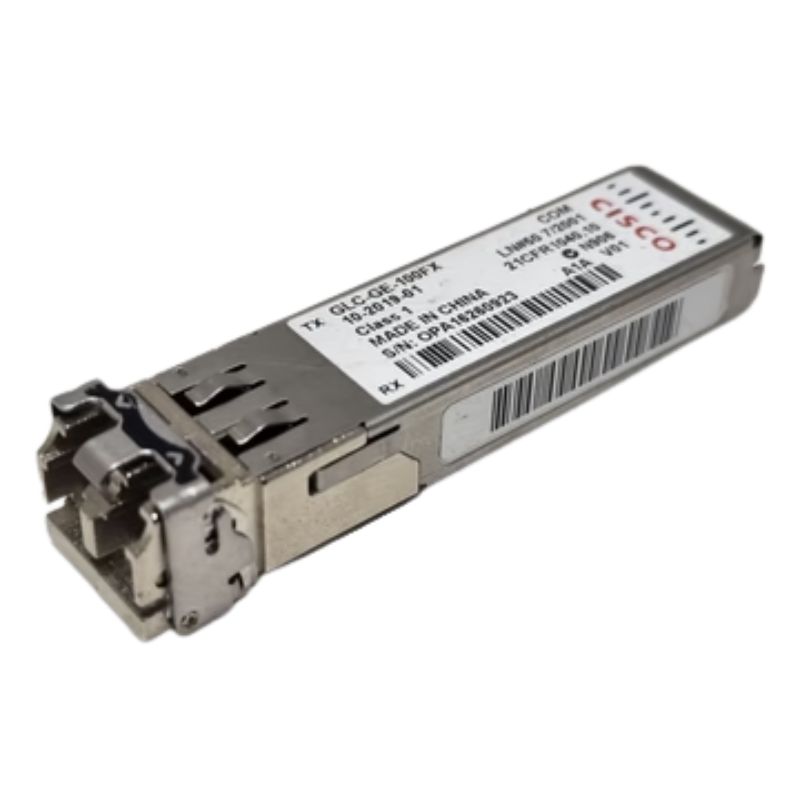


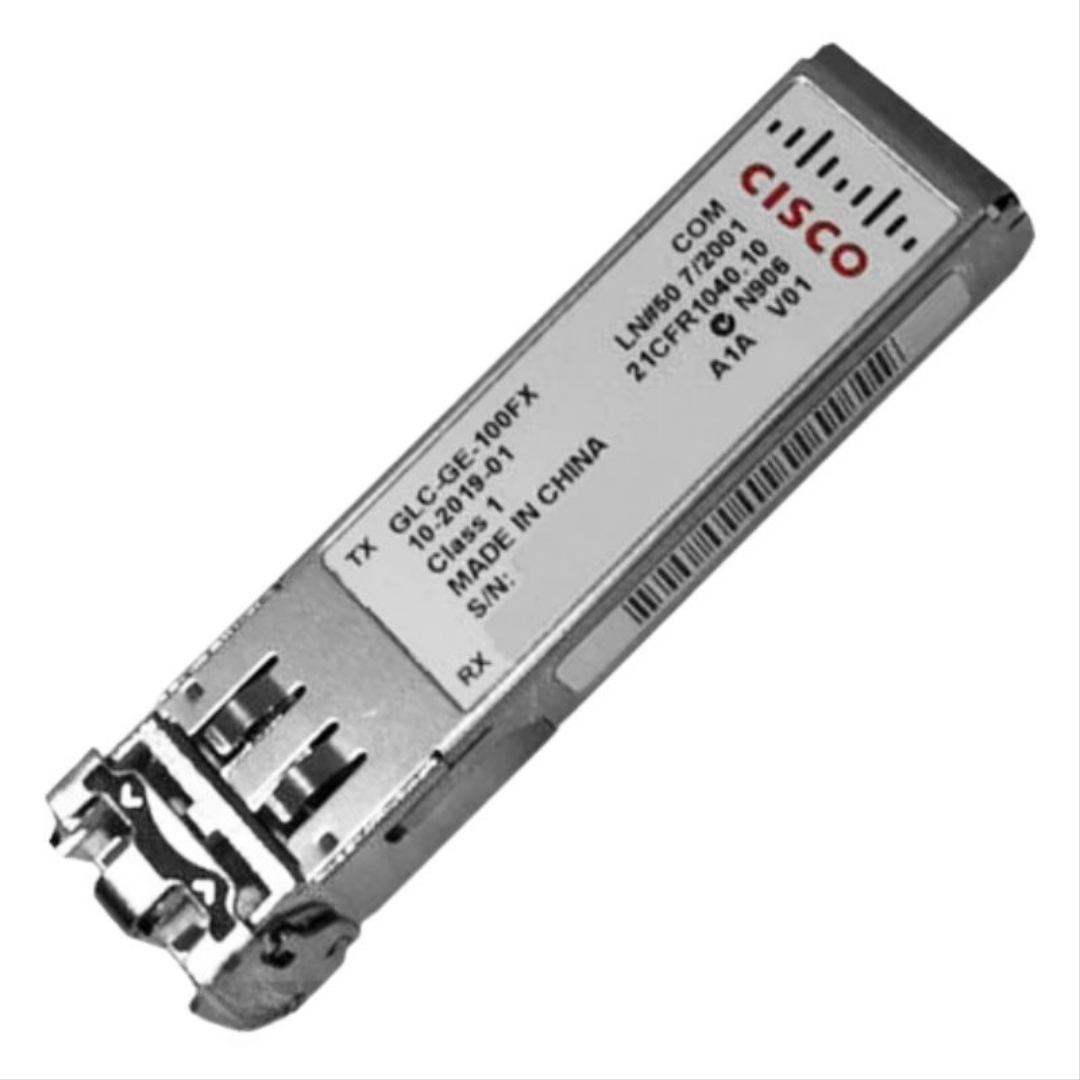
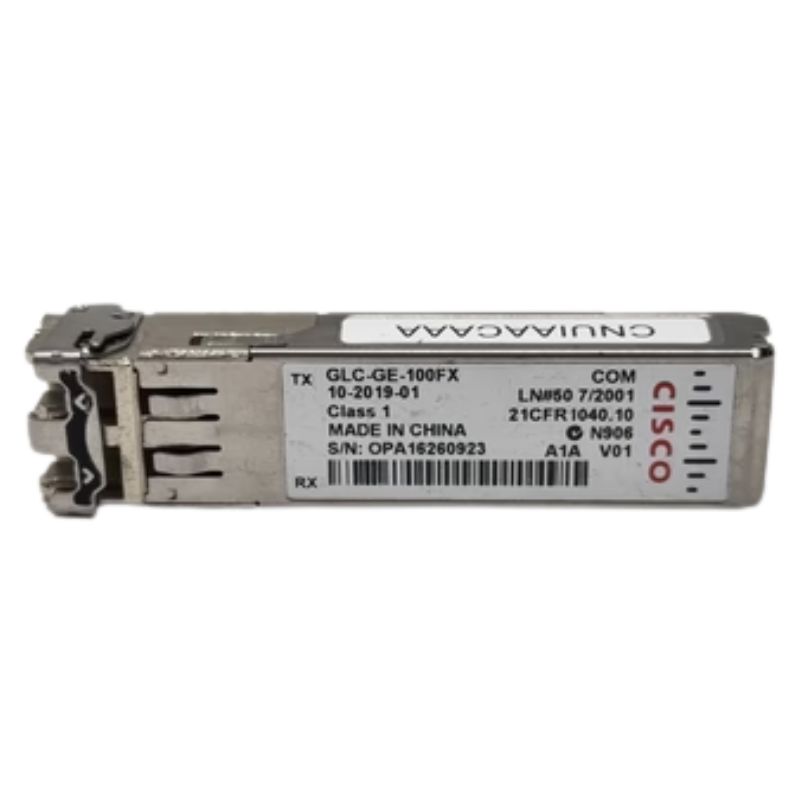
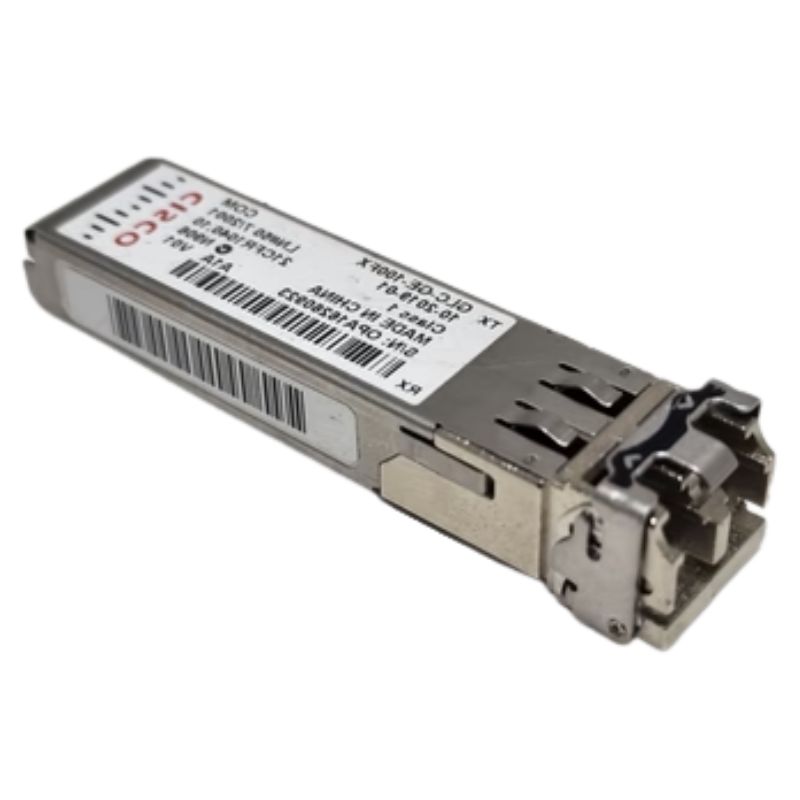
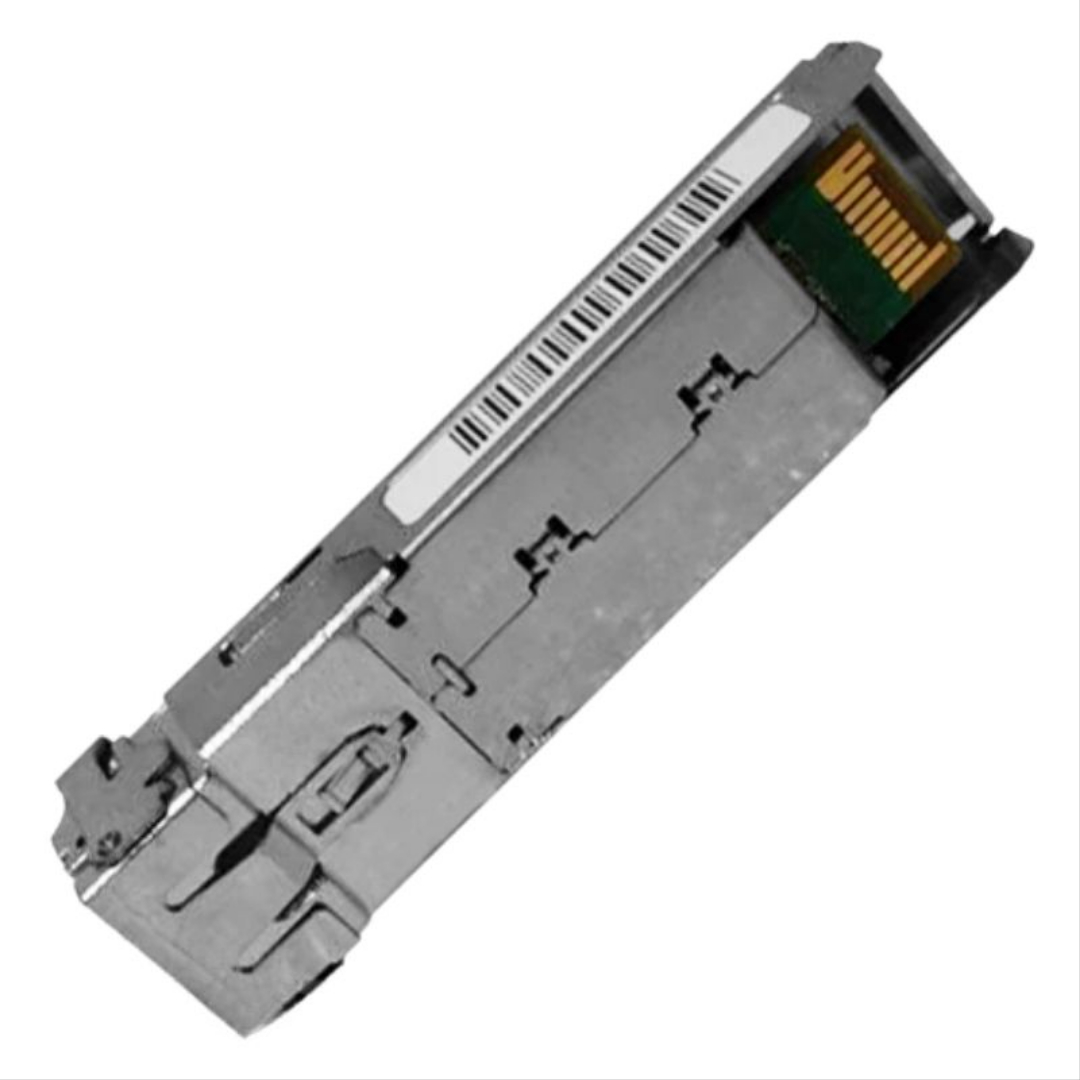
Cisco GLC-GE-100FX Mini-gbic 100Base-FX SFP Transceiver Module. Factory-Sealed New in Original Box (FSB) with 1 year replacement warranty
| SKU/MPN | Warranty | Price | Condition | You save |
|---|---|---|---|---|
| GLC-GE-100FX | 1 Year Warranty | $72.00 | Excellent Refurbished | You save: $25.20 (26%) |
| GLC-GE-100FX | 1 Year Warranty | $128.00 | Factory-Sealed New Retail in Original Box (FSB) | You save: $44.80 (26%) |
The Cisco GLC-GE-100FX is a compact Small Form-Factor Pluggable transceiver module engineered for dependable Fast Ethernet fiber connectivity in enterprise and campus networking environments. Built as a hot-swappable plug-in module, this Cisco SFP transceiver supports 100Base-FX networking and uses a 1310 nm optical wavelength to deliver stable fiber communication across longer distances than standard copper-based links. It is an efficient choice for businesses that need reliable data transmission, streamlined switch uplinks, and consistent network expansion using fiber infrastructure. Designed to integrate with a wide range of Cisco Catalyst switches, the Cisco GLC-GE-100FX transceiver module offers an ideal balance of performance, compatibility, and installation simplicity for structured networking deployments.
The Cisco GLC-GE-100FX Mini-GBIC 100Base-FX SFP Transceiver Module belongs to a specialized class of Cisco optical networking components built for organizations that need dependable 100Base-FX fiber connectivity through Gigabit Ethernet SFP-capable interfaces on supported Cisco platforms. This transceiver category is widely associated with enterprise switching, campus networking, industrial connectivity planning, migration from copper to fiber, and secure long-distance Fast Ethernet transport inside business networks. Although compact in size, the Cisco GLC-GE-100FX module plays an important role in extending the reach of Fast Ethernet links over multimode fiber while preserving the modular flexibility expected from Cisco SFP technology.
In many business environments, network administrators continue to support legacy Fast Ethernet devices, specialized controllers, industrial endpoints, access-layer systems, surveillance infrastructure, building automation components, and branch network segments that still operate efficiently at 100 Mbps. The Cisco GLC-GE-100FX Mini-GBIC category is especially relevant in these environments because it enables fiber-based Fast Ethernet communication through compatible Cisco switches and routers equipped with Gigabit Ethernet SFP ports that support this transceiver type. That makes it a practical option for businesses that need to maintain reliable optical connectivity without redesigning an entire infrastructure around higher-speed optics when the application itself does not demand more bandwidth.
This category is not merely about adding an optical interface. It represents a network design approach centered on flexibility, controlled infrastructure spending, stable optical communication, and support for existing operational requirements. A Cisco GLC-GE-100FX transceiver can help organizations extend Fast Ethernet connections over multimode fiber, reduce electromagnetic interference concerns common in copper-heavy environments, improve cable run distances beyond traditional twisted-pair limitations, and support structured migration strategies inside Cisco-based network architectures. For IT teams working in education, healthcare, manufacturing, transportation, warehousing, government, retail, hospitality, and commercial office networks, the category remains relevant because it bridges older 100 Mbps network needs with the modular optical interface model used by modern Cisco hardware.
The Cisco GLC-GE-100FX module is part of Cisco’s broader family of pluggable optical transceivers designed for Ethernet switching and routing applications. In Cisco terminology, this type of module is often referred to as an SFP transceiver or mini-GBIC. It provides a removable optical interface that can be inserted into a compatible SFP slot on a Cisco switch or router. Rather than hardwiring a fixed uplink medium into the chassis, the SFP model gives network planners the ability to choose the optical standard appropriate for each port and deployment requirement.
Within the Cisco 100BASE-X optical family, the GLC-GE-100FX is positioned as a 100BASE-FX transceiver intended for supported Gigabit Ethernet SFP ports, not a standard copper uplink accessory and not a general-purpose Gigabit optical module. Cisco documentation for the 100BASE-X SFP family identifies the GLC-GE-100FX as a 100BASE-FX SFP that operates in Gigabit Ethernet ports of supported Cisco switches and routers, while related models such as GLC-FE-100FX are intended for Fast Ethernet or dual-rate Fast/Gigabit Ethernet SFP ports. Cisco also describes the module family as hot-swappable and built around a pay-as-you-populate deployment model, which is important for organizations that want to expand optical connectivity only where needed rather than purchasing fully populated fiber interfaces at initial deployment.
Because this category sits between legacy Fast Ethernet application requirements and modular Cisco optical uplink design, it remains a useful product class for businesses that need 100 Mbps fiber transport but still rely on Cisco platforms with SFP-based expansion. The result is a transceiver category that supports continuity, flexibility, and practical lifecycle management across mixed-generation networks.
100Base-FX is a Fast Ethernet fiber standard designed for optical communication at 100 Mbps. In real-world enterprise and industrial networks, this standard remains useful because many devices and systems do not require Gigabit throughput to perform their core tasks. Environmental monitoring devices, control systems, badge access infrastructure, serial-over-Ethernet gateways, security devices, voice equipment, supervisory systems, and older access-layer platforms often function reliably at Fast Ethernet speeds. When those systems must connect across longer distances or through electrically noisy environments, fiber becomes the preferred transport medium, and a 100Base-FX transceiver category such as Cisco GLC-GE-100FX becomes highly relevant.
The practical value of 100Base-FX lies in its balance of stability, distance capability, and cost-effective support for established applications. Copper Ethernet has its place, but multimode fiber is often chosen when network designers need longer links, better resistance to electromagnetic interference, more predictable signal integrity across campus buildings, and cleaner separation between network cabinets or equipment rooms. A 100Base-FX optical link can therefore serve as an efficient backbone for legacy systems, remote equipment clusters, building-to-building interconnects, industrial cells, or distribution closets that do not require Gigabit throughput but still demand dependable optical transport.
Cisco positions the GLC-GE-100FX within this exact use case. The module allows organizations to deliver 100Base-FX optical communication through supported Gigabit Ethernet SFP ports on Cisco platforms, making it easier to maintain or expand fiber-based Fast Ethernet networks without abandoning modular Cisco switching infrastructure. That combination of old and new is one reason the category continues to appear in enterprise and industrial procurement environments.
The main role of the Cisco GLC-GE-100FX Mini-GBIC transceiver is to convert an electrical SFP interface on a compatible Cisco device into a fiber-based 100Base-FX connection. It acts as the optical endpoint inside the switch or router, allowing the network port to communicate over multimode fiber using the 100Base-FX standard. In category terms, that means the module is a compact, pluggable, port-level building block for Fast Ethernet fiber deployment.
Instead of viewing the module as a standalone product, it is more accurate to see it as a category component that enables several different infrastructure strategies. It can be used for uplink connectivity from an access switch to a distribution switch where the application environment remains 100 Mbps. It can link industrial or operational technology equipment in separate buildings. It can help maintain a fiber run to an older security or manufacturing subsystem. It can support phased migration, where the core network may already use Gigabit or higher speeds while a subset of edge devices still relies on Fast Ethernet fiber connectivity. It can also serve as a spare or replacement transceiver in organizations that maintain older Cisco infrastructure with specialized optical needs.
Because the Cisco GLC-GE-100FX is part of a modular transceiver ecosystem, it also supports smarter inventory management. Instead of stocking entire switches with fixed optical uplinks, organizations can keep a controlled inventory of SFP modules tailored to actual link types in the field. This improves serviceability, simplifies replacement planning, and gives administrators a practical way to adapt the medium on a per-port basis.
For category-page purposes, the technical profile of the Cisco GLC-GE-100FX is one of the most important parts of the product description because buyers often need to confirm not just brand and form factor, but also optical standard, fiber type, reach, and port behavior. Cisco documentation for its 100BASE-X SFP family states that the GLC-GE-100FX is a 100BASE-FX SFP for Gigabit Ethernet ports. Cisco lists the module family as using a dual LC connector and identifies 100BASE-FX operation over multimode fiber with a maximum link span of up to 2 kilometers. Cisco also notes that the 100BASE-X SFP family is hot-swappable and supports optical interoperability with respective 100BASE-X Ethernet interfaces on the same link.
These technical points shape how the category should be understood in purchasing and deployment terms. First, the module uses the SFP form factor, which means it is physically compact and intended for insertion into a compatible Cisco SFP slot. Second, the module is based on 100BASE-FX rather than 1000BASE-SX or 1000BASE-LX, so it is designed for Fast Ethernet optical transport rather than Gigabit optical transport. Third, the module is intended for multimode fiber connectivity and uses dual LC fiber connectors. Fourth, its reach profile makes it suitable for extended internal building runs, campus links, and certain controlled inter-building deployments where multimode fiber and link budget requirements align.
Cisco’s 100BASE-X SFP documentation also notes power consumption and environmental information for this module family. For the GLC-GE-100FX specifically, Cisco lists typical power consumption at approximately 1.5 watts per port, up to 1.7 watts, and indicates a commercial operating temperature range of 0 to 70 degrees Celsius for this model. Cisco additionally lists the module dimensions within the standard SFP envelope used across the family.
The mini-GBIC or SFP form factor remains one of the most valuable aspects of this category because it allows a single switch platform to support different media types and transmission standards through interchangeable pluggable modules. In practical network design, that means a Cisco switch can be deployed with a mix of copper uplinks, Gigabit fiber transceivers, Fast Ethernet fiber modules, or long-distance optics depending on the requirements of each connected endpoint or network segment. The Cisco GLC-GE-100FX fits into that modular model by delivering a dedicated 100Base-FX option without consuming the physical space that would be required by larger fixed transceiver assemblies.
Space efficiency matters in dense wiring closets, branch deployments, industrial cabinets, and campus edge locations where administrators need to maximize port utility without increasing rack footprint. The SFP model supports that objective by keeping the optical interface small, replaceable, and easy to manage.
Connector type is a critical category attribute because fiber patching standards, cable plant design, and transceiver compatibility all depend on it. Cisco documentation identifies the GLC-GE-100FX family as using a dual LC connector. This is significant because LC connectors are widely used in enterprise and campus fiber installations, offering a compact footprint and secure optical termination. Dual LC connectivity also aligns with standard duplex fiber deployment, where one fiber strand is used for transmit and the other for receive.
For buyers, the dual LC interface simplifies matching the module to existing multimode fiber patch panels, jumpers, patch cords, and structured cabling layouts. For infrastructure planners, it helps maintain consistency across switch uplinks and optical cross-connect environments. In a category page, this matters because connector type often determines whether a transceiver can be deployed immediately or whether additional fiber patching changes are required.
One of the defining characteristics of the Cisco GLC-GE-100FX category is its support for 100BASE-FX communication over multimode fiber up to 2 kilometers. Cisco explicitly lists the GLC-GE-100FX alongside other 100BASE-FX family members in its 100BASE-X SFP documentation and provides a 2 km reach specification for the 100BASE-FX optical category.
This reach profile is especially useful in campus environments, warehouse complexes, healthcare facilities, universities, municipal buildings, transportation hubs, manufacturing plants, and commercial properties where network closets or control points may be located far apart. While not every deployment will use the full 2 km distance, the availability of optical reach well beyond standard copper limitations gives network teams far more freedom in physical design. Instead of being constrained by short copper runs, administrators can place switches, controllers, and endpoint systems where they are operationally useful, then connect them over multimode fiber through a Cisco-compatible 100Base-FX optical path.
Compatibility is one of the most important themes in any transceiver category because the success of a deployment depends on more than the connector and wavelength. The switch or router must support the module at the port level, the software environment must recognize it correctly, and the opposite optical endpoint must match the transmission standard. Cisco identifies the GLC-GE-100FX as a 100BASE-FX SFP designed for Gigabit Ethernet ports of Cisco switches and routers, which immediately distinguishes it from the GLC-FE-100FX model used in Fast Ethernet or dual-rate Fast/Gigabit Ethernet ports.
This distinction is essential for category buyers. A transceiver may physically fit into an SFP slot, but that does not guarantee functional compatibility. The Cisco GLC-GE-100FX is intended for supported Gigabit Ethernet SFP ports that can operate with this 100BASE-FX module. Therefore, compatibility should always be evaluated against the Cisco platform, line card, software release, and documented support matrix for the specific switch or router model in use. Cisco’s broader transceiver documentation and compatibility resources exist precisely because optical support can vary across product families, even when the form factor appears identical.
Another important compatibility principle is that the link partner must support the same optical standard. The Cisco GLC-GE-100FX is intended for 100BASE-FX optical communication, so the device on the far end of the fiber should be configured for a compatible 100BASE-FX interface. Cisco also notes optical interoperability with respective 100BASE-X Ethernet interfaces on the same link, reinforcing the importance of matching the transceiver type to the correct standard and media environment.
Many organizations run mixed optical environments containing older Cisco switches, newer distribution hardware, media converters, industrial devices, and third-party equipment that communicates over standard 100BASE-FX. In these situations, the Cisco GLC-GE-100FX category can be useful because it provides a Cisco-qualified path to integrate a supported Cisco switch or router with an existing 100Base-FX multimode fiber segment. The value lies in preserving the operational life of the fiber network and connected systems while still using a Cisco platform at the aggregation or access layer.
That said, interoperability planning should never be reduced to wavelength and connector alone. Buyers should evaluate fiber type, distance, duplex requirements, port support, speed negotiation expectations, and software recognition of the module. When those factors align, the Cisco GLC-GE-100FX becomes a practical way to connect a Cisco device into an established 100Base-FX optical environment without unnecessary redesign.
The Cisco GLC-GE-100FX category remains attractive because it combines optical transport reliability with Cisco modularity. For many enterprise and industrial customers, the key advantage is not raw speed but deployment fit. The transceiver allows a supported Cisco switch or router to participate in a 100Base-FX fiber network while retaining the operational benefits of a pluggable SFP architecture.
One major advantage is distance. Standard copper Fast Ethernet links have much shorter practical limitations than fiber-based 100BASE-FX links. By using multimode fiber and a Cisco optical module designed for up to 2 km operation, organizations can extend connectivity to remote buildings, production zones, utility enclosures, warehouse sections, perimeter locations, or physically isolated systems without relying on copper runs that may be too short or too vulnerable to environmental interference.
A second advantage is electromagnetic resilience. Fiber cabling is not affected by electromagnetic interference in the same way copper cabling can be. This is particularly valuable in factories, utility facilities, transportation environments, and buildings with heavy electrical infrastructure. A Cisco 100Base-FX SFP therefore supports more stable communications in areas where copper performance might be compromised by electrical noise.
A third advantage is modular lifecycle management. Because the GLC-GE-100FX is a pluggable transceiver, it can be replaced independently of the host switch. That simplifies maintenance, supports rapid spares management, and gives administrators the freedom to reassign optics as network topology changes. It also aligns with Cisco’s pay-as-you-populate model, which allows businesses to add optical interfaces only where needed instead of purchasing fully populated fixed-media hardware.
One of the strongest reasons organizations continue to buy this transceiver category is that it serves as a bridge between infrastructure generations. Not every network migration happens all at once. Many businesses run a modern core with legacy access segments. Others replace switches in stages while keeping the existing fiber plant and endpoint systems intact. In these scenarios, the Cisco GLC-GE-100FX acts as a preservation tool because it allows supported Cisco hardware to continue communicating with 100Base-FX segments already deployed across the site.
This has important budget and planning implications. Replacing every endpoint, every access switch, and every fiber run simultaneously is often unnecessary and financially inefficient. If the application workload remains modest and the current 100 Mbps optical segment is stable, it can make more sense to modernize around it gradually. The Cisco GLC-GE-100FX category supports that strategy by extending the useful life of existing multimode 100Base-FX infrastructure while enabling centralized management through Cisco switches and routers.
Migration planning also benefits from the SFP model because the optical interface is not permanently tied to the switch hardware. If a segment is later upgraded to a different optical standard, administrators can often change the transceiver rather than replace the entire host device, assuming the platform supports the new module. This flexibility is one of the key operational strengths of Cisco’s pluggable optics ecosystem.


 Contact Us
 Information
 Catalog
 Solid State Drives (SSD)
 Network Switches
 Hard Disk Drives
 HBA & Controllers
 PC & Servers
 PC & Server Memory
 CPU & Processors
 Network Routers
 Power Supplies
 Tape Drives & Libraries
 Network Devices
 Computer & Network Cables