(7% discount is applied at checkout)
Cart is empty
Your go-to destination for cutting-edge server products
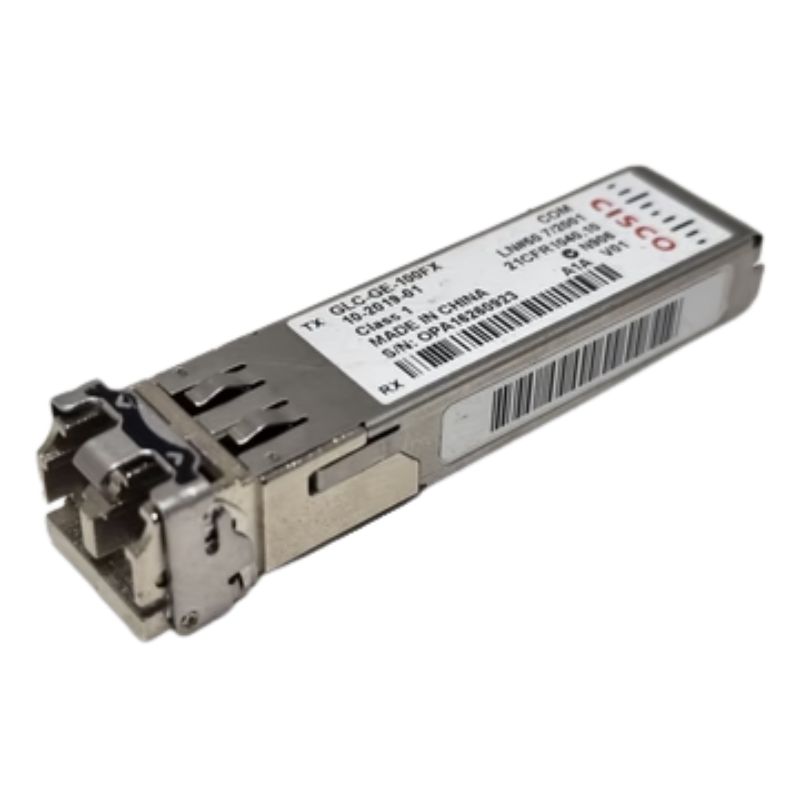


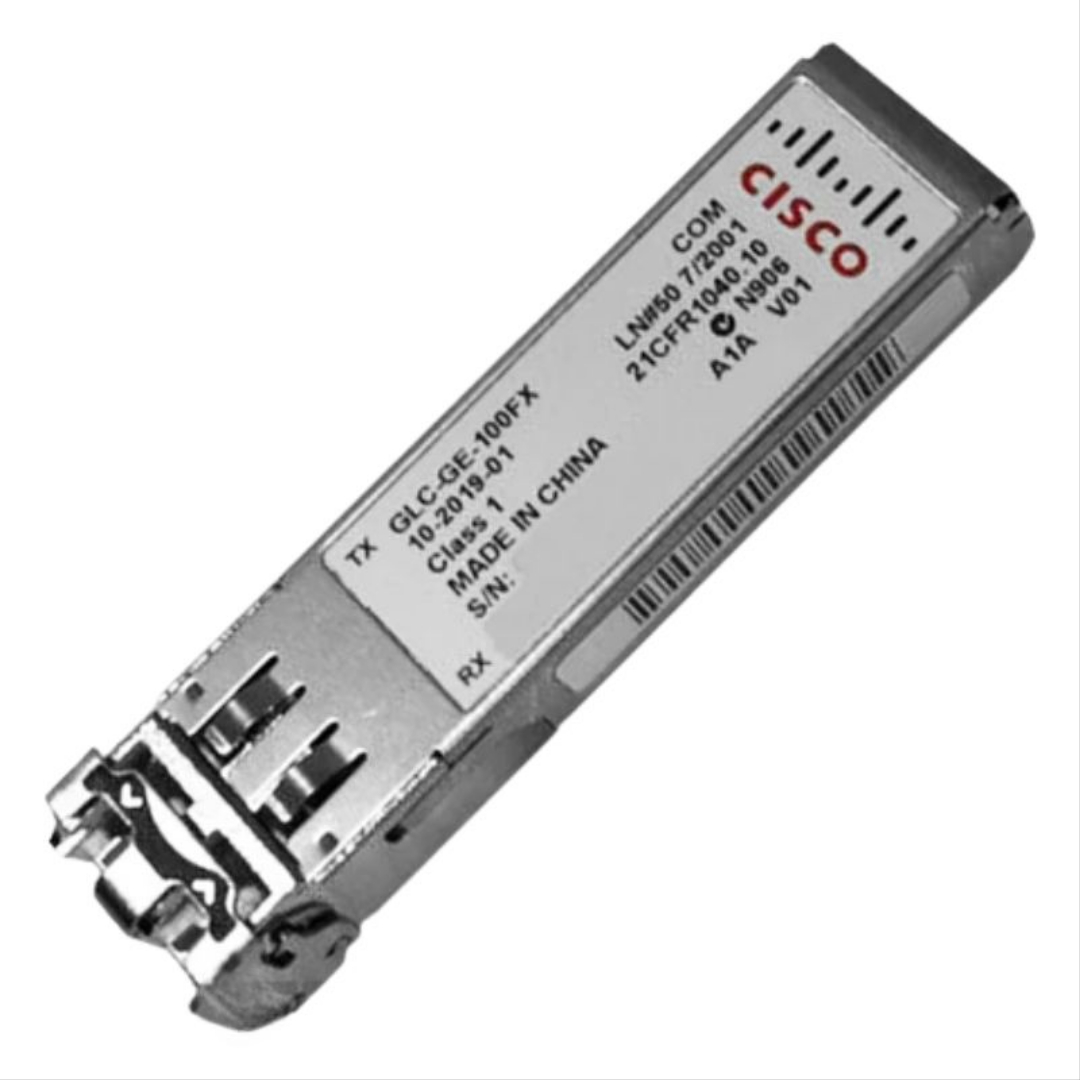
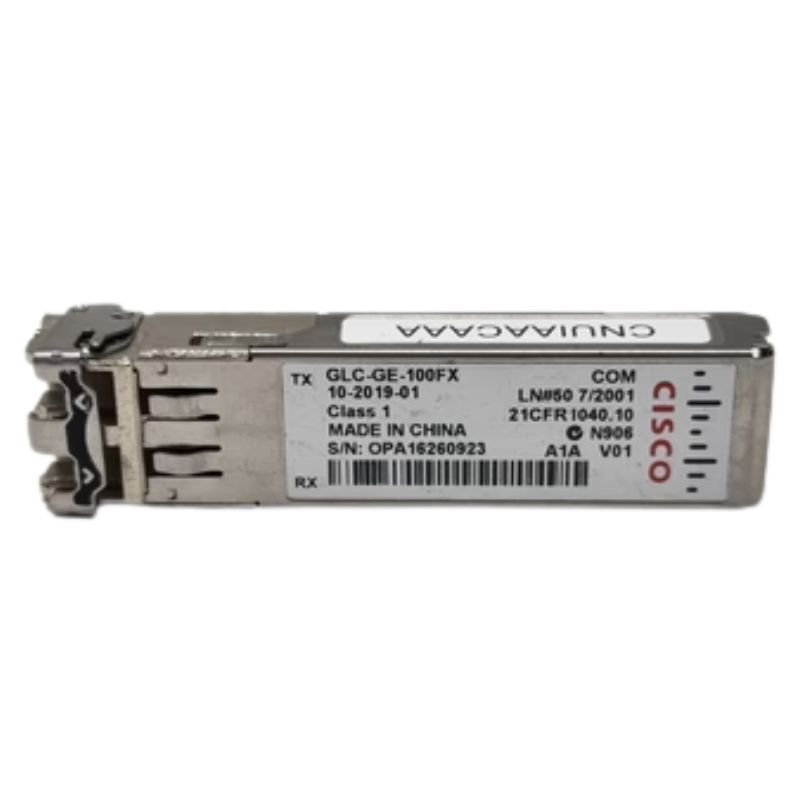
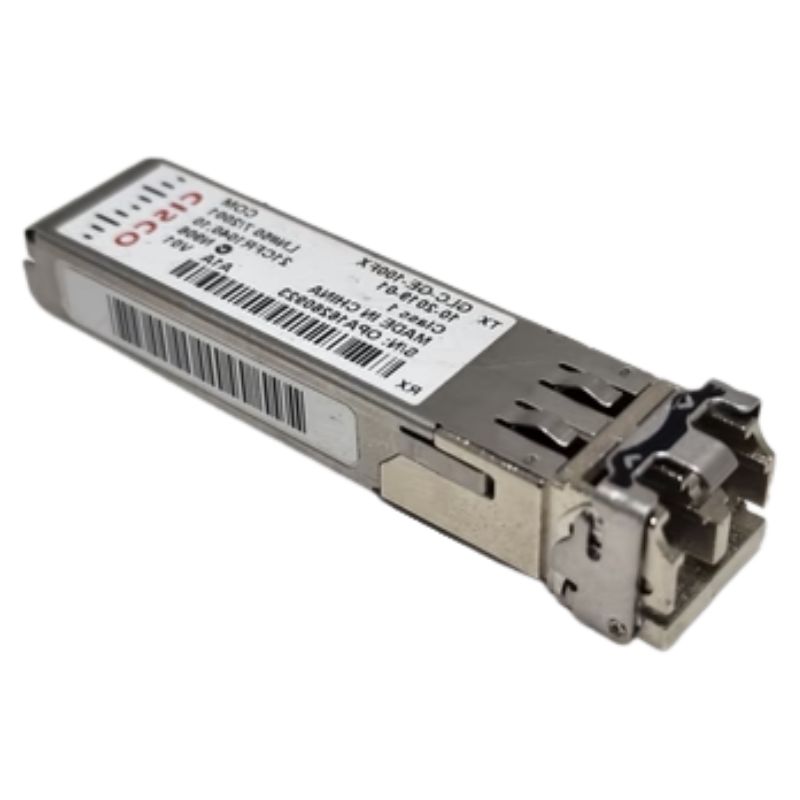
Cisco GLC-GE-100FX 100MBPS Multi Mode Fiber Transceiver Module. Excellent Refurbished with 1 year replacement warranty
| SKU/MPN | Warranty | Price | Condition | You save |
|---|---|---|---|---|
| GLC-GE-100FX | 1 Year Warranty | $72.00 | Excellent Refurbished | You save: $25.20 (26%) |
| GLC-GE-100FX | 1 Year Warranty | $128.00 | Factory-Sealed New Retail in Original Box (FSB) | You save: $44.80 (26%) |
The Cisco GLC-GE-100FX is a high-performance 100Mbps multi-mode fiber transceiver module designed to deliver dependable Fast Ethernet connectivity for enterprise and campus network environments. Built as a compact plug-in module, it supports 100BASE-FX cabling and operates at a 1310 nm optical wavelength for stable fiber communication across longer distances. With support for a maximum transfer distance of up to 1.2 miles, this Cisco transceiver is a practical choice for extending network links between switches and other compatible infrastructure devices. It is engineered to provide consistent data transmission, straightforward deployment, and reliable compatibility with a wide range of Cisco Catalyst switches.
The Cisco GLC-GE-100FX 100Mbps Multi Mode Fiber Transceiver Module is built for network environments that need dependable Fast Ethernet optical communication through a Gigabit Ethernet SFP interface. This transceiver belongs to Cisco’s 100BASE-X SFP family and is designed to deliver stable 100Mbps fiber connectivity across multimode fiber cabling while fitting into compatible Cisco switching and routing platforms that support this deployment model. In modern enterprise, campus, industrial, and distribution layer networks, the Cisco GLC-GE-100FX module serves as a practical option for extending copper-limited connections into reliable optical links that can travel farther, resist electromagnetic interference, and improve structured network design.
Organizations that still rely on 100Mbps fiber uplinks, legacy Fast Ethernet systems, industrial control networks, utility environments, and specialized enterprise infrastructure often need a transceiver that combines Cisco platform compatibility with straightforward multimode fiber deployment. The Cisco GLC-GE-100FX module answers that need by providing a compact hot-swappable optical interface that enables 100BASE-FX communication over multimode fiber while operating in supported Gigabit Ethernet ports on Cisco switches and routers. This makes it especially valuable in networks where the physical port is Gigabit-capable but the optical service requirement is specifically 100Mbps fiber connectivity.
Fast Ethernet fiber modules continue to play an important role in networks where equipment life cycles are long, environmental conditions favor fiber over copper, or application demands do not require a full Gigabit optical link. In these cases, the Cisco GLC-GE-100FX transceiver offers a balanced solution that supports network modernization without forcing unnecessary bandwidth upgrades across every optical segment. It can help preserve existing multimode fiber plant investments, maintain compatibility with installed Fast Ethernet devices, and simplify migration planning for organizations managing a mixture of old and new infrastructure.
Cisco offers a broad family of optical modules for different data rates, cable types, and deployment distances. Within that broader ecosystem, the Cisco GLC-GE-100FX transceiver occupies a very specific and useful role. It is intended for 100BASE-FX optical communication over multimode fiber, yet it is designed to operate in supported Gigabit Ethernet SFP ports rather than only in dedicated Fast Ethernet ports. Cisco documentation identifies the GLC-GE-100FX as a 100BASE-FX module for Gigabit Ethernet ports, making it distinct from the Cisco GLC-FE-100FX model that is intended for Fast Ethernet or dual-rate Fast/Gigabit Ethernet ports on certain platforms. This distinction matters for buyers who must match the transceiver not only to the cable plant and required speed, but also to the exact electrical and software behavior of the host port.
Because many Cisco switches and routers include SFP slots that can accept multiple optics depending on platform support, choosing the right Fast Ethernet optical transceiver is not simply a matter of connector type. The network designer must account for whether the switch or router port is expecting a module designed for a Fast Ethernet port or one intended for a Gigabit Ethernet SFP port that can run a 100FX optic. The Cisco GLC-GE-100FX fills that requirement for supported Cisco hardware and gives network teams a purpose-built module for 100Mbps multimode fiber operation in those environments. Cisco’s Fast Ethernet SFP documentation specifically differentiates this product by stating that GLC-GE-100FX modules operate in Gigabit Ethernet ports of Cisco switches and routers, which is one of the most important buying and deployment considerations for this category.
The Cisco GLC-GE-100FX module is associated with 100BASE-FX optical networking, a Fast Ethernet fiber standard used for 100Mbps communication over fiber-optic infrastructure. 100BASE-FX is a long-established Ethernet transport option that remains useful in campus backbones, manufacturing facilities, transport cabinets, remote telecom rooms, education networks, utility sites, healthcare buildings, and branch interconnects. Instead of transmitting Ethernet frames over twisted-pair copper, 100BASE-FX uses optical signaling over fiber cabling, which allows longer runs, better immunity to electrical noise, and stronger physical separation from sources of interference.
Multimode fiber remains a practical medium for many enterprise and industrial facilities because it is already installed in building risers, wiring closets, plant floors, and campus pathways. The Cisco GLC-GE-100FX module is intended for multimode fiber operation and therefore fits naturally into environments where 50/125 µm or 62.5/125 µm multimode cabling has been deployed. Cisco documentation for related 100BASE-FX SFP modules in the same optical family specifies multimode operation, 1310 nm wavelength, and distances up to 2 kilometers, and these characteristics are central to how this category is positioned in real-world deployments. Cisco’s Fast Ethernet SFP data sheet also describes the 100BASE-FX SFP family as operating over ordinary multimode fiber spans up to 2 km, reinforcing the role of this optical category in medium-distance Fast Ethernet fiber networks.
Not every network link needs Gigabit or 10 Gigabit bandwidth. In many industrial, building automation, surveillance aggregation, serial-over-IP, utility monitoring, warehouse control, access layer uplink, and older enterprise environments, 100Mbps remains fully adequate for the applications carried across the link. The Cisco GLC-GE-100FX module addresses that reality by allowing a network team to maintain a 100Mbps optical path using supported Gigabit-capable Cisco hardware. This can be valuable when the switch platform is modern enough to include Gigabit SFP slots, but the far-end equipment, structured cabling design, or operational policy still depends on 100BASE-FX service.
Using a dedicated 100BASE-FX optic in those cases can be cleaner and more predictable than forcing media conversion through external devices. The transceiver becomes part of the switch or router itself, helping reduce cable clutter, power requirements, and failure points that can come with standalone media converters. It also keeps management and monitoring closer to the network platform rather than moving the optical conversion layer into a separate appliance.
Multimode fiber is common in older and still-active enterprise cabling systems because it is effective for moderate distances within buildings and across campuses. The Cisco GLC-GE-100FX category is especially relevant where multimode fiber is already present between telecommunications rooms, floor distribution points, control rooms, machine areas, and local distribution cabinets. Instead of replacing those optical pathways, organizations can continue using them with an appropriate 100BASE-FX transceiver.
Multimode fiber offers several advantages in these environments. It is resistant to electromagnetic interference, which is important in industrial sites and electrically noisy buildings. It supports longer distances than copper Fast Ethernet, making it practical for long risers, inter-building runs, and secure equipment room separation. It can also help improve grounding isolation between buildings or distant cabinets, which is particularly useful in large facilities and campus installations.
The Cisco GLC-GE-100FX transceiver follows the Small Form-Factor Pluggable design philosophy that made SFP modules a standard part of modular network architecture. Rather than locking a switch or router into one permanent optical interface, the SFP approach allows the network administrator to select the appropriate transceiver for the exact media type, speed, and distance required by the deployment. This flexibility is especially useful in mixed networks where some uplinks use copper, others use Gigabit fiber, and still others need 100Mbps multimode fiber because of legacy interoperability or specific application constraints.
The compact SFP form factor keeps the optical interface small and serviceable. It allows transceivers to be inserted into supported slots without requiring the replacement of an entire network interface card or switch. Cisco’s Fast Ethernet SFP documentation also highlights hot-swappability as a major benefit, meaning the optic can typically be installed or replaced without rebooting the host switch or router. In production environments, that feature reduces maintenance disruption and simplifies replacement planning.
Hot-swappable optics are valuable in enterprise operations because they allow field replacement without major service interruption. If a network team needs to replace a failed transceiver, reconfigure a port, or migrate a connection to a different optical medium, the SFP model makes that process much easier than a fixed-port design. For maintenance windows, this can translate into faster work, fewer dependencies, and reduced downtime risk.
In remote branch sites and industrial facilities, hot-swappable modules also reduce the complexity of spare parts strategy. Instead of stocking complete line cards or separate converter devices, the organization can keep spare SFP modules on hand and replace them as needed. This lowers operational overhead and helps standardize field service procedures.
Space efficiency matters in campus switches, industrial cabinets, distribution closets, and router edge deployments. SFP modules support dense port configurations while keeping optical connectivity modular. The Cisco GLC-GE-100FX module contributes to that density by providing a small optical footprint suitable for platforms where rack space, airflow, and cable organization all matter. Rather than using a large external optical adapter, the transceiver sits directly in the Cisco device and preserves a cleaner physical layout.
One of the most important aspects of this category is platform compatibility. The Cisco GLC-GE-100FX is not simply a generic 100Mbps multimode optic; it is a Cisco optical module intended for specific supported Cisco switches and routers. Buyers must match the transceiver to the host platform, the intended port type, the software support level, and the desired operating mode. Cisco’s documentation for the 100BASE-X SFP family makes a clear distinction between GLC-FE-100FX modules for Fast Ethernet or dual-rate Fast/Gigabit Ethernet ports and GLC-GE-100FX modules for Gigabit Ethernet ports. That distinction should guide every procurement decision in this category.
Compatibility planning typically includes four layers of verification. The first is physical slot compatibility, meaning the Cisco device has an SFP slot designed to accept supported optics. The second is electrical and software compatibility, meaning the host port and system software support operation with the specific GLC-GE-100FX optic. The third is media compatibility, meaning the installed fiber plant is multimode fiber of the proper type and condition. The fourth is link compatibility, meaning the far-end device or transceiver is configured to communicate correctly over 100BASE-FX.
This is one of the most important subtopics for a category page because confusion between these two Cisco part numbers can lead to deployment problems. The Cisco GLC-FE-100FX is a 100BASE-FX SFP commonly associated with Fast Ethernet ports or supported dual-rate Fast/Gigabit Ethernet ports, while the Cisco GLC-GE-100FX is intended for Gigabit Ethernet ports on supported Cisco switches and routers that can operate with this optic. Although both belong to the same broader family of 100BASE-FX multimode optical modules, they are not interchangeable by assumption. The host platform documentation must always be checked.
For purchasing teams, this distinction affects quoting accuracy, replacement planning, and lifecycle support. For technical teams, it affects port behavior, supported line cards, and operational expectations. A category page for the Cisco GLC-GE-100FX should therefore emphasize that the product is specifically aligned with Gigabit Ethernet port environments that support 100FX SFP operation, not simply any Cisco SFP slot labeled as fiber-capable.
The Cisco GLC-GE-100FX category is relevant in a range of Cisco network environments where a Gigabit Ethernet SFP port can be used for 100BASE-FX service. Depending on platform support, these environments may include branch routers, industrial Ethernet switches, aggregation switches, and access or distribution devices in enterprise networks. Cisco platform support references for interfaces and modules list the GLC-GE-100FX among supported options on certain Cisco systems, reinforcing its role as a specialized Fast Ethernet optic for Gigabit port environments rather than a general-purpose unmanaged module.
Fiber link planning is a central part of successful transceiver deployment. Even when the transceiver itself is correct, the link will only perform properly if the fiber plant, connector condition, distance, attenuation, and far-end optics are aligned with the intended optical standard. The Cisco GLC-GE-100FX category is based on multimode 100BASE-FX connectivity, so planning must start with multimode fiber validation.
In the related Cisco 100BASE-FX optical family, the standard multimode deployment model uses dual LC connectivity and supports runs up to 2 kilometers on multimode fiber. Cisco’s installation guides for 100Mb SFP transceivers list 50 and 62.5 micron multimode fiber and a 2 km maximum distance for the GLC-FE-100FX family member, and Cisco’s Fast Ethernet SFP data sheet states that the 100BASE-FX SFP operates on ordinary multimode fiber spans up to 2 km. These values provide a practical planning reference for the Cisco GLC-GE-100FX category because it belongs to the same 100BASE-FX multimode optical application class.
Multimode fiber is generally encountered in two common core sizes in enterprise environments: 50/125 µm and 62.5/125 µm. These fiber types are widely installed in legacy campus and in-building optical systems. A Cisco GLC-GE-100FX deployment is usually considered where those existing multimode pathways are still in service and there is a need to connect Cisco equipment over Fast Ethernet fiber.
When reusing installed multimode cabling, the network team should inspect the path for connector cleanliness, patch panel quality, splice loss, excessive bends, damaged jumpers, and historical signal issues. Even if the nominal distance is well within the supported limit, poor optical hygiene can cause intermittent link instability, frame errors, or complete link failure. Good practice includes testing the fiber plant, cleaning LC connectors, confirming patch polarity, and verifying that the far-end device is configured for the same optical mode and speed.
A maximum distance figure in a transceiver data sheet is a useful design target, but real-world optical planning should also account for link margin. Patch panels, couplers, splices, field repairs, old jumpers, and dusty connectors all consume part of the available optical budget. For that reason, experienced network engineers often treat the maximum rated distance as an upper design boundary rather than a routine operating target. Where a facility has older multimode fiber, multiple patch points, or unknown installation quality, it is wise to maintain comfortable margin below the theoretical limit.
Facilities teams should also remember that a transceiver link is a complete optical system rather than a single part number. The module, the fiber, the patch cords, the patch panels, the far-end optics, and the cleanliness of the connectors all affect the final result. A Cisco GLC-GE-100FX transceiver can perform very reliably, but only when the surrounding optical path is designed and maintained to support stable 100BASE-FX communication.
When a network is built around Cisco routing and switching infrastructure, many organizations prefer Cisco-qualified optics rather than generic third-party transceivers. The Cisco GLC-GE-100FX category reflects that preference by offering an optical module designed for Cisco platform support and identification. Cisco’s 100BASE-X SFP documentation highlights that Cisco-qualified SFPs can be recognized by the switch or router and are intended to interoperate with supported Cisco systems. For organizations with standardized support processes, this can be an important operational advantage.
Using Cisco optics in Cisco platforms can simplify deployment standards, support procedures, and replacement planning. Instead of mixing transceiver vendors across sites, the organization can maintain a consistent optical inventory tied to its switching and routing estate. This helps with documentation, maintenance, and procurement, especially in distributed environments with multiple branches, closets, and field cabinets.
Although many third-party optics can function in Cisco equipment, supported Cisco modules provide a more predictable path when the network team wants to stay within the boundaries of documented compatibility. This is particularly important for older Fast Ethernet optical links where the port behavior, software support, and exact transceiver identity can influence success. The Cisco GLC-GE-100FX is aimed at a specific operational niche, and that specificity is one of its strengths when matched correctly to the host platform.
Optical modules are a practical way to adapt a switch or router to changing media needs without replacing the whole platform. A Cisco switch may use one type of transceiver for a Gigabit uplink, another for single-mode long-distance transport, and another like the GLC-GE-100FX for a 100Mbps multimode legacy link. This modularity supports phased upgrades and reduces waste because the network device itself can remain in place while the optical personality of the port changes to meet the link requirement.


 Contact Us
 Information
 Catalog
 Solid State Drives (SSD)
 Network Switches
 Hard Disk Drives
 HBA & Controllers
 PC & Servers
 PC & Server Memory
 CPU & Processors
 Network Routers
 Power Supplies
 Tape Drives & Libraries
 Network Devices
 Computer & Network Cables