(7% discount is applied at checkout)
Cart is empty
Your go-to destination for cutting-edge server products
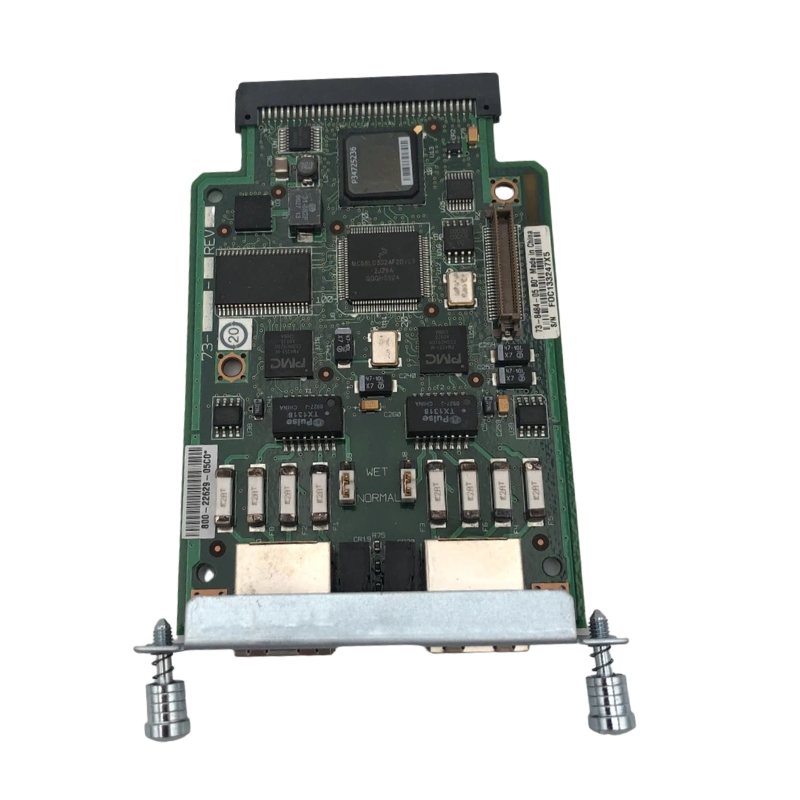


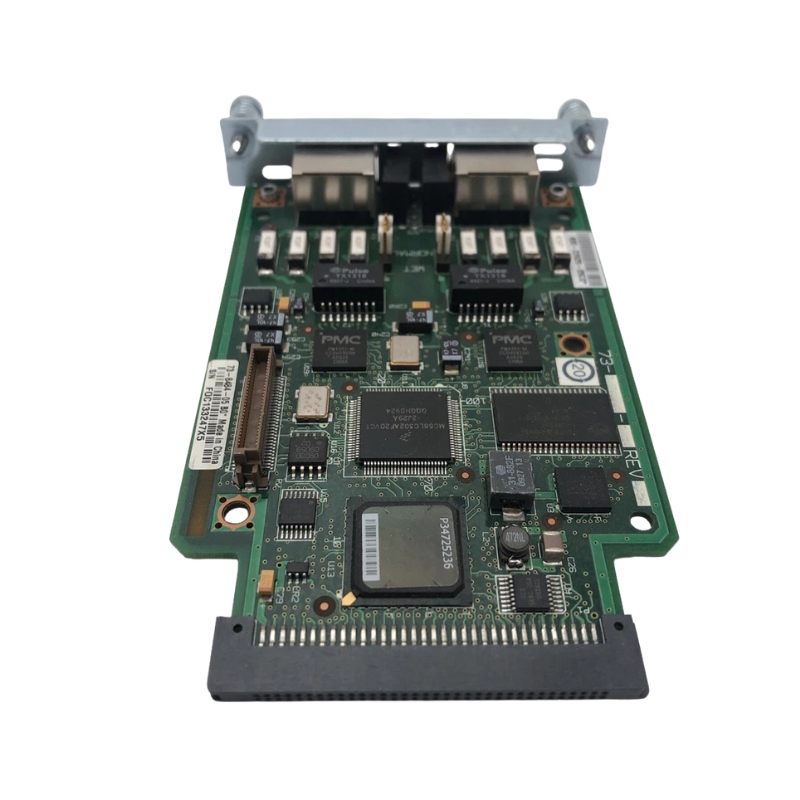
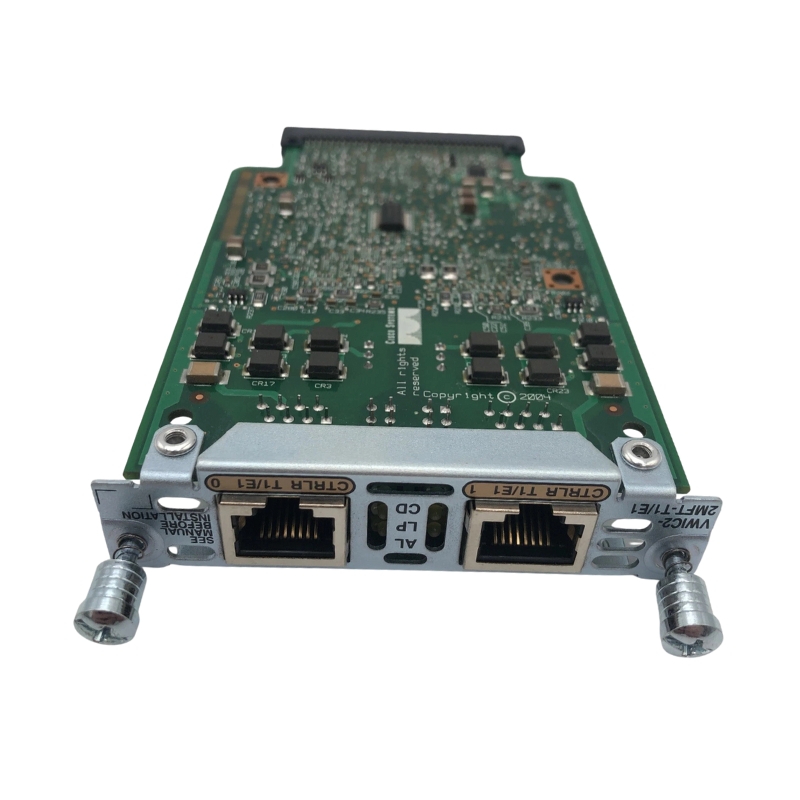
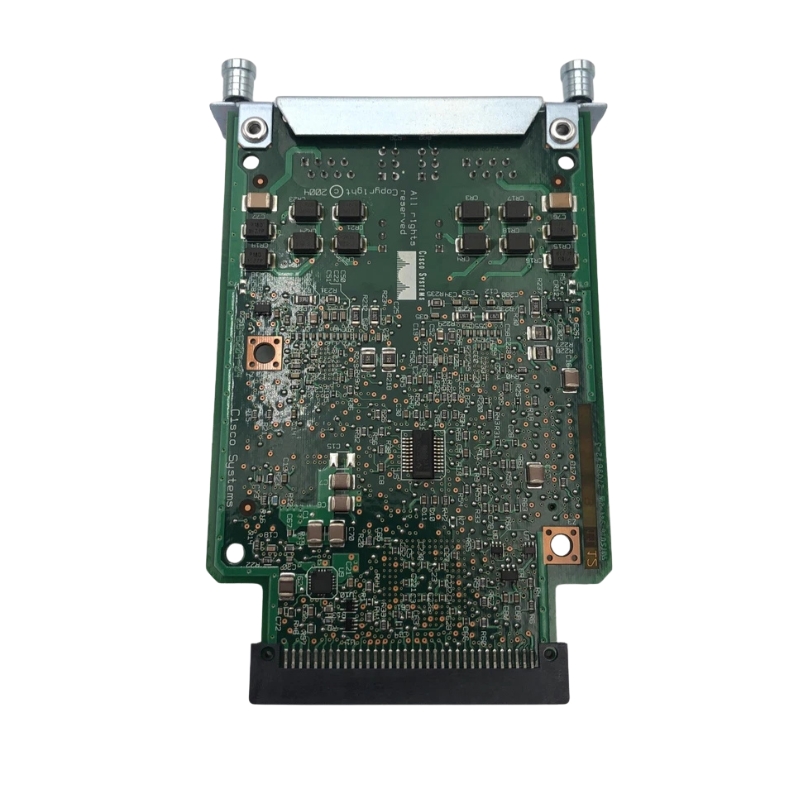
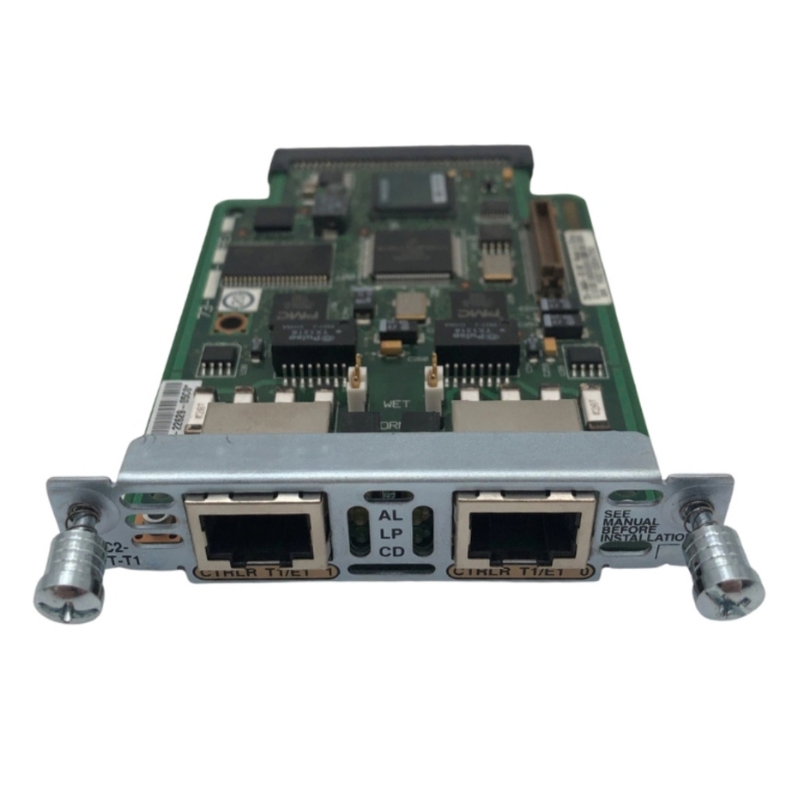
Cisco VWIC-2T1/E1-RAN 2-port Voice/WAN Interface Card. Excellent Refurbished with 1 year replacement warranty
The Cisco VWIC-2T1/E1-RAN is a dual-port Voice/WAN Interface Card designed to deliver reliable and efficient connectivity for enterprise-grade networking environments. It is engineered to support both voice and data transmission across T1/E1 WAN interfaces, ensuring seamless communication performance.
The Cisco VWIC-2T1/E1-RAN 2-Port Voice/WAN Interface Card is a high-performance networking module designed to provide flexible integration of voice and data services over T1 and E1 carrier lines. Developed by Cisco Systems, this interface card enables enterprises and service providers to consolidate voice, WAN, and routing capabilities into a single modular router platform. It is widely deployed in branch office environments, enterprise edge networks, and carrier-grade telecommunication infrastructures where reliable digital voice and WAN connectivity is essential.
This interface card supports both T1 and E1 standards, making it suitable for global deployments across North America, Europe, Asia, and other regions that rely on different digital transmission standards. By integrating two ports in a single module, the VWIC-2T1/E1-RAN enhances scalability while reducing hardware footprint and operational complexity.
The Cisco VWIC-2T1/E1-RAN is designed as a modular interface card that fits into compatible Cisco routers, allowing organizations to expand voice and WAN capabilities without replacing entire systems. This modular architecture reduces capital expenditure and enables seamless upgrades.
The dual-port configuration supports simultaneous operation of two T1 or E1 circuits. This allows for redundancy, load balancing, or independent routing of voice and data traffic. Enterprises can configure each port independently based on network requirements.
The card processes digital signals using advanced framing and encoding techniques, ensuring minimal latency and high-quality transmission. It supports standard telecom framing formats such as ESF (Extended Super Frame), SF (Super Frame), and E1 CRC4 framing structures.
One of the primary advantages of this interface card is its ability to support both T1 and E1 circuits. T1 is commonly used in North America and Japan, while E1 is widely used in Europe, Asia, and other international markets. This dual compatibility makes the card a versatile solution for multinational organizations.
The VWIC-2T1/E1-RAN supports integrated voice and WAN services, enabling organizations to transmit voice calls, VoIP gateway traffic, and data over a single infrastructure. This convergence improves efficiency and reduces operational costs.
Built for mission-critical environments, the card ensures consistent uptime and stable performance. It is engineered to handle continuous traffic loads, making it suitable for enterprise backbone and service provider networks.
Network administrators can configure the card for channelized or unchannelized modes depending on deployment needs. This flexibility supports a wide range of applications, including PBX interconnection, WAN aggregation, and VoIP gateway integration.
The card supports T1 (1.544 Mbps) and E1 (2.048 Mbps) digital transmission standards. T1 supports 24 channels, while E1 supports 32 channels, including signaling and synchronization channels. This ensures compatibility with global telecom infrastructure.
Each port on the VWIC-2T1/E1-RAN can be configured for channelized voice, data, or a combination of both. This allows enterprises to optimize bandwidth utilization and prioritize critical traffic.
The interface supports multiple framing modes including ESF, SF, and CRC4. These framing methods ensure accurate synchronization and error detection across transmission lines.
The card supports AMI (Alternate Mark Inversion) and B8ZS (Bipolar with 8-Zero Substitution) encoding for T1, as well as HDB3 encoding for E1 lines, ensuring signal integrity over long distances.
Proper synchronization is critical in telecom networks. The VWIC-2T1/E1-RAN supports multiple clocking modes including internal, line, and external clock sources, ensuring accurate timing across distributed networks.
Organizations use the Cisco VWIC-2T1/E1-RAN to connect branch offices to central data centers. The dual-port design allows redundancy, ensuring uninterrupted communication even if one line fails.
The card plays a key role in VoIP deployments by connecting traditional PSTN systems to IP-based voice networks. It enables seamless migration from legacy telephony to modern unified communications systems.
Service providers deploy this card in edge routers to aggregate voice and data traffic from multiple customers. Its high reliability and scalability make it ideal for carrier-grade environments.
The dual-interface design allows organizations to implement failover strategies, ensuring continuous service availability during network outages or maintenance events.
The VWIC-2T1/E1-RAN is managed through Cisco IOS, providing administrators with a powerful command-line interface for configuration, monitoring, and troubleshooting.
Administrators can define channel groups for voice and data traffic segmentation. This allows efficient bandwidth allocation and prioritization of critical services.
The card integrates directly into router interfaces, allowing routing protocols such as OSPF, EIGRP, and BGP to operate over T1/E1 links. This ensures seamless WAN integration.
Typical configuration includes setting framing type, line encoding, clock source, and channel group assignments. These parameters ensure proper alignment with service provider requirements.
Quality of Service (QoS) mechanisms allow prioritization of voice traffic over data, ensuring low latency and minimal jitter for real-time communications.
By enabling channelized configurations, organizations can maximize bandwidth utilization and reduce wasted capacity on underused circuits.
The interface card is optimized for minimal processing delay, making it suitable for time-sensitive applications such as VoIP and video conferencing.
While the VWIC-2T1/E1-RAN does not provide encryption at the hardware level, it integrates with router-based security features such as IPsec VPNs and firewall policies.
The module includes diagnostic capabilities to detect line failures, framing errors, and signal degradation. This ensures rapid troubleshooting and minimal downtime.
Dual-port functionality allows failover configurations, ensuring continuous service availability in case of circuit failure or maintenance activities.


 Contact Us
 Information
 Catalog
 Solid State Drives (SSD)
 Network Switches
 Hard Disk Drives
 HBA & Controllers
 PC & Servers
 PC & Server Memory
 CPU & Processors
 Network Routers
 Power Supplies
 Tape Drives & Libraries
 Network Devices
 Computer & Network Cables