(7% discount is applied at checkout)
Cart is empty
Your go-to destination for cutting-edge server products
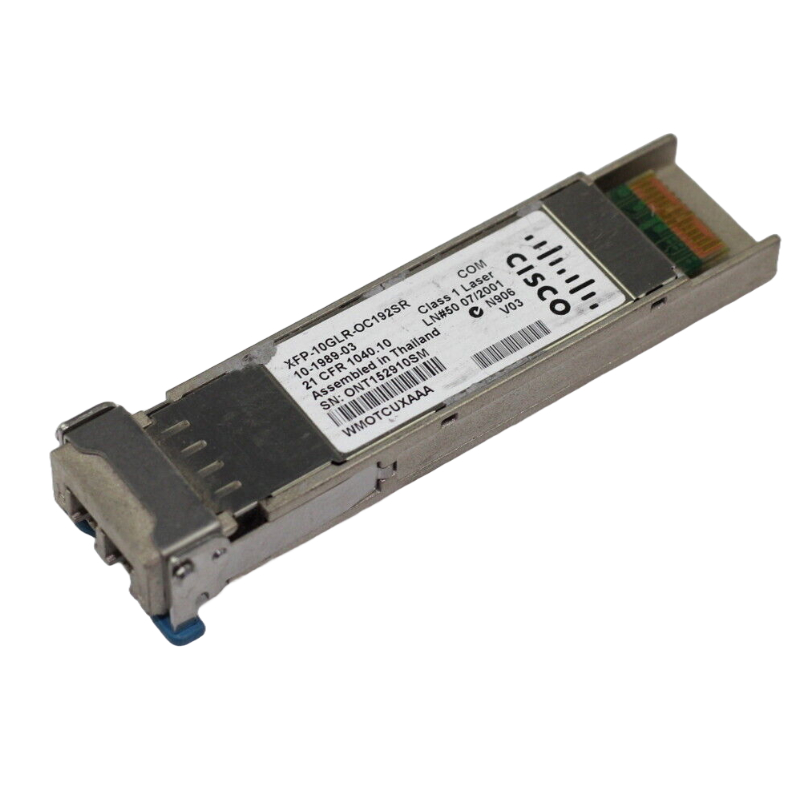


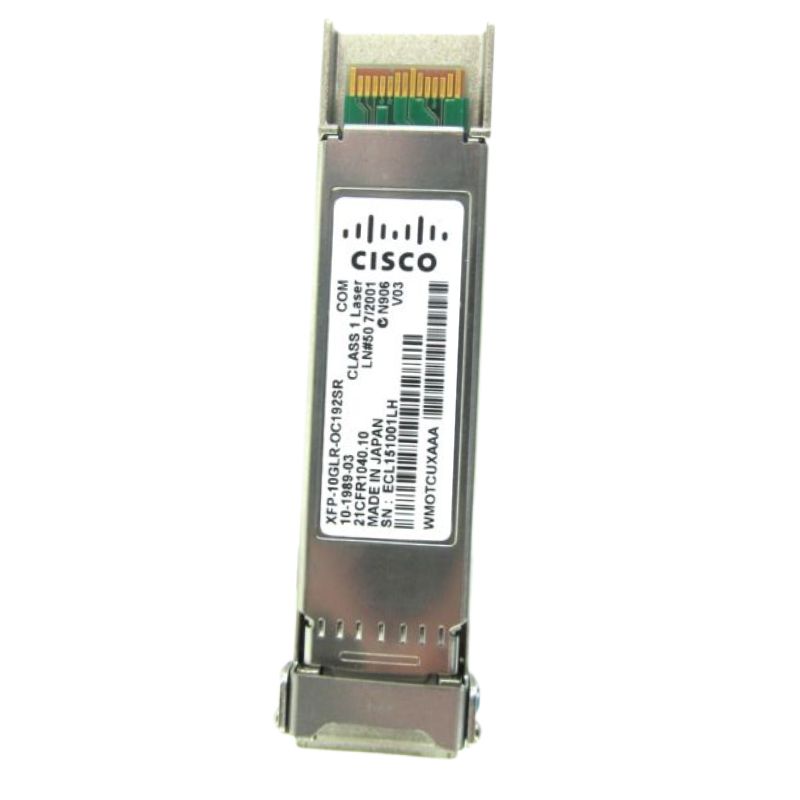
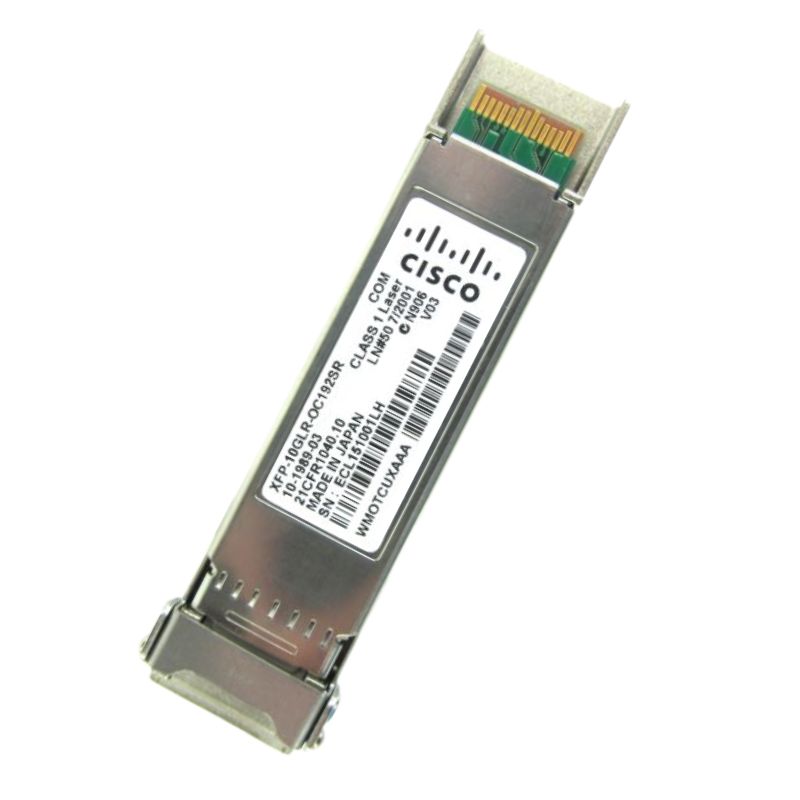
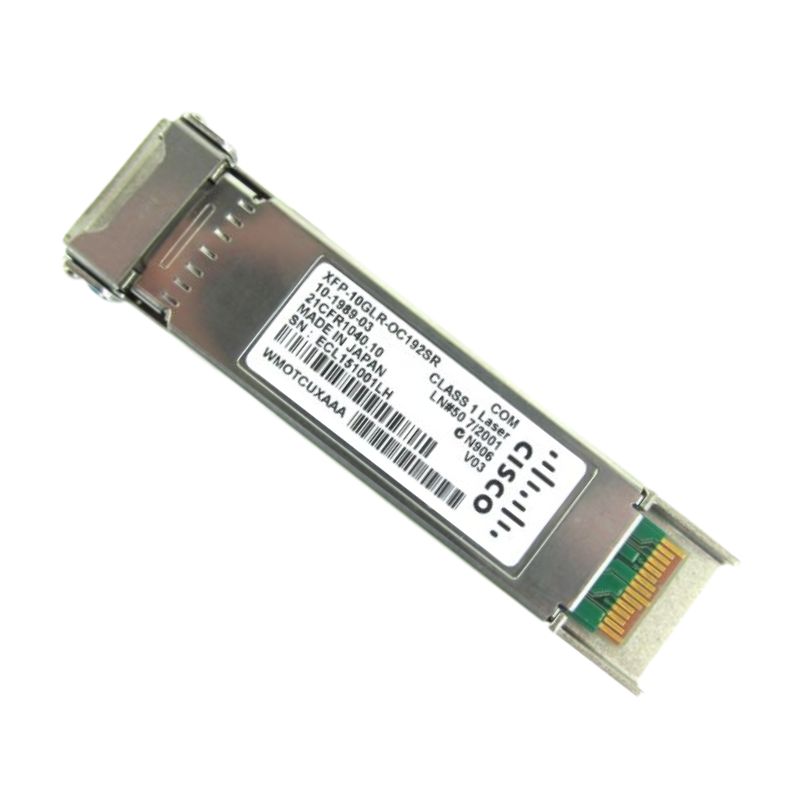
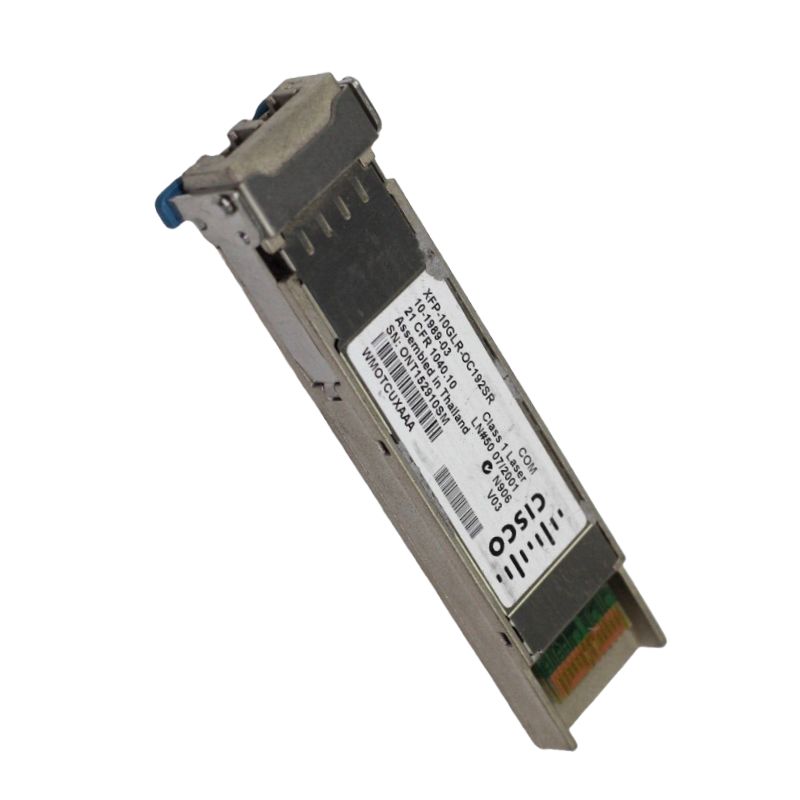
Cisco XFP-10GLR-OC192SR LC Connector Transceiver Module. Factory-Sealed New in Original Box (FSB) with 1 year replacement warranty
| SKU/MPN | Warranty | Price | Condition | You save |
|---|---|---|---|---|
| XFP-10GLR-OC192SR | 1 Year Warranty | $252.00 | Factory-Sealed New in Original Box (FSB) | You save: $88.20 (26%) |
| XFP-10GLR-OC192SR | 1 Year Warranty | $55.00 | Excellent Refurbished | You save: $19.25 (26%) |
The Cisco XFP-10GLR-OC192SR LC Connector Transceiver Module is a powerful optical networking solution designed for enterprises requiring high-speed and long-distance data transmission. This hot-swappable unit ensures seamless integration into Cisco systems while maintaining energy efficiency and compliance with industry standards.
The Cisco XFP-10GLR-OC192SR LC Connector Transceiver Module represents a high-performance optical networking component engineered for high-speed data transmission across enterprise, telecom, and service provider infrastructures. this transceiver module belongs to the XFP (10 Gigabit Small Form Factor Pluggable) family and is widely used in backbone networks where reliability, long-distance signal integrity, and interoperability are essential. It is specifically optimized for 10 Gigabit Ethernet and OC-192/STM-64 SONET/SDH applications, enabling seamless integration into carrier-grade optical systems.
As part of modern fiber-optic communication ecosystems, this module plays a critical role in ensuring stable, high-bandwidth connectivity between switches, routers, and optical transport equipment. Its LC duplex interface supports efficient fiber coupling, reducing insertion loss while maximizing signal clarity over extended distances. The Cisco XFP-10GLR-OC192SR is widely adopted in metro networks, data centers, and WAN environments that demand low latency and high throughput performance.
The internal architecture of the Cisco XFP-10GLR-OC192SR is built around advanced photonic components that enable 10Gbps transmission rates. It uses a highly optimized laser transmitter paired with a sensitive photodetector receiver, ensuring accurate signal conversion between electrical and optical domains. The design focuses on minimizing jitter, reducing signal distortion, and maintaining bit error rates at extremely low levels even under long-distance transmission scenarios.
The module integrates precision-controlled circuitry that manages modulation, signal conditioning, and thermal stabilization. This ensures that performance remains consistent even in environments with fluctuating temperature conditions or high electromagnetic interference. The optical engine is optimized for reliability in mission-critical infrastructures where downtime is not acceptable.
The LC connector interface used in this module is designed for compact, high-density networking environments. Its small form factor allows multiple connections within a limited chassis space, making it ideal for densely populated network switches and optical distribution frames. The LC duplex configuration supports bidirectional communication over separate fiber strands, ensuring full-duplex data transmission at 10Gbps speeds.
The connector mechanism ensures secure locking, minimizing accidental disconnection and maintaining stable optical alignment. This enhances signal consistency and reduces the risk of packet loss during high-volume data transfers.
The Cisco XFP-10GLR-OC192SR module is engineered to support multiple networking standards, including 10 Gigabit Ethernet (10GbE) and OC-192/STM-64 SONET/SDH protocols. This dual compatibility makes it a versatile solution for mixed network environments where legacy optical systems coexist with modern Ethernet infrastructures.
In telecom-grade deployments, SONET/SDH compatibility ensures synchronization and deterministic data flow across optical transport networks. In enterprise data centers, 10GbE support allows for high-speed server interconnectivity and backbone switching.
This module is optimized for long-reach optical transmission over single-mode fiber. It is engineered to maintain signal integrity over extended distances without requiring excessive signal regeneration. This is achieved through precise wavelength stabilization and advanced optical amplification compatibility, enabling stable performance in metropolitan and regional fiber networks.
The engineering design minimizes chromatic dispersion and attenuation, ensuring that data integrity remains intact across long-haul deployments. This makes the module highly suitable for carrier-grade WAN infrastructures.
In enterprise environments, the Cisco XFP-10GLR-OC192SR is commonly deployed in core switching layers where high-speed aggregation of data traffic is required. It enables seamless communication between data centers, storage clusters, and network aggregation points. Enterprises rely on this module to maintain consistent throughput and low latency across mission-critical applications.
Telecom operators utilize this transceiver module in optical transport networks to support high-capacity data transmission across cities and regions. Its compatibility with SONET/SDH systems allows it to integrate into existing telecom architectures without requiring full infrastructure replacement. This reduces operational costs while increasing bandwidth efficiency.
Modern data centers depend on high-speed interconnects to synchronize workloads and distribute cloud-based services. The Cisco XFP-10GLR-OC192SR enables reliable 10Gbps links between data center switches, ensuring efficient traffic balancing and redundancy. Its low latency characteristics are particularly beneficial for virtualization platforms and distributed computing environments.
This transceiver module is designed to maximize bandwidth utilization while minimizing overhead. It supports full 10Gbps throughput, ensuring that large data transfers occur without bottlenecks. This performance is essential in environments where high-volume data replication and real-time processing are required.
Latency is minimized through optimized optical-electrical conversion processes and efficient signal encoding techniques. The module ensures that data packets are transmitted with minimal delay, supporting applications such as financial trading systems, real-time analytics, and cloud orchestration platforms.
The Cisco XFP-10GLR-OC192SR is designed with energy-efficient components that reduce power consumption without compromising performance. Its thermal regulation system ensures stable operation even under continuous high-load conditions. Heat dissipation mechanisms are integrated into the module design to maintain optimal operating temperatures, extending device lifespan and reliability.
Before integrating the module into a network environment, compatibility with host devices such as routers, switches, and optical transport equipment must be verified. The XFP form factor ensures broad compatibility across Cisco networking platforms that support 10G optical modules. Proper alignment with system firmware and optical configurations is essential for optimal performance.
Single-mode fiber cables are typically used with this module to achieve maximum transmission distance and signal clarity. Proper cleaning and inspection of LC connectors are essential before installation to avoid contamination-related signal degradation. Fiber routing should also minimize sharp bends and physical stress to preserve optical integrity.
Once installed, network administrators configure the module through system interfaces to ensure correct wavelength settings, link speed validation, and diagnostic monitoring. The module supports digital diagnostics monitoring, enabling real-time tracking of optical performance parameters such as temperature, voltage, and optical power levels.
The Cisco XFP-10GLR-OC192SR is built to withstand demanding operational environments, including high-density data centers and carrier-grade telecom facilities. Its robust design ensures long-term reliability even under continuous operation. The component selection process emphasizes durability and consistent optical performance.
Regular inspection of fiber connections and monitoring of diagnostic parameters helps maintain optimal module performance. Ensuring that LC connectors remain free from dust and contamination significantly reduces signal loss and potential transmission errors. Monitoring system logs also helps detect early signs of performance degradation.
Fiber optic transmission inherently provides enhanced security compared to copper-based systems, as it is resistant to electromagnetic interception. The Cisco XFP-10GLR-OC192SR enhances this advantage by ensuring tightly controlled signal pathways and minimizing leakage risks in high-security network environments.
The module is immune to electromagnetic interference, making it suitable for deployment in industrial environments or areas with high electrical noise. This ensures consistent data transmission quality even in challenging operational conditions.
When procuring Cisco XFP-10GLR-OC192SR modules, enterprises typically evaluate compatibility, scalability, and long-term network architecture alignment. Cost efficiency is balanced against performance requirements, especially in high-availability systems where redundancy is critical.
This transceiver module supports scalable network expansion by allowing incremental upgrades to existing fiber infrastructure. Organizations can expand bandwidth capacity without redesigning the entire network topology, making it a cost-effective solution for growing enterprises.
In hybrid environments where legacy SONET/SDH systems coexist with modern Ethernet networks, the Cisco XFP-10GLR-OC192SR acts as a bridging component that ensures interoperability. This flexibility enables gradual migration to next-generation optical systems without disrupting ongoing operations.
Advanced signal conditioning within the module ensures that optical data transmission remains stable across varying distances and network loads. This includes automatic compensation for signal attenuation and dispersion, allowing consistent performance across long-haul fiber links.
The module is engineered to maintain extremely low bit error rates through precise modulation control and high-quality optical components. This ensures data accuracy in environments where even minor transmission errors can have significant operational impacts.


 Contact Us
 Information
 Catalog
 Solid State Drives (SSD)
 Network Switches
 Hard Disk Drives
 HBA & Controllers
 PC & Servers
 PC & Server Memory
 CPU & Processors
 Network Routers
 Power Supplies
 Tape Drives & Libraries
 Network Devices
 Computer & Network Cables