(7% discount is applied at checkout)
Cart is empty
Your go-to destination for cutting-edge server products
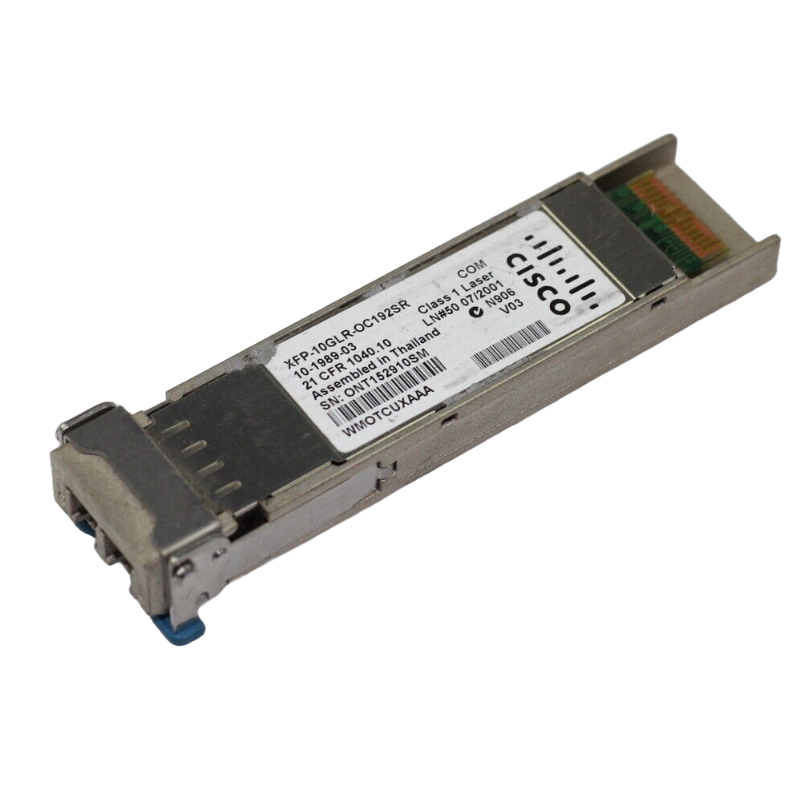


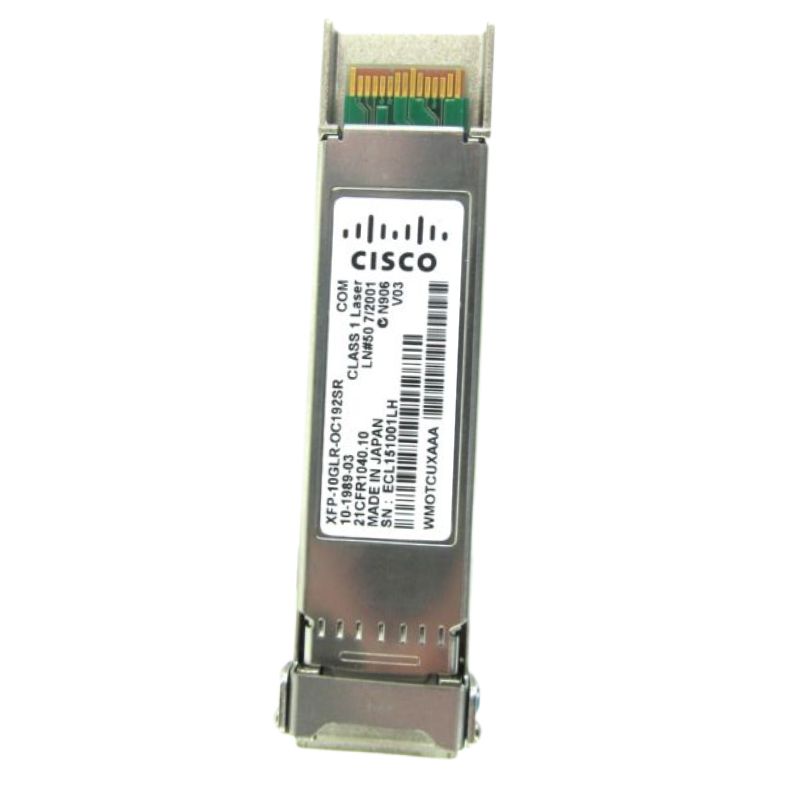
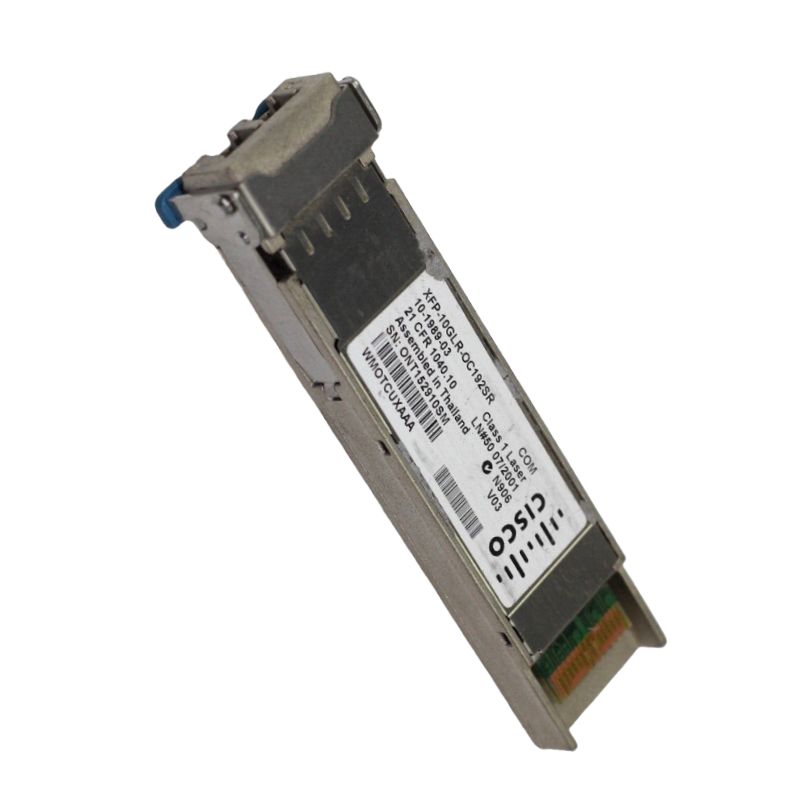
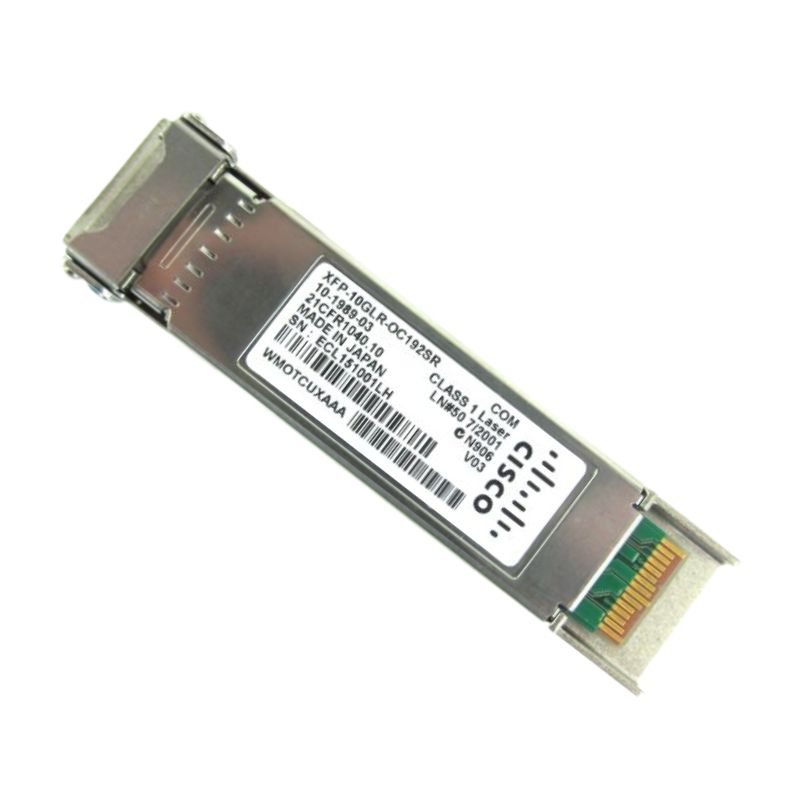
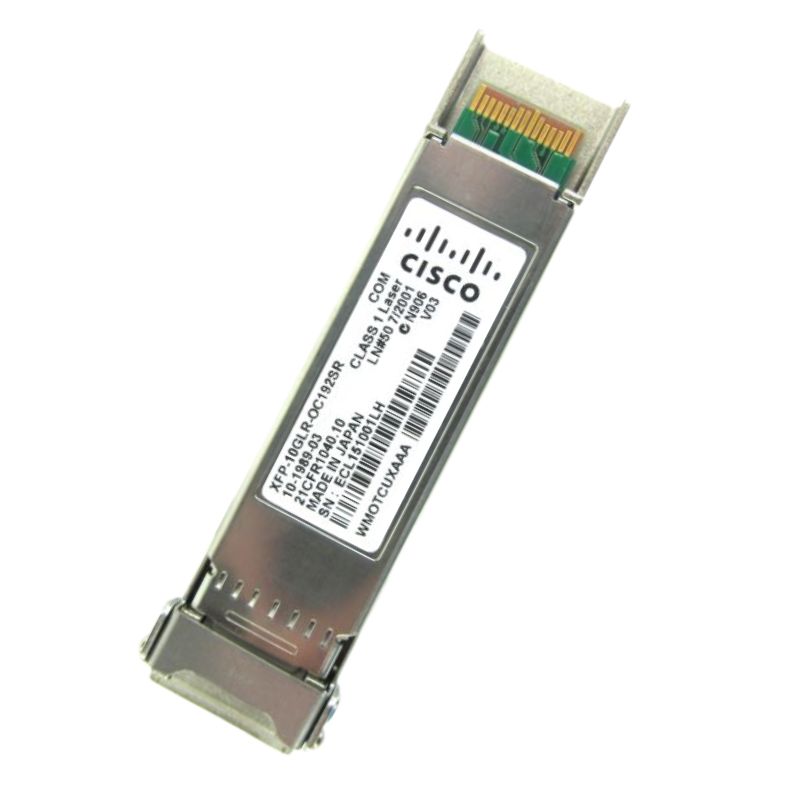
Cisco XFP-10GLR-OC192SR 10GBPS XFP Transceiver Module. Excellent Refurbished with 1 year replacement warranty
| SKU/MPN | Warranty | Price | Condition | You save |
|---|---|---|---|---|
| XFP-10GLR-OC192SR | 1 Year Warranty | $252.00 | Factory-Sealed New in Original Box (FSB) | You save: $88.20 (26%) |
| XFP-10GLR-OC192SR | 1 Year Warranty | $55.00 | Excellent Refurbished | You save: $19.25 (26%) |
The Cisco XFP-10GLR-OC192SR XFP Transceiver Module offers a remarkable data transfer rate of 10Gbps. This feature is crucial for users who require high-speed and reliable data transmission. In this section, we will delve into the benefits and importance of this impressive data transfer rate in detail.
The Cisco XFP-10GLR-OC192SR LC Connector Transceiver Module represents a high-performance optical networking component designed for long-reach 10 Gigabit Ethernet and OC-192/STM-64 optical transport applications. As part of the advanced portfolio developed by
Built to comply with the XFP Multi-Source Agreement (MSA), this transceiver module provides a standardized hot-swappable interface that enables seamless installation into compatible network devices. The LC duplex connector ensures compact fiber termination while maintaining optimal optical performance. Designed for 10GBASE-LR and OC-192 SR compatibility, the module supports data transmission over single-mode fiber, making it suitable for long-distance deployments in metropolitan area networks and wide area network environments.
The Cisco XFP-10GLR-OC192SR module is built around precision optical signal processing technology that enables efficient conversion between electrical and optical signals. This ensures minimal latency and reduced signal degradation over extended distances. The transmitter section integrates a laser diode optimized for long-reach transmission, while the receiver uses a high-sensitivity photodetector that ensures accurate signal interpretation even under high-noise network conditions.
The internal design incorporates advanced modulation techniques that enhance spectral efficiency and reduce bit error rates. This engineering approach allows the module to maintain consistent throughput performance even in high-demand network environments such as data center interconnects and carrier backbone systems.
Thermal stability is a critical aspect of high-speed transceiver design. The Cisco XFP module integrates low-power consumption circuitry that minimizes heat generation while maintaining full operational capacity. Its thermal dissipation structure ensures that the module remains within optimal operating temperatures even when deployed in dense network chassis configurations.
Power efficiency is achieved through optimized chipset design and adaptive power control mechanisms. These features allow the module to dynamically adjust power usage based on signal conditions and operational load, reducing overall energy consumption in large-scale deployments.
The XFP-10GLR-OC192SR module is widely deployed across enterprise and carrier-grade networks where high-capacity optical transport is required. It is compatible with a range of Cisco networking platforms that support XFP interfaces, enabling seamless integration into existing infrastructure without the need for extensive hardware modifications.
In enterprise environments, the module is commonly used for high-speed backbone connectivity between data centers, aggregation switches, and core routing systems. In carrier networks, it supports metro optical transport systems and long-haul backbone links that require stable and scalable bandwidth delivery.
Compliance with IEEE 802.3ae and ITU-T standards ensures that the module can interoperate with a wide range of optical networking equipment. This standards-based approach enhances flexibility in mixed-vendor environments, allowing network architects to design scalable systems without being constrained by proprietary limitations.
The LC connector interface further enhances interoperability by supporting industry-standard fiber optic cabling systems. This ensures compatibility with existing single-mode fiber infrastructure commonly deployed in telecommunications and enterprise networks.
The Cisco XFP module is engineered to support 10 Gigabit Ethernet transmission with minimal latency and maximum throughput efficiency. Its internal clock recovery and signal conditioning mechanisms ensure that data integrity is maintained even over extended distances. This makes it suitable for latency-sensitive applications such as financial trading systems, cloud computing interconnects, and real-time data processing environments.
The module’s design minimizes jitter and signal distortion, ensuring stable packet delivery and reduced retransmission rates. This contributes to improved overall network performance and higher quality of service in mission-critical applications.
In addition to Ethernet support, the module is optimized for OC-192 and STM-64 SONET/SDH transport protocols. These capabilities make it suitable for telecommunications backbone networks that rely on synchronous optical networking for high-capacity data transmission.
The integration of multi-protocol support ensures that the module can be deployed in hybrid network environments where both packet-based and circuit-based transport systems coexist. This versatility is essential for service providers managing complex infrastructure ecosystems.
The LC duplex connector used in the Cisco XFP module is designed for high-density fiber optic applications. Its compact form factor allows for efficient port utilization in network equipment, making it ideal for environments where space optimization is critical.
The connector ensures precise fiber alignment, reducing insertion loss and improving signal transmission quality. Its latch-based locking mechanism provides secure physical connectivity, preventing accidental disconnection during operation.
The module is optimized for single-mode fiber (SMF) transmission, which enables long-distance communication with minimal signal attenuation. Single-mode fiber architecture is essential for metropolitan and wide area networks where transmission distances can extend across tens of kilometers.
By leveraging advanced laser technology, the module ensures consistent optical output power, enabling reliable communication across extended fiber spans without the need for frequent signal regeneration.
One of the key operational advantages of the module is its hot-swappable capability. This allows network administrators to install or replace the module without shutting down the host system, thereby maintaining continuous network availability.
This feature is particularly valuable in large-scale data centers and telecom environments where downtime must be minimized. It also simplifies maintenance operations and reduces operational complexity.
In modern data center environments, the Cisco XFP module plays a vital role in connecting geographically distributed facilities. Its long-reach capability enables high-speed data synchronization between data centers, supporting disaster recovery, load balancing, and cloud service replication.
The high bandwidth capacity ensures that large volumes of data can be transferred efficiently between storage systems, virtualization clusters, and application servers.
Within metropolitan area networks, the module supports high-speed communication between network aggregation points and core infrastructure nodes. This enables service providers to deliver high-bandwidth services such as video streaming, enterprise connectivity, and broadband internet access.
Its ability to maintain signal integrity over long distances makes it ideal for city-wide optical transport systems that require stable and scalable performance.
Telecom operators rely on the Cisco XFP module for backbone network deployment where OC-192/STM-64 transport is required. Its compatibility with synchronous optical networking ensures stable timing and synchronization across distributed network elements.
This makes it suitable for high-capacity voice, data, and video transmission across national and international communication networks.
The module incorporates advanced signal conditioning techniques that enhance overall optical performance. These mechanisms reduce dispersion and attenuation effects that commonly occur in long-distance fiber transmission.
By maintaining signal clarity and reducing bit error rates, the module ensures that data is transmitted with high accuracy and minimal retransmission requirements.
Integrated noise reduction capabilities help mitigate the impact of external interference sources. This is particularly important in dense network environments where multiple optical and electrical signals coexist.
Error correction support further enhances reliability by ensuring that corrupted data packets are detected and corrected, improving overall network efficiency.
The Cisco XFP module supports modular network expansion strategies, enabling organizations to scale their infrastructure as demand increases. Its standardized interface allows it to be deployed across multiple hardware platforms without requiring architectural redesign.
This scalability is essential for growing enterprises and service providers who must adapt to increasing bandwidth requirements without disrupting existing services.


 Contact Us
 Information
 Catalog
 Solid State Drives (SSD)
 Network Switches
 Hard Disk Drives
 HBA & Controllers
 PC & Servers
 PC & Server Memory
 CPU & Processors
 Network Routers
 Power Supplies
 Tape Drives & Libraries
 Network Devices
 Computer & Network Cables