(7% discount is applied at checkout)
Cart is empty
Your go-to destination for cutting-edge server products
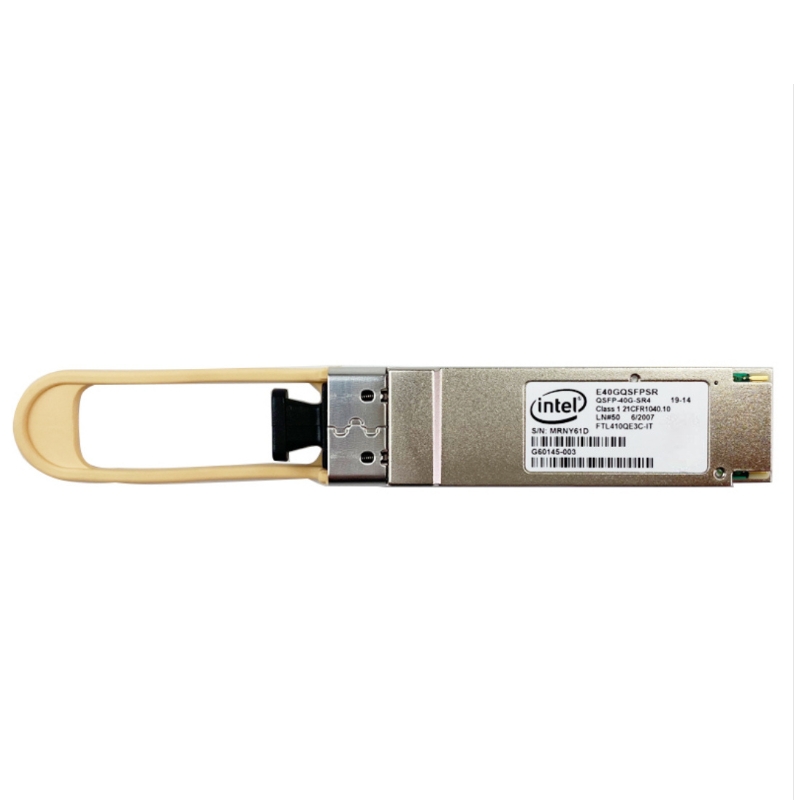


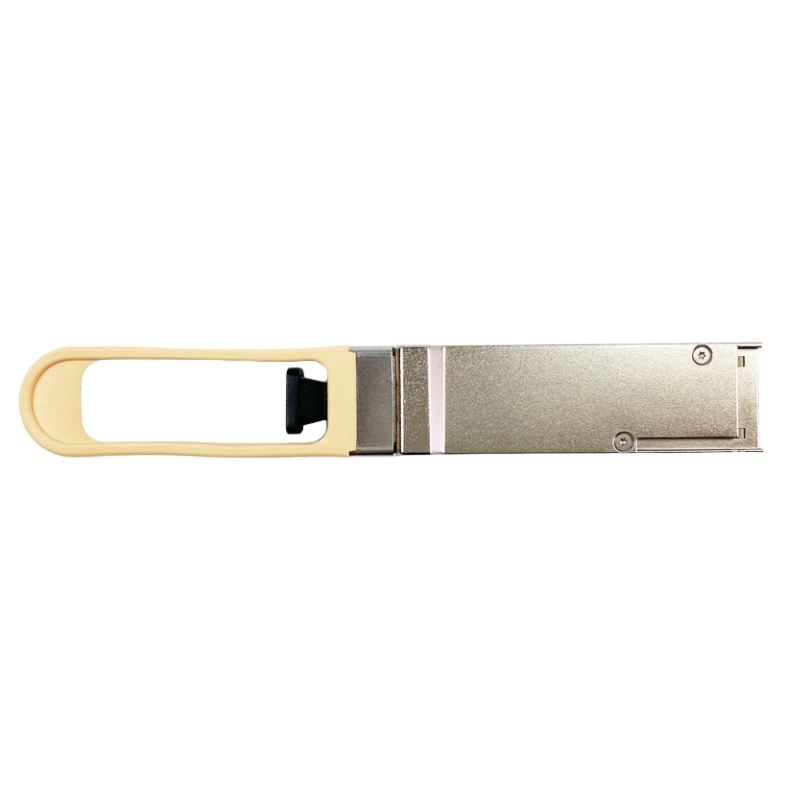
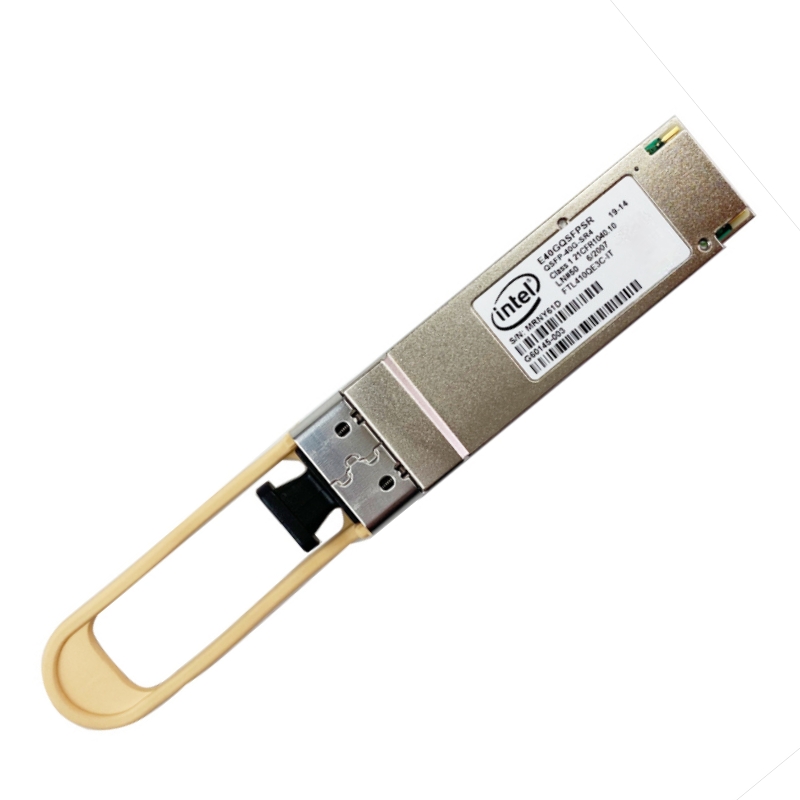
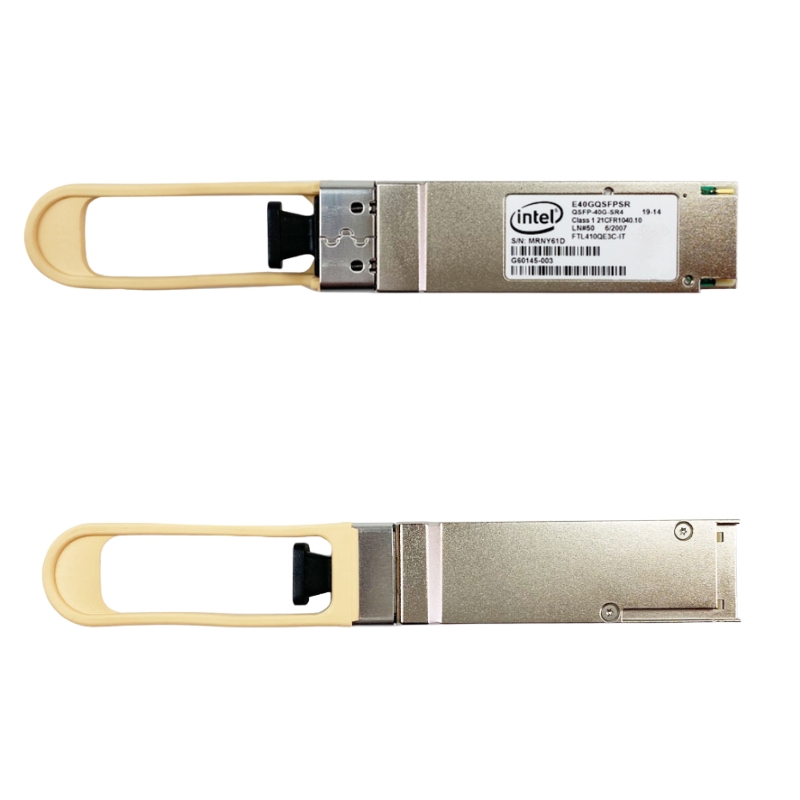
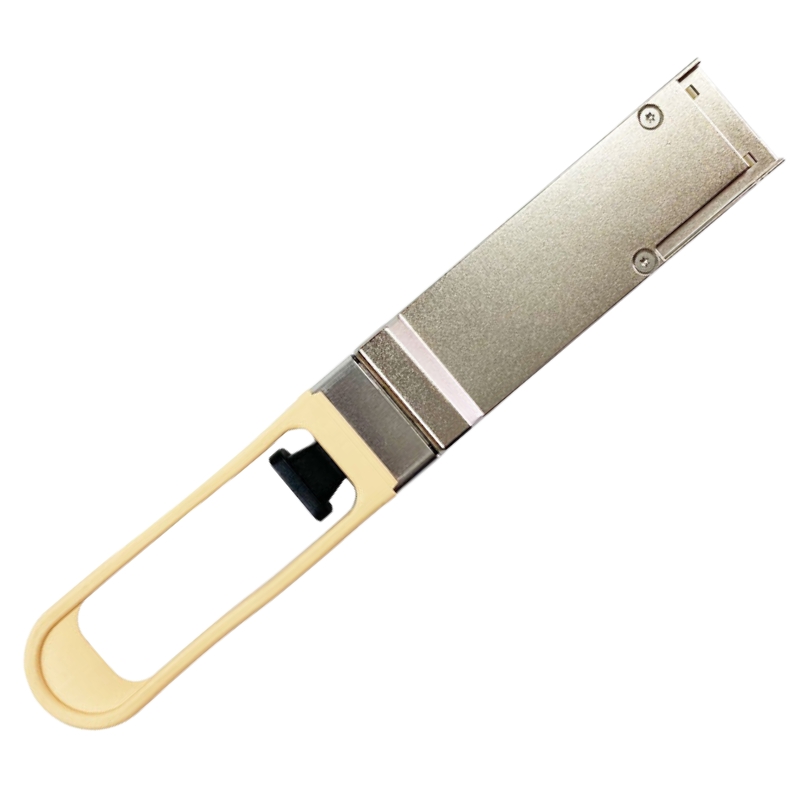
Intel E40GQSFPSR QSFP+ 40Gbps MPO Multi-Mode Transceiver Module. New Sealed with 1 Year Replacement Warranty
| SKU/MPN | Warranty | Price | Condition | You save |
|---|---|---|---|---|
| E40GQSFPSR | 1 Year Warranty | $48.00 | Excellent Refurbished | You save: $16.80 (26%) |
| E40GQSFPSR | 1 Year Warranty | $260.00 | New Sealed in Box (NIB) | You save: $91.00 (26%) |
The Intel E40GQSFPSR is a high-speed QSFP+ optical transceiver module built for 40 Gigabit Ethernet environments that require dependable short-range fiber connectivity. Designed as a hot-pluggable plug-in module, it supports 40GBASE-SR4 networking over multimode fiber and delivers a robust 40 Gbps data rate for high-bandwidth switching, aggregation, virtualization, and data center interconnect applications. With an 850 nm optical wavelength and MPO multi-mode interface, this Intel transceiver is well suited for organizations seeking a compact and efficient 40GbE optical solution for enterprise networks, cloud platforms, storage fabrics, and performance-driven server infrastructure.
The Intel E40GQSFPSR QSFP+ 40Gbps MPO Multi-Mode Transceiver Module belongs to a performance-focused category of 40GbE optical networking components built for short-reach, high-bandwidth communication across enterprise data centers, virtualization clusters, aggregation layers, storage fabrics, and high-speed switch-to-switch environments. Designed around the QSFP+ form factor, this module provides 40 Gigabit Ethernet connectivity over multi-mode fiber and is commonly associated with 40GBASE-SR4 architecture, parallel optical transmission, and MPO-based cabling infrastructure. In practical deployment terms, this category serves organizations that need to move far beyond 10GbE limitations while preserving low-latency, high-throughput communication inside modern rack, row, pod, and campus network designs.
As part of the broader 40GbE transceiver market, the Intel E40GQSFPSR module is especially relevant where network planners need an efficient optical uplink for top-of-rack switches, end-of-row switching, core aggregation, hyper-converged infrastructure, clustered servers, GPU nodes, and high-speed storage networks. This category is defined not only by its nominal 40Gbps speed, but also by its short-reach optical profile, support for parallel transmission over multi-mode fiber, and its ability to integrate with high-density MPO connectivity schemes. For IT teams building scalable optical backbones inside facilities, this class of transceiver represents a practical balance between bandwidth, reach, interoperability, and deployment efficiency.
The product family around Intel E40GQSFPSR is often evaluated by organizations modernizing legacy 1GbE and 10GbE environments. Instead of relying on multiple lower-speed links to carry east-west traffic across virtualization clusters or storage workloads, a 40Gbps QSFP+ optical module can consolidate bandwidth into a compact, hot-pluggable interface. This supports cleaner cable management, lower port consumption, improved switch utilization, and stronger long-term scaling for server farms, cloud edge nodes, and distributed application platforms.
QSFP+ stands for Quad Small Form-Factor Pluggable Plus, and this category of transceiver is built around four transmit channels and four receive channels that together create an aggregate 40Gbps connection. The Intel E40GQSFPSR transceiver module fits into QSFP+ ports on compatible switches, network interface cards, routers, and specialized appliances. In the case of 40GBASE-SR4 multi-mode optics, the QSFP+ design enables a high-density optical interface that can deliver high data rates without occupying excessive front-panel space.
That density matters in enterprise and data center environments because front-panel real estate is always valuable. A single 1U or 2U switch may need to serve dozens of server links, storage uplinks, aggregation paths, and inter-switch trunks. By using QSFP+ optical modules instead of multiple lower-speed transceivers, administrators can simplify port planning and reduce the number of individual physical connections required for a given throughput target. In a large deployment, this improves airflow, rack organization, cable traceability, and operational maintainability.
The Intel E40GQSFPSR category is therefore not simply about a removable optic. It is part of a density strategy, a bandwidth strategy, and a scaling strategy. Whether deployed in a core distribution switch, a spine layer, or a storage aggregation environment, the QSFP+ architecture allows a single compact transceiver to carry the traffic equivalent of multiple 10GbE channels while remaining serviceable and replaceable in live environments.
The Intel E40GQSFPSR QSFP+ 40Gbps MPO Multi-Mode Transceiver Module is associated with 40GBASE-SR4 style optical communication. In this architecture, the 40Gbps link is delivered as four parallel lanes in each direction, with each lane carrying approximately 10Gbps-class traffic. Rather than sending all traffic over a single optical lane, the module distributes the aggregate bandwidth across multiple optical channels. This parallel model is a defining trait of SR4 multi-mode optics and is one of the reasons MPO connectivity is used.
For the buyer, integrator, or infrastructure architect, that means the transceiver category should be understood as a parallel optical solution rather than a simple duplex LC short-range optic. This distinction affects cabling choices, patch panel design, polarity planning, structured cabling procurement, and migration strategies from older Ethernet generations. In short, the Intel E40GQSFPSR category belongs to a class of optics intended for environments that are prepared for MPO-based 40G connectivity or are actively building around it.
Because SR4 is optimized for short-distance data center links, it is especially effective for interconnecting devices within the same room, row, or structured fiber plant. It is not positioned as a long-haul metro optic or a campus single-mode module. Instead, it is designed to deliver very fast, very stable optical connectivity where link distance is moderate but bandwidth demand is intense. That makes it particularly well suited to east-west traffic patterns in virtualized compute environments, clustered databases, AI staging networks, and storage-heavy enterprise applications.
One of the defining characteristics of the Intel E40GQSFPSR transceiver module category is its MPO multi-mode optical interface. MPO connectivity is widely used in high-density optical networks because it supports multiple fibers within a single connector body. For a 40GBASE-SR4 style transceiver, the MPO interface supports the parallel optical architecture that makes 40Gbps transmission possible over multi-mode fiber. This creates a category that is very different from standard duplex optical modules used in many 1GbE or 10GbE environments.
From a deployment perspective, MPO-based optics can improve cable density and streamline structured cabling in data centers where a large number of optical links must be managed cleanly. Instead of deploying separate individual duplex connections for each lower-speed link, administrators can use MPO trunks, cassettes, patch panels, and harness assemblies designed around higher-density fiber distribution. This supports cleaner cabinet design, faster turn-up of new links, and more predictable capacity planning when scaling from one rack to many racks.
The multi-mode design further reinforces the role of this category in short-range, in-building networking. Multi-mode fiber is commonly used in data center environments because it is practical for relatively short distances and supports high-speed optical communication over structured in-facility cabling. In the case of a 40Gbps SR4 transceiver such as the Intel E40GQSFPSR, multi-mode operation aligns well with top-of-rack to end-of-row runs, leaf-to-spine interconnects, or server-to-switch optical uplinks in large enterprise installations.
Multi-mode fiber continues to be relevant in many enterprise and data center environments because it provides a cost-conscious and operationally practical medium for short-distance optical links. Organizations with established OM3 or OM4 cabling plants often prefer to leverage that existing infrastructure when moving to 40GbE, especially when the required link distances fall within the supported SR4 range. The Intel E40GQSFPSR category therefore appeals to IT teams that want to introduce higher bandwidth without completely redesigning their short-range optical layer.
In many real-world facilities, the majority of high-volume east-west traffic does not need long-haul optics. Traffic between servers, storage arrays, virtualization clusters, and aggregation switches may remain within the same room or hall. For these scenarios, a multi-mode QSFP+ transceiver can be a highly efficient solution because it delivers the bandwidth needed for modern workloads without forcing the cost profile or reach characteristics of single-mode long-distance optics.
Another reason multi-mode remains valuable is installation familiarity. Many enterprises, colocation providers, and institutional IT departments already have operational experience with multi-mode patching, fiber management, and short-reach optical troubleshooting. This reduces deployment friction when adding 40GbE transceivers like the Intel E40GQSFPSR into existing operational frameworks. It also simplifies spare parts planning, optical cleaning workflows, and physical layer documentation because the team is working with a known cabling model rather than an unfamiliar transport architecture.
The MPO connector design is especially attractive in high-density data centers because it reduces connector sprawl and supports organized parallel optical infrastructure. In environments with hundreds or thousands of optical links, every decision around connector format, cable pathway management, and patch panel layout affects long-term serviceability. The Intel E40GQSFPSR transceiver category fits well into these environments because it aligns with MPO trunking strategies that help standardize 40G interconnects at scale.
High-density deployment scenarios often include leaf-spine fabrics, converged compute clusters, virtualization hosts with multiple uplinks, storage switching, and redundant fabric paths across multiple rows. In such environments, the ability to deploy compact, standardized QSFP+ optics with MPO interfaces can simplify cross-connect planning and reduce clutter inside cabinets and cable trays. This is particularly useful where every rack unit and every cable pathway matters for thermal efficiency, maintenance access, and structured growth.
MPO also supports the operational philosophy of modularity. Instead of hardwiring every optical run in an ad hoc manner, network teams can build repeatable structured cabling designs using MPO trunks and patching systems. The Intel E40GQSFPSR category fits naturally into that modular optical model, enabling consistent provisioning and easier scaling as network capacity expands.
The Intel E40GQSFPSR QSFP+ 40Gbps MPO Multi-Mode Transceiver Module is part of a performance-oriented category that exists to deliver 40Gbps optical throughput with low-latency signaling and strong reliability inside enterprise and data center environments. Its appeal comes from more than raw bandwidth. This class of transceiver is valued because it combines throughput, density, optical consistency, and compatibility with structured cabling methods used in high-performance facilities.
In network design, throughput is not only about headline speed. It is also about sustaining application performance under bursty workloads, supporting rapid east-west data movement, and preventing uplink bottlenecks between compute and storage resources. When organizations move from 10GbE to 40GbE optical uplinks, they are often solving real performance problems such as congestion between hypervisors and storage arrays, inadequate inter-switch bandwidth, delayed replication traffic, or inefficient oversubscription at aggregation points. The Intel E40GQSFPSR category directly addresses those concerns by enabling a substantial jump in available optical bandwidth.
This category is especially useful in environments where many servers or applications converge onto a smaller number of uplink ports. Rather than aggregating multiple lower-speed interfaces and consuming extra switch ports, a 40Gbps optical module allows the network to carry more traffic per physical transceiver slot. That improves switch economics, reduces cable counts, and provides room for growth as workloads intensify.
Modern data centers are dominated by east-west traffic rather than purely north-south internet-bound flows. Virtual machine migrations, distributed databases, clustered storage, backup replication, application synchronization, and containerized microservices all generate substantial internal traffic between servers and internal switching layers. The Intel E40GQSFPSR category is built for these environments because 40Gbps optical bandwidth can absorb much heavier internal traffic loads than traditional 10GbE links.
East-west traffic growth is especially visible in virtualization-heavy environments. A hypervisor cluster with dozens of hosts may continuously exchange storage blocks, memory state, application data, and management traffic. If these flows are constrained by insufficient uplink bandwidth, performance issues can ripple across the entire environment. By deploying 40Gbps QSFP+ optical transceivers, network teams can create more headroom for high-volume internal communication and reduce the risk of contention during peak activity.
The same is true in analytics, AI preprocessing, content rendering, research computing, and other data-intensive workloads. These workloads often involve moving large files, intermediate datasets, or replicated data between nodes at high speed. The Intel E40GQSFPSR transceiver category supports such environments by providing a practical short-range optical link for high-throughput communication inside the facility.
Latency matters in more scenarios than many buyers initially realize. While bandwidth is the most obvious specification for a 40GbE optic, predictable low-latency communication can be equally important in clustered applications, storage networks, and time-sensitive data processing. Optical transceivers in the Intel E40GQSFPSR category are typically chosen for structured, high-performance switching environments where consistent transport behavior matters for both application responsiveness and infrastructure stability.
In private cloud environments, for example, orchestration platforms may shift workloads dynamically, replicate data between nodes, and maintain continuous communication among compute, control, and storage layers. In a database cluster, latency spikes can affect synchronization and transaction behavior. In a software-defined storage environment, delayed east-west traffic can impact rebuild operations and client I/O consistency. A 40Gbps multi-mode QSFP+ module helps address these demands by delivering fast optical connectivity within the reach envelope typical of data center interiors.
Because the Intel E40GQSFPSR category is generally associated with short-range in-building optical links, it is often deployed precisely where low-latency performance matters most: inside the same room, row, or facility. The transceiver is not burdened with the requirements of long-haul optical transport. Instead, it is optimized for high-speed internal infrastructure communication where low delay and stable throughput are essential.
The Intel E40GQSFPSR QSFP+ 40Gbps MPO Multi-Mode Transceiver Module is suitable for a wide range of enterprise and institutional networking scenarios. Its category is most relevant where network designers need short-range 40GbE optical links with reliable compatibility, strong density, and support for structured fiber cabling. Because it is a hot-pluggable module built for QSFP+ interfaces, it can serve many roles across the access, aggregation, compute, and storage layers of a modern environment.
In a top-of-rack deployment, the module may be used to connect a rack switch to an aggregation switch or spine layer. In an end-of-row design, it may link server access switches to core switching platforms. In a virtualization cluster, it can provide uplinks between hypervisor hosts and the data center switching fabric. In a storage environment, it can support high-bandwidth connectivity between storage controllers, switches, and compute nodes that need rapid access to shared datasets.
The category also extends into research networks, media production environments, software development labs, and service provider edge data centers. Any environment that combines short physical distances with heavy internal traffic can potentially benefit from a 40Gbps multi-mode QSFP+ optic. What makes the Intel E40GQSFPSR especially appealing is that it sits in a well-established and widely recognized class of optical modules, making it easier for organizations to source compatible cabling, plan replacements, and integrate with standard 40GbE design practices.
One of the most common applications for the Intel E40GQSFPSR category is switch-to-switch interconnection inside the data center. This may involve linking top-of-rack switches to a spine switch, connecting aggregation switches to a core, or creating redundant fabric paths between rows of cabinets. In each of these cases, the network needs high throughput, compact optics, and structured cabling compatibility. A 40Gbps QSFP+ MPO multi-mode transceiver fits those needs well.
Switch interconnects are often some of the busiest links in the environment because they aggregate traffic from many downstream devices. If those links are undersized, congestion can spread quickly across multiple racks or service domains. Deploying the Intel E40GQSFPSR transceiver category for these uplinks helps ensure the switching fabric has enough internal capacity to carry server traffic, storage traffic, replication flows, and management traffic simultaneously.
Because switch-to-switch links are frequently short in physical distance, the SR4 multi-mode design is a natural fit. The module provides the required throughput without overprovisioning for reach that the facility does not actually need. This makes it a highly practical choice for structured in-building interconnects.
When organizations invest in optical modules, they are not only buying speed. They are buying compatibility, operational predictability, and confidence that the transceiver will work correctly inside a larger switching or server environment. The Intel E40GQSFPSR category matters because it aligns with the expectations of QSFP+ 40GbE deployments and fits into a recognized ecosystem of optical standards, cabling practices, and enterprise hardware platforms.
In practical terms, compatibility affects whether a transceiver initializes properly, reports digital diagnostics correctly, negotiates as expected with the host platform, and performs reliably under continuous production load. For data center teams, that reliability is critical because an optical module failure or compatibility mismatch can affect not just a single endpoint but an entire aggregation path, rack uplink, or storage segment. Choosing a transceiver category with a strong compatibility profile reduces operational risk and simplifies lifecycle management.
The Intel E40GQSFPSR designation also makes this category relevant to organizations that standardize on Intel networking hardware or maintain mixed-vendor environments where Intel-compatible optical modules are part of the support model. In such cases, product selection is not just about technical specs; it is about maintaining consistency across procurement, sparing, deployment documentation, and change control processes.


 Contact Us
 Information
 Catalog
 Solid State Drives (SSD)
 Network Switches
 Hard Disk Drives
 HBA & Controllers
 PC & Servers
 PC & Server Memory
 CPU & Processors
 Network Routers
 Power Supplies
 Tape Drives & Libraries
 Network Devices
 Computer & Network Cables