(7% discount is applied at checkout)
Cart is empty
Your go-to destination for cutting-edge server products
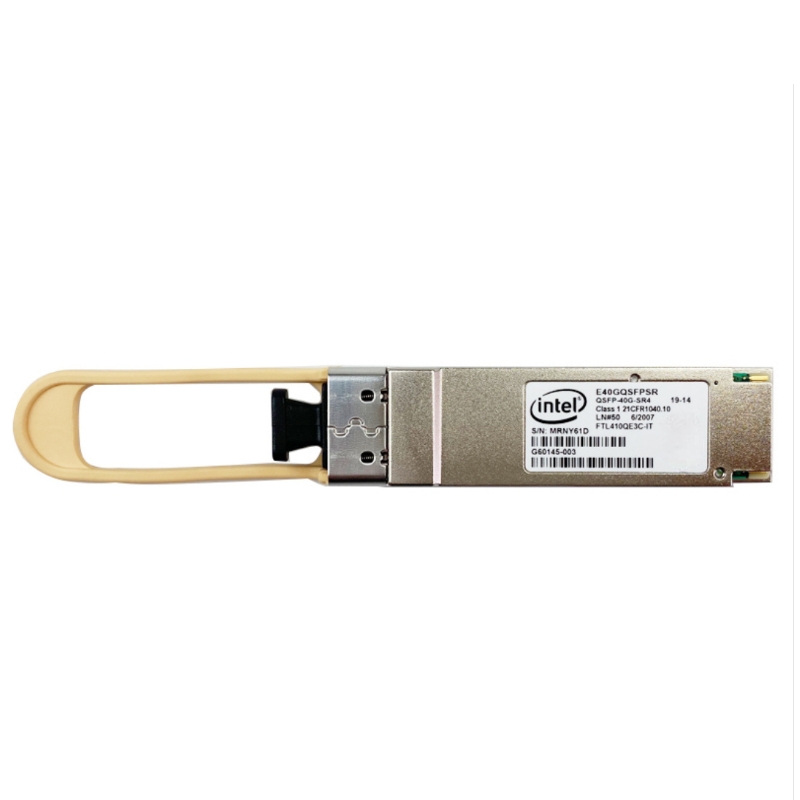


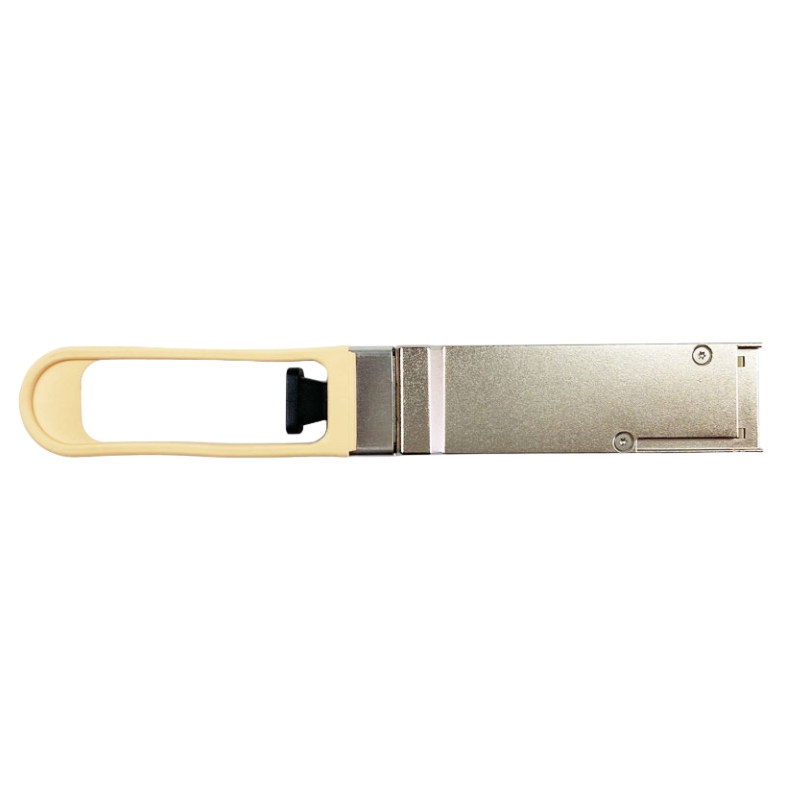
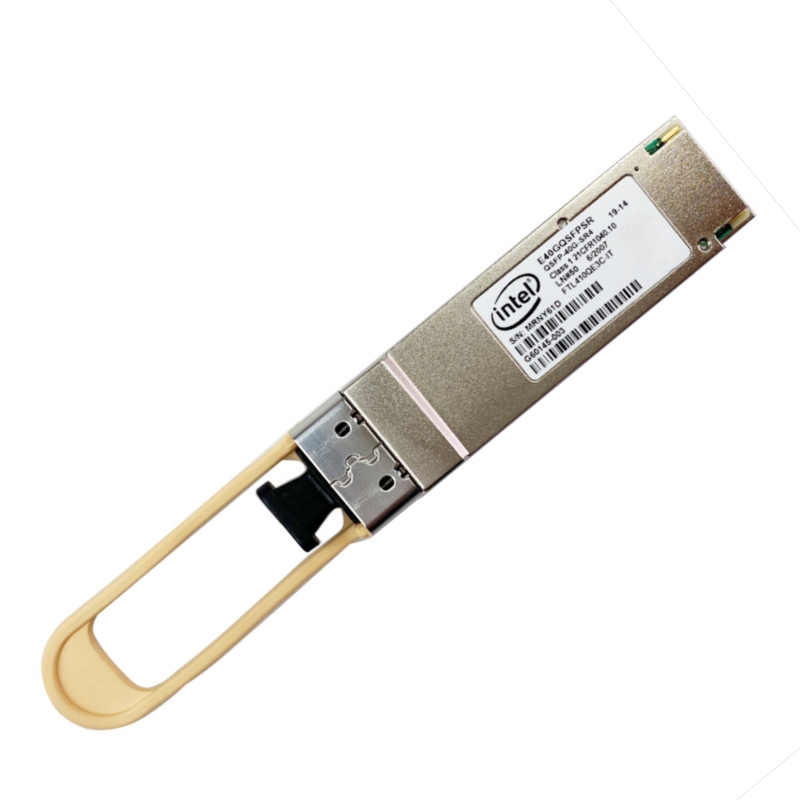
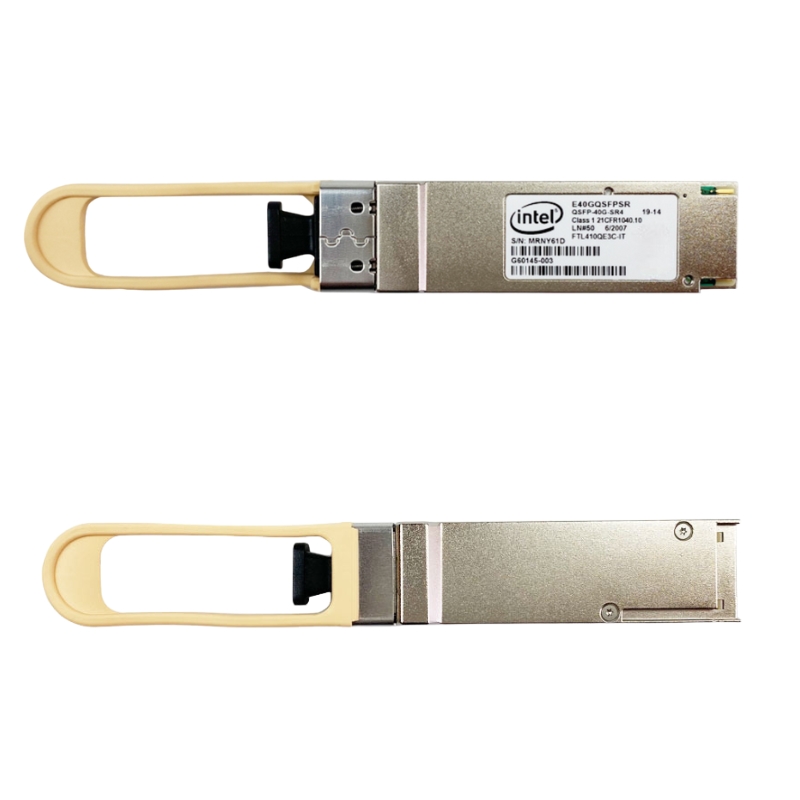
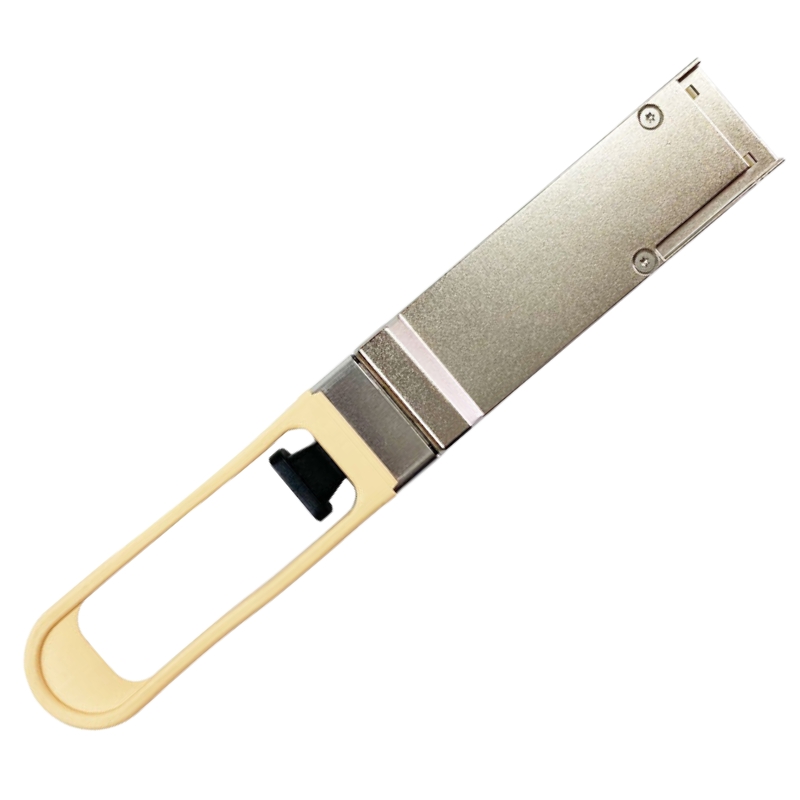
Intel E40GQSFPSR QSFP+ 40GBPS MPO Multi-Mode Transceiver Module. Excellent Refurbished with 1 year replacement warranty
| SKU/MPN | Warranty | Price | Condition | You save |
|---|---|---|---|---|
| E40GQSFPSR | 1 Year Warranty | $48.00 | Excellent Refurbished | You save: $16.80 (26%) |
| E40GQSFPSR | 1 Year Warranty | $260.00 | New Sealed in Box (NIB) | You save: $91.00 (26%) |
The Intel E40GQSFPSR is a high-speed QSFP+ transceiver module engineered for dependable 40 Gigabit Ethernet connectivity in enterprise networks, cloud environments, and data center infrastructures. Built as a hot-pluggable plug-in module, this 40Gbps optical transceiver is designed to support short-range, high-bandwidth connections over multimode fiber while maintaining stable signal integrity and consistent network performance. It uses an MPO multi-mode interface and operates with 40GBASE-SR4 technology, making it a practical solution for organizations that require fast interconnects between switches, servers, and other network hardware.
The Intel E40GQSFPSR QSFP+ 40GBPS MPO Multi-Mode Transceiver Module belongs to the high-speed optical connectivity category built for 40 Gigabit Ethernet environments that need compact form factor optics, dependable signal integrity, and efficient short-reach fiber communication across modern switching and server infrastructures. Positioned within the broader family of QSFP+ optical transceivers, this module is associated with 40GBASE-SR4 connectivity over multimode fiber and is commonly selected for data center aggregation, top-of-rack switching, spine-and-leaf architectures, high-density virtualization clusters, enterprise core interconnects, and high-bandwidth storage networks.
In practical deployment terms, the Intel E40GQSFPSR module serves as a bridge between high-throughput Ethernet equipment and parallel multimode fiber cabling. It is designed for environments where network administrators want to move significantly more traffic than legacy 10GbE links can efficiently handle, while still maintaining a familiar modular optics approach. Because it uses the QSFP+ form factor, it supports a dense port layout on switches, routers, converged infrastructure devices, and high-performance network interface cards. Because it uses an MPO optical interface and multimode optics, it fits especially well in short-distance enterprise and data center installations where structured cabling, rack-to-rack links, and aggregation layer uplinks require high bandwidth with controlled latency.
One of the defining traits of the Intel E40GQSFPSR category is the use of parallel optical transmission. Rather than relying on a single optical lane to carry the full payload, a 40G SR4 transceiver typically uses four transmit lanes and four receive lanes, each carrying approximately 10Gbps. This architecture makes it possible to achieve 40Gbps aggregate throughput while leveraging mature VCSEL-based optical technology at 850nm. In environments where bandwidth density, short-range performance, and lower power consumption matter, this parallel-lane design remains highly relevant for 40G network fabrics.
The QSFP+ segment emerged to satisfy the need for greater bandwidth per switch port while preserving manageable thermal characteristics and manageable physical density. The Intel E40GQSFPSR sits within this segment as a multimode short-reach module that is intended for high-speed Ethernet links inside buildings, within data halls, and between nearby network zones. It is not a long-haul transceiver intended for metropolitan links or campus runs spanning many kilometers. Instead, it is engineered for short-range optical communication where speed, density, and operational efficiency are more important than extreme distance.
Within the optical transceiver market, categories are usually segmented by speed, fiber type, wavelength, reach, connector style, and application class. Intel E40GQSFPSR belongs to the 40GbE multimode short-reach segment. This means it is generally evaluated alongside other QSFP+ SR4 modules that use an MPO or MTP-style connector, operate at 850nm, and support OM3 or OM4 multimode fiber. Buyers searching for this category are often comparing compatibility, signal quality, power draw, supported operating temperature, interoperability, and suitability for specific switch models or NICs.
The module’s place in this category also reflects a specific infrastructure philosophy. It supports environments that want to standardize around modular optics instead of fixed integrated uplinks, because modular transceivers give architects more freedom when planning cabling pathways, hardware refresh cycles, and network growth. A QSFP+ transceiver can be swapped, reallocated, replaced, or upgraded as the network changes, which makes it a practical choice for organizations that regularly adjust rack layouts, server density, switching topology, or storage interconnect patterns.
The Quad Small Form-Factor Pluggable Plus format was developed to bring higher bandwidth into a compact transceiver envelope that fits modern Ethernet hardware. The Intel E40GQSFPSR module uses this format to provide 40Gbps optical throughput without consuming the physical space that multiple individual transceivers would otherwise require. This matters in top-of-rack and aggregation switching, where port density has a direct effect on rack design, airflow planning, and overall network scalability.
A single QSFP+ port can carry the equivalent of four 10GbE lanes in one module. That density is valuable because it allows switch manufacturers and network planners to build compact, high-capacity fabrics with fewer faceplate ports, fewer individual transceiver insertions, and fewer cable management points. In a large-scale deployment, these seemingly small efficiencies translate into easier maintenance, lower physical clutter, and better use of rack space. The Intel E40GQSFPSR category therefore appeals not only because of its raw bandwidth, but also because of the way it supports cleaner infrastructure design.
The pluggable nature of the QSFP+ module is equally important. It allows administrators to deploy optics only where needed, choose between copper and fiber options based on distance and use case, and replace failed units without changing the host system. For enterprise buyers, this flexibility protects switch and server investments. For data center operators, it reduces downtime during maintenance and allows standardized spares management across multiple racks or sites.
In high-density switching environments, the physical shape and serviceability of a transceiver matter almost as much as its signaling performance. The Intel E40GQSFPSR category benefits from the mature QSFP+ mechanical ecosystem, where module insertion, latching, extraction, and front-access maintenance are already well understood by data center technicians. When hundreds of optical links terminate in a single row of racks, serviceability becomes a critical operational advantage.
Dense port layouts also mean that airflow and heat management need to remain controlled. A properly designed QSFP+ optical module is intended to operate within the thermal envelope of enterprise switches and adapters while minimizing disruption to front-to-back cooling strategies. The Intel E40GQSFPSR category is therefore relevant to buyers who care not only about data rates but also about the cumulative thermal effect of populating dozens of high-speed ports in a compact switching chassis.
The Intel E40GQSFPSR transceiver category is closely associated with 40GBASE-SR4 optical signaling. SR4 is a short-reach Ethernet standard that delivers 40 Gigabit connectivity over multimode fiber using parallel optics. Instead of a single duplex pair carrying the full signal, SR4 divides the payload across four transmit lanes and four receive lanes. Each lane operates at approximately 10Gbps, and the module aggregates those lanes to create a full 40GbE connection.
This parallel architecture has practical implications for cabling, switch design, and migration planning. Because the module relies on multiple optical lanes, it typically uses an MPO-based connector rather than a standard duplex LC interface. In most 40GBASE-SR4 deployments, eight fibers actively carry traffic, with separate fibers allocated to transmit and receive lanes. The use of parallel optics is one reason the Intel E40GQSFPSR category is strongly associated with modern structured cabling in data centers and enterprise distribution zones where pre-terminated MPO trunks simplify deployment and scaling.
The SR4 design is particularly effective for short-range links because multimode fiber and VCSEL technology offer a balance of cost, performance, and power efficiency in that distance range. For organizations running intra-data-center links, storage uplinks, or server cluster interconnects, the Intel E40GQSFPSR category provides a practical way to move large amounts of traffic over familiar multimode infrastructure.
The four-lane model used by this category is more than a technical detail; it directly shapes how network architects design 40G pathways. By using four optical lanes in each direction, the module can take advantage of proven 10Gbps lane technology while still delivering a 40Gbps Ethernet service to the host device. This approach supports a reliable and standards-based path to higher throughput without forcing every short-range optical link to adopt more complex long-wave optics or specialized transport methods.
For administrators, the aggregated-lane model also influences testing and troubleshooting. Signal quality, polarity, patching discipline, and cabling cleanliness all matter because a degraded lane can affect the entire 40G link. That is why the Intel E40GQSFPSR category is often discussed together with MPO polarity planning, trunk cleanliness, and structured cabling best practices. High-speed optics do not operate in isolation; they perform best when the surrounding cabling system is designed with equal attention.
The MPO connector is one of the defining features of the Intel E40GQSFPSR QSFP+ 40GBPS MPO Multi-Mode Transceiver Module category. Unlike duplex LC transceivers that use two fibers, MPO-based 40G SR4 optics rely on a multi-fiber interface designed for parallel transmission. This makes the category especially relevant in data centers where structured cabling is built around MPO trunks, cassette systems, and pre-terminated high-density fiber assemblies.
MPO connectivity helps simplify large-scale cabling because multiple fibers can be consolidated into a single connector body. In a dense rack environment, that reduces front-panel congestion and makes it easier to route high-count fiber trunks through cable pathways. It also aligns well with leaf-spine architectures, where many high-bandwidth links may need to be provisioned in a limited amount of physical space. The Intel E40GQSFPSR category therefore appeals to organizations standardizing on high-density fiber management practices.
Multimode fiber is equally central to this category. The module is generally associated with OM3 and OM4 fiber types, both of which are commonly used in enterprise buildings and data centers for short-range optical Ethernet. These fiber types are optimized for 850nm laser transmission and support the reach profile typically expected of 40G SR4 optics. Because many existing facilities already have multimode cabling deployed, the Intel E40GQSFPSR category can be a logical fit for upgrades where the goal is to increase bandwidth while continuing to use an established fiber plant.
The relationship between the transceiver and the installed fiber plant is a major purchasing consideration. In many cases, organizations evaluate the Intel E40GQSFPSR category precisely because they already have OM3 or OM4 multimode cabling in place and want a 40GbE transceiver that fits that environment. The category supports the common data center model of short rack-to-rack links, switch-to-switch uplinks, and aggregation paths inside the same room or between nearby cabinets.
OM3 and OM4 are both laser-optimized multimode fiber standards, but OM4 generally supports greater reach and stronger performance margins at high speeds. In practical planning, this means buyers often consider their exact fiber type, patch panel count, connector quality, and total channel length before selecting optics. The Intel E40GQSFPSR category becomes attractive when the installed environment aligns with the reach characteristics of 40GBASE-SR4 and when the operator values the economics and flexibility of multimode fiber for short-distance connectivity.
Because SR4 optics depend on parallel fibers, structured cabling discipline becomes a significant part of deployment success. MPO trunk polarity, cassette orientation, connector cleanliness, and patch lead selection all influence link stability. In category-page terms, this is an important point because buyers looking for Intel E40GQSFPSR modules are often not just buying a transceiver; they are buying into a broader cabling method that supports high-speed optical distribution at scale.
Well-designed MPO infrastructure allows fast provisioning, simplified patching, and more predictable link performance across dense switching rows. It also supports future changes, such as reassigning uplinks, adding spine switches, or implementing breakout topologies where appropriate. The Intel E40GQSFPSR category fits naturally into these structured environments because it is intended to operate as part of a coordinated optical channel rather than as an isolated point product.
The most common use cases for the Intel E40GQSFPSR category are found inside data centers, server rooms, virtualization clusters, and enterprise network cores where east-west traffic has grown beyond what 10GbE uplinks can comfortably handle. As virtualization density increases and workloads become more distributed, internal network traffic rises sharply. Storage replication, VM mobility, backup streams, container orchestration, analytics traffic, and application clustering all contribute to bandwidth demand. A 40GbE transceiver module helps relieve this pressure by providing higher-capacity interconnects between switching layers and compute zones.
Top-of-rack and end-of-row switching are two of the most important deployment models for this category. In top-of-rack designs, servers connect to a local access switch, and those switches require fast uplinks to aggregation or spine layers. Rather than deploying multiple separate 10GbE uplinks, administrators can use 40GbE optics to consolidate traffic and reduce the number of physical interconnects. This not only improves bandwidth efficiency but can also simplify spanning tree domains, routing policy design, and cable routing.
In end-of-row and aggregation designs, the Intel E40GQSFPSR category helps connect server access layers to higher-level switches with enough throughput to handle bursty and sustained traffic from many hosts at once. Because the module is optical rather than copper, it also offers the reach and electromagnetic resilience that dense enterprise and data center environments often require.
Modern data centers increasingly use leaf-spine architecture to create predictable low-latency paths between any two endpoints. In this design, leaf switches connect servers and storage devices, while spine switches provide the fabric backbone. The Intel E40GQSFPSR category is relevant here because 40GbE links have historically been a practical speed tier for leaf-to-spine connectivity in many environments. They provide more bandwidth than 10GbE uplinks while remaining accessible for organizations that do not yet need a complete move to 100GbE.
In a leaf-spine topology, consistent optical performance and repeatable cabling practices are essential. The Intel E40GQSFPSR category supports this model by providing a modular 40G optical interface that can be deployed repeatedly across many switch ports. When combined with MPO-based structured cabling, it helps create a uniform and scalable physical layer that simplifies expansion and troubleshooting.
High-performance compute clusters and storage fabrics also benefit from the Intel E40GQSFPSR category. Large data transfers between compute nodes, backup repositories, object storage systems, and database clusters can overwhelm lower-speed links. By using 40GbE optical interconnects, administrators can reduce bottlenecks and support more consistent application response during heavy synchronization or replication activity.
This is particularly useful in environments where applications depend on rapid movement of datasets between hosts. Research workloads, virtualization clusters, private cloud infrastructure, media rendering farms, and backup platforms all generate large internal traffic flows. The Intel E40GQSFPSR category addresses the physical connectivity side of that challenge by enabling high-bandwidth short-range optical paths between key devices.
One of the strongest reasons buyers search for the Intel E40GQSFPSR category is the need to transition from 10GbE networks toward denser and faster uplinks. For many organizations, 10GbE remains widely deployed at the server edge, but the aggregation layer begins to strain when dozens of servers or multiple access switches send traffic upstream at the same time. A 40GbE QSFP+ optical module provides a clear step forward by multiplying available uplink bandwidth and reducing the number of separate ports required to move the same amount of traffic.
Bandwidth consolidation is an important design benefit. Instead of managing four independent 10GbE links between devices, an organization may choose to deploy a single 40GbE optical link where appropriate. This can simplify link planning, reduce port consumption, and create cleaner documentation. It can also support more straightforward capacity forecasting because each inter-switch path carries a larger bandwidth pool. In environments where port count, cable volume, and switch faceplate utilization matter, these advantages are significant.
The Intel E40GQSFPSR category also fits into staged migration strategies. An enterprise may not be ready to replace every server NIC or every access switch at once, but it can still upgrade core interconnects and aggregation uplinks to 40GbE. This creates more breathing room in the network while preserving existing lower-speed endpoints. As workloads grow, the organization can continue upgrading at the edge while the backbone is already prepared to handle greater traffic volumes.
High-speed optical networking depends on more than a nominal speed label. The value of the Intel E40GQSFPSR category comes from its role in delivering stable 40GbE transmission with acceptable error performance, controlled power behavior, and consistent interoperability across supported hardware. In enterprise operations, a transceiver is expected to do its work quietly and reliably, often for years at a time, without becoming the weak point in the path.
Signal integrity begins with the optical engine inside the module. In the 40GBASE-SR4 class, VCSEL transmitters at 850nm are commonly used because they offer an effective combination of speed, cost efficiency, and compatibility with multimode fiber. On the receive side, the module must accurately detect the incoming parallel optical lanes and convert them into stable electrical signaling for the host interface. If the optical budget is compromised by dirty connectors, poor-quality cabling, excessive attenuation, or improper patching, performance can degrade. That is why the category is closely tied to disciplined optical maintenance.
Operational stability also depends on the host platform recognizing and managing the module correctly. Switches, routers, and network adapters may expose monitoring data, lane status, and transceiver health information to administrators. In large environments, this visibility helps teams identify degrading links before they become outages. As a result, the Intel E40GQSFPSR category is often valued not just for the optical connection it provides, but for its contribution to predictable and manageable network operations.
Compatibility is a central concern in the optical transceiver market, and it plays a major role in how buyers evaluate the Intel E40GQSFPSR category. A transceiver may meet the correct speed and optical specifications, but it still needs to initialize properly in the host device, maintain stable operation, and align with the firmware expectations of the switch, router, adapter, or server platform. This is why transceiver part numbers are often searched by exact model rather than by generic speed alone.
The Intel E40GQSFPSR category is relevant to environments using Intel-based networking components, but it is also part of a broader ecosystem where administrators may seek modules that are coded, validated, or described as compatible with specific hardware families. In enterprise procurement, that matters because compatibility affects deployment speed, support outcomes, spare stocking, and risk management. Network teams want confidence that the optics they purchase will behave consistently across the installed base.
Interoperability also matters when multiple vendors share the same network environment. A data center may use Intel adapters in servers, one brand of top-of-rack switch, and another brand of aggregation switch. The optical module category must therefore be understood not only from a standards perspective but from an operational one. Buyers often compare whether a transceiver is intended as an original Intel-branded option, an Intel-compatible coded module, or a multi-vendor solution validated for broader interoperability. These distinctions shape purchasing decisions and support policies.


 Contact Us
 Information
 Catalog
 Solid State Drives (SSD)
 Network Switches
 Hard Disk Drives
 HBA & Controllers
 PC & Servers
 PC & Server Memory
 CPU & Processors
 Network Routers
 Power Supplies
 Tape Drives & Libraries
 Network Devices
 Computer & Network Cables