(7% discount is applied at checkout)
Cart is empty
Your go-to destination for cutting-edge server products
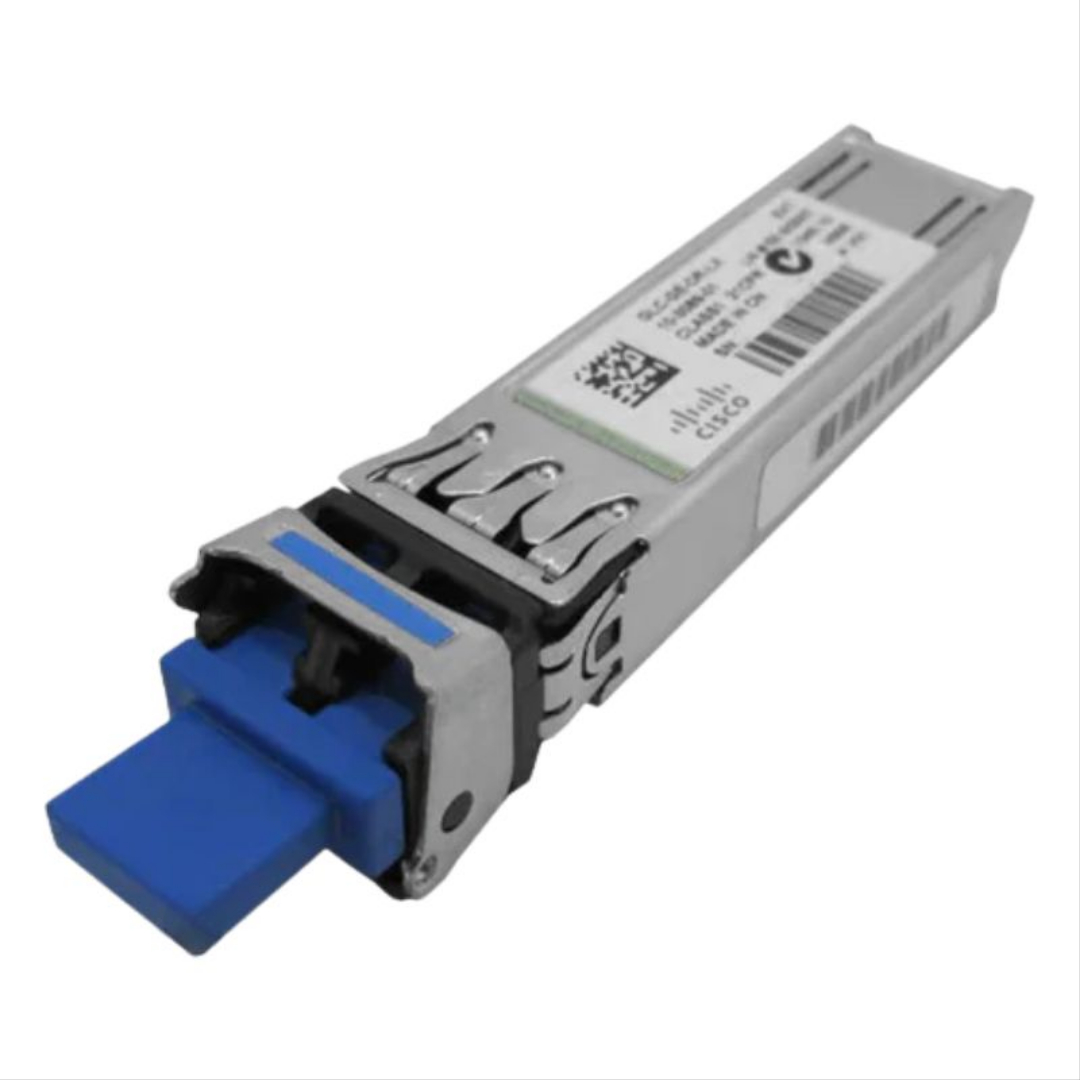


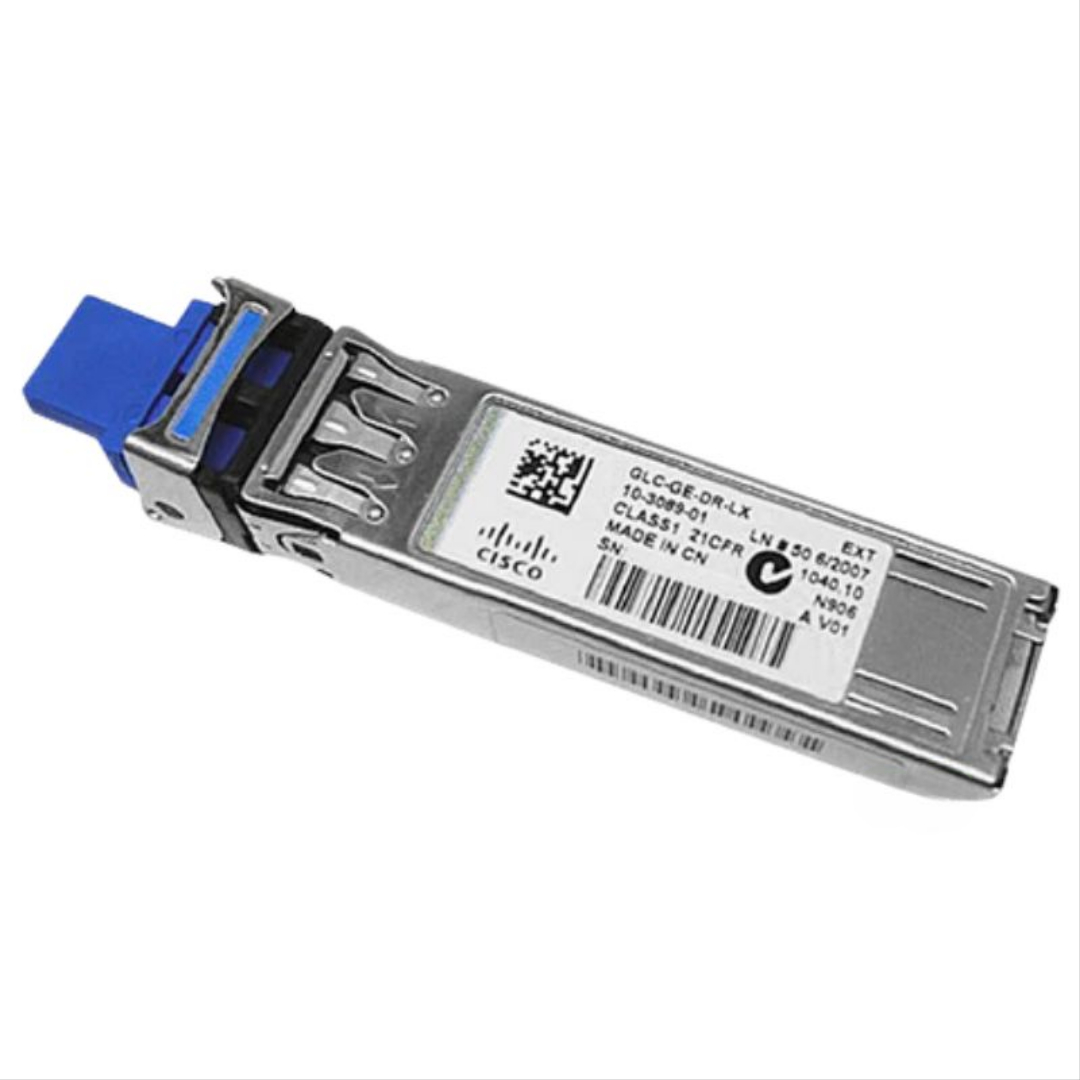
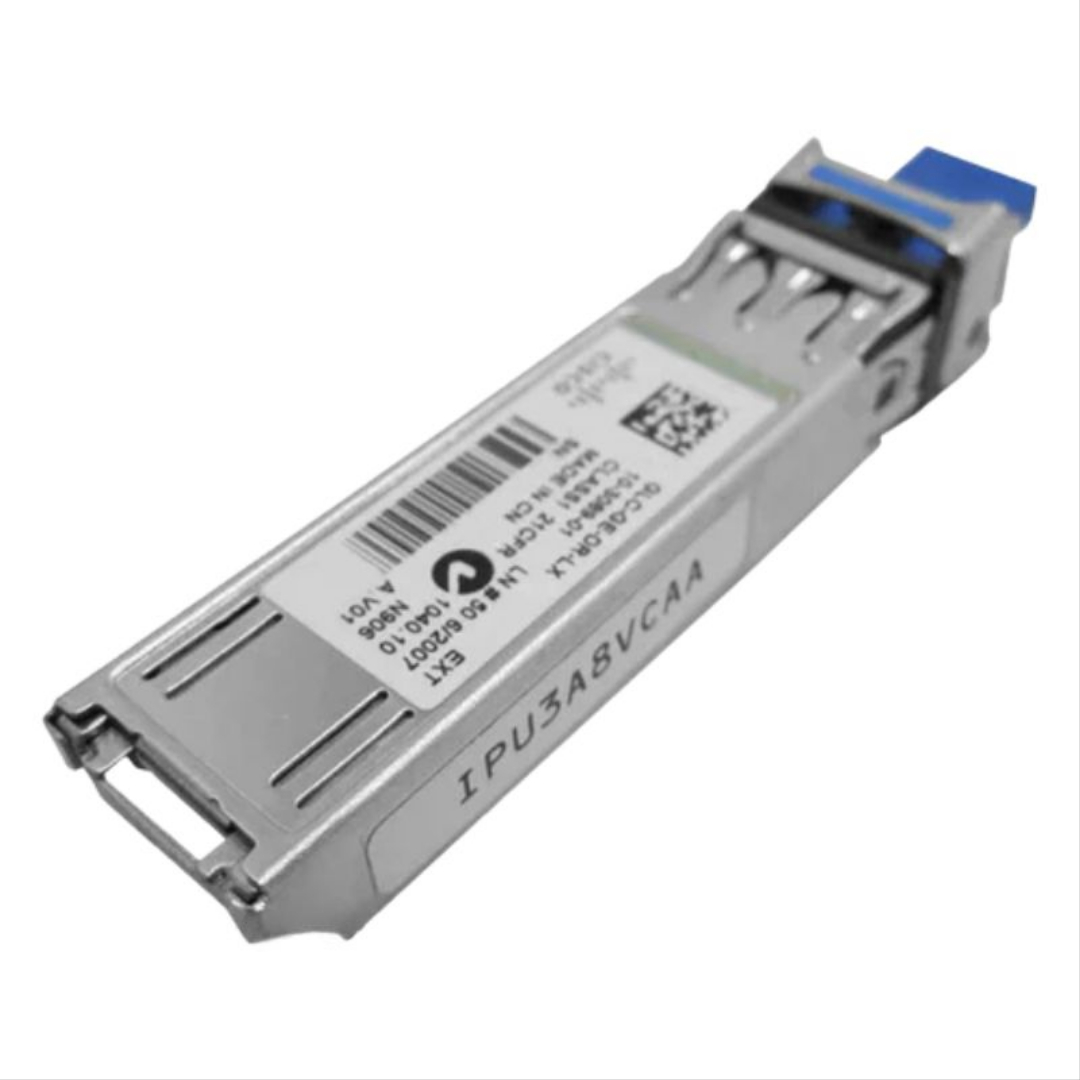
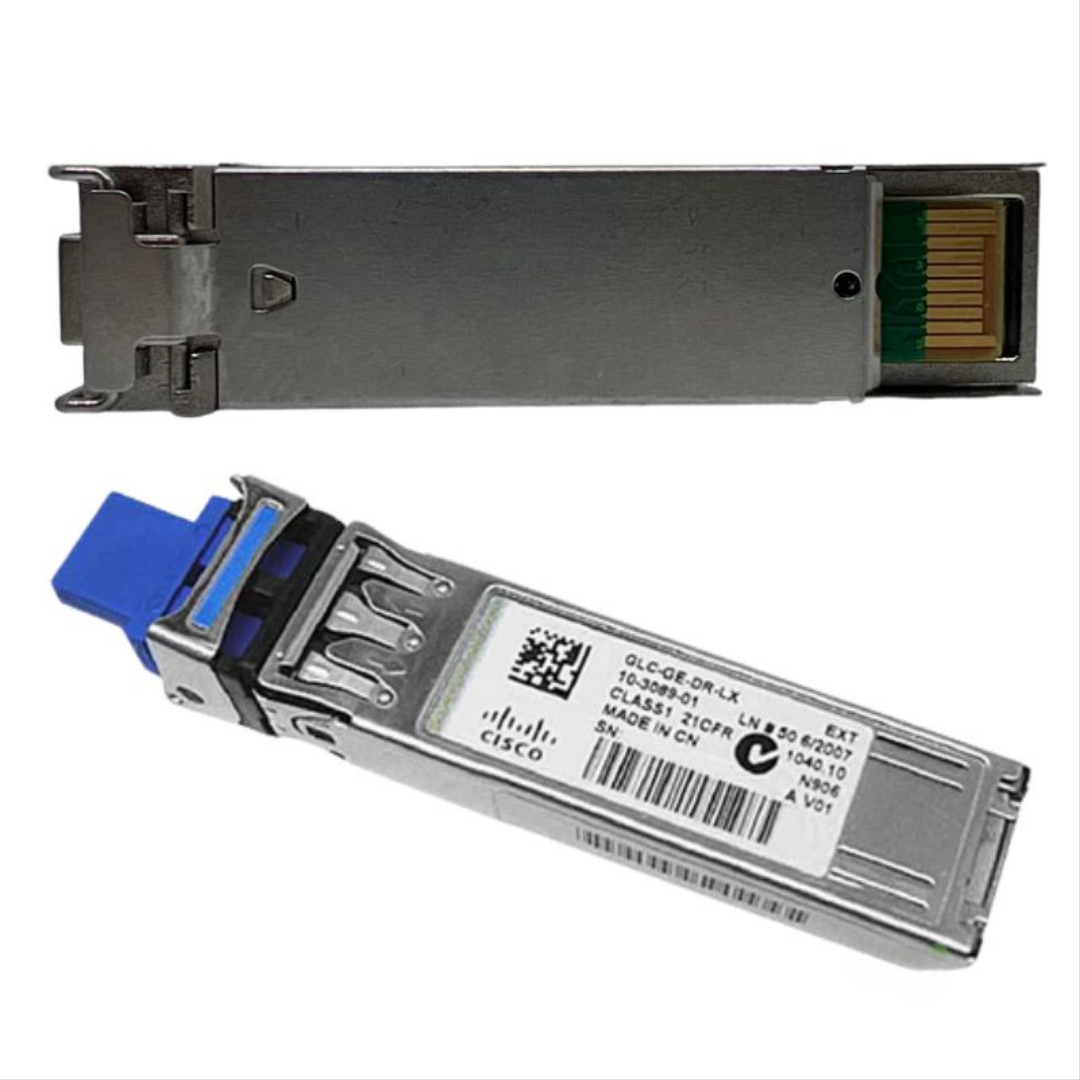
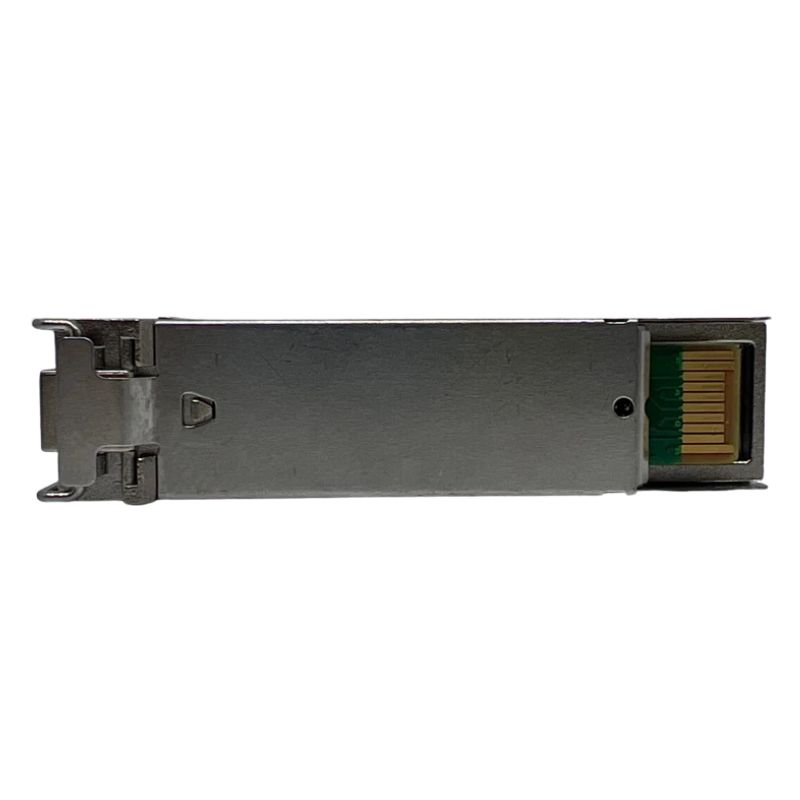
Cisco GLC-GE-DR-LX 1000BASE-LX/LH SFP Transceiver Module. Excellent Refurbished with 1 year replacement warranty
| SKU/MPN | Warranty | Price | Condition | You save |
|---|---|---|---|---|
| GLC-GE-DR-LX | 1 Year Warranty | Contact us for a price | Factory-Sealed New in Original Box (FSB) | |
| GLC-GE-DR-LX | 1 Year Warranty | $480.00 | Excellent Refurbished | You save: $168.00 (26%) |
The Cisco GLC-GE-DR-LX is a high-performance 1-Gigabit SFP transceiver module built for dependable long-distance fiber connectivity in enterprise, campus, and service provider environments. Designed for 1000BASE-LX/LH networking applications, this compact hot-swappable module delivers stable Gigabit Ethernet transmission over single-mode fiber while maintaining excellent signal integrity and low power consumption. It is a practical solution for organizations that need reliable uplink connectivity, smooth data transfer, and efficient optical performance across distributed network infrastructures.
The Cisco GLC-GE-DR-LX 1000BASE-LX/LH SFP Transceiver Module belongs to a widely deployed class of Gigabit Ethernet optical modules built for dependable long-distance fiber communication in enterprise, campus, service provider, and branch networking environments. This transceiver category is especially relevant for organizations that need stable 1 Gigabit fiber uplinks, flexible interoperability with Cisco switching and routing platforms, and an optical form factor that supports dense port configurations without consuming unnecessary rack space. As a hot-swappable small form-factor pluggable module, the Cisco GLC-GE-DR-LX is used to extend network links across buildings, floors, wiring closets, aggregation layers, and remote facilities while preserving consistent signal quality over fiber infrastructure.
In the broader market of Cisco transceiver modules, the GLC-GE-DR-LX sits within the long-wavelength Gigabit Ethernet optical category that supports fiber-based transmission rather than copper Ethernet cabling. It is associated with 1310 nm optical operation and is designed for long-reach connectivity over single-mode fiber while also fitting into the broader 1000BASE-LX/LH family used in optical Gigabit deployments. Cisco documentation for the GLC-GE-DR-LX identifies it as a dual-rate 100M and 1G LX optical module with support for Digital Optical Monitoring, making it a practical choice for network environments that need not only reliable uplink transport but also operational visibility into transceiver health and optical performance. Cisco lists the module as supporting standard single-mode fiber spans up to 10 kilometers and notes interoperability with both 100BASE-LX10 and 1000BASE-LX/LH standards depending on the deployment scenario.
For businesses building out optical access, distribution, or aggregation infrastructure, the Cisco GLC-GE-DR-LX category matters because it provides a balance of distance, compatibility, compact size, and serviceability. Instead of deploying larger fixed optical interfaces, administrators can populate SFP-capable ports with the exact media type required for the link. This approach improves inventory flexibility, reduces wasted interface capacity, and allows one switch or router model to support multiple cabling types depending on site requirements. In practical network design, that means a Cisco platform equipped with SFP slots can support short-range multimode optics in one rack, long-range single-mode optics between buildings, and copper modules for edge equipment, all within the same device family. That modularity is one of the reasons Cisco SFP categories remain important in enterprise networking and infrastructure refresh projects.
The Cisco GLC-GE-DR-LX is best understood as a fiber transceiver that enables Gigabit Ethernet communication over optical cabling in situations where copper cabling is either insufficient in distance, unsuitable for electromagnetic environments, or impractical for backbone transport. Cisco’s SFP ecosystem includes short-range, long-range, bidirectional, extended-reach, and copper options, and the GLC-GE-DR-LX falls into the long-wavelength segment optimized for longer fiber runs and stable backbone-style connectivity. Its role is to convert electrical Ethernet signals from a Cisco switch, router, firewall, or compatible networking appliance into optical signals that can travel across fiber, then convert incoming optical signals back into electrical data for the host platform.
This function is essential in modern networks because the physical layer still determines the practical limits of performance, distance, and deployment flexibility. While switches and routers often receive the most attention, the transceiver is the component that actually determines whether the network port will connect over copper, multimode fiber, or single-mode fiber, and at what reach. The Cisco GLC-GE-DR-LX category is therefore not just an accessory class; it is a key part of link engineering, optical budgeting, and physical network design.
Cisco identifies its long-wavelength Gigabit SFP modules as hot-swappable input and output devices that plug into Gigabit Ethernet ports or slots and connect those interfaces to the fiber network. The broader Cisco 1000BASE-LX/LH family is intended for use on standard single-mode fiber links up to 10 km, while Cisco also documents multimode considerations for some LX/LH optics and provides guidance on mode-conditioning patch cable use where legacy multimode fiber is involved. The GLC-GE-DR-LX specifically is documented as a 100M and 1G 10 km LX optical SFP with DOM capability.
The Cisco GLC-GE-DR-LX is often associated with the 1000BASE-LX/LH family because it serves the same broad optical networking need: long-reach Gigabit Ethernet over fiber with 1310 nm optics and support for single-mode deployments. At the same time, this module has an important distinction within the Cisco transceiver catalog. Cisco documents it as a dual-rate 100M and 1G LX SFP, meaning it can operate in environments where the connected interface and peer optics require either 100BASE-LX10 behavior or 1000BASE-LX/LH behavior, depending on the deployment. This gives the module value in migration projects where some parts of the network still operate at Fast Ethernet over fiber while other segments have moved to Gigabit Ethernet.
That dual-rate capability can simplify network upgrades because organizations do not always modernize every switch, media converter, access ring, or remote device at the same time. A modular optical transceiver that can bridge transitional environments reduces the need to keep separate inventories for every edge case. Cisco notes that the GLC-GE-DR-LX can interoperate with other 100M optics and interfaces when they are based on 100BASE-LX10, and with 1G optics and interfaces when they are based on 1000BASE-LX/LH. Cisco also notes that a 5 dB attenuator is needed on the path of the dual-rate SFP transmit side and the 100BASE-LX10 interface receive side in 100M operation, while no attenuator is required for 1G LX/LH interoperability.
This is one of the reasons the category deserves a more detailed treatment than a generic product listing. It is not simply a one-speed LX module. It belongs to a subcategory of Cisco optical transceivers that can support migration, operational continuity, and phased infrastructure refresh strategies while preserving the familiar SFP form factor and Cisco compatibility model.
At a technical level, the Cisco GLC-GE-DR-LX category combines several characteristics that make it valuable in business networking. It uses the SFP form factor, enabling compact modular insertion into compatible Cisco ports. It operates in the Gigabit optical domain associated with 1310 nm long-wavelength transmission. It is designed for single-mode fiber reach up to 10 km, and it includes Digital Optical Monitoring functions aligned with the SFF-8472 multisource agreement, allowing administrators to monitor optical and electrical telemetry values directly from the module and host device. Cisco documentation lists real-time monitoring of optical output power, optical input power, temperature, laser bias current, and transceiver supply voltage.
These characteristics matter because they affect not only whether a link comes up, but how easily it can be managed and maintained over time. In a modern enterprise, network teams are expected to support uptime, troubleshoot degradation before it becomes an outage, and maintain clean visibility across both logical and physical layers. A transceiver with DOM is more valuable than a basic optical module because it can expose warning signs such as declining receive power, unusual temperature levels, or abnormal laser bias behavior. That operational visibility helps reduce troubleshooting time and can prevent unnecessary replacement of switches, routers, patch cords, or fiber panels when the real issue is isolated to optical conditions.
The small form-factor pluggable design is one of the strongest reasons Cisco optical modules remain so widely used. The SFP footprint allows a switch or router to host multiple fiber uplinks without dedicating large physical areas to each optical port. This matters in high-density access switches, compact branch routers, distribution switches, and data center edge appliances where port density, thermal efficiency, and modularity all affect hardware planning.
Hot-swappability is another major advantage. Administrators can replace or add a Cisco GLC-GE-DR-LX transceiver without powering down the host platform, which reduces maintenance windows and simplifies field support. In branch deployments or service environments, that can translate into faster restoration of service and less disruption to users.
1310 nm optical transmission is a defining feature of the LX family and is closely associated with long-reach single-mode networking. Compared with short-wavelength optics that target shorter multimode links, 1310 nm modules are typically chosen when network planners need more distance and greater flexibility for campus or metro-style fiber runs. Cisco’s documentation for the GLC-GE-DR-LX lists a transmit and receive wavelength range of 1260 to 1360 nm and an operating distance of 10,000 meters on G.652 single-mode fiber, placing it firmly in the long-reach Gigabit optical segment.
Digital Optical Monitoring is a major value point in the Cisco GLC-GE-DR-LX category because it elevates the module from a passive link accessory to an actively observable network component. DOM data can be surfaced by supported Cisco operating systems and management tools, helping administrators validate whether a fiber path is within expected power levels and whether the transceiver is operating within safe thermal and electrical ranges.
In production environments, DOM can support several practical tasks. It can help validate whether a newly installed fiber path has acceptable receive power. It can help identify gradual signal degradation due to dirty connectors or damaged patch leads. It can also help confirm whether an outage is related to optical loss, a remote-end issue, or a host platform configuration problem. For organizations that maintain service-level expectations across campuses, factories, healthcare sites, and distribution centers, this level of visibility improves confidence in the physical network layer.
One of the most important parts of any optical transceiver category description is cabling behavior. Buyers evaluating the Cisco GLC-GE-DR-LX need to understand not just that it is a Gigabit SFP, but what kind of fiber it is intended for, how far it can reach, and what practical installation considerations affect performance. Cisco’s documentation places the GLC-GE-DR-LX in the long-reach single-mode optical category, supporting up to 10 km on G.652 single-mode fiber. This makes it well suited to building interconnects, campus backbones, metro access links, remote facility connectivity, and other medium-distance optical applications where multimode optics would not provide sufficient reach.
Fiber selection matters because the transceiver and cabling plant must work together as a system. Even the best Cisco module cannot deliver a stable link if the wrong fiber type, incorrect connector polish, poor splicing, or excessive insertion loss undermines the optical path. For this reason, category pages for Cisco LX modules should not focus only on the part number. They should also educate the buyer about deployment planning, optical compatibility, and link design best practices.
The 10 km reach profile of the Cisco GLC-GE-DR-LX is a major selling point for organizations that need longer Gigabit links without moving into far more specialized long-haul optics. Ten kilometers is enough for many campus networks, educational institutions, industrial complexes, healthcare campuses, municipal facilities, and enterprise branch topologies. It also supports many metro-style access links where the remote site is beyond the practical reach of copper and short multimode fiber but still within the common distance envelope of enterprise optical networking.
From a planning perspective, 10 km reach offers useful flexibility. A network architect can deploy a single optical standard across multiple remote buildings rather than mixing several different optic types for every distance tier. Inventory management becomes simpler, spare transceivers can be standardized more easily, and operations teams can develop repeatable installation and testing procedures around a consistent optical platform.
Cisco’s Gigabit Ethernet SFP family uses LC-style optical connectors for LX/LH modules, and the GLC-GE-DR-LX fits within that common optical patching model. LC connectivity remains widely used because it supports high-density patch panels and switch front panels while maintaining secure duplex fiber termination. In real-world deployments, this means the module can integrate cleanly into enterprise cabling environments built around LC patch cords, fiber enclosures, and structured optical distribution frames.
Patching quality still matters. Clean connectors, correct polarity, low-loss jumpers, and accurate labeling all contribute to the long-term performance of a fiber link. Because long-reach single-mode optics often serve critical uplink paths, the transceiver category should be viewed as part of a complete optical channel that includes the SFP, the patch leads, the structured cabling, and the remote endpoint optic.
The dual-rate behavior of the Cisco GLC-GE-DR-LX creates an additional design consideration when it is used in 100M LX scenarios. Cisco notes that when interoperating with 100BASE-LX10 interfaces, a 5 dB attenuator is needed on the path between the dual-rate SFP transmit side and the 100BASE-LX10 receive side, while the opposite strand does not require an attenuator. In contrast, when the module is operating at 1G and interoperating with other 1000BASE-LX/LH interfaces, no attenuator is required in either fiber strand.
This detail is important because it highlights how optical compatibility is about more than connector fit. It also involves speed negotiation behavior, optical budgets, and the electrical and optical expectations of the remote transceiver. Category content that explains this nuance helps buyers avoid deployment mistakes and reduces the chance of support cases caused by incomplete understanding of mixed-speed fiber links.
Another reason the Cisco GLC-GE-DR-LX category is commercially significant is its broad relevance across Cisco networking hardware. Cisco’s transceiver ecosystem spans switching, routing, wireless control, industrial networking, security, and service provider infrastructure. Cisco documentation for 1-Gbps SFP modules lists support across a wide variety of Cisco equipment families, including Catalyst switching platforms, ASR routers, Nexus systems, industrial Ethernet devices, and other networking products depending on the compatibility matrix and supported software release.
For buyers and infrastructure planners, compatibility breadth is a major advantage. It allows a standard transceiver category to be reused across multiple projects rather than being tied to a single hardware line. An enterprise may use one Cisco transceiver family in campus switches, another in industrial enclosures, and another in data center leaf devices, but when a module such as the GLC-GE-DR-LX is supported across a wide range of platforms, procurement becomes easier and spares can be managed more efficiently.
In Cisco switching environments, the GLC-GE-DR-LX category is especially useful for uplinks from access to distribution, distribution to core, and switch-to-switch building interconnects. Access switches often use SFP uplink slots so that administrators can choose copper or optical uplinks depending on the site layout. In a campus with long fiber runs between wiring closets, a long-reach LX module is often a more practical choice than copper because it preserves distance, avoids electromagnetic interference, and supports cleaner backbone architecture.
Distribution and aggregation switches also benefit from this category when 1 Gigabit fiber remains appropriate for the application. Not every backbone segment requires 10G or 25G throughput. Many branch offices, security appliances, legacy application segments, and building interconnects still operate effectively at 1 Gigabit, particularly when the priority is stable reach and predictable cost rather than maximum bandwidth density.
Routers, WAN edge devices, and integrated service platforms often use optical transceivers to connect to provider handoffs, enterprise demarcation points, or remote aggregation layers. In these cases, the Cisco GLC-GE-DR-LX category serves as the physical media interface that links routed services to the fiber transport environment. This is particularly useful in branch deployments, managed WAN circuits, industrial sites, and metro Ethernet connections where the handoff is optical rather than copper.
Because the module is hot-swappable and compact, it also fits operational models where edge equipment may be upgraded or reconfigured over time without replacing the entire router. Organizations can repurpose the same hardware platform for different locations simply by changing the transceiver to match the local media requirement.
The Cisco GLC-GE-DR-LX category remains valuable because many networks still depend on reliable 1 Gigabit optical uplinks even as higher-speed interfaces continue to grow. Not every application needs 10G or 25G, and not every remote building, branch, or access ring justifies a complete hardware redesign. A proven Cisco long-reach SFP with dual-rate capability and Digital Optical Monitoring continues to serve practical infrastructure needs across enterprises, educational institutions, healthcare systems, logistics facilities, service providers, and public sector deployments.
Its value comes from the combination of compact modularity, long-distance single-mode fiber support, operational visibility, broad Cisco ecosystem relevance, and suitability for both stable Gigabit deployments and mixed-speed migration scenarios. For category pages built around Cisco optical networking hardware, the GLC-GE-DR-LX deserves detailed treatment because it is not simply another plug-in accessory. It is a physical-layer building block for dependable Cisco fiber connectivity, network modernization, and maintainable Gigabit Ethernet architecture across distributed environments.


 Contact Us
 Information
 Catalog
 Solid State Drives (SSD)
 Network Switches
 Hard Disk Drives
 HBA & Controllers
 PC & Servers
 PC & Server Memory
 CPU & Processors
 Network Routers
 Power Supplies
 Tape Drives & Libraries
 Network Devices
 Computer & Network Cables