(7% discount is applied at checkout)
Cart is empty
Your go-to destination for cutting-edge server products
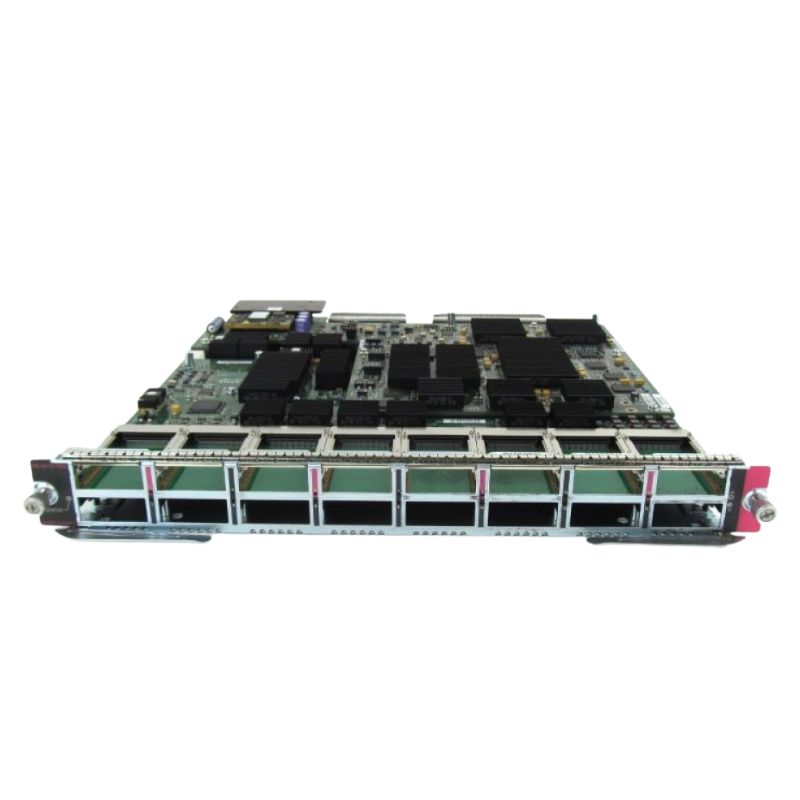


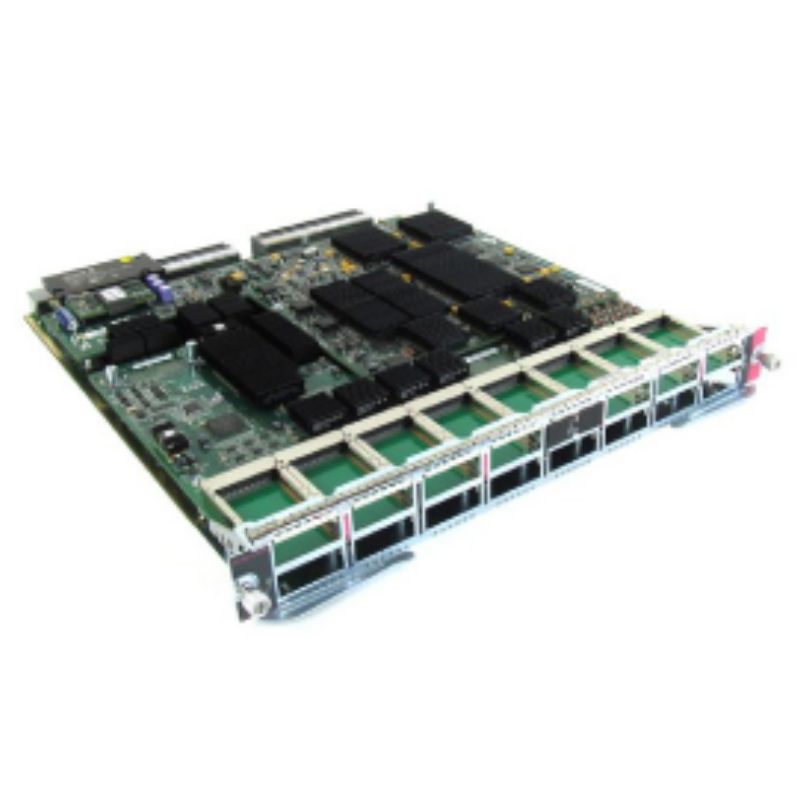
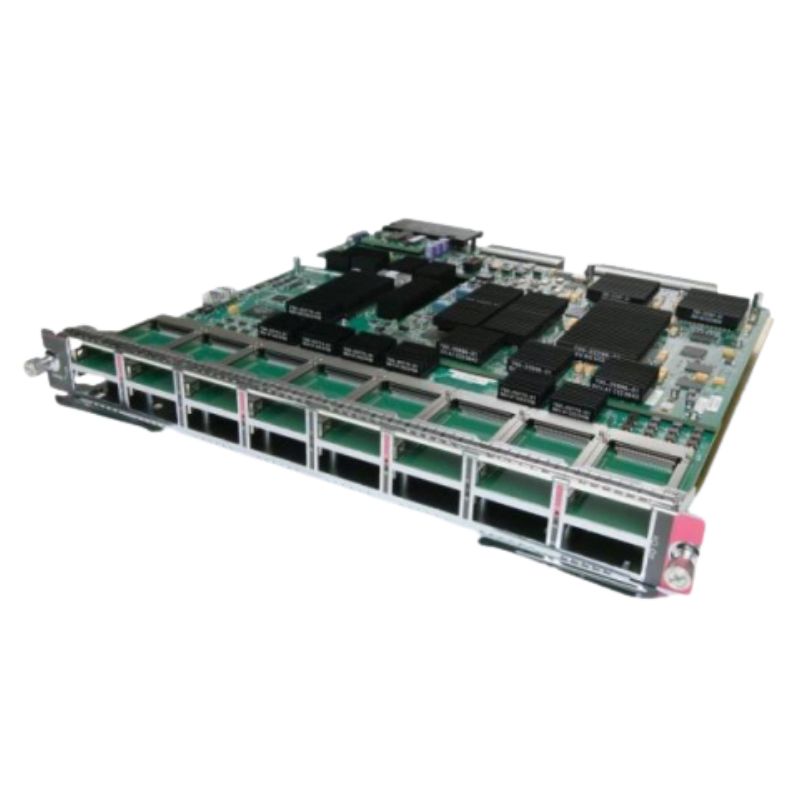
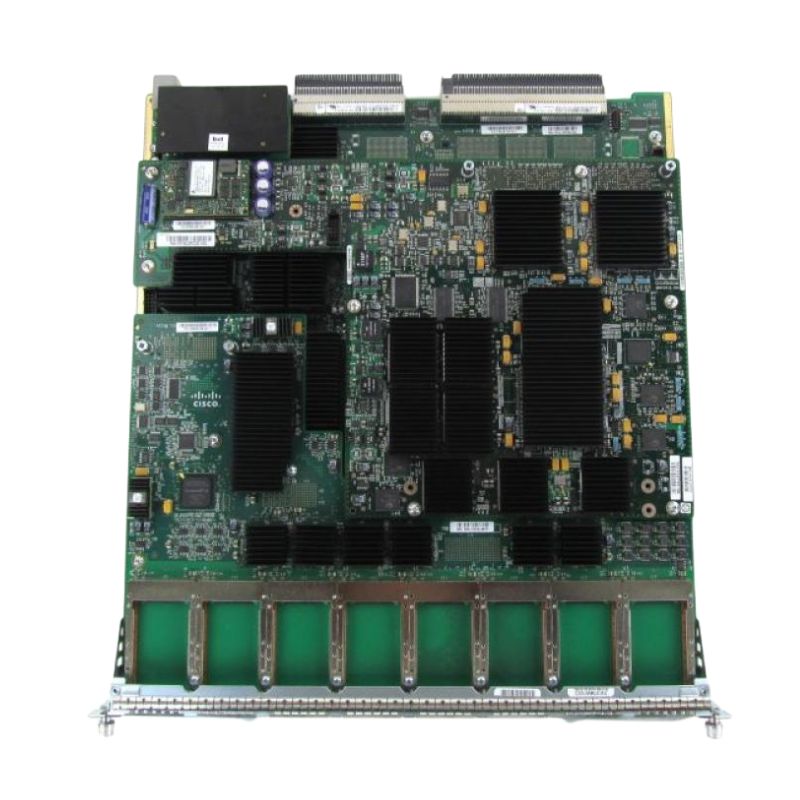
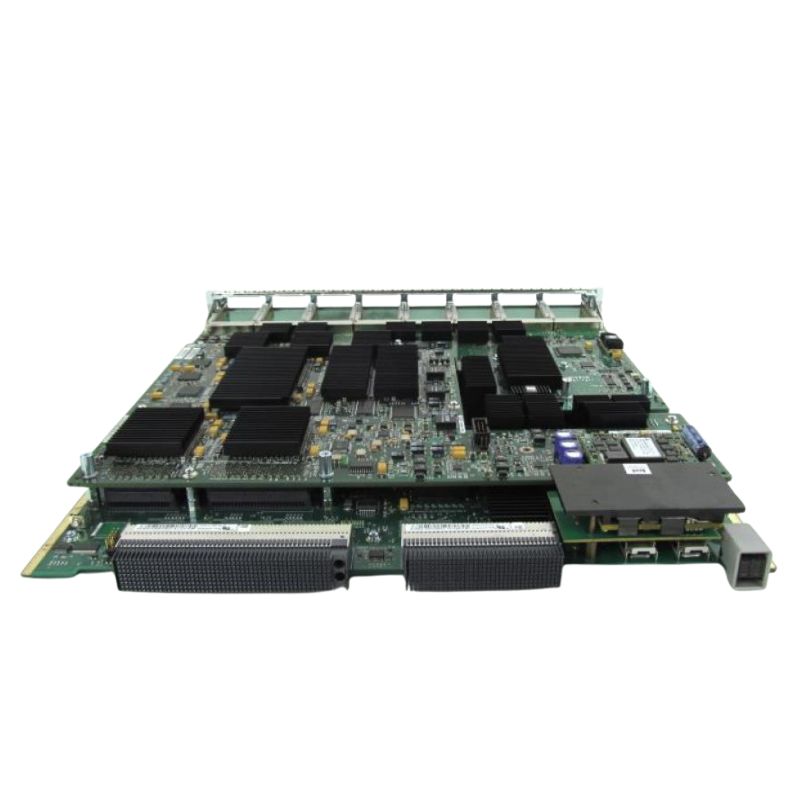
Cisco WS-X6716-10G-3C= 16-Ports 10 Gigabit Ethernet. Excellent Refurbished with 1 year replacement warranty
| SKU/MPN | Warranty | Price | Condition | You save |
|---|---|---|---|---|
| WS-X6716-10G-3C= | 1 Year Warranty | Contact us for a price | Factory-Sealed New in Original Box (FSB) | |
| WS-X6716-10G-3C= | 1 Year Warranty | $250.00 | Excellent Refurbished | You save: $87.50 (26%) |
The is a high-performance 16-port 10 Gigabit Ethernet switching expansion module engineered for scalable enterprise and data center environments. Designed for high-throughput backbone deployments, it enhances modular switch capacity, delivers advanced routing performance, and supports mission-critical network workloads.
The Cisco WS-X6716-10G-3C= 16-Port 10 Gigabit Ethernet switching module represents a high-performance, enterprise-class line card designed for advanced network infrastructures requiring ultra-high-speed connectivity, scalability, and resilient data throughput. Developed by
Built to support demanding workloads, virtualization environments, and bandwidth-intensive applications, this module enhances switching performance by enabling high-speed interconnectivity between servers, storage systems, and core network infrastructure. The architecture focuses on minimizing latency while maximizing forwarding capacity, making it suitable for modern converged network environments where performance and reliability are critical.
The WS-X6716-10G-3C= is engineered around the principles of scalability, modular expansion, and hardware-based forwarding efficiency. Unlike fixed-configuration switches, this line card-based design allows organizations to incrementally scale their network infrastructure without replacing entire switching systems. This approach significantly reduces capital expenditure while improving long-term infrastructure flexibility.
Its design is optimized for high-density 10GbE environments, ensuring that organizations can support growing data traffic loads associated with virtualization clusters, cloud computing platforms, and high-speed storage networks. The module’s architecture is built to offload processing from the central supervisor engine, improving overall switching performance.
The module provides 16 independent 10 Gigabit Ethernet ports, designed to support both fiber optic connectivity and high-speed uplink/downlink configurations. Each port is engineered for consistent low-latency transmission, ensuring reliable packet delivery in high-throughput environments. The port density makes it particularly effective in aggregation layers where multiple server racks or distribution switches converge into a central switching backbone.
Each interface is optimized for advanced Layer 2 and Layer 3 forwarding, supporting modern enterprise routing and switching protocols. This enables seamless integration into existing network topologies while supporting future scalability requirements.
One of the most critical features of this module is its support for Distributed Forwarding Card (DFC) technology, specifically the DFC3C architecture. This hardware-based forwarding engine allows packet processing to occur directly at the line card level, significantly reducing the load on the central supervisor engine.
By distributing forwarding decisions across the module itself, the system achieves lower latency and higher throughput. This architecture is particularly beneficial in environments where large volumes of traffic must be processed simultaneously, such as virtualization clusters, cloud data centers, and high-performance computing networks.
The DFC3C engine enhances performance by enabling wire-speed forwarding for complex traffic flows. It supports advanced routing tables, access control processing, and quality of service enforcement without relying on centralized processing resources. This results in improved scalability and predictable performance under heavy load conditions.
The WS-X6716-10G-3C= is designed with a non-blocking architecture that ensures maximum throughput across all active ports simultaneously. This means that each of the 16 ports can operate at full 10Gbps capacity without degradation in performance due to internal switching bottlenecks.
Such a design is essential for modern enterprise environments where data traffic patterns are unpredictable and often highly bursty. The ability to maintain consistent throughput across all interfaces ensures stable application performance and reduced network congestion.
Latency-sensitive applications such as financial trading systems, real-time analytics platforms, and distributed database clusters benefit significantly from the module’s optimized forwarding pipeline. By minimizing processing delays at the hardware level, the module ensures rapid packet delivery across network segments.
Efficient buffer allocation mechanisms allow the module to manage traffic bursts effectively without packet loss or significant jitter. This is particularly important in data center environments where microbursts of traffic are common due to synchronized server operations or virtualization workloads.
In data center environments, the WS-X6716-10G-3C= serves as an aggregation layer component that connects multiple access layer switches and high-performance servers. Its high port density and 10GbE capability make it ideal for consolidating traffic from multiple racks into a centralized switching backbone.
This aggregation role ensures efficient traffic routing between compute nodes, storage arrays, and external network gateways. It also supports virtualization platforms that require high-bandwidth east-west traffic flow within data centers.
Within enterprise campus environments, this module can function as part of a core switching infrastructure, enabling high-speed connectivity between different departments, buildings, or network zones. Its modular nature allows IT administrators to scale the core network as organizational requirements evolve.
By integrating into a larger chassis-based switching system, it helps maintain consistent performance across geographically distributed enterprise locations.
Cloud computing environments rely heavily on high-speed, low-latency network connectivity. The WS-X6716-10G-3C= supports virtual machine migration, distributed storage systems, and containerized application environments by providing reliable 10GbE connectivity.
Its architecture ensures that virtualized workloads can communicate efficiently across hosts without network bottlenecks, enabling seamless workload balancing and high availability configurations.
The module is designed for compatibility with Cisco Catalyst modular chassis systems, allowing it to be installed alongside other line cards and supervisor engines. This modularity enables organizations to build customized switching platforms tailored to their specific performance requirements.
Integration into a chassis system ensures centralized management, redundant power distribution, and high availability configurations. The system architecture supports hot-swappable components, reducing downtime during upgrades or maintenance operations.
The WS-X6716-10G-3C= works in coordination with supervisor engines to ensure seamless routing, switching control, and system-wide policy enforcement. While the DFC handles local forwarding decisions, the supervisor engine manages control plane operations such as routing updates and network topology changes.
The module supports interoperability with a wide range of Cisco-based networking equipment, allowing it to be deployed within existing enterprise infrastructures without requiring complete system overhauls. This compatibility reduces migration complexity and ensures smooth upgrades from legacy systems.
The module includes advanced Quality of Service mechanisms that prioritize critical traffic flows such as voice, video, and mission-critical applications. By classifying and managing traffic based on predefined policies, it ensures that high-priority applications receive sufficient bandwidth even during peak network usage periods.
Traffic scheduling algorithms ensure efficient bandwidth allocation across multiple service classes. This helps maintain consistent application performance in environments with mixed traffic loads, including enterprise applications, cloud services, and multimedia streaming.
Security features embedded within the module include access control lists, traffic filtering, and hardware-based security enforcement. These features help protect enterprise networks from unauthorized access and malicious traffic patterns.
By enforcing security policies at the hardware level, the module reduces processing overhead on centralized systems while maintaining high-speed data transmission.
The modular nature of the WS-X6716-10G-3C= allows organizations to expand network capacity without replacing entire switching systems. Additional line cards can be installed as bandwidth requirements increase, providing a cost-effective scaling solution.
This scalability is essential for organizations experiencing rapid growth in data traffic due to digital transformation initiatives, cloud adoption, and increasing reliance on distributed applications.
The module is designed to support evolving network demands such as high-definition video streaming, big data analytics, and artificial intelligence workloads. Its high throughput and low latency characteristics ensure compatibility with next-generation application environments.
Network administrators can manage the module through centralized management systems that provide visibility into traffic patterns, performance metrics, and system health. This enables proactive network optimization and rapid troubleshooting.
Built-in diagnostic tools provide real-time insights into port performance, error rates, and traffic distribution. These tools help ensure optimal network performance and reduce downtime through predictive maintenance strategies.
The module incorporates power-efficient design principles that help reduce overall energy consumption within data center environments. By optimizing hardware utilization and minimizing unnecessary processing overhead, it contributes to lower operational costs.
The WS-X6716-10G-3C= supports redundant system configurations that ensure continuous network operation even in the event of hardware failure. This is critical for mission-critical environments where downtime is unacceptable.
Instead of replacing entire switching systems, organizations can scale incrementally by adding or upgrading line cards. This reduces capital investment while extending the lifecycle of existing infrastructure.
By enabling incremental upgrades, the module supports sustainable IT infrastructure planning. Organizations can adapt to changing network requirements without disruptive system overhauls.
Proper deployment of the WS-X6716-10G-3C= requires careful bandwidth planning to ensure optimal performance. Network architects must evaluate traffic patterns, application requirements, and redundancy needs when designing network topologies.
The module must be installed in compatible chassis systems with appropriate cooling, power supply, and slot configuration. Proper installation ensures stable operation and long-term reliability.
Efficient thermal design ensures that the module operates within safe temperature ranges even under heavy load conditions. This enhances reliability and extends hardware lifespan in enterprise environments.
The module supports intelligent traffic distribution mechanisms that help balance network load across multiple ports and pathways. This prevents congestion and improves overall system efficiency.
Advanced switching algorithms and hardware acceleration techniques reduce latency across all communication paths. This is essential for applications requiring real-time data processing and fast response times.


 Contact Us
 Information
 Catalog
 Solid State Drives (SSD)
 Network Switches
 Hard Disk Drives
 HBA & Controllers
 PC & Servers
 PC & Server Memory
 CPU & Processors
 Network Routers
 Power Supplies
 Tape Drives & Libraries
 Network Devices
 Computer & Network Cables