(7% discount is applied at checkout)
Cart is empty
Your go-to destination for cutting-edge server products
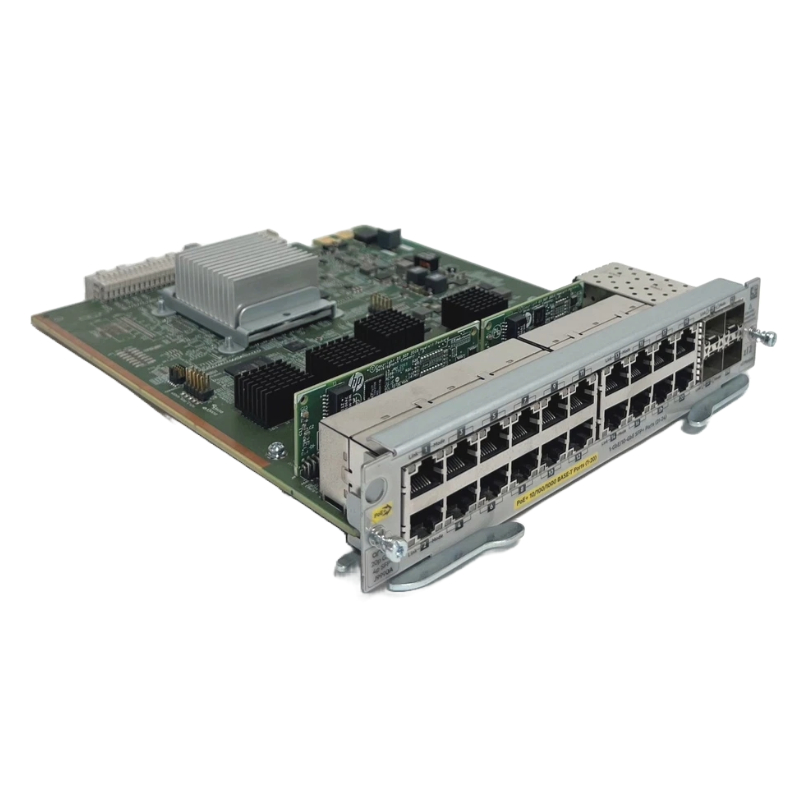


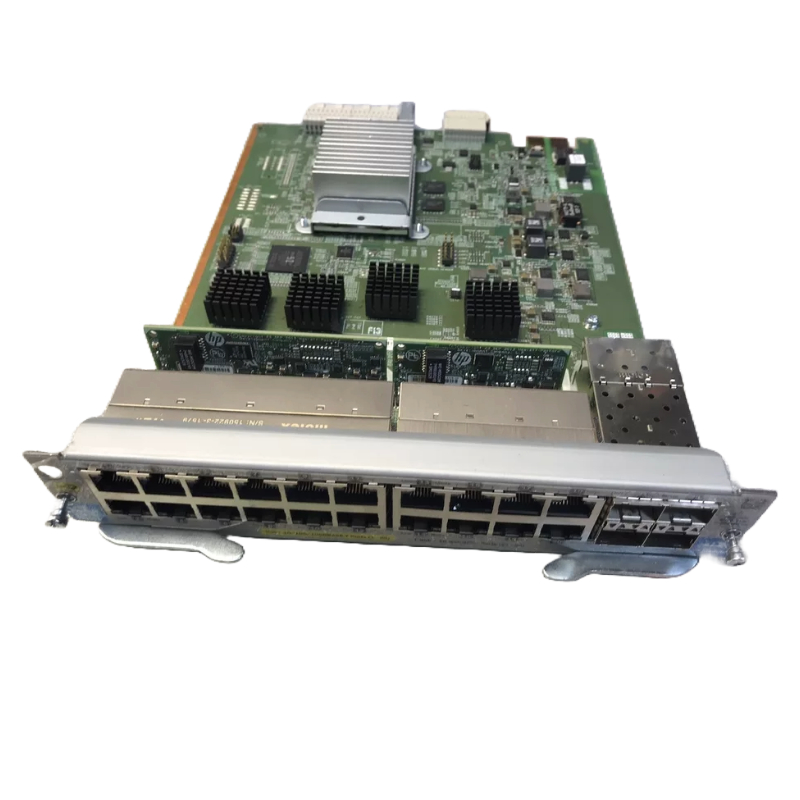
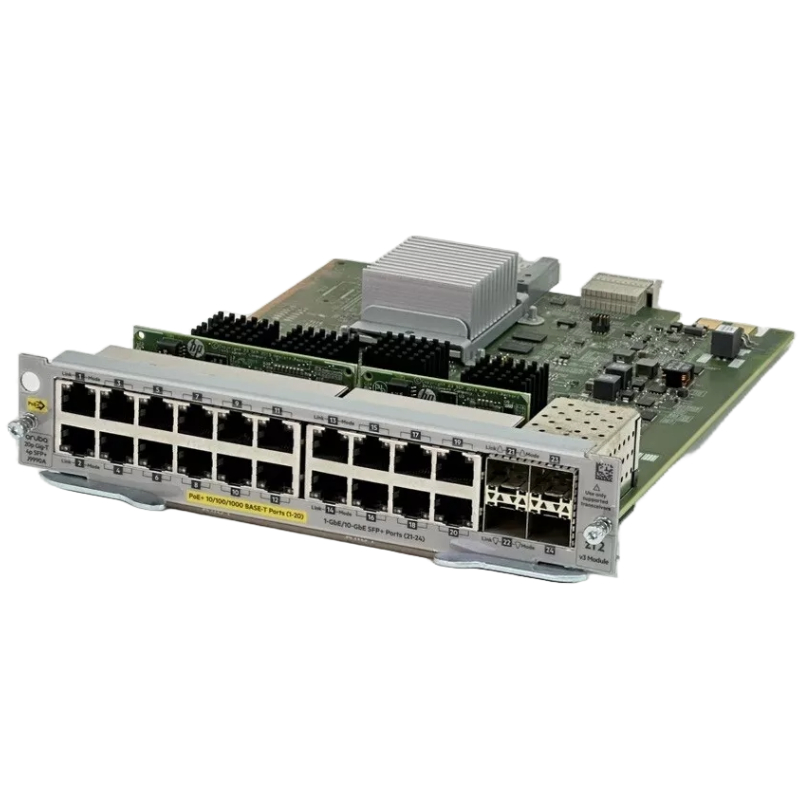
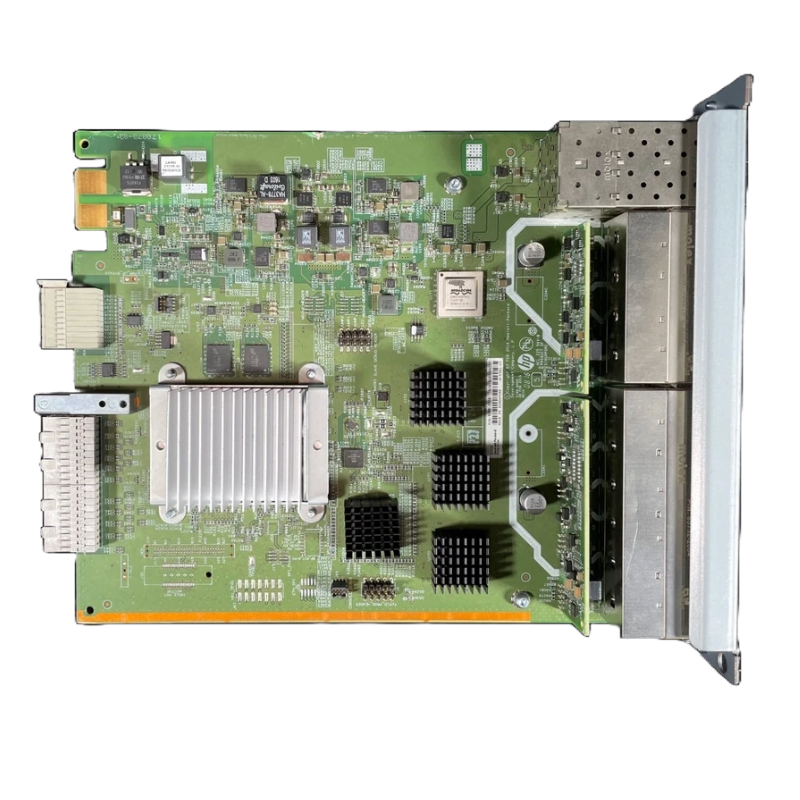
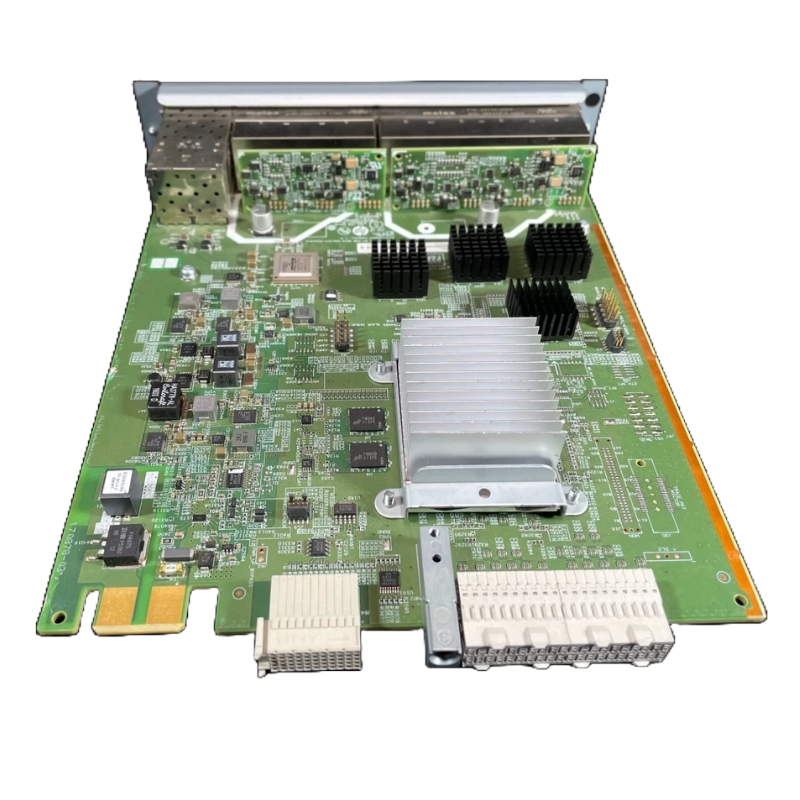
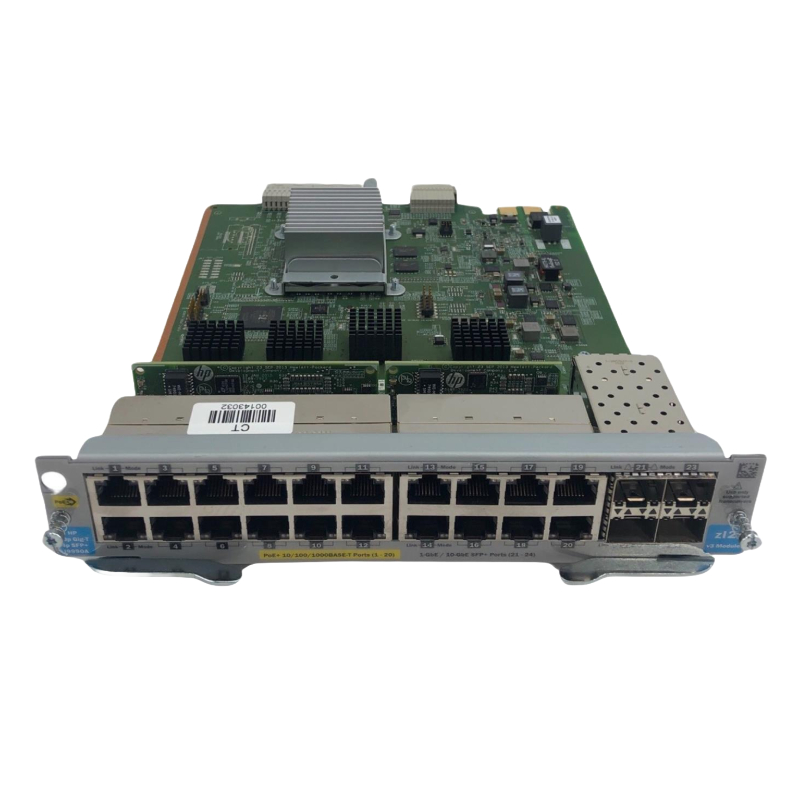
HPE J9990A 5400R 20-Ports 10/100/1000Base-T PoE+ 10GbE SFP+ Expansion Module. Excellent Refurbished with 1 year replacement warranty
The HPE J9990A Expansion Module is a high-performance plug-in networking component designed for scalable enterprise switching environments. Manufactured by this module enhances switch capacity with advanced PoE+ support, high-speed uplinks, and flexible connectivity options for modern data networks.
The HPE J9990A 20-Ports 5400R PoE+ 10/100/1000Base-T 10GbE SFP+ category focuses on highly flexible, modular, and scalable enterprise switching solutions designed for modern converged networks. This category brings together advanced Power over Ethernet Plus capabilities, multi-speed copper interfaces, and high-performance 10 Gigabit SFP+ uplinks within the HPE 5400R switch series architecture. It is tailored for organizations that require resilient connectivity for data, voice, video, and IoT devices, while maintaining centralized control, robust security, and simplified management. The HPE J9990A module is engineered to integrate seamlessly into the 5400R chassis, delivering a dense port configuration that supports a wide range of deployment scenarios, from core and distribution layers to high-capacity access networks in campuses, branches, and data centers.
Within this category, the emphasis is on combining PoE+ power delivery with Gigabit Ethernet access and 10GbE fiber uplinks to create a unified platform for powering and connecting critical endpoints. The 20-port design allows network architects to build efficient topologies that minimize cabling complexity and maximize port utilization. Each port is capable of 10/100/1000Base-T operation, enabling support for legacy devices while providing a clear path to Gigabit performance. The inclusion of 10GbE SFP+ uplink options ensures that traffic from access devices can be aggregated and forwarded at high speed to core switches or servers, reducing bottlenecks and improving overall network responsiveness.
The category description for HPE J9990A 20-Ports 5400R PoE+ 10/100/1000Base-T 10GbE SFP+ also highlights the importance of modularity and investment protection. Because the module is part of the HPE 5400R chassis ecosystem, organizations can scale their networks incrementally by adding or upgrading modules as requirements evolve. This approach reduces the need for disruptive forklift upgrades and allows IT teams to align network capacity with business growth. The combination of PoE+ and multi-gigabit connectivity supports a diverse range of applications, including IP telephony, wireless access points, security cameras, building automation systems, and high-bandwidth workstations.
The HPE J9990A 20-Ports 5400R PoE+ 10/100/1000Base-T 10GbE SFP+ category is defined by several core characteristics that make it suitable for demanding enterprise environments. At its foundation, the category is built around the HPE 5400R switch series, which is known for its modular chassis design, high availability features, and advanced Layer 2 and Layer 3 capabilities. The J9990A module contributes to this platform by offering twenty PoE+ enabled copper ports, each capable of delivering both data and power over a single Ethernet cable. This integration simplifies network design and reduces the need for separate power infrastructure for connected devices.
Another defining characteristic is the support for 10/100/1000Base-T speeds on the copper interfaces. This multi-speed capability ensures compatibility with a wide range of endpoints, from older Fast Ethernet devices to modern Gigabit-ready equipment. It allows organizations to transition gradually to higher speeds without forcing immediate upgrades of all connected hardware. The 10GbE SFP+ uplink capability further enhances the category by providing high-bandwidth connections to aggregation or core layers, enabling efficient traffic forwarding and supporting bandwidth-intensive applications such as video streaming, large file transfers, and virtualization workloads.
The PoE+ functionality in this category is particularly important for powering devices that require more wattage than standard PoE. With PoE+, the J9990A module can support devices such as dual-band wireless access points, pan-tilt-zoom security cameras, and advanced IP phones that demand higher power budgets. This capability allows network designers to deploy sophisticated endpoint hardware without needing separate power supplies or electrical outlets near each device. As a result, the category is well-suited for modern smart buildings, campuses, and branch offices where centralized power delivery and simplified cabling are critical.
The HPE 5400R chassis plays a central role in the HPE J9990A 20-Ports 5400R PoE+ 10/100/1000Base-T 10GbE SFP+ category. It provides the physical framework and backplane connectivity that allow multiple modules to operate together as a single, cohesive switch. The chassis is designed for high reliability, with features such as redundant power supplies, hot-swappable modules, and robust cooling mechanisms. These attributes ensure that the network remains operational even in the event of hardware failures, making the category suitable for mission-critical environments where downtime is unacceptable.
Within the chassis, the J9990A module connects to a high-speed backplane that facilitates rapid data transfer between modules. This architecture enables the creation of flexible configurations that can include a mix of PoE+ access modules, non-PoE modules, and specialized uplink or service modules. The result is a highly customizable platform that can be tailored to the specific needs of each organization. For example, a campus deployment might use multiple J9990A modules to provide dense PoE+ access for wireless access points and IP phones, while also incorporating 10GbE uplink modules to connect to core switches or data center infrastructure.
The chassis-based design also supports advanced software features that enhance the overall value of the category. These features can include dynamic routing protocols, quality of service mechanisms, security policies, and network virtualization capabilities. By combining the hardware flexibility of the 5400R chassis with the functional richness of HPE networking software, the J9990A category delivers a powerful solution for organizations seeking to build resilient, scalable, and secure networks.
PoE+ capabilities are a cornerstone of the HPE J9990A 20-Ports 5400R PoE+ 10/100/1000Base-T 10GbE SFP+ category. Each copper port on the module is capable of delivering power in accordance with the PoE+ standard, which typically supports up to 30 watts per port. This level of power is sufficient for a wide range of devices, including advanced wireless access points that support multiple radios, high-resolution IP cameras with pan-tilt-zoom functionality, and feature-rich IP phones with color displays and integrated switches. By providing PoE+ across twenty ports, the category enables dense deployments of powered devices without the need for separate power injectors or local power outlets.
Effective power management is essential in PoE+ environments, and the HPE J9990A category addresses this need through intelligent power allocation and monitoring features. Administrators can configure power budgets at the module or chassis level, ensuring that the total available power is distributed efficiently among connected devices. They can also prioritize critical devices, such as security cameras or emergency communication systems, to ensure that these endpoints receive power even during periods of high demand. Power usage can be monitored through the management interface, allowing IT teams to identify potential issues, optimize power consumption, and plan for future expansions.
The integration of PoE+ with Gigabit Ethernet connectivity also contributes to energy efficiency and operational simplicity. By delivering both power and data over a single cable, the category reduces the number of cables and power adapters required in the network. This streamlined approach can lower installation costs, reduce clutter in wiring closets and ceiling spaces, and simplify troubleshooting. For organizations focused on sustainability, the ability to manage power centrally and deploy energy- efficient devices can support broader environmental goals and reduce overall energy consumption.
The combination of 10/100/1000Base-T access ports and 10GbE SFP+ uplinks is a defining feature of the HPE J9990A 20-Ports 5400R PoE+ 10/100/1000Base-T 10GbE SFP+ category. The copper access ports provide flexible connectivity for a wide range of devices, from legacy endpoints that operate at 10 or 100 Mbps to modern Gigabit-capable equipment. This flexibility allows organizations to support existing infrastructure while gradually upgrading to higher-speed devices as budgets and requirements permit. The auto-negotiation capabilities of the ports ensure that each connection operates at the optimal speed supported by both the switch and the endpoint.
On the uplink side, the 10GbE SFP+ interfaces deliver high-bandwidth connections that are essential for aggregating traffic from multiple access ports. These uplinks can be used to connect the J9990A module to core switches, distribution switches, or servers, providing the throughput needed to support bandwidth- intensive applications. In environments where large volumes of data are transmitted, such as video surveillance systems, multimedia content delivery, or virtualization platforms, the 10GbE uplinks help prevent congestion and ensure smooth performance. The use of SFP+ modules also provides flexibility in terms of media type, allowing organizations to choose between copper, multimode fiber, or single-mode fiber depending on distance and environmental requirements.
The synergy between Gigabit access and 10GbE uplinks in this category supports hierarchical network designs that are common in enterprise environments. Access devices connect to the J9990A module via 10/100/1000Base-T ports, while aggregated traffic flows through the 10GbE uplinks to higher layers of the network. This architecture enables efficient traffic distribution, simplifies troubleshooting, and supports the implementation of quality of service policies that prioritize critical applications. By providing both access and uplink capabilities in a single module, the category helps reduce the number of devices required and simplifies overall network design.
The HPE J9990A 20-Ports 5400R PoE+ 10/100/1000Base-T 10GbE SFP+ category is suitable for a wide range of deployment scenarios across different industries and organizational sizes. In campus networks, the category can be used to provide PoE+ access for wireless access points, IP phones, and security cameras located in offices, classrooms, and common areas. The 10GbE uplinks connect these access modules to distribution or core switches, ensuring that traffic from multiple endpoints is aggregated efficiently and forwarded to the appropriate destinations. This approach supports seamless mobility, unified communications, and comprehensive security coverage throughout the campus.
In branch office environments, the category offers a compact yet powerful solution for delivering both connectivity and power to local devices. A single 5400R chassis equipped with one or more J9990A modules can serve as the primary switch for the branch, providing PoE+ for IP phones, wireless access points, and cameras, while also offering high-speed uplinks back to the central data center or headquarters. This configuration simplifies branch network design, reduces the number of devices required, and enables centralized management and monitoring from the main IT team.
The category is also relevant in data center or server room environments where PoE+ access is needed for management devices, out-of-band access points, or security cameras. While data centers typically focus on high-speed server connectivity, there is often a need to power and connect auxiliary devices that support operations and security. The J9990A module can provide this functionality while integrating seamlessly with other 5400R modules that focus on server or storage connectivity. The 10GbE uplinks ensure that traffic from these auxiliary devices is forwarded efficiently to monitoring systems, management platforms, or storage arrays.
Network management, security, and reliability are critical aspects of the HPE J9990A 20-Ports 5400R PoE+ 10/100/1000Base-T 10GbE SFP+ category. The 5400R platform is designed to provide comprehensive management capabilities that allow administrators to configure, monitor, and troubleshoot the network from a central interface. This can include support for command-line interfaces, web-based management tools, and integration with network management systems. The J9990A module fits into this framework by exposing detailed information about each port, including link status, power usage, and traffic statistics.
Security features in this category are designed to protect both the network infrastructure and connected devices. The 5400R platform typically supports features such as access control lists, port security, authentication mechanisms, and network segmentation. These capabilities allow administrators to control which devices can connect to the network, what resources they can access, and how traffic is routed between different segments. In environments where sensitive data is transmitted or critical systems are connected, these security measures are essential for preventing unauthorized access and mitigating potential threats.
Reliability is another key focus of the HPE J9990A category. The 5400R chassis is built with redundancy in mind, offering features such as dual power supplies, hot-swappable modules, and robust hardware design. These attributes help ensure that the network remains operational even in the event of hardware failures or maintenance activities. The J9990A module contributes to this reliability by providing stable PoE+ power delivery and consistent network performance across all ports. In mission-critical environments such as healthcare facilities, financial institutions, or large campuses, this level of reliability is essential for maintaining continuous operations and supporting business continuity.
Quality of service is an important consideration in the HPE J9990A 20-Ports 5400R PoE+ 10/100/1000Base-T 10GbE SFP+ category, particularly in environments where multiple types of traffic share the same network infrastructure. The 5400R platform typically supports QoS mechanisms that allow administrators to prioritize certain types of traffic, such as voice, video, or critical application data. By assigning higher priority to these traffic types, the network can ensure that they receive the bandwidth and low latency they require, even during periods of high utilization.
The J9990A module plays a role in QoS by providing the access ports through which endpoint traffic enters the network. Administrators can configure QoS policies on these ports, specifying how different traffic classes should be treated. For example, voice traffic from IP phones connected via PoE+ ports can be prioritized over bulk data transfers, ensuring clear and uninterrupted communication. Video streams from security cameras can also be given appropriate priority to maintain smooth playback and reliable recording.
Traffic optimization in this category extends beyond QoS to include features such as link aggregation, load balancing, and dynamic routing. The 10GbE uplinks can be combined into aggregated links that provide higher bandwidth and redundancy, ensuring that traffic is distributed efficiently across multiple paths. Dynamic routing protocols can be used to adapt to changes in network topology, ensuring that traffic always takes the most efficient route. Together, these features help organizations maximize the performance and resilience of their networks built around the HPE J9990A category.
Scalability and future-proofing are central themes in the HPE J9990A 20-Ports 5400R PoE+ 10/100/1000Base-T 10GbE SFP+ category. The modular design of the 5400R chassis allows organizations to start with a configuration that meets their current needs and expand over time as requirements grow. Additional J9990A modules can be added to increase the number of PoE+ access ports, while other modules can be introduced to provide additional uplinks, specialized services, or new technologies. This incremental approach to scaling helps organizations avoid large upfront investments and reduces the risk of over-provisioning.
Future-proofing in this category is also achieved through support for industry standards and interoperability. The use of 10/100/1000Base-T and 10GbE SFP+ interfaces ensures compatibility with a wide range of devices and network equipment from different vendors. This interoperability allows organizations to integrate the HPE J9990A category into existing networks without requiring wholesale replacement of other components. As new technologies emerge, such as higher-speed uplinks or advanced PoE standards, the modular nature of the 5400R chassis provides a path for adopting these innovations without disrupting the entire network.
The category also supports future-proofing through software updates and feature enhancements. HPE networking platforms typically receive updates that introduce new capabilities, improve performance, or address security vulnerabilities. By keeping the software up to date, organizations can ensure that their HPE J9990A deployments remain aligned with evolving best practices and industry trends. This combination of hardware modularity and software evolution makes the category a long-term investment that can adapt to changing business and technological landscapes.
The HPE J9990A 20-Ports 5400R PoE+ 10/100/1000Base-T 10GbE SFP+ category is designed to integrate seamlessly with broader HPE networking ecosystems, including other switch series, wireless solutions, and management platforms. This integration allows organizations to build end-to-end networks that leverage HPE technologies across access, distribution, and core layers. For example, J9990A modules in 5400R chassis can provide PoE+ access for HPE wireless access points, which in turn connect to HPE controllers or management systems. The 10GbE uplinks can connect to HPE core switches that handle routing, security, and traffic aggregation.
Integration with HPE management platforms enables centralized visibility and control over the entire network. Administrators can use these platforms to monitor performance, configure devices, and enforce policies across multiple locations and device types. This centralized approach simplifies operations, reduces the risk of configuration errors, and supports consistent application of security and QoS policies. In multi-site deployments, the ability to manage HPE J9990A modules alongside other HPE networking components from a single interface can significantly improve operational efficiency.
The category also supports integration with third-party systems and tools, thanks to adherence to industry standards and support for common protocols. This interoperability allows organizations to use existing monitoring, security, or automation tools in conjunction with their HPE J9990A deployments. By leveraging both HPE and third-party ecosystems, organizations can create comprehensive solutions that meet their unique requirements while maintaining flexibility and choice.
Practical considerations for installation and maintenance are an important part of working with the HPE J9990A 20-Ports 5400R PoE+ 10/100/1000Base-T 10GbE SFP+ category. During installation, attention should be paid to factors such as rack space, power availability, cooling, and cable management. The 5400R chassis should be installed in locations that provide adequate ventilation and access for maintenance. Power supplies should be sized appropriately to support the expected PoE+ load, and redundant power configurations should be considered for mission-critical environments.
Cable management is particularly important in deployments with dense PoE+ access, as numerous Ethernet cables will connect devices to the J9990A ports. Proper labeling, routing, and bundling of cables can simplify troubleshooting and reduce the risk of accidental disconnections. The use of structured cabling systems and patch panels can further enhance organization and accessibility. During installation, administrators should also verify that devices receive the expected power and connectivity, testing each port as needed.
Maintenance of HPE J9990A deployments involves regular monitoring of performance, power usage, and device status. Administrators should review logs and alerts to identify potential issues, such as ports experiencing errors, devices drawing excessive power, or uplinks approaching capacity limits. Firmware and software updates should be applied in a timely manner to ensure that the system remains secure and up-to-date. In environments with high availability requirements, maintenance activities should be planned carefully to minimize disruption, leveraging features such as hot-swappable modules and redundant configurations.


 Contact Us
 Information
 Catalog
 Solid State Drives (SSD)
 Network Switches
 Hard Disk Drives
 HBA & Controllers
 PC & Servers
 PC & Server Memory
 CPU & Processors
 Network Routers
 Power Supplies
 Tape Drives & Libraries
 Network Devices
 Computer & Network Cables