(7% discount is applied at checkout)
Cart is empty
Your go-to destination for cutting-edge server products
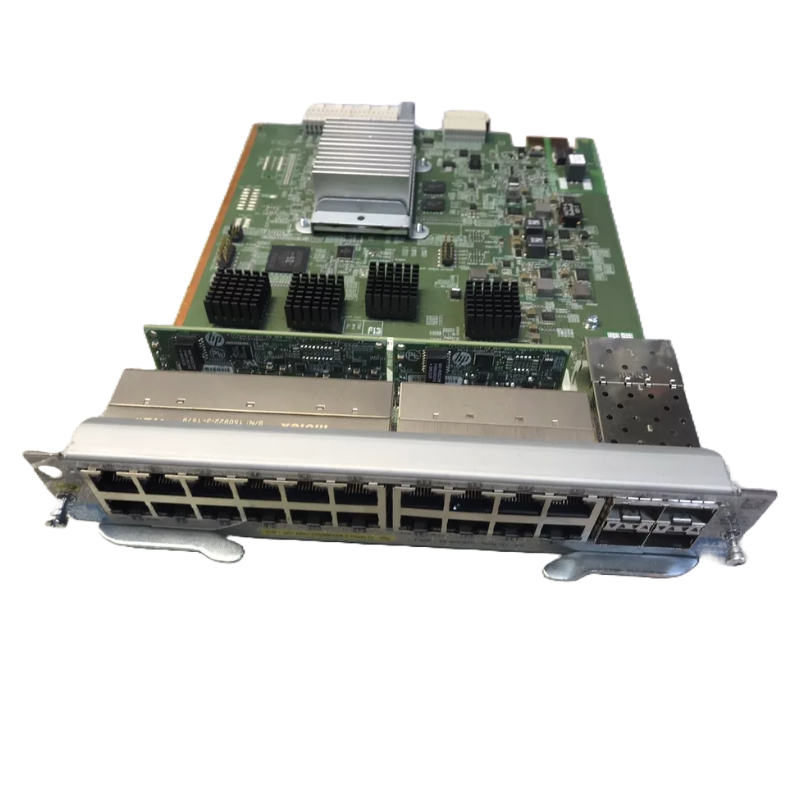


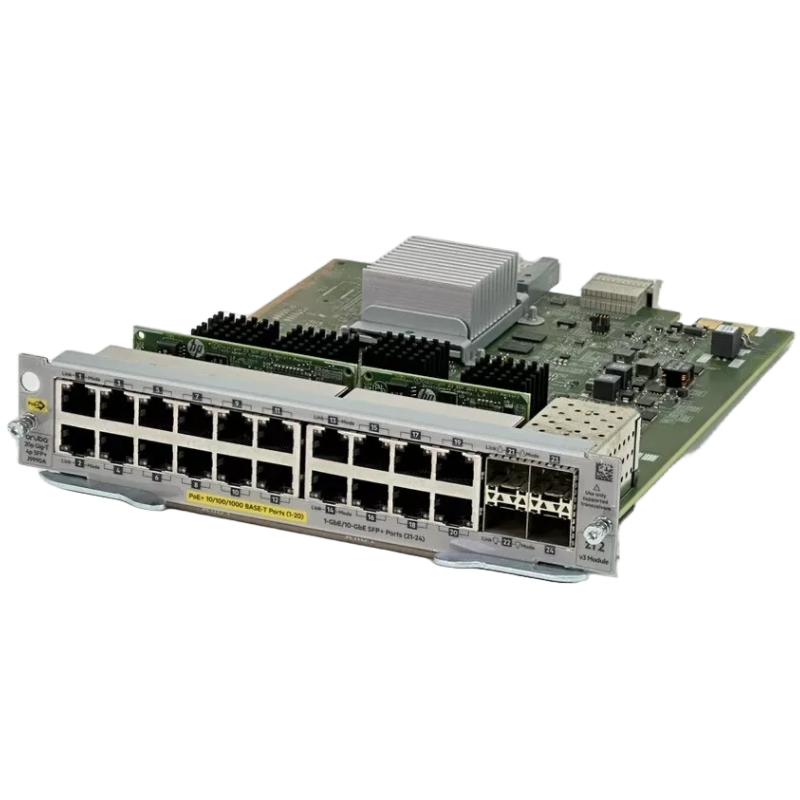
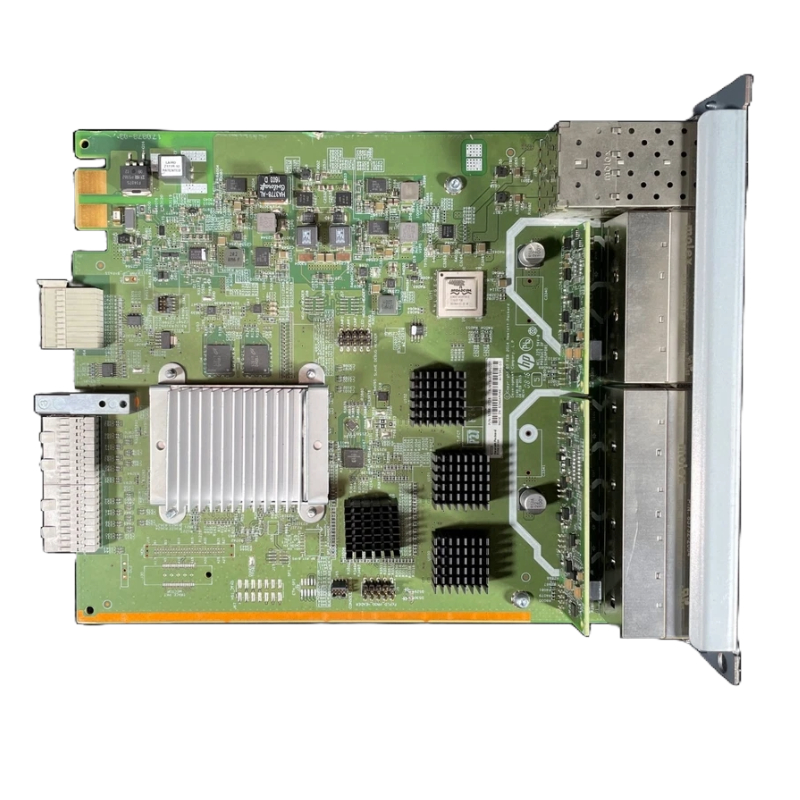
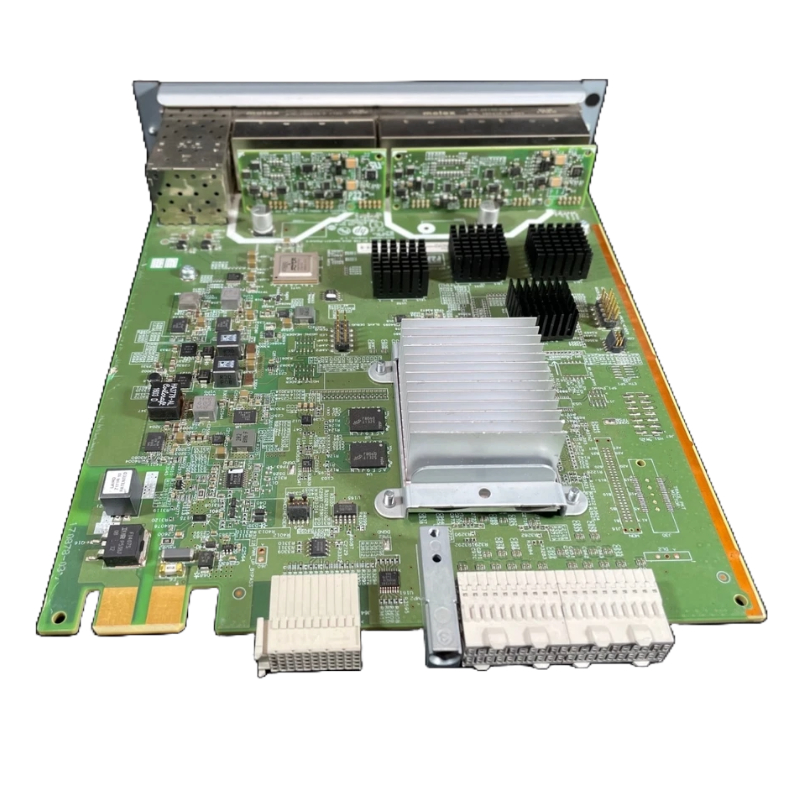
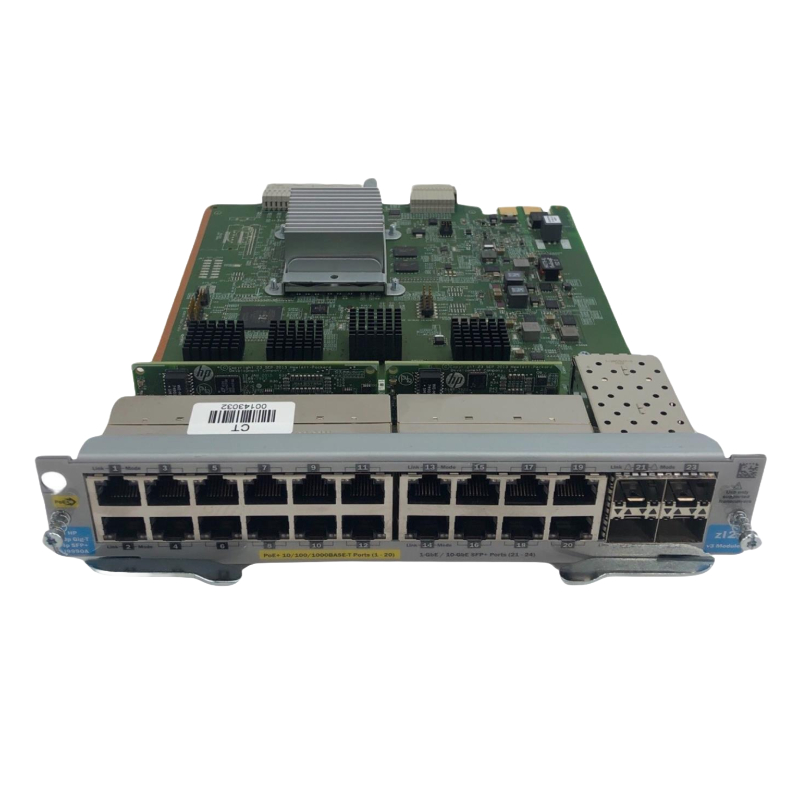
HPE J9990A 20-Ports 10/100/1000Base-T PoE+ 10GbE SFP+ Expansion Module 5400R. Factory-Sealed New in Original Box (FSB) with 3 Years Warranty
The HPE J9990A plug‑in module enhances network scalability with advanced POE+ support, versatile Ethernet connectivity, and robust security capabilities. Designed for enterprise‑grade infrastructures, it delivers dependable wired performance for demanding environments.
The HPE J9990A 20-Ports 5400R POE+ 10/100/1000Base-T 10GbE SFP+ category focuses on highly flexible, enterprise-grade switching modules designed for modern campus and branch networks. This category is centered around the HPE 5400R series architecture, which is known for its modular design, resiliency, and ability to scale with evolving business demands. The J9990A module provides twenty PoE+ capable 10/100/1000Base-T ports combined with high-speed 10GbE SFP+ uplink capabilities, making it ideal for organizations that need to power and connect a wide range of devices while maintaining robust performance and future-ready bandwidth. As part of the 5400R switch family, this category is tailored for environments that require advanced Layer 2 and Layer 3 features, high availability, and simplified management in a single, integrated solution.
Within this category, the emphasis is on delivering secure, scalable connectivity for IP phones, wireless access points, surveillance cameras, thin clients, and other PoE-enabled endpoints. The 10/100/1000Base-T interfaces provide flexible copper connectivity for legacy and modern devices, while the 10GbE SFP+ ports enable high-speed uplinks to core switches, data centers, or aggregation layers. This combination allows network administrators to design topologies that balance cost-effective edge connectivity with high-performance backbone links. The HPE J9990A module is engineered to integrate seamlessly into the 5400R chassis, leveraging the platform’s redundant power, hot-swappable components, and intelligent management features to deliver continuous uptime and simplified operations.
The category is particularly relevant for organizations undergoing digital transformation, where bandwidth demands, device density, and application complexity are steadily increasing. By offering PoE+ support, the J9990A module enables centralized power delivery over Ethernet, reducing the need for separate electrical infrastructure and simplifying deployment of powered devices. At the same time, the 10GbE SFP+ uplinks ensure that traffic from multiple edge devices can be aggregated and forwarded without bottlenecks, supporting high-definition video, unified communications, cloud applications, and other bandwidth-intensive workloads. This category description explores the capabilities, use cases, and technical characteristics of the HPE J9990A 20-Ports 5400R PoE+ 10/100/1000Base-T 10GbE SFP+ module and related subcategories, helping buyers and network planners understand how it fits into their overall infrastructure strategy.
At the core of this category is the combination of twenty PoE+ copper ports and high-speed SFP+ uplink interfaces. Each 10/100/1000Base-T port supports Power over Ethernet Plus, enabling up to 30W of power per port for compatible devices. This allows the module to support a wide range of endpoints, from advanced wireless access points and IP cameras to VoIP phones and building automation systems. The ability to deliver both data and power over a single cable simplifies installation, reduces clutter, and lowers total cost of ownership. For organizations deploying dense wireless networks or extensive surveillance systems, the PoE+ capability is a critical factor in choosing the J9990A category.
The 10GbE SFP+ ports provide the high-speed connectivity required to aggregate traffic from the twenty PoE+ access ports. These uplinks can be used to connect to core switches, distribution layers, or directly to data center infrastructure, depending on the network design. By leveraging fiber-based SFP+ transceivers, organizations can extend their network over longer distances and maintain high-performance links between buildings, floors, or remote facilities. The combination of copper access and fiber uplinks makes the J9990A module versatile and suitable for a wide range of deployment scenarios, from small campuses to large enterprise networks.
Another defining characteristic of this category is its integration with the HPE 5400R chassis. The 5400R platform is known for its modular design, allowing administrators to mix and match different interface modules to create a customized switch that meets specific requirements. The J9990A module fits into this ecosystem, providing PoE+ access and 10GbE uplinks alongside other modules that may offer additional copper ports, fiber interfaces, or specialized features. This modularity ensures that the network can evolve over time, with new modules added or replaced as needs change, without requiring a complete overhaul of the switching infrastructure.
The PoE+ functionality in the HPE J9990A category is a central feature for organizations that rely on powered devices at the edge of the network. Each port can deliver up to 30W, which is sufficient for many modern wireless access points, pan-tilt-zoom cameras, and advanced IP phones. This allows administrators to deploy devices in locations where traditional power outlets may be limited or impractical, such as ceilings, outdoor areas, or secure zones. By using PoE+, the network becomes the primary power distribution system, simplifying cabling and reducing installation time.
Power management is an important aspect of this category. The 5400R chassis and J9990A module support intelligent power allocation, allowing administrators to define priorities and limits for different ports. This ensures that critical devices, such as security cameras or emergency communication systems, receive power even during periods of high demand. The switch can monitor power usage and provide detailed reporting, helping organizations optimize their PoE budget and plan for future expansions. In environments with many PoE devices, this level of control is essential to maintain reliability and avoid unexpected outages.
The PoE+ capabilities also align with energy efficiency goals. By centralizing power delivery and leveraging efficient switch hardware, organizations can reduce overall energy consumption compared to using individual power adapters for each device. The HPE 5400R platform is designed with energy-saving features, and the J9990A module benefits from these optimizations. This makes the category attractive for businesses that prioritize sustainability and seek to minimize their environmental footprint while maintaining high-performance connectivity.
The twenty 10/100/1000Base-T ports in this category provide flexible copper connectivity for a wide range of devices. These ports support auto-negotiation, allowing them to adapt to the speed capabilities of connected endpoints, whether they are legacy 100 Mbps devices or modern Gigabit Ethernet clients. This flexibility is important in mixed environments where older equipment is still in use alongside newer technologies. The J9990A module ensures that all devices can connect reliably, without requiring separate switches or complex configurations.
In typical deployments, these access ports are used to connect user workstations, IP phones, wireless access points, cameras, and other networked devices. The PoE+ capability adds value by powering compatible endpoints, but even non-PoE devices benefit from the robust performance and advanced features of the 5400R platform. Quality of Service, VLAN tagging, and security policies can be applied at the port level, allowing administrators to segment traffic, prioritize critical applications, and enforce access controls. This makes the category suitable for environments where performance and security are both high priorities.
The copper ports also support advanced features such as link aggregation, which allows multiple ports to be combined into a single logical link for increased bandwidth and redundancy. This can be useful when connecting high-demand devices or aggregating traffic from smaller switches. By leveraging these capabilities, organizations can design resilient and scalable topologies that make full use of the J9990A module’s port density and performance characteristics.
The inclusion of 10GbE SFP+ ports in this category is a key differentiator that enables high-speed aggregation and uplink connectivity. These ports are designed to handle large volumes of traffic, making them ideal for connecting the 5400R switch to core or distribution layers. In campus networks, the SFP+ uplinks can be used to create high-bandwidth links between buildings or floors, ensuring that data flows smoothly between different segments of the network. For organizations with data-intensive applications, such as video streaming, large file transfers, or real-time analytics, the 10GbE capability is essential to avoid bottlenecks.
SFP+ transceivers offer flexibility in terms of media type and distance. Depending on the chosen transceiver, the uplinks can use multimode or single-mode fiber, supporting short-range connections within a building or long-range links between remote sites. This allows the J9990A module to fit into a variety of network designs, from compact campus deployments to geographically dispersed enterprises. The ability to choose the appropriate transceiver for each uplink ensures that organizations can optimize cost and performance based on their specific requirements.
In addition to raw bandwidth, the 10GbE SFP+ ports support advanced features such as link aggregation and redundancy. Multiple uplinks can be combined to create resilient connections that continue to operate even if one link fails. This is important for maintaining high availability and ensuring that critical services remain accessible. The 5400R platform’s software features complement these hardware capabilities, providing dynamic routing, load balancing, and failover mechanisms that enhance overall network resilience.
The HPE J9990A 20-Ports 5400R PoE+ 10/100/1000Base-T 10GbE SFP+ module is part of a broader ecosystem of 5400R components and subcategories. The 5400R chassis is designed to accommodate multiple interface modules, each providing different types of connectivity. In this context, the J9990A module represents a category focused on PoE+ access and high-speed uplinks, while other modules may offer additional copper ports, fiber-only interfaces, or specialized features such as MACsec encryption or advanced routing capabilities. Together, these modules allow organizations to build a customized switch that aligns with their specific network design and operational requirements.
Subcategories within the 5400R family may include modules with different port densities, speed combinations, or power capabilities. For example, some modules may provide non-PoE copper ports for environments where power delivery is not required, while others may focus on high-density SFP or SFP+ interfaces for fiber-heavy deployments. The J9990A category stands out by combining PoE+ access with 10GbE uplinks, making it particularly suitable for edge or aggregation roles where powered devices and high-speed backbone connectivity are both needed.
The integration with the 5400R architecture also extends to software features and management tools. The platform supports advanced Layer 2 and Layer 3 functionality, including VLANs, OSPF, VRRP, and other protocols that enable complex network topologies. The J9990A module benefits from these capabilities, allowing administrators to implement sophisticated routing and switching policies that optimize performance and enhance security. Centralized management tools provide visibility into port status, power usage, traffic patterns, and configuration details, making it easier to monitor and maintain the network.
One of the key advantages of the HPE 5400R platform and the J9990A category is scalability. As organizations grow and their network demands increase, they can add additional modules to the 5400R chassis to expand port capacity, introduce new types of connectivity, or enhance performance. This modular approach allows for incremental investment, avoiding the need to replace entire switches when requirements change. The J9990A module can be deployed alongside other modules that provide complementary features, creating a balanced configuration that meets current needs while leaving room for future expansion.
Scalability is not limited to hardware. The 5400R platform’s software features can be updated and enhanced over time, providing access to new protocols, security features, and management capabilities. This ensures that the J9990A category remains relevant as networking technologies evolve. For organizations that prioritize long-term value and adaptability, the combination of modular hardware and upgradable software is a compelling reason to choose the 5400R and J9990A ecosystem.
In multi-site deployments, scalability also means the ability to replicate successful configurations across different locations. The J9990A module can be used as a standard building block in branch offices, campuses, or remote facilities, providing consistent performance and management experience. This simplifies operations and reduces the learning curve for network administrators, who can apply the same best practices and configuration templates across the entire organization.
Reliability is a critical consideration in this category. The HPE 5400R platform is designed with high availability in mind, featuring redundant power supplies, hot-swappable modules, and robust hardware components. The J9990A module benefits from these design principles, ensuring that PoE+ devices and uplink connections remain operational even in the event of hardware failures. The ability to replace modules without powering down the chassis minimizes downtime and allows maintenance to be performed during normal operations.
Redundancy extends to network design as well. The 10GbE SFP+ uplinks can be configured in redundant pairs or groups, providing failover capabilities that keep traffic flowing even if one link fails. Routing protocols such as VRRP and dynamic routing mechanisms further enhance resilience, allowing traffic to be rerouted automatically in response to changes in network topology. For organizations that rely on continuous connectivity for critical applications, these features are essential.
High availability is also supported by the platform’s software architecture. The 5400R series is designed to handle large routing tables, complex VLAN configurations, and high volumes of traffic without compromising stability. The J9990A module operates within this environment, providing consistent performance and reliability for connected devices. This makes the category suitable for mission-critical deployments where downtime is not acceptable.
The HPE J9990A 20-Ports 5400R PoE+ 10/100/1000Base-T 10GbE SFP+ category is applicable to a wide range of use cases and deployment scenarios. In campus networks, the module can serve as an access or aggregation layer, connecting user devices, wireless access points, and cameras while providing high-speed uplinks to core switches. The PoE+ capability is particularly valuable in these environments, where large numbers of powered devices are deployed across multiple buildings and floors. By centralizing power delivery and leveraging the 5400R platform’s management features, administrators can maintain control over device configurations, power budgets, and security policies.
In branch offices, the J9990A module can provide a compact yet powerful solution for connecting local devices and linking the branch to the main data center or headquarters. The 10GbE SFP+ uplinks enable high-speed connections over WAN or metro Ethernet links, ensuring that branch users have access to centralized applications and services without performance degradation. The PoE+ ports support IP phones, cameras, and wireless access points, making it easier to deploy unified communications and security solutions in remote locations.
The category is also relevant for specialized environments such as healthcare facilities, educational institutions, and industrial sites. In hospitals, the J9990A module can support medical devices, wireless networks, and security systems, all of which require reliable connectivity and power. In schools and universities, the module can be used to connect classrooms, labs, and administrative offices, providing the bandwidth needed for e-learning, research, and collaboration tools. In industrial settings, the PoE+ capability can power sensors, cameras, and control systems, while the 10GbE uplinks ensure that data is transmitted quickly to central monitoring and control systems.
One of the most common use cases for this category is supporting wireless access and mobility. Modern organizations rely heavily on Wi-Fi for user connectivity, and access points often require PoE+ power to operate. The J9990A module’s twenty PoE+ ports provide ample capacity for deploying multiple access points in a single area or across a building. By connecting these access points to the 5400R switch, administrators can manage SSIDs, VLANs, and security policies centrally, ensuring consistent user experience and robust protection against threats.
The 10GbE SFP+ uplinks play a crucial role in wireless deployments by providing the bandwidth needed to aggregate traffic from multiple access points. As users consume more data through streaming, video conferencing, and cloud applications, the uplinks ensure that the network can handle the load without congestion. This is particularly important in high-density environments such as conference centers, lecture halls, or open office spaces, where many users may be connected simultaneously.
Mobility also extends to devices such as IP phones and tablets, which may connect via wired or wireless interfaces. The J9990A category supports these devices through its copper ports and PoE+ capabilities, enabling flexible deployment options that adapt to changing user needs. As organizations embrace hybrid work models and flexible office layouts, the ability to reconfigure network connections quickly and easily becomes a significant advantage.
Performance is a central focus of the HPE J9990A 20-Ports 5400R PoE+ 10/100/1000Base-T 10GbE SFP+ category. The 5400R platform is built to handle high volumes of traffic with low latency and consistent throughput. The J9990A module leverages this architecture to deliver reliable performance for connected devices, whether they are user workstations, access points, cameras, or other endpoints. Advanced features such as Quality of Service allow administrators to prioritize critical applications, ensuring that voice, video, and real-time data receive the bandwidth they need even during periods of heavy load.
Security is equally important. The category supports a range of security features, including port-based access control, MAC authentication, and integration with network access control solutions. These capabilities allow organizations to enforce policies that restrict access to authorized devices and users, reducing the risk of unauthorized connections or malicious activity. VLANs can be used to segment traffic, isolating sensitive systems from general user traffic and creating secure zones for specific applications.
Management features play a crucial role in making the J9990A category practical and efficient to operate. The 5400R platform provides centralized management tools that offer visibility into port status, power usage, traffic patterns, and configuration details. Administrators can monitor PoE+ budgets, identify potential issues, and make adjustments as needed. Remote management capabilities allow configurations to be applied across multiple switches or sites, simplifying operations in distributed environments. Logging and reporting features provide valuable insights that support troubleshooting, capacity planning, and compliance efforts.
The HPE 5400R platform and J9990A category support advanced Layer 2 and Layer 3 functionality that enables complex network designs. At Layer 2, features such as VLANs, Spanning Tree Protocol, and link aggregation allow administrators to create segmented, resilient topologies that optimize performance and reduce the risk of loops or failures. At Layer 3, routing protocols such as OSPF and static routing provide the ability to direct traffic between different subnets and network segments, supporting multi-site deployments and complex application architectures.
These features are particularly important in environments where the J9990A module serves as an aggregation point for multiple access switches or devices. By implementing routing and switching policies at the 5400R level, organizations can control traffic flows, enforce security policies, and optimize performance across the entire network. The combination of PoE+ access, 10GbE uplinks, and advanced Layer 2 and Layer 3 functionality makes the category a powerful tool for building modern, efficient networks.
The platform’s software architecture is designed to support these features without compromising stability or performance. Updates and enhancements can be applied over time, ensuring that the J9990A category remains aligned with evolving networking standards and best practices. For organizations that require sophisticated network designs, the advanced functionality provided by the 5400R and J9990A ecosystem is a significant advantage.
Security policies and access control are essential components of the HPE J9990A category. The 5400R platform supports port-based authentication mechanisms that ensure only authorized devices and users can connect to the network. Integration with network access control solutions allows for dynamic policy enforcement based on user identity, device type, or security posture. This helps organizations protect sensitive data and systems from unauthorized access.
Access control can be combined with VLAN segmentation to create secure zones for specific applications or departments. For example, cameras and security systems can be placed in a dedicated VLAN with restricted access, while user devices operate in separate VLANs with appropriate policies. The J9990A module’s PoE+ ports and 10GbE uplinks support these configurations, providing the connectivity and performance needed to implement robust security architectures.


 Contact Us
 Information
 Catalog
 Solid State Drives (SSD)
 Network Switches
 Hard Disk Drives
 HBA & Controllers
 PC & Servers
 PC & Server Memory
 CPU & Processors
 Network Routers
 Power Supplies
 Tape Drives & Libraries
 Network Devices
 Computer & Network Cables