(7% discount is applied at checkout)
Cart is empty
Your go-to destination for cutting-edge server products
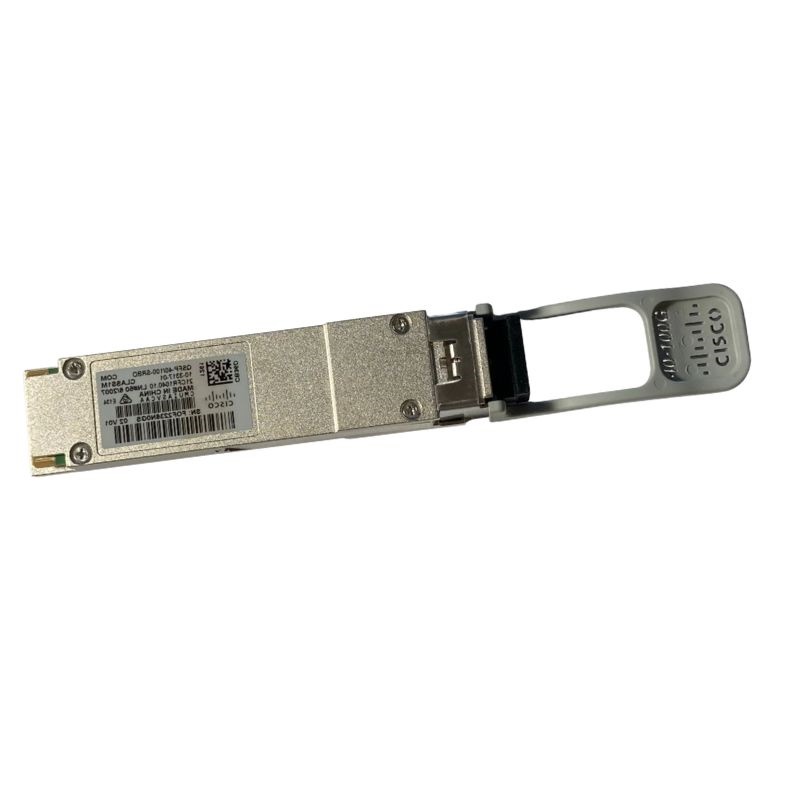


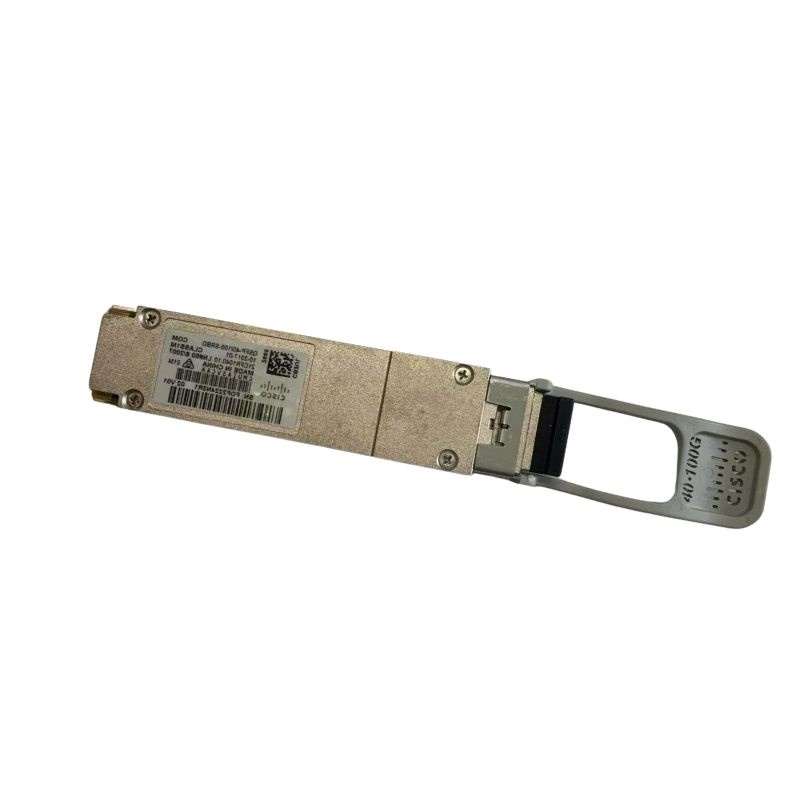
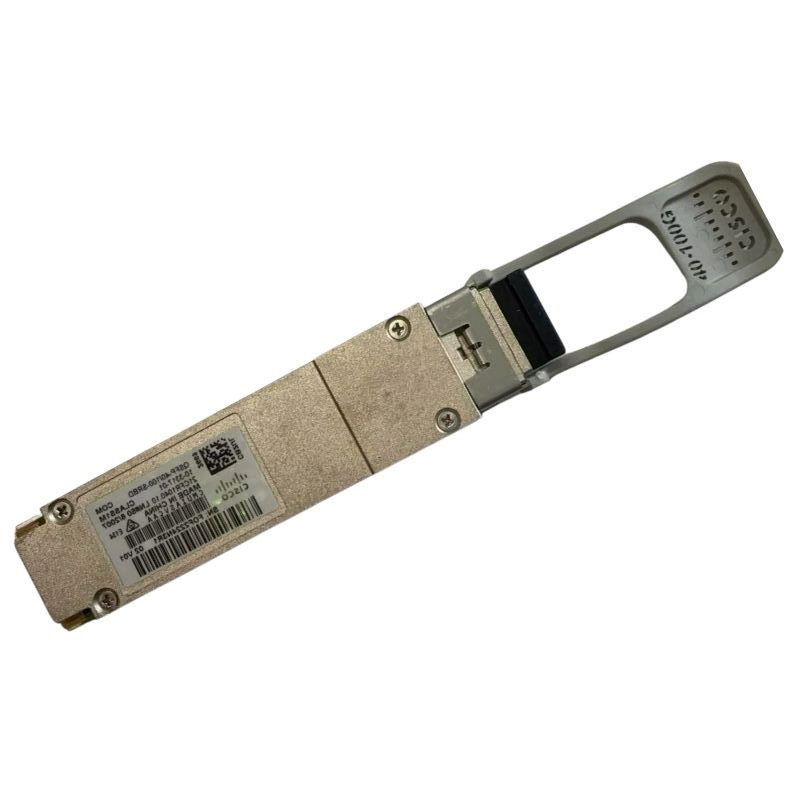
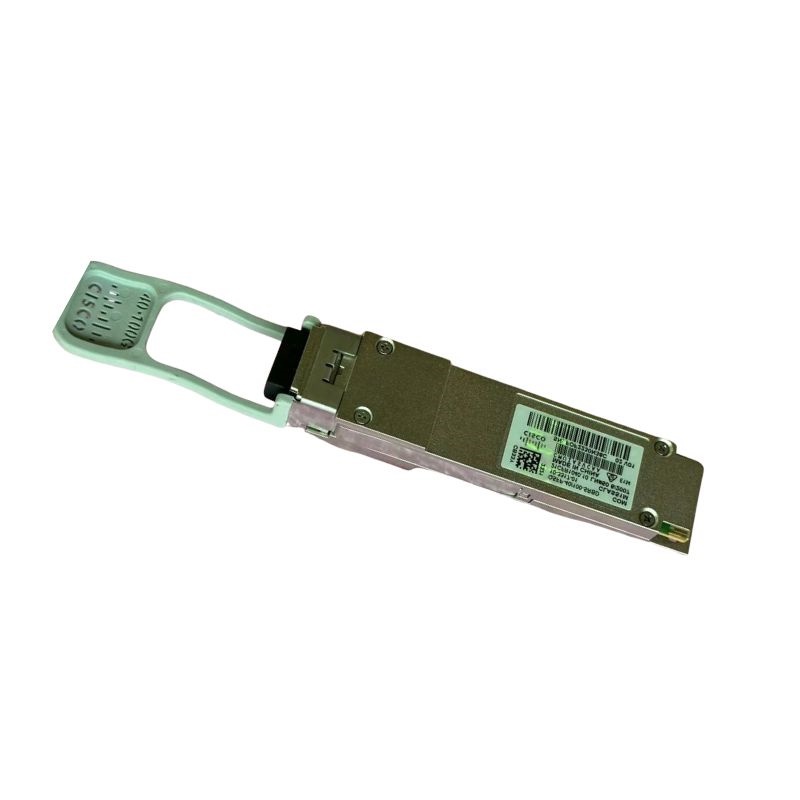
Cisco 10-3317-01 100 GBPS LC Multi-Mode QSFP+ Transceiver Module. Factory-Sealed New in Original Box (FSB) with 1 year replacement warranty
| SKU/MPN | Warranty | Price | Condition | You save |
|---|---|---|---|---|
| 10-3317-01 | 1 Year Warranty | $160.00 | Excellent Refurbished | You save: $56.00 (26%) |
| 10-3317-01 | 1 Year Warranty | $198.00 | Factory-Sealed New in Original Box (FSB) | You save: $69.30 (26%) |
The 10-3317-01 QSFP28/QSFP+ optical transceiver module is a high-performance networking component designed for ultra-fast data transmission in modern data center and enterprise environments. Built for scalability and efficiency, this dual-rate optical module supports both 40 Gbps and 100 Gbps connectivity, ensuring flexible deployment across evolving network infrastructures.
The Cisco 10-3317-01 100 GBPS LC Multi-Mode QSFP+ Transceiver Module represents a high-performance optical connectivity component designed for modern data-driven network environments where bandwidth density, transmission stability, and scalable architecture are essential. This module is widely associated with high-speed Ethernet infrastructures that demand efficient short-reach optical communication across enterprise switching fabrics, cloud data centers, and carrier-grade networking systems. This module is engineered to deliver consistent 100 Gigabit per second data transmission over multimode fiber links while maintaining low latency and optimized power efficiency for dense port environments.
The QSFP+ form factor used in the Cisco 10-3317-01 module is specifically designed for compact, high-density networking equipment where maximizing port availability is a priority. QSFP+ stands for Quad Small Form-factor Pluggable Plus, indicating that the module integrates four high-speed channels within a single physical interface. Each channel contributes to aggregated throughput, enabling a total line rate of 100G. This architecture is especially beneficial in environments where rack space efficiency is directly linked to operational scalability.
The physical design of this module ensures compatibility with standard QSFP+ ports on switches and routers, allowing seamless integration into existing optical infrastructure without extensive redesign. The mechanical stability of the transceiver housing is optimized for repeated insertion cycles, ensuring long-term reliability in mission-critical deployments.
One of the defining characteristics of the Cisco 10-3317-01 module is its LC connector-based interface, optimized for multi-mode fiber (MMF) transmission. LC connectors are widely used in high-density optical environments due to their small footprint and superior alignment precision. The use of LC connectors enhances signal integrity while reducing insertion loss, making them ideal for short-reach high-bandwidth applications.
Multi-mode fiber compatibility allows the module to operate efficiently over OM3, OM4, and OM5 fiber types, supporting short-distance data center interconnects where high bandwidth is required over limited physical spans. This makes it particularly suitable for top-of-rack (ToR), end-of-row (EoR), and leaf-spine architectures commonly deployed in hyperscale data centers.
The 100 Gigabit Ethernet capability of the Cisco 10-3317-01 module is achieved through advanced optical modulation techniques and parallel channel transmission. Each internal lane operates at a high symbol rate, allowing the aggregation of multiple data streams into a unified high-speed channel. This enables seamless handling of large-scale data workloads, including virtualization traffic, cloud computing data flows, and high-frequency trading systems where microseconds of latency matter.
The module ensures that data integrity is maintained even under heavy network loads by employing advanced error correction and signal conditioning techniques. This ensures minimal packet loss and stable throughput, even in environments where network congestion is common.
Latency optimization is a key design principle in high-speed optical transceivers. The Cisco 10-3317-01 module is optimized to minimize optical-to-electrical and electrical-to-optical conversion delays. This is essential for latency-sensitive applications such as real-time analytics, financial trading systems, and distributed computing clusters.
By reducing signal processing overhead and maintaining high synchronization across channels, the module ensures consistent packet delivery times. This contributes to improved overall network performance, particularly in spine-leaf architectures where inter-switch latency must be tightly controlled.
Multi-mode fiber technology allows multiple light rays or modes to propagate through the fiber core simultaneously. This is particularly effective for short-distance communication where high data rates are required without the complexity and cost associated with single-mode fiber systems. The Cisco 10-3317-01 module leverages this principle to achieve efficient 100G transmission over optimized multimode cabling infrastructures.
The design ensures controlled dispersion characteristics, reducing modal distortion and maintaining signal clarity over supported distances. This is achieved through precise calibration of optical components and alignment systems within the transceiver module.
The module’s compatibility with OM3, OM4, and OM5 fiber types allows it to be deployed across a wide range of existing infrastructure setups. OM3 fiber provides a cost-effective solution for moderate distance transmission, while OM4 enhances performance with extended reach and reduced attenuation. OM5 introduces further optimization for wavelength division multiplexing, supporting future-ready network scaling strategies.
This flexibility ensures that organizations can adopt the Cisco 10-3317-01 module without requiring complete fiber infrastructure replacement, thereby reducing deployment costs and simplifying upgrade pathways.
Modern cloud data centers rely heavily on high-bandwidth interconnects to manage distributed workloads across thousands of servers. The Cisco 10-3317-01 module plays a critical role in enabling these architectures by providing stable and scalable 100G connectivity between switching layers.
In leaf-spine network designs, the module is typically deployed in spine switches to handle aggregated traffic from multiple leaf nodes. This ensures consistent throughput and prevents bottlenecks in large-scale virtualized environments.
Within enterprise environments, the module is frequently used to enhance core network backbone capacity. As organizations expand their digital infrastructure, the demand for high-speed data exchange between departments, cloud services, and external gateways increases significantly. The Cisco 10-3317-01 module supports these requirements by enabling efficient backbone scaling without introducing latency bottlenecks.
High-performance computing environments and artificial intelligence clusters require extremely fast inter-node communication. The 100G capability of this transceiver module ensures that data can be transferred between compute nodes rapidly, enabling faster model training cycles and improved parallel processing efficiency. This is especially important in machine learning workloads where distributed datasets must be synchronized across multiple nodes.
Energy efficiency is a fundamental requirement in modern data centers. The Cisco 10-3317-01 module is engineered to maintain low power consumption while delivering high throughput performance. This is achieved through optimized circuitry design and efficient signal modulation techniques that reduce unnecessary energy expenditure.
Lower power consumption not only reduces operational costs but also contributes to improved environmental sustainability in large-scale deployments where thousands of transceiver modules may be active simultaneously.
Heat management is critical in densely populated switch environments. The module is designed with thermal efficiency in mind, ensuring that heat generated during high-speed data transmission is effectively dissipated. This helps maintain stable operating temperatures and reduces the risk of thermal throttling or performance degradation.
Efficient thermal design also contributes to longer module lifespan and improved reliability under continuous operation conditions commonly found in enterprise data centers.
Signal integrity is a critical aspect of high-speed optical communication. The module incorporates advanced optical alignment systems to ensure that emitted light remains precisely aligned with receiving components. This reduces bit error rates and improves overall transmission accuracy.
In high-speed networks, error correction mechanisms play a vital role in maintaining data integrity. The Cisco 10-3317-01 module supports robust error detection processes that help identify and correct transmission anomalies before they affect application-level performance. This ensures resilient operation even in high-traffic conditions.
Hyperscale environments require network components that can scale efficiently without introducing architectural limitations. The Cisco 10-3317-01 module supports scalable expansion by enabling high-bandwidth interconnects that grow alongside computing demands. This ensures that infrastructure can evolve without major redesigns.
Investing in 100G optical modules allows organizations to prepare for increasing bandwidth requirements driven by cloud computing, artificial intelligence, and data analytics workloads. The flexibility of multi-mode fiber compatibility ensures that existing infrastructure can support future upgrades without extensive physical rewiring.
The shift toward 100G networking represents a significant evolution from earlier 10G and 40G infrastructures. This transition is driven by increasing demands for high-bandwidth applications such as video streaming, cloud computing, and large-scale data processing. The Cisco 10-3317-01 module plays a role in enabling this transition by providing backward-compatible integration paths within modern network systems.
Software-defined networking architectures rely on flexible and programmable infrastructure components. High-speed transceivers like the Cisco 10-3317-01 module support these environments by enabling rapid data movement between virtualized network segments. This improves automation, orchestration, and overall network efficiency.
Cloud-native systems require high-speed connectivity between microservices and distributed applications. The module supports this requirement by providing low-latency, high-throughput links that ensure efficient service communication across distributed environments.
The Cisco 10-3317-01 module is designed to align with industry Ethernet standards governing 100G optical transmission. This ensures interoperability with a wide range of networking equipment and guarantees compliance with established performance benchmarks.
In complex enterprise ecosystems, multi-vendor interoperability is essential. This module supports standardized optical communication protocols that enable integration across different hardware platforms, ensuring flexibility in heterogeneous network environments.
The adoption of high-speed optical modules such as the Cisco 10-3317-01 represents a strategic investment in network modernization. Organizations benefit from improved performance, reduced latency, and enhanced scalability, all of which contribute to more efficient digital transformation initiatives across enterprise and service provider environments.


 Contact Us
 Information
 Catalog
 Solid State Drives (SSD)
 Network Switches
 Hard Disk Drives
 HBA & Controllers
 PC & Servers
 PC & Server Memory
 CPU & Processors
 Network Routers
 Power Supplies
 Tape Drives & Libraries
 Network Devices
 Computer & Network Cables