(7% discount is applied at checkout)
Cart is empty
Your go-to destination for cutting-edge server products
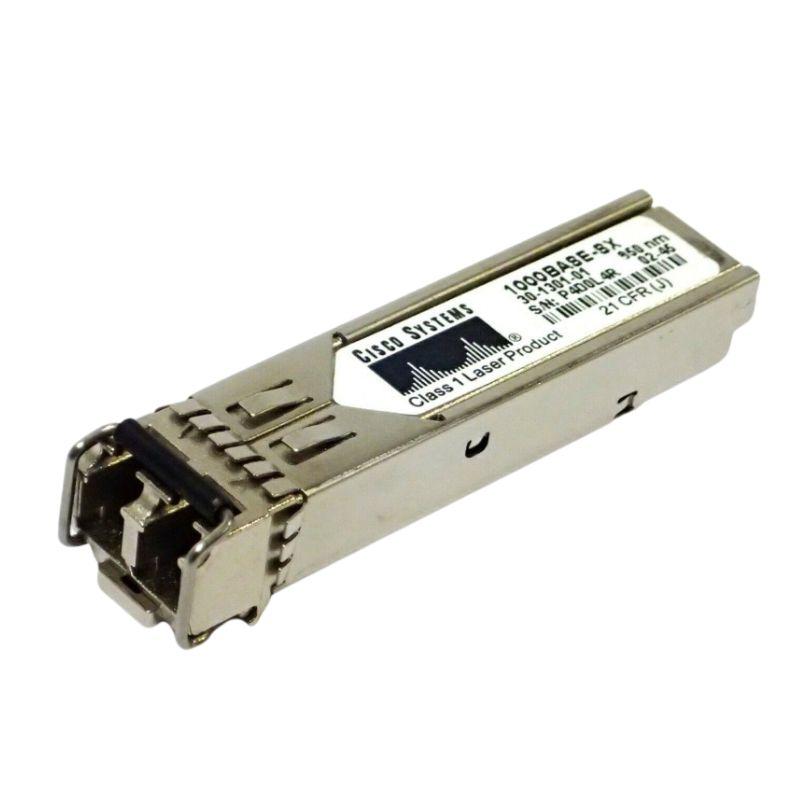


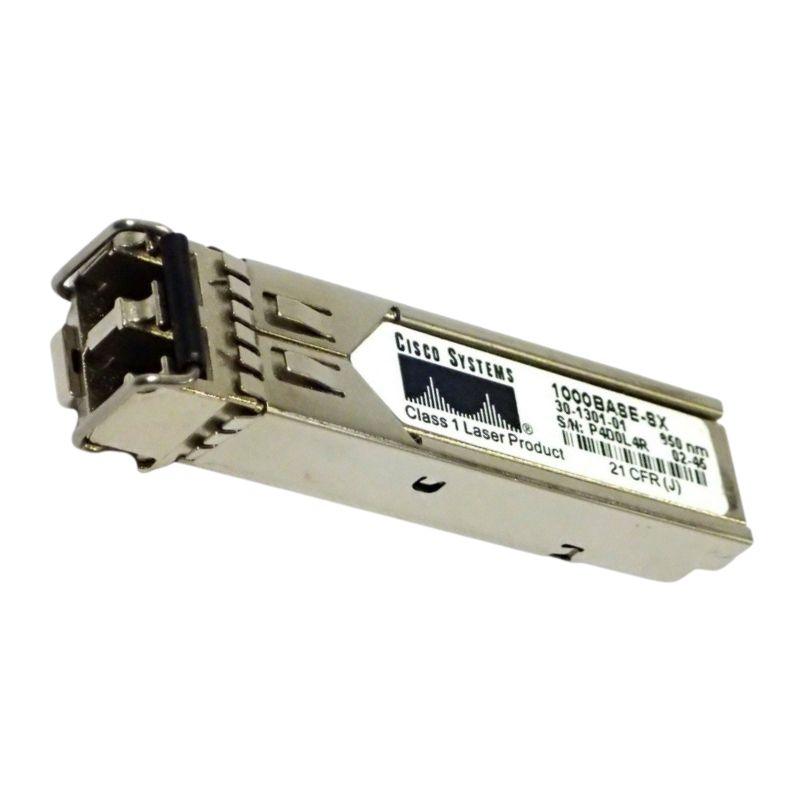
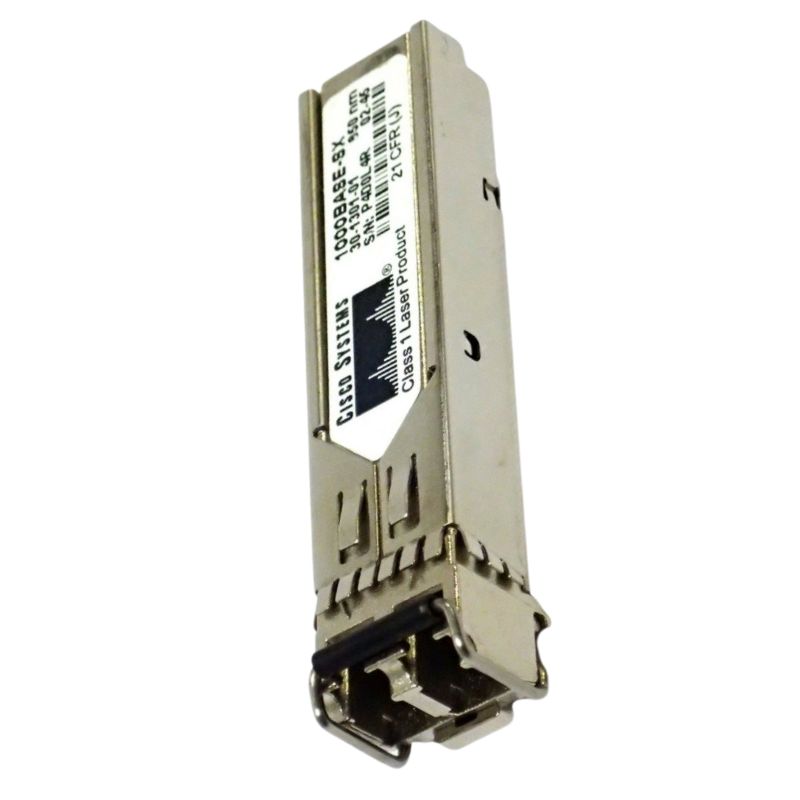
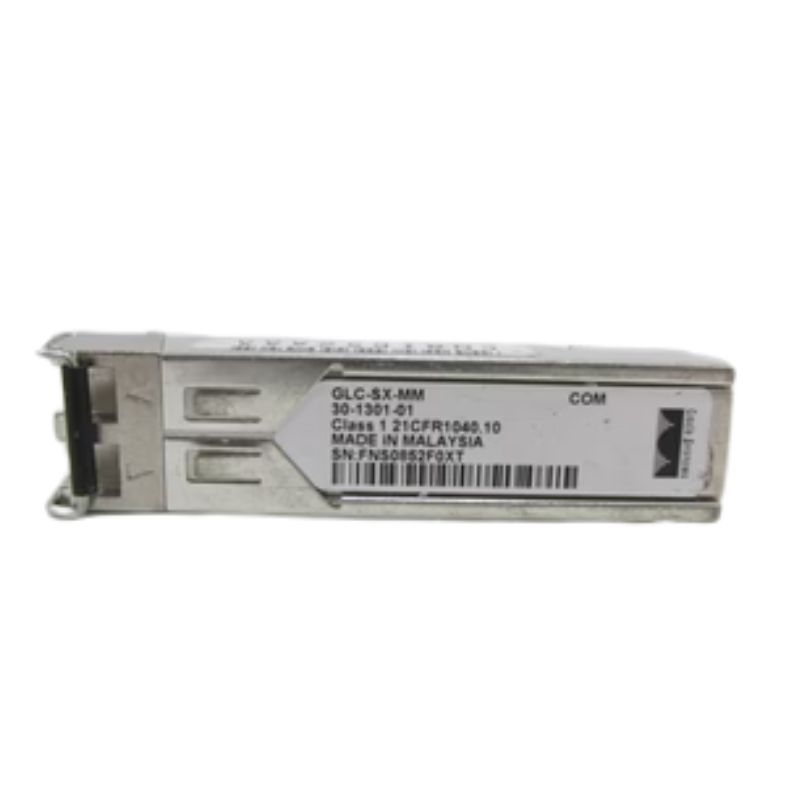
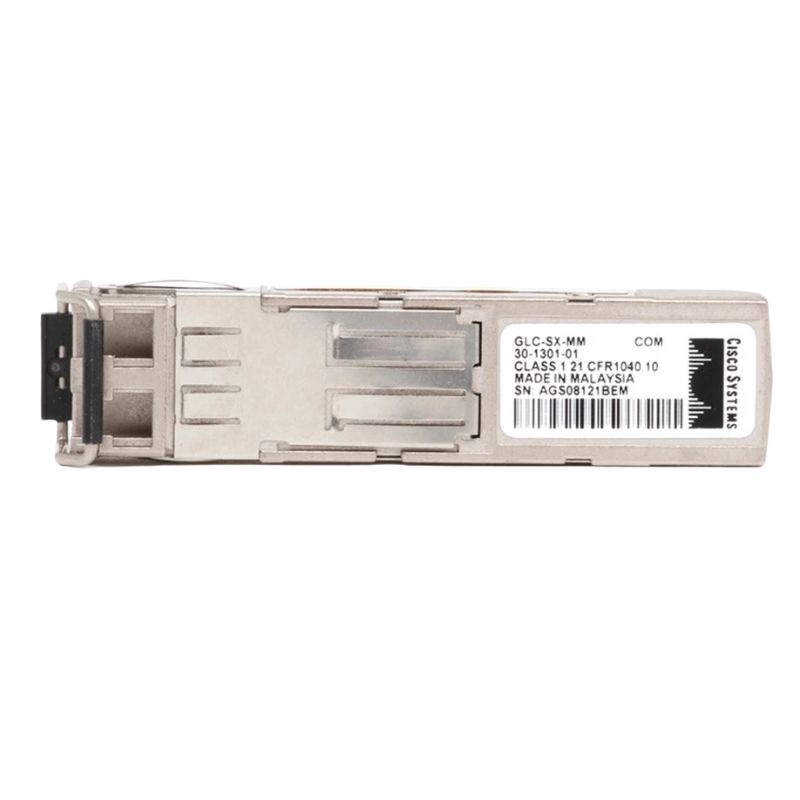
Cisco 30-1301-01 SFP (Mini-GBIC) Transceiver Module LC Multi-Mode. Factory-Sealed New in Original Box (FSB) with 1 year replacement warranty
| SKU/MPN | Warranty | Price | Condition | You save |
|---|---|---|---|---|
| 30-1301-01 | 1 Year Warranty | $50.00 | Excellent Refurbished | You save: $17.50 (26%) |
| 30-1301-01 | 1 Year Warranty | $76.00 | Factory-Sealed New Retail in Original Box (FSB) | You save: $26.60 (26%) |
Overview of Cisco SFP Transceiver Module
The Cisco 1000BASE-SX compatible SFP (Small Form-Factor Pluggable) transceiver module is engineered to deliver reliable, high-speed data transmission across enterprise, educational, and governmental network environments. Designed for seamless integration into Cisco switching and routing systems, this compact plug-in module enhances fiber-optic connectivity with stability, efficiency, and long-distance performance.
The Cisco 30-1301-01 SFP (Small Form-Factor Pluggable) transceiver module is a high-performance optical networking component designed for short-range fiber optic communication within enterprise, data center, and campus network infrastructures. This Mini-GBIC module is engineered to deliver reliable Gigabit Ethernet connectivity over multi-mode fiber (MMF) using LC duplex connectors, ensuring stable and efficient data transmission across network switches, routers, and other compatible networking devices.
As part of Cisco’s widely adopted optical transceiver portfolio, the 30-1301-01 SFP module is built to support scalable network expansion while maintaining low latency, high bandwidth, and energy efficiency. It is commonly deployed in environments where high-speed local area network (LAN) connectivity is essential, including enterprise core switches, aggregation switches, and server access layers.
The Cisco 30-1301-01 operates using multi-mode fiber optics, which allows multiple light modes to propagate simultaneously through the fiber core. This characteristic enables efficient short-distance data transmission, typically within data centers and building backbones. Multi-mode fiber is optimized for shorter reach compared to single-mode fiber, but it provides cost-effective high bandwidth for internal networking environments.
The transceiver generally operates at an 850nm wavelength, which is standard for short-range optical communication over multi-mode fiber. This wavelength is ideal for vertical-cavity surface-emitting lasers (VCSELs), which are commonly used in SFP modules due to their efficiency and stability.
The LC duplex interface used in the Cisco 30-1301-01 is a compact fiber optic connector designed for high-density networking applications. Its reduced footprint allows network administrators to deploy a larger number of ports within limited switch space, making it ideal for modern high-density switch architectures.
The LC connector ensures precise alignment of fiber cores, minimizing insertion loss and maximizing signal integrity. This contributes to improved overall network performance, especially in environments where multiple transceiver modules operate simultaneously under heavy traffic loads.
Signal integrity in the Cisco 30-1301-01 module is maintained through precise optical alignment, advanced internal circuitry, and strict manufacturing standards. These factors help reduce jitter, attenuation, and dispersion, ensuring consistent data transmission even under variable network conditions.
The module is designed to maintain stable performance across a wide range of environmental conditions, including temperature variations and electromagnetic interference typical in enterprise environments.
The Cisco 30-1301-01 SFP module is engineered for seamless integration with Cisco networking hardware, including switches and routers that support SFP or Mini-GBIC slots. Its compatibility ensures plug-and-play functionality in supported devices, reducing configuration complexity and deployment time.
It is commonly deployed in Catalyst series switches, Cisco modular routers, and other enterprise-grade networking platforms that require reliable Gigabit Ethernet fiber connectivity.
Although primarily optimized for Cisco environments, the 30-1301-01 may also function in third-party networking equipment that adheres to standard SFP MSA (Multi-Source Agreement) specifications. However, performance and compatibility may vary depending on firmware restrictions or vendor-specific coding.
Network administrators often evaluate interoperability requirements when integrating this module into heterogeneous network infrastructures to ensure stable operation and compliance with network policies.
The Cisco 30-1301-01 supports Gigabit Ethernet speeds, typically operating at 1.25 Gbps signaling rates. This enables high-throughput data transmission suitable for enterprise applications such as virtualization, cloud connectivity, file sharing, and real-time communications.
The module ensures consistent bandwidth delivery across supported distances, minimizing packet loss and latency fluctuations in high-demand network environments.
Designed for multi-mode fiber applications, the module typically supports transmission distances up to 550 meters depending on fiber grade (such as OM2 or OM3). This makes it ideal for intra-building connections, campus networks, and data center rack-to-rack communication.
Its short-range optimization reduces deployment costs by eliminating the need for more expensive single-mode fiber in environments where long-distance transmission is not required.
The Mini-GBIC form factor of the Cisco 30-1301-01 is designed for compact, hot-swappable installation. This allows network engineers to install or replace modules without shutting down the system, significantly improving network uptime and maintainability.
Its compact size supports high-density switch configurations, enabling more ports per chassis and improving overall network scalability.
The module is constructed using industrial-grade materials that ensure durability in demanding network environments. It is engineered to withstand continuous operation, thermal variation, and mechanical handling during installation or maintenance.
Cisco’s strict quality assurance processes ensure each module meets high reliability standards before deployment in enterprise networks.
Efficient power consumption is a critical aspect of SFP module design. The Cisco 30-1301-01 is optimized for low power usage, reducing overall heat output within networking equipment. This contributes to improved thermal management within densely populated switch racks.
Lower power consumption also enhances long-term operational efficiency, reducing energy costs in large-scale deployments such as data centers and enterprise IT infrastructures.
In enterprise environments, the Cisco 30-1301-01 is commonly used to connect departmental switches, core switches, and distribution layers. Its high-speed connectivity ensures efficient data flow between different segments of the organization.
It is particularly useful in environments requiring reliable internal communication between servers, storage systems, and user access networks.
Within data centers, the module plays a critical role in providing rack-to-rack connectivity. It supports high-speed communication between servers and aggregation switches, ensuring smooth operation of virtualization platforms and cloud services.
The low-latency performance of the module makes it suitable for applications requiring rapid data exchange, including database synchronization and distributed computing systems.
Educational institutions and campus networks often deploy the Cisco 30-1301-01 to connect multiple buildings or network segments. Its multi-mode fiber support provides a cost-effective solution for medium-range connectivity across campus infrastructures.
The module’s stability ensures uninterrupted access to learning management systems, digital libraries, and administrative applications.
Multi-mode fiber used with the Cisco 30-1301-01 features a larger core diameter compared to single-mode fiber, typically 50 or 62.5 microns. This allows multiple light paths, making it ideal for short-distance communication.
The fiber types commonly associated with this module include OM2, OM3, and OM4, each offering different bandwidth and distance capabilities depending on network requirements.
The module is designed to optimize bandwidth utilization within multi-mode fiber networks by minimizing modal dispersion and maintaining signal clarity. This ensures efficient data transmission even in environments with high network congestion.
Advanced optical engineering techniques help maintain consistent throughput, reducing retransmission rates and improving overall network efficiency.
The Cisco 30-1301-01 is engineered to deliver low-latency communication, ensuring minimal delay in packet transmission across network segments. This is essential for real-time applications such as VoIP, video conferencing, and cloud-based services.
High throughput efficiency ensures that large volumes of data can be transmitted without bottlenecks, supporting modern enterprise workloads and data-intensive applications.
The module incorporates advanced optical signaling mechanisms that reduce bit error rates and enhance transmission reliability. This ensures consistent data integrity across supported distances, even under heavy network traffic conditions.
Reliable error performance is essential in maintaining stable network operations in critical IT infrastructures.
The Cisco 30-1301-01 supports modular network expansion, allowing organizations to scale their infrastructure incrementally without replacing entire systems. Additional SFP modules can be deployed as network demand increases.
This scalability makes it an ideal choice for growing enterprises and evolving IT environments where flexibility is a key requirement.
The module integrates seamlessly with modern network architectures including hybrid cloud systems, software-defined networking (SDN), and virtualized environments. Its standardized design ensures compatibility with evolving network technologies.
As organizations adopt more advanced digital infrastructures, the 30-1301-01 remains a reliable component for maintaining high-speed optical connectivity.
The Cisco 30-1301-01 is designed for long-term operational reliability, maintaining consistent performance throughout its lifecycle. Its robust construction and adherence to industry standards ensure minimal failure rates in production environments.
This reliability reduces maintenance costs and enhances overall network uptime, which is critical for enterprise and data center operations.
Many Cisco-compatible networking systems support diagnostic monitoring features such as Digital Optical Monitoring (DOM), which allows administrators to track real-time performance metrics of the transceiver module.
These monitoring capabilities help detect potential issues early, enabling proactive maintenance and reducing the risk of network disruptions.


 Contact Us
 Information
 Catalog
 Solid State Drives (SSD)
 Network Switches
 Hard Disk Drives
 HBA & Controllers
 PC & Servers
 PC & Server Memory
 CPU & Processors
 Network Routers
 Power Supplies
 Tape Drives & Libraries
 Network Devices
 Computer & Network Cables