(7% discount is applied at checkout)
Cart is empty
Your go-to destination for cutting-edge server products
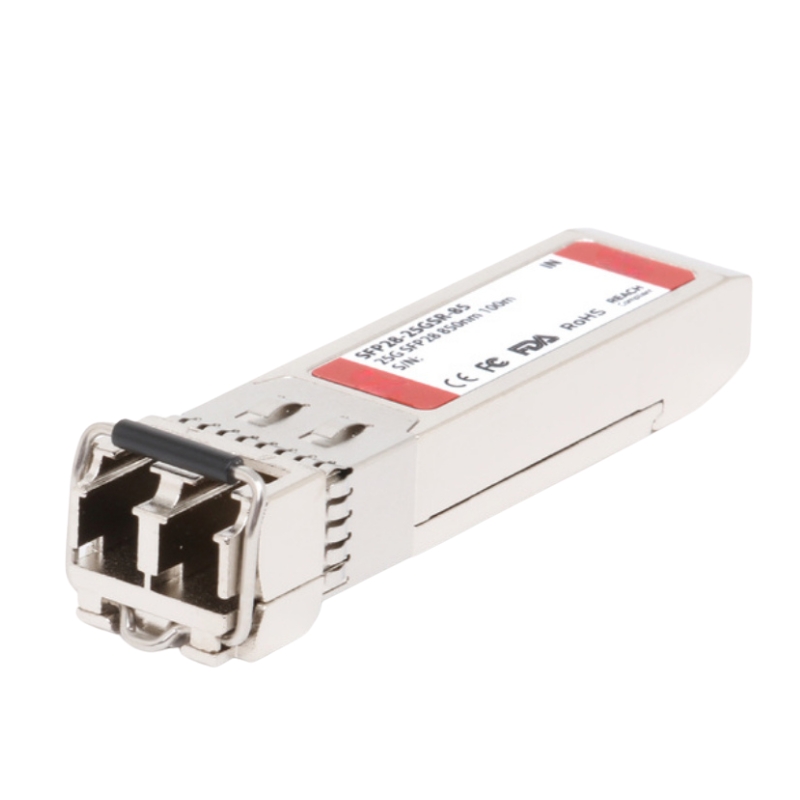


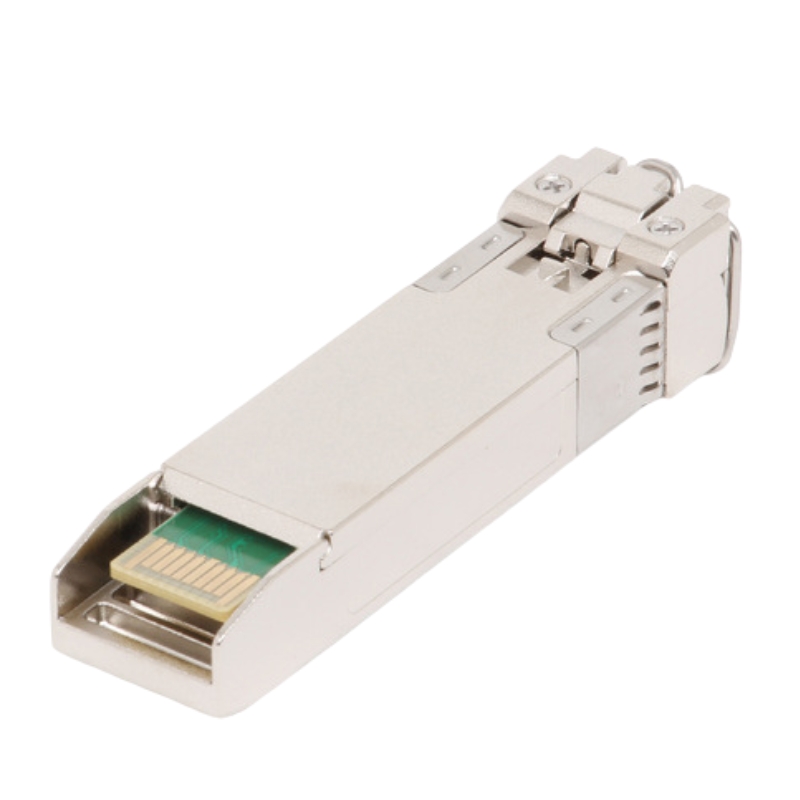
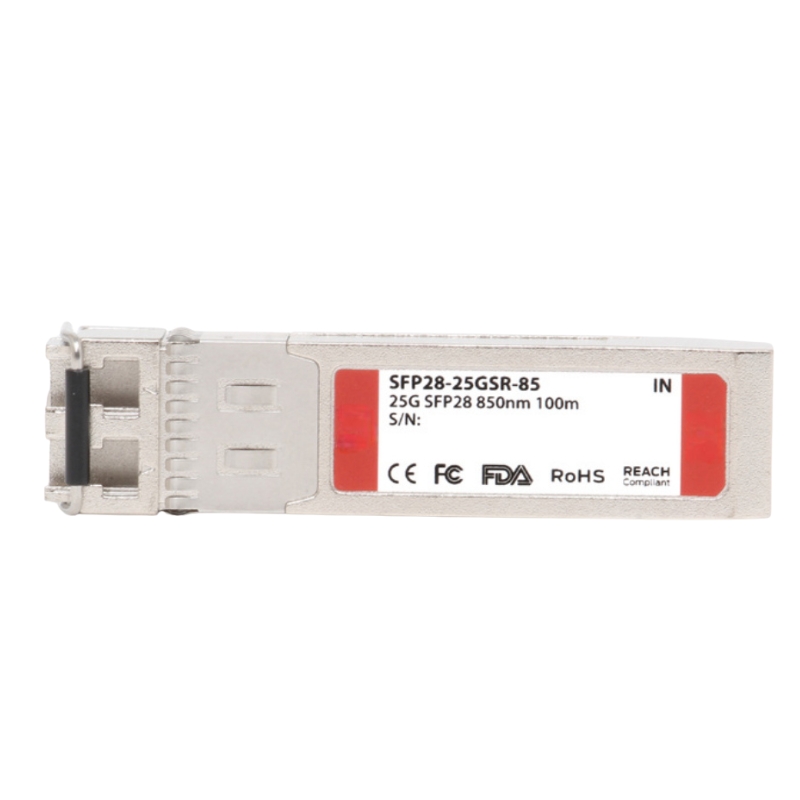
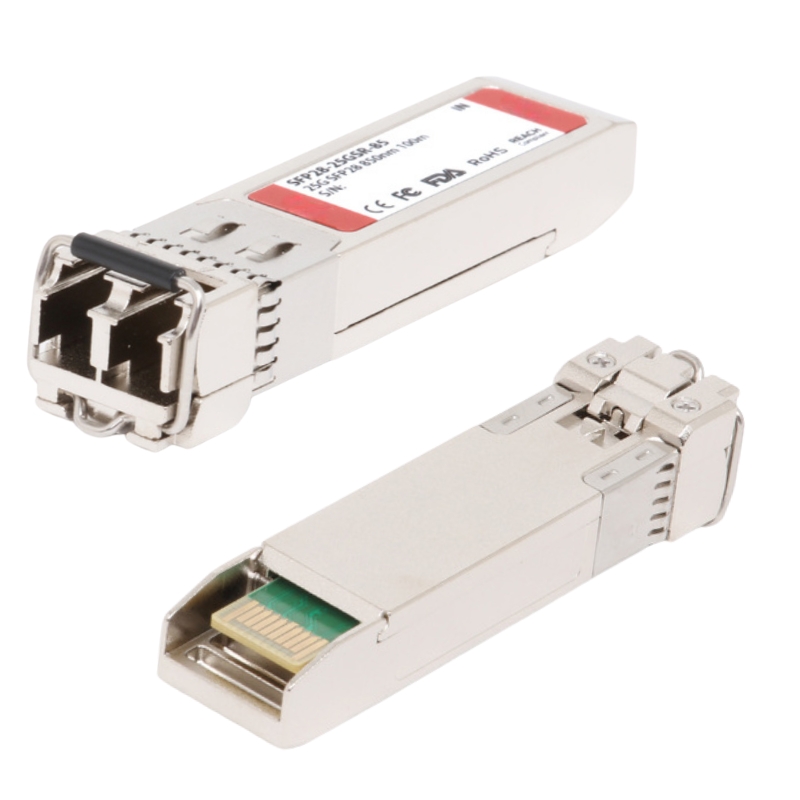
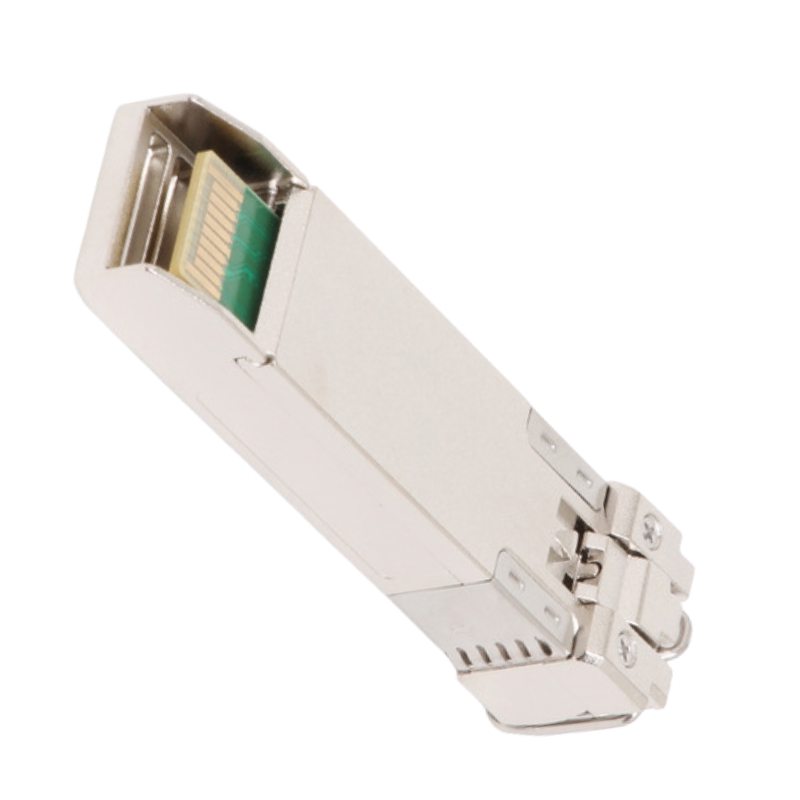
Intel E25GSFP28SRX SFP28 Transceiver with Multi-mode Fiber Duplex LC Connector. Excellent Refurbished with 1 year replacement warranty
| SKU/MPN | Warranty | Price | Condition | You save |
|---|---|---|---|---|
| E25GSFP28SRX | 1 Year Warranty | $82.00 | Factory-Sealed New in Original Box (FSB) | You save: $28.70 (26%) |
| E25GSFP28SRX | 1 Year Warranty | $62.00 | Excellent Refurbished | You save: $21.70 (26%) |
The Intel E25GSFP28SRX is a high-speed SFP28 transceiver module engineered for reliable 25GbE connectivity across short-range fiber links. Built with a duplex LC connector and designed for multi-mode fiber environments, this plug-in optic delivers dependable performance for modern enterprise networks, cloud infrastructure, server rooms, and data center deployments. Supporting both 10GBASE-SR and 25GBASE-SR applications, it offers flexible integration for organizations that need faster throughput, stable optical transmission, and efficient network scalability.
The Intel E25GSFP28SRX SFP28 Transceiver with Multi-mode Fiber Duplex LC Connector belongs to the 25GbE optical transceiver category built for high-speed Ethernet connectivity in modern enterprise, cloud, storage, and data center environments. It is designed for installations where reliable 25 Gigabit Ethernet throughput, low-latency signal delivery, compact port density, and efficient short-range optical transport are essential to the overall network architecture. As a hot-pluggable SFP28 optical module, this transceiver supports flexible deployment in servers, switches, network interface cards, and other compatible networking platforms that rely on SFP28-based optical uplinks or interconnects.
Within the broader family of Intel Ethernet optics, the Intel E25GSFP28SRX represents a short-reach optical solution built for multimode fiber infrastructure. The presence of a duplex LC connector indicates a two-fiber optical architecture commonly used in structured cabling environments where transmit and receive paths are separated across a matched pair of multimode fiber strands. This design is widely adopted in enterprise LAN deployments, top-of-rack to aggregation switching, high-density virtualization clusters, storage fabrics, edge compute installations, and bandwidth-sensitive business applications that require dependable 25GbE transport without the reach requirements of long-haul single-mode links.
The SFP28 form factor itself is an important part of the product category. SFP28 modules are designed to deliver 25GbE performance in a compact pluggable footprint, allowing network architects to maximize interface density while preserving flexibility for future changes in media type, cable length, and infrastructure layout. In environments where equipment must scale without a complete hardware redesign, pluggable optics simplify deployment planning because administrators can match the transceiver to the application instead of locking the platform into one fixed physical media option. The Intel E25GSFP28SRX fits directly into this model by offering an optical transceiver solution suited for short-range, high-speed Ethernet communication over multimode fiber cabling.
The Intel E25GSFP28SRX belongs to the SFP28 optical transceiver class, which is specifically designed for 25 Gigabit Ethernet applications. SFP28 modules use a single electrical lane architecture at approximately 25Gb/s, making them highly efficient for modern network adapters and switch ports. Compared with older SFP+ modules commonly associated with 10GbE, SFP28 provides significantly higher bandwidth while preserving a similar compact footprint. This allows vendors and data center operators to achieve improved port performance without sacrificing valuable front-panel space.
In practical deployment terms, the category of Intel SFP28 transceivers serves environments where high throughput and modularity must coexist. The pluggable nature of the module makes it suitable for systems that may need optical connectivity today and different media options later. Rather than replacing an entire switch or server adapter, administrators can select the correct optical module for the task. In a short-range multimode fiber environment, that often means choosing an SR-class optic such as the Intel E25GSFP28SRX.
The short-reach profile of this transceiver category is particularly important for intra-data-center networking. Most rack-to-rack, row-to-row, or switch-to-server optical links do not require long-haul reach. What they do require is stable high-speed transmission, low error rates, predictable performance, and compatibility with common multimode fiber plant already installed in enterprise and colocation facilities. The Intel E25GSFP28SRX is positioned precisely for that operational space, enabling 25GbE over multimode fiber with a duplex LC connector arrangement that aligns with common patch panel and fiber distribution designs.
A defining characteristic of the Intel E25GSFP28SRX is its support for multi-mode fiber and its duplex LC connector interface. These two features are central to understanding the category and its deployment value. Multimode fiber remains a widely used medium inside data centers, enterprise campuses, and large technology facilities because it supports high-speed transmission over short distances while integrating well with structured cabling systems. The duplex LC connector format is equally common, providing a compact, secure, and standardized optical connection point for transmit and receive fiber pairs.
Multimode fiber is especially suitable for short-reach optical Ethernet because it is cost-effective for internal building and campus connectivity when compared with long-distance single-mode requirements. In server rooms, enterprise data halls, and network closets, many links span distances that fall comfortably within SR optical design parameters. The Intel E25GSFP28SRX fits these environments by enabling high-speed 25GbE communication over the multimode infrastructure already used by many organizations. This helps reduce disruption during upgrades because teams can often modernize bandwidth while continuing to use an established cabling topology, subject to the specifications of the installed fiber grade and the supported reach for the optic.
The duplex LC connector also contributes to the module’s appeal. LC connectors are compact and well-suited for high-density networking equipment where dozens of optical links may be terminated in a limited amount of rack space. Their locking design helps maintain a secure physical connection, while the duplex format clearly separates the transmit and receive paths. For technicians managing patch panels, distribution frames, or switch uplinks, LC-based multimode optics are familiar, practical, and easy to integrate into standardized cabling practices.
The Intel E25GSFP28SRX category is most closely associated with short-range 25GbE optical links inside data centers and enterprise network cores. These environments require high bandwidth, deterministic performance, and dependable connectivity between switches, servers, and storage endpoints. In a modern rack design, a 25GbE optical transceiver may connect a server NIC to a top-of-rack switch, a leaf switch to a spine layer uplink in compact architectures, or a storage system to a high-performance Ethernet fabric.
Short-reach optical modules are particularly valuable in environments where copper cabling either lacks the required reach, introduces unwanted bulk, or becomes less attractive due to cable management complexity and electromagnetic considerations. Optical links provide a clean, efficient way to support high-speed traffic over common in-building distances. In densely populated racks where airflow, cable routing, and maintenance accessibility all matter, compact optical transceivers can simplify operations while supporting higher aggregate throughput.
For enterprise organizations moving from 10GbE to 25GbE, the Intel E25GSFP28SRX category offers a practical transition point. The jump from 10GbE to 25GbE is substantial in terms of throughput, yet it remains operationally manageable because the form factor, port strategy, and general optical deployment model remain familiar. Instead of redesigning the entire network for a more radical speed change, businesses can increase per-port bandwidth in a controlled way, aligning server refresh cycles, switch upgrades, and application growth with a transceiver category purpose-built for that tier of performance.
Intel Ethernet optics are often selected alongside Intel network adapters, especially in environments where administrators prefer validated combinations of NICs, drivers, firmware, and optical components. Intel documentation for its Ethernet product family identifies SFP28 optics as part of the supported ecosystem for 25GbE network adapters, including platforms in the XXV710 family. That broader compatibility context makes the Intel E25GSFP28SRX especially relevant to organizations standardizing on Intel-based server connectivity, where consistent hardware qualification and interoperability can simplify deployment planning and ongoing support.
In a category page context, compatibility matters because buyers are not simply purchasing an isolated optical module. They are usually evaluating how that module fits into a complete network path that includes the adapter or switch port, the cable plant, the optical reach requirement, and the operating environment. A transceiver that belongs to the Intel Ethernet optics ecosystem carries value for customers who want to align optics with Intel NICs or who want a module that is clearly positioned within Intel’s Ethernet connectivity portfolio. That portfolio approach is often important in enterprise procurement, where standardized vendor stacks can reduce uncertainty during deployment.
The Intel E25GSFP28SRX category is therefore relevant to several purchasing scenarios. One common scenario involves a customer refreshing server adapters to 25GbE and needing matching optical modules for multimode short-reach connectivity. Another involves replacing older optics in a switch fabric where the organization wants a known SFP28 multimode transceiver for consistent operational performance. A third scenario includes integrators and resellers building validated solutions for customers who prefer Intel-branded networking accessories across adapters and optical components.
The move from 10GbE to 25GbE has become a common modernization path for organizations seeking more bandwidth without leaping directly to much higher-speed architectures for every access connection. In this context, the Intel E25GSFP28SRX category is significant because it sits at the center of a balanced migration strategy. It offers higher throughput than 10GbE, preserves a compact pluggable form factor, and aligns with the performance profile of contemporary servers and switch silicon.
For many enterprises, the adoption of 25GbE is driven by server hardware refresh cycles. Newer processors, faster SSD arrays, and denser virtualization stacks all place more pressure on network links. A 10GbE port that was once adequate for a standalone application server may become insufficient when that same server is repurposed into a virtualized node hosting dozens of workloads. By moving to 25GbE optics such as the Intel E25GSFP28SRX, organizations can better match network capacity to compute and storage capability.
There is also a financial and architectural logic behind 25GbE. It can provide a meaningful performance increase without the complexity of redesigning every access layer around a much larger bandwidth tier. This makes it attractive for phased deployments, especially where multimode fiber already exists and where SFP28-capable switches and adapters are being introduced gradually. In such environments, an SR multimode optical module becomes an important component of the upgrade plan because it translates the platform’s 25GbE electrical capability into a practical optical link.
Reliability is a defining requirement for any optical transceiver category, and it is especially important in 25GbE environments where a failed or unstable link can disrupt multiple applications, virtual machines, storage sessions, or service chains. The Intel E25GSFP28SRX category is relevant to buyers who need dependable optical connectivity for continuous operation inside business-critical infrastructure. Even when a transceiver is physically small, its role in the network is foundational because every packet flowing across that optical path depends on stable signal transmission.
Optical link integrity is influenced by several factors, including connector cleanliness, fiber quality, bend radius management, compatibility between the module and the host platform, and adherence to the supported reach and media specifications. A short-reach multimode SFP28 optic is designed for an environment where these conditions can be controlled and documented. In structured enterprise networks, this makes the category easier to support than ad hoc cabling arrangements or improvised media conversions.
The duplex LC interface contributes to stability by using a standardized and widely understood connection format. Fiber technicians and network engineers are familiar with LC cleaning tools, patching methods, polarity management, and inspection routines. This helps reduce the risk of physical-layer faults and simplifies troubleshooting when a link experiences degradation. In high-availability environments, that operational familiarity can be as valuable as the transceiver’s raw speed because it shortens diagnosis time and supports faster recovery from cabling-related issues.


 Contact Us
 Information
 Catalog
 Solid State Drives (SSD)
 Network Switches
 Hard Disk Drives
 HBA & Controllers
 PC & Servers
 PC & Server Memory
 CPU & Processors
 Network Routers
 Power Supplies
 Tape Drives & Libraries
 Network Devices
 Computer & Network Cables