(7% discount is applied at checkout)
Cart is empty
Your go-to destination for cutting-edge server products
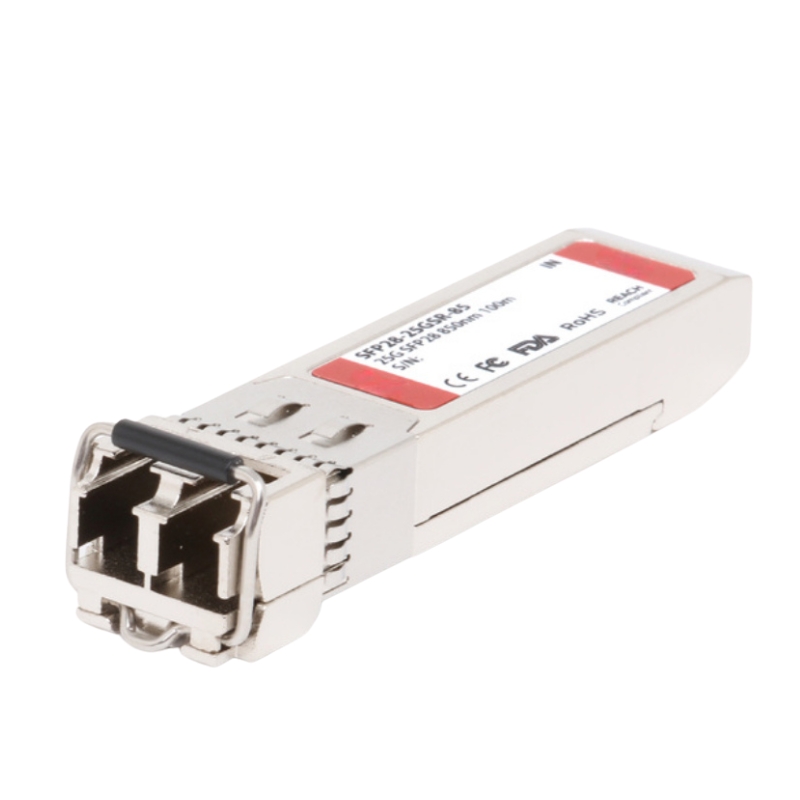


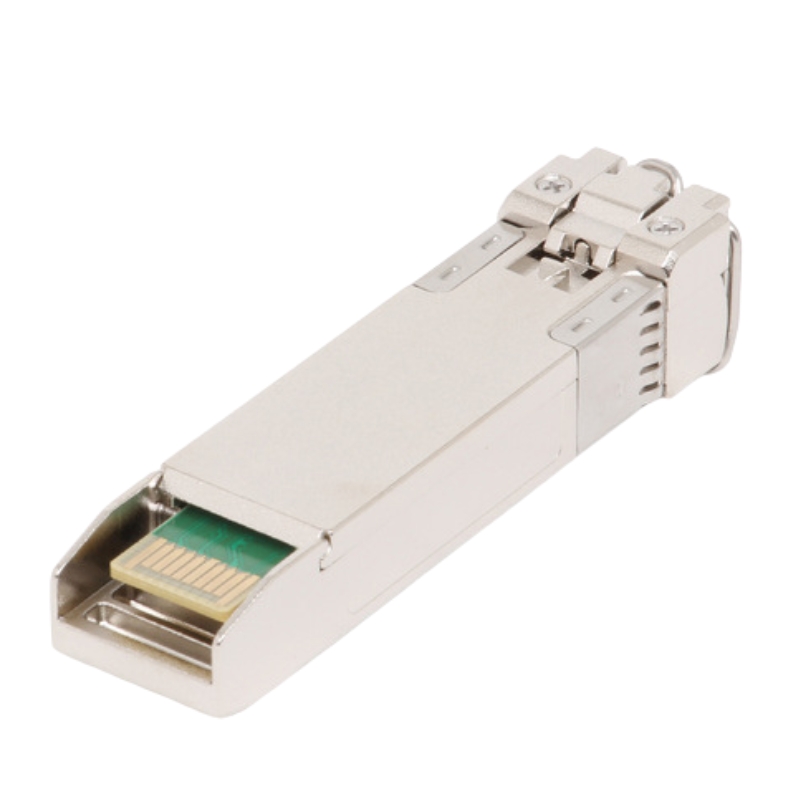
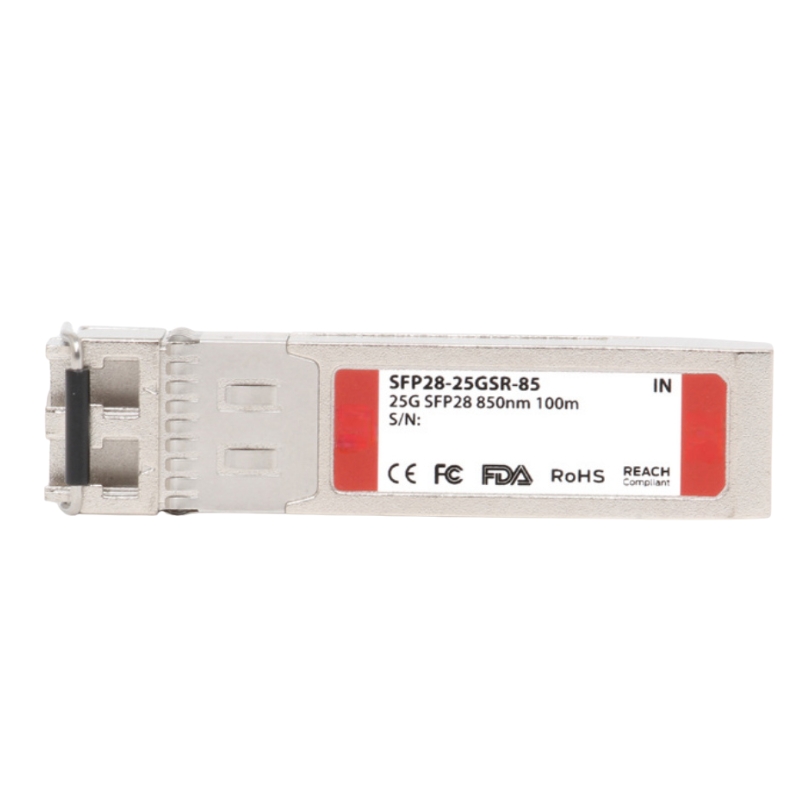
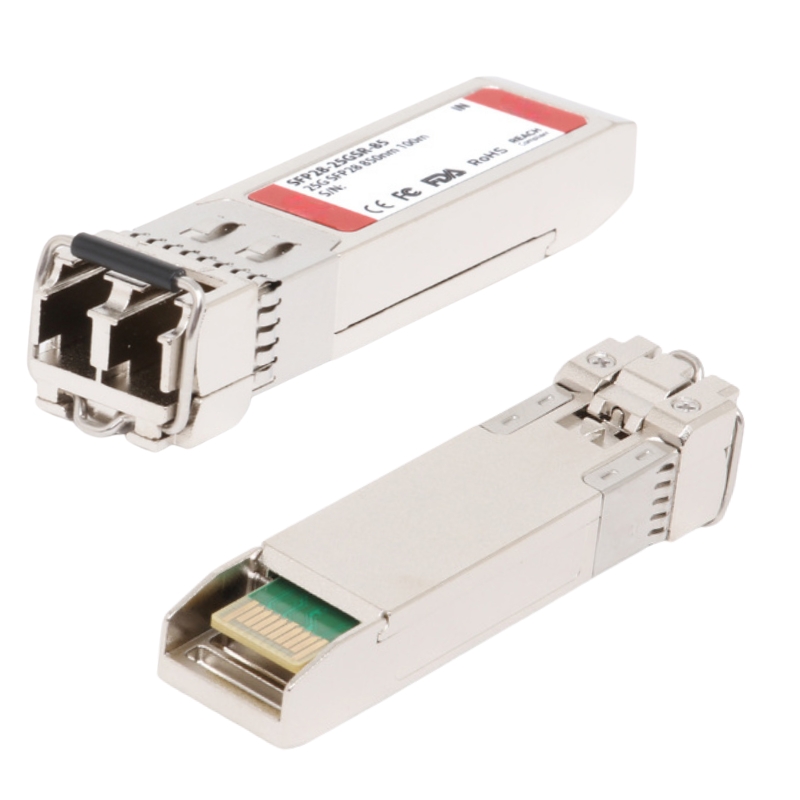
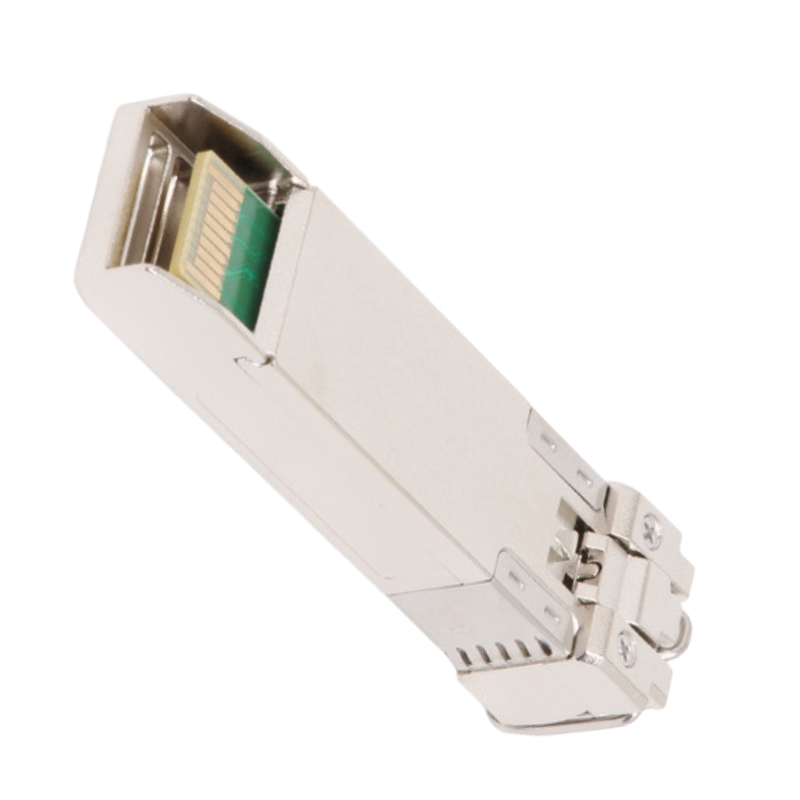
Intel E25GSFP28SRX SFP28 Transceiver with Multi-mode Fiber Duplex LC Connector. Factory-Sealed New in Original Box (FSB) with 3 Years Warranty
| SKU/MPN | Warranty | Price | Condition | You save |
|---|---|---|---|---|
| E25GSFP28SRX | 1 Year Warranty | $82.00 | Factory-Sealed New in Original Box (FSB) | You save: $28.70 (26%) |
| E25GSFP28SRX | 1 Year Warranty | $62.00 | Excellent Refurbished | You save: $21.70 (26%) |
The Intel E25GSFP28SRX is a high-speed SFP28 transceiver module engineered for dependable 10GbE and 25GbE optical networking. Built for use with multi-mode fiber cabling, this plug-in optic features a duplex LC interface and operates at an 850 nm wavelength, making it a practical choice for short-range, high-bandwidth data transmission in enterprise networks, virtualization platforms, cloud environments, and modern data center infrastructures. Its compact hot-pluggable form factor helps simplify deployment, upgrades, and maintenance while supporting consistent network performance across demanding applications.
The Intel E25GSFP28SRX SFP28 Transceiver with Multi-mode Fiber Duplex LC Connector is built for high-speed optical Ethernet environments that require dependable 25GbE connectivity, compact transceiver density, and efficient short-reach fiber performance. Positioned within the 25 Gigabit optical networking segment, this transceiver category is widely used in enterprise networks, cloud infrastructure, top-of-rack switching, storage fabrics, virtualization platforms, high-performance computing clusters, and modern data center interconnect designs. The module combines the space-saving SFP28 form factor with short-range multi-mode optical transmission, making it a practical option for organizations that need greater bandwidth than 10GbE while preserving deployment flexibility and port scalability.
As 25GbE adoption continues across servers, switches, network interface cards, and storage systems, the Intel E25GSFP28SRX category remains relevant for network architects looking to increase throughput without moving directly to larger and more expensive optical form factors. The module is associated with short-reach optical communication over multi-mode fiber and is commonly selected for structured cabling inside data halls, enterprise server rooms, edge compute installations, and rack-to-rack or switch-to-server connections. Because it uses a duplex LC interface and multi-mode fiber media, it supports straightforward deployment in facilities already equipped with OM3 or OM4 cabling plant designed for high-density Ethernet transport.
Within a 25GbE infrastructure strategy, this category supports network modernization by offering a balance of speed, density, power efficiency, and interoperability. It fits environments that need reliable short-distance optical links for traffic-intensive workloads such as virtualization, storage access, database synchronization, analytics pipelines, application hosting, and east-west traffic movement between servers and switching layers. The Intel E25GSFP28SRX family is also relevant to organizations standardizing on Intel-compatible optical components for consistency across Ethernet adapters and platform ecosystems.
The SFP28 form factor is one of the most important aspects of this transceiver category because it enables high port density while supporting 25 Gigabit Ethernet throughput. Compared with older 10GbE SFP+ deployments, SFP28 allows infrastructure teams to scale server and switch uplinks more efficiently, especially in environments where rack space, airflow, and front-panel density matter. A compact transceiver footprint helps data center operators maximize switch port utilization without increasing the physical size of the hardware platform.
The Intel E25GSFP28SRX category is especially useful in environments where many links must be deployed across a limited footprint. High-density top-of-rack switches, aggregation platforms, and server adapters benefit from optical modules that maintain a familiar insertion model while delivering higher data rates. This makes the category attractive to enterprises that want to transition from 10GbE to 25GbE while keeping cabling layouts manageable and avoiding oversized optics for short-range connections.
Benefits of the SFP28-based design include compact port utilization, efficient front-panel density, easier cable management in high-port-count environments, reduced power draw compared with larger optical modules in similar short-range scenarios, and straightforward adoption in 25GbE switch and NIC ecosystems. These advantages make the Intel E25GSFP28SRX category suitable for dense compute environments, hyperconverged clusters, and modern application delivery infrastructure where every rack unit and every switch port matters.
This transceiver category is associated with short-range 25GbE optical communication over multi-mode fiber using an LC duplex connector. In practical deployment terms, that makes it highly relevant for server-to-switch, switch-to-switch, storage-to-switch, and intra-facility data center links where the distance is relatively limited but bandwidth demands are substantial. Short-reach optical modules are frequently selected for structured cabling paths inside the same row, adjacent racks, equipment zones, or data center halls where copper is either impractical or undesirable.
Organizations deploying Intel E25GSFP28SRX transceivers typically prioritize low-latency, high-bandwidth communication for workloads that generate continuous east-west traffic. Examples include virtual machine migration, clustered databases, distributed storage replication, software-defined networking overlays, analytics pipelines, media processing, AI-related data movement, and backup traffic between compute and storage nodes. The category supports the performance goals of these environments by enabling a 25GbE optical path that is more scalable than legacy 10GbE links and more space-efficient than breaking out higher-speed uplinks for every connection.
Short-reach 25GbE transceivers also help maintain a clean network design in environments where cable runs must be organized carefully around power distribution units, cable trays, hot-aisle and cold-aisle layouts, and airflow management. Multi-mode fiber with duplex LC connectivity is familiar to many data center teams, which can reduce deployment complexity and speed up implementation during switch refresh projects or server onboarding cycles.
The Intel E25GSFP28SRX SFP28 Transceiver with Multi-mode Fiber Duplex LC Connector belongs to a category built around short-range optical transport over multi-mode fiber. This matters because multi-mode cabling remains common in enterprise and data center environments where links are relatively short and where existing structured cabling infrastructure has been designed for high-speed Ethernet or Fibre Channel growth. The use of multi-mode fiber allows organizations to deploy 25GbE optics in environments where OM3 or OM4 fiber already exists, helping reduce the cost and disruption associated with cabling replacement.
Duplex LC connectivity is another defining trait of the category. LC connectors are widely adopted in enterprise and data center fiber installations due to their compact footprint, secure connection style, and support for dense patch panel layouts. A duplex LC transceiver uses separate transmit and receive fiber paths, which aligns with standard short-range Ethernet optical practices and simplifies link design for technicians familiar with conventional duplex fiber patching.
Multi-mode fiber is frequently selected for short-distance data center connectivity because it provides excellent performance for local optical links while remaining practical to install and manage. In the context of the Intel E25GSFP28SRX category, multi-mode fiber supports use cases such as top-of-rack to server attachment, leaf-to-spine links inside a contained environment, storage connectivity, and cross-connects between patch panels and active equipment. For facilities already standardized on multi-mode cabling, this transceiver category can be a natural extension of the existing fiber strategy.
Multi-mode fiber can be particularly attractive in scenarios where link distances remain within the supported optical reach and where the organization values compatibility with established patching infrastructure. It is often used in enterprise data centers, campus core facilities, managed hosting environments, research labs, media production networks, and industrial compute rooms that require reliable optical Ethernet transport without the complexity of long-haul single-mode planning.
From an operational standpoint, using a transceiver category built for multi-mode fiber can simplify procurement, spare inventory, installation practices, and technician training. Teams already familiar with duplex LC multi-mode patch cords can expand 25GbE connectivity without introducing a completely different connector ecosystem or fiber handling model.
The LC duplex interface contributes to the practicality of the Intel E25GSFP28SRX category by providing a compact and widely recognized optical connector format. In dense switch environments, LC connectors allow multiple optical circuits to be terminated efficiently on a small front-panel footprint. This is especially important when 25GbE links are deployed at scale across dozens or hundreds of server-facing or uplink ports.
Because the connector is duplex, transmit and receive signals are carried on separate strands of fiber. This supports conventional short-range Ethernet optics architecture and helps technicians troubleshoot link polarity, patching, and continuity more easily. In enterprise and data center environments, consistent use of duplex LC patching can streamline cross-connect documentation, labeling practices, and replacement procedures when a transceiver or patch cord must be swapped during maintenance windows.
The LC duplex format also aligns well with structured fiber distribution systems, including patch panels, trunk cabling, cable managers, and rack-level distribution shelves. That compatibility makes the Intel E25GSFP28SRX category useful not only as a standalone module selection but also as part of a broader optical cabling design strategy.
The Intel E25GSFP28SRX transceiver category is closely associated with 25GbE migration projects. Many organizations reach a point where 10GbE no longer delivers sufficient throughput for modern workloads, but a full move to higher-speed optics across every edge connection may not be necessary or economical. In that middle ground, 25GbE provides a compelling path forward. It increases per-link bandwidth significantly, supports modern server and storage interfaces, and aligns with current switch silicon and network adapter roadmaps.
For infrastructure teams modernizing data center connectivity, the Intel E25GSFP28SRX category can support staged upgrades. Rather than replacing an entire network architecture in a single project, teams can begin by upgrading high-traffic racks, virtualization hosts, storage nodes, and application clusters to 25GbE. This targeted improvement can reduce oversubscription, improve workload mobility, and create a better foundation for future server refresh cycles.
Virtualization platforms often generate much more east-west traffic than legacy application environments. Virtual machine migration, distributed storage access, backup traffic, orchestration communication, overlay networking, and clustered application behavior all place sustained demands on server uplinks. In these environments, 25GbE optical transceivers help remove bottlenecks that may appear when multiple workloads share 10GbE interfaces.
The Intel E25GSFP28SRX category is well suited for hypervisor hosts, virtualization clusters, private cloud nodes, and container platforms where bandwidth demand scales quickly as more services are consolidated onto fewer physical systems. A 25GbE optical link can improve application responsiveness, shorten migration windows, accelerate backup jobs, and support more predictable performance during peak usage periods.
For enterprises building software-defined infrastructure, the move to 25GbE also helps align network capacity with modern CPU, memory, and storage performance. Fast processors and NVMe-based storage can expose the limitations of older network links, especially when data must move frequently between nodes. Using SFP28 optics in these environments supports a more balanced infrastructure design.
Storage traffic is another major driver behind the adoption of 25GbE optical transceivers. Backup platforms, replication engines, scale-out storage systems, analytics repositories, and content delivery workflows all benefit from increased network throughput. The Intel E25GSFP28SRX category can play a role in storage-heavy environments by enabling faster connectivity between compute nodes and storage fabrics, or between storage systems and aggregation switches.
High-throughput storage workflows often involve sequential data movement, large file transfers, parallel access from multiple application servers, or continuous replication between nodes. In such cases, 25GbE can reduce congestion and improve the efficiency of both primary and secondary storage operations. This is especially relevant in media environments, research computing, AI data preparation, database clusters, and enterprise backup architectures where transfer windows must be minimized.
The Intel E25GSFP28SRX category is particularly important for buyers who want alignment with Intel networking ecosystems. Intel Ethernet adapters and related infrastructure are common in enterprise servers, virtualization clusters, and cloud deployments, so transceivers associated with Intel compatibility are often selected to support operational consistency and hardware integration goals. In environments where administrators prefer a standardized vendor ecosystem for network interface cards and optics, a transceiver in this category can simplify qualification and procurement workflows.
Platform alignment matters for several reasons. First, many organizations want to reduce uncertainty around interoperability between network adapters and optical modules. Second, standardizing on Intel-compatible optics can make it easier to maintain spare inventory and streamline hardware refresh planning. Third, compatibility consistency can help reduce troubleshooting time when diagnosing link establishment, monitoring optical health, or validating firmware and platform behavior during deployment.
Large server environments often contain dozens or hundreds of systems using the same family of network adapters. When those adapters are connected through a standardized optical module category, installation practices become more repeatable and documentation becomes easier to maintain. The Intel E25GSFP28SRX category supports this operational model by giving teams a common reference point for 25GbE optical connectivity across multiple racks, clusters, or facilities.
Consistency across a server adapter fleet can improve procurement efficiency, reduce the number of spare part variations that must be stocked, and make technician training more straightforward. It also helps during expansion projects because new servers can be deployed with the same optical connectivity profile as existing infrastructure, minimizing variation in cabling, optics, and link expectations.


 Contact Us
 Information
 Catalog
 Solid State Drives (SSD)
 Network Switches
 Hard Disk Drives
 HBA & Controllers
 PC & Servers
 PC & Server Memory
 CPU & Processors
 Network Routers
 Power Supplies
 Tape Drives & Libraries
 Network Devices
 Computer & Network Cables