(7% discount is applied at checkout)
Cart is empty
Your go-to destination for cutting-edge server products
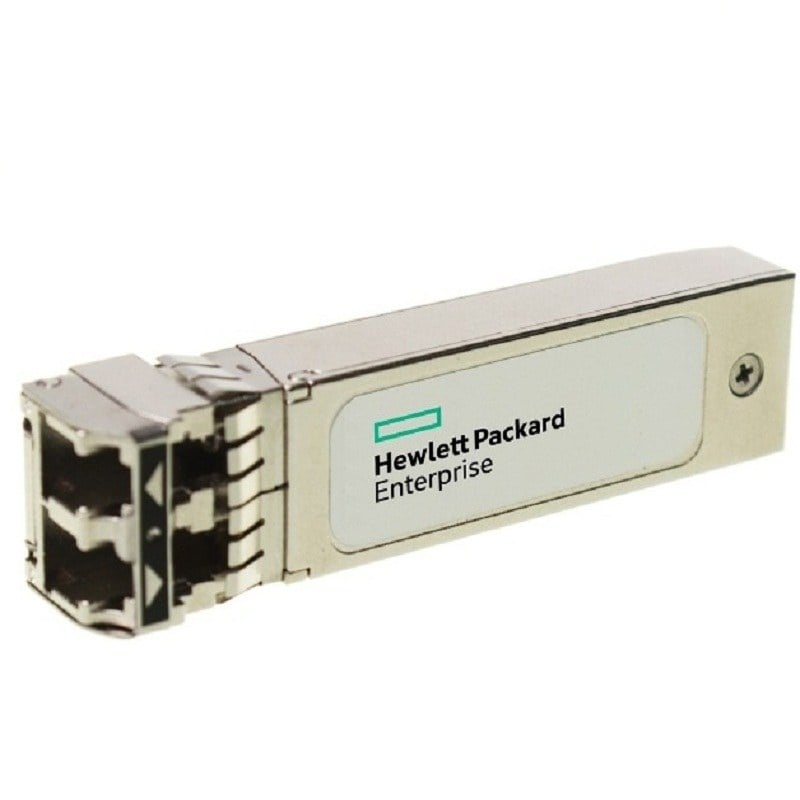


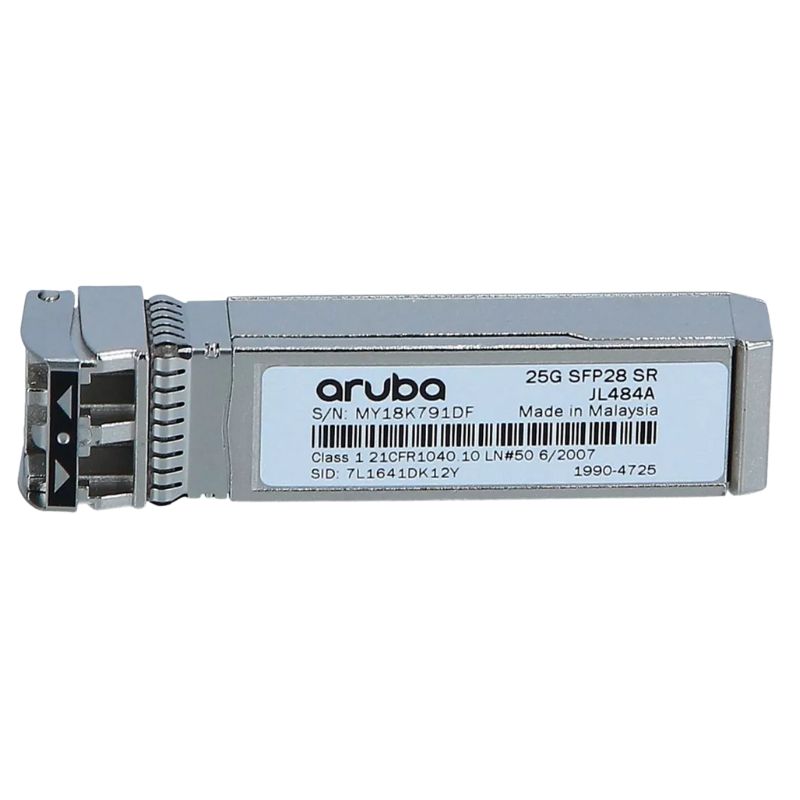
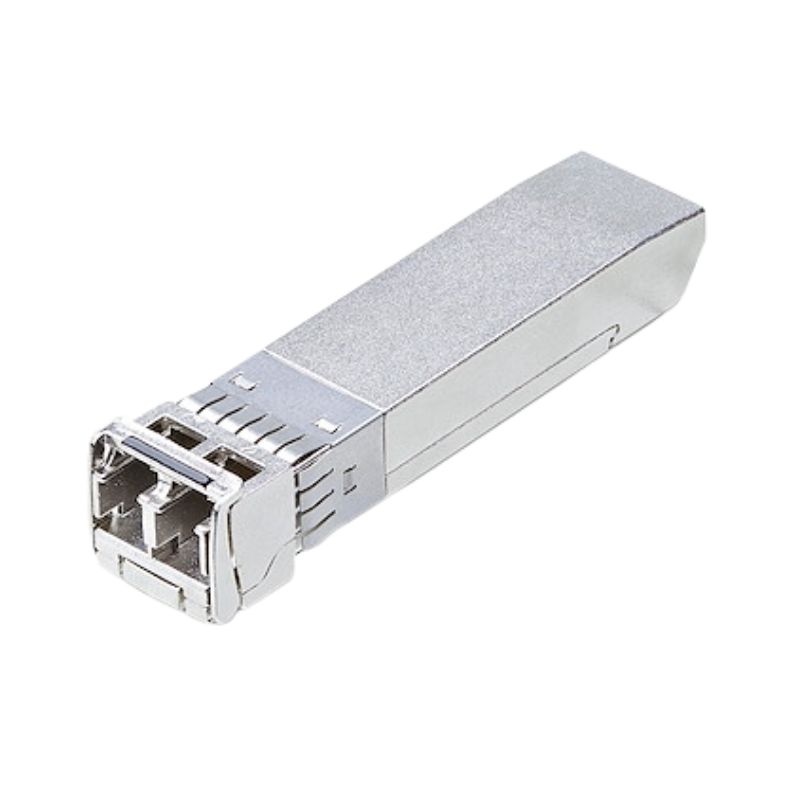
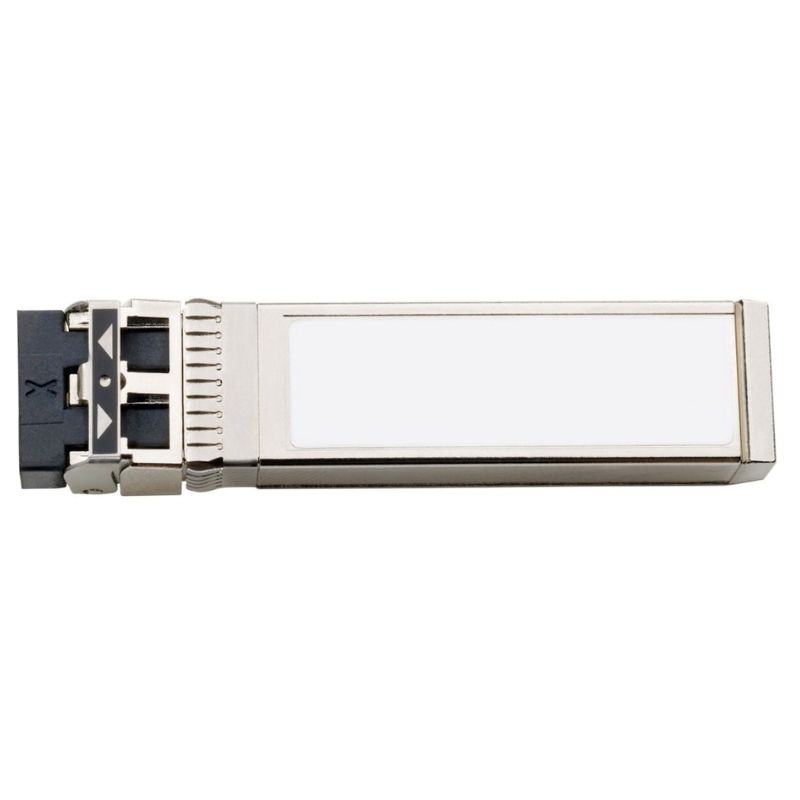
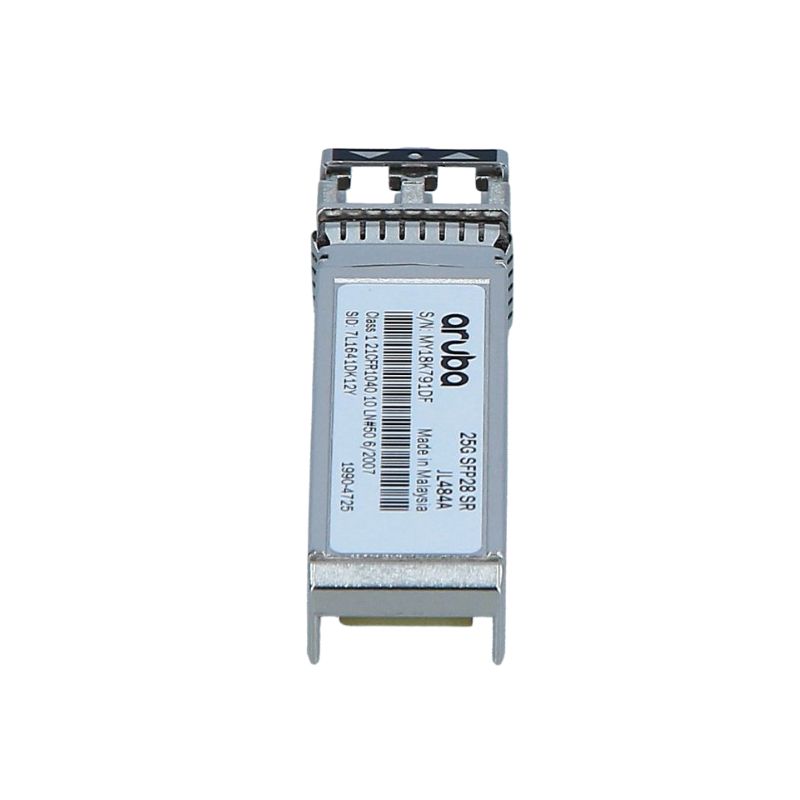
HPE JL484-61001 Aruba 25 Gigabit SFP28 LC SR 100m MMF Transceiver. New Sealed with 1 Year Replacement Warranty
| SKU/MPN | Warranty | Price | Condition | You save |
|---|---|---|---|---|
| JL484-61001 | 1 Year Warranty | $370.00 | New Sealed in Box (NIB) | You save: $129.50 (26%) |
| JL484-61001 | 1 Year Warranty | $405.00 | Factory-Sealed New in Original Box (FSB) | You save: $141.75 (26%) |
The HPE JL484-61001 Aruba 25‑Gigabit SFP28 LC SR Transceiver is engineered to deliver fast, stable, and efficient optical connectivity for modern high‑bandwidth networks. Designed for multi‑mode fiber environments, this compact plug‑in module enables reliable short‑range data transmission, ensuring smooth performance for switches and systems requiring consistent 25GbE throughput. Its robust design supports demanding workloads while maintaining low latency and dependable signal integrity.
The HPE JL484-61001 Aruba 25 Gigabit SFP28 LC SR 100m MMF Transceiver represents a high-performance optical networking component designed for next-generation data center and enterprise networking environments. Built to support 25 Gigabit Ethernet connectivity over multimode fiber, this transceiver is engineered for high-density switching platforms where bandwidth efficiency, low latency, and scalable throughput are critical requirements. As network infrastructures evolve toward cloud-native architectures, virtualization, and high-speed interconnects, 25G SFP28 technology has become a foundational building block for modern switching ecosystems.
This transceiver is optimized for short reach applications using multimode fiber cabling with LC duplex connectors, enabling reliable data transmission up to 100 meters. It is widely deployed in leaf-spine architectures, aggregation layers, and high-performance computing clusters where consistent and deterministic data transfer is essential. The design emphasizes interoperability, energy efficiency, and compact form factor integration within Aruba switching platforms.
The 25 Gigabit SFP28 standard is an evolution of the SFP+ form factor, engineered to deliver significantly higher bandwidth while maintaining similar physical dimensions. The HPE JL484-61001 utilizes this architecture to deliver 25 Gbps data throughput over a single lane electrical interface, reducing complexity compared to multi-lane 40G solutions. This enables more efficient switch port utilization and improved cost per bit ratios in enterprise deployments.
At its core, the SFP28 interface relies on enhanced signal integrity mechanisms and advanced modulation techniques that support higher data rates without compromising signal stability. The transceiver integrates precision laser optics, photodiode receivers, and digital diagnostic monitoring capabilities to ensure accurate signal transmission across multimode fiber links. This architecture is specifically optimized for short-reach connectivity scenarios in data center environments.
The integration of SR (Short Reach) optical technology ensures compatibility with OM3 and OM4 multimode fiber infrastructure. The use of LC duplex connectors allows for standardized connectivity, reducing installation complexity and improving compatibility across Aruba switching platforms and broader HPE networking ecosystems.
Modern data centers require scalable and flexible network architectures capable of supporting virtualization, containerized workloads, and high-performance computing demands. The HPE JL484-61001 Aruba 25 Gigabit SFP28 LC SR transceiver plays a critical role in enabling these environments by providing high-speed interconnectivity between leaf and spine switches.
In leaf-spine topologies, 25G connections are commonly used to connect servers to top-of-rack switches and uplink aggregation layers. This transceiver supports consistent bandwidth delivery that is essential for distributed computing systems, storage replication, and real-time analytics workloads. The ability to deliver low latency transmission ensures that performance-sensitive applications maintain optimal responsiveness under heavy network loads.
Additionally, this transceiver supports scaling strategies where organizations transition from 10G to 25G networks without requiring full architectural redesigns. This incremental upgrade path allows enterprises to optimize infrastructure investment while achieving higher throughput and improved network efficiency.
The HPE JL484-61001 operates over multimode fiber (MMF), which is widely used in data centers due to its cost efficiency and ease of installation. Multimode fiber supports multiple light propagation paths, making it ideal for short-range high-speed communication within rack-to-rack and row-to-row data center layouts.
The LC duplex connector interface provides a compact and reliable physical connection standard that is widely adopted in modern optical networking. Its small form factor allows for high port density on switches while maintaining strong optical alignment and minimal insertion loss. This ensures stable signal transmission and reduced error rates in high-speed environments.
OM3 and OM4 fiber types are commonly used with this transceiver, with OM4 providing extended reach capabilities and improved performance margins. The 100-meter reach specification aligns with typical data center architectural layouts, where equipment clusters are distributed within controlled spatial ranges.
Signal integrity is a critical aspect of high-speed optical communication. The HPE JL484-61001 incorporates advanced optical components designed to minimize jitter, attenuation, and dispersion across the transmission medium. These engineering enhancements ensure that data integrity is maintained even under high utilization conditions.
The transceiver includes built-in Digital Diagnostic Monitoring functionality, which allows real-time monitoring of parameters such as temperature, optical power levels, voltage, and laser bias current. This feature provides network administrators with visibility into operational performance and helps identify potential issues before they impact network stability.
Thermal stability is another key consideration in high-density switching environments. The module is engineered to maintain performance consistency across a wide range of operating temperatures, ensuring reliable functionality even in demanding data center conditions.
The transition from 10 Gigabit Ethernet to 25 Gigabit Ethernet represents a significant evolution in network design. The HPE JL484-61001 supports this transition by offering a direct upgrade path that increases bandwidth efficiency without requiring substantial changes to physical infrastructure.
25G technology is particularly advantageous in environments where server virtualization density is increasing. As workloads become more distributed and data-intensive, network bottlenecks can occur at traditional 10G interfaces. The adoption of 25G SFP28 modules helps alleviate these constraints and supports smoother workload distribution.
In addition, 25G technology serves as a foundational layer for higher-speed uplinks such as 100G, where multiple 25G lanes are aggregated to form higher-capacity links. This modular scalability makes the transceiver an essential component in modern hierarchical network architectures.
The HPE JL484-61001 is widely utilized in enterprise environments that demand high-speed, reliable, and scalable network connectivity. In cloud computing infrastructures, it supports rapid data movement between compute nodes, storage systems, and virtualization platforms.
In high-performance computing environments, the transceiver enables low-latency communication between clustered nodes, ensuring efficient parallel processing and distributed workload execution. This is especially important in scientific computing, artificial intelligence training clusters, and big data analytics systems.
Enterprise campus networks also benefit from this technology in aggregation layers where multiple access switches converge into high-speed backbone infrastructure. The consistent performance of 25G links ensures smooth application delivery across large organizational networks.
Energy efficiency is a critical factor in modern data center design, and the HPE JL484-61001 is engineered with low power consumption characteristics. By optimizing optical transmission efficiency, the module reduces overall energy usage per gigabit transmitted.
Thermal management is achieved through efficient internal heat dissipation design, ensuring stable operation under continuous high-load conditions. This is particularly important in dense switch environments where multiple transceivers operate simultaneously within confined chassis spaces.
Reliability is further enhanced through rigorous manufacturing standards and testing processes that ensure consistent performance across deployment environments. This makes the module suitable for mission-critical applications where uptime is essential.
The use of 25G SFP28 transceivers like the HPE JL484-61001 enables optimized network architecture designs that balance performance, cost, and scalability. In spine-leaf architectures, 25G links provide efficient server connectivity while allowing uplinks to scale toward 100G or higher capacities.
This hierarchical approach ensures that network traffic is distributed evenly, reducing congestion and improving overall system performance. It also allows organizations to expand infrastructure incrementally without disruptive redesigns.
As data demands continue to grow, the flexibility of 25G infrastructure ensures long-term adaptability, making it a strategic investment for enterprise networking environments.
The integration of Digital Optical Monitoring (DOM) technology provides real-time visibility into the operational status of the transceiver. Key metrics such as transmitted power, received power, and temperature are continuously monitored to ensure optimal performance.
These diagnostics enable proactive maintenance strategies where potential issues can be identified before they escalate into network failures. This contributes to improved network reliability and reduced operational downtime.
Administrators can use these insights to fine-tune network configurations and ensure that optical links operate within optimal performance thresholds.
The HPE JL484-61001 is designed for seamless integration within Aruba networking ecosystems, including high-performance modular and fixed configuration switches. It is commonly deployed in environments utilizing Aruba CX series switches where high-density 25G connectivity is required for server access and inter-switch communication.
Compatibility across Aruba switching platforms ensures that organizations can deploy standardized optical modules across multiple network layers. This reduces operational complexity and simplifies inventory management for large-scale enterprise environments. The transceiver is also suitable for mixed-speed environments where 10G, 25G, and 100G links coexist within a unified network architecture.
Typical deployment scenarios include enterprise data centers, cloud service provider infrastructures, high-performance computing clusters, and virtualization-heavy environments. In each case, the transceiver contributes to stable, high-throughput connectivity that supports mission-critical workloads.


 Contact Us
 Information
 Catalog
 Solid State Drives (SSD)
 Network Switches
 Hard Disk Drives
 HBA & Controllers
 PC & Servers
 PC & Server Memory
 CPU & Processors
 Network Routers
 Power Supplies
 Tape Drives & Libraries
 Network Devices
 Computer & Network Cables