(7% discount is applied at checkout)
Cart is empty
Your go-to destination for cutting-edge server products
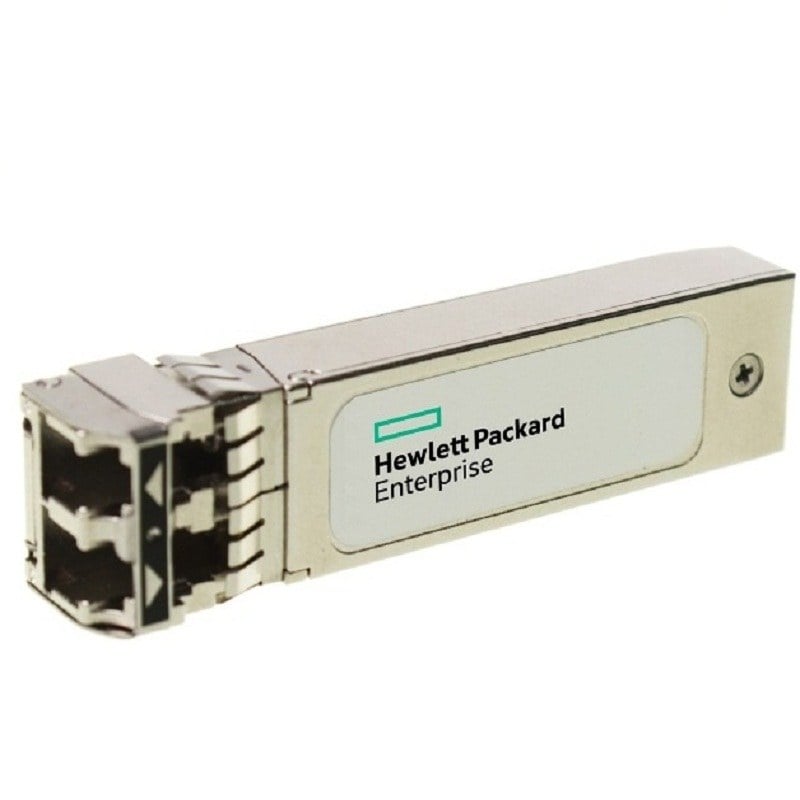


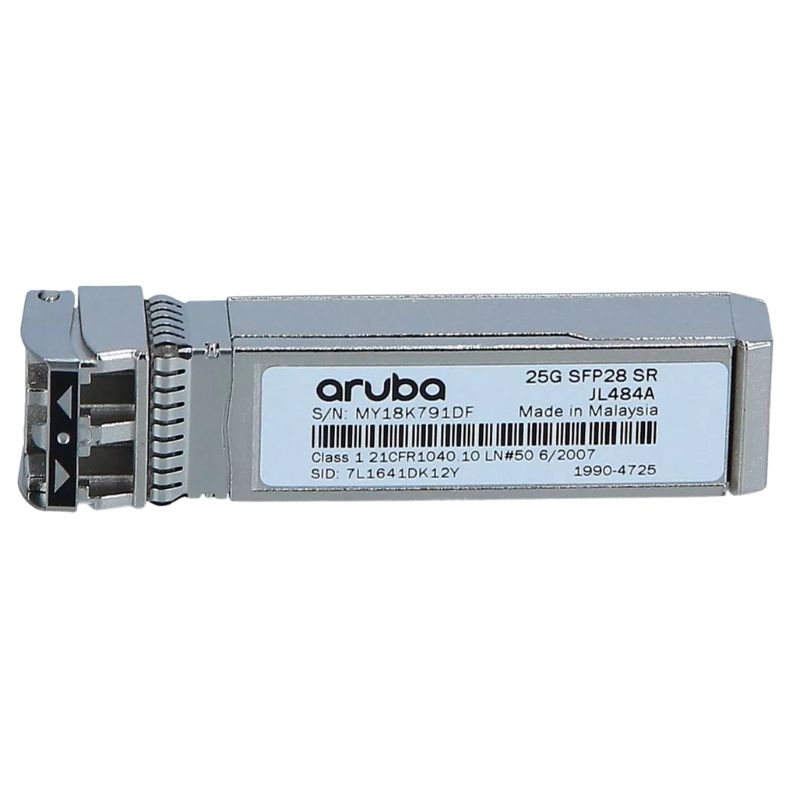
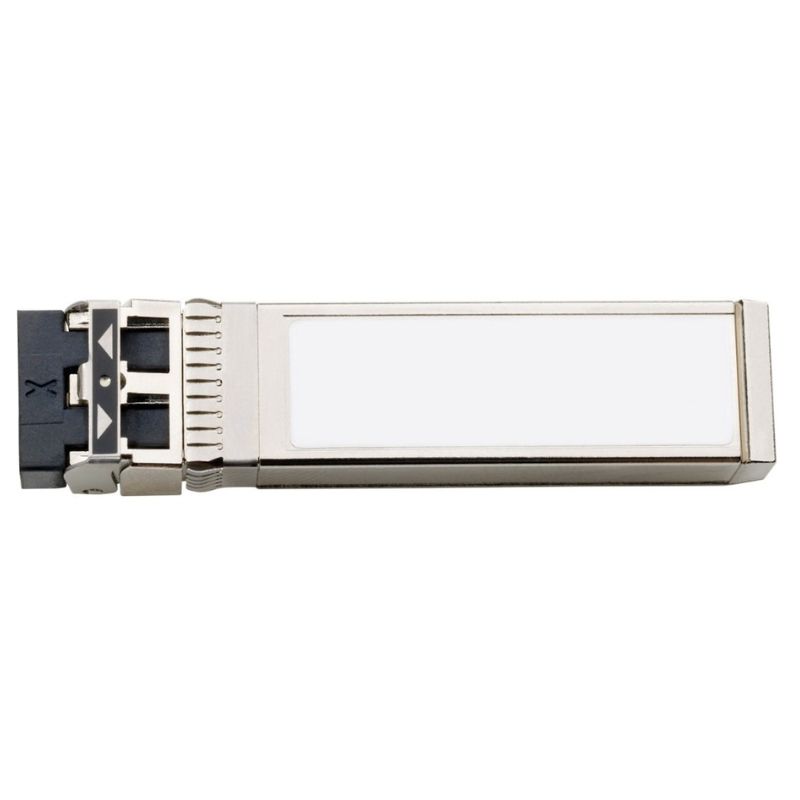
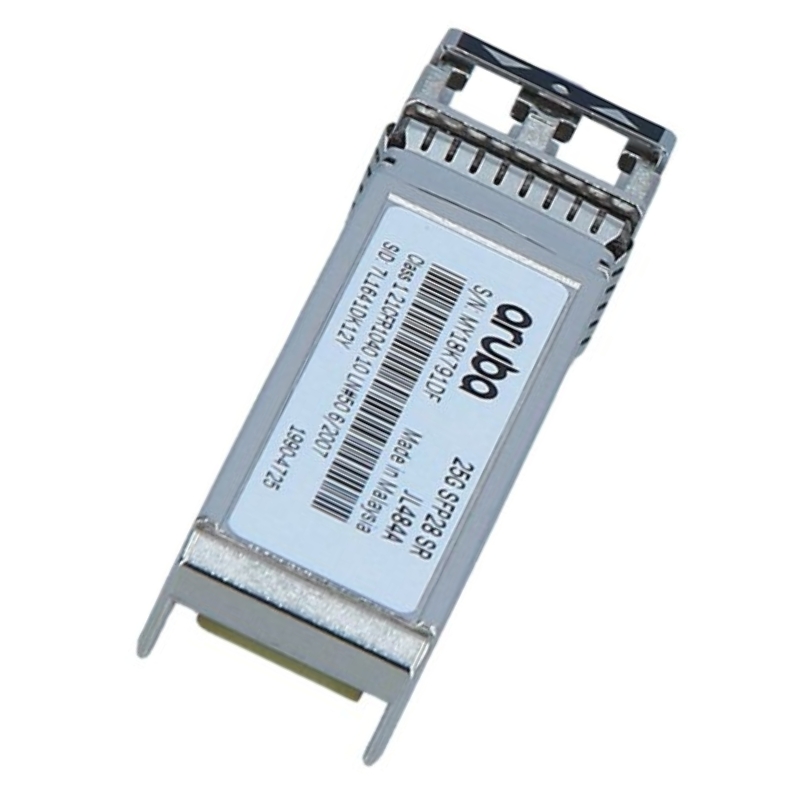
HPE JL484-61001 Aruba 25 Gigabit SFP28 LC SR 100m MMF Transceiver. Factory-Sealed New in Original Box (FSB) with 3 Years Warranty
| SKU/MPN | Warranty | Price | Condition | You save |
|---|---|---|---|---|
| JL484-61001 | 1 Year Warranty | $370.00 | New Sealed in Box (NIB) | You save: $129.50 (26%) |
| JL484-61001 | 1 Year Warranty | $405.00 | Factory-Sealed New in Original Box (FSB) | You save: $141.75 (26%) |
HPE JL484-61001 Aruba 25 Gigabit SFP28 LC SR 100m MMF Transceiver is a high-performance optical networking component designed to deliver reliable, high-speed data transmission across modern enterprise and data center infrastructures. Developed under the advanced networking portfolio of Hewlett Packard Enterprise, this transceiver module supports 25GbE connectivity with enhanced stability, low latency, and efficient power usage. It is engineered for short-range multimode fiber applications, making it suitable for dense switching environments where bandwidth optimization and scalable architecture are essential. With its compact SFP28 form factor and LC duplex interface, it ensures seamless integration into compatible Aruba networking devices while maintaining consistent optical performance across demanding workloads.
The category of high speed optical networking components represented by the HPE JL484-61001 Aruba 25 Gigabit SFP28 LC SR 100m MMF Transceiver is designed for modern data center environments that require ultra low latency, high bandwidth, and reliable short range fiber optic connectivity. This class of optical transceivers is built to support next generation Ethernet speeds while maintaining backward compatibility with established fiber infrastructure standards. It plays a crucial role in enabling scalable cloud architectures, enterprise backbone switching, and high performance computing interconnects where 25 Gigabit Ethernet links are increasingly becoming the baseline for aggregation and access layer connectivity.
Within this category, optical transceivers serve as the physical interface between networking equipment such as switches, routers, and servers, and multimode fiber optic cabling. The specific design of SFP28 SR modules allows efficient transmission of high speed serial data streams using short range multimode fiber, making them ideal for intra rack and inter rack connectivity within data centers.
The development of 25 Gigabit Ethernet technology represents a significant advancement over previous 10 Gigabit Ethernet standards, offering a substantial increase in throughput while maintaining similar physical infrastructure complexity. The IEEE 802.3by standard defines the operational framework for 25GBASE-SR links, which are commonly implemented using SFP28 optical transceivers. This advancement allows network operators to achieve higher port density and improved bandwidth efficiency without a proportional increase in power consumption or physical space requirements.
In high density switching environments such as those powered by Aruba switching platforms, the use of SFP28 SR modules ensures that data flows are optimized for east west traffic patterns commonly found in modern distributed computing systems. These environments require predictable latency and consistent throughput, both of which are supported by the optical characteristics of SR multimode fiber transmission.
The SFP28 form factor is an evolution of the SFP+ design, maintaining a compact physical footprint while supporting significantly higher data rates. This design allows network equipment manufacturers to increase port density on switching platforms without redesigning chassis layouts. The HPE JL484-61001 Aruba 25 Gigabit SFP28 LC SR 100m MMF Transceiver fits into standard SFP28 cages, ensuring interoperability across a wide range of enterprise and data center hardware.
The LC duplex connector interface used in this transceiver category is widely adopted due to its compact size, low insertion loss, and ease of handling in dense cabling environments. Its compatibility with multimode fiber cabling ensures flexibility in deployment across existing infrastructure while supporting upgrades to higher bandwidth networking.
The SR designation in this transceiver category refers to short range transmission over multimode fiber optic cabling. Typically, these modules are optimized for distances up to 100 meters when used with OM4 fiber and slightly lower distances with OM3 fiber. This makes them suitable for intra building and intra data center communication where high speed links are required between racks and adjacent networking equipment.
Multimode fiber allows multiple light paths to propagate simultaneously, which is ideal for cost effective high speed transmission over short distances. The engineering of SR transceivers compensates for modal dispersion and ensures signal integrity across supported distances. This balance of performance and cost efficiency is a key reason why SR optical modules are widely deployed in enterprise environments.
The optical power budget of a 25G SR transceiver defines the allowable loss between transmitter and receiver while maintaining reliable signal decoding. This includes losses from fiber attenuation, connector insertion loss, and patch panel transitions. Proper network design ensures that the total link loss remains within acceptable limits to avoid packet errors and retransmissions.
Signal integrity is maintained through advanced laser modulation techniques and built in receiver sensitivity optimization. These features allow the transceiver to maintain stable performance even in environments with high electromagnetic interference or dense cabling structures.
In modern leaf spine network architectures, 25 Gigabit SFP28 SR transceivers play a fundamental role in connecting leaf switches to spine aggregation layers. This design eliminates bottlenecks and ensures uniform latency across the network fabric. The HPE JL484-61001 Aruba 25 Gigabit SFP28 LC SR 100m MMF Transceiver supports high throughput communication patterns required in cloud computing environments and virtualization clusters.
This architecture is particularly important for applications involving distributed storage systems, container orchestration platforms, and real time analytics workloads. The predictable performance of SR optical links ensures that east west traffic flows efficiently across the network fabric.
High performance computing environments and artificial intelligence training clusters require extremely fast data exchange between compute nodes. The use of 25G SR optical modules ensures that GPU clusters and distributed processing systems can communicate with minimal latency overhead. This is critical for maintaining synchronization across compute workloads that rely on parallel processing.
The consistent throughput provided by SR transceivers supports large scale dataset movement, model training synchronization, and distributed memory access patterns, which are essential in AI driven infrastructure.
One of the key advantages of SFP28 optical modules is their low power consumption relative to their data transmission capabilities. The HPE JL484-61001 Aruba 25 Gigabit SFP28 LC SR 100m MMF Transceiver is engineered to operate efficiently within tight thermal envelopes, making it suitable for high density switch configurations where thermal management is critical.
Efficient power usage reduces overall cooling requirements in data centers, contributing to lower operational costs and improved energy efficiency metrics. This aligns with modern data center sustainability goals and green computing initiatives.
Thermal stability is essential for maintaining consistent optical performance. These transceivers are designed with temperature compensation mechanisms that ensure reliable operation across typical data center environmental ranges. This reduces the risk of performance degradation due to heat fluctuations or environmental stress.
Digital Diagnostic Monitoring (DDM) functionality provides real time insight into transceiver performance parameters such as optical output power, input signal strength, temperature, and voltage levels. This allows network administrators to proactively monitor the health of optical links and identify potential issues before they impact network performance.
The integration of DDM capabilities into SFP28 SR transceivers enhances operational visibility and supports predictive maintenance strategies in enterprise environments. This reduces downtime and improves overall network reliability.
When connectivity issues arise, diagnostic data from the transceiver can be used to isolate faults within the optical link. This includes identifying fiber degradation, connector contamination, or misalignment issues. Such capabilities significantly reduce troubleshooting time and improve operational efficiency in large scale deployments.
The performance of 25G SR transceivers is closely tied to the quality of the multimode fiber cabling infrastructure. OM3 and OM4 fiber types are commonly used to support 25 Gigabit Ethernet links. OM4 fiber typically allows for extended reach up to 100 meters, while OM3 supports slightly shorter distances depending on installation conditions and loss budgets.
Proper fiber management, including bend radius control and connector cleanliness, is essential for maintaining optimal signal performance. Poor cabling practices can significantly reduce link reliability and increase error rates.
Structured cabling systems provide the foundation for scalable network deployments. In environments using SFP28 SR transceivers, structured fiber distribution panels and patching systems allow efficient routing of high speed links between equipment racks. This modular approach supports flexible scaling and simplified maintenance operations.
Organizations transitioning from 10 Gigabit Ethernet to 25 Gigabit Ethernet benefit from significant performance improvements without a proportional increase in physical infrastructure complexity. The SFP28 SR category allows for incremental upgrades that preserve existing fiber investments while increasing bandwidth capacity.
This transition strategy is particularly beneficial for data centers experiencing rapid growth in application workloads, virtualization density, and cloud service adoption.
While 25G represents a current standard for high performance enterprise networks, it also serves as a stepping stone toward 50G and 100G architectures. The modular nature of optical transceivers allows organizations to upgrade network speeds progressively while maintaining infrastructure continuity.
The HPE JL484-61001 Aruba 25 Gigabit SFP28 LC SR 100m MMF Transceiver is designed for seamless integration with Aruba switching platforms that support SFP28 interfaces. These include high performance modular and fixed configuration switches used in enterprise core and aggregation layers.
Compatibility ensures that administrators can deploy standardized optical components across multiple layers of the network, reducing complexity in inventory management and improving operational consistency. Aruba switching systems are optimized to support these transceivers with automatic recognition and configuration capabilities.
While optimized for Aruba environments, SFP28 SR transceivers generally adhere to industry standards that allow interoperability with other vendor platforms that support 25 Gigabit Ethernet interfaces. This ensures flexibility in mixed vendor environments and supports phased upgrade strategies where legacy equipment is gradually replaced with higher speed infrastructure.


 Contact Us
 Information
 Catalog
 Solid State Drives (SSD)
 Network Switches
 Hard Disk Drives
 HBA & Controllers
 PC & Servers
 PC & Server Memory
 CPU & Processors
 Network Routers
 Power Supplies
 Tape Drives & Libraries
 Network Devices
 Computer & Network Cables