(7% discount is applied at checkout)
Cart is empty
Your go-to destination for cutting-edge server products
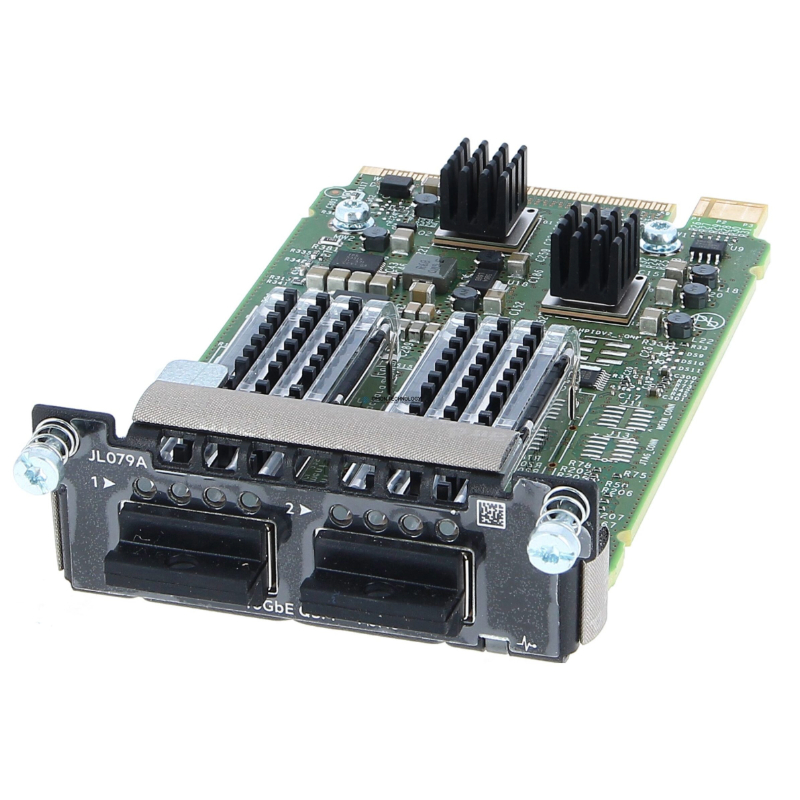


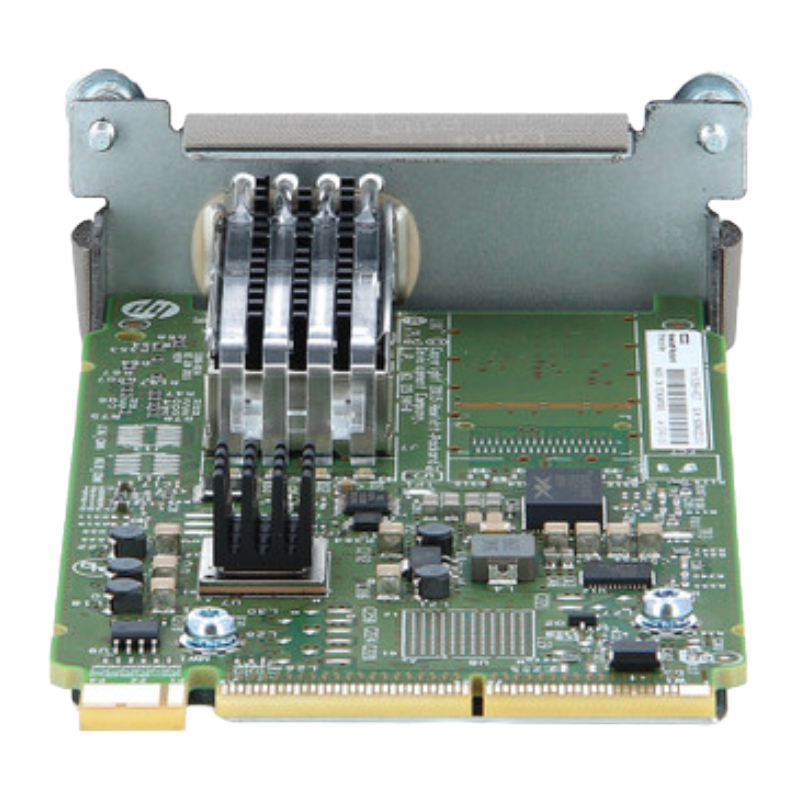
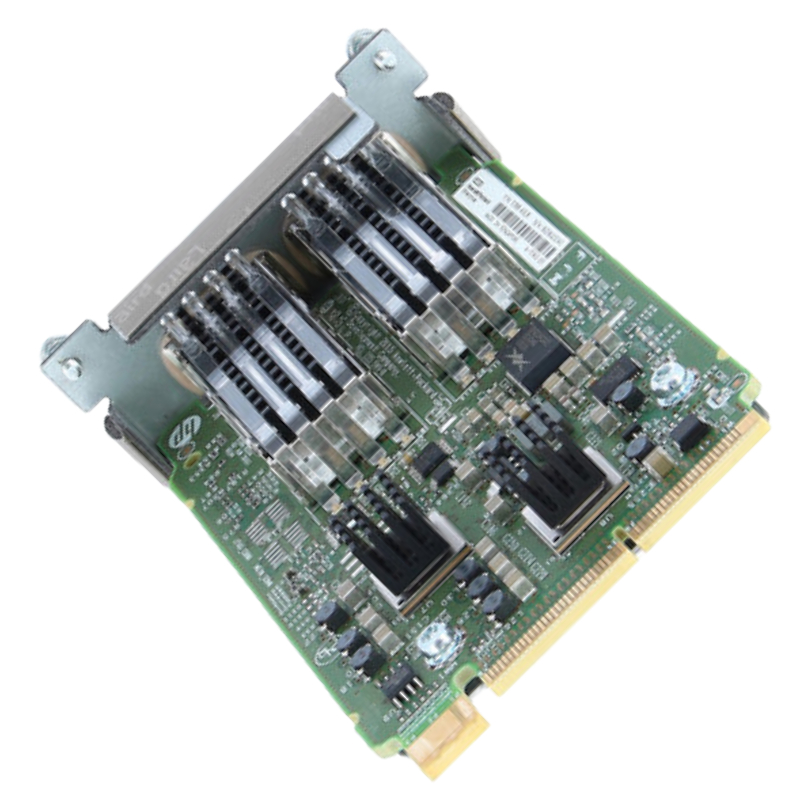
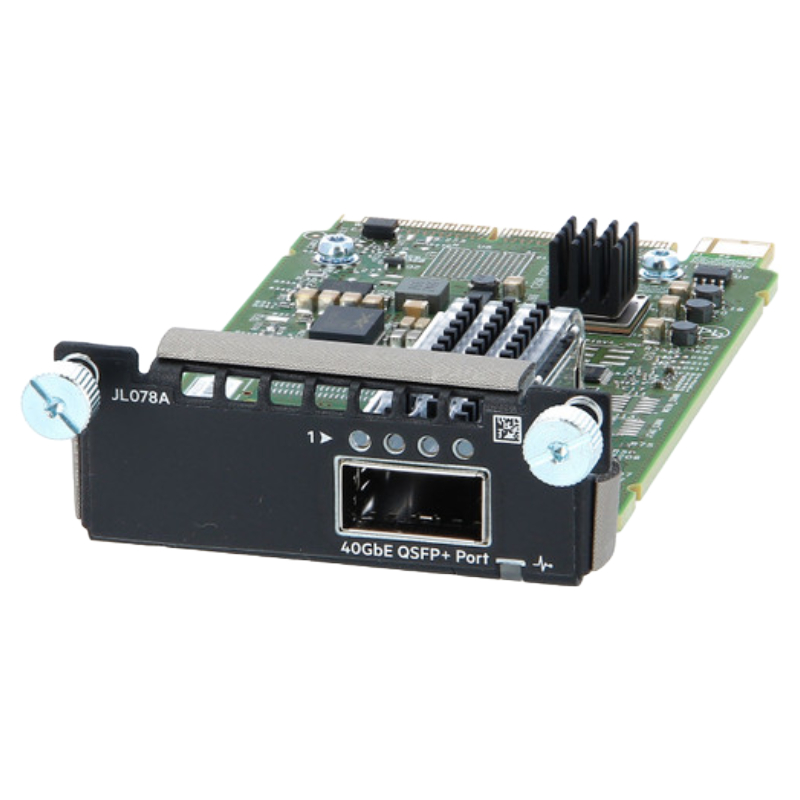
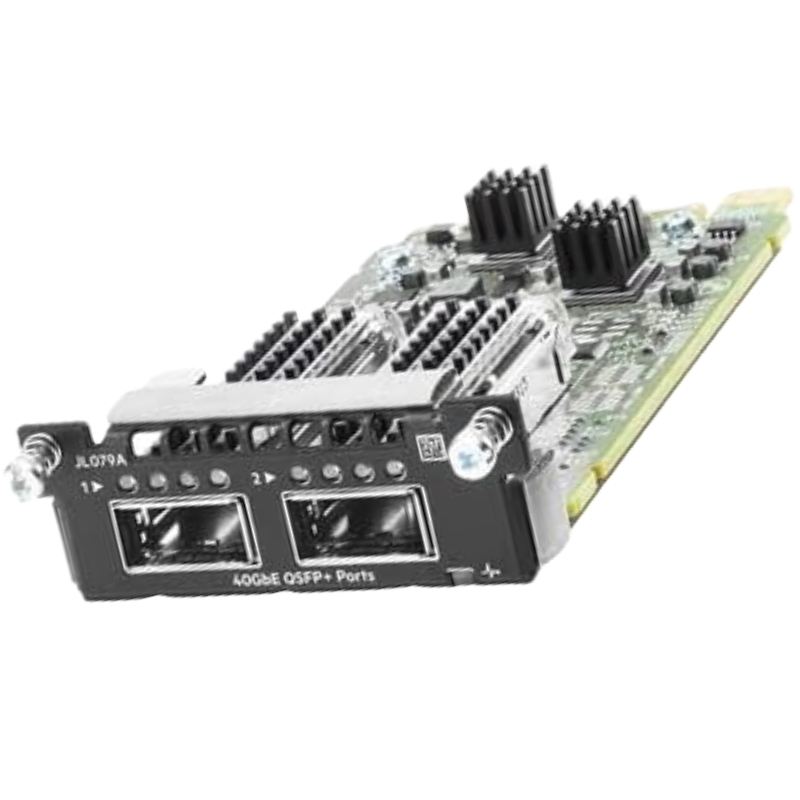
HPE JL079A Expansion Module for Aruba 3810m with 2qsfp+ 40gbe. Factory-Sealed New in Original Box (FSB) with 3 Years Warranty
| SKU/MPN | Warranty | Price | Condition | You save |
|---|---|---|---|---|
| JL079A | 1 Year Warranty | $250.00 | New Factory-Sealed Spare | You save: $87.50 (26%) |
| JL079A | 1 Year Warranty | $285.00 | Factory-Sealed New in Original Box (FSB) | You save: $99.75 (26%) |
The HPE JL079A Expansion Module enhances Aruba 3810M switch performance by delivering two high‑speed QSFP+ 40GbE uplink ports, enabling efficient bandwidth aggregation and scalable network growth. Built for enterprise‑grade infrastructures, this plug‑in module integrates seamlessly into Aruba’s modular switching ecosystem, offering dependable throughput, flexible expansion options, and robust support for high‑capacity campus and distribution‑layer deployments.
Enterprise switching environments increasingly depend on modular uplink systems to achieve scalable bandwidth growth without replacing entire switching chassis. Within this context, expansion modules represent a critical design philosophy that allows network administrators to extend switching capacity, introduce higher-speed uplinks, and adapt infrastructure to evolving traffic patterns. The expansion module category associated with the HPE Aruba 3810M platform is specifically engineered to support high-throughput uplink capabilities while maintaining operational consistency across campus and data center environments. These modules enable seamless transition between Gigabit, 10 Gigabit, and 40 Gigabit Ethernet uplinks depending on organizational requirements and growth trajectories.
One of the most notable components within this category is the HPE JL079A Expansion Module, which provides dual QSFP+ interfaces designed for 40GbE connectivity. This module extends the capabilities of the Aruba 3810M switch series, allowing network operators to implement high-density uplink aggregation without altering the core switching hardware. The modular nature of this architecture ensures that enterprises can align network performance with workload demands in a controlled and cost-efficient manner.
As enterprise applications become more data-intensive, the need for scalable uplink capacity has intensified. Traditional fixed-port switches often lack the flexibility to evolve with increasing bandwidth demands, leading to premature hardware replacement cycles. Expansion modules such as the JL079A address this limitation by introducing interchangeable uplink interfaces that can be upgraded independently of the main switching chassis. This approach significantly enhances the lifecycle of switching infrastructure and provides organizations with a more adaptive network design model.
The transition from 1GbE to 10GbE and now to 40GbE uplink speeds reflects a broader shift toward high-performance distributed computing environments, virtualization clusters, and cloud-native applications. Within this evolution, modular uplink systems act as the backbone of scalable switching strategies, ensuring that aggregation layers can keep pace with increasingly dense traffic flows.
The Aruba 3810M series is designed as a high-performance campus switch platform that supports modular uplink expansion. The integration of expansion modules such as the JL079A is achieved through dedicated module bays that connect directly to the switch’s internal switching fabric. This ensures low-latency data transfer between the uplink module and the core switching engine, maintaining wire-speed performance even under heavy load conditions.
The synergy between the expansion module and the switch chassis is a defining characteristic of this category. The system is engineered to ensure that uplink modules are not isolated components but fully integrated extensions of the switching fabric. This design enables consistent throughput performance across all active interfaces while preserving deterministic latency characteristics required in enterprise-grade networks.
Scalability in the Aruba 3810M ecosystem is achieved through a combination of stacking capabilities and modular uplink expansion. The JL079A module contributes to this scalability by enabling 40GbE uplinks that can be used for switch stacking, aggregation, or direct backbone connectivity. This allows network architects to design hierarchical topologies that can grow incrementally without disruptive redesign.
In large campus environments, this scalability is particularly important as it enables distribution switches to connect to core layers using high-bandwidth links while maintaining consistent operational performance. The modular approach also reduces the need for over-provisioning, allowing organizations to deploy bandwidth precisely where it is needed.
At the core of the JL079A module is its dual QSFP+ interface design, supporting 40 Gigabit Ethernet connectivity. QSFP+ technology is widely recognized for its ability to deliver high-density, high-speed connectivity in compact form factors. Each QSFP+ port can support optical fiber connections or direct attach copper cables depending on deployment requirements, providing flexibility in physical network design.
The use of 40GbE uplinks significantly increases aggregation capacity, allowing multiple downstream 10GbE or 1GbE ports to be consolidated efficiently. This is particularly valuable in environments with high east-west traffic patterns, such as virtualization clusters, storage networks, and distributed application architectures.
The implementation of 40GbE uplinks within the Aruba 3810M ecosystem allows for efficient traffic aggregation between access and core layers. By consolidating multiple lower-speed links into a single high-capacity uplink, network congestion can be reduced and routing efficiency improved. This results in more predictable network performance and reduced latency during peak usage periods.
Additionally, the architecture supports advanced traffic optimization techniques that allow for dynamic load distribution across uplink interfaces. This ensures that network resources are utilized effectively, minimizing bottlenecks and improving overall throughput consistency across the switching infrastructure.
Expansion modules designed for high-speed networking must maintain strict thermal and power efficiency standards. The JL079A module is engineered to operate within the thermal envelope of the Aruba 3810M chassis while delivering sustained 40GbE performance. Efficient airflow design and optimized component placement ensure that heat dissipation does not interfere with operational stability.
Power efficiency is also a critical design factor. The module is designed to draw power directly from the switch chassis, eliminating the need for external power sources while maintaining energy-efficient operation. This integrated approach simplifies deployment and reduces overall infrastructure complexity.
One of the defining features of enterprise-grade expansion modules is hot-swappability. The JL079A module supports installation and replacement without requiring system downtime, allowing network administrators to upgrade or replace modules while maintaining uninterrupted service. This capability is essential in mission-critical environments where downtime can result in operational disruption or financial loss.
Hot-swappable design also supports phased network upgrades, enabling organizations to transition gradually from lower-speed uplinks to higher-speed 40GbE connectivity without disrupting existing network services.
In campus network architectures, the JL079A expansion module is commonly deployed at the distribution or core layers where high-speed uplink connectivity is required. The 40GbE interfaces allow distribution switches to aggregate traffic from multiple access-layer switches efficiently, ensuring smooth data flow toward the core network infrastructure.
This deployment model is particularly beneficial in large educational institutions, corporate campuses, and healthcare environments where thousands of connected devices generate substantial traffic volumes. The module ensures that backbone connectivity remains robust even under peak load conditions.
Although primarily associated with campus switching, the Aruba 3810M platform with the JL079A module can also function effectively at the edge of data center environments. In these scenarios, the module provides high-speed uplinks to aggregation switches or spine-layer infrastructure, supporting virtualization clusters and application delivery systems.
The ability to support 40GbE connectivity ensures that data center edge switches can handle large-scale data movement between compute nodes, storage systems, and external networks without introducing bottlenecks.
Virtualized environments require extremely efficient network infrastructure to handle dynamic workload distribution and frequent east-west traffic. The JL079A module supports these requirements by providing high-bandwidth uplinks that can accommodate virtual machine migration, storage replication, and distributed application communication.
The dual-port QSFP+ configuration allows for redundancy and load balancing, ensuring that virtualization workloads remain stable and responsive even during periods of high demand.
The JL079A module is part of a broader ecosystem of modular components designed for Aruba switching platforms. Its compatibility with the Aruba 3810M series ensures seamless integration with existing network configurations, enabling organizations to extend their infrastructure without compatibility concerns.
This ecosystem approach allows network architects to standardize on a unified switching platform while still maintaining flexibility in uplink configuration and bandwidth scaling.
The module supports a wide range of QSFP+ transceivers and direct attach copper cables, enabling interoperability across different network environments. This flexibility allows organizations to choose between optical fiber for long-distance connectivity and copper-based solutions for short-range high-speed connections.
Such interoperability ensures that the module can be deployed in diverse physical environments, from enterprise office buildings to distributed campus networks and compact server rooms.
The dual-port design of the JL079A module enables redundant uplink configurations that enhance network resilience. By distributing traffic across multiple 40GbE interfaces, organizations can ensure continuous network availability even in the event of a link failure. This redundancy is essential in environments where uptime is critical to business operations.
Redundant configurations also support load balancing, allowing network traffic to be distributed evenly across available uplinks, thereby improving performance consistency.
The engineering design of the expansion module emphasizes long-term operational stability under continuous high-throughput conditions. This includes robust hardware design, optimized thermal performance, and firmware-level integration with the Aruba 3810M switch system. Together, these elements ensure consistent performance over extended deployment cycles.
The JL079A module is designed with a compact form factor that fits seamlessly into the expansion slots of the Aruba 3810M switch. This compact design allows for efficient use of chassis space while delivering high-density uplink capabilities. The physical layout ensures ease of installation and maintenance without requiring specialized tools or procedures.
Electrical connectivity between the module and the switch chassis is achieved through a dedicated interface that ensures stable power delivery and high-speed data transmission. This integration eliminates the need for external cabling between the module and the main switch, reducing potential points of failure and simplifying system architecture.
Within enterprise networks, quality of service mechanisms play a critical role in ensuring that latency-sensitive applications receive priority handling. The JL079A module supports advanced traffic management features when integrated with the Aruba 3810M switch, enabling prioritization of voice, video, and mission-critical data streams.
This ensures that high-priority traffic is transmitted efficiently across 40GbE uplinks without being affected by lower-priority background traffic.
As organizations continue to evolve toward cloud-centric and hybrid network architectures, the need for future-ready infrastructure becomes increasingly important. Expansion modules such as the JL079A provide a scalable foundation that supports incremental upgrades and evolving bandwidth requirements without requiring full infrastructure replacement.
This forward-compatible design ensures that organizations can adapt to emerging technologies and increasing data demands while maintaining investment protection in existing hardware platforms.


 Contact Us
 Information
 Catalog
 Solid State Drives (SSD)
 Network Switches
 Hard Disk Drives
 HBA & Controllers
 PC & Servers
 PC & Server Memory
 CPU & Processors
 Network Routers
 Power Supplies
 Tape Drives & Libraries
 Network Devices
 Computer & Network Cables