
(7% discount is applied at checkout)
Cart is empty
Your go-to destination for cutting-edge server products
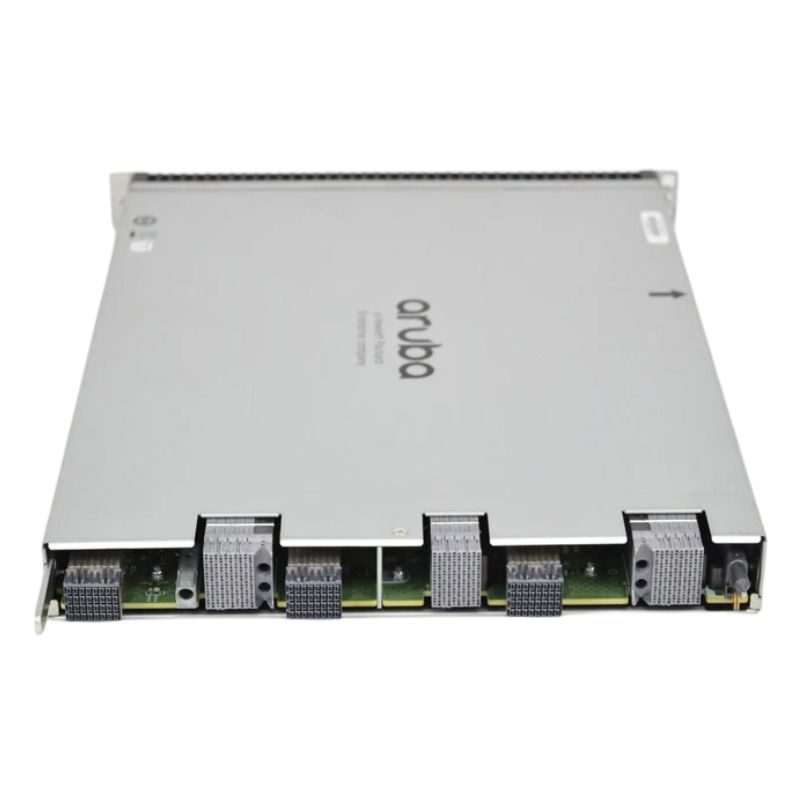


HPE JL368A Aruba 8400 Management Module. Excellent Refurbished with 1 year replacement warranty
| SKU/MPN | Warranty | Price | Condition | You save |
|---|---|---|---|---|
| JL368A | 1 Year Warranty | $674.00 | Excellent Refurbished | You save: $235.90 (26%) |
| JL368A | 1 Year Warranty | $7,837.00 | Factory-Sealed New in Original Box (FSB) | You save: $2,742.95 (26%) |
The HPE JL368A Aruba 8400 Management Module delivers advanced control, streamlined orchestration, and resilient oversight for complex enterprise networks. Engineered for high‑performance environments, this module enhances system intelligence, accelerates operational workflows, and ensures stable, wired connectivity across demanding infrastructures. Its robust architecture supports scalable deployments, making it ideal for organizations seeking reliable network governance and superior hardware efficiency.
The HPE JL368A Aruba 8400 Management Module is designed as a critical component within the Aruba 8400 modular switching ecosystem, delivering centralized operational control for high performance enterprise and data center switching environments. The Aruba 8400 platform is engineered for environments that require resilient packet forwarding, deterministic performance, and advanced control plane separation. Within this architecture, the management module operates as the primary interface between network administrators and the underlying hardware fabric, ensuring that configuration, monitoring, and orchestration tasks are executed with precision and reliability. The system is built to support evolving network demands, including increasing traffic density, virtualization workloads, and application driven networking models that require real time responsiveness and deep visibility across all network layers.
The management module functions as the intelligence layer of the Aruba 8400 chassis, handling system coordination, software lifecycle control, and operational state management. It is responsible for maintaining the integrity of system configuration databases and ensuring synchronization between redundant components where high availability is enabled. This module supports administrative access through secure management channels, enabling operators to perform system configuration, monitoring, diagnostics, and troubleshooting without directly impacting data forwarding processes. By isolating control functions from the data plane, the platform ensures operational stability even under heavy network loads or partial system failure conditions.
The Aruba 8400 series is constructed using a modular chassis approach that allows individual components such as management modules, fabric modules, and line cards to operate in a coordinated yet independently replaceable manner. The JL368A management module is engineered with hardware redundancy principles that support continuous operation even in scenarios involving component replacement or failure recovery. The design emphasizes deterministic system behavior, ensuring that control operations remain consistent regardless of traffic conditions within the switching fabric. This architecture is particularly valuable in enterprise environments where downtime must be minimized and operational continuity is a primary requirement.
High availability is embedded deeply into the design philosophy of the Aruba 8400 platform. The management module supports redundant deployment configurations where two modules can operate in an active and standby relationship. This ensures that system control remains uninterrupted in the event of a hardware fault or maintenance activity. State synchronization between modules allows seamless failover, preserving configuration consistency and minimizing service disruption. The system continuously monitors operational health metrics, ensuring that any deviation in expected performance triggers immediate internal response mechanisms that maintain system stability.
The control plane synchronization process ensures that both primary and secondary management modules maintain identical operational states. This includes configuration data, routing control information, and system logs. Synchronization occurs in real time through dedicated internal channels, ensuring that failover events are executed without data loss or configuration inconsistencies. This mechanism is essential for maintaining network continuity in mission critical environments where even brief interruptions can have significant operational impact.
The JL368A management module provides centralized orchestration capabilities that allow network administrators to manage complex switching environments from a unified control interface. This includes configuration management, policy enforcement, and system monitoring across multiple chassis components. The centralized approach reduces operational complexity by consolidating management tasks into a single operational plane, enabling consistent policy application across large scale network deployments. This is particularly important in environments such as data centers and enterprise campuses where consistent configuration enforcement is required across multiple network segments.
Software lifecycle management is a core function of the management module, enabling controlled deployment of firmware updates and system software upgrades. The module ensures that updates are validated, staged, and applied in a manner that minimizes disruption to ongoing network operations. Version control mechanisms allow administrators to maintain consistent software baselines across multiple devices, ensuring compatibility and reducing the risk of configuration drift. This structured approach to software governance is essential for maintaining long term system reliability and security compliance.
Security within the Aruba 8400 management environment is implemented through layered authentication mechanisms that ensure only authorized personnel can access system controls. The management module supports secure login protocols and encrypted communication channels that protect administrative sessions from unauthorized interception. Role based access control allows organizations to define granular permissions for different administrative users, ensuring that operational responsibilities are clearly separated and enforced at the system level.
The management module continuously monitors system integrity to detect unauthorized changes or abnormal behavior patterns. Integrity verification processes ensure that system configurations remain consistent with approved operational policies. Any deviation triggers alerts and logging mechanisms that assist in rapid diagnosis and remediation. These protections are essential in environments where network infrastructure forms a critical part of business operations and must remain secure against both internal and external threats.
In data center deployments, the Aruba 8400 management module plays a central role in maintaining high performance switching operations at the core of the network. It supports large scale traffic aggregation, virtualization connectivity, and high bandwidth application flows. The modular design of the system ensures that it can adapt to increasing capacity demands while maintaining consistent operational performance. The management module ensures that configuration consistency is maintained across all system components, enabling stable and predictable data center operations.
Within enterprise campus environments, the management module enables centralized control of distributed network infrastructure. It supports segmentation of network traffic across multiple departments, user groups, and application types. The ability to enforce consistent policies across diverse network segments allows organizations to maintain operational efficiency while ensuring security and performance requirements are met. The system is capable of handling dynamic network changes that occur in large campus environments, such as device onboarding and policy updates.
In service provider environments, the management module supports aggregation of high volume traffic flows and ensures efficient distribution of network services across backbone infrastructure. It enables service providers to maintain consistent service delivery while supporting scalable network expansion. The module’s ability to coordinate large scale switching operations makes it suitable for environments where high throughput and low latency are critical operational requirements.
The Aruba 8400 platform is engineered for high throughput environments, and the management module plays a crucial role in ensuring that system resources are efficiently allocated. It coordinates control plane operations in a way that minimizes processing overhead and maximizes data forwarding efficiency. This allows the system to handle large volumes of network traffic without degradation in performance or responsiveness.
Scalability is a key attribute of the Aruba 8400 system, allowing organizations to expand network capacity without redesigning core infrastructure. The management module facilitates this scalability by supporting dynamic integration of additional system components. As network demands grow, new modules can be incorporated into the existing system framework while maintaining operational consistency and control plane synchronization.
The management module provides comprehensive monitoring capabilities that deliver real time insights into system performance, hardware status, and network behavior. This visibility enables administrators to proactively identify potential issues before they escalate into service disruptions. Continuous monitoring ensures that all system components operate within defined performance thresholds, maintaining network reliability across all operational conditions.
Telemetry systems integrated into the Aruba 8400 platform collect detailed operational data that can be used for advanced analytics and diagnostics. This data provides insights into traffic patterns, system utilization, and performance trends. By analyzing this information, administrators can optimize network configurations and improve overall system efficiency. The management module ensures that telemetry data is accurately collected and securely transmitted for analysis.
The Aruba 8400 management module is designed to operate within heterogeneous network environments where multiple vendors and technologies coexist. It supports interoperability standards that allow integration with external systems, enabling organizations to maintain flexible infrastructure architectures. This compatibility is essential for enterprises that operate complex network ecosystems spanning multiple technology domains.
Modern network environments increasingly rely on automation and orchestration systems to manage large scale infrastructure. The management module supports integration with these platforms, enabling automated configuration deployment, policy enforcement, and system monitoring. This reduces operational overhead and improves consistency across network environments by minimizing manual configuration tasks.


 Contact Us
 Information
 Catalog
 Solid State Drives (SSD)
 Network Switches
 Hard Disk Drives
 HBA & Controllers
 PC & Servers
 PC & Server Memory
 CPU & Processors
 Network Routers
 Power Supplies
 Tape Drives & Libraries
 Network Devices
 Computer & Network Cables


