(7% discount is applied at checkout)
Cart is empty
Your go-to destination for cutting-edge server products
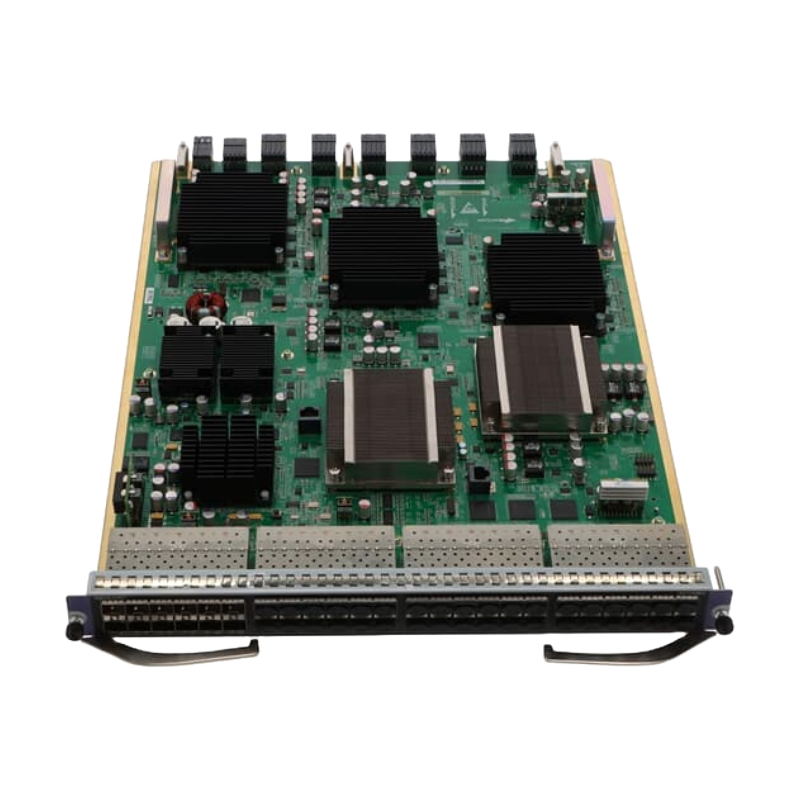


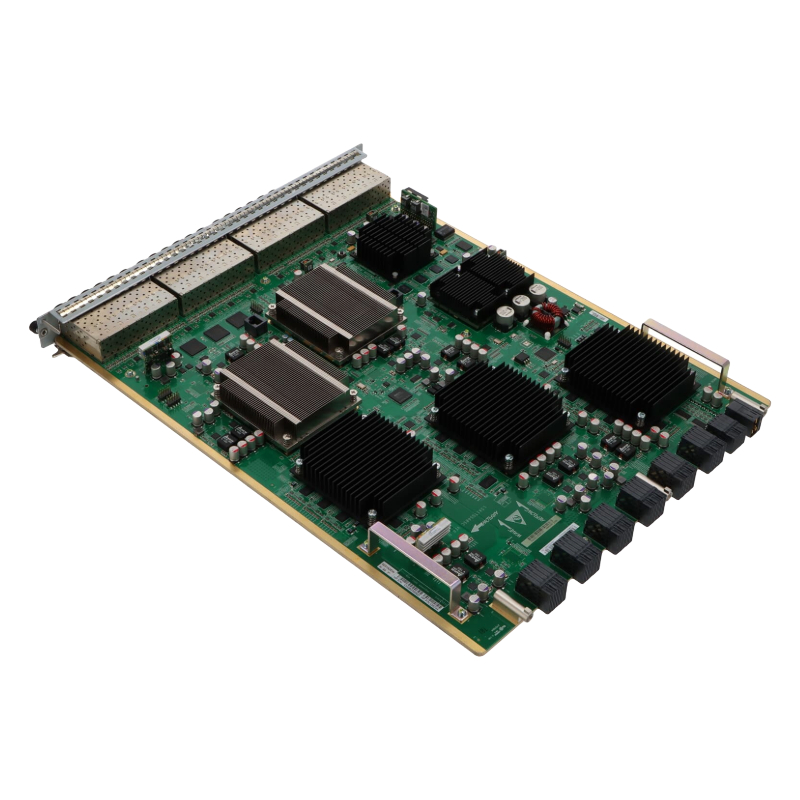
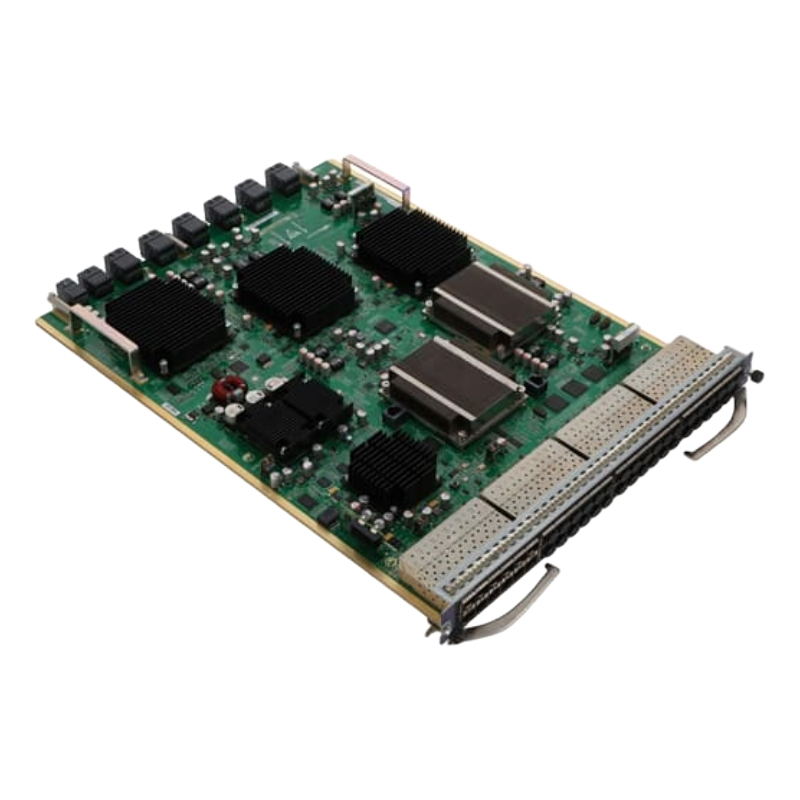
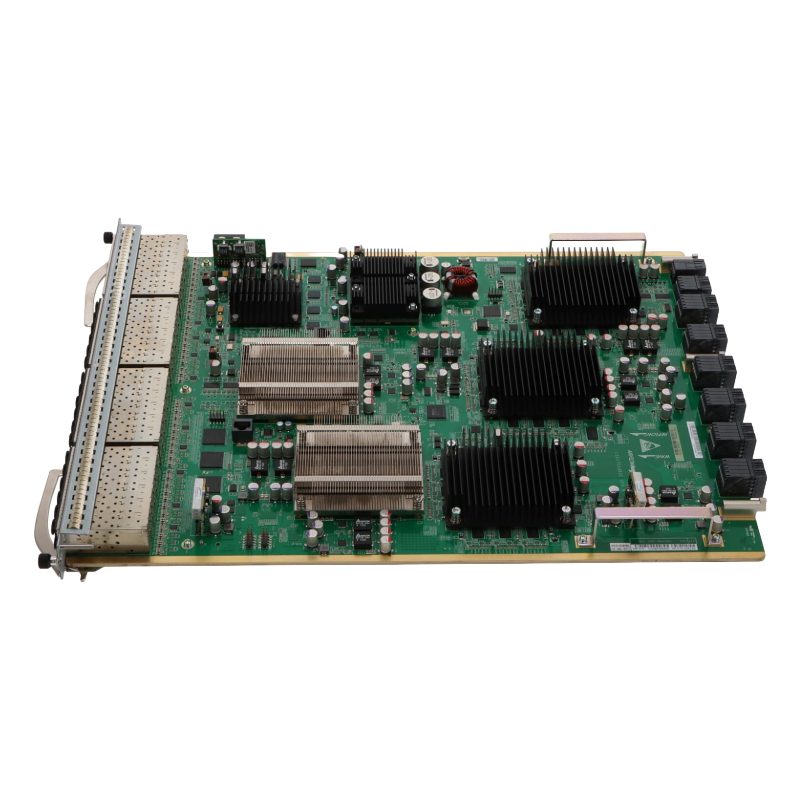
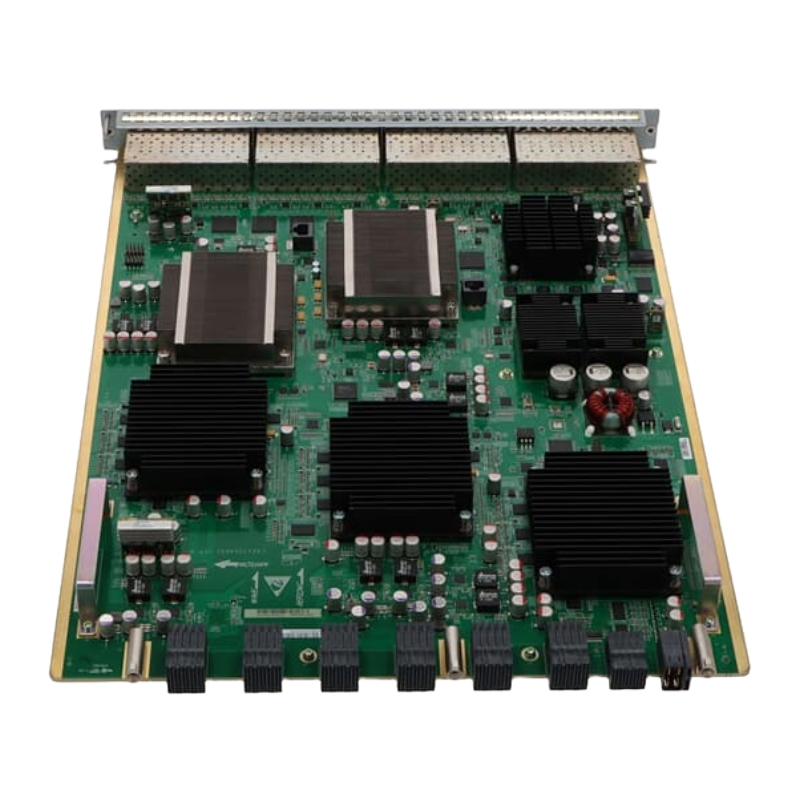
HPE JC756A Flexnetwork 10500 48-Port 10GBE SFP+ SF Module Network Switches. Factory-Sealed New in Original Box (FSB) with 3 Years Warranty
| SKU/MPN | Warranty | Price | Condition | You save |
|---|---|---|---|---|
| JC756A | 1 Year Warranty | $215.00 | Excellent Refurbished | You save: $75.25 (26%) |
| JC756A | 1 Year Warranty | $505.00 | Factory-Sealed New in Original Box (FSB) | You save: $176.75 (26%) |
The HPE JC756A is a high-performance expansion module, designed to enhance your network infrastructure with advanced features, including a large number of high-speed slots for seamless connectivity.
The HPE JC756A 10500 48-Port 10GbE SFP+ SF Module Network Switches represent a high-performance optical switching interface module designed for integration within the HPE 10500 series modular chassis ecosystem. This module provides 48 ports of 10 Gigabit Ethernet connectivity using SFP+ optical transceivers, enabling ultra-high-speed data transmission across enterprise core networks, data center aggregation layers, and service provider backbone infrastructures. Engineered for scalability, density, and low-latency performance, this module is a critical component in modern high-bandwidth networking architectures.
Unlike standalone switches, the JC756A module functions as part of a modular chassis system where multiple line cards and switching modules operate under a centralized control and switching fabric architecture. This design enables organizations to expand their network capacity dynamically while maintaining a unified management plane and consistent performance across all modules. The 10GbE SFP+ interface ensures that the module is optimized for fiber-based high-speed connectivity, making it ideal for long-distance, high-bandwidth, and low-latency network deployments.
The JC756A module is designed for deployment within the HPE 10500 chassis, which supports multiple interchangeable line cards and fabric modules. This modular architecture enables flexible network scaling by allowing administrators to add or replace interface modules without disrupting existing network operations.
Each module operates under a centralized control plane that manages routing decisions, switching logic, and network policy enforcement. This separation of interface and control functions enhances operational efficiency and allows for high-density network deployments in a compact form factor.
The module integrates 48 SFP+ ports, each capable of supporting 10 Gigabit Ethernet optical connections. These ports are designed for use with a wide range of fiber optic transceivers, enabling flexible deployment across different distances and network topologies.
The high port density allows enterprises to maximize connectivity within a single chassis slot, significantly reducing rack space requirements while increasing aggregate bandwidth capacity.
The JC756A module connects to the internal high-speed switching fabric of the HPE 10500 chassis through advanced backplane interconnects. These interconnects provide ultra-low-latency communication between line cards and the central switching fabric.
The backplane architecture ensures that all ports can communicate simultaneously without internal bottlenecks, enabling non-blocking performance under full load conditions.
Each of the 48 SFP+ ports supports 10 Gigabit Ethernet optical transmission, enabling high-speed data transfer across enterprise and service provider networks. This capability is essential for bandwidth-intensive applications such as virtualization, cloud computing, and high-performance storage networking.
The use of fiber optic connectivity ensures low signal attenuation and extended transmission distances compared to traditional copper-based Ethernet solutions.
The SFP+ interface design supports a wide range of optical transceivers, including short-range, long-range, and extended-range modules. This flexibility allows organizations to tailor network configurations based on specific deployment requirements.
Transceiver modularity also enables cost optimization by allowing selective deployment of optical modules based on distance and bandwidth needs.
The module is engineered for low-latency packet forwarding using hardware-based ASIC processing. This ensures that data packets are processed at wire speed with minimal delay, making the module suitable for latency-sensitive applications.
Low-latency performance is particularly important in environments such as financial trading systems, real-time analytics platforms, and distributed computing clusters.
The JC756A module is designed to operate within a non-blocking switching architecture when integrated into a fully configured chassis. This ensures that all ports can operate at full line rate simultaneously without congestion or performance degradation.
Non-blocking performance is achieved through high-capacity internal fabric connections and optimized traffic scheduling mechanisms.
Packet forwarding within the module is handled by specialized application-specific integrated circuits (ASICs) that accelerate data processing and reduce reliance on CPU resources.
This hardware-based approach ensures deterministic performance and consistent throughput across varying traffic conditions.
Advanced buffering mechanisms are used to manage traffic bursts and prevent packet loss during congestion events. These buffers dynamically allocate resources based on traffic priority and network conditions.
Traffic management systems ensure fair resource distribution while prioritizing mission-critical applications.
The JC756A module supports scalable deployment within the HPE 10500 chassis, allowing organizations to expand network capacity by adding additional modules as needed.
This modular scalability eliminates the need for full system replacement and supports incremental infrastructure upgrades.
When multiple modules are installed within the same chassis, they operate in coordination with the central switching fabric to distribute traffic efficiently across all available resources.
This ensures balanced utilization and prevents congestion within individual modules.
The module can be deployed across access, aggregation, and core layers of enterprise networks. Its high-speed capabilities make it suitable for aggregation and core deployments where large-scale traffic handling is required.
This flexibility allows organizations to standardize on a single modular platform across multiple network tiers.
The JC756A module supports advanced VLAN configurations that enable logical segmentation of network traffic. This allows organizations to isolate different departments, applications, or tenants within a shared physical infrastructure.
VLAN segmentation enhances security and improves network efficiency by reducing broadcast domain size.
Spanning tree protocol support ensures loop-free network topologies by dynamically blocking redundant paths while maintaining failover capabilities.
This ensures network stability in environments with redundant links and complex topologies.
QoS capabilities enable prioritization of critical traffic types such as voice, video, and mission-critical applications. Traffic classification ensures that high-priority data receives preferential treatment during congestion.
This is essential in converged networks where multiple application types share the same infrastructure.
The HPE 10500 chassis supports redundant power supplies, fabric modules, and control engines, ensuring that the JC756A module operates within a highly resilient environment.
This redundancy minimizes downtime risks and ensures continuous network availability in mission-critical deployments.
The module is designed for hot-swapping, allowing installation or replacement without powering down the chassis. This ensures uninterrupted network service during maintenance operations.
Hot-swappability is essential for enterprise environments requiring continuous uptime.
In the event of hardware or link failure, the system automatically reroutes traffic through alternative paths within the chassis fabric, ensuring uninterrupted service.
Failover mechanisms operate within milliseconds to maintain application continuity.
The JC756A module is widely used in data center environments for core and aggregation layer switching. Its 10GbE SFP+ interfaces support high-bandwidth server connectivity and storage networking.
This makes it ideal for virtualization clusters, cloud infrastructure, and distributed computing environments.
Service providers deploy the module in backbone networks where high-capacity optical transport is required. Its scalability and performance make it suitable for handling large-scale subscriber traffic.
It supports reliable high-speed connectivity across metropolitan and long-distance networks.
The module is managed through centralized chassis-based control systems that simplify configuration and monitoring across all installed modules.This reduces administrative complexity and ensures consistent policy enforcement.
Firmware updates are designed to be applied with minimal disruption, ensuring continuous service availability during maintenance cycles.


 Contact Us
 Information
 Catalog
 Solid State Drives (SSD)
 Network Switches
 Hard Disk Drives
 HBA & Controllers
 PC & Servers
 PC & Server Memory
 CPU & Processors
 Network Routers
 Power Supplies
 Tape Drives & Libraries
 Network Devices
 Computer & Network Cables