(7% discount is applied at checkout)
Cart is empty
Your go-to destination for cutting-edge server products
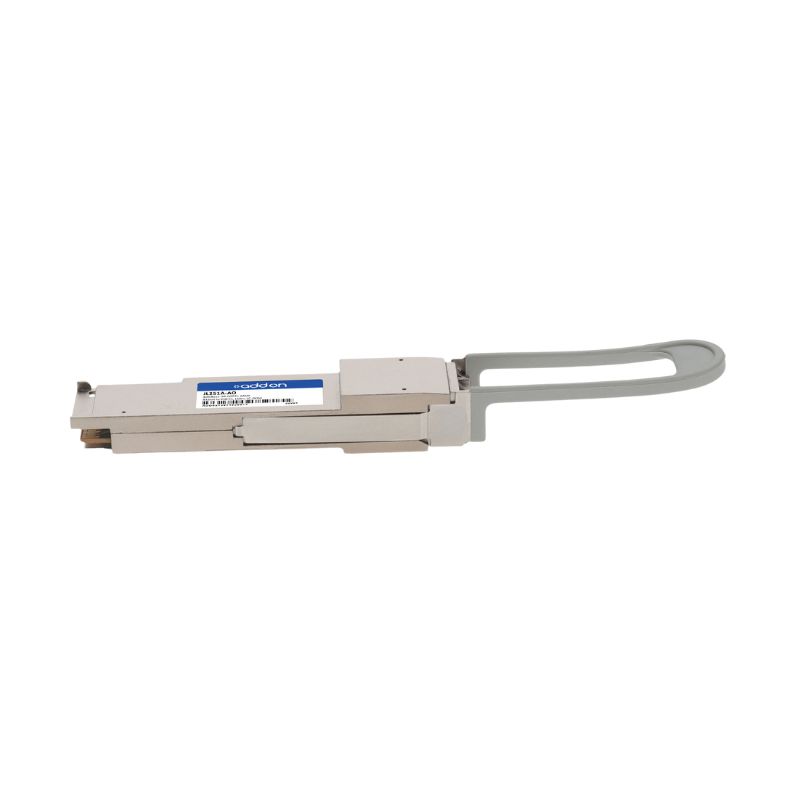


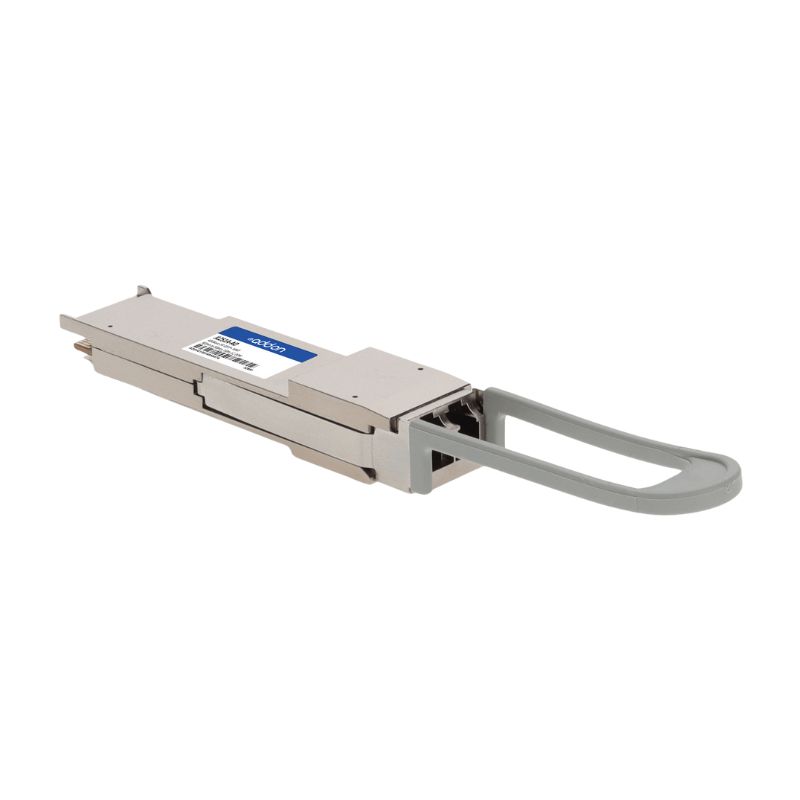
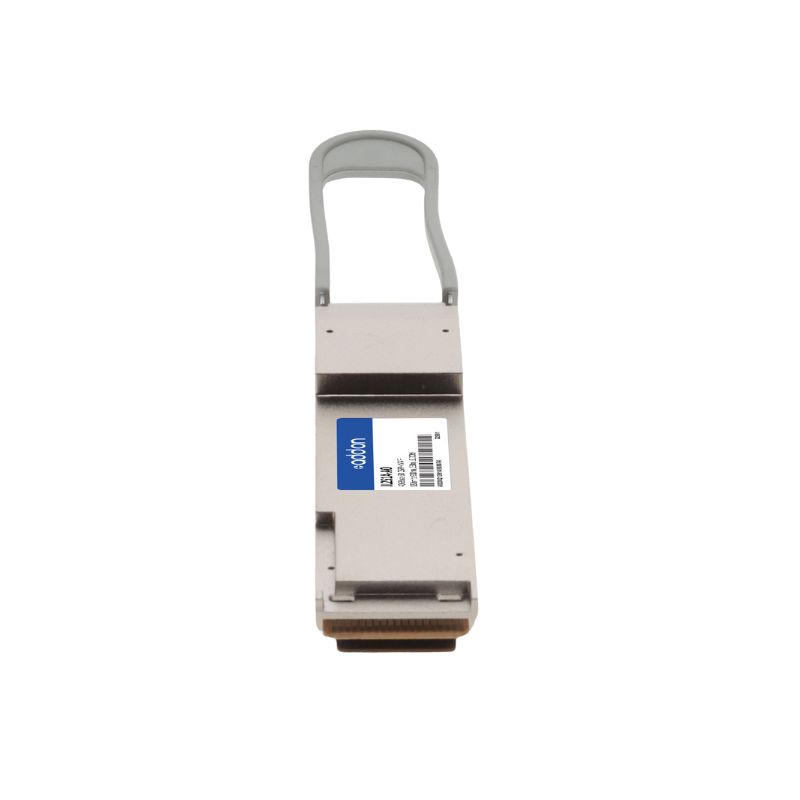
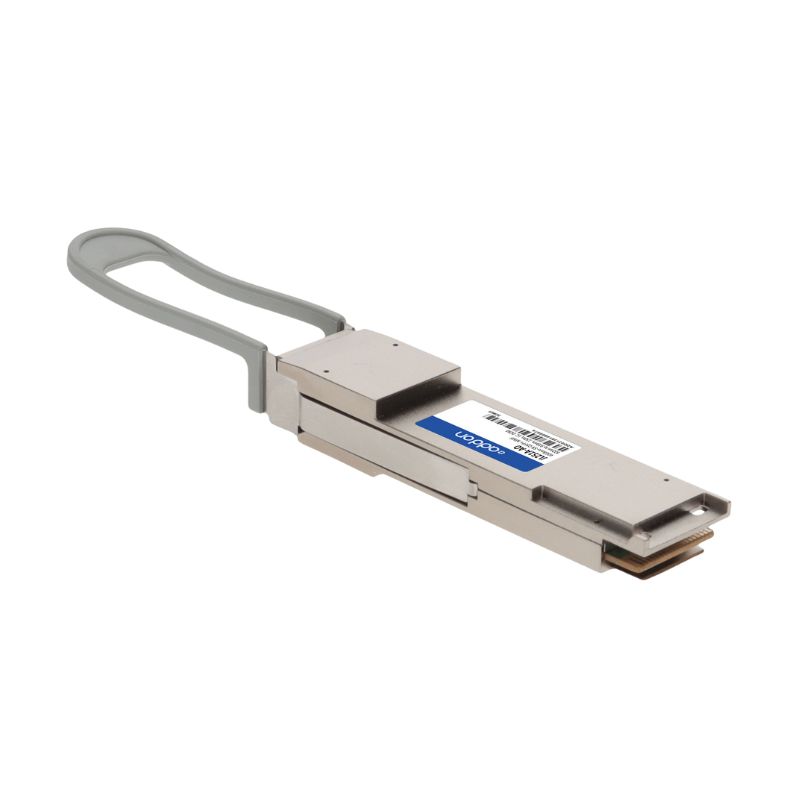
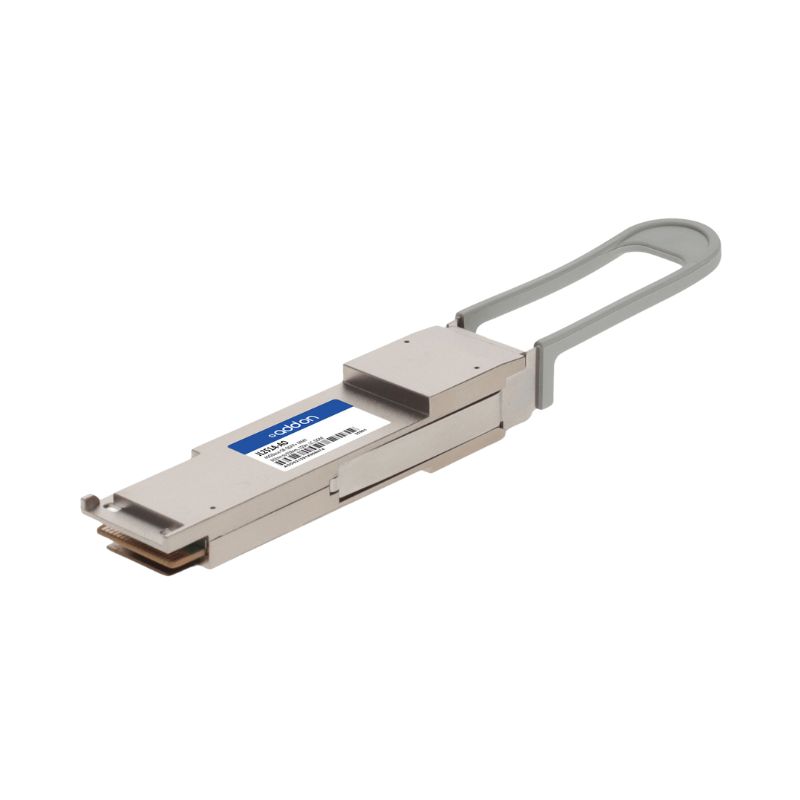
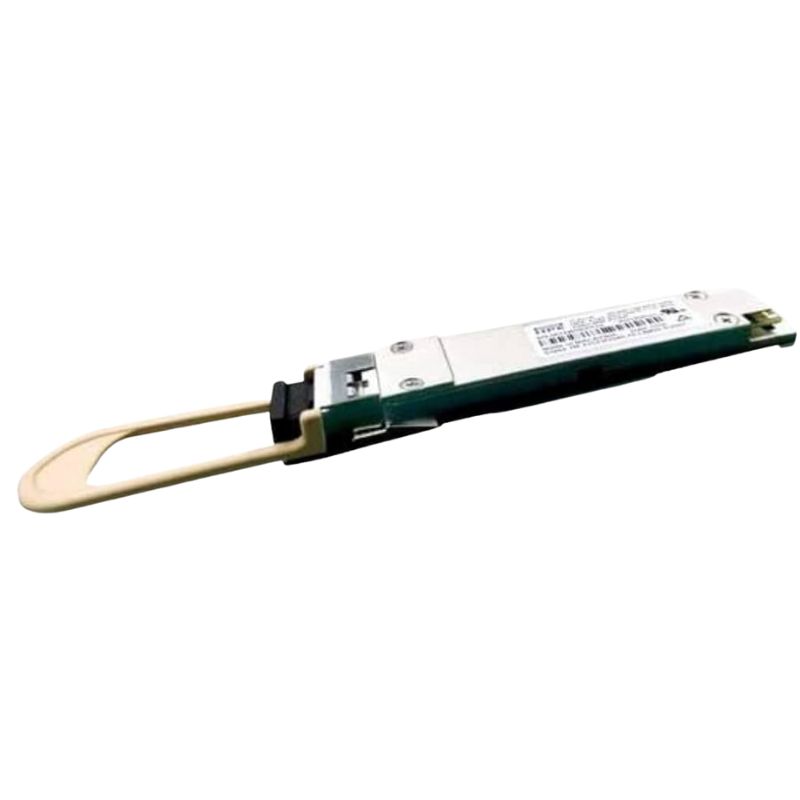
HPE JL251A 40 Gigabit Ethernet Transceiver Module. New Sealed with 1 year replacement warranty
| SKU/MPN | Warranty | Price | Condition | You save |
|---|---|---|---|---|
| JL251A | 1 Year Warranty | $74.00 | Excellent Refurbished | You save: $25.90 (26%) |
| JL251A | 1 Year Warranty | $158.00 | New Sealed in Box (NIB) | You save: $55.30 (26%) |
The HPE JL251A QSFP+ Transceiver Module is a high-performance 40 Gigabit Ethernet networking component engineered to deliver reliable, high-speed optical connectivity for modern enterprise and data center environments. Designed under Hewlett Packard Enterprise engineering standards, this plug-in optical transceiver enables efficient short-range and long-range data transmission over compatible 40GBASE-BIDI infrastructure. It is optimized for seamless integration into high-density switching platforms where bandwidth scalability, low latency, and stable throughput are critical for mission-critical workloads, virtualization, and cloud networking architectures.
The HPE JL251A 40 Gigabit Ethernet Transceiver Module represents a high-performance optical networking component designed for modern data center architectures and enterprise-grade switching environments. Built to support ultra-fast data transmission over fiber optic infrastructure, this QSFP+ form factor transceiver enables reliable 40GbE connectivity across short and long-range networking topologies. It is engineered to deliver consistent throughput, low latency communication, and stable signal integrity in demanding network conditions where bandwidth density and scalability are essential.
This category of transceiver modules plays a critical role in enabling high-speed aggregation layers, spine-leaf network designs, and backbone connectivity within large-scale IT environments. As organizations continue to scale virtualized workloads, cloud-native applications, and distributed computing systems, the demand for 40 Gigabit Ethernet connectivity remains relevant in both legacy support and hybrid infrastructure deployments.
The QSFP+ (Quad Small Form-Factor Pluggable Plus) architecture used in the HPE JL251A module integrates four high-speed lanes into a single compact interface. Each lane typically operates at approximately 10 Gbps, combining to achieve an aggregated 40 Gbps data rate. This design allows for efficient port density on networking hardware while reducing physical footprint and power consumption compared to multiple lower-speed interfaces.
The internal engineering of the module is centered around optical signal conversion, where electrical signals from the host device are transformed into optical signals transmitted over fiber optic cables. This conversion is achieved using advanced laser diode technology and photonic receivers that ensure minimal signal degradation over distance. The module also incorporates digital diagnostics monitoring capabilities that provide real-time insights into operational parameters such as temperature, voltage, and optical power levels.
Signal integrity is a defining characteristic of the HPE JL251A module, as it ensures reliable transmission across both short-reach and extended fiber links. The module is designed to minimize insertion loss and reduce bit error rates, which is essential for maintaining consistent network performance in high-density environments. By leveraging optimized optical components and precise calibration, the transceiver maintains stable communication even under heavy traffic loads.
The data transmission mechanism is built to support full-duplex communication, enabling simultaneous sending and receiving of data streams. This capability is essential in environments where bidirectional traffic flow is constant, such as virtualization clusters, storage replication systems, and distributed database infrastructures.
The performance profile of the HPE JL251A transceiver is optimized for enterprise-grade workloads that require sustained high-speed data transfer. Its 40GbE capability ensures that large data sets, virtual machine migrations, and real-time analytics workloads can be processed without network bottlenecks.
Power efficiency is another key attribute of the module. QSFP+ form factor design reduces per-port power consumption compared to multiple discrete lower-speed transceivers. This contributes to lower operational costs and improved thermal efficiency within densely populated network racks.
Latency is minimized through streamlined optical signal processing and reduced conversion overhead. The module is engineered to maintain consistent throughput even under variable network conditions. This stability is crucial for latency-sensitive applications such as financial trading systems, real-time communication platforms, and high-performance computing clusters.
Throughput stability ensures that bandwidth allocation remains predictable, allowing network administrators to design infrastructure with confidence in performance consistency across all connected endpoints.
The HPE JL251A module operates over fiber optic cabling, which provides significant advantages over traditional copper-based networking solutions. Fiber optic transmission supports higher bandwidth, longer distance coverage, and improved resistance to electromagnetic interference. These characteristics make it ideal for data center interconnects and enterprise backbone networks.
Depending on the optical variant, the module may support either multimode or single-mode fiber configurations. Multimode fiber is typically used for shorter distances within data centers, while single-mode fiber enables long-distance transmission across campuses or metropolitan areas.
The optical conversion process involves transforming electrical data signals into modulated light pulses. These pulses are transmitted through fiber strands and received by a photodetector on the opposite end, where they are converted back into electrical signals. This process is highly optimized to reduce signal loss and maintain data integrity across varying distances.
Advanced modulation techniques ensure that the signal remains robust even in environments with high electromagnetic interference or physical cable density.
The HPE JL251A 40 Gigabit Ethernet Transceiver Module is widely deployed in enterprise data centers, cloud infrastructure environments, and service provider networks. Its ability to support high-density bandwidth aggregation makes it ideal for modern computing architectures that rely heavily on distributed processing and virtualization.
In enterprise environments, the module supports core switching layers and high-speed interconnects between critical infrastructure components. In data centers, it facilitates efficient traffic flow between compute clusters, storage arrays, and network appliances.
Cloud service providers utilize 40GbE connectivity to ensure scalable and efficient resource allocation across virtualized environments. The HPE JL251A module supports the high-speed backbone required for multi-tenant architectures, enabling seamless communication between distributed services and microservices-based applications.
This level of performance is essential for maintaining service level agreements and ensuring consistent user experience across cloud-hosted platforms.
Reliability is a core design principle of the HPE JL251A module. It is engineered to operate continuously in high-demand environments with minimal failure rates. Lifecycle management includes regular monitoring of operational metrics, firmware compatibility checks, and physical inspection of fiber connections.
Maintenance procedures are simplified through modular design, allowing individual transceivers to be replaced without impacting the broader network system. This reduces downtime and enhances operational continuity.
The module is designed to operate within standard data center environmental conditions, including controlled temperature and humidity ranges. Proper cooling and airflow management are essential to ensure long-term stability and performance efficiency.
The HPE JL251A transceiver supports a wide range of advanced networking use cases including high-performance computing clusters, big data analytics platforms, virtualization farms, and storage area networks. These environments require consistent high-speed connectivity to maintain operational efficiency and reduce processing delays.
In storage networking, the module enables fast replication and backup processes, reducing recovery time objectives and improving disaster recovery capabilities. In analytics environments, it supports rapid data ingestion and processing across distributed systems.
While higher-speed Ethernet standards continue to evolve, 40 Gigabit Ethernet remains relevant in many enterprise and data center environments. The HPE JL251A module continues to provide a stable and cost-efficient solution for organizations that require reliable high-bandwidth connectivity without transitioning immediately to 100GbE or beyond.
Its role in hybrid infrastructure environments ensures continued demand as organizations balance legacy systems with next-generation networking technologies. The module remains a foundational component in scalable, flexible, and performance-oriented network designs.
The HPE JL251A 40 Gigabit Ethernet Transceiver Module is designed for compatibility with a wide range of HPE networking switches and routers that support QSFP+ interfaces. This includes high-end data center switches, aggregation layer devices, and modular chassis systems. Its interoperability ensures seamless integration into existing network infrastructures without requiring extensive hardware modifications.
Compatibility is further enhanced through adherence to industry-standard optical and electrical specifications, enabling the module to function within multi-vendor environments in many deployment scenarios. This flexibility is particularly valuable for enterprises operating heterogeneous network ecosystems where interoperability is a key requirement.
In spine-leaf architectures, the HPE JL251A module plays a critical role in providing high-bandwidth uplinks between leaf switches and spine switches. This ensures non-blocking communication paths and predictable latency across the network fabric. The 40 Gigabit Ethernet capacity allows for efficient traffic aggregation, reducing congestion and improving overall system performance.


 Contact Us
 Information
 Catalog
 Solid State Drives (SSD)
 Network Switches
 Hard Disk Drives
 HBA & Controllers
 PC & Servers
 PC & Server Memory
 CPU & Processors
 Network Routers
 Power Supplies
 Tape Drives & Libraries
 Network Devices
 Computer & Network Cables