(7% discount is applied at checkout)
Cart is empty
Your go-to destination for cutting-edge server products


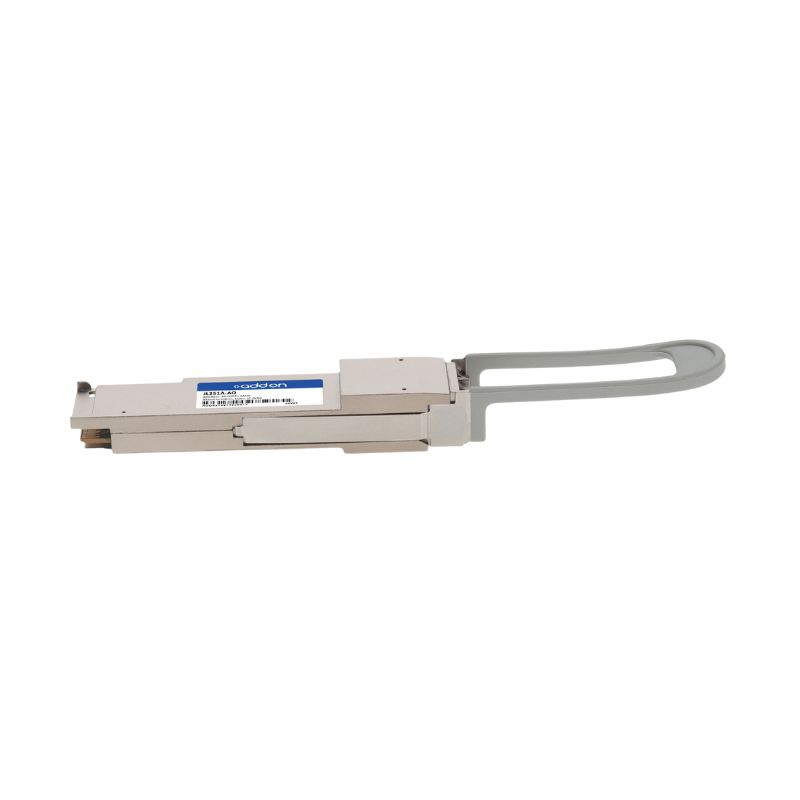
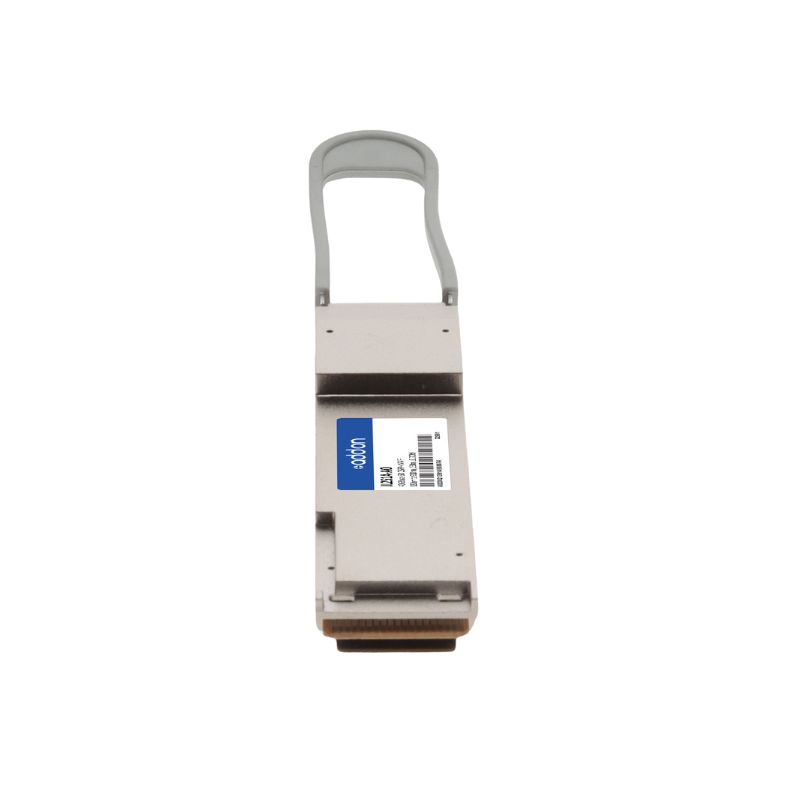
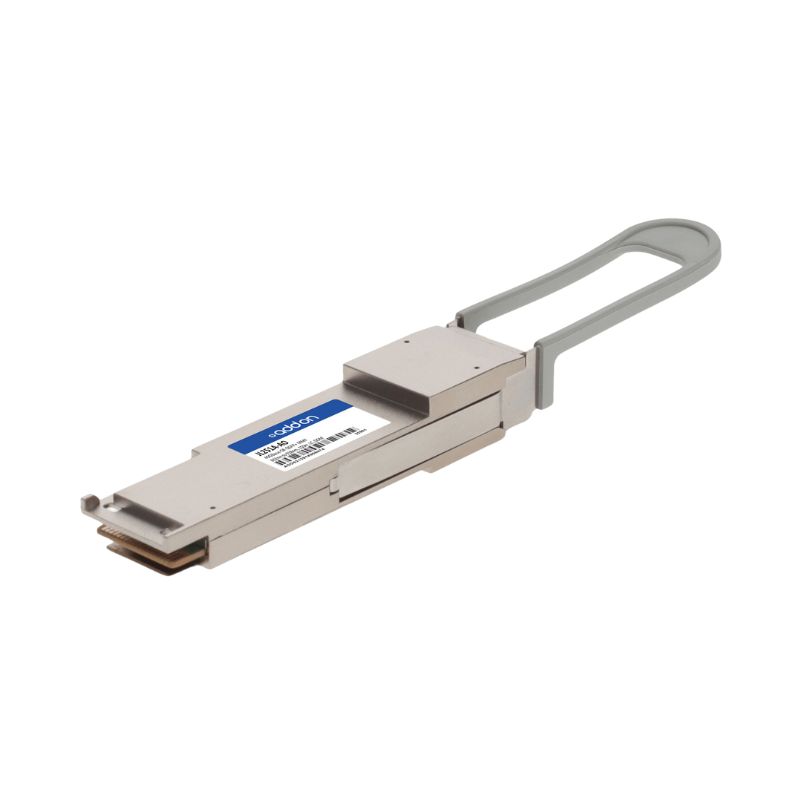
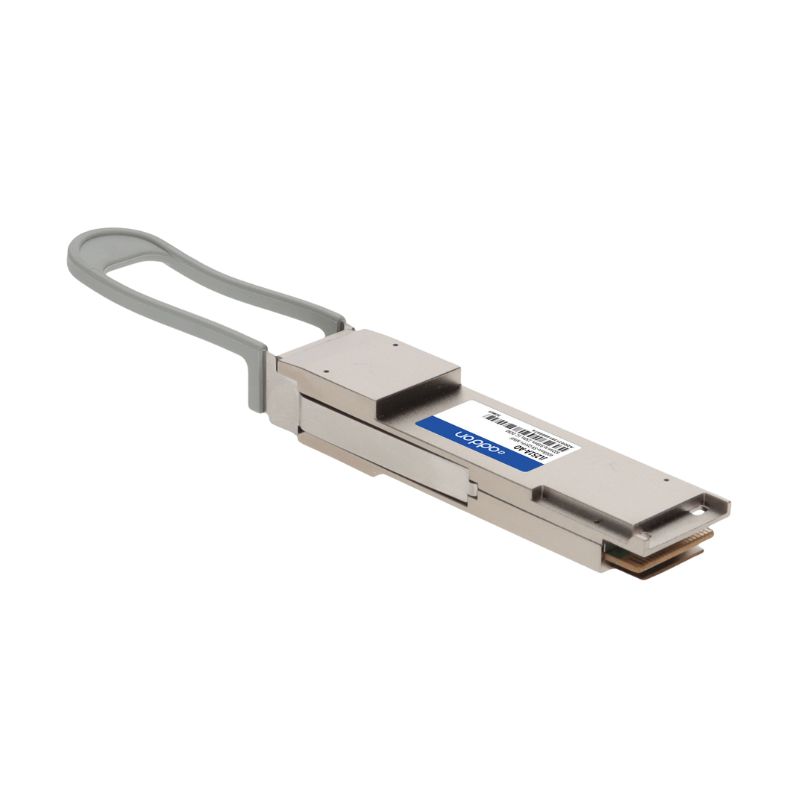
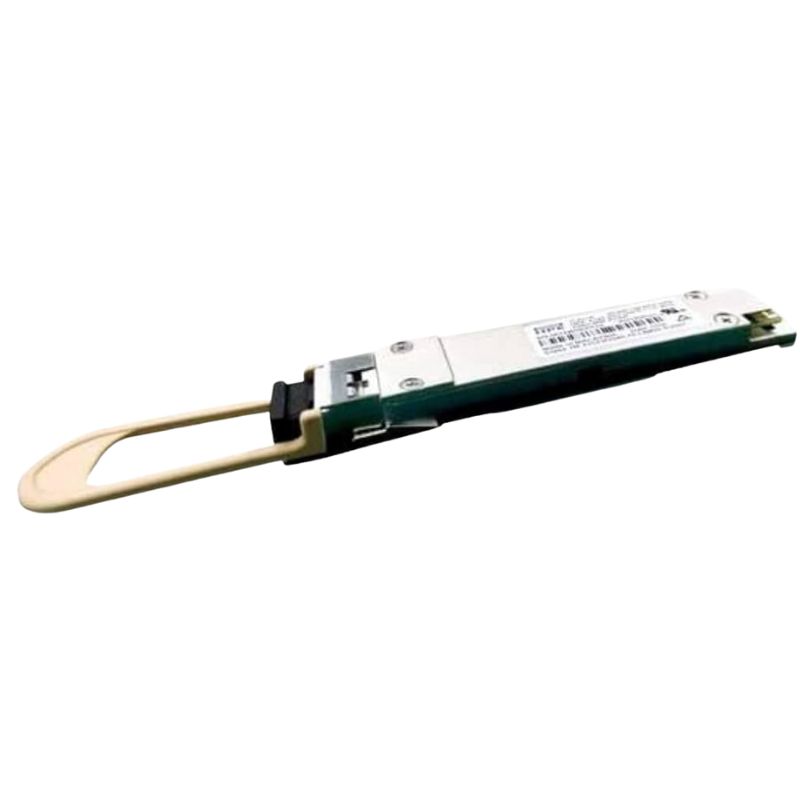
HPE JL251A X140 - QSFP+ Transceiver Module - 40 Gigabit Ethernet. Excellent Refurbished with 1 year replacement warranty
| SKU/MPN | Warranty | Price | Condition | You save |
|---|---|---|---|---|
| JL251A | 1 Year Warranty | $74.00 | Excellent Refurbished | You save: $25.90 (26%) |
| JL251A | 1 Year Warranty | $158.00 | New Sealed in Box (NIB) | You save: $55.30 (26%) |
The HPE JL251A X140 QSFP+ Transceiver Module is a high-performance networking solution designed to deliver reliable 40 Gigabit Ethernet connectivity for modern enterprise, cloud, and data center environments. Engineered as a compact plug-in module, it provides outstanding bandwidth, stable signal transmission, and efficient data communication for organizations requiring scalable and high-speed network infrastructure. Built to support 40GBASE-BiDi technology, this transceiver helps simplify fiber deployments while maintaining exceptional network performance, making it an excellent choice for virtualization, storage networking, aggregation, and high-density switching applications.
The HPE JL251A X140 QSFP+ transceiver module designed for 40 Gigabit Ethernet connectivity represents a critical building block in modern high-density data center switching and enterprise backbone infrastructures. This optical transceiver category is engineered to support demanding bandwidth requirements across aggregation layers, core switching fabrics, and high-performance computing environments where consistent low-latency data transfer is essential. The QSFP+ form factor enables compact, high-capacity port density while maintaining backward compatibility with established optical networking architectures, making it a key component in scalable enterprise networking designs.
Within the broader ecosystem of optical networking components, this module class is positioned to address the increasing need for faster interconnectivity between switches, routers, and storage systems. As data traffic continues to expand due to virtualization, cloud computing workloads, artificial intelligence processing, and large-scale storage replication, 40 Gigabit Ethernet transceivers serve as a transitional yet still widely deployed solution between legacy 10 Gigabit infrastructures and newer 100 Gigabit deployments.
The Quad Small Form-factor Pluggable Plus architecture is designed around four independent high-speed channels operating in parallel. Each channel contributes a portion of the total aggregate bandwidth, combining to deliver 40 Gigabit Ethernet throughput. This parallelized signal transmission method allows efficient utilization of optical fiber resources while maintaining signal stability over short, medium, and extended reach distances depending on the optical variant and fiber classification.
The mechanical structure of QSFP+ modules is engineered for hot-pluggable functionality, enabling installation and replacement without powering down network equipment. This capability is essential in enterprise environments where uptime is critical and service interruptions must be minimized. The compact housing design also contributes to improved airflow within densely populated switch chassis, reducing thermal buildup and maintaining operational efficiency across high port-count systems.
Inside the module, advanced signal conditioning circuitry manages the conversion between electrical and optical signals. High-speed serialization and deserialization processes ensure that data integrity is preserved as it transitions across optical media. The module incorporates integrated laser drivers, photodetectors, and amplification components designed to optimize signal clarity while reducing jitter and attenuation across fiber links.
The optical engine is tuned for consistent wavelength stability, ensuring compatibility across multi-vendor environments where interoperability is required. This stability is particularly important in enterprise-scale deployments where mixed infrastructure components must function seamlessly within unified network topologies.
The HPE JL251A X140 QSFP+ 40 Gigabit Ethernet module is widely utilized in modern data centers that require predictable high-bandwidth connectivity between switching layers. Its primary deployment environments include top-of-rack switching architectures, spine-leaf network topologies, and high-performance storage area networks where rapid data movement is critical.
In spine-leaf architectures, QSFP+ modules enable low-latency connections between leaf switches and spine switches, ensuring uniform bandwidth distribution and eliminating bottlenecks that could degrade application performance. This is particularly important in cloud computing environments where workloads are dynamically distributed across virtual machines and containerized applications.
High-performance computing clusters also benefit from the use of 40 Gigabit Ethernet transceivers, as they facilitate rapid synchronization of distributed computational tasks. Scientific computing, machine learning model training, and financial analytics systems depend heavily on deterministic network performance, making optical transceivers a foundational component of infrastructure reliability.
The optical transmission capabilities of QSFP+ modules are determined by the type of fiber infrastructure used in the network. Multimode fiber is commonly used for short-reach applications within data centers, typically spanning distances within racks or between adjacent equipment rows. Single-mode fiber extends the operational reach significantly, enabling inter-building or campus-wide connectivity with reduced signal degradation.
Signal propagation within optical fiber is governed by wavelength stability, modal dispersion, and attenuation factors. QSFP+ transceivers are engineered to maintain consistent optical output power levels, ensuring that signal loss remains within acceptable thresholds defined by networking standards. This ensures reliable data transmission even in environments with high electromagnetic interference or complex cable routing systems.
Laser-based optical transmission within QSFP+ modules relies on precise wavelength calibration to ensure compatibility across network links. The module maintains stable emission characteristics that reduce bit error rates and improve overall link reliability. Signal integrity is further enhanced through built-in error correction mechanisms and adaptive equalization techniques that compensate for physical transmission variations.
These mechanisms ensure that even in high-density installations where multiple optical links operate in close proximity, cross-channel interference is minimized and performance remains stable across all connected endpoints.
In enterprise networking environments, QSFP+ transceivers serve as foundational elements within hierarchical network designs. Core switches utilize these modules to aggregate traffic from multiple distribution layers, ensuring smooth data flow across organizational networks. The ability to handle high-throughput traffic makes them particularly suitable for environments with heavy virtualization and centralized application hosting.
Large organizations often deploy these modules within redundant network paths to ensure failover capabilities. Redundant optical links provide resilience against hardware failures, fiber cuts, or maintenance activities, allowing continuous operation without service disruption. This redundancy is a critical requirement for industries such as finance, healthcare, telecommunications, and government infrastructure systems.
The QSFP+ ecosystem is designed to maintain interoperability with a wide range of switching platforms. The HPE JL251A X140 module is compatible with enterprise-grade networking hardware that supports 40 Gigabit Ethernet QSFP+ ports. This compatibility allows organizations to integrate the module into existing infrastructure without requiring complete system redesigns.
Firmware-level support within switching devices ensures that optical transceivers are automatically detected and configured according to predefined operational parameters. This simplifies deployment processes and reduces the complexity associated with manual configuration of optical links.
Network efficiency in high-speed environments depends heavily on minimizing latency, maximizing throughput, and ensuring consistent data flow. QSFP+ modules contribute to these objectives by delivering stable high-bandwidth channels capable of supporting simultaneous data streams without congestion. Their parallel channel design ensures that data packets are distributed evenly across transmission lanes.
Traffic optimization techniques such as load balancing and link aggregation further enhance performance by distributing network traffic across multiple QSFP+ connections. This approach reduces the likelihood of bottlenecks and improves overall system responsiveness in multi-user environments.
Low latency is achieved through optimized signal processing pathways within the module and efficient electrical-to-optical conversion processes. By minimizing processing delays and maintaining synchronized signal timing across channels, QSFP+ modules support real-time applications that require rapid data exchange.
Applications such as high-frequency trading systems, real-time analytics platforms, and interactive cloud services benefit significantly from reduced network latency, making these modules an essential component in performance-sensitive environments.
Reliability is a defining characteristic of enterprise-grade optical transceivers. The HPE JL251A X140 module is built to maintain consistent performance under varying environmental conditions, including fluctuations in temperature, humidity, and electromagnetic exposure. Rigorous testing ensures that each module meets stringent operational standards before deployment.
Long-term stability is supported through robust component selection and manufacturing processes that minimize failure rates. This ensures predictable lifecycle performance, reducing the need for frequent replacements and minimizing operational disruptions.
Lifecycle management strategies in enterprise networks involve monitoring optical module health, tracking performance metrics, and planning replacements based on usage patterns. QSFP+ modules are often integrated into network monitoring systems that provide real-time insights into link performance, signal quality, and error rates.
These monitoring capabilities allow network administrators to proactively address potential issues before they impact system performance, ensuring continuous availability of critical network services.
Scalability is a fundamental requirement in modern networking environments, and QSFP+ transceivers play a key role in enabling incremental infrastructure expansion. Organizations can deploy these modules to increase network capacity without replacing entire switching systems, allowing for cost-effective upgrades and phased modernization strategies.
As network demands evolve, QSFP+ infrastructure can serve as an intermediate layer supporting migration toward higher-speed technologies while maintaining compatibility with existing systems. This flexibility ensures long-term value and adaptability in dynamic IT environments.
Many enterprises operate hybrid architectures that combine multiple generations of networking technology. QSFP+ modules facilitate seamless integration between legacy systems and newer high-speed infrastructure, enabling gradual transitions without service disruption.
This hybrid approach supports operational continuity while allowing organizations to adopt emerging technologies at a controlled pace aligned with budgetary and operational constraints.


 Contact Us
 Information
 Catalog
 Solid State Drives (SSD)
 Network Switches
 Hard Disk Drives
 HBA & Controllers
 PC & Servers
 PC & Server Memory
 CPU & Processors
 Network Routers
 Power Supplies
 Tape Drives & Libraries
 Network Devices
 Computer & Network Cables