(7% discount is applied at checkout)
Cart is empty
Your go-to destination for cutting-edge server products
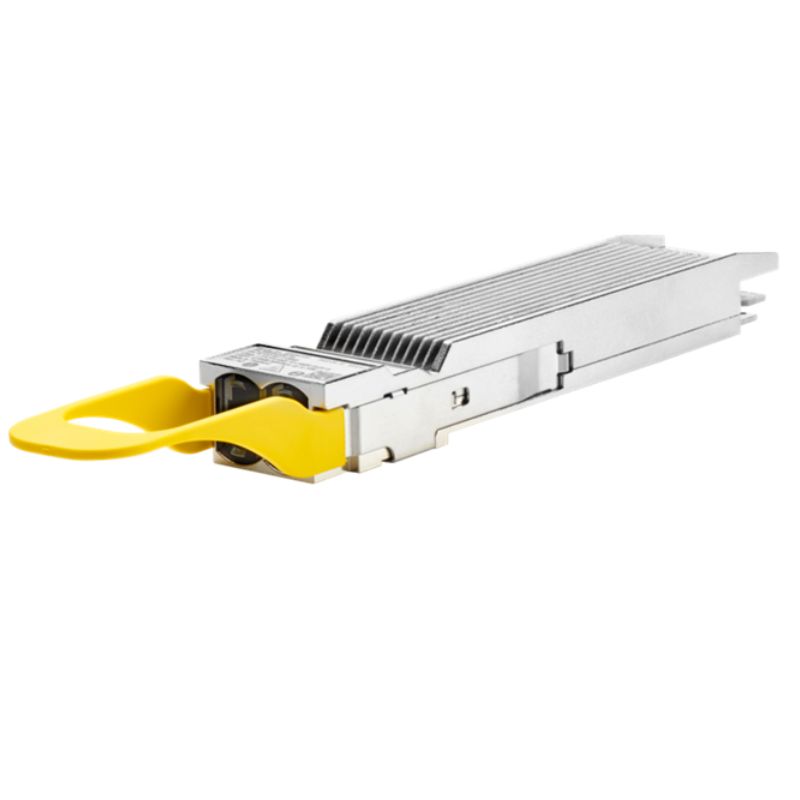


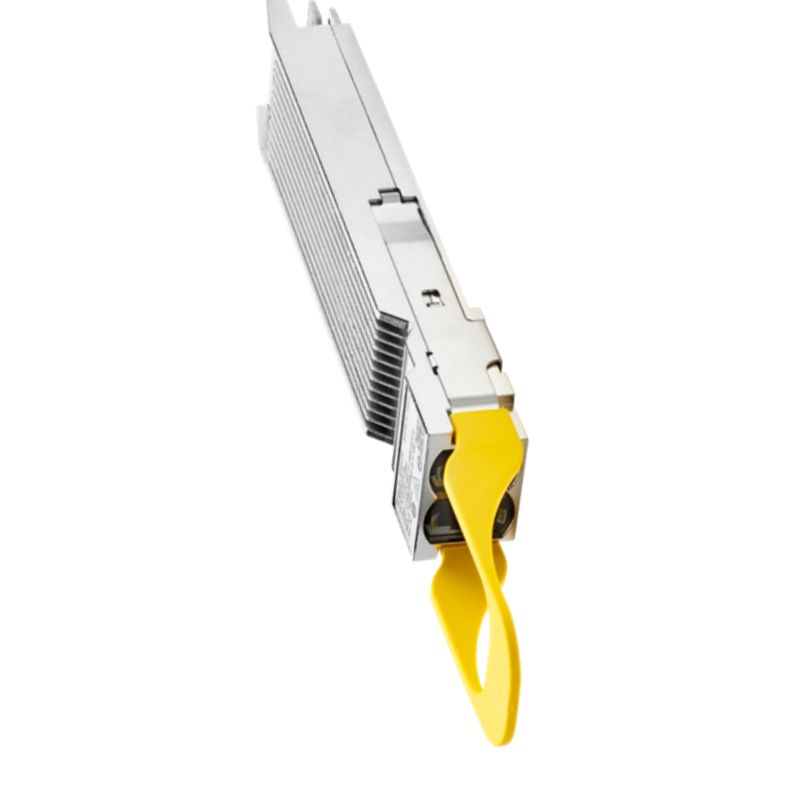
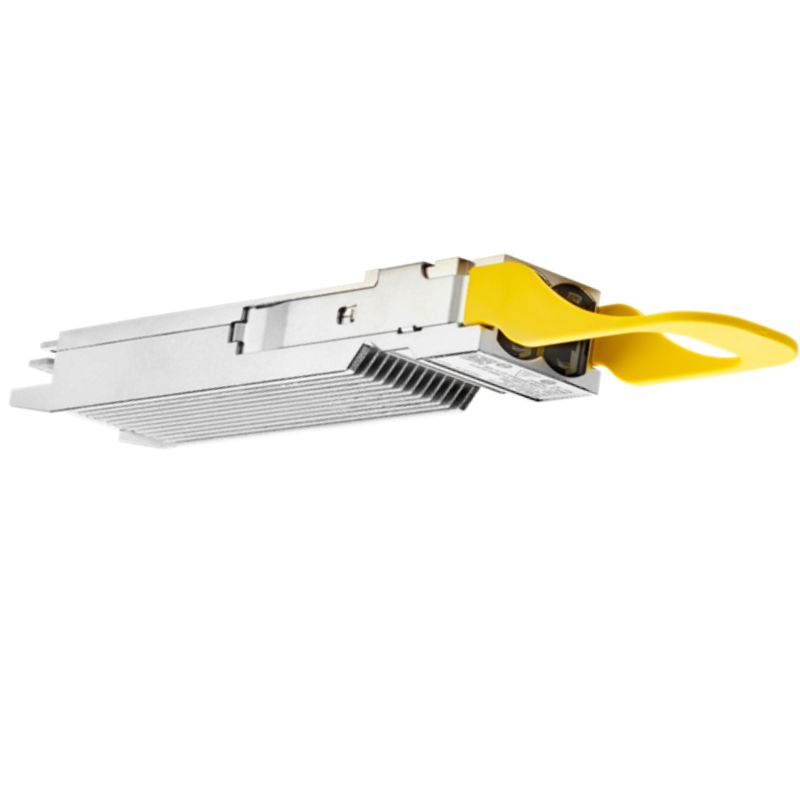
HPE P86377-B21 2x400GbE OSFP 2-port Multi-mode 50m Flat-Top InfiniBand/Ethernet Transceiver. New Sealed with 1-Year Replacement Warranty
HPE P86377-B21 2x400GbE OSFP 2-port Multi-mode 50m Flat-Top InfiniBand/Ethernet Transceiver is a high-performance networking module engineered for ultra-fast data center connectivity, supporting next-generation bandwidth-intensive workloads with exceptional reliability and efficiency. Designed under the advanced networking portfolio of this transceiver enables seamless integration across high-density environments where speed, stability, and low latency are critical for enterprise-grade infrastructure and cloud-scale deployments.
The HPE P86377-B21 2x400GbE OSFP 2-port Multi-mode 50m Flat-Top InfiniBand/Ethernet Transceiver represents a specialized class of ultra-high-performance optical networking components designed for next-generation data center architectures. This category of transceivers is engineered to support extreme bandwidth demands, low-latency communication, and highly scalable interconnect topologies required in artificial intelligence workloads, high performance computing environments, large-scale cloud platforms, and distributed storage systems.
As digital workloads continue to evolve, the demand for faster, more efficient, and more reliable interconnect solutions has intensified. This category focuses on optical modules that bridge high-density switching fabrics with advanced server and storage systems, enabling seamless data transmission across short-reach multimode fiber links. The design of these modules prioritizes signal integrity, energy efficiency, and compact mechanical architecture to fit within dense networking environments.
The OSFP form factor used in this transceiver category is optimized for next-generation 800G-class networking systems and advanced 400G dual-channel configurations. The mechanical and electrical architecture is built to support higher power envelopes while maintaining thermal stability under continuous high-load operations. The dual-port configuration allows simultaneous transmission across two independent 400GbE channels, effectively doubling throughput capabilities within a single module footprint.
This design approach significantly enhances port density within modern switch systems. Instead of relying on multiple discrete transceiver modules, the integrated dual-port OSFP architecture consolidates bandwidth delivery, reduces physical space requirements, and improves airflow efficiency within densely populated chassis environments. The flat-top design further improves thermal conduction by optimizing surface contact with cooling systems, enabling more consistent performance in high-temperature data center racks.
A defining characteristic of this category is its ability to support both InfiniBand and Ethernet protocols, offering flexible deployment across heterogeneous networking environments. InfiniBand compatibility ensures ultra-low latency communication for tightly coupled compute clusters, often used in scientific computing, machine learning training, and simulation workloads. Ethernet compatibility, on the other hand, provides broad interoperability across enterprise and cloud infrastructures.
This dual-protocol capability eliminates the need for separate hardware ecosystems, allowing organizations to standardize on a unified interconnect strategy. The result is improved operational efficiency, simplified procurement processes, and reduced complexity in network design. High-throughput Ethernet configurations benefit from enhanced congestion control mechanisms, while InfiniBand deployments leverage deterministic communication patterns for maximum performance consistency.
The transceiver category is optimized for multimode fiber environments with a transmission reach of up to 50 meters. This range is particularly suitable for intra-data center connectivity, where high-density switch-to-switch and switch-to-server links require stable, high-bandwidth performance over relatively short distances. Multimode fiber enables cost-effective deployment while maintaining high signal quality for 400GbE-class transmissions.
The optical signaling technology employed ensures minimal dispersion and attenuation across supported fiber channels. This allows consistent data integrity even under sustained high-throughput conditions. The system is designed to maintain synchronization across multiple lanes of data transmission, ensuring efficient parallel processing of network traffic without degradation in performance.
The flat-top OSFP configuration is a critical innovation in thermal management and mechanical integration. By maximizing the top surface area of the module, heat dissipation is significantly improved, allowing for more effective contact with passive and active cooling solutions. This design is particularly important in high-density switch environments where thermal accumulation can impact overall system stability.
The mechanical structure is reinforced to maintain structural integrity under continuous insertion and removal cycles. This durability ensures long-term reliability in mission-critical environments where hardware changes and upgrades occur regularly. The flat-top architecture also supports consistent airflow patterns across adjacent modules, reducing thermal hotspots within densely populated networking racks.
Modern artificial intelligence workloads demand massive data throughput between compute nodes, storage arrays, and distributed processing units. This category of transceivers is specifically designed to meet such requirements by delivering aggregated 800GbE-class performance through dual 400GbE channels. This level of bandwidth density enables faster model training cycles, improved distributed computation efficiency, and reduced communication bottlenecks.
Cloud service providers also benefit from the scalability offered by this category. Large-scale virtualization environments, containerized workloads, and microservices architectures require consistent and predictable network performance. High-speed optical transceivers ensure that latency-sensitive operations such as database synchronization, load balancing, and real-time analytics function without interruption.
Maintaining signal integrity at 400GbE speeds requires precise engineering across electrical, optical, and mechanical domains. This category incorporates advanced modulation techniques, forward error correction mechanisms, and optimized lane alignment strategies to ensure data fidelity across transmission paths. These technologies reduce bit error rates and improve overall network reliability.
The transceiver design also incorporates adaptive equalization methods to compensate for channel impairments caused by connector variability, fiber imperfections, and environmental fluctuations. This ensures stable performance even in challenging deployment scenarios where infrastructure conditions may not be perfectly controlled.
Energy consumption is a critical consideration in high-density data center environments. The P86377-B21 class of transceivers is engineered to balance high throughput with optimized power usage. By integrating efficient optical engines and low-power electrical interfaces, the module reduces overall energy draw while maintaining peak performance levels.
Thermal efficiency contributes directly to power savings by reducing the need for aggressive active cooling systems. This leads to improved operational cost efficiency and supports sustainable data center design practices. The reduction in power per bit transmitted is a key factor in enabling scalable network expansion without proportional increases in energy consumption.
This category is widely deployed in hyperscale data centers, enterprise cloud environments, and high-performance computing clusters. In AI training clusters, the transceivers facilitate rapid synchronization between GPU nodes, enabling efficient distributed learning processes. In storage-heavy environments, they support high-speed replication and backup operations across geographically distributed systems.
Telecommunication infrastructure also benefits from this class of optical modules, particularly in backbone aggregation layers where high-capacity traffic routing is required. Financial institutions and real-time analytics platforms rely on similar high-speed interconnects to ensure low-latency transaction processing and rapid data ingestion.
One of the defining strengths of this category is its ability to scale seamlessly within evolving network architectures. As data demands increase, additional modules can be integrated into existing switching fabrics without requiring significant redesign of infrastructure. This scalability supports long-term investment protection and reduces the need for frequent hardware replacement cycles.
The dual-channel design allows network architects to allocate bandwidth dynamically based on workload requirements. This flexibility ensures optimal utilization of available resources and prevents underutilization of high-performance hardware components.
The transceiver is designed to integrate with advanced HPE networking platforms and compatible OSFP-enabled switches. This ensures interoperability across a wide range of enterprise-grade systems, allowing organizations to deploy consistent networking standards across multiple infrastructure layers.
Compatibility considerations also extend to fiber infrastructure, connector alignment, and signal calibration protocols. This ensures that integration into existing environments can be achieved with minimal disruption and maximum efficiency. Standardized design practices help maintain consistency across deployment cycles and reduce configuration complexity.


 Contact Us
 Information
 Catalog
 Solid State Drives (SSD)
 Network Switches
 Hard Disk Drives
 HBA & Controllers
 PC & Servers
 PC & Server Memory
 CPU & Processors
 Network Routers
 Power Supplies
 Tape Drives & Libraries
 Network Devices
 Computer & Network Cables