(7% discount is applied at checkout)
Cart is empty
Your go-to destination for cutting-edge server products
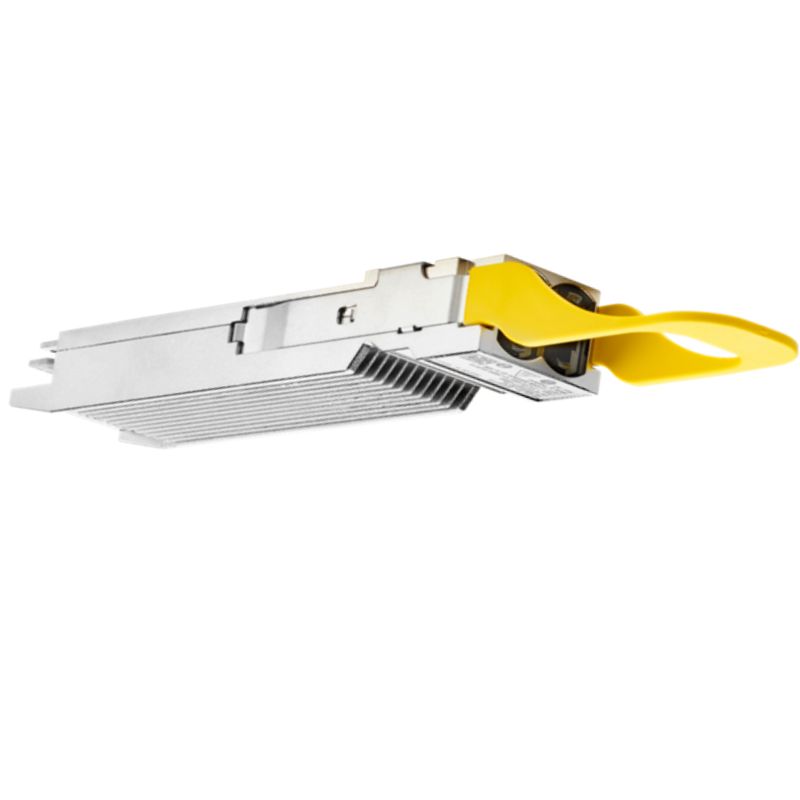


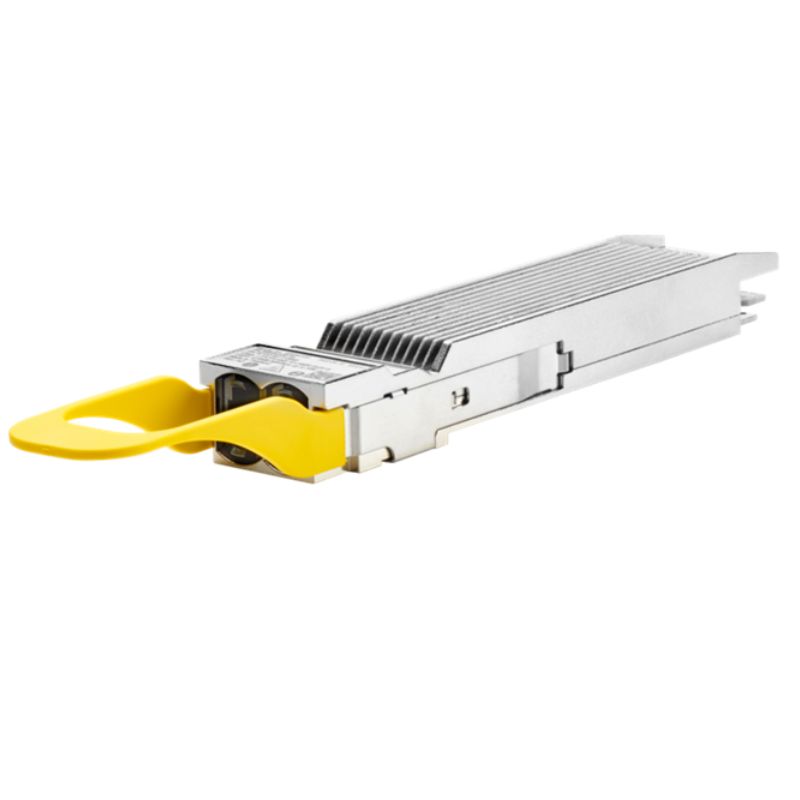
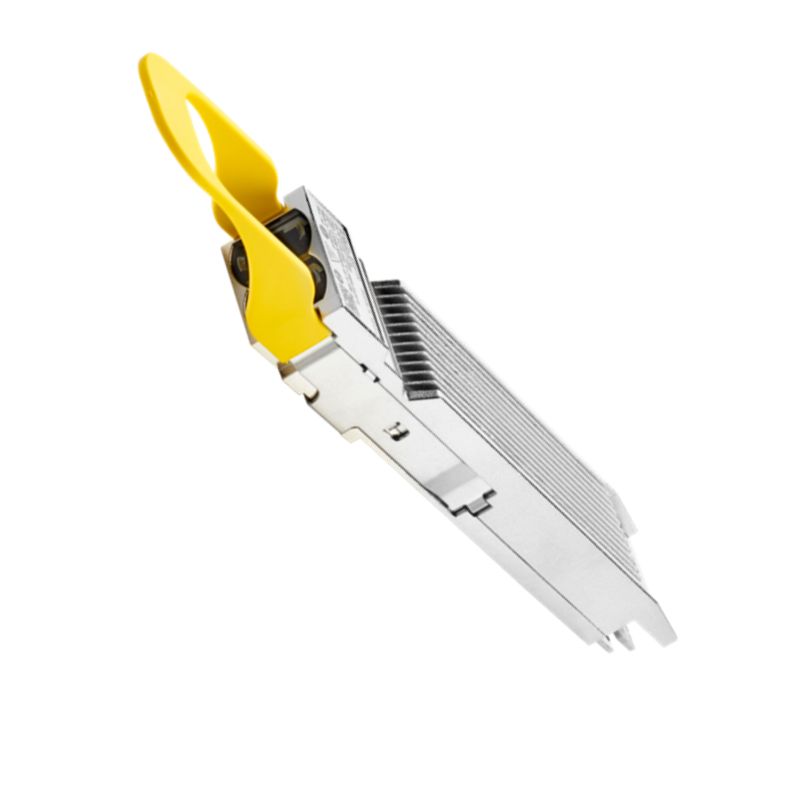
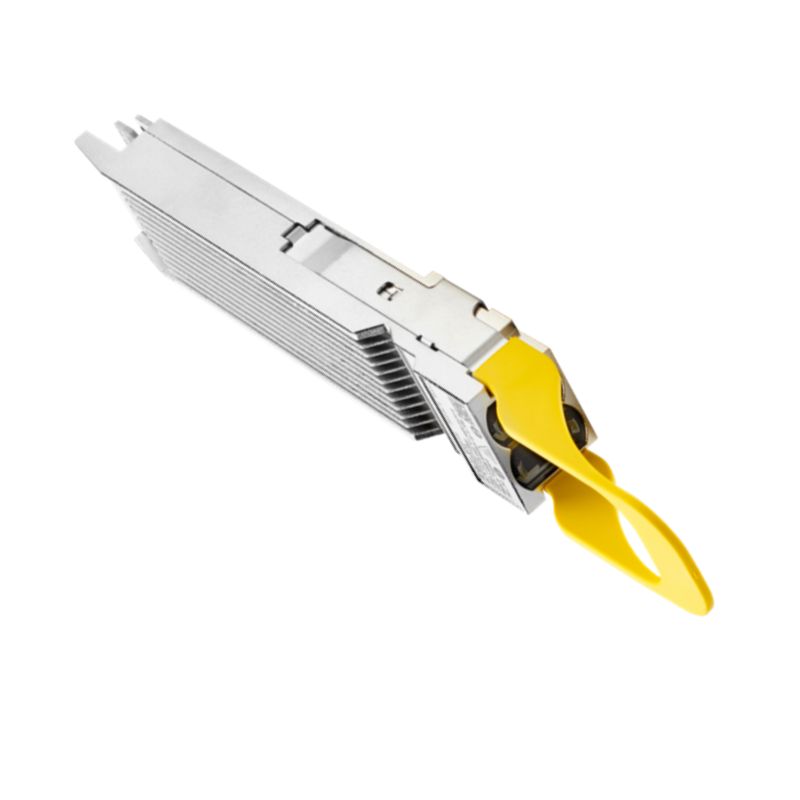
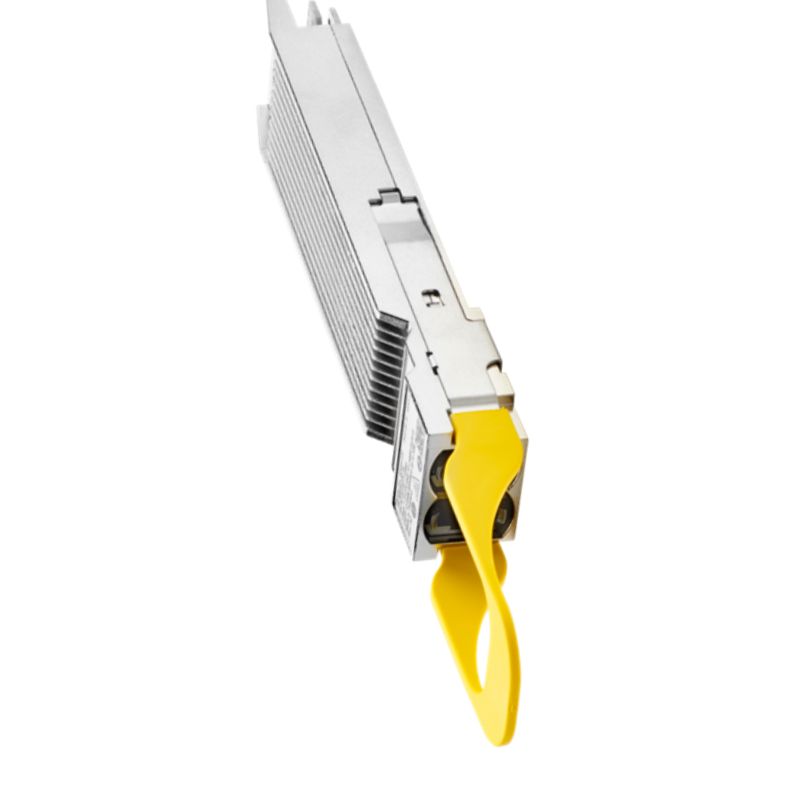
HPE P86531-001 2x400GbE OSFP 2-port Multi-mode 50m InfiniBand/Ethernet Transceiver. New Sealed with 1-Year Replacement Warranty
HPE P86531-001 2x400GbE OSFP dual-port multi-mode optical transceiver is a high-performance networking solution engineered for ultra-fast data center connectivity. Designed to support both InfiniBand and Ethernet environments, this advanced module delivers reliable 2x400 Gigabit throughput with a transmission reach of up to 50 meters over multi-mode fiber, making it ideal for short-range, high-bandwidth interconnects in modern enterprise and hyperscale infrastructures.
The HPE P86531-001 2x400GbE OSFP 2-port Multi-mode 50m InfiniBand and Ethernet Transceiver is engineered for ultra-high bandwidth networking environments where performance density, optical precision, and low-latency communication are critical. Designed for next-generation data center fabrics, this transceiver supports dual 400 Gigabit Ethernet lanes within a single OSFP optical module, enabling aggregated throughput of 800Gbps across two ports while maintaining compatibility with both Ethernet and InfiniBand protocols. This design aligns with the growing demand for accelerated computing workloads, artificial intelligence clusters, high-performance storage networks, and hyperscale cloud infrastructures.
Built on advanced optical engineering principles, this module leverages multimode fiber technology optimized for short-reach interconnects up to 50 meters. This makes it particularly suitable for intra-rack and inter-rack connections within tightly packed data center environments. The transceiver integrates high-speed electrical-to-optical conversion components that ensure minimal signal degradation, maintaining signal integrity even under sustained high-throughput workloads.
The OSFP (Octal Small Form Factor Pluggable) architecture used in this module is specifically designed for high-density networking environments where thermal efficiency and port scalability are essential. Compared to traditional QSFP variants, OSFP provides increased power handling capacity, improved thermal dissipation characteristics, and superior electrical performance at extreme data rates.
The physical structure of the module supports eight electrical lanes internally, allowing efficient aggregation into two high-speed 400GbE channels. This architecture reduces congestion within the networking chassis while improving airflow and thermal stability. The mechanical interface ensures secure seating and stable signal transmission even in high-vibration enterprise environments.
This transceiver supports dual independent 400 Gigabit Ethernet channels, enabling flexible network architecture configurations. The dual-port design allows network engineers to segment traffic workloads efficiently or aggregate bandwidth for compute-intensive applications such as distributed machine learning training or large-scale database replication.
Each port operates at 400GbE with full-duplex capability, ensuring simultaneous bidirectional data flow without bottlenecks. The architecture supports high packet-per-second processing, making it suitable for environments requiring deterministic latency and consistent throughput under load.
One of the defining features of this transceiver is its dual-protocol support for both InfiniBand and Ethernet environments. InfiniBand is widely used in high-performance computing clusters due to its low latency and high throughput characteristics, while Ethernet remains the dominant protocol in enterprise and cloud networks. This module bridges both ecosystems, providing seamless interoperability across diverse infrastructure environments.
The adaptive protocol compatibility allows data center architects to deploy unified hardware across heterogeneous network stacks. This reduces inventory complexity and simplifies infrastructure scaling while maintaining performance consistency across workloads.
This transceiver is optimized for multimode fiber infrastructure, enabling efficient short-range optical communication up to 50 meters. Multimode fiber uses a larger core diameter compared to single-mode fiber, allowing multiple light paths to propagate simultaneously. This makes it cost-effective and ideal for intra-data-center deployments where long-distance transmission is not required.
The optical engine is tuned to minimize modal dispersion and signal attenuation, ensuring clean data transmission across supported distances. This results in stable link performance even in densely cabled environments where fiber routing complexity is high.
At 400GbE per channel, signal integrity becomes a critical engineering requirement. This module incorporates advanced equalization techniques, error correction mechanisms, and low-jitter clock recovery systems to ensure stable transmission under extreme data rates.
The electrical interface is designed to minimize insertion loss and reflection, ensuring that high-frequency signals maintain waveform integrity throughout the transmission path. This is particularly important in environments with dense switch fabrics and complex cabling layouts.
The HPE P86531-001 transceiver is designed for modern hyperscale and enterprise data center architectures. It is particularly effective in environments where ultra-low latency and high throughput are required simultaneously.
Common deployment scenarios include distributed computing clusters, artificial intelligence training systems, real-time analytics platforms, and high-frequency trading infrastructures. Its dual-port architecture enables flexible network segmentation or aggregation depending on workload requirements.
This transceiver supports multiple network topology configurations including leaf-spine architectures, fat-tree designs, and mesh interconnects. Its dual-channel capability allows efficient scaling of network nodes without introducing congestion points.
In spine-leaf architectures, the module can be deployed at both leaf and spine layers, enabling uniform bandwidth distribution across the network fabric. This ensures consistent latency and throughput across all connected nodes.
The module integrates precision-engineered electrical lanes that connect seamlessly with host ASICs and switching platforms. These lanes are optimized for minimal impedance mismatch and high-frequency signal stability.
On the optical side, the transceiver uses advanced laser modulation techniques to ensure consistent light emission across multimode fiber channels. This improves overall link reliability and reduces retransmission overhead.
Reliability is a critical factor in mission-critical environments where downtime can result in significant operational impact. This transceiver is built with industrial-grade components that ensure long-term stability under continuous operation.
The module undergoes rigorous validation processes to ensure compliance with high-performance networking standards, including stress testing under temperature variation, vibration, and sustained bandwidth load conditions.
Scalability is a fundamental requirement in modern computing infrastructures. This transceiver supports scalable architectures that can grow from small clusters to hyperscale deployments without requiring fundamental changes in hardware design.
By enabling dual 400GbE channels in a single module, network architects can effectively double interconnect density while maintaining manageable cabling structures. This improves airflow, reduces physical congestion, and simplifies maintenance operations.
This transceiver is designed to integrate seamlessly with compatible HPE networking infrastructure, as well as industry-standard OSFP-enabled switching platforms. This flexibility allows it to be deployed in mixed vendor environments without sacrificing performance.
Its plug-and-play design simplifies installation, enabling rapid deployment in new or existing network infrastructures. This reduces downtime during upgrades and accelerates system expansion cycles.


 Contact Us
 Information
 Catalog
 Solid State Drives (SSD)
 Network Switches
 Hard Disk Drives
 HBA & Controllers
 PC & Servers
 PC & Server Memory
 CPU & Processors
 Network Routers
 Power Supplies
 Tape Drives & Libraries
 Network Devices
 Computer & Network Cables