(7% discount is applied at checkout)
Cart is empty
Your go-to destination for cutting-edge server products
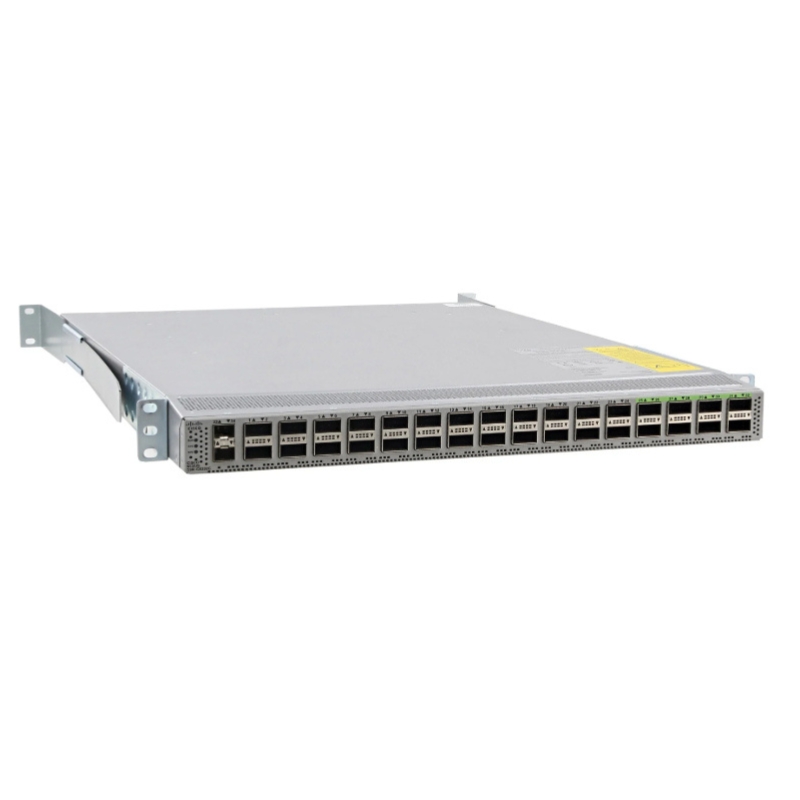


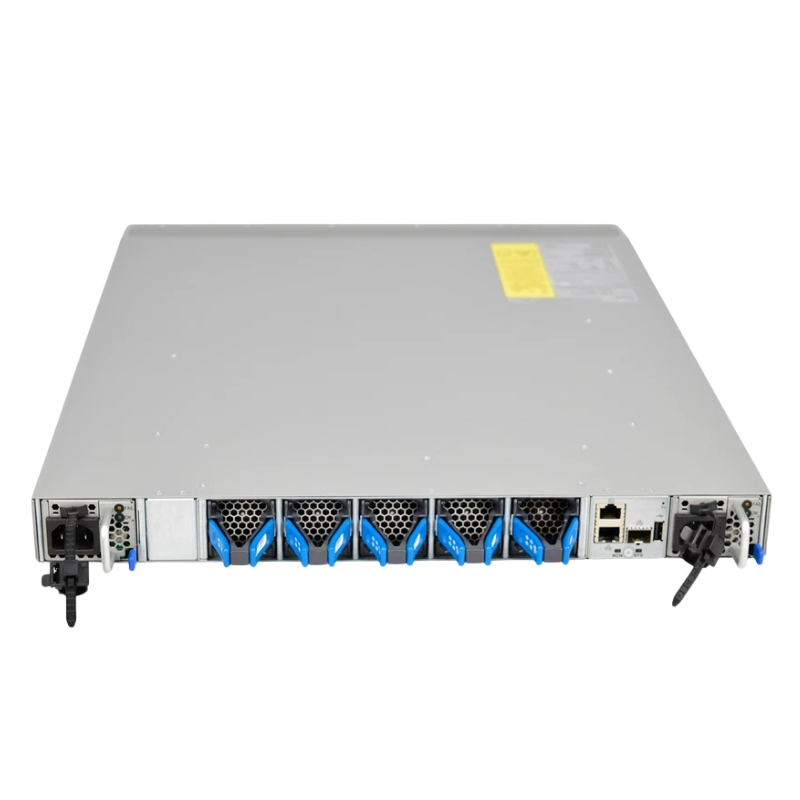
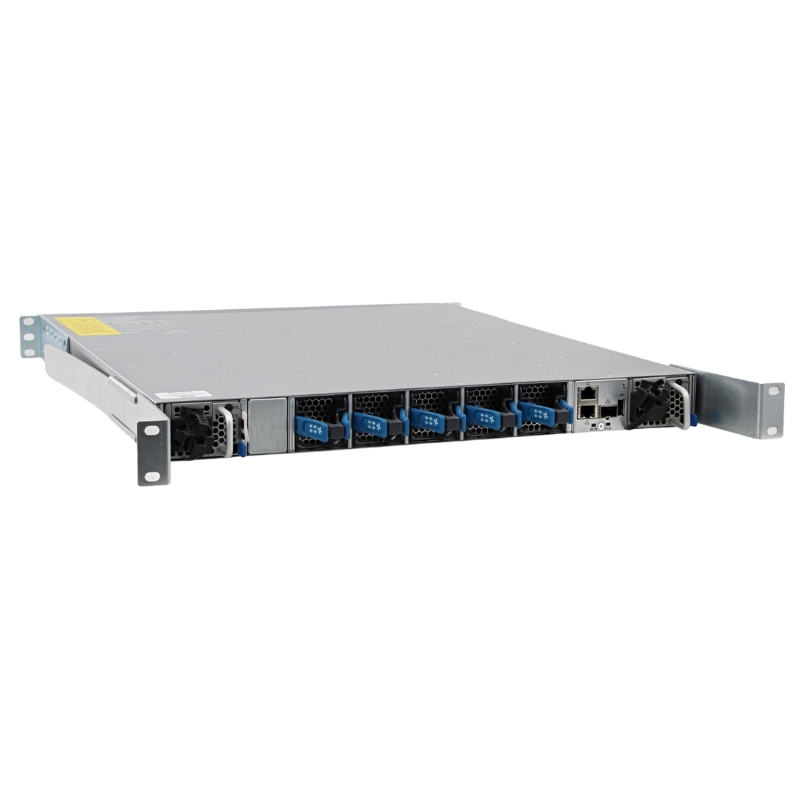
Cisco N9K-C9332C Nexus 9332C ACI Spine Network Switch with 32 Ports, supporting 40/100G QSFP28 and 1/10G SFP connections. Excellent Refurbished with 1 year replacement warranty
| SKU/MPN | Warranty | Price | Condition | You save |
|---|---|---|---|---|
| N9K-C9332C | 1 Year Warranty | $9,580.00 | Factory-Sealed New in Original Box (FSB) | You save: $3,353.00 (26%) |
| N9K-C9332C | 1 Year Warranty | $2,095.00 | Excellent Refurbished | You save: $733.25 (26%) |
The Cisco Nexus 9332C is engineered for modern data center fabrics, delivering ultra-low latency, massive throughput, and flexible connectivity. Designed for ACI spine deployments, this switch supports scalable architectures where performance, reliability, and automation are critical.
This model offers a high port count suitable for spine or aggregation layers, enabling dense east-west traffic flows across the fabric.
Built for bandwidth-intensive applications, the Nexus 9332C ensures predictable forwarding and non-blocking throughput.
Reliability and thermal efficiency are prioritized through redundant components and optimized airflow.
Multiple management access options simplify deployment, monitoring, and maintenance.
The Cisco N9K-C9332C Nexus 9332C belongs to the Cisco Nexus 9000 Series, a data center switching family engineered to support modern, high-density, low-latency network fabrics. Within this series, the 9332C is positioned as a high-performance spine switch optimized for Cisco Application Centric Infrastructure deployments. As a spine-class device, it plays a critical role in scalable leaf-spine architectures by providing consistent, predictable bandwidth between all connected leaf switches. The switch is designed to meet the demands of cloud-scale data centers, enterprise core fabrics, service provider environments, and large-scale virtualization platforms where east-west traffic dominates network patterns.
The Nexus 9332C integrates tightly with Cisco ACI, enabling centralized policy-driven automation, enhanced application visibility, and simplified operations across the entire fabric. Its hardware and software design emphasizes deterministic performance, rapid convergence, and seamless integration with both traditional and software-defined networking models. This makes the category particularly relevant for organizations transitioning from legacy three-tier architectures to modern spine-leaf topologies.
The Cisco N9K-C9332C is equipped with 32 high-speed QSFP28 ports that support both 40 Gigabit Ethernet and 100 Gigabit Ethernet connectivity. This port density enables massive aggregate throughput while maintaining a compact 1RU form factor. Each QSFP28 interface is capable of operating at full line rate, providing non-blocking performance essential for spine-layer switching. The flexibility of supporting multiple Ethernet speeds allows network architects to design fabrics that balance performance, cost, and future scalability.
In addition to native 40G and 100G operation, the QSFP28 ports support breakout configurations that enable connectivity to 1G and 10G SFP-based devices using appropriate fan-out cables. This capability enhances backward compatibility and simplifies integration with existing network infrastructure. As a result, the switch category supports both greenfield deployments and incremental upgrades without forcing a complete overhaul of edge or access layers.
Spine switches in a leaf-spine architecture must provide uniform, high-bandwidth connectivity between all leaf nodes. The Cisco Nexus 9332C delivers consistent latency and throughput across all ports, ensuring predictable application performance regardless of traffic patterns. With all ports capable of running at 100G, the switch supports massive east-west traffic flows generated by virtualization clusters, container platforms, and distributed storage systems.
The category is particularly suited for data centers that require linear scalability. As additional leaf switches are added to the fabric, the 9332C maintains full bandwidth availability, allowing organizations to scale out without redesigning the network. This scalability is a foundational requirement for modern cloud-native and DevOps-driven environments.
Support for both 40G and 100G speeds provides a smooth migration path for organizations upgrading from older generations of data center networking. Enterprises can deploy the Cisco Nexus 9332C initially using 40G optics and later transition to 100G as application demands increase. The ability to support 1G and 10G connections through breakout cables further protects existing investments in access-layer equipment.
This flexibility positions the category as a long-term networking solution rather than a short-term upgrade. By accommodating mixed-speed environments, the Nexus 9332C helps reduce capital expenditures while still enabling access to next-generation performance.
The Cisco N9K-C9332C is purpose-built to operate as a spine switch within Cisco ACI fabrics. ACI introduces a policy-based networking model that abstracts configuration complexity and aligns network behavior with application requirements. The 9332C supports the full ACI feature set, including centralized management through the Cisco Application Policy Infrastructure Controller, integrated telemetry, and automated fabric provisioning.
Within this category, hardware and software are tightly integrated to deliver consistent policy enforcement across the fabric. Network administrators can define application-level intents that are automatically translated into forwarding rules, security policies, and quality of service parameters. This reduces operational overhead and minimizes the risk of configuration errors in large-scale environments.
Traditional networking models often require manual configuration of individual devices, which becomes increasingly complex as the network grows. The Cisco Nexus 9332C category supports policy-based automation that enables rapid deployment and modification of network services. Through ACI, administrators can apply consistent policies across hundreds or thousands of endpoints without manual intervention.
This operational model improves agility and reduces time-to-service for new applications. It also enhances consistency and compliance by ensuring that policies are uniformly enforced throughout the fabric. For enterprises and service providers alike, this level of automation is essential for maintaining reliable operations at scale.
Visibility into network and application behavior is a critical requirement for modern data centers. The Cisco Nexus 9332C supports advanced telemetry capabilities that provide real-time insights into traffic flows, latency, and fabric health. This data is integrated into the ACI management framework, enabling proactive monitoring and faster troubleshooting.
By correlating network performance with application metrics, organizations can identify bottlenecks and performance issues before they impact end users. This enhanced visibility is particularly valuable in highly virtualized and containerized environments where traditional monitoring tools may fall short.
As a spine switch, the Cisco Nexus 9332C is engineered for ultra-low latency and deterministic forwarding behavior. Its hardware architecture is optimized to handle high packet rates without congestion, ensuring that latency-sensitive applications perform reliably. This is especially important for workloads such as real-time analytics, financial trading platforms, and distributed databases.
The switch category leverages custom ASIC technology designed to deliver consistent performance across all ports. This ensures that traffic patterns do not introduce unexpected delays, even during peak utilization. For data center operators, predictable latency is a key differentiator when selecting spine-layer hardware.
The non-blocking design of the Cisco Nexus 9332C ensures that all ports can operate at full capacity simultaneously. This is essential in spine-leaf fabrics where multiple leaf switches may transmit large volumes of data concurrently. By eliminating internal bottlenecks, the switch maintains optimal throughput and reduces the risk of congestion-related performance degradation.
Line-rate performance across all supported speeds makes the category suitable for demanding workloads that generate sustained high traffic volumes. This capability supports the growth of data-intensive applications such as big data processing, machine learning, and large-scale virtualization.
Deterministic forwarding behavior ensures that packets are delivered consistently and predictably, regardless of traffic conditions. The Cisco Nexus 9332C is designed to meet these requirements, making it suitable for mission-critical applications that cannot tolerate jitter or packet loss.
This reliability is a key factor in environments such as financial services, healthcare, and telecommunications, where network performance directly impacts service quality and regulatory compliance. The category addresses these needs through robust hardware design and advanced congestion management features.
The Cisco N9K-C9332C Nexus 9332C category is designed to support a wide range of modern data center use cases. These include private and hybrid cloud deployments, large-scale virtualization platforms, container orchestration systems, and software-defined storage environments. Its high port density and flexible connectivity options make it adaptable to diverse architectural requirements.
As data centers evolve to support microservices and distributed applications, network fabrics must accommodate increased east-west traffic and dynamic workload mobility. The Nexus 9332C addresses these challenges by providing a scalable, high-performance backbone that supports rapid changes in traffic patterns.
Virtualized and containerized workloads generate significant east-west traffic as services communicate across multiple hosts and clusters. The Cisco Nexus 9332C provides the bandwidth and low latency required to support these communication patterns. Its integration with ACI further enhances support for virtual machine and container networking through seamless policy enforcement and automation.
This makes the category well-suited for enterprises adopting platforms such as VMware, Kubernetes, and OpenShift. The switch enables consistent networking policies across physical and virtual domains, simplifying management and improving application performance.
Cloud-scale data centers and service provider environments often require multi-tenant isolation and scalable network segmentation. The Cisco Nexus 9332C supports these requirements through ACI-based tenant separation and policy control. Each tenant can be assigned specific network policies without impacting others, ensuring secure and efficient resource utilization.
This capability is essential for hosting providers, managed service operators, and large enterprises running multiple business units on shared infrastructure. The category supports secure multi-tenancy while maintaining high performance and operational simplicity.
Reliability and availability are fundamental characteristics of the Cisco Nexus 9332C category. As a spine switch, it is a critical component of the data center fabric, and any downtime can have widespread impact. The switch is designed with enterprise-grade hardware, redundant components, and robust software to ensure continuous operation.
High-quality manufacturing standards and rigorous testing contribute to the long-term stability of the platform. This reliability is a key consideration for organizations operating mission-critical applications and services.
The Cisco Nexus 9332C supports redundant power supplies and cooling modules, ensuring continued operation in the event of a component failure. This design minimizes the risk of downtime and supports high availability requirements in enterprise and service provider environments.
Efficient thermal management also contributes to overall system reliability by maintaining optimal operating temperatures under heavy workloads. This is particularly important in high-density data center racks where heat dissipation can be a challenge.
The software ecosystem supporting the Cisco Nexus 9332C emphasizes stability, security, and long-term support. Regular updates and patches ensure compatibility with evolving standards and emerging threats. Integration with Cisco’s broader networking portfolio further enhances interoperability and supportability.
This focus on software quality ensures that the category remains a dependable foundation for data center networks over its operational lifespan.
The Cisco N9K-C9332C Nexus 9332C occupies a strategic role within modern network infrastructures. As a spine switch, it enables the high-speed interconnection of leaf switches, forming the backbone of scalable data center fabrics. Its support for 40G, 100G, and breakout connectivity ensures adaptability to changing performance requirements.
The category aligns with industry trends toward software-defined networking, automation, and cloud-native architectures. By combining high-performance hardware with policy-driven management, the Nexus 9332C supports organizations seeking to modernize their networks while maintaining reliability and control.
Network infrastructure investments must anticipate future growth and technological change. The Cisco Nexus 9332C is designed with this principle in mind, offering support for high-speed Ethernet standards and integration with advanced networking frameworks such as ACI. This future-ready approach helps organizations extend the lifespan of their infrastructure investments.
As application demands continue to grow, the category provides a scalable and adaptable foundation capable of supporting emerging workloads and technologies.
The versatility of the Cisco Nexus 9332C makes it suitable for a wide range of deployment scenarios, from enterprise private clouds to large-scale service provider data centers. Its combination of performance, flexibility, and automation support addresses the needs of diverse industries and operational models.
This broad applicability reinforces the category’s position as a cornerstone of modern data center networking solutions, delivering the performance and reliability required to support digital transformation initiatives.


 Contact Us
 Information
 Catalog
 Solid State Drives (SSD)
 Network Switches
 Hard Disk Drives
 HBA & Controllers
 PC & Servers
 PC & Server Memory
 CPU & Processors
 Network Routers
 Power Supplies
 Tape Drives & Libraries
 Network Devices
 Computer & Network Cables