(7% discount is applied at checkout)
Cart is empty
Your go-to destination for cutting-edge server products
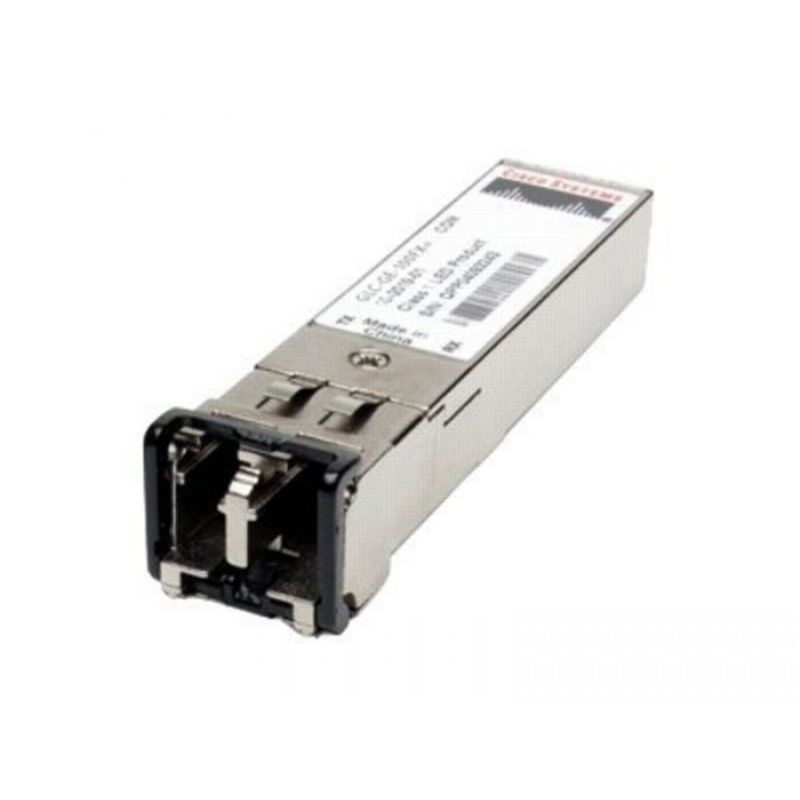


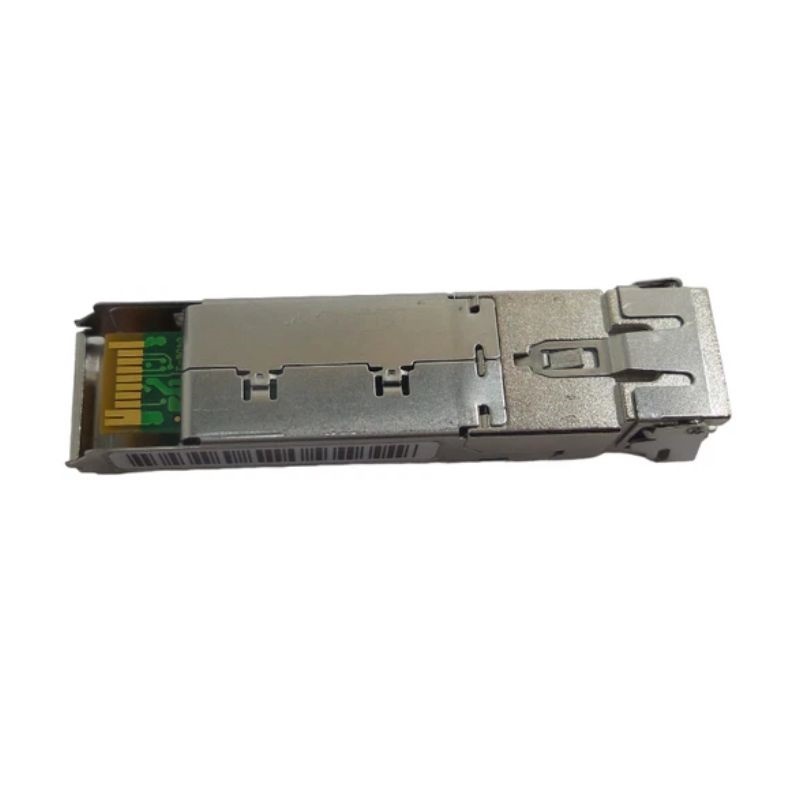
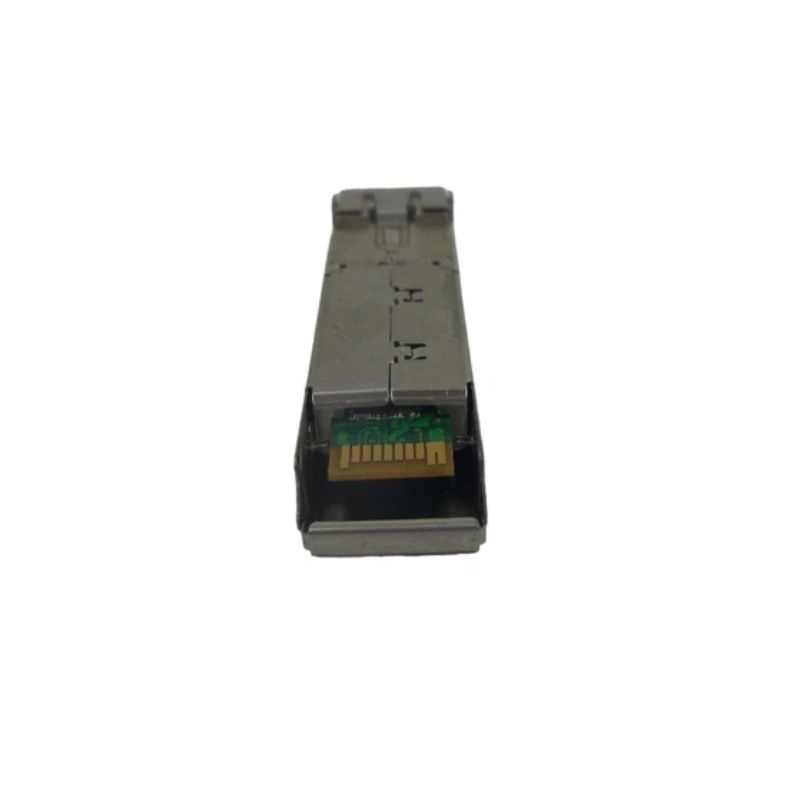
Cisco 10-2019-02 SFP (mini-GBIC) 1310 NM LC Multi-mode Transceiver Module. Factory-Sealed New in Original Box (FSB) with 1 year replacement warranty
The Cisco 10-2019-02 is a compact, hot-swappable SFP mini-GBIC transceiver designed for reliable Fast Ethernet (100BASE-FX) fiber links. It plugs directly into compatible Cisco switch ports, enabling quick optical uplinks without a chassis overhaul.
Built for Cisco environments, this module aligns with many Catalyst 2K/3K series platforms. Always verify your specific switch OS and slot requirements before deployment.
The Cisco 10-2019-02 SFP (mini-GBIC) 1310 nm LC multi-mode transceiver module is part of a widely deployed family of hot-swappable optical interfaces that deliver dependable Gigabit Ethernet connectivity across campus networks, metropolitan access links, data center interconnects, and industrial edge environments. Built around the compact Small Form-factor Pluggable (SFP) footprint, the module enables network architects to match port optics precisely to fiber plant characteristics, optimize link budgets, and future-proof aggregation layers without replacing the host switch or router. Its 1310 nm optical wavelength and LC duplex interface make it a practical option for environments migrating from legacy 1000BASE-SX to longer-reach 1310 nm links on multi-mode fiber (MMF), while also aligning with best practices for mixed-fiber deployments in modern enterprise networks.
Engineered for interoperability with Cisco platforms that support SFP optics, the 10-2019-02 serves scenarios that require consistent throughput, low latency, and simplified maintenance. The hot-swap capability enables transport upgrades and replacement without interrupting chassis power or neighboring ports. Administrators can standardize on this transceiver type to streamline spares, simplify documentation, and reduce mean time to repair (MTTR) in distributed sites.
While 850 nm is commonly associated with short-reach multi-mode links, the 1310 nm window is preferred in many environments for its lower chromatic dispersion and compatibility with diverse fiber types. In practical campus designs, the 1310 nm wavelength—together with appropriate cabling practices—offers robust signal integrity over extended MMF runs and allows smoother transitions to single-mode fiber (SMF) when required elsewhere in the topology. This wavelength also aligns with long-standing optical standards used in access and metropolitan networks, providing a conservative and field-proven path for organizations that prioritize stability.
Network teams planning uniform optics across disparate buildings, temporary facilities, or brownfield expansions often choose 1310 nm SFPs to reduce the variety of spare parts and to align with cross-connect panels pre-wired for LC duplex connectors. In mixed-plant scenarios, 1310 nm optics simplify documentation and reduce the risk of mismatched patching—especially where 850 nm short-reach modules coexist with longer-reach modules in the same patch field.
The SFP form factor allows insertion and removal without powering down the host system. Field engineers benefit from the ability to swing services quickly, migrate between optical types as requirements evolve, and isolate faults by module rather than by chassis. This modularity delivers operational flexibility for everything from routine moves/adds/changes to non-intrusive maintenance windows where downtime budgets are tight.
As a 1310 nm LC multi-mode transceiver in the SFP profile, the 10-2019-02 targets 1 Gbps Ethernet environments seeking stable, low-error optical paths. Typical deployments prioritize balanced optical power budgets, reliable LC connectivity, and compliance with Gigabit Ethernet physical layer expectations across campus backbones and access-aggregation segments.
The LC duplex connector is the prevailing standard for SFP-class optics due to its compact footprint and latch-based stability. In structured cabling systems, LC panels maximize density and make it straightforward to label and manage high-port-count fields. The 10-2019-02 leverages LC to ensure seamless patching to pre-terminated cassettes, rack enclosures, zone distribution frames, and wall-mounted termination points, all while maintaining bend radius and insertion-loss discipline demanded by enterprise cabling standards.
The module’s 1310 nm nominal wavelength is suited to multi-mode links that require dependable performance at building-to-building distances and within large facilities. When used with properly specified multi-mode fiber types (e.g., OM2/OM3/OM4) and with optical best practices, links can maintain robust margins for a variety of campus distances commonly encountered in enterprise and education networks. For environments that later transition to single-mode for longer backbones, the use of 1310 nm at the edge simplifies change management by keeping wavelength planning consistent across tiers.
Optical budgets depend on connector counts, patch panel density, quality of fiber terminations, and intermediate cross-connects. Technicians should account for insertion loss at each LC pair, estimated splice losses where applicable, and the performance characteristics of the chosen MMF grade. Cleanliness practices—such as inspection and dry cleaning of connectors before insertion—are critical to sustaining link budgets over time, particularly in dusty or high-traffic MDF/IDF spaces.
Organizations deploy the Cisco 10-2019-02 SFP in a range of contexts where 1 Gbps over optical fiber must be stable, repeatable, and easy to manage. The following scenarios highlight common patterns that benefit from 1310 nm LC multi-mode optics.
Access switches on each floor or wing often aggregate into a distribution-layer core using fiber uplinks. The 1310 nm LC multi-mode module provides a clean, low-latency path from wiring closets to intermediate distribution frames. Uniform optic selection eases documentation and reduces the risk of deploying the wrong wavelength during closet upgrades. Where intermediate distances fall within multi-mode capabilities, the module keeps costs predictable while offering a clear upgrade path if later migration to single-mode becomes necessary.
Institutions with stringent uptime needs leverage the hot-swap functionality to keep clinical floors, labs, classrooms, and administrative areas online during maintenance. Centralized spares enable on-site technicians to replace failed optics quickly, while consistent cabling (LC to LC) keeps troubleshooting straightforward across buildings. The 1310 nm wavelength helps standardize plant documentation between research buildings and administrative spaces where different fiber grades may be present.
Large venues often reconfigure floor plans and temporary IDFs for events. The 10-2019-02 SFP enables portable distribution switches to tie into core networks through existing multi-mode trunks. Event operators can scale uplinks for high-density Wi-Fi, registration kiosks, digital signage, and streaming booths while maintaining predictable performance and avoiding the complexity of heterogeneous optic inventories.
In plants or utility substations, electromagnetic interference (EMI) and long cable runs make fiber desirable. The LC multi-mode approach provides optical immunity to EMI and simplifies patching to hardened enclosures. As operational technology (OT) networks adopt Gigabit Ethernet for supervisory control and data acquisition (SCADA), the 1310 nm optics support deterministic links between aggregation switches and distributed controllers without introducing copper’s susceptibility to noise.
Retail back-of-house networks and fulfillment centers rely on uninterrupted connectivity for point-of-sale systems, handheld scanners, cameras, and voice picking. Multi-mode LC fibers commonly interconnect mezzanine IDFs and floor switches. The 10-2019-02 maintains stable 1 Gbps throughput for these critical operations while allowing maintenance teams to swap optics during off-hours or even live, minimizing business disruption.
The 10-2019-02 SFP is designed for Cisco devices that support SFP-class optics on 1 Gbps slots. In typical networks, it appears in access, distribution, and service-provider edge platforms across fixed and modular chassis. For procurement teams, the alignment with Cisco’s widely deployed hardware ecosystem simplifies qualification, spare planning, and compliance reporting.
Interoperability relies on matching optical characteristics (wavelength, power levels) and fiber types at both ends of the link. Standard LC termination and 1310 nm operation simplify cross-vendor interconnects when required. Administrators should confirm that link partners are configured for 1 Gbps full-duplex operation and that autonegotiation settings align with site standards. Clean patching and verified polarity (A-to-B) are crucial to avoid light path inversions that lead to link-down conditions.
Brownfield sites often include a mix of OM2/OM3/OM4 MMF trunks and, in some areas, single-mode runs. 1310 nm optics can be planned to co-exist with these topologies. Where necessary, work with cabling stakeholders to document each trunk’s fiber grade, length, and connector count, then select patching strategies that maintain optical margins.
Day-to-day performance of multi-mode 1310 nm links depends on optical signal-to-noise ratios, fiber quality, and handling practices. The 10-2019-02 SFP is built to deliver stable 1 Gbps transport so long as link budgets, cleanliness, and bend-radius management are respected.
Optical uplinks exhibit low and predictable latency compared to copper over similar distances, which is beneficial for voice, video, and real-time control traffic. The module’s optical characteristics support link integrity under bursty loads typical of backup windows or software updates. Error counters—such as CRC errors and input drops—should remain near zero on healthy links; rising counts can indicate contamination or micro-bends at connectors that warrant inspection.
Within manufacturer-specified temperature and humidity ranges, SFP optics maintain steady performance. Wiring closets should maintain sufficient ventilation and cable management to prevent heat accumulation around densely populated SFP cages. Dust control policies—such as covered panels and routine cleaning—protect connectors from particulate buildup that increases insertion loss over time.
Many SFPs expose digital diagnostic monitoring (DDM) values directly on the host device, allowing teams to observe transmit power, receive power, temperature, and voltage. Monitoring these metrics helps detect gradual degradation due to connector wear, fiber contamination, or aging optics, enabling replacement before service impact. Integrating thresholds with network management systems allows proactive alerts tied to site tickets.
Achieving consistent performance from the Cisco 10-2019-02 SFP requires disciplined cabling practices. The following guidance reflects field-proven habits in enterprise and service-provider environments.
Maintain A-to-B polarity through patch panels and cassettes. Label both ends of every trunk with a unique identifier, record path details in documentation, and update records during changes. Prefer color-coded boots or cable jackets to differentiate 1310 nm links from 850 nm or single-mode circuits where feasible.
Adhere to minimum bend radius guidelines for MMF patch cords and trunks to minimize micro-bending loss. Use cable managers and Velcro ties to avoid compression points. In ladder racks and vertical managers, route fiber separately from copper bundles and power to reduce incidental damage during service work.
For each link, calculate cumulative insertion loss by summing connector and splice contributions, then add margin for aging and environmental effects. Ensure the link remains well within the optical power budget for the 10-2019-02 on both transmit and receive sides. Where long cross-connect paths are unavoidable, consider reducing intermediate connector pairs or using higher-grade patch cords to reclaim margin.
Although optics themselves are not security devices, their consistent performance and diagnostic visibility support the broader security posture of a network. Reliable optical links reduce false positives in monitoring systems and help segregation policies—such as VLAN segmentation, micro-segmentation, and out-of-band management—operate without transport-layer surprises.
Integrate optical health metrics into network management dashboards. Establish alerts for falling receive power, excessive error rates, or temperature excursions that may indicate environmental problems in wiring closets. Correlate optical alarms with syslog and interface counters to accelerate root-cause analysis during incidents.
Document every optic insertion, removal, and swap with time, serial number when available, and reason for change. In multi-site deployments, standardize work instructions for cleaning and optical testing to reduce variability among field teams. A disciplined approach to change management yields consistent service quality and predictable operating costs.
Networks rarely stand still. Planning for growth and technology shifts keeps the optical layer aligned with business needs. The Cisco 10-2019-02 SFP plays a role both as a stable building block for today’s 1 Gbps links and as a bridge to future topologies.
Campuses can adopt a staged approach to modernization: stabilize existing multi-mode backbones with consistent 1310 nm optics, renovate select pathways to higher-grade MMF or single-mode where distances demand it, and then introduce higher-speed uplinks at distribution layers while maintaining 1 Gbps at the access edge. This approach avoids wholesale rip-and-replace projects and aligns capital spend with the areas of greatest need.
As 10 Gbps and 25 Gbps become common in cores and data center spines, access uplinks may remain at 1 Gbps over multi-mode for cost efficiency. Careful labeling and port planning prevent accidental cross-patching between SFP and SFP+ cages. Where chassis support mixed-speed slots, maintain clear documentation and physical separation in patch fields to reduce operational risk during maintenance windows.
When retiring optics, follow e-waste policies that include data center-grade recycling streams. Remove dust caps and return accessories where reuse is possible. Maintain records of decommissioned serials to keep inventory accurate and to support audits.
Consistent design patterns reduce operational complexity and ensure predictable performance for users and applications. The 1310 nm LC multi-mode optic fits into several proven topologies in enterprise networks.
In mid-size campuses, access closets connect to a pair of collapsed core/distribution switches. Each access switch uses two 10-2019-02 SFPs for redundant 1 Gbps uplinks—one to each core switch—carried over multi-mode trunks routed through diverse pathways. Link aggregation control protocol (LACP) can offer load balancing or fast failover depending on design goals.
Some facilities implement an IDF ring for resilience, where each closet interconnects with neighbors and the main distribution frame. The 1310 nm LC optics sustain consistent performance across these short to medium runs, while spanning tree or rapid link failure detection preserves loop-free forwarding.
For on-premises data centers adjacent to the campus core, 1 Gbps links based on the 10-2019-02 SFP can provide dedicated out-of-band management paths separate from higher-speed production uplinks. This separation ensures control access even during production incidents.
Clear documentation and governance guard against service drift as teams grow and infrastructure evolves. By standardizing on the Cisco 10-2019-02 SFP in the relevant portions of the network, organizations can codify consistent practices in runbooks and change policies.
Invest in training that covers optical fundamentals, connector handling, and platform-specific monitoring commands. Hands-on labs with loopbacks, attenuators, and known-good fibers help technicians build intuition for diagnosing optical issues quickly and accurately.
Maintain records for optic installations, including location, date, and responsible technician. Ensure data retention aligns with organizational policies and any regulatory frameworks applicable to the industry. During audits, produce proof of standardized procedures and asset control for optics inventory.
Before broad rollout, many teams validate optics in a staging environment. The goal is to replicate field conditions—patch panel counts, trunk distances, and cabinet thermal profiles—so that performance in production matches expectations.
Define clear pass/fail thresholds for receive power, error counters, and link stability over a representative period. Document any environmental sensitivities and mitigation steps. Approve standardized patching diagrams that technicians will use during deployment.
Introduce the 10-2019-02 SFP in a limited pilot, gather metrics, and then expand to additional buildings. Incorporate lessons learned into runbooks and knowledge bases before full production rollout.
Well-planned optical networks avoid unnecessary rip-and-replace cycles. By aligning on multi-mode 1310 nm optics where suitable, organizations can reuse existing fiber plant and defer disruptive construction projects, thereby reducing environmental impact and capital expenditure.
The following concise checklists help teams embed optical discipline into daily operations with the Cisco 10-2019-02 SFP module.
Consistent documentation aligns teams and accelerates incident response. Below are conventions commonly adopted for 1310 nm LC multi-mode deployments based on the Cisco 10-2019-02 SFP.
Mark each LC pair with wavelength, fiber type, and endpoint location. Use high-contrast labels and maintain a laminated mapping sheet near the panel for rapid reference during maintenance windows.
Document interface descriptions with building and closet references. Capture DDM baselines in the ticketing system during turn-up to create a historical record for each circuit.
Optics contribute to the resilience of the overall network when supported by risk-aware processes. The 10-2019-02 SFP’s modular nature helps isolate failures and simplifies replacement, but broader planning ensures continuity.
Where possible, separate redundant uplinks into different physical pathways and panels. This minimizes the chance that a single incident—such as a ladder rack mishap or water intrusion—affects both fibers simultaneously.
In critical sites, provision spare strands or dark fiber pairs ready to be activated. If a primary link degrades, swing to the spare with a rapid optic move and updated patching, keeping services online while remediation proceeds.
Schedule periodic link testing that includes optical loss verification and connector inspection. Use maintenance windows to exercise failover paths and validate that documentation matches reality on the ground.
The optical layer underpins application performance. With stable 1 Gbps links, the Cisco 10-2019-02 SFP supports converged network services without contention or unexpected latency spikes.
Voice and video endpoints benefit from deterministic uplinks between closets and call control systems. LLDP-MED and QoS policies rely on a predictable transport. The 1310 nm optic helps keep packet loss and jitter low across wiring closets with varying environmental conditions.
Wireless access points offload to aggregation switches through optical uplinks that must sustain peak traffic during events or class changes. Consistent optical performance reduces retransmissions and keeps controller tunnels efficient.
Building automation, cameras, and sensors spread across campuses demand reliable backhaul. The 10-2019-02 SFP provides the foundational link between distributed PoE access switches and the aggregation layer where analytics and security policies are enforced.
Successful optical deployments require coordination across networking, facilities, and security teams. The standardized use of 1310 nm LC multi-mode optics provides a clear common ground for collaboration.
Work with facilities to maintain clean, climate-controlled closets and to plan pathway expansions that respect bend radius and separation from power. Share optical loss targets so contractors can certify trunks to the necessary performance levels.
Coordinate physical security measures—locked cabinets, access logs, camera coverage—in areas hosting critical patch fields. Align on incident response that includes optical inspection as a standard step when link anomalies appear.
Establish clear responsibilities with cabling vendors and managed service providers. Require documentation of fiber grades and test results, and insist on standardized labeling conventions that align with internal asset systems.
Beyond initial deployment, maintainability ensures that optics continue to meet service expectations for years. The Cisco 10-2019-02 SFP’s hot-swap design and consistent optical characteristics make it a dependable component in the network’s long-term health.
Track mean time between failures (MTBF) for optics, failure causes, and environmental correlations. Use these metrics to refine closet environmental controls, training programs, and spare stock levels.
Embed documentation updates into change workflows so that every optic swap, reroute, or panel re-termination is captured. Accurate records speed future maintenance and reduce accidental service impacts.
Hold periodic reviews of incident tickets involving optical links to identify patterns—dusty closets, specific panels, or common human errors—and implement targeted corrections such as additional training or upgraded patch hardware.


 Contact Us
 Information
 Catalog
 Solid State Drives (SSD)
 Network Switches
 Hard Disk Drives
 HBA & Controllers
 PC & Servers
 PC & Server Memory
 CPU & Processors
 Network Routers
 Power Supplies
 Tape Drives & Libraries
 Network Devices
 Computer & Network Cables