(7% discount is applied at checkout)
Cart is empty
Your go-to destination for cutting-edge server products
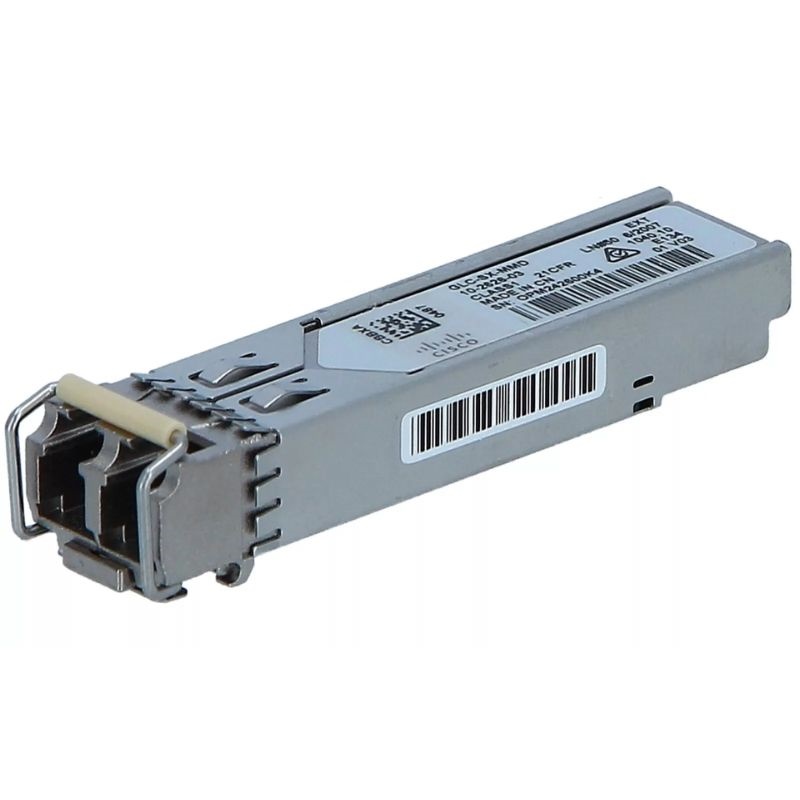


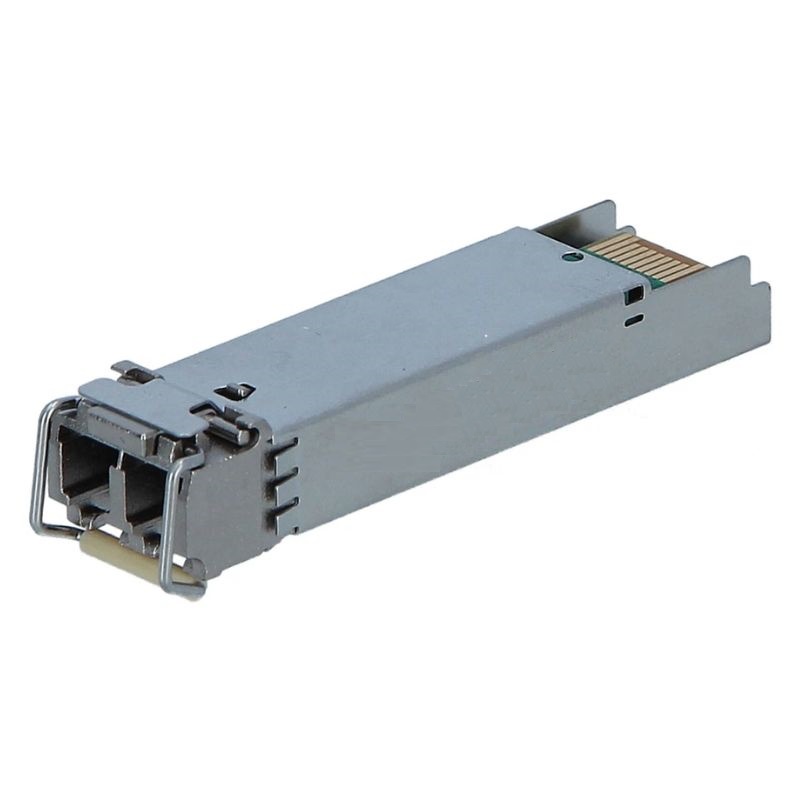
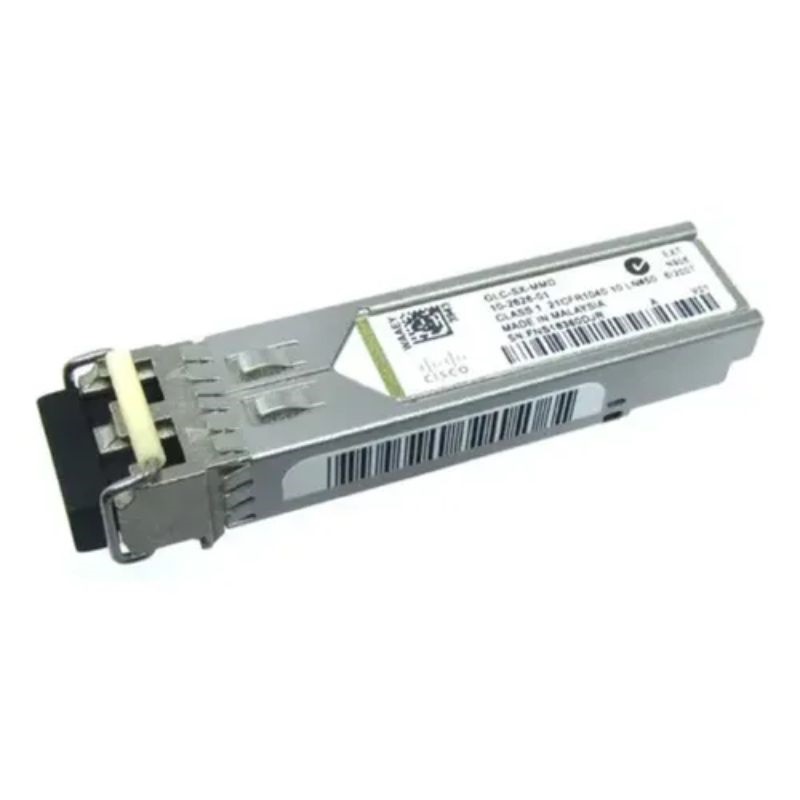
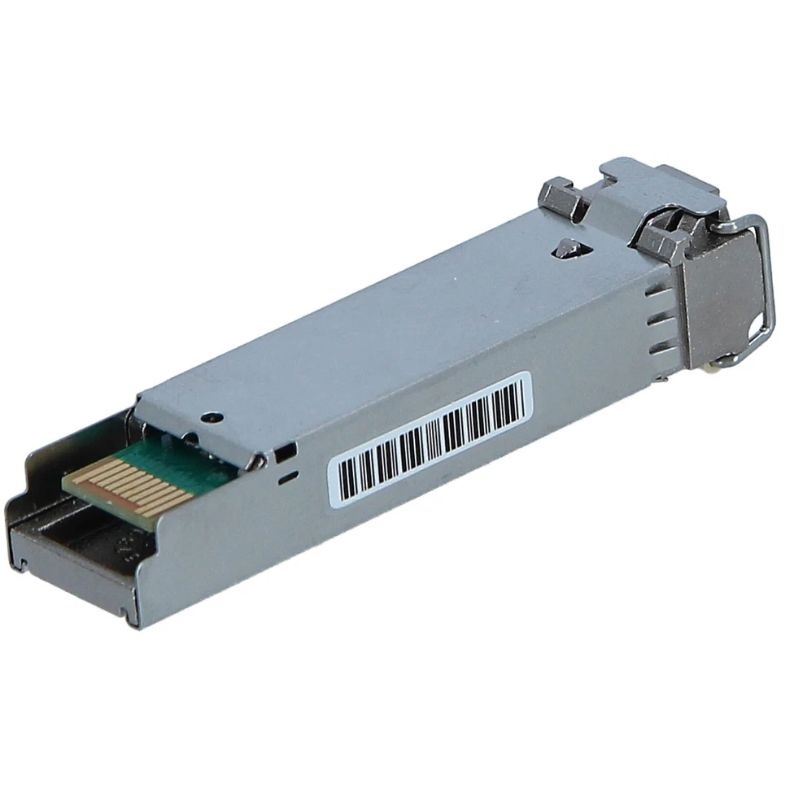
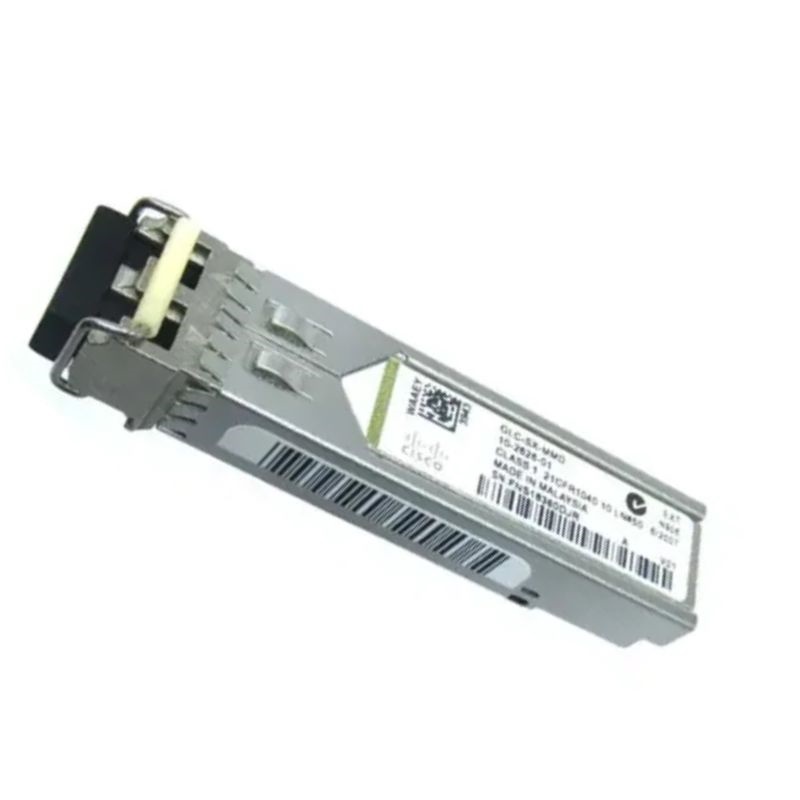
Cisco 10-2626-03 1GBPS SFP Lc/pc Multi-mode Transceiver Module. Factory-Sealed New in Original Box (FSB) with 1 year replacement warranty
| SKU/MPN | Warranty | Price | Condition | You save |
|---|---|---|---|---|
| 10-2626-03 | 1 Year Warranty | $50.00 | Excellent Refurbished | You save: $17.50 (26%) |
| 10-2626-03 | 1 Year Warranty | $162.00 | Factory-Sealed New in Original Box (FSB) | You save: $56.70 (26%) |
The Cisco Small Form-Factor Pluggable (SFP) mini-GBIC is a hot-swappable transceiver that slides into a compatible Gigabit Ethernet slot to bridge your interface with the optical network. Designed for rapid replacement and minimal downtime, it supports seamless scaling across campus, branch, and aggregation layers.
Optimized for short-haul fiber links using 850 nm optics, this SFP delivers consistent 1 GbE performance for wiring closets, server interconnects, and access uplinks.
Engineered for broad Cisco ecosystem support. Verify software revs and optics policies on your platform for final confirmation.
The Cisco 10-2626-03 1Gbps SFP LC/PC Multimode Transceiver Module occupies a proven spot in enterprise and campus networks that need fast, reliable Gigabit Ethernet over short to medium multimode fiber runs. As a compact hot-swappable Small Form-factor Pluggable (SFP) optic, it helps network teams scale switch uplinks, server connections, and fiber patching zones with minimal downtime and predictable performance. This category page explores where these modules fit, how they compare with related optics, recommended installation practices, common troubleshooting tips, and what to consider when selecting units for diverse environments—from wiring closets and MDF/IDF stacks to dense top-of-rack edge fabrics.
Within the broader optical portfolio, a Cisco 10-2626-03 class module aligns with common 1-Gigabit multimode SFPs that are typically deployed for 1000BASE-SX links through duplex LC/PC connectors. While exact specifications can vary by manufacturing batch and platform support, this class of module is generally associated with 850-nm wavelength operation and multimode fiber runs commonly reaching a few hundred meters depending on the cable grade (e.g., OM1, OM2, OM3, or OM4). In campus and data center designs, it forms the short-reach workhorse for Gigabit aggregation between distribution switches and access layers, for fiber-to-desk deployments in specialized buildings, and for connecting networked devices that require noise-immune optical links rather than copper.
While part-specific datasheets ultimately govern exact values, network teams commonly evaluate the following characteristics when selecting or deploying modules in the 10-2626-03 family. The information below reflects typical behavior for 1Gbps multimode SFP optics and is provided to guide planning and comparative evaluations.
Gigabit multimode optics in this category typically support several hundred meters on higher-grade MMF. Many designs target OM3/OM4 runs for improved headroom versus legacy OM1. Actual reach depends on attenuation, modal bandwidth, splice quality, and patching hygiene.
1G multimode SFP optics typically operate at a low power budget compared with faster pluggables. Still, high-density panels benefit from proper front-to-back airflow and cable management to avoid obstructing vents or stressing cages. In mixed panels with 10G/25G optics, segregate higher-power modules where possible to keep chassis thermals balanced.
Modules in this category are intended for 1000BASE-SX operation and are commonly interoperable with standards-compliant Gigabit multimode optics from Cisco platforms and, when applicable, standards-compliant peers. Always verify platform release notes, transceiver support matrices, and fiber plant conditions to confirm operation, especially when linking heterogeneous equipment or legacy plants.
The use cases below reflect frequent deployments where a Gigabit MMF SFP is a natural fit. They are not exhaustive; rather, they illustrate how these modules solve practical optical interconnect needs across campus and facility networks.
For traditional three-tier campus designs, the access layer often uplinks to distribution switches through fiber. Where 1G is sufficient—such as for voice-heavy floors, general office areas, or IoT-rich spaces—multimode SFPs simplify patching via duplex LC and keep optics costs predictable. They also align well with buildings that already have OM2/OM3 trunks in conduit between IDFs and MDFs.
Many office towers, hospitals, and universities have pre-pulled multimode risers. A 1G MMF SFP pairs neatly with those risers for short-to-medium distances, minimizing the need to retrofit cabling. The LC/PC interface matches today’s LC patch panels, enabling fast plug-and-patch deployments with minimal rework.
Because SFPs are hot-swappable, teams can maintain redundancy through dual-homed uplinks. Optics can be swapped without powering down switches, supporting maintenance windows where keeping service continuity is crucial.
In data centers with mixed speeds, 1G multimode SFPs often serve out-of-band management networks, KVM switches, environmental controllers, and legacy storage management ports. They isolate sensitive control traffic from production data paths and take advantage of short LC patching across adjacent racks.
Some environments run light edge fabrics that don’t require 10G/25G at every hop. In those cases, 1G MMF SFPs offer predictable latency and adequate capacity for monitoring, orchestration, and light VM motion activities.
Optical isolation via MMF provides electromagnetic immunity and reduces crosstalk in congested electrical environments. For sensitive control planes or ICS/SCADA gateways, 1G MMF links offer clean separation from data-bearing production vLANs.
Factories and transportation hubs often prefer fiber for ground isolation and resistance to electrical noise. A 1G MMF SFP is a common choice where fiber already exists between enclosures or across floors in industrial buildings. With proper enclosures and patching hygiene, organizations can deploy reliable links unaffected by EMI that would degrade copper cabling.
Schools and hospitals frequently operate extensive campus fiber infrastructure. LC-terminated multimode trunks allow quick addition of 1G links to expand Wi-Fi controller backhaul, imaging device connectivity, library systems, or lab networks without touching long-haul single-mode routes. The module’s budget-friendly Gigabit rate helps when scaling dozens or hundreds of ports.
The “LC/PC” designation indicates LC connectors with Physical Contact polish. Understanding this helps avoid costly mismatches and supports best-practice installations.
When planning a link with a 1G MMF SFP, consider attenuation (dB), modal bandwidth, and connector/splice quality. Laser-optimized OM3/OM4 cables typically provide higher bandwidth and lower attenuation, offering more margin at 850 nm. Excessive patching, dirty connectors, or tight bends can compromise the optical budget, so keeping patch paths clean and efficient is essential.
Contamination at the ferrule end-face is the number one cause of optical link instability. Dust caps protect during storage, but they are not a substitute for cleaning immediately before insertion. Adopt a clean-inspect-connect policy and document it in standard operating procedures.
The 10-2626-03 family aligns with Cisco platforms that support 1G MMF SFPs. In practice, compatibility depends on software version, transceiver whitelist, and port mode. Check device release notes and transceiver compatibility matrices for your specific chassis, supervisor, and line card combination. In mixed-vendor environments, ensure both ends negotiate 1000BASE-SX correctly and that spanning tree, port security, and QoS policies align across the link.
For higher availability, many designs deploy parallel fibers with dual SFPs bonded via link aggregation (LACP) or protected via first-hop redundancy. Carefully separate fiber paths through diverse conduits or trays to avoid single points of failure. Where possible, terminate on different patch panels and power domains to reduce blast radius during maintenance or incidents.
Although a 1G MMF SFP is simple to deploy, thoughtful design choices can unlock reliability and operational ease for years.
Where budgets allow, prefer OM3/OM4 for new pulls or extensions. These grades provide extra headroom for 1G and position the plant for potential higher-speed upgrades on other links (e.g., 10G SR).
Maintain accurate patch records in a CMDB or structured spreadsheet: port IDs, fiber path, panel positions, serial numbers, and service owners. Good documentation reduces mean time to repair and streamlines moves/adds/changes.
Understanding adjacent optics helps you pick the right module class for each link and avoid over- or under-engineering.
Where future bandwidth demand is anticipated, plan higher-speed optics for specific links. However, for stable, low-to-moderate traffic paths, 1G MMF SFPs remain more power-efficient and cost-effective. Many organizations mix 1G and 10G/25G strategically—1G for management/out-of-band or edge segments, higher-speeds for server-to-leaf or distribution uplinks that carry aggregation traffic.
Upgrading select links to 10G/25G SR does not force replacement of all 1G optics. Maintain a tiered strategy: keep 1G for control traffic and light uplinks while reserving higher speeds for data-intensive paths. This minimizes forklift upgrades and allows staged budget allocation.
Optics themselves do not enforce security policies, but their deployment influences network segmentation and physical security.
Fiber links are immune to electromagnetic interference and difficult to tap without detection. For sensitive areas (e.g., labs, finance, or ICS networks), multimode fiber with LC/PC connectors provides a clean physical layer that reduces exposure to EMI-based attacks associated with copper runs.
Adhere to structured cabling standards for labeling, bend radius, and pathway separations. Proper pathways simplify audits and reduce unplanned downtime. When linking buildings, comply with fire-stopping and plenum requirements in risers and ceilings, and verify that patch components meet local code.
Efficient operations depend on a reliable spare pool, clear ownership, and predictable replacement processes.
As the number of links scales into the hundreds or thousands, small process improvements save significant time.
Bundle routine patch moves and optic replacements during scheduled windows. Include pre- and post-checks in each change plan and require photos of the final patch field to maintain visual records.
Optics are a small line item compared to switches, but poor processes can inflate total cost of ownership.
As campuses add buildings or renovate floors, plan additional risers and crosstie panels. Reserve LC positions for growth and maintain consistent MPO/MTP cassette mapping across sites to simplify field work.
Though small, optics are electronic components that require responsible handling at end-of-life. Follow local e-waste rules, and whenever possible, refurbish or return to authorized recycling programs. Maintaining a healthy spare pool and reusing functional modules across non-critical links extends service life and reduces environmental impact.
Across campuses and facilities, teams repeatedly report that consistent cleaning practices, proper labeling, and disciplined patching are the three biggest contributors to stable optical links. When issues arise, the culprit is often a simple one: swapped polarity in a panel, a dusty connector, or an undocumented change. By centering processes on those fundamentals, 1G MMF SFP links remain remarkably dependable, even in environments with heavy daily changes.
Prepare pre-labeled patch cords and keep a “golden” SFP known to work on the same platform. During incidents, swap to the golden optic first to isolate whether the fault sits with the fiber path or the module. Keep a small handheld inspection scope and click-cleaner in every closet; empowering frontline staff to inspect and clean immediately can resolve the majority of link flaps without escalating.
While many edge devices connect via copper, fiber uplinks often prove superior across distance and EMI-prone areas. 1G LC/PC MMF SFPs bridge that gap, allowing copper edge ports to feed into fiber aggregation with minimal complexity. This hybrid approach leverages existing copper cabling for short, localized runs while reserving fiber for anything that leaves the room or passes electrical hotspots.
When selecting units in this category, map every link, confirm fiber types, enforce cleaning standards, and plan for spares. The consistent feature set of 1G LC/PC multimode SFPs—compact size, reliable LC duplex interface, and straightforward installation—makes them an obvious choice for a wide range of enterprise and campus applications. With disciplined practices, these modules provide years of service with minimal attention, slotting seamlessly into structured cabling ecosystems and mixed-speed networks alike.


 Contact Us
 Information
 Catalog
 Solid State Drives (SSD)
 Network Switches
 Hard Disk Drives
 HBA & Controllers
 PC & Servers
 PC & Server Memory
 CPU & Processors
 Network Routers
 Power Supplies
 Tape Drives & Libraries
 Network Devices
 Computer & Network Cables