(7% discount is applied at checkout)
Cart is empty
Your go-to destination for cutting-edge server products
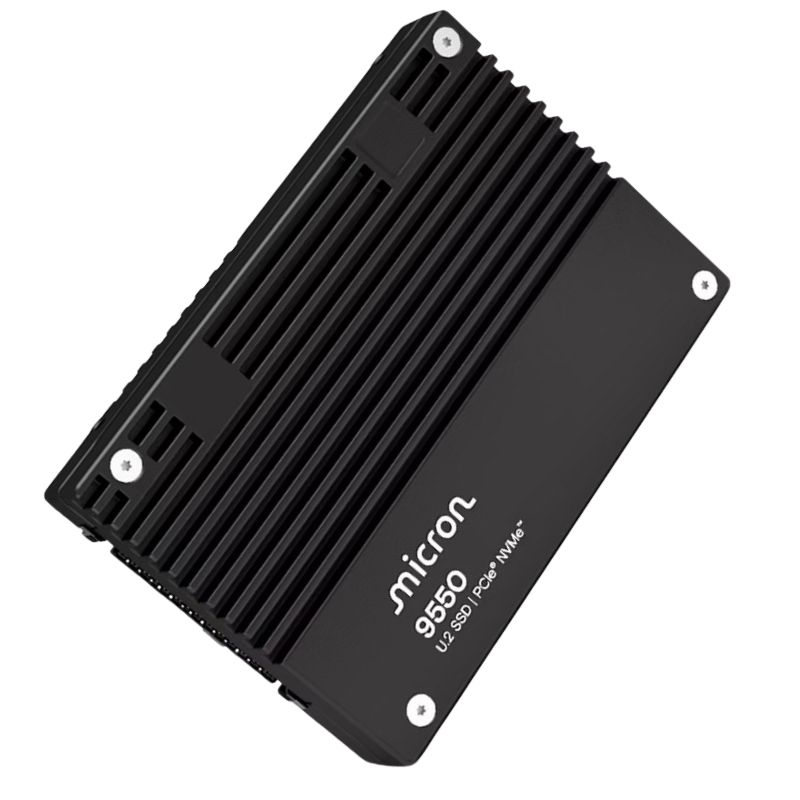


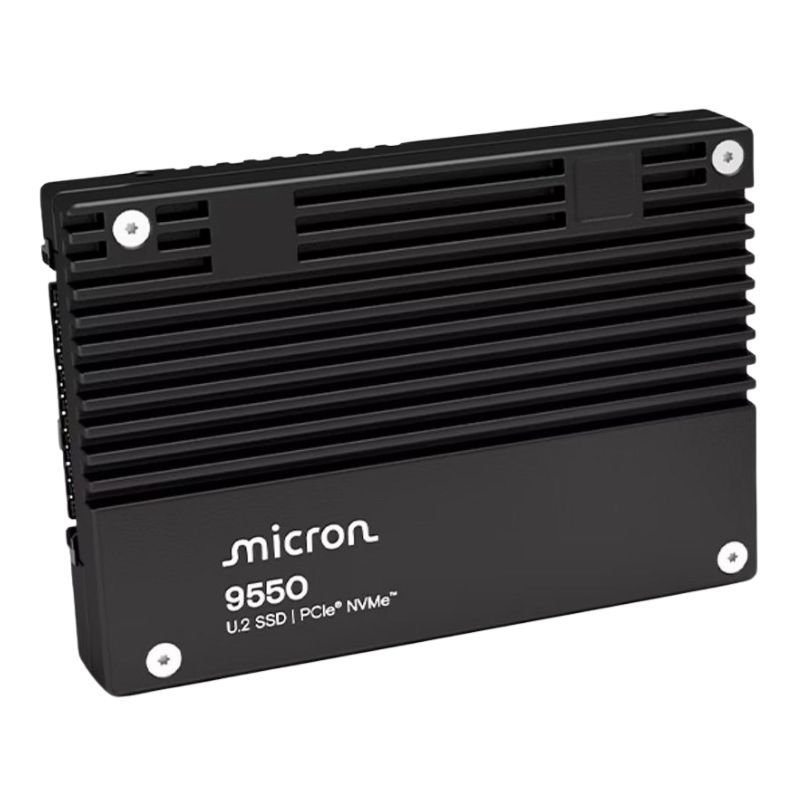
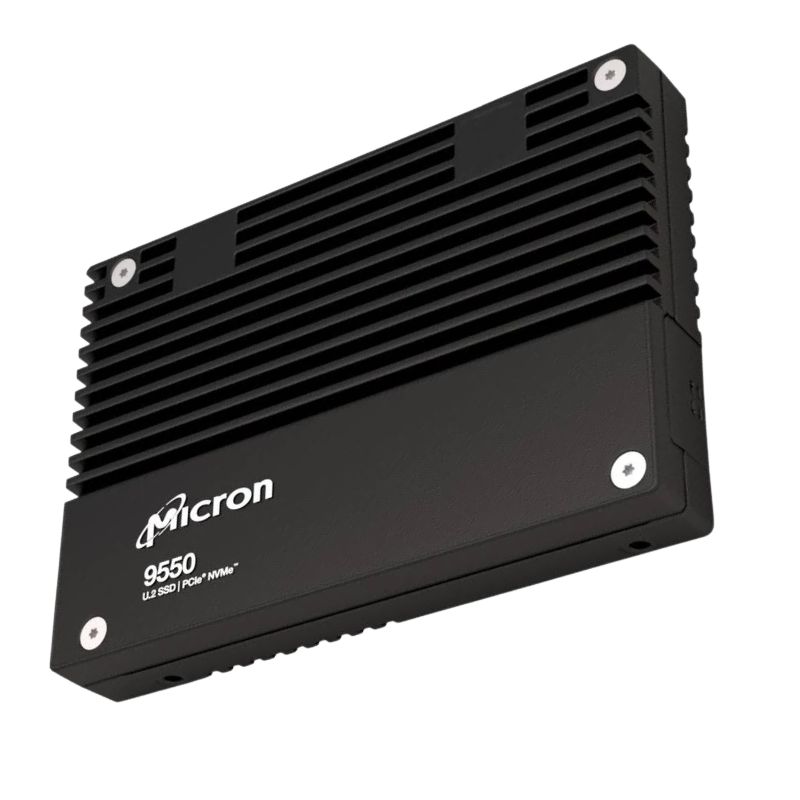
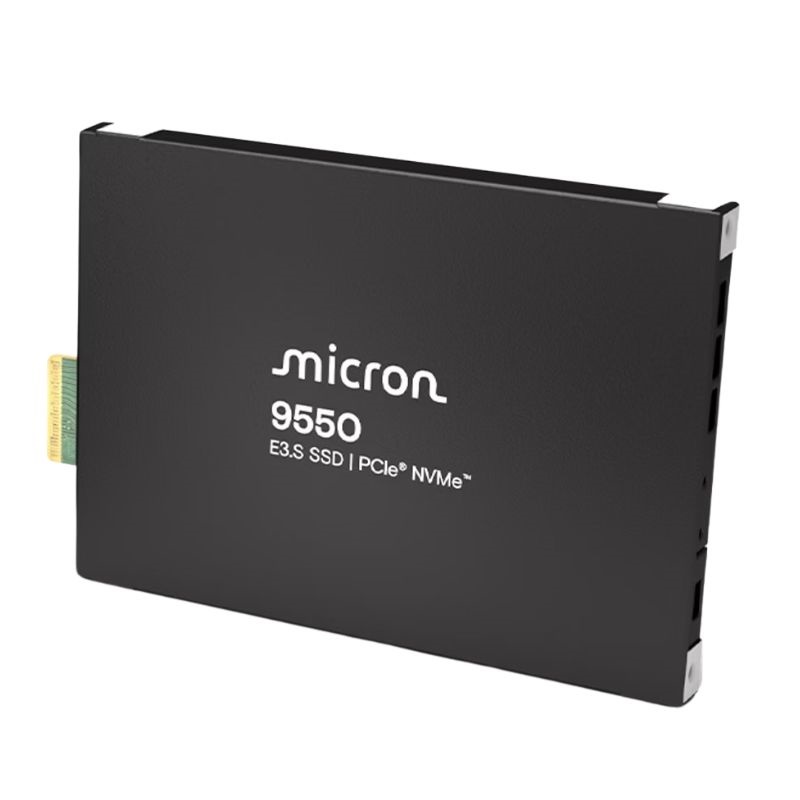
Micron MTFDLBQ30T7THA-1BK1DABYY 9550 Pro 30.72TB NVMe E3.S Solid State Drive. New Sealed in Box (NIB) with 3 Years Replacement Warranty
The Micron 9550 Pro 30.72TB NVMe E3.S Solid State Drive is designed for high-demand enterprise workloads, providing a balance of exceptional capacity, next-level speed, and rock-solid endurance. Built with Micron 3D TLC NAND, this drive delivers superior efficiency and sustained reliability for mission-critical applications.
The MTFDLBQ30T7THA-1BK1DABYY Micron 9550 Pro 30.72TB NVMe E3.S Solid State Drive sits at the high end of Micron’s data-center focused storage portfolio. Engineered as a read-intensive, enterprise-grade NVMe SSD, the 9550 Pro series pairs very large capacities (up to 30.72TB), the E3.S 7.5mm server-optimized form factor and a PCIe Gen5 / NVMe interface to deliver sustained throughput and density for AI training datasets, cache layers, analytics and other data-intensive workloads. This drive is designed to be a drop-in, high-density block storage option for modern servers and OCP/plug-in subsystems that demand both capacity and Gen5 performance.
As data sets grow and latency-sensitive applications proliferate, organizations need storage that balances sheer capacity with predictable I/O behavior. The Micron 9550 Pro family targets that intersection: high per-drive density to lower rack-level BOM and operational costs, while offering PCIe Gen5 bandwidth and NVMe optimizations to minimize bottlenecks in AI, analytics and large-scale caching tiers. The result is a category that is optimized for scale — enabling system architects to consolidate many terabytes of fast storage into fewer drive slots and to accelerate data pipelines without sacrificing manageability.
The MTFDLBQ30T7THA-1BK1DABYY Micron 9550 Pro is built to deliver class-leading sequential throughput — advertised sequential read performance up to ~14 GB/s and sequential write performance up to ~10 GB/s on Gen5 platforms. Those headline numbers translate into dramatic reductions in dataset staging and checkpoint times for large model training and improve cache warm-up for latency-sensitive analytics stacks. Beyond peak throughput, the 9550 family emphasizes consistent sustained performance under mixed real-world loads through advanced firmware quality-of-service (QoS) controls, over-provisioning strategies and enterprise-grade thermal management.
While sequential bandwidth is often the most-cited metric for Gen5 SSDs, NVMe drives in this category are also optimized for low command latency and strong small-block I/O performance. For database query acceleration, metadata storage, and small-read access patterns that accompany AI inference or OLTP caching layers, the combination of Micron’s controller firmware and TLC NAND tuning yields competitive random-read IOPS and steady latency under mixed loads — an important distinction from lower-cost, consumer-grade NVMe parts that lack enterprise QoS guarantees.
The 30.72TB capacity of the MTFDLBQ30T7THA SKU is purpose-built for environments where rack density and storage consolidation matter. The E3.S 7.5mm form factor is increasingly the preferred option for hyperscale and cloud operators: it fits high-density sleds, supports efficient airflow/thermal designs, and maps well to OCP-style backplanes and custom server trays. Choosing an E3.S drive instead of multiple smaller drives reduces footprint, lowers failure domain counts, and simplifies firmware and power management at the system level.
Physical dimensions and power characteristics are relevant to thermal engineering and system design. The E3.S 7.5mm format typically adheres to standardized dimensions for sled compatibility, and the Micron datasheet and vendor specification pages list the exact physical envelope and expected operating voltage/power profiles to help systems engineers model thermal dissipation, airflow and power budgets. Always consult the platform vendor’s support documents and Micron’s product brief when integrating into dense server chassis.
Micron targets the 9550 Pro family at read-intensive enterprise applications — a balance between capacity, endurance and cost. Endurance ratings, measured in drive writes per day (DWPD) or total bytes written (TBW), and broad device MTTF numbers reflect Micron’s validation and targeted workload classes. In practice, these drives are tuned to maximize lifecycle under steady read-dominant access while still supporting necessary background housekeeping, wear leveling and error management. Manufacturers and distributors typically publish TBW and MTTF figures on product pages for precise lifecycle planning.
To ensure data integrity and secure data-at-rest, the 9550 Pro line can be configured with hardware encryption standards (TCG Opal and related TCG technologies on select SKUs). Enterprise features like end-to-end data protection, power-loss protection mechanisms, and advanced ECC help preserve data integrity under heavy loads and during unexpected power events. System integrators should check SKU-level options to confirm which security and power-loss protections are enabled.
Micron’s vertically integrated approach gives them control over NAND process nodes and controller tuning. The 9550 Pro uses Micron 3D TLC NAND — a pragmatic choice that balances cost per gigabyte, performance and retention characteristics. TLC provides a good compromise for read-intensive workloads, and Micron’s controller and firmware are tuned to get the most consistent performance from that media type. System designers should account for the NAND type when modeling endurance, latency and long-term performance under different workload profiles.
Enterprise buyers often require drives that meet regulatory and internal compliance policies. The Micron 9550 Pro family offers encryption options such as TCG Opal compliance on selected variants and may be available with other compliance options depending on region and enabling firmware. Encryption offloads cryptographic workloads to the drive hardware to protect data at rest with minimal CPU overhead for servers. Confirming FIPS or other region-specific certifications requires referencing the specific SKU’s datasheet and vendor compliance notes.
For large deployments, remote health telemetry and fleet management are essential. The 9550 Pro supports NVMe SMART attributes, telemetry reporting and vendor-provided management tools that expose endurance counters, thermal metrics, media errors and firmware versioning. These signals are critical for predictive maintenance, capacity planning and firmware lifecycle management in distributed storage fleets.
The Micron 9550 Pro is explicitly positioned as a data-center drive that helps accelerate AI workloads by reducing I/O bottlenecks during dataset staging and model checkpointing. Micron has highlighted AI performance gains on 9550-class drives, and in practical deployments the high sequential bandwidth and Gen5 interface allow faster movement of very large files into GPU memory or host buffers. For training pipelines that frequently read multi-terabyte shards, a small number of 30TB drives can significantly reduce storage footprint and simplify data orchestration.
High-capacity, low-latency NVMe drives make excellent persistent cache layers for analytics clusters, where working sets must be served with predictable latency. Replacing tiered arrays of smaller SSDs with a few ultra-dense 30.72TB E3.S drives reduces management overhead and can increase usable cache capacity per server. The read-intensive tuning of the 9550 Pro makes it a natural choice when write amplification is low and read throughput matters most
Virtualized environments and cloud object stores benefit from large-capacity, high-bandwidth drives that allow many tenants to share a single storage node without repeated migrations. The 9550 Pro can be used as fast backing storage for object layers, metadata stores, or as an acceleration tier for distributed file systems — enabling operators to serve more data out of fewer nodes. Proper over-provisioning and namespace planning are critical to ensure predictable QoS across multi-tenant workloads.
Completing these checks avoids last-mile compatibility issues and ensures that the 9550 Pro performs as expected in production. Vendor product pages and Micron’s official datasheet provide the authoritative mechanical, electrical and firmware details required for system validation.
SSD firmware updates can contain important performance and reliability improvements. For production systems, validate firmware changes in a staging environment before fleet-wide rollout. Also check that the NVMe driver stack used by your OS supports the Gen5 features you intend to leverage; some older drivers may need updates to unlock new telemetry or namespace management features.
Gen5 NVMe SSDs are designed for higher throughput and therefore may draw more peak power under sustained workloads compared with older generations. When modeling full-system power draw during benchmarks or heavy data movement, include SSD peak active power profiles to avoid oversubscription. Many vendors publish operating and peak power numbers per SKU to help estimate PSU sizing and rack-level power provisioning.
Heat dissipation is crucial in dense server environments. Drives in the E3.S form factor are often installed adjacent to other hot components, so plan airflow channels, heatsink attachments or chassis-level fan policies to maintain nominal operating temperatures. Sustained transfers at Gen5 bandwidth will challenge thermal limits more quickly than occasional bursts, so design for the worst-case thermal profile when workload scheduling could cause long-duration heavy writes or reads.
Within the MTFDLBQ30T7THA-1BK1DABYY Micron 9550 family there are subvariants tuned for different workload profiles (e.g., Pro for read-intensive, Max for mixed/use-intense workloads). When selecting a SKU, align the endurance rating, over-provisioning and price point with the expected write amplification and lifecycle needs of your workload. Read-intensive Pro models often deliver better $/GB and are suitable for dataset-heavy, low-write workloads; mixed-use or write-heavy environments may warrant the Max class or alternative product lines with higher DWPD ratings.
Using 30.72TB drives can reduce the number of drive bays required for a given usable capacity, which simplifies rack cabling and lowers servo/management overhead. When evaluating TCO, consider not only purchase price but also power, cooling and administration costs reduced through drive consolidation.
Optimize the MTFDLBQ30T7THA-1BK1DABYY category description around high-intent phrases buyers use when procuring enterprise NVMe storage: examples include “30TB PCIe Gen5 NVMe E3.S SSD”, “Micron 9550 Pro 30.72TB specs”, “enterprise NVMe 30TB drive”, and “E3.S 7.5mm NVMe server SSD”. Combine these exact match targets with long-tail modifiers that address workloads and benefits: “for AI dataset staging”, “read-intensive enterprise SSD”, “OCP E3.S high-density SSD”, etc.
Use heading hierarchies (H2–H5) to surface important attributes for both search engines and buyers. Supply a short, scannable spec table near the top, followed by descriptive sections that explain why the specs matter for common workloads (AI, caching, virtualization). Include bullet lists for pros/cons, integration checklist callouts, and a procurement / compatibility checklist to reduce friction for technical buyers.
Yes — PCIe is backward compatible. A Micron 9550 Pro will operate in a Gen4 slot but will be limited to Gen4 maximum throughput. For most small-scale tests this is acceptable, but for production deployments seeking full 14 GB/s read/10 GB/s write performance the host must support PCIe Gen5 lanes.
Large model training (dataset staging), distributed cache layers where greater persistent capacity reduces network fetches, and archival hot-tier storage that still requires NVMe responsiveness are all strong candidates. If your workload writes large volumes frequently, consider a mixed-use variant or confirm endurance ratings to ensure lifecycle alignment.
Many 9550 Pro SKUs include hardware-based encryption options such as TCG Opal. Confirm SKU-level support with the reseller or Micron’s product documentation if hardware encryption is a procurement requirement.
For an MTFDLBQ30T7THA-1BK1DABYY category description, combine factual technical detail (capacity, interface, form factor, headline throughput) with practical guidance (integration checklist, workload fit, procurement notes). By addressing both “what” the drive is and “why” it matters to technical buyers — including AI, analytics and virtualization use cases — you improve the page’s relevance for both commercial and informational search intents. The Micron 9550 Pro 30.72TB E3.S SKU is a compelling anchor item for a category focused on Gen5 enterprise NVMe SSDs, providing both the density and the performance story that modern data centers need.
Always validate firmware compatibility with your server vendor, test thermal and power profiles under expected workloads, and include monitoring hooks into your telemetry stack before deploying high-density NVMe drives into production — these steps reduce surprises and preserve long-term performance and availability.


 Contact Us
 Information
 Catalog
 Solid State Drives (SSD)
 Network Switches
 Hard Disk Drives
 HBA & Controllers
 PC & Servers
 PC & Server Memory
 CPU & Processors
 Network Routers
 Power Supplies
 Tape Drives & Libraries
 Network Devices
 Computer & Network Cables