(7% discount is applied at checkout)
Cart is empty
Your go-to destination for cutting-edge server products
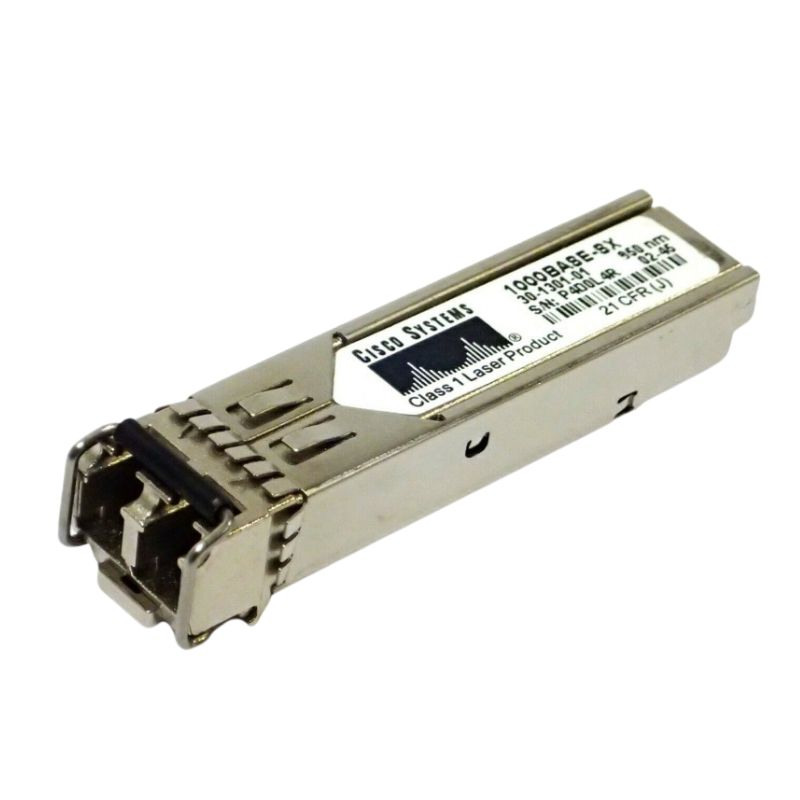


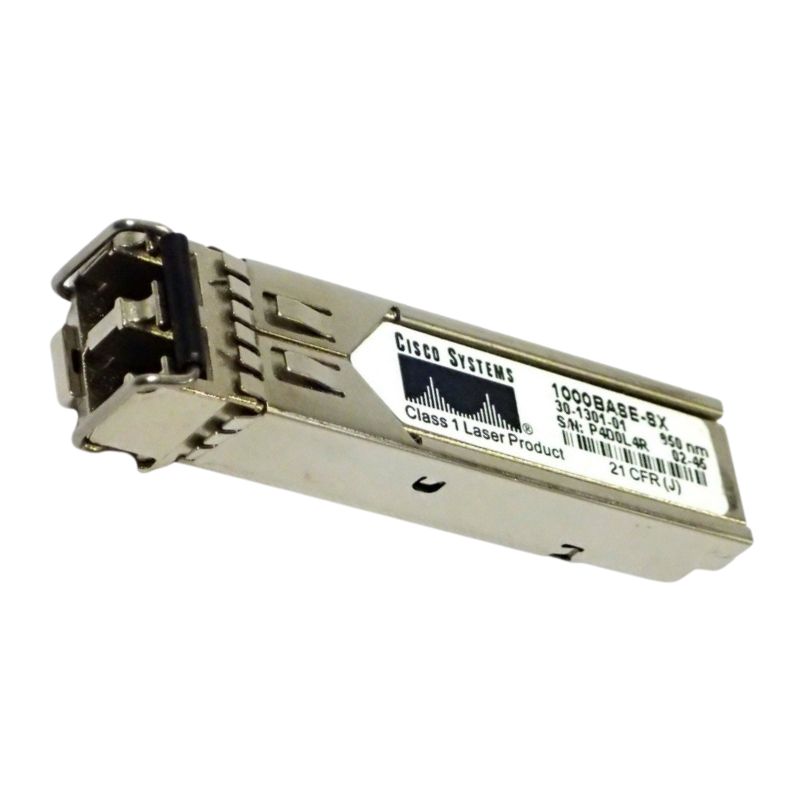
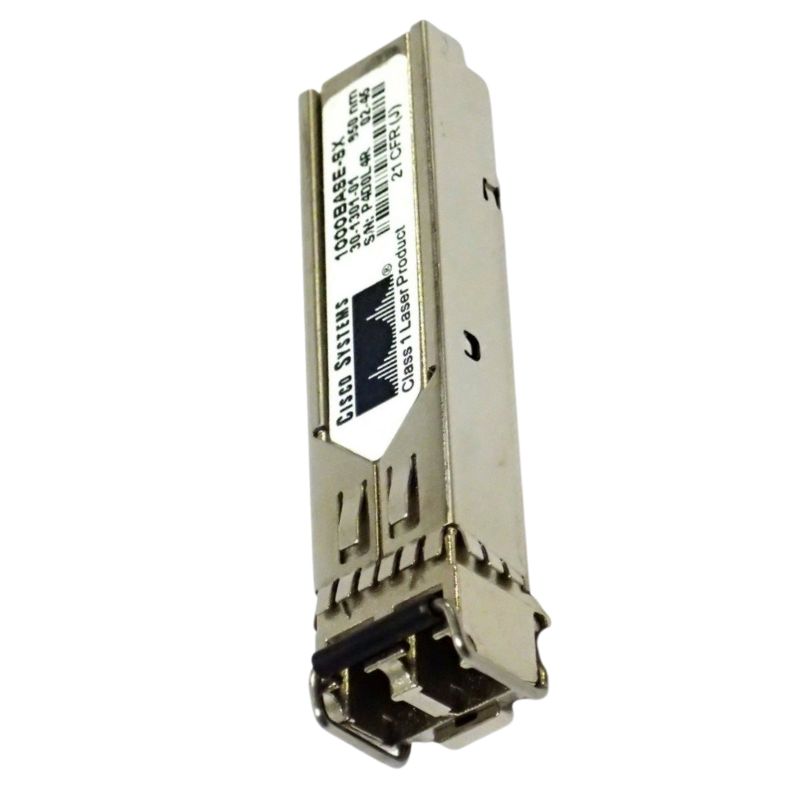
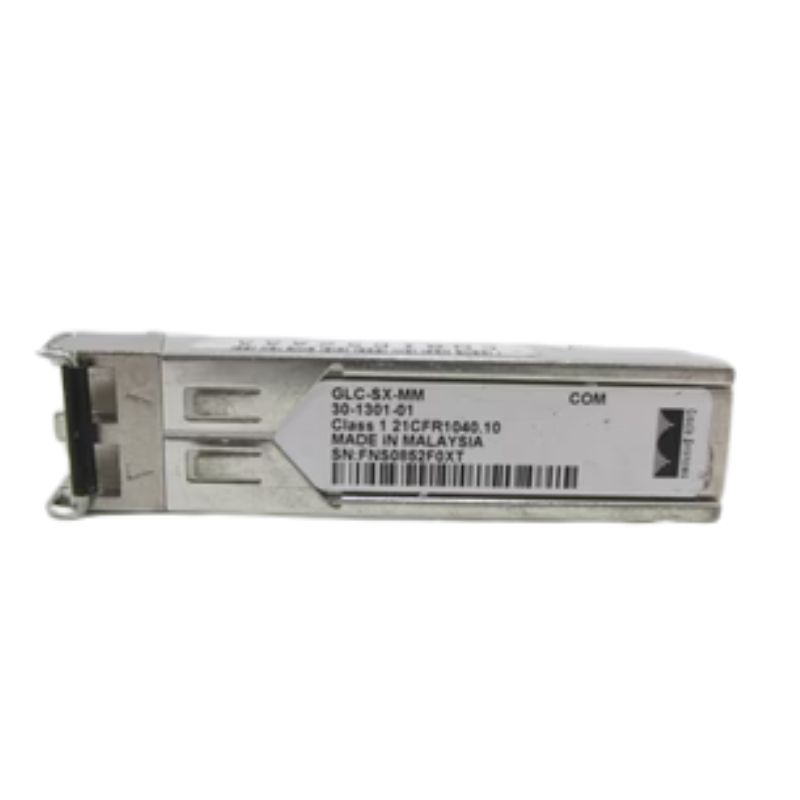
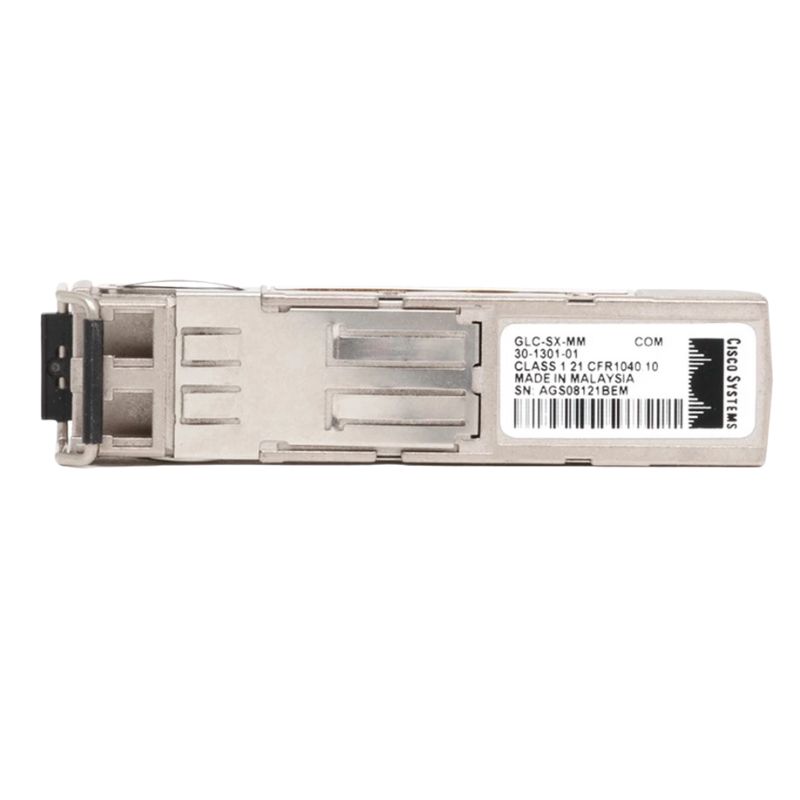
Cisco 30-1301-01 SFP (Mini-GBIC) Transceiver Module LC Multi-Mode. Excellent Refurbished with 1-Year Replacement Warranty
| SKU/MPN | Warranty | Price | Condition | You save |
|---|---|---|---|---|
| 30-1301-01 | 1 Year Warranty | $50.00 | Excellent Refurbished | You save: $17.50 (26%) |
| 30-1301-01 | 1 Year Warranty | $76.00 | Factory-Sealed New Retail in Original Box (FSB) | You save: $26.60 (26%) |
Cisco 30‑1301‑01 is a Small Form-Factor Pluggable (SFP), also known as Mini-GBIC, designed to provide reliable, high-speed optical connectivity using LC connectors over multi‑mode fiber (MMF). Ideal for enterprise and data center networks, this transceiver module supports Gigabit Ethernet, Fiber Channel, and other data protocols. It is engineered for seamless integration with Cisco switches, routers, and other networking hardware, delivering high performance, interoperability, and simplified deployment.
Built around the well-established SFP form factor, the Cisco 30‑1301‑01 supports hot-pluggable insertion/removal for minimal disruption during upgrades or maintenance. This flexibility allows network administrators to scale network capacity, upgrade fiber runs, or perform module swaps without powering down equipment.
Manufacturer Part Number: 30-1301-01
Product Designation: Cisco Transceiver Module
Device Classification: Transceiver Module
Form Factor: Plug-in Module
Interface (Bus) Type: SFP (Mini-GBIC)
Primary Cabling Specification: Ethernet 1000BASE-SX
Data Link Protocol: Gigabit Ethernet
Peak Data Throughput: 1.06 Gbps
Maximum Operational Distance: 1800 ft
The Cisco 30‑1301‑01 is fully compatible with a range of multi‑mode fiber (MMF) types, such as OM1 (62.5/125 µm), OM2 (50/125 µm), OM3 (50/125 µm laser-optimized), and OM4 (also laser-optimized). These fibers offer differing bandwidth-distance trade-offs:
In Gigabit Ethernet deployments, typical maximum distances vary by fiber type, for example OM1 up to 550 m, OM2 up to 550 m, and OM3/OM4 up to 550–1000 m, depending on switch/vendor specifications. The Cisco 30‑1301‑01 module ensures reliable signal integrity across these distances.
This SFP module is qualified for use with an extensive lineup of Cisco gear, including Catalyst switches (e.g., 2960, 3560, 3650), Nexus series, and select routers. Cisco rigorously tests this module to ensure plug-and-play operation, firmware compatibility, and stable link performance—minimizing deployment complexity.
With SFF‑8472-based diagnostics (DOM), network teams gain visibility into signal integrity and device health. Accessible via SNMP or CLI commands, DOM metrics include:
These parameters help detect premature component failure, identify dirty or aging fibers, and preemptively troubleshoot performance issues—enhancing uptime and reducing Mean Time to Repair (MTTR).
- Form factor: SFP / Mini‑GBIC
- Connector: LC duplex, latch-type, standard for multi‑mode transceivers
- Hot‑pluggable design enables maintenance without system downtime.
The Cisco 30‑1301‑01 is widely deployed in data center access and aggregation layers, where short-reach fiber links connect server racks or storage arrays to top-of-rack (ToR) or end-of-row (EoR) switches. With high port density switches, these compact SFPs help reduce cabling clutter and power draw, while delivering 1 Gbps connectivity across racks.
In multi-building campuses, this SFP offers cost-efficient fiber links between distribution switches. With multi‑mode fiber already installed in many buildings, using Cisco 30‑1301‑01 facilitates rapid network deployment or upgrades with minimal infrastructure changes.
Cisco validates 30‑1301‑01 modules with strict manufacturing and testing protocols, ensuring compliance with Cisco NX-OS, IOS, IOS XE, and other firmware platforms. This quality assurance process includes BER testing, environmental stress testing, and compatibility labs—boosting confidence in production environments.
Firmware updates on Cisco hardware sometimes introduce new SFP behavior in link training or power management. Cisco‑certified transceivers like the 30‑1301‑01 are tested across firmware versions to maintain optimal compatibility, preventing scenarios where unsupported optics trigger link down or warning states.
Organizations with Cisco SMARTnet or other support agreements benefit from extended support options when using Cisco‑branded optics. If issues arise, Cisco TAC (Technical Assistance Center) will support the transceiver just like any Cisco hardware component, streamlining troubleshooting.
To ensure optimal performance, calculate the link budget by combining the module’s transmit power, fiber attenuation (typically 2–3 dB/km for MMF), and connector/splice losses. Always leave a safety margin (~3–5 dB) for aging fibers and environmental changes.
Even small amounts of dust or contamination on LC connectors can significantly degrade performance or damage lasers. Use proper inspection and cleaning tools (fiber inspection scopes, lint-free wipes, isopropyl alcohol) before connection and during routine maintenance.
While the Cisco 30‑1301‑01 is ideal for 1 Gbps links, many networks are migrating toward 10 Gbps and beyond. Plan your fiber plant with scalable multi‑mode fibers (e.g. OM3/OM4), consider using Cisco SFP+ or QSFP‑based transceivers in the future, and ensure your cabling infrastructure can support an upgrade path.
Within the Cisco SFP family, you can find various modules for different media types:
Supporting accessories enhance performance and management:
Multi‑mode fibers should never be bent beyond their specified minimum bend radius to avoid modal dispersion and attenuation—typically around 30 mm for 50/125 µm fibers, but always verify vendor specifications.
Track interface error metrics—CRC errors, alignment errors, and optical loss—as part of routine network monitoring. Sudden increases may point to aging cables, dirty connectors, or failing optics.
Some Cisco platforms offer reduced optical output power or automatic power‑saving features on idle ports. Consult your device documentation to verify if power modes are present and appropriate for your environment.
In summary, Cisco 30‑1301‑01 SFP (Mini‑GBIC) LC multi‑mode transceiver delivers dependable 1 Gbps connectivity in a compact, hot‑pluggable form. Its compatibility with Cisco hardware, diagnostic visibility via DOM, and adherence to quality testing make it a reliable workhorse for enterprise and data‑center environments. By pairing it with proper fiber infrastructure and installation practices, organizations can enjoy robust performance today and a pathway toward higher speeds tomorrow.
Cisco stands as the undisputed global pioneer in the realm of Internet and network infrastructure. The corporation's IP-centric (Internet Protocol) technological offerings constitute the essential bedrock for the World Wide Web, in addition to a vast number of institutional, educational, and state-operated networks internationally.
Cisco delivers an unparalleled and extensive portfolio of systems engineered for the reliable conveyance of data, vocal communications, and multimedia content. These solutions are adept for deployment across intimate office settings, sprawling academic campuses, and global enterprises.
In the contemporary digital landscape, computer networking and Internet connectivity have become indispensable components for commercial operations, academic pursuits, and personal entertainment. An overwhelming majority of digital communications and electronic transactions traversing the Internet are facilitated by the robust and secure architecture of Cisco hardware.
Cisco's integrated solutions are meticulously designed to guarantee that all network environments, including both public and private infrastructures, perform at their peak capacity. This is achieved while maintaining stringent security protocols and ensuring operational adaptability.
Link Technology: Wired
Laser Wavelength: 850 nm
Expansion/Connectivity Ports: 1 x Network - Ethernet 1000BASE-SX - LC Multi-mode
Designed for Slot Type: 1 x SFP (Mini-GBIC)
Mandatory Operating System: Cisco IOS


 Contact Us
 Information
 Catalog
 Solid State Drives (SSD)
 Network Switches
 Hard Disk Drives
 HBA & Controllers
 PC & Servers
 PC & Server Memory
 CPU & Processors
 Network Routers
 Power Supplies
 Tape Drives & Libraries
 Network Devices
 Computer & Network Cables