(7% discount is applied at checkout)
Cart is empty
Your go-to destination for cutting-edge server products
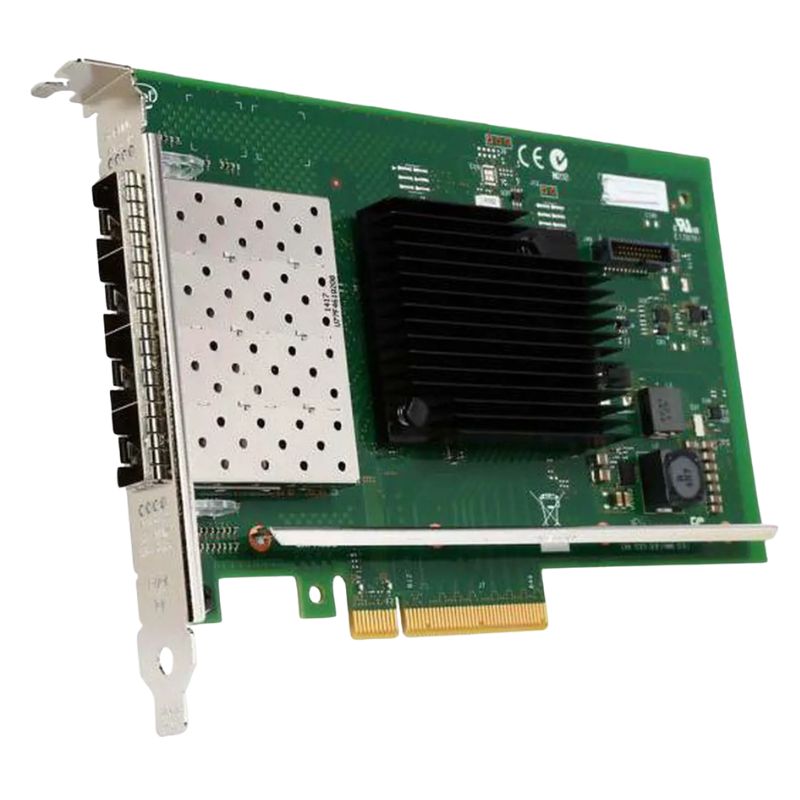


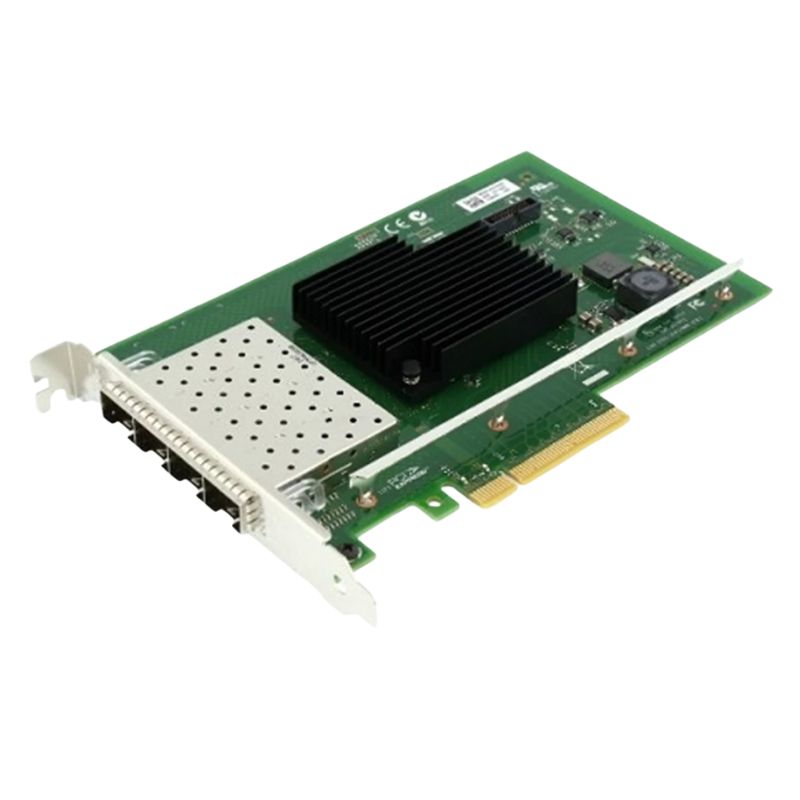
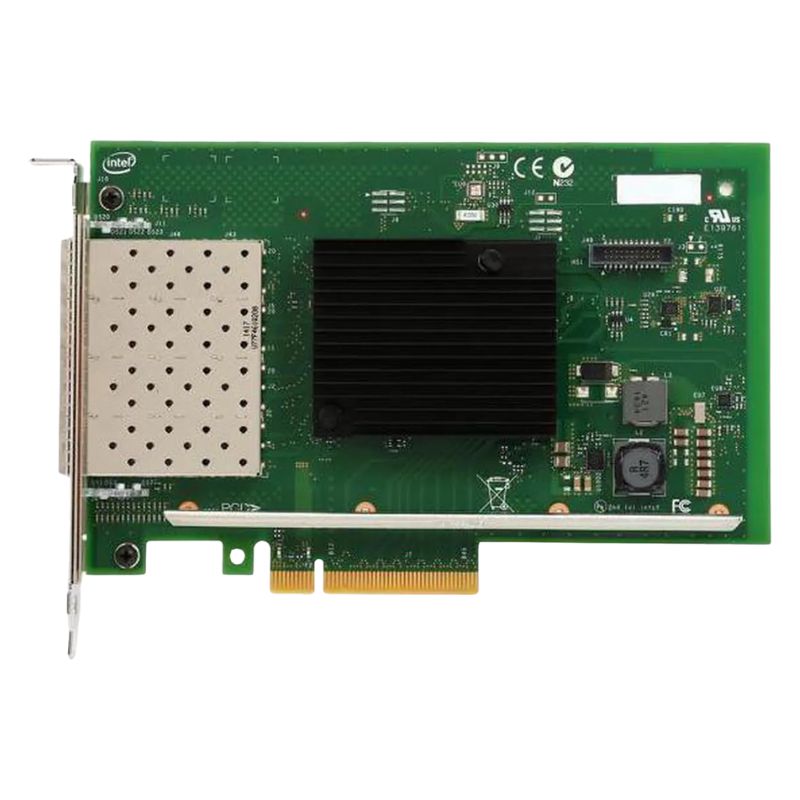
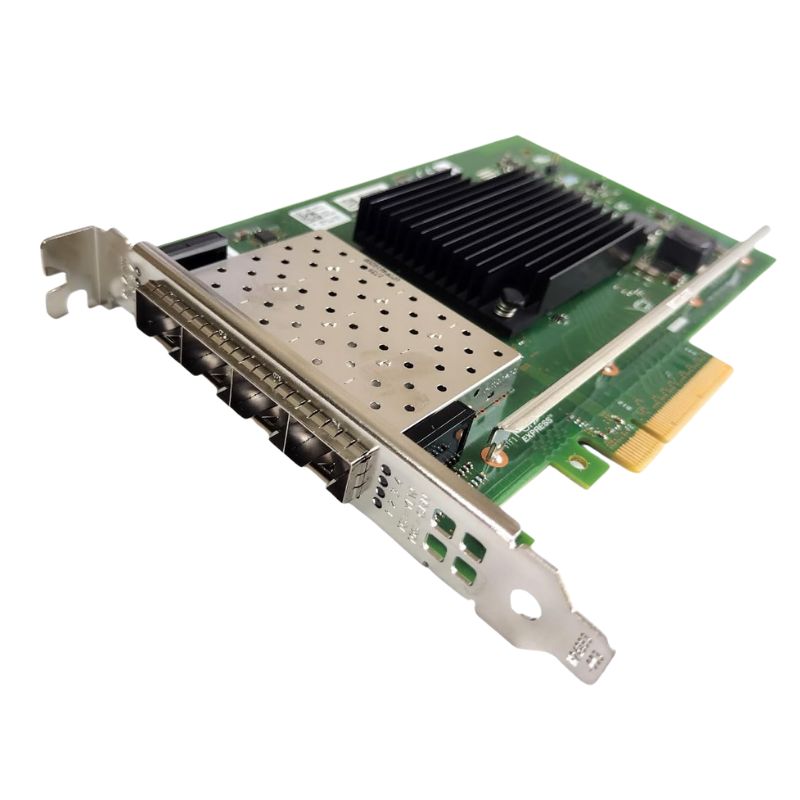
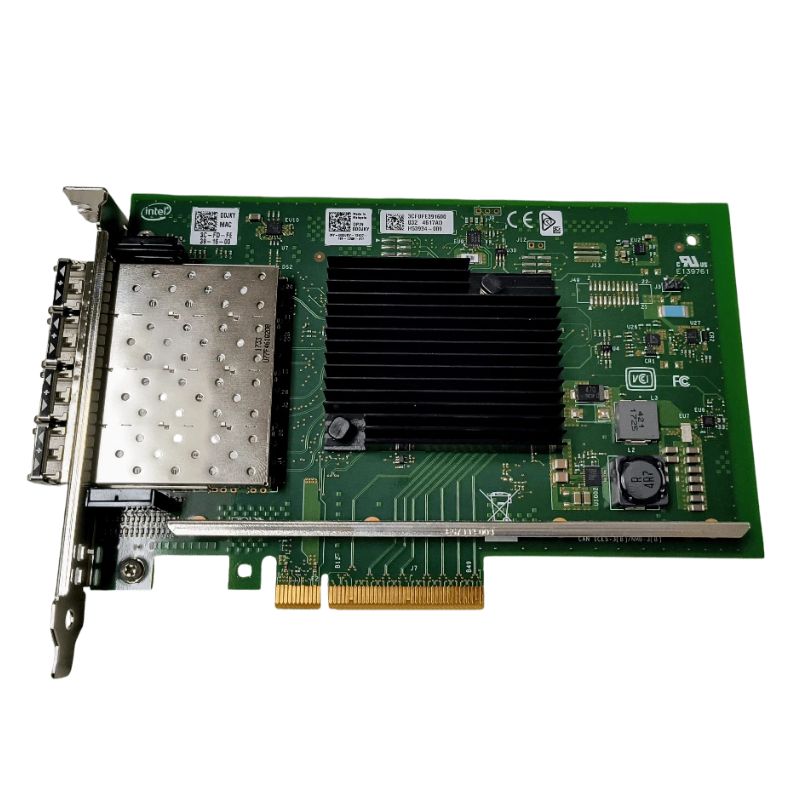
Intel X710DA4FHBLK 4-Port 10 Gigabit Ethernet SFP+ PCI-Express Converged Network Adapter. Excellent Refurbished with 1 year replacement warranty
| SKU/MPN | Warranty | Price | Condition | You save |
|---|---|---|---|---|
| X710DA4FHBLK | 1 Year Warranty | $217.00 | Excellent Refurbished | You save: $75.95 (26%) |
| X710DA4FHBLK | 1 Year Warranty | $417.00 | New Sealed in Box (NIB) | You save: $145.95 (26%) |
The Intel X710DA4FHBLK is a high-performance four-port 10 Gigabit Ethernet SFP+ PCI Express network adapter designed to deliver advanced connectivity for modern data center environments. Built to support demanding virtualization, cloud infrastructure, and enterprise networking workloads, this converged adapter ensures efficient traffic handling, reduced latency, and reliable throughput across multiple network channels. It is engineered to enhance server communication efficiency while maintaining stability under heavy network loads, making it suitable for mission-critical applications requiring consistent high-speed data transfer.
The Intel X710DA4FHBLK 4-Port 10 Gigabit Ethernet SFP+ PCI Express Converged Network Adapter represents a high performance networking solution designed for modern enterprise infrastructures, cloud environments, and data intensive computing systems. This class of network adapter is engineered to deliver exceptional bandwidth density, low latency packet processing, and flexible connectivity options for servers that require scalable and efficient network throughput. The design focuses on consolidating multiple networking functions into a single hardware platform, reducing overhead on host systems while enabling consistent data transmission performance across virtualized and bare metal environments.
Within contemporary data centers, network convergence has become a foundational requirement. Devices in this category integrate advanced Ethernet capabilities with offload engines that reduce CPU utilization during high traffic workloads. The four port configuration allows simultaneous multi network segmentation, enabling administrators to isolate workloads, manage traffic flows, and improve redundancy strategies without increasing hardware footprint. The SFP+ interface further enhances adaptability, supporting a range of optical transceivers and direct attach copper cabling options depending on distance and bandwidth requirements.
At the core of the Intel X710 series architecture lies a highly optimized controller designed to handle multi queue packet processing efficiently. The internal engine distributes network traffic across multiple processing queues, allowing parallel handling of incoming and outgoing packets. This architecture is particularly beneficial in virtualization and cloud environments where multiple virtual machines or containers share the same physical network interface. Each queue can be assigned to different virtual functions, enabling workload isolation and predictable performance under heavy traffic conditions.
The adapter incorporates hardware acceleration features that offload compute intensive networking tasks from the central processing unit. These tasks include checksum calculation, segmentation offload, interrupt moderation, and packet filtering. By transferring these responsibilities to the adapter, system resources are freed for application level processing, which enhances overall server efficiency and responsiveness. This architecture also reduces jitter and improves consistency in latency sensitive applications such as real time analytics and financial trading systems.
The silicon design emphasizes power efficiency without compromising throughput capability. Advanced power management states dynamically adjust energy consumption based on traffic load, ensuring that idle ports consume minimal energy while active ports maintain full operational capability. This balance is critical in large scale deployments where hundreds or thousands of interfaces operate simultaneously.
The PCI Express interface forms the backbone of connectivity between the network adapter and the host system. Designed to operate on high bandwidth PCI Express lanes, the adapter ensures that data transfer between network interface and system memory occurs with minimal bottlenecking. The multi lane architecture allows full utilization of available bus bandwidth, enabling aggregated throughput suitable for demanding workloads such as virtualization clusters, storage replication, and distributed computing environments.
Efficient utilization of PCI Express resources is achieved through advanced queuing and direct memory access mechanisms. These allow network packets to be transferred directly into system memory without unnecessary CPU intervention. The reduction in interrupt overhead significantly improves packet processing efficiency and reduces latency under heavy network load conditions.
In high density server environments, PCI Express slot configuration and lane allocation play a crucial role in determining overall system performance. The adapter is designed to maintain stable performance even in shared lane environments, ensuring that bandwidth allocation does not degrade under concurrent workload scenarios. This makes it suitable for deployment in blade servers, rack mounted systems, and modular compute nodes.
The SFP+ interface provides a highly flexible connectivity framework that supports multiple transceiver types, enabling the adapter to adapt to diverse networking infrastructures. This includes short range direct attach copper cables for intra rack communication as well as long range fiber optic transceivers for inter rack or inter building connectivity. The ability to interchange physical media without changing the adapter itself significantly reduces infrastructure complexity and long term operational costs.
Optical flexibility is essential in modern distributed systems where network topology may span multiple floors, buildings, or geographic regions. The adapter’s support for modular transceivers ensures that network architects can design scalable and future proof infrastructures without being constrained by fixed physical interface types. This adaptability also simplifies maintenance and upgrades, allowing incremental improvements without full system replacement.
Signal integrity and error reduction are key considerations in high speed optical communication. The adapter incorporates advanced encoding and decoding mechanisms to maintain data accuracy across varying transmission distances. This ensures consistent performance in both low latency intra data center communication and long distance enterprise connectivity.
Virtualization is a fundamental aspect of modern computing environments, and this class of network adapter is engineered with extensive support for virtual machine networking requirements. Features such as single root input output virtualization enable the physical adapter to be divided into multiple virtual interfaces, each capable of being assigned to individual virtual machines or containers. This ensures that each workload receives dedicated network resources while maintaining isolation from other tenants.
The ability to create multiple virtual functions significantly enhances resource utilization efficiency in cloud computing environments. Administrators can allocate bandwidth dynamically based on workload demand, ensuring that critical applications receive priority access to network resources. This dynamic allocation capability is essential in environments where workloads vary in intensity over time.
Network virtualization also improves security by isolating traffic between different virtual instances. Each virtual function operates independently, reducing the risk of data leakage or unauthorized access between workloads sharing the same physical hardware. This isolation is particularly important in multi tenant cloud environments where different customers or departments share infrastructure.
In large scale data center deployments, network adapters of this category serve as critical components in server connectivity architecture. They are commonly deployed in compute nodes, storage servers, and virtualization clusters where high throughput and low latency are essential. The four port configuration enables flexible network segmentation, allowing separation of management traffic, storage traffic, and application traffic across distinct physical interfaces.
Scalability is a defining requirement in modern infrastructure design. As computational demand increases, network infrastructure must be capable of expanding without introducing performance bottlenecks. This adapter supports scalable deployment models where additional servers can be integrated into existing network topologies without redesigning the core architecture. Its consistent performance profile ensures predictable behavior as network load increases.
High availability configurations often rely on redundant networking paths to ensure uninterrupted service delivery. The multi port design allows for redundant link aggregation strategies, ensuring that network connectivity is maintained even in the event of a single link failure. This redundancy is critical in mission critical systems where downtime is not acceptable.
Performance optimization is achieved through a combination of hardware acceleration, efficient driver design, and intelligent traffic management. The adapter is capable of handling high packet per second rates, making it suitable for environments with small packet intensive workloads. This includes high frequency trading systems, telecommunications infrastructure, and real time analytics platforms.
Throughput engineering involves balancing bandwidth utilization with latency control. The adapter’s architecture ensures that high throughput does not come at the cost of increased latency. Advanced buffering mechanisms and flow control algorithms help maintain consistent performance even under peak traffic conditions.
Interrupt moderation techniques further enhance performance by reducing CPU overhead during high traffic bursts. Instead of generating an interrupt for every packet, the adapter aggregates events, allowing the system to process multiple packets in a single operation. This significantly improves efficiency in high load scenarios.
Integration into server platforms requires compatibility with a wide range of motherboard chipsets, firmware configurations, and system BIOS settings. The adapter is designed to operate across enterprise grade server hardware from multiple vendors, ensuring broad compatibility with standard PCI Express slot architectures. This reduces deployment complexity and ensures smooth integration into existing infrastructure.
System integration also involves ensuring compatibility with virtualization platforms, cloud orchestration systems, and network management tools. The adapter supports standardized networking interfaces that allow seamless integration into software defined networking environments. This enables centralized control of network resources across distributed systems.
Firmware updates and driver consistency are essential for maintaining compatibility across evolving operating system versions. The adapter supports structured firmware management processes that allow administrators to deploy updates without disrupting network operations.
The adapter is supported across major operating systems used in enterprise environments, including Linux distributions, Windows Server editions, and virtualization hypervisors. Driver optimization ensures that each operating system can fully utilize the hardware capabilities of the adapter without requiring extensive manual configuration.
In Linux environments, support for advanced networking frameworks allows integration with container orchestration systems and cloud native platforms. In Windows Server environments, integration with hyper V and network load balancing features ensures efficient utilization in enterprise virtualization deployments.
Driver stability plays a crucial role in maintaining consistent network performance. Continuous updates ensure compatibility with evolving kernel versions and system updates, reducing the risk of performance degradation over time.
Reliability is a key design consideration in enterprise networking hardware. The adapter incorporates robust thermal management systems that ensure stable operation under sustained high load conditions. Efficient heat dissipation mechanisms help maintain optimal operating temperatures, reducing the risk of thermal throttling or hardware degradation.
Energy efficiency is achieved through adaptive power scaling, which adjusts power consumption based on real time network activity. This ensures that unused ports consume minimal energy while active ports maintain full operational capability. Such efficiency is essential in large scale deployments where energy consumption directly impacts operational costs.
Long term durability is supported through high quality component selection and rigorous validation testing. This ensures consistent performance across extended operational lifecycles in demanding enterprise environments.
In cloud computing environments, network adapters of this category serve as foundational components for virtual machine connectivity and service orchestration. High bandwidth and low latency capabilities ensure that cloud applications operate efficiently under variable load conditions. The adapter supports rapid scaling of cloud services by providing consistent network performance across dynamically allocated compute resources.
In storage networking environments, the adapter facilitates high speed data transfer between storage arrays and compute nodes. This is essential for distributed storage systems, backup operations, and real time data replication. The ability to handle large data volumes with minimal latency improves overall storage efficiency and system responsiveness.
High performance computing environments benefit from the adapter’s ability to handle intensive data exchange between compute nodes. Scientific simulations, machine learning workloads, and large scale analytics operations rely on fast and reliable network communication to distribute processing tasks efficiently.
Security is integrated into the architecture through hardware assisted packet filtering and traffic segmentation capabilities. These features enable administrators to enforce network policies at the hardware level, reducing reliance on software based filtering mechanisms. This improves both performance and security consistency.
Traffic management capabilities allow prioritization of critical workloads, ensuring that high priority applications receive guaranteed network resources even under congested conditions. This is essential in enterprise environments where multiple services share the same physical infrastructure.
Data integrity is maintained through hardware level error checking mechanisms that detect and correct transmission anomalies. This ensures that sensitive data remains accurate and reliable during transmission across network links.


 Contact Us
 Information
 Catalog
 Solid State Drives (SSD)
 Network Switches
 Hard Disk Drives
 HBA & Controllers
 PC & Servers
 PC & Server Memory
 CPU & Processors
 Network Routers
 Power Supplies
 Tape Drives & Libraries
 Network Devices
 Computer & Network Cables