(7% discount is applied at checkout)
Cart is empty
Your go-to destination for cutting-edge server products
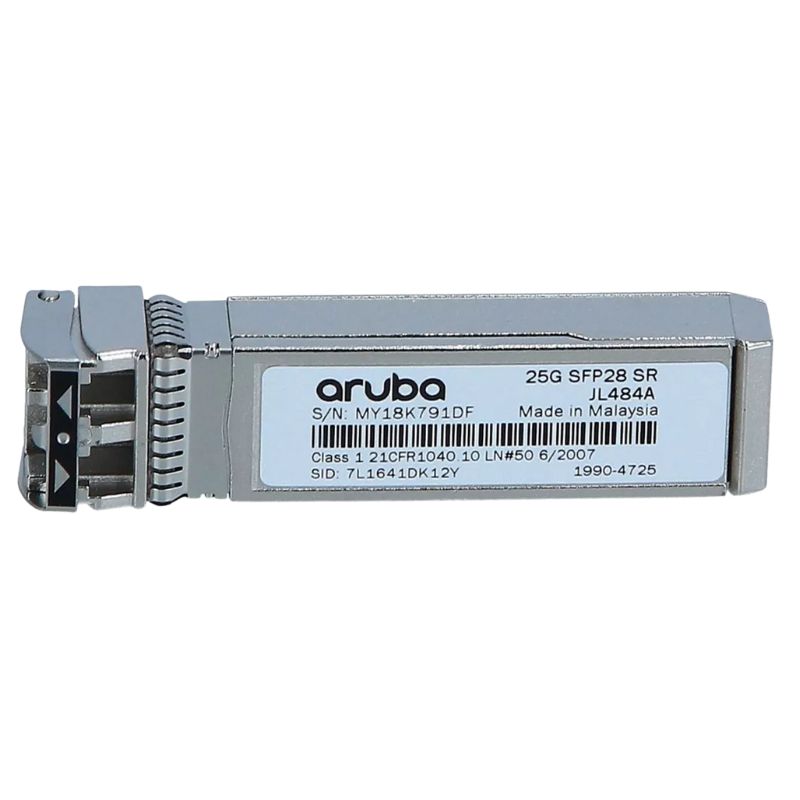


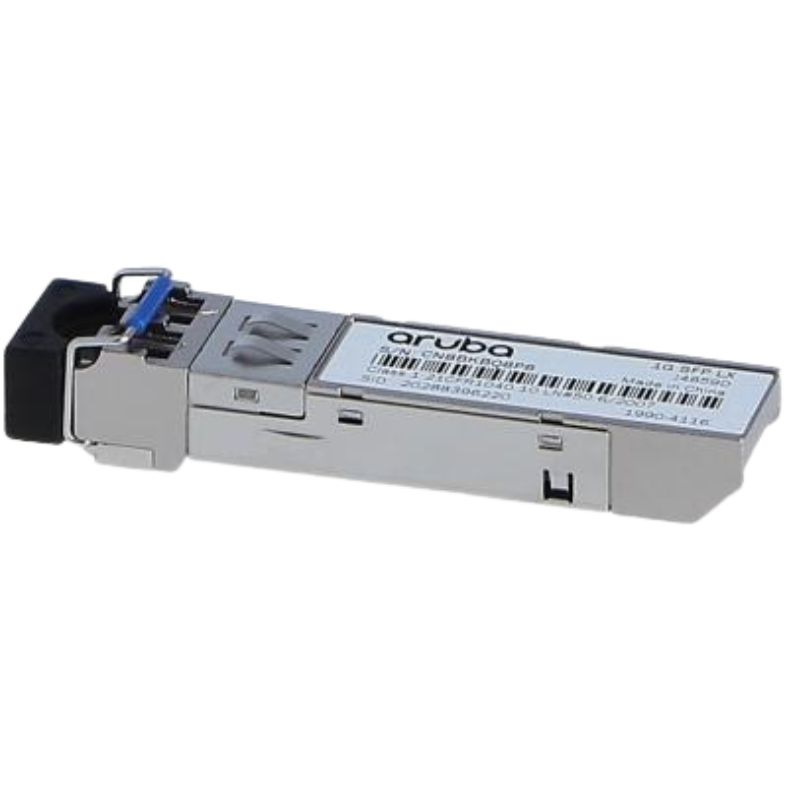
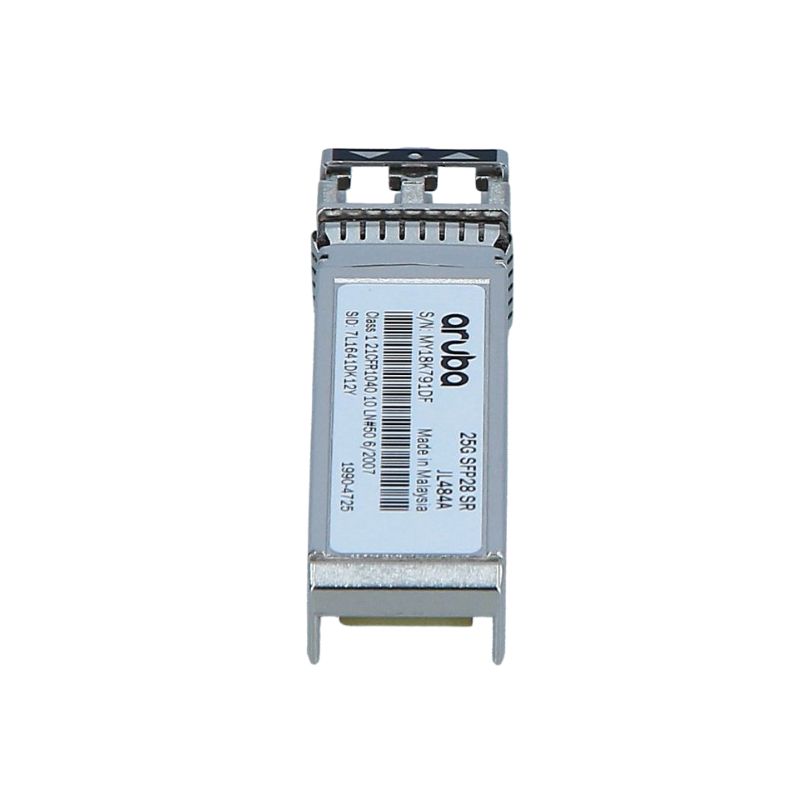
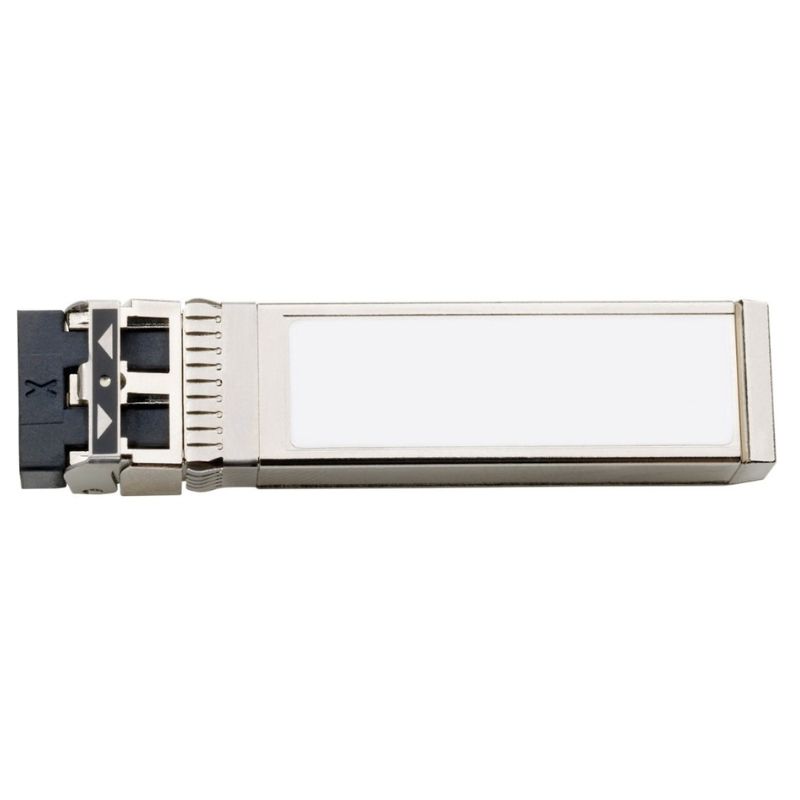
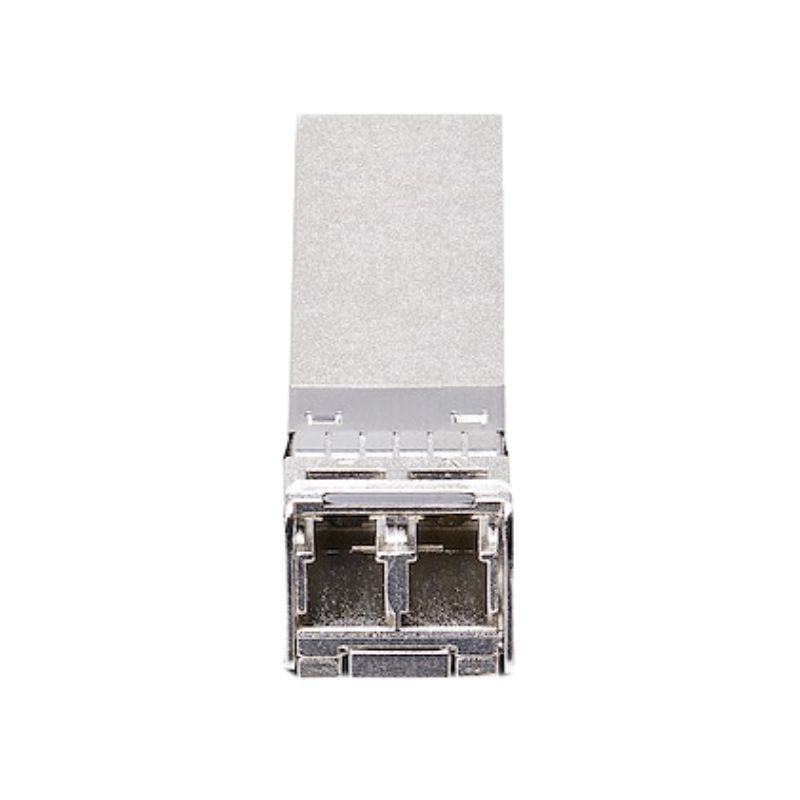
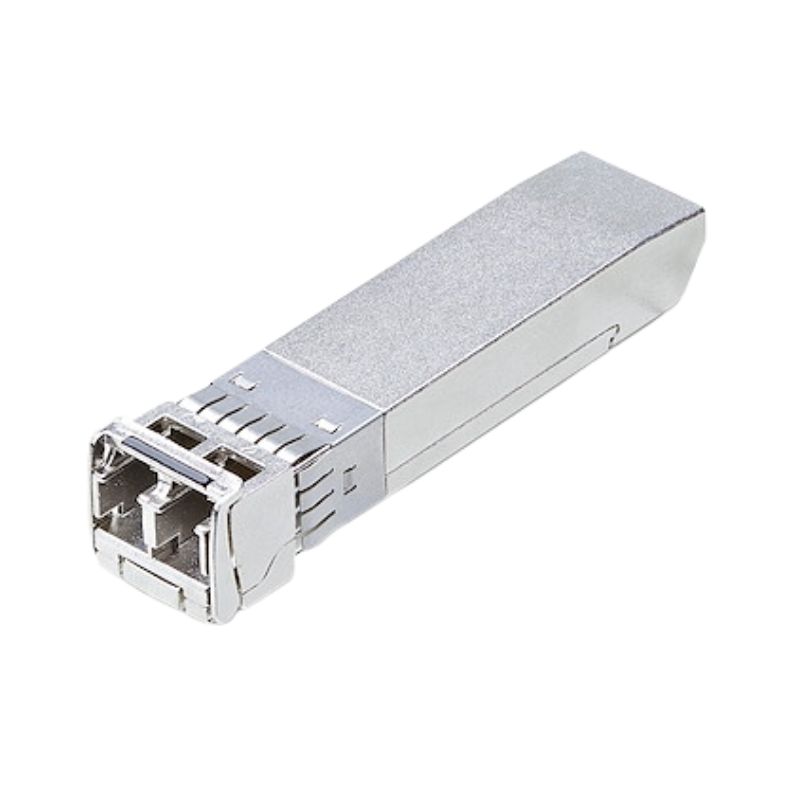
HPE JL484A Aruba 25G SFP28 LC SR 100M MMF Transceiver. Excellent Refurbished with 1 year replacement warranty
The HPE JL484A Aruba 25G SFP28 LC SR 100M MMF Transceiver is a high-performance optical networking component engineered to deliver reliable and ultra-fast 25 Gigabit Ethernet connectivity over multimode fiber infrastructure. Designed for modern data centers and enterprise-grade switching environments, this SFP28 short-range transceiver enables seamless high-speed data transmission while maintaining low latency and excellent signal integrity. It is optimized for short-distance fiber runs up to 100 meters (328 feet) using OM4 multimode fiber, making it ideal for high-density switch-to-switch or switch-to-server interconnects in advanced network architectures.
The HPE JL484A Aruba 25G SFP28 LC SR 100M MMF Transceiver category represents a critical segment of high-speed optical networking components designed for modern data center and enterprise switching environments. This class of transceivers is engineered to deliver reliable 25 Gigabit Ethernet connectivity over multimode fiber infrastructure, enabling high bandwidth, low latency, and efficient scalability for next-generation network architectures. Built to align with IEEE standards for short-range optical transmission, these modules play a central role in optimizing switch-to-switch, switch-to-server, and aggregation layer connectivity across high-performance networks.
Manufactured within the ecosystem of integrated into the broader networking portfolio of this transceiver class is widely adopted in enterprise, cloud, and service provider infrastructures where predictable throughput and low signal degradation are essential.
The SFP28 form factor used in this transceiver category is a compact, hot-pluggable optical interface designed specifically for 25 Gigabit Ethernet applications. It builds upon the SFP+ architecture but enhances electrical signaling and optical modulation efficiency to support higher data rates while maintaining backward compatibility in many switching environments. The SR designation indicates short-range capability, typically optimized for multimode fiber links using vertical-cavity surface-emitting laser technology.
This architecture prioritizes signal integrity through precise laser calibration, advanced photodiode reception systems, and optimized error correction alignment at the physical layer. The module is designed to minimize jitter and dispersion, ensuring stable transmission across distances up to 100 meters when paired with OM4 multimode fiber cabling. In dense switching environments, this level of precision is essential for maintaining deterministic latency across distributed workloads.
The 100-meter reach capability of this transceiver category is specifically engineered for structured cabling systems within data centers and enterprise buildings. The performance envelope is optimized for OM3 and OM4 multimode fiber types, with OM4 providing enhanced modal bandwidth that supports more stable signal propagation at full 25G throughput. This makes it particularly suitable for top-of-rack to end-of-row switch architectures.
Short-range optical modules like this one reduce overall deployment complexity by eliminating the need for long-haul single-mode fiber infrastructure in intra-data center environments. The result is simplified cable management, reduced installation costs, and improved airflow efficiency due to thinner fiber cabling compared to copper alternatives. The optical design ensures consistent performance even in high-density patch panel configurations.
In modern data center environments, the demand for high-throughput, low-latency interconnects continues to increase due to virtualization, containerization, and distributed computing workloads. The 25G SFP28 SR transceiver category is positioned as a foundational building block for leaf-spine network architectures, where predictable bandwidth scaling is critical.
By enabling 25G per lane connectivity, this module supports efficient east-west traffic flow between servers and switching nodes. This is particularly important in hyperconverged infrastructure deployments where storage, compute, and network traffic converge over shared high-speed links. The optical consistency of SR modules ensures stable performance under sustained traffic loads.
At the physical layer, this transceiver category uses advanced optical modulation techniques to maintain signal clarity over multimode fiber. The transmitter utilizes a highly stable laser source calibrated for consistent wavelength output, while the receiver employs high-sensitivity photodiodes capable of accurately interpreting high-speed optical pulses.
Signal integrity is maintained through careful control of dispersion, attenuation, and modal interference. These factors are critical in multimode environments where multiple propagation paths can introduce distortion. The module’s internal signal processing circuitry compensates for these effects, ensuring minimal bit error rates across supported distances.
Deployment of 25G SFP28 SR transceivers requires adherence to structured cabling standards, particularly those governing multimode fiber performance. OM3 and OM4 fiber types are commonly used, with OM4 providing superior bandwidth-distance characteristics that fully support 100-meter transmission at 25G speeds.
Proper polishing of LC duplex connectors, accurate patch panel alignment, and controlled bend radius management are essential to maintain optical efficiency. These physical infrastructure considerations directly impact signal quality and long-term reliability in dense networking environments.
One of the defining features of this transceiver category is its hot-pluggable SFP28 design, which allows installation and replacement without powering down network devices. This capability is essential in enterprise and data center environments where uptime requirements are stringent and maintenance windows are limited.
The modular nature of the design supports rapid scalability, enabling network administrators to adjust bandwidth capacity dynamically as workload demands evolve. This operational flexibility reduces downtime and enhances overall network agility.
Scalability is a defining characteristic of the 25G SFP28 SR category. As network demands grow, organizations can incrementally upgrade from 10G to 25G links without requiring full architectural redesign. This supports cost-efficient scaling strategies aligned with business growth.
The transition to 25G also enables improved aggregation ratios in spine-leaf topologies, reducing oversubscription and improving overall network efficiency. This makes it a preferred choice for organizations modernizing legacy infrastructure.
Reliability is engineered into every aspect of the SFP28 SR transceiver design. Components are tested under rigorous environmental conditions to ensure consistent performance across temperature variations, vibration exposure, and long-term operational stress.
Lifecycle stability is essential for enterprise environments where hardware refresh cycles are planned over multiple years. The durability of optical components ensures predictable performance throughout extended deployment periods.
The 25G SFP28 SR transceiver category represents a transitional technology that bridges the gap between legacy 10G infrastructure and emerging 100G and beyond architectures. Its adoption enables organizations to modernize incrementally while preserving existing fiber investments.
As network demands continue to evolve, this category will remain a foundational component in scalable, high-performance networking strategies, supporting the increasing need for bandwidth-intensive applications such as AI workloads, real-time analytics, and cloud-native services.
This transceiver category is commonly deployed in high-performance switching platforms supporting SFP28 interfaces, particularly within Aruba data center switches, aggregation switches, and leaf-spine architectures. Compatibility is designed to align with modular switch systems that support flexible port configuration and dynamic bandwidth scaling.
Integration within enterprise networks allows seamless interoperability with existing 10G and 40G infrastructures through breakout configurations and multi-speed port negotiation, depending on switch capability. This flexibility supports gradual network evolution without requiring complete hardware replacement, making it a cost-effective solution for long-term infrastructure planning.


 Contact Us
 Information
 Catalog
 Solid State Drives (SSD)
 Network Switches
 Hard Disk Drives
 HBA & Controllers
 PC & Servers
 PC & Server Memory
 CPU & Processors
 Network Routers
 Power Supplies
 Tape Drives & Libraries
 Network Devices
 Computer & Network Cables