(7% discount is applied at checkout)
Cart is empty
Your go-to destination for cutting-edge server products
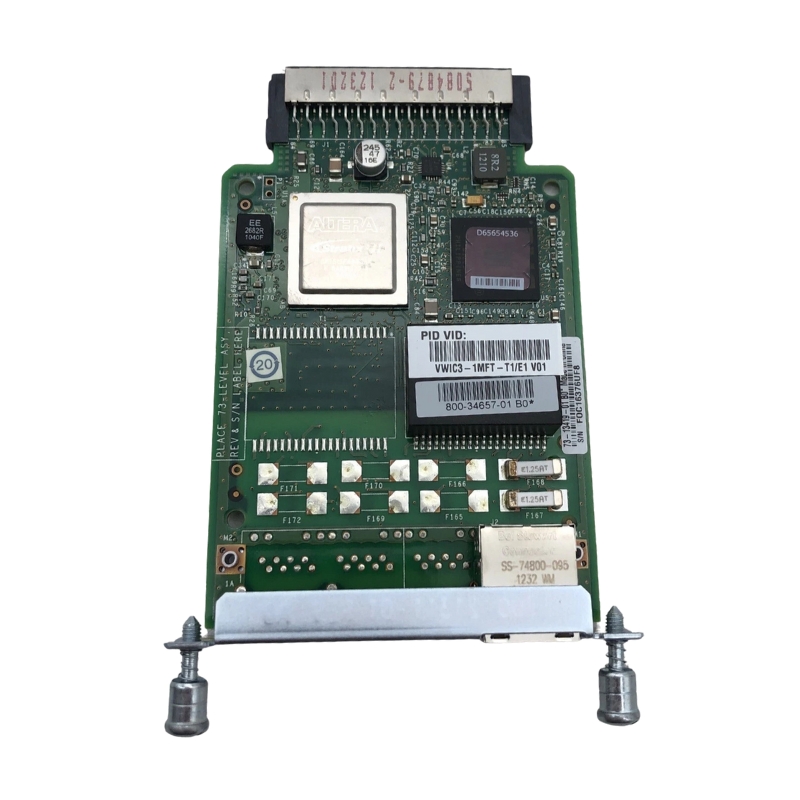


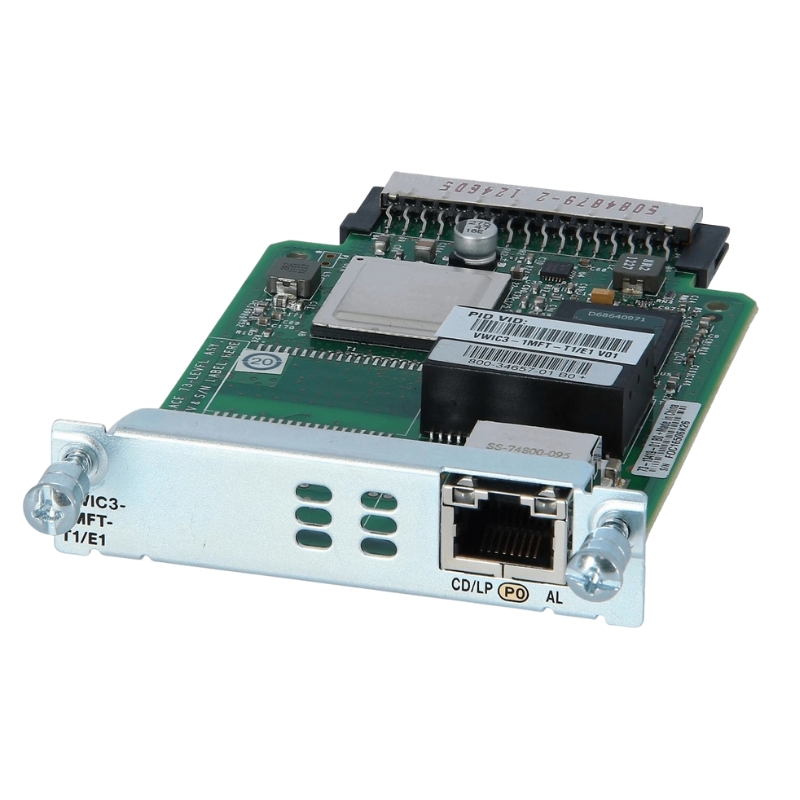
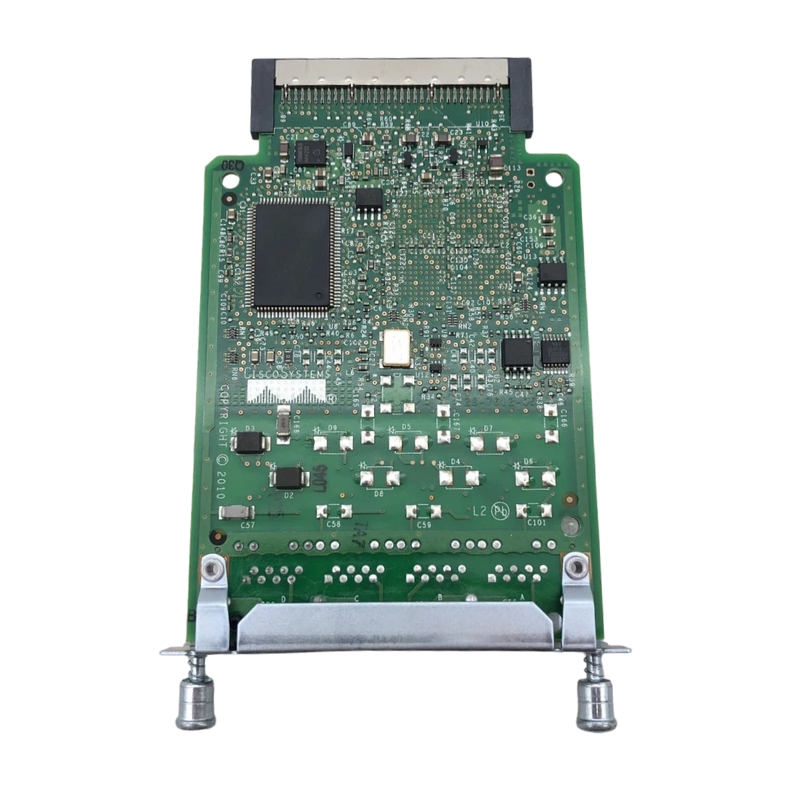
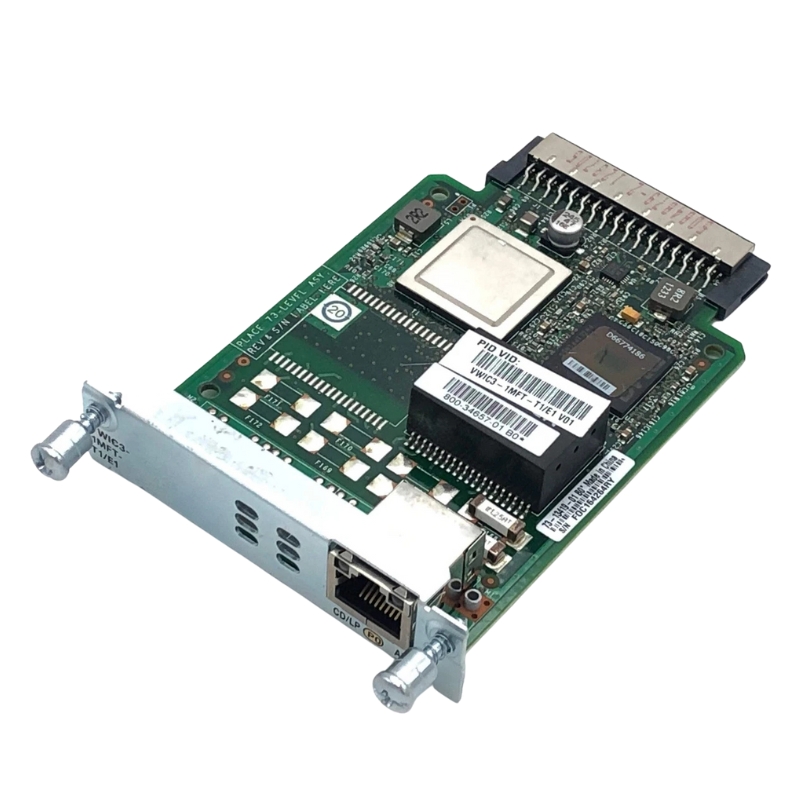
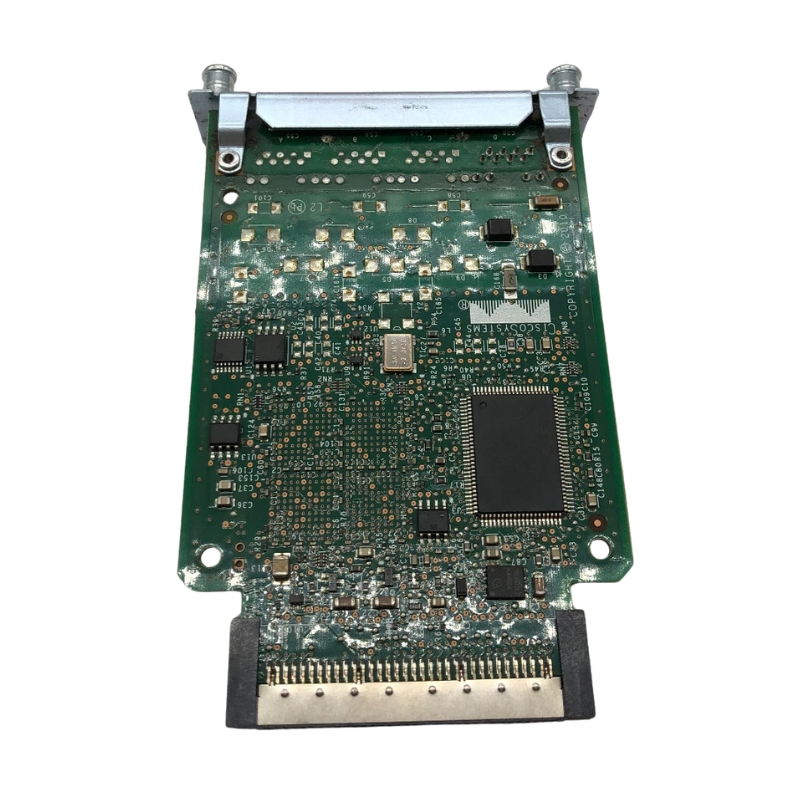
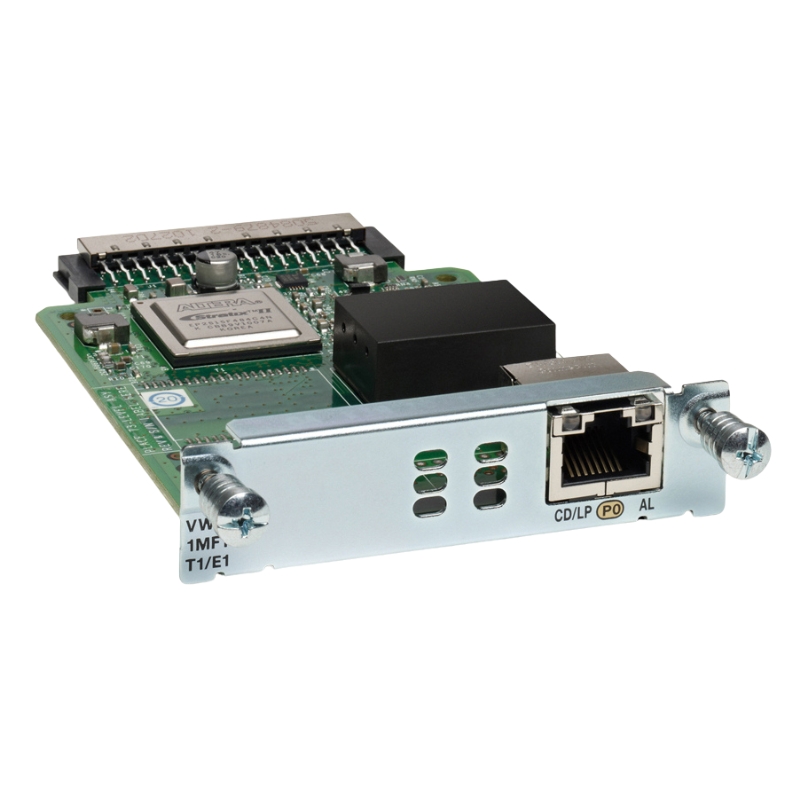
Cisco VWIC3-1MFT-T1/E1 1 Port WAN Interface Card. Factory-Sealed New in Original Box (FSB) with 1 year replacement warranty
| SKU/MPN | Warranty | Price | Condition | You save |
|---|---|---|---|---|
| VWIC3-1MFT-T1/E1 | 1 Year Warranty | $52.00 | Excellent Refurbished | You save: $18.20 (26%) |
| VWIC3-1MFT-T1/E1 | 1 Year Warranty | $145.00 | Factory-Sealed New Retail in Original Box (FSB) | You save: $50.75 (26%) |
The Cisco VWIC3-1MFT-T1/E1 is a high-performance Voice/WAN Interface Card designed to enhance connectivity for enterprise-grade Cisco router platforms. It delivers reliable integration of voice and wide area network (WAN) services in a single compact module, ensuring efficient communication across business networks.
The Cisco VWIC3-1MFT-T1/E1 1 Port Voice/WAN Interface Card is a highly versatile network module designed to integrate voice and data services over T1 and E1 circuit-switched networks. This category of interface cards is widely used in enterprise networking environments, telecom infrastructures, and branch office connectivity setups where reliable WAN transport and voice gateway functionality are essential. Built for compatibility with Cisco Integrated Services Routers (ISRs), the VWIC3 series enhances modular flexibility by allowing organizations to deploy converged services over legacy and modern telecom infrastructures.
As part of Cisco’s third-generation VWIC modules, the VWIC3-1MFT-T1/E1 card supports multi-function operation, enabling both channelized and unchannelized configurations depending on network requirements. It is optimized for high-performance WAN connectivity and voice trunking applications, making it a core component in hybrid communication systems that require PSTN integration and digital circuit support.
The VWIC3-1MFT-T1/E1 supports both T1 (1.544 Mbps) and E1 (2.048 Mbps) standards, offering global deployment flexibility. This dual compatibility ensures that the same hardware module can be deployed across North American, European, Asian, and Middle Eastern telecom infrastructures without requiring hardware replacement.
The interface card automatically adapts to either T1 or E1 signaling modes based on configuration settings. This adaptability reduces deployment complexity and ensures seamless integration into heterogeneous telecom environments.
One of the most important features of this category is its ability to handle both voice and WAN traffic simultaneously. This convergence capability allows enterprises to reduce infrastructure costs while maintaining high-quality voice transmission and reliable data connectivity.
The module supports channelized voice applications where individual time slots (DS0 channels) can be assigned to voice calls. This is particularly useful in VoIP gateway implementations and PSTN interconnections.
The VWIC3 series is designed to integrate seamlessly with Cisco Integrated Services Routers, including ISR G2 platforms. This ensures that organizations can upgrade or expand their WAN capabilities without replacing their existing routing infrastructure.
The interface card is built with compact form factor engineering to fit into Cisco router network module slots. It supports low power consumption while maintaining high throughput efficiency. The hardware design ensures durability under continuous enterprise-level workloads.
The module includes a single port capable of operating in either T1 or E1 mode. This port supports both voice and data channelization depending on configuration settings within the router operating system.
The VWIC3-1MFT-T1/E1 supports a wide range of telecom signaling protocols including PRI (Primary Rate Interface), CAS (Channel Associated Signaling), and PPP (Point-to-Point Protocol). These protocols ensure interoperability with legacy systems and modern IP-based networks.
Accurate timing is critical in digital telephony systems. This interface card supports network and internal clocking options, ensuring proper synchronization with carrier networks and reducing jitter in voice transmission.
The card delivers up to 2.048 Mbps bandwidth in E1 mode and 1.544 Mbps in T1 mode. This bandwidth is distributed across 24 (T1) or 32 (E1) time slots, depending on regional standards and configuration.
The VWIC3-1MFT-T1/E1 plays a critical role in enabling unified communications systems by bridging traditional PSTN networks with IP-based telephony solutions. It allows voice traffic to be carried over circuit-switched infrastructure while integrating with VoIP systems through Cisco voice gateways.
In hybrid deployments, this interface card serves as the bridge between legacy telephony systems and modern IP networks. This is especially useful in enterprise migration scenarios where full IP adoption is gradual.
The module also functions as a WAN interface card, allowing routers to establish dedicated leased-line connections over T1/E1 circuits. This ensures predictable latency and stable connectivity for mission-critical applications.
Quality of Service (QoS) policies can be applied to prioritize voice traffic over data traffic, ensuring optimal call quality even during peak network usage periods.
The VWIC3-1MFT-T1/E1 is commonly deployed in branch offices requiring secure and stable connectivity to headquarters. It provides a dedicated WAN link that supports both voice calls and data transmission.
In multi-site enterprise environments, multiple VWIC3 modules can be deployed across routers to establish a meshed or hub-and-spoke WAN topology.
Service providers use this interface card to connect customer premises equipment (CPE) to the public switched telephone network (PSTN). Its compatibility with standard telecom protocols ensures seamless interconnection.
Carriers often deploy T1/E1 leased lines for enterprise customers requiring guaranteed bandwidth and uptime. This module enables termination of such circuits at customer premises routers.
QoS mechanisms are essential for optimizing voice traffic performance. By prioritizing voice packets, administrators can minimize latency, jitter, and packet loss.
Traffic shaping policies help regulate WAN bandwidth usage, ensuring that voice applications maintain consistent performance even under heavy data loads.
In multi-interface deployments, load balancing techniques distribute traffic evenly across available WAN links, improving redundancy and performance.
Although the VWIC3-1MFT-T1/E1 operates on circuit-switched networks, additional encryption mechanisms can be implemented at the router level to secure voice traffic.
Administrators can configure ACLs (Access Control Lists) to restrict unauthorized access to WAN interfaces and prevent potential intrusion attempts.
Segmentation of voice and data traffic improves security and reduces the risk of cross-network vulnerabilities.
Large enterprises utilize VWIC3-1MFT-T1/E1 modules to connect internal IP telephony systems with external PSTN networks, ensuring seamless communication across global offices.
Call centers rely on this interface card to handle high volumes of inbound and outbound voice traffic with consistent reliability.
Banks and financial organizations use dedicated T1/E1 links for secure transaction processing and communication between branches.


 Contact Us
 Information
 Catalog
 Solid State Drives (SSD)
 Network Switches
 Hard Disk Drives
 HBA & Controllers
 PC & Servers
 PC & Server Memory
 CPU & Processors
 Network Routers
 Power Supplies
 Tape Drives & Libraries
 Network Devices
 Computer & Network Cables