(7% discount is applied at checkout)
Cart is empty
Your go-to destination for cutting-edge server products
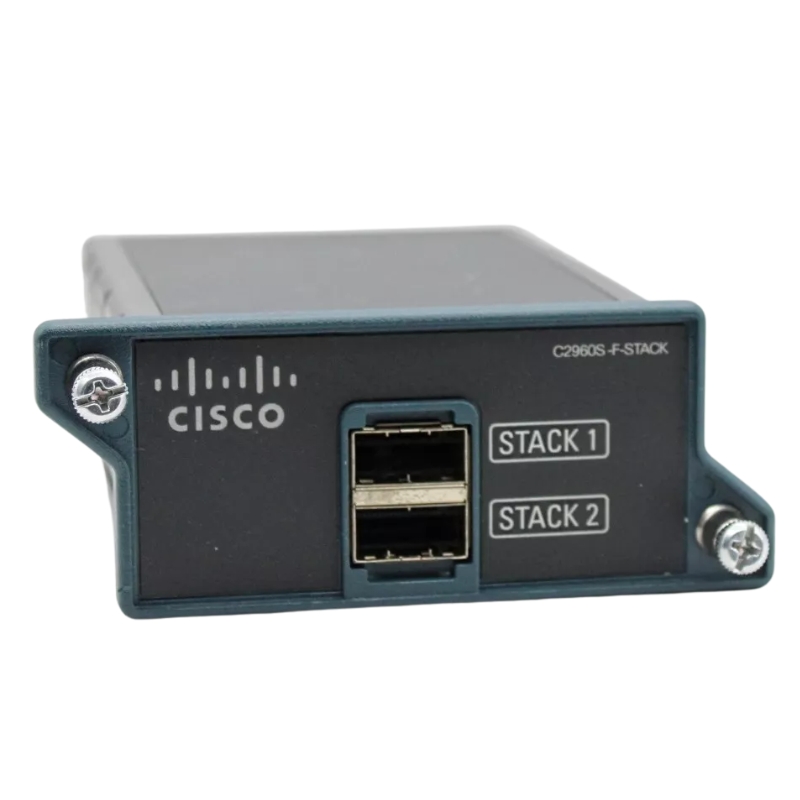


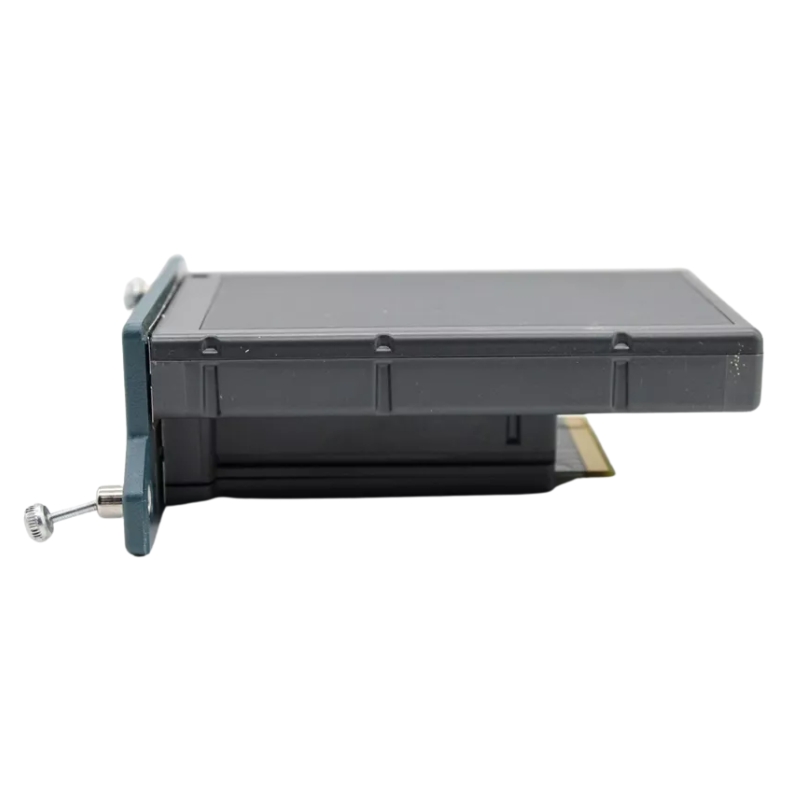
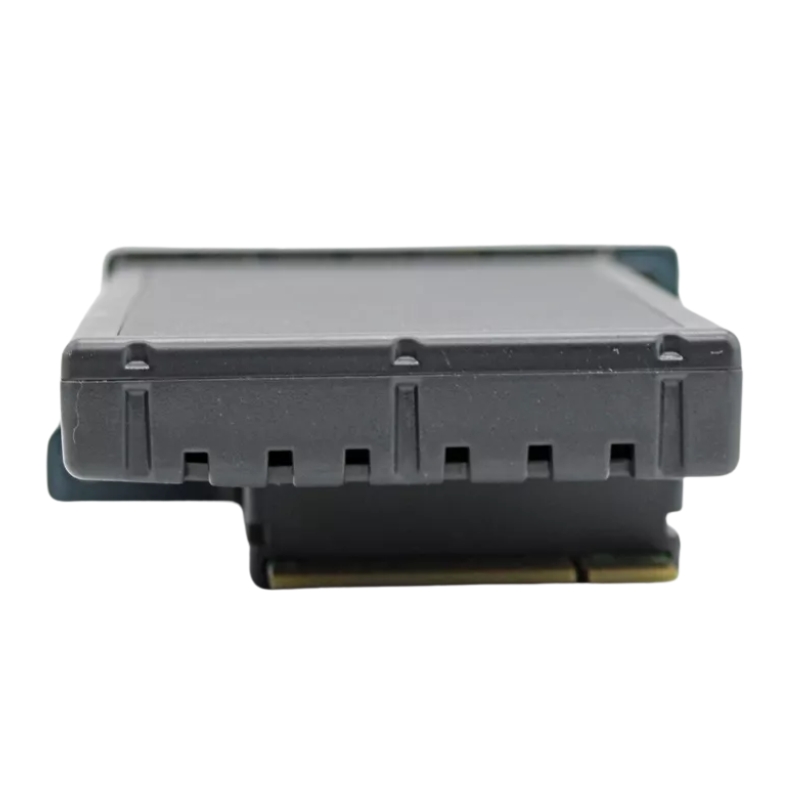
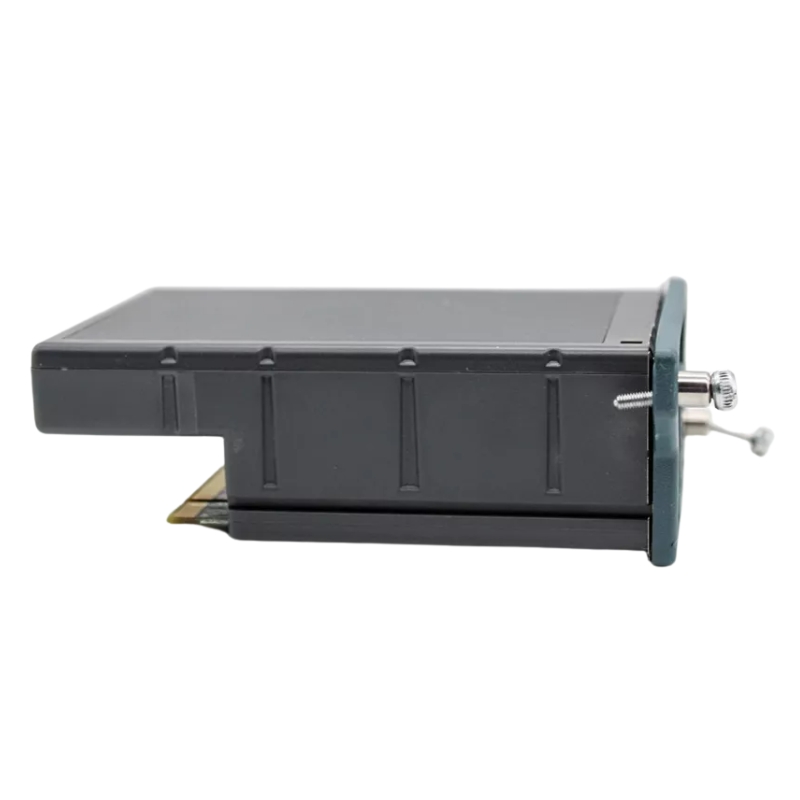
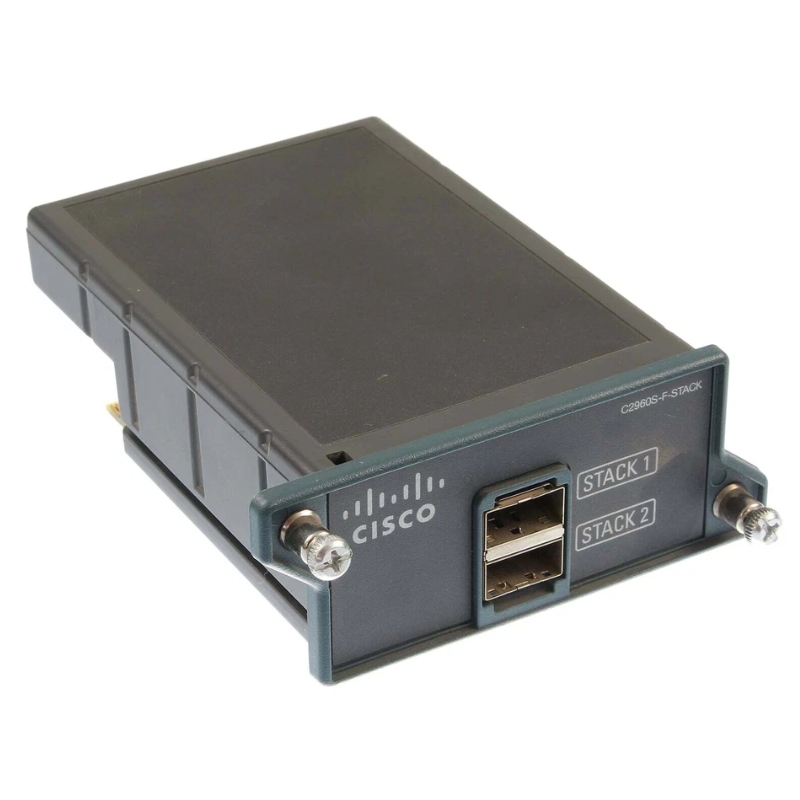
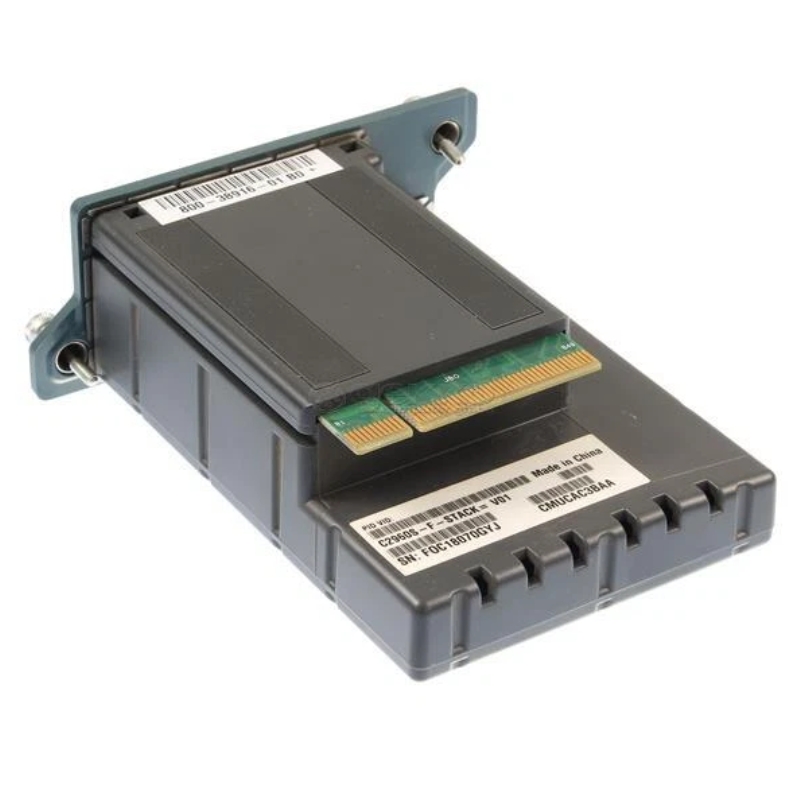
Cisco C2960S-F-STACK Hot-Swappable FlexStack Stacking Module. Factory-Sealed New in Original Box (FSB) with 1 year replacement warranty
| SKU/MPN | Warranty | Price | Condition | You save |
|---|---|---|---|---|
| C2960S-F-STACK | 1 Year Warranty | $60.00 | Excellent Refurbished | You save: $21.00 (26%) |
| C2960S-F-STACK | 1 Year Warranty | $585.00 | Factory-Sealed New in Original Box (FSB) | You save: $204.75 (26%) |
Overview of the Cisco Stacking Module
The C2960S-F-STACK Cisco 2960S FlexStack Stacking Module is a dedicated stacking solution engineered for Cisco Catalyst 2960-S series switches, enabling seamless integration of multiple switches into a single logical unit. This stacking module plays a critical role in modern enterprise access-layer networking by improving scalability, simplifying management, and enhancing redundancy. Designed specifically for enterprise campus environments, the module enables administrators to manage multiple physical switches as one cohesive system, reducing operational complexity while increasing network resilience and performance efficiency.
As organizations expand their network infrastructure, the need for flexible stacking solutions becomes essential. The Cisco FlexStack technology, implemented through the C2960S-F-STACK module, ensures high-speed interconnectivity between compatible switches while maintaining low latency and deterministic performance. This stacking capability transforms independent switches into a unified system with a single control plane, single configuration file, and shared forwarding architecture.
The architecture of the Cisco 2960-S FlexStack system is built on a modular stacking design that connects switches using dedicated stacking ports and proprietary stack cables. The C2960S-F-STACK Cisco 2960S FlexStack Stacking Module is inserted into a rear expansion slot of compatible switches, enabling high-speed data exchange between stack members. This architecture ensures that all switches in the stack operate under a single management domain, effectively functioning as one logical switch.
Cisco FlexStack technology is designed to provide a balance between performance, scalability, and simplicity. The stacking module supports a high-speed stacking bandwidth that allows data packets to be transmitted between switches without bottlenecks. This ensures consistent performance across the network, even during high traffic loads. FlexStack also enables stateful switchover, which preserves network sessions during failover events, minimizing downtime and improving service continuity.
Unlike traditional standalone switch configurations, FlexStack creates a virtual switching system that consolidates control plane functions. This means that routing decisions, MAC address tables, and configuration settings are shared across all stack members. The result is a simplified network architecture that reduces administrative overhead and improves operational efficiency.
The C2960S-F-STACK Cisco 2960S FlexStack Stacking Module offers a wide range of features that make it a preferred choice for enterprise network deployments. These features are designed to enhance scalability, reliability, and ease of management in campus and branch network environments.
One of the most important features of the FlexStack module is its high-speed stack interconnect capability. The module enables data transfer between switches at multi-gigabit speeds, ensuring minimal latency and efficient load distribution across the stack. This high-speed interconnect is essential for maintaining consistent network performance in environments with heavy data traffic.
With the C2960S-F-STACK module, multiple switches can be managed as a single entity. This unified management system reduces the complexity of network administration by allowing configuration changes to be applied across the entire stack simultaneously. Network administrators benefit from simplified monitoring, troubleshooting, and provisioning processes.
FlexStack technology provides enhanced redundancy by allowing stack members to act as backups for each other. In the event of a switch failure, the remaining switches in the stack automatically take over the workload, ensuring uninterrupted network operations. This redundancy is crucial for mission-critical applications that require continuous uptime.
The stacking module supports the addition of multiple switches to a single stack, enabling organizations to scale their network infrastructure as needed. This scalability allows businesses to start with a small deployment and gradually expand without redesigning the entire network architecture.
The C2960S-F-STACK Cisco 2960S FlexStack Stacking Module is specifically designed for Cisco Catalyst 2960-S series switches. It is not compatible with other Cisco switch families, which ensures optimized performance and tight integration within the supported platform. The module fits into a dedicated stacking slot located at the rear of the switch chassis, making installation straightforward and secure.
Supported models include various Cisco Catalyst 2960-S variants that feature FlexStack-ready hardware. These models are widely used in enterprise access networks, branch offices, and educational institutions due to their reliability and cost-effectiveness. The compatibility of the stacking module ensures that organizations can build standardized network infrastructures with consistent performance characteristics.
Installing the C2960S-F-STACK Cisco 2960S FlexStack Stacking Module is a straightforward process designed for minimal disruption. The module is typically inserted into the stacking slot on the back of the switch while the device is powered down or in maintenance mode. Once installed, stacking cables are used to connect multiple switches in either a ring or chain topology.
The physical installation involves aligning the module with the designated slot and securing it firmly to ensure stable connectivity. After installation, Cisco-approved stacking cables are connected between switches to establish communication links. Proper cable management is essential to maintain airflow and prevent physical strain on connectors.
After physical setup, switches automatically detect stack members and assign roles such as master or member. The master switch is responsible for managing the stack configuration and distributing control plane information. Administrators can verify stack status using Cisco IOS commands and adjust priority settings to influence master election processes.
The deployment of the C2960S-F-STACK Cisco 2960S FlexStack Stacking Module provides significant performance enhancements in enterprise network environments. By aggregating multiple switches into a single logical unit, the system improves bandwidth utilization and reduces congestion.
Load balancing across stack members ensures that network traffic is distributed efficiently, preventing any single switch from becoming a bottleneck. Additionally, the low-latency interconnect between stack members supports high-performance applications such as VoIP, video conferencing, and real-time data processing.
FlexStack architecture enables intelligent traffic routing within the stack, allowing packets to traverse the shortest possible path between source and destination. This reduces unnecessary hops and improves overall network responsiveness.
In enterprise environments where uptime is critical, the stacking module significantly reduces downtime by providing automatic failover capabilities. If a switch fails, the stack quickly reconfigures itself to maintain network continuity without manual intervention.
The C2960S-F-STACK Cisco 2960S FlexStack Stacking Module is widely used in various networking scenarios, particularly in environments that require scalable and reliable access-layer switching solutions.
In large enterprise campuses, FlexStack enables centralized management of multiple access switches across different buildings or floors. This simplifies network administration and ensures consistent policy enforcement across the organization.
Branch offices benefit from the stacking module by reducing the need for complex network configurations. A stacked system behaves as a single switch, making it easier for IT teams to manage remote locations efficiently.
Schools and universities often deploy stacked Cisco 2960-S switches to support classroom connectivity, administrative systems, and wireless infrastructure. FlexStack ensures stable connectivity even during peak usage periods.
Healthcare environments require highly available and reliable network systems. The redundancy and failover capabilities of the C2960S-F-STACK module help ensure continuous access to critical systems and patient data.
When designing a network using the Cisco 2960-S FlexStack system, several factors must be considered to ensure optimal performance. These include stack size, topology design, redundancy planning, and bandwidth allocation.
Stack size is an important consideration, as Cisco recommends a specific maximum number of switches per stack to maintain performance efficiency. Ring topology is generally preferred over chain topology because it provides better redundancy and faster failover capabilities.
Proper redundancy planning ensures that the failure of a single switch does not impact the entire network. By distributing critical services across multiple stack members, organizations can achieve high availability and fault tolerance.
Effective bandwidth management ensures that network resources are used efficiently. The FlexStack module helps distribute traffic evenly across stack members, reducing congestion and improving user experience.
Cisco offers multiple stacking technologies, including FlexStack, FlexStack-Plus, and StackWise systems. The C2960S-F-STACK module is specifically designed for the Catalyst 2960-S series and provides a cost-effective stacking solution compared to higher-end StackWise technologies.
While StackWise offers higher bandwidth and advanced features, FlexStack remains a reliable and efficient solution for access-layer switching in small to medium enterprise environments. Its simplicity and affordability make it a popular choice for organizations seeking scalable networking solutions without excessive complexity.
The use of the Cisco 2960-S FlexStack module significantly improves operational efficiency by reducing the number of devices that require individual management. Network administrators can implement changes across the entire stack simultaneously, reducing configuration errors and saving time.
In addition, the unified system architecture simplifies network documentation and monitoring. Performance metrics can be collected at the stack level, providing a comprehensive view of network health.
Security is a critical aspect of any network deployment involving the C2960S-F-STACK Cisco 2960S FlexStack Stacking Module. Cisco provides multiple security features such as port security, access control lists (ACLs), and secure management protocols to protect stack environments.
By centralizing management, FlexStack also helps enforce consistent security policies across all connected switches. This reduces the risk of misconfiguration and enhances overall network security posture.
Organizations using the Cisco 2960-S FlexStack system can plan for future growth by adding additional stack members as needed. While the platform is designed for access-layer networking, it provides a solid foundation for expansion into more advanced Cisco switching architectures.
Upgrade paths may include transitioning to newer Cisco Catalyst platforms while maintaining similar stacking principles. This ensures continuity and reduces the learning curve for network administrators.


 Contact Us
 Information
 Catalog
 Solid State Drives (SSD)
 Network Switches
 Hard Disk Drives
 HBA & Controllers
 PC & Servers
 PC & Server Memory
 CPU & Processors
 Network Routers
 Power Supplies
 Tape Drives & Libraries
 Network Devices
 Computer & Network Cables