(7% discount is applied at checkout)
Cart is empty
Your go-to destination for cutting-edge server products
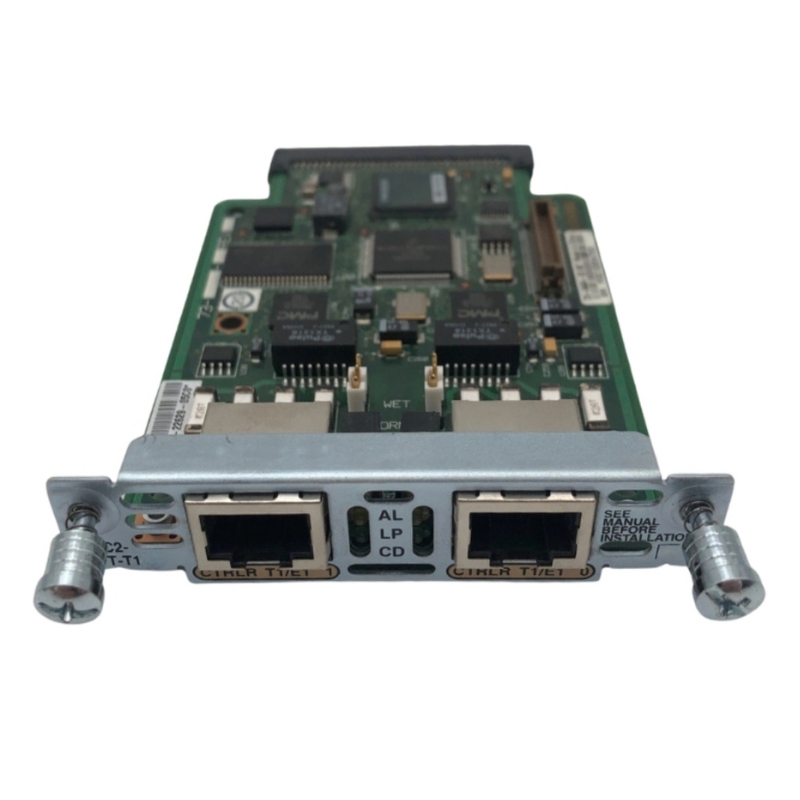


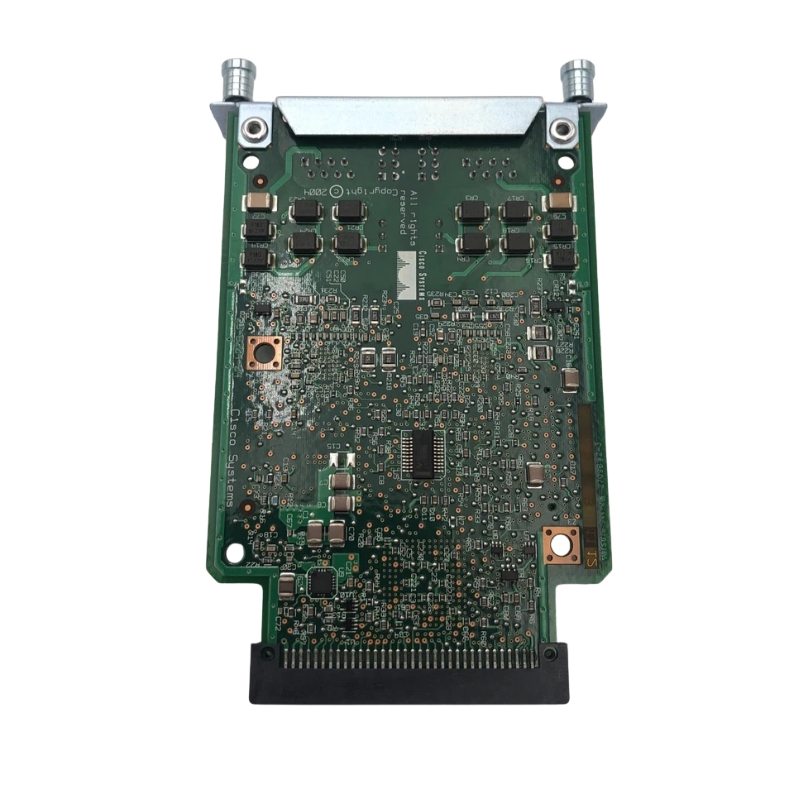
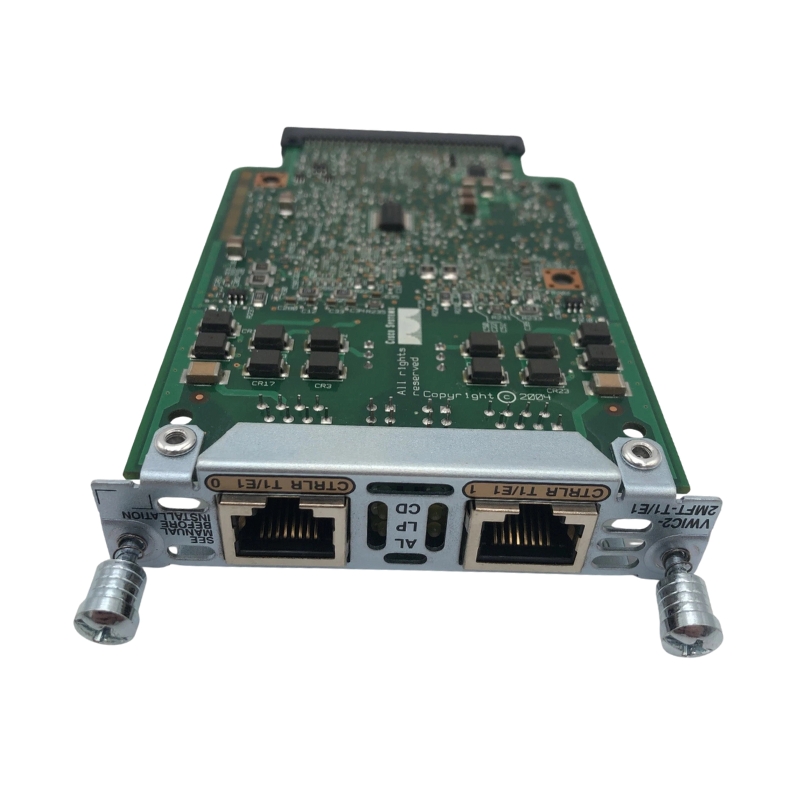
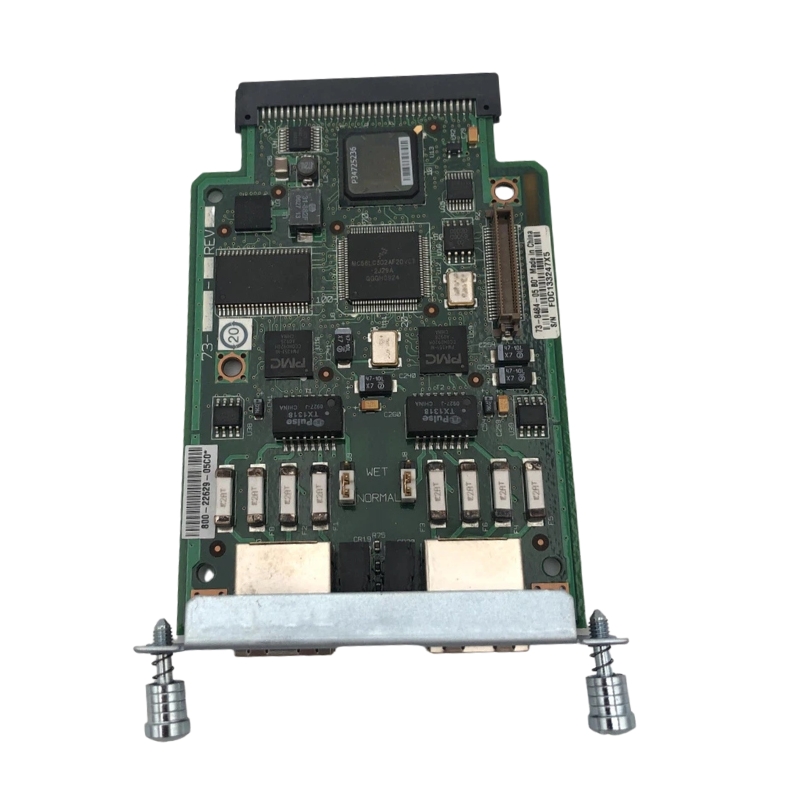
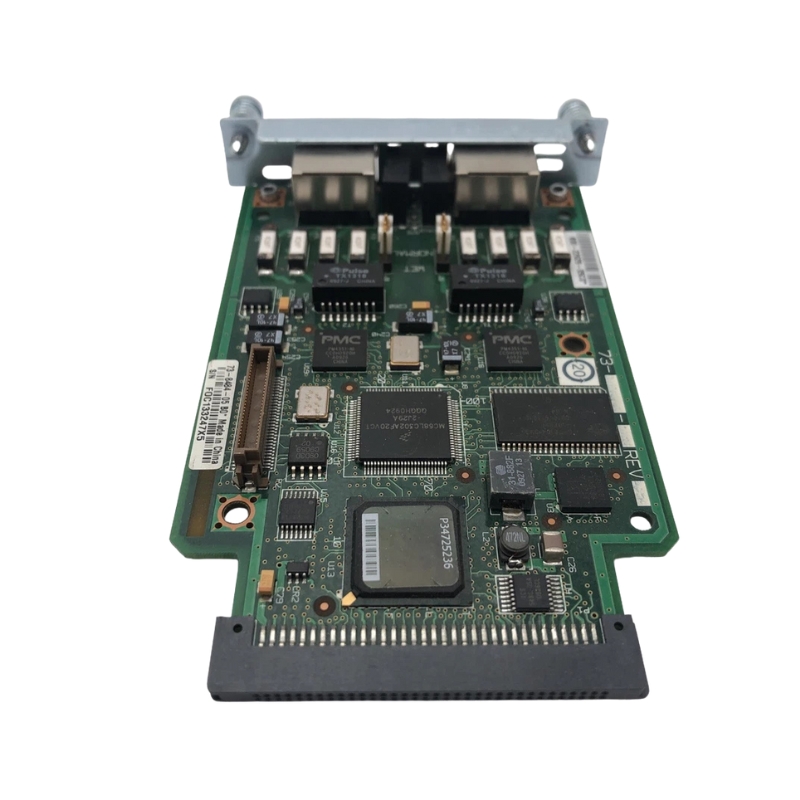
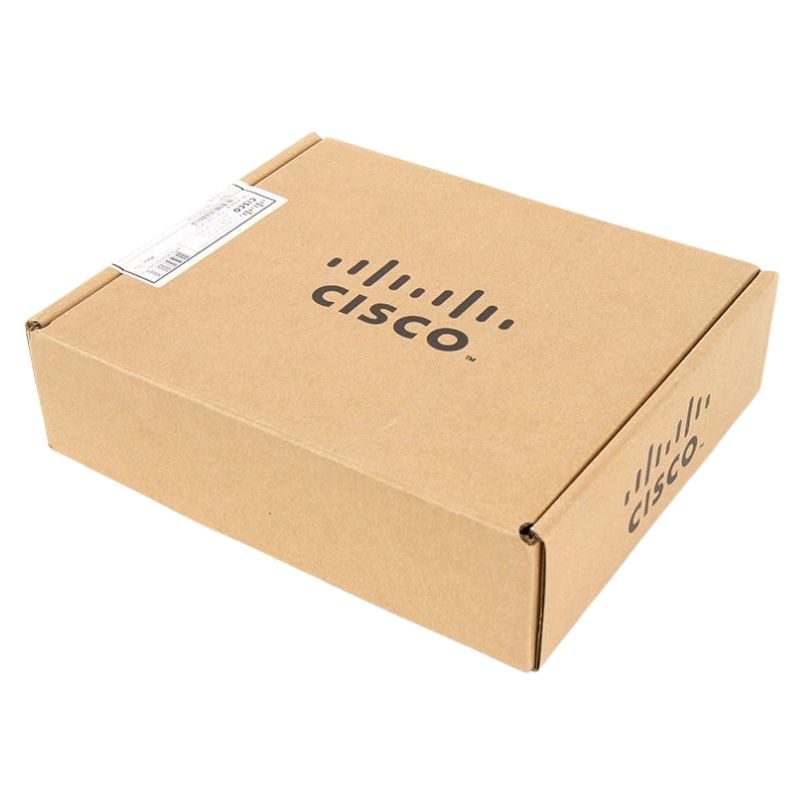
Cisco VWIC-2MFT-T1 2 Ports Voice Interface Card. Excellent Refurbished with 1 year replacement warranty
| SKU/MPN | Warranty | Price | Condition | You save |
|---|---|---|---|---|
| VWIC-2MFT-T1 | 1 Year Warranty | $60.00 | Factory-Sealed New in Original Box (FSB) | You save: $21.00 (26%) |
| VWIC-2MFT-T1 | 1 Year Warranty | $48.00 | Excellent Refurbished | You save: $16.80 (26%) |
The Cisco VWIC-2MFT-T1 is a high-performance voice and WAN interface expansion module designed to enhance connectivity in Cisco Integrated Services Routers. It provides dual-port T1 support, enabling reliable voice and data transmission across enterprise networks.
This interface card is engineered for seamless integration with multiple Cisco Integrated Services Routers, making it a flexible solution for enterprise networking environments.
The Cisco VWIC-2MFT-T1 Multiplex 2 Ports Voice Interface Card is a high-performance WAN and voice integration module designed for enterprise-grade telecommunication environments. This interface card is widely deployed in legacy and hybrid network infrastructures where T1 digital voice services and WAN connectivity must coexist on a unified platform. It is engineered to support multiplexed voice and data transmission, enabling businesses to maximize bandwidth utilization while maintaining reliable voice communication across distributed systems.
This dual-port VWIC module is typically installed in Cisco routers that support modular interface cards, providing seamless integration between traditional telephony systems and modern IP-based communication networks. Its architecture is optimized for scalability, allowing organizations to support multiple voice channels over T1 circuits without compromising performance or call quality.
The Cisco VWIC-2MFT-T1 card is designed with a dual-function architecture that supports both voice and WAN interfaces simultaneously. This integration reduces the need for separate hardware modules, simplifying network design and lowering operational costs. The card processes T1 signals using built-in channelized multiplexing, enabling multiple voice channels to be transmitted over a single physical line.
Featuring two independent T1 ports, the module allows administrators to configure redundant or load-balanced voice circuits. Each port supports 24-channel T1 framing, providing up to 48 voice channels when both ports are fully utilized. This makes it suitable for medium to large enterprises that require high-density voice connectivity without investing in separate PBX expansion systems.
The card supports channelized voice transmission, where each DS0 channel within a T1 circuit can carry individual voice calls or data sessions. This granular level of control ensures optimal bandwidth utilization and efficient call routing across enterprise networks.
Built-in multiplexing capabilities allow the VWIC-2MFT-T1 to combine multiple voice streams into a single digital signal. This reduces overhead and enhances transmission efficiency, particularly in environments with heavy voice traffic and limited WAN resources.
The Cisco VWIC-2MFT-T1 supports up to 48 voice channels across two T1 interfaces. This high-density capability makes it ideal for organizations that operate call centers, branch offices, or distributed communication systems requiring consistent voice availability.
The module provides seamless integration with Public Switched Telephone Network (PSTN) environments. It allows legacy analog and digital voice systems to interface with modern IP-based infrastructures, ensuring smooth transition during network upgrades.
TDM is a critical feature of the VWIC-2MFT-T1, enabling multiple voice streams to share a single transmission medium. This ensures synchronized delivery of voice packets and minimizes latency, jitter, and packet loss during communication sessions.
The card supports internal, external, and loop-timed clocking configurations, allowing it to adapt to different network synchronization requirements. Proper clocking ensures accurate data transmission and prevents timing slips in voice communication.
In enterprise branch environments, the Cisco VWIC-2MFT-T1 is commonly used to connect remote offices to centralized communication hubs. It enables voice traffic consolidation and reduces dependency on multiple physical lines.
Call centers benefit significantly from the high channel density of this interface card. By supporting multiple simultaneous calls, it ensures uninterrupted customer service operations and efficient call routing across agents and departments.
The module plays a key role in unified communications systems where voice, video, and data are converged. It acts as a bridge between legacy telephony systems and modern IP-based platforms, ensuring interoperability across technologies.
With dual-port configuration, organizations can implement redundancy strategies to maintain voice services during network failures. If one T1 line goes down, traffic can be rerouted to the secondary interface, ensuring business continuity.
Each T1 port provides a bandwidth of 1.544 Mbps, supporting 24 DS0 channels per line. Combined, the dual-port configuration delivers a total theoretical bandwidth of 3.088 Mbps for voice and data multiplexing operations.
The Cisco VWIC-2MFT-T1 is optimized for low-latency voice transmission. Its hardware-based processing minimizes delays associated with packetization and routing, ensuring high-quality voice communication even under heavy network load.
Built-in diagnostic features continuously monitor line quality, detecting issues such as signal degradation, frame slips, and bit errors. This proactive monitoring helps network administrators maintain optimal performance levels.
The module is compatible with a range of Cisco routers that support voice WAN interface cards. It integrates seamlessly into modular router architectures, enabling flexible network expansion and upgrade paths.
Efficient bandwidth utilization is achieved through channelized voice allocation and intelligent traffic distribution. The card ensures that unused channels can be dynamically allocated based on network demand.
Advanced signaling and timing mechanisms help maintain high voice quality. Features such as jitter control and echo suppression ensure clear communication even in high-traffic environments.
Quality of Service (QoS) policies can be applied to prioritize voice traffic over data traffic. This ensures that critical communication is not affected by bandwidth congestion.
With dual T1 ports, traffic can be distributed evenly to prevent overload on a single interface. This enhances performance stability and reduces the risk of service disruption.
Compared to single-port VWIC modules, the VWIC-2MFT-T1 offers significantly higher capacity and redundancy. This makes it more suitable for enterprise-grade deployments requiring continuous uptime.
While newer voice interface technologies focus on full IP-based communication, the VWIC-2MFT-T1 remains relevant in hybrid environments where T1 circuits are still widely used.
Organizations often choose this module for cost-effective upgrades of existing infrastructure rather than complete system overhauls, allowing gradual migration to IP telephony.
The modular nature of Cisco voice interface cards ensures scalability, enabling businesses to expand capacity without replacing entire network systems.
Although primarily a transport layer device, the VWIC-2MFT-T1 contributes to secure communication by ensuring stable and isolated voice channels within enterprise networks.
Voice traffic can be segmented from data traffic to reduce congestion and improve security. This isolation helps prevent interference and enhances overall system reliability.
Dual-port redundancy provides automatic failover capabilities, ensuring uninterrupted service during hardware or line failures.
Enterprise deployments benefit from continuous uptime guarantees enabled by redundant routing and failover configurations.


 Contact Us
 Information
 Catalog
 Solid State Drives (SSD)
 Network Switches
 Hard Disk Drives
 HBA & Controllers
 PC & Servers
 PC & Server Memory
 CPU & Processors
 Network Routers
 Power Supplies
 Tape Drives & Libraries
 Network Devices
 Computer & Network Cables