(7% discount is applied at checkout)
Cart is empty
Your go-to destination for cutting-edge server products
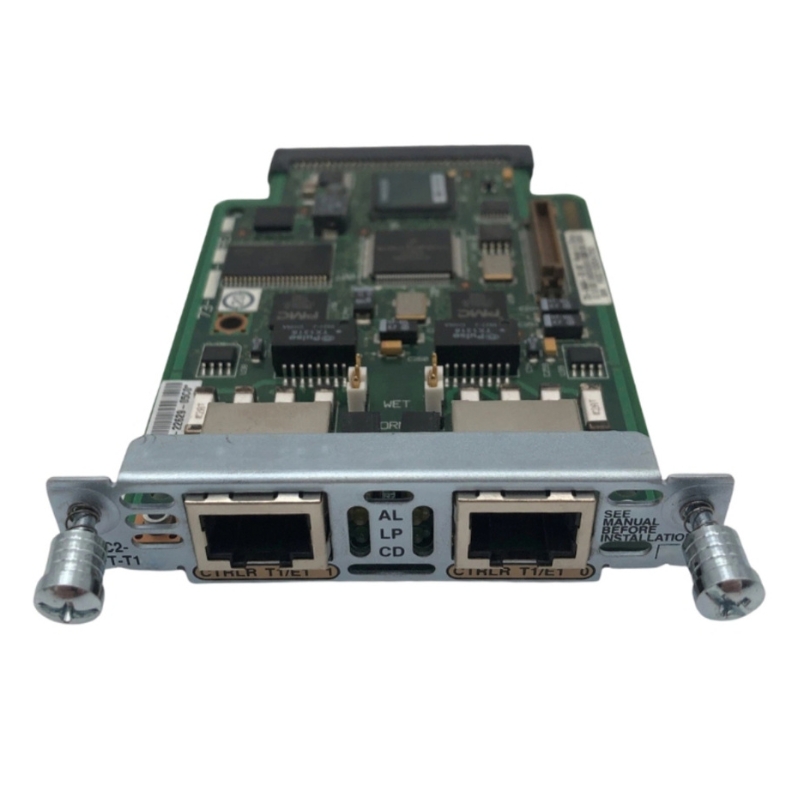


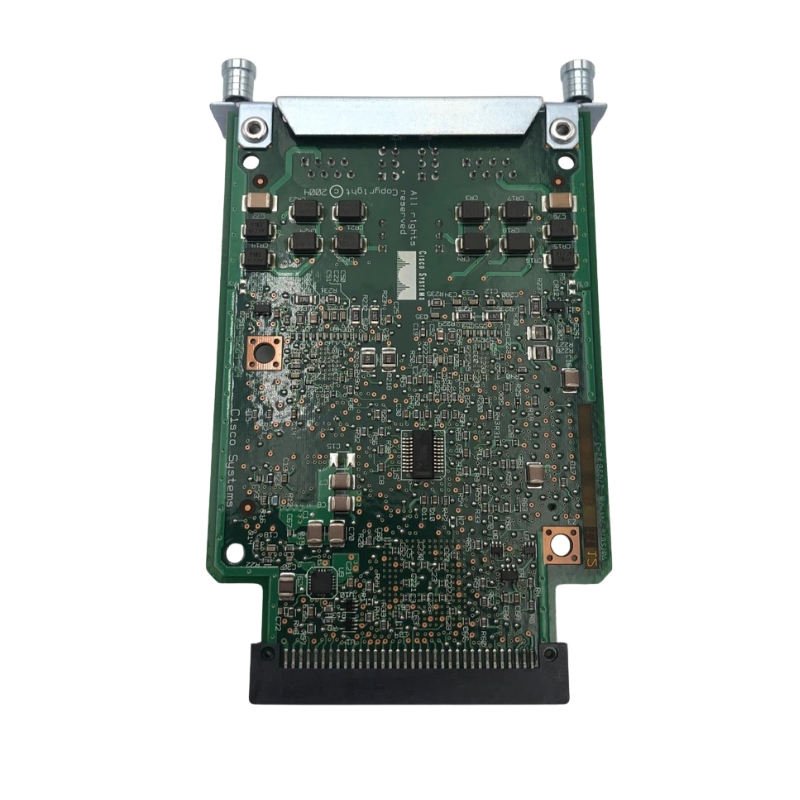
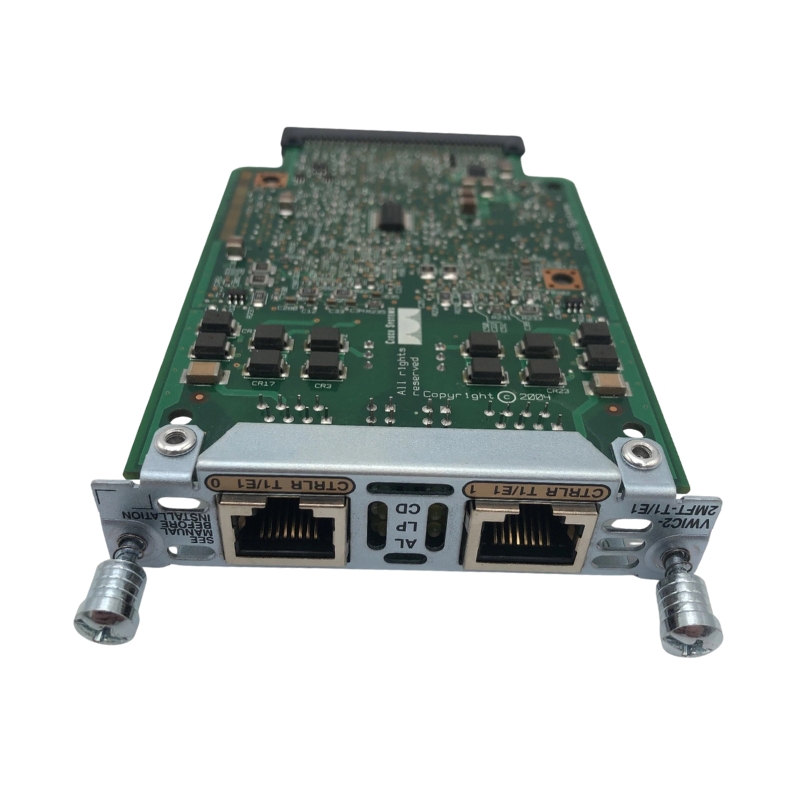
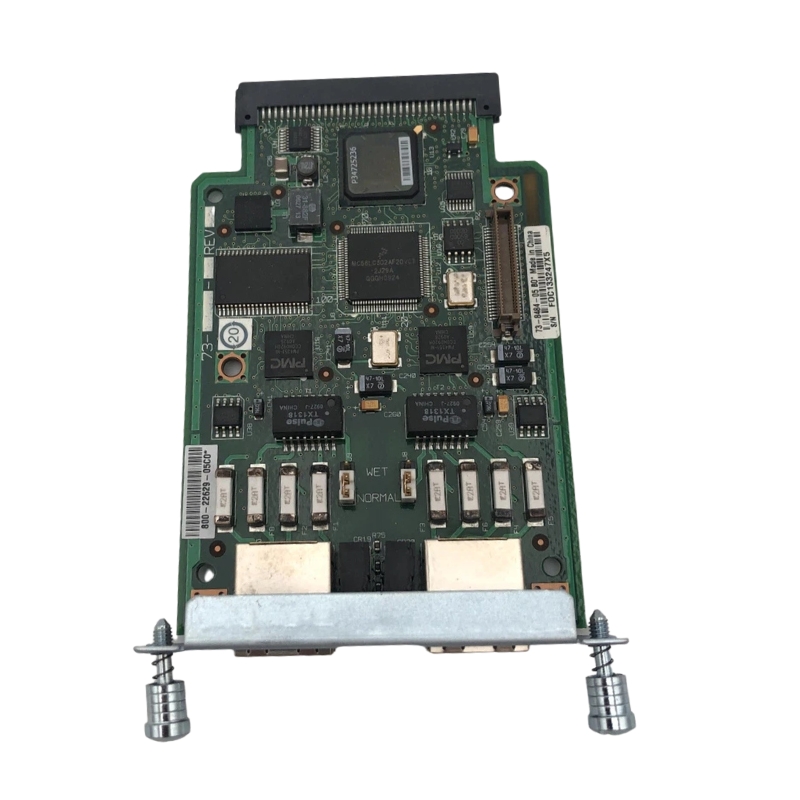
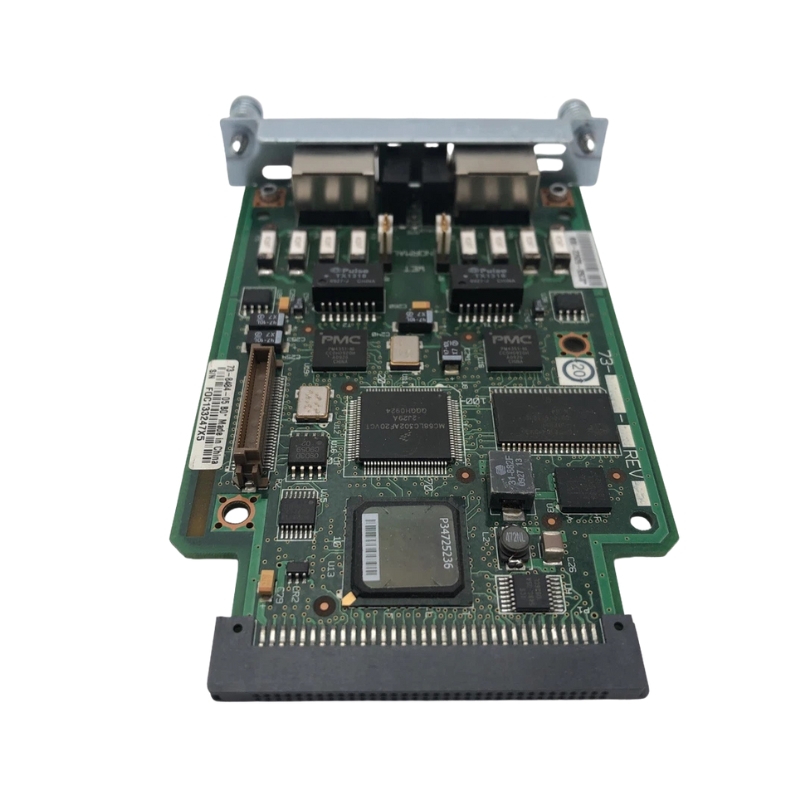
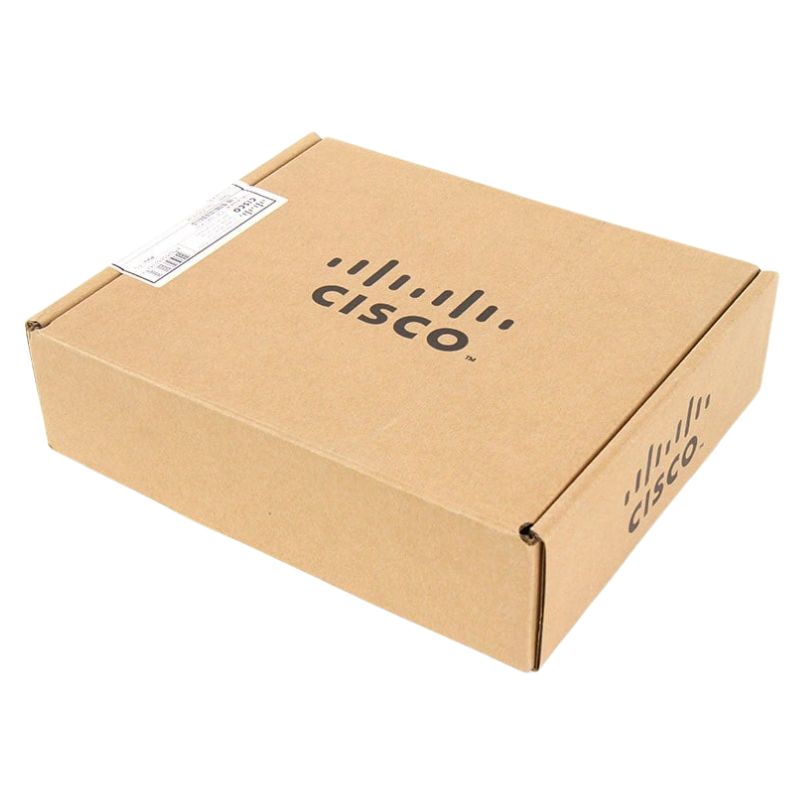
Cisco VWIC-2MFT-T1= Multiplex 2 Ports Voice Interface Card. Excellent Refurbished with 1 year replacement warranty
| SKU/MPN | Warranty | Price | Condition | You save |
|---|---|---|---|---|
| VWIC-2MFT-T1= | 1 Year Warranty | $60.00 | Factory-Sealed New in Original Box (FSB) | You save: $21.00 (26%) |
| VWIC-2MFT-T1= | 1 Year Warranty | $48.00 | Excellent Refurbished | You save: $16.80 (26%) |
The Cisco VWIC-2MFT-T1= is a high-performance voice and WAN interface module designed to deliver reliable T1 connectivity for enterprise networking environments. This dual-port voice interface card is engineered to enhance communication efficiency and network scalability across Cisco routers.
This interface card supports seamless integration of voice and data services over T1 lines, ensuring stable and efficient communication performance.
Built as a plug-in expansion module, it is designed for easy installation and space-efficient deployment within Cisco routers.
The Cisco VWIC-2MFT-T1= Multiplex 2 Ports Voice Interface Card is a specialized networking hardware module designed to enhance voice and WAN integration within enterprise-grade routing environments. This interface card is engineered to support dual-port T1 connectivity, enabling simultaneous voice and data transmission across integrated services routers. Built for scalability, reliability, and carrier-grade performance, this module is widely deployed in legacy and hybrid telecommunication infrastructures where T1 circuits remain a critical backbone for business communication systems.
As organizations continue to bridge traditional telephony systems with modern IP-based communication networks, the VWIC-2MFT-T1= serves as a key transitional component. It provides multiplexing capabilities that allow voice traffic to be efficiently combined with data streams over T1 links, ensuring optimal bandwidth utilization and reduced infrastructure complexity. This makes it especially valuable in enterprise branch offices, call centers, and distributed communication environments requiring stable voice transmission.
The primary role of the Cisco VWIC-2MFT-T1= is to integrate voice services directly into WAN architectures without requiring separate voice-only circuits. This convergence enables enterprises to reduce operational costs while maintaining high-quality voice communication across geographically distributed networks. By supporting voice multiplexing, the card allows multiple voice channels to be transmitted over a single T1 line, significantly improving efficiency.
In voice WAN integration scenarios, the module acts as an intermediary between traditional telephony equipment such as PBX systems and modern IP routers. This bridging capability ensures that legacy telephony investments remain functional while organizations gradually migrate toward full VoIP environments. The card’s design supports seamless interoperability, reducing downtime during network upgrades.
The Cisco VWIC-2MFT-T1= is built on a modular architecture optimized for flexibility and performance. It is engineered to fit into Cisco Integrated Services Routers (ISR), providing a compact yet powerful solution for voice and WAN connectivity. The card’s dual-port design ensures redundancy and load balancing capabilities, which are critical for maintaining uninterrupted communication in enterprise environments.
At the core of the module lies its 2-port multiplexing design, which enables simultaneous handling of multiple voice channels over T1 circuits. This multiplexing capability ensures that voice data is efficiently encoded, transmitted, and decoded without degradation in quality. The dual ports also allow administrators to configure separate circuits for redundancy or load distribution, improving network resilience.
The VWIC-2MFT-T1= supports standard T1 framing formats, including D4 (Superframe) and Extended Superframe (ESF). These framing structures allow the card to maintain synchronization with carrier networks while ensuring accurate data transmission. The signal processing engine embedded within the module is optimized for low latency, ensuring that voice packets are delivered in real time without noticeable delay.
Additionally, the card supports integrated channelization, which divides the 1.544 Mbps T1 bandwidth into 24 individual 64 Kbps channels. These channels can be dynamically allocated for voice or data, depending on configuration requirements.
The physical interface of the Cisco VWIC-2MFT-T1= utilizes RJ-48 connectors, which are standard for T1 line termination. These connectors ensure secure and stable physical connectivity to telecom infrastructure. The RJ-48 interface is designed to minimize signal loss and electromagnetic interference, which is essential for maintaining high-quality voice transmission over long distances.
To ensure optimal performance, the module incorporates advanced line conditioning mechanisms that reduce jitter, attenuation, and crosstalk. These features are particularly important in environments where multiple T1 lines are deployed in close proximity. The card’s internal circuitry is engineered to preserve signal integrity even under heavy traffic loads.
The VWIC-2MFT-T1= is compatible with a wide range of Cisco Integrated Services Routers, making it a versatile solution for enterprise networking environments. It is commonly deployed in ISR G1 and G2 series routers, where it integrates seamlessly with existing voice and data modules. This compatibility ensures that organizations can scale their infrastructure without replacing entire routing systems.
Within Cisco ISR architectures, the card functions as a modular expansion component that enhances WAN and voice capabilities. It works in conjunction with voice digital signal processors (DSPs) to enable compression, transcoding, and packetization of voice traffic. This integration supports both traditional PSTN connectivity and IP-based voice services.
One of the most significant advantages of the VWIC-2MFT-T1= is its ability to support legacy telephony systems. Many enterprises still rely on PBX systems that operate over T1 circuits, and this module ensures continued compatibility. By bridging legacy and modern systems, it allows organizations to extend the lifespan of existing telecommunication investments.
The Cisco VWIC-2MFT-T1= plays a critical role in enabling voice and data convergence over a unified infrastructure. This convergence reduces the need for separate networks, thereby lowering maintenance costs and simplifying network management. The module supports both circuit-switched voice and packet-based data transmission, ensuring flexibility in deployment.
Through intelligent traffic prioritization mechanisms, the card ensures that voice packets are given priority over data traffic. This Quality of Service (QoS) capability is essential for maintaining clear and uninterrupted voice communication, particularly in high-traffic network environments.
Bandwidth optimization is achieved through dynamic channel allocation and compression techniques. The module allows administrators to configure voice compression algorithms that reduce bandwidth consumption without compromising audio quality. This is especially beneficial for organizations operating across multiple remote locations with limited WAN capacity.
Quality of Service mechanisms embedded in the VWIC-2MFT-T1= ensure that latency-sensitive voice traffic is prioritized over less critical data transmissions. This ensures that voice calls remain clear and stable even during periods of network congestion. The card integrates with Cisco IOS QoS policies to enforce traffic classification and prioritization rules.
The Cisco VWIC-2MFT-T1= is widely used in a variety of enterprise and service provider environments. Its flexibility makes it suitable for branch office connectivity, call center operations, and inter-office voice trunking. Organizations with distributed infrastructures benefit significantly from its ability to consolidate voice and data traffic over a single T1 link.
In branch office deployments, the module enables reliable voice communication between remote sites and headquarters. It ensures that calls are transmitted with minimal latency and high reliability, even over long-distance T1 circuits. This makes it ideal for organizations with geographically dispersed operations.
Call centers rely heavily on uninterrupted voice communication, and the VWIC-2MFT-T1= provides the necessary stability and performance. It supports multiple concurrent voice channels, allowing call centers to handle high volumes of inbound and outbound calls efficiently.
In carrier-grade environments, uptime and reliability are critical. The module is designed to meet stringent performance requirements, ensuring continuous operation even under heavy load conditions. Its redundant port configuration enhances fault tolerance and minimizes service disruption.


 Contact Us
 Information
 Catalog
 Solid State Drives (SSD)
 Network Switches
 Hard Disk Drives
 HBA & Controllers
 PC & Servers
 PC & Server Memory
 CPU & Processors
 Network Routers
 Power Supplies
 Tape Drives & Libraries
 Network Devices
 Computer & Network Cables